

India-Pakistan Conflict: Multiple districts in Gujarat observe blackout as precautionary measure
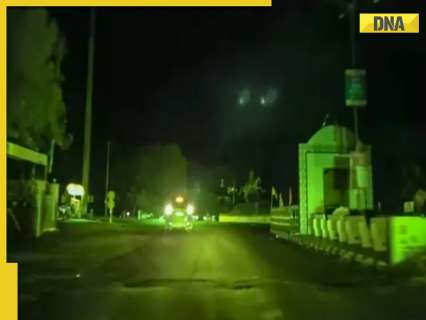
As escalations between India and Pakistan intensified, multiple districts in Gujarat observed a complete blackout as a precautionary measure, an official statement from the Chief Minister’s Office (CMO) said.
India Pakistan Tension: Railways to run 5 special trains from these areas in Jammu and Kashmir for…
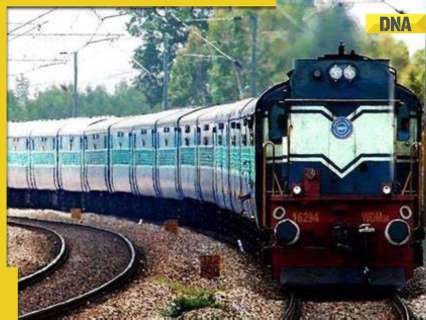
India Pakistan Tension: Railway Minister Ashwini Vaishnaw assessed the current situation of the Railways. Operations of trains have been hampered in view of the current terror attacks, therefore, Ashwini Vaishnaw has planned to run special trains
Weather update: IMD issues heat wave in east India over, rain in Northwest and Central regions; check full forecast here
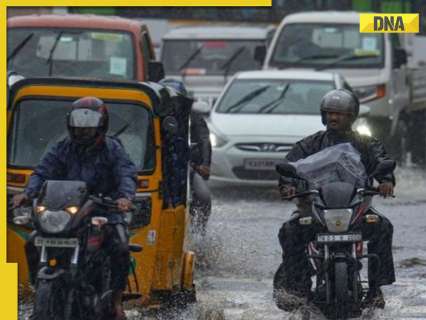
States such as Gangetic West Bengal, Bihar, Odisha and Jharkhand are likely to face extreme heat conditions.
John Cornyn says tax and spending bill must reimburse Texas $11 billion for border security
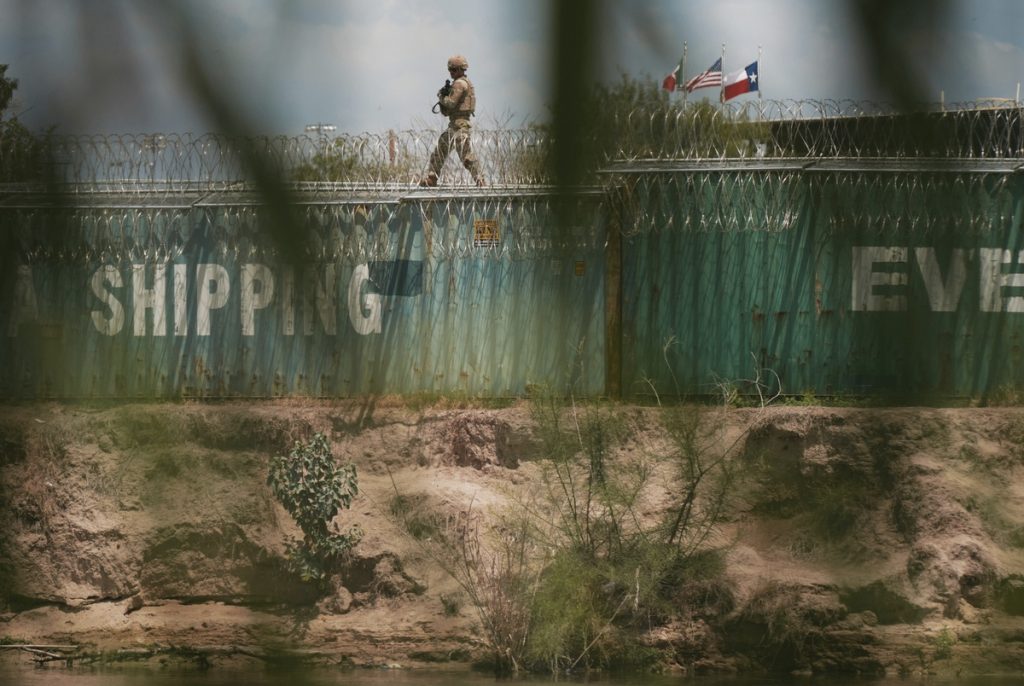
Texas Republicans are pushing the federal government to pay the state’s costs of Operation Lone Star, Gov. Greg’s Abbott’s border security initiative.
Canadian unemployment rate hits six-month high amid US-imposed tariffs
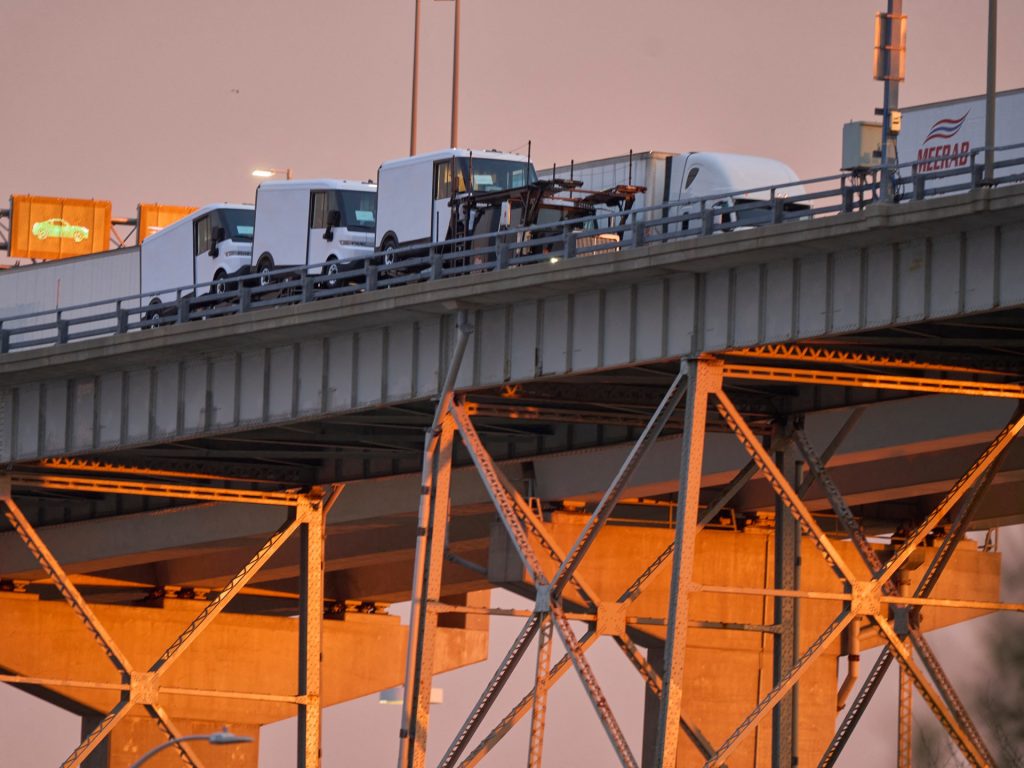
Statistics Canada showed an unemployment rate of 6.9 percent, with most cuts in the manufacturing sector. Canada’s unemployment jumped to its highest level since November as United States President Donald Trump’s imposed tariffs affect the export-dependent economy. Statistics Canada showed a 0.2 percent increase for the month of April, bringing the country’s unemployment rate to 6.9 percent, according to its report released on Friday. The 6.9 figure matched November unemployment, which was an eight-year high outside of the pandemic era. The agency pointed to the effect tariffs imposed by the US had on the country’s manufacturing sector, which lost 31,000 jobs on a monthly basis. The wholesale, retail and trade sector saw 27,000 jobs cut. Employment in the public sector increased by 23,000 or up 0.5 percent in April, following three months of little change, especially due to increased temporary hiring for the federal election that took place on April 28. The average hourly wage growth of permanent employees, a metric closely watched by the Canadian central bank to gauge inflationary trends, was at 3.5 percent in April, unchanged since March. Advertisement Overall, the employment number was largely flat with minimal gains of net 7,400 jobs in April, it said – slightly higher than analyst expectations at 6.8 percent. This was in contrast to a loss of 32,600 jobs the prior month. The employment rate, or the proportion of the working-age population that is employed, was at 60.8 percent in April, following a decline of 0.2 percentage points in March. This was a six-month low, the statistics agency said. The employment rate had been depressed for most of 2023 and 2024 as population growth outpaced employment gains. However, since February, population growth has not been very high but employment gains have slowed. “People who were unemployed continued to face more difficulties finding work in April than a year earlier,” StatsCan said, adding that among those who were unemployed in March, 61 percent remained unemployed in April – almost four percentage points higher than the same period last year. Major hit coming Trump’s tariffs on Canadian steel and aluminium in March and automobiles in April, along with import duties on a broad range of products with various reductions and exemptions, have affected businesses and households. The Bank of Canada has warned that growth would take a major hit in the coming months as exports fall, prices increase, hiring drops and layoffs accelerate. It has said it will act decisively if the economy needs urgent support. “Overall, we are seeing a job market that was weak heading into the trade war, now looking like it could soon buckle. Today’s report supports the case for a Bank of Canada cut in June,” Ali Jaffery, senior economist at CIBC Capital Markets, told the Reuters news agency. Advertisement Adblock test (Why?)
Church must bring light to world’s ‘dark nights’: Pope Leo at first mass
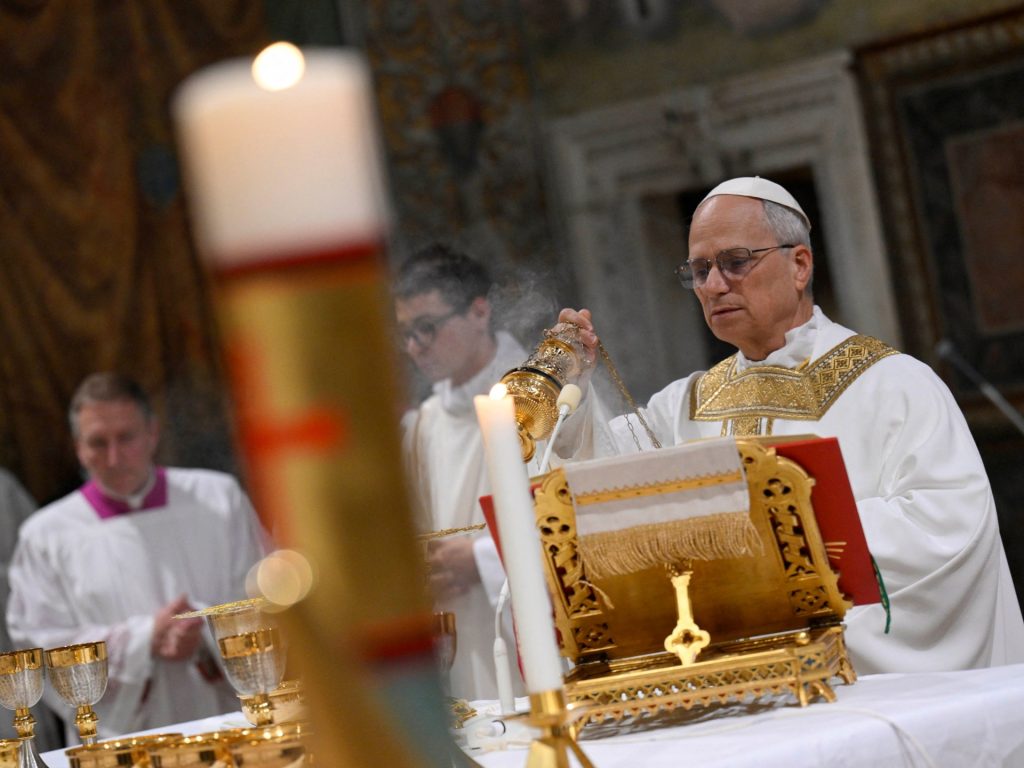
The new head of the Catholic Church will be formally installed as pope at a mass on May 18, the Vatican says. Pope Leo XIV has promised to make the Catholic Church a balm for the world’s “dark nights”, as he celebrated his first mass as pontiff less than 24 hours after being elected. Sixty-nine-year-old Leo, the former Cardinal Robert Prevost and the first American pope, delivered the Mass on Friday, flanked by cardinals in the Vatican City’s Sistine Chapel. The new head of the Catholic Church was elected by fellow cardinals on Thursday, following Pope Francis’s death, and has become the first US pontiff in the church’s 2,000-year history. Leo, who now leads the world’s 1.4 billion Catholics, acknowledged that the Christian faith is sometimes “considered absurd” and the preserve of “the weak and unintelligent”. “A lack of faith is often tragically accompanied by the loss of meaning in life, the neglect of mercy, appalling violations of human dignity, the crisis of the family and so many other wounds that afflict our society,” he said at the mass, adorned in simple white and gold clothes. He also warned that Jesus cannot be “reduced to a kind of charismatic leader or superman”. Advertisement “This is true not only among non-believers, but also among many baptised Christians, who thus end up living, at this level, in a state of practical atheism,” he said. The new pontiff said he would seek to serve as the “faithful administrator” for the Church as a whole. Leo will be formally installed as pope at a mass on May 18 and will preside over his first general audience on May 21, the Vatican said, with world and religious leaders invited to his formal launch of the papacy. Pope Francis’s inauguration in 2013 attracted a crowd of about 200,000 people. The new pope will also leave senior Vatican officials in their roles for the time being, giving him time to decide before making appointments, the Vatican said. The pope was elected at the end of a two-day conclave that wrapped up on Thursday evening when white smoke billowed from the chimney of the Sistine Chapel. Francis, who died last month at the age of 88, leaves Leo to inherit a number of major challenges, ranging from a budget shortfall to divisions about whether the Church should be more welcoming towards the LGBTQ community and divorcees, and should let women play a greater role in its affairs. Leo was born in Chicago but spent two decades as a missionary in Peru. Before his election, US cardinals were largely written off as papal contenders because of a widespread assumption that the global Church could not be run by a superpower pope. However, since Leo also holds Peruvian citizenship, it is understood that he has knowledge of both the West and the Global South. Advertisement Adblock test (Why?)
Who are the armed groups India accuses Pakistan of backing?
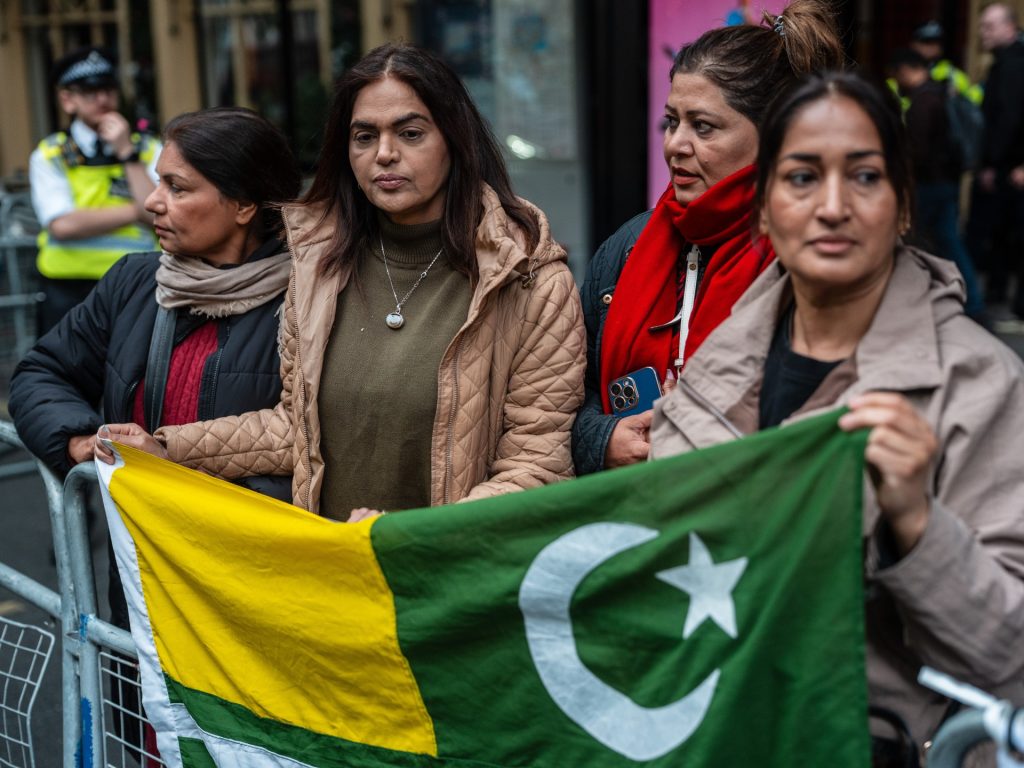
Tensions are higher between India and Pakistan than they have been in decades as the two countries trade blame for drone attacks on each other’s territory over the past few days. At the heart of the dispute is what India claims is Pakistan’s support for armed separatist groups operating in Kashmir, a region disputed between the two countries. An armed group called The Resistance Front (TRF) claimed responsibility for the Pahalgam attack in Indian-administered Kashmir last month in which 26 people were killed. India alleges that TRF is an offshoot of another Pakistan-based armed group, Lashkar-e-Taiba (LeT) and has blamed Pakistan for supporting such groups. Pakistan has denied this. It condemned the attack in April and called for an independent investigation. Here is more about who the armed groups are and the major attacks they’ve claimed or been blamed for. The TRF emerged in 2019 following the Indian government’s suspension of Article 370 of the Indian Constitution, stripping Indian-administered Kashmir of its semi-autonomous status. Advertisement However, the group was not widely known before the Pahalgam attack, which it took responsibility for in April via the Telegram messaging app, on which it said it was opposed to the granting of residency permits to “outsiders”. Since the repeal of Article 370, non-Kashmiris have been granted residency permits to settle in Indian-administered Kashmir. This has stoked fears that the Indian government is trying to change the demographics of Kashmir, whose population is nearly all Muslim. Unlike other armed rebel groups in Kashmir, the TRF does not have an Islamic name. However, the Indian government maintains that it is an offshoot of, or a front for, Lashkar-e-Taiba (LeT), a Pakistan-based armed group whose name means “Army of the Pure”. In 2020, TRF started claiming responsibility for minor attacks, including some targeted killings. TRF recruits included rebels from different splinter rebel groups. Indian security agents say they have arrested multiple TRF members since then. According to Indian government records, most armed fighters killed in gunfights in Kashmir were affiliated with the TRF in 2022. The LeT, which calls for the “liberation” of Indian-administered Kashmir, was founded around 1990 by Hafiz Muhammad Saeed, who is also known as Hafiz Saeed. In 2008, armed gunmen opened fire on civilians at several sites in Mumbai, India, killing 166 people. Ajmal Kasab, the only attacker captured alive, said the attackers were members of LeT. Saeed denied any involvement in that attack, however. Kasab was executed by India in 2012. Advertisement India also blamed Pakistani intelligence agencies for the attack. While Pakistan conceded that the attack may have been partly planned on Pakistani soil, it maintained that its government and intelligence agencies were not involved. According to the United Nations, LeT was also involved in a 2001 attack on India’s parliament and a 2006 attack on Mumbai commuter trains that killed 189 people. On May 7, India launched missile attacks on several cities in Pakistan and Pakistan-administered Kashmir. One of these cities was Muridke in the Punjab province. India claims that Muridke was the location of the headquarters of the Jamat-ud-Dawa, a charity organisation that New Delhi insists is a front for the LeT. Last week, the Indian army claimed it had struck LeT’s Markaz Taiba camp in Muridke. The army also claimed Kasab had been trained at this camp. Pakistan says LeT has been banned, however. Following an attack on Indian-administered Kashmir’s Pulwama in 2019, Pakistan also reimposed a lapsed ban on Jamat-ud-Dawa. Saeed was arrested in 2019 and is in the custody of the Pakistani government, serving a 31-year prison sentence after being convicted in two “terror financing” cases. Jaish-e-Muhammad (JeM), or “The Army of Muhammad”, was formed around 2000 by Masood Azhar, who had been released from Indian prison in 1999. Azhar, who had been arrested on “terrorism” charges, was released in exchange for 155 hostages being held by hijackers of an Indian Airlines plane. Azhar previously fought under the banner of a group called Harkat-ul-Mujahideen, which calls for Kashmir to be united with Pakistan, and has been linked to al-Qaeda. Advertisement According to the UN Security Council, JeM has also had links with al-Qaeda, Osama bin Laden and the Taliban. Pakistan banned JeM in 2002 after the group, alongside LeT, was blamed for an attack on the Indian parliament in 2001. The British-born Ahmed Omar Saeed Sheikh, who was convicted of killing US journalist Daniel Pearl in 2002, was also a member of JeM. Pearl was the Wall Street Journal’s South Asia bureau chief. However, a 2011 report released by the Pearl Project at Georgetown University following its own investigation claimed that Pearl had not been murdered by Sheikh. The report instead alleged that Khalid Sheikh Mohammed, the mastermind behind the September 11, 2001 attacks, was responsible. In 2021, a panel of three judges at Pakistan’s Supreme Court ordered Sheikh’s release. Despite the ban, Indian authorities claim the group continues to operate in Bahawalpur, in Pakistan’s Punjab province. On May 7, the Indian army claimed its strikes had also targeted the headquarters of JeM there. In 2019, JeM claimed a suicide bomb attack that killed 40 Indian paramilitary soldiers in Pulwama in Indian-administered Kashmir. Azhar has been arrested by Pakistani authorities twice, but was released and has never been charged. He has since disappeared from the public eye and his current whereabouts are not known. Hizbul-ul-Mujahideen Hizbul-ul-Mujahideen (HuM), or “Party of Holy Fighters” was formed in 1989 by Kashmiri separatist leader Muhammad Ahsan Dar. The group emerged out of the 1988 protests in Kashmir against the Indian government. The group, also called Hizb, has become the largest Indigenous rebel group based in Indian-administered Kashmir. Advertisement Rather than calling for independence, HuM calls for the whole of Kashmir to be allowed to accede to Pakistan. The group has a huge network of fighters in Shopian, Kulgam and Pulwama districts in the south of Indian-administered Kashmir. In 2016, the killing of popular HuM commander Burhan Wani triggered widespread protests in Indian-administered Kashmir, resulting in a crackdown by
Is Ajit Doval posting on his Facebook amid India-Pak war? Government fact-checks viral post
To stop the spread of false information, PIB shared the clarification on its official social media handles.
India Pakistan Tension: Three people injured in Pakistani drone attack in Punjab’s Firozpur, hospitalised
A Pakistani drone has hit a residential area in Firozpur and injured a family. The family has been rushed to hospital for further treatment
India Pakistan Tension: Family injured in Pakistani drone attack in Firozpur, hospitalised
One Pakistani drone has hit a residential area in Firozpur and injured a family. Rushed to hospital for further treatment