

Stacey Abrams considers 3rd run for Georgia governor despite back-to-back defeats
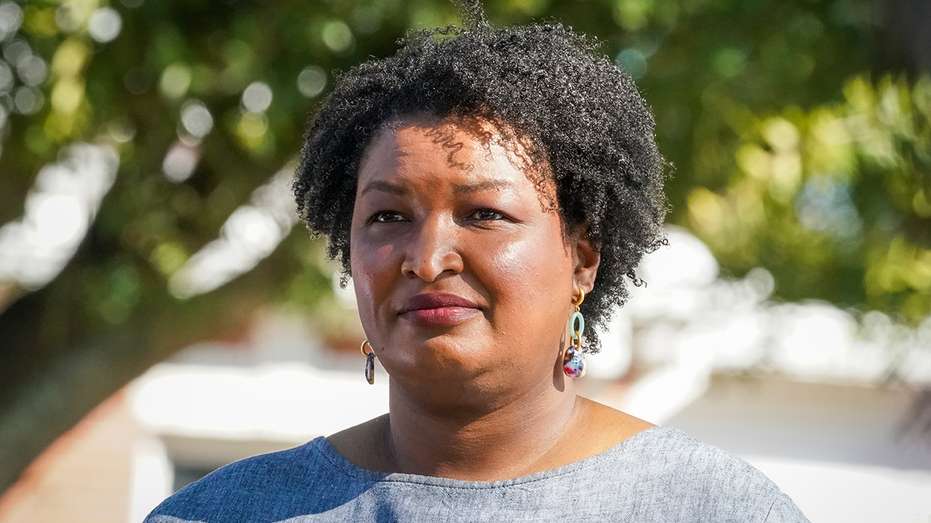
Democrat Stacey Abrams is seriously considering a third-straight run for Georgia governor in 2026, a source familiar confirmed to Fox News Digital. Abrams, a former Democratic Party leader in the Georgia state legislature and a nationally known voting-rights advocate, narrowly lost to now-Gov. Brian Kemp in the 2018 gubernatorial election. She lost the 2022 rematch to Kemp by nearly eight points. Kemp, the popular conservative governor, is term limited and cannot seek reelection in 2026. The Cook Political Report, a top nonpartisan political handicapper, ranked the race to succeed Kemp in the battleground state a “toss up” – teeing up a likely competitive race in the Peach State. Georgia has followed the national trend in the past three presidential elections, all with President Donald Trump at the top of the ticket. While Trump was triumphant in 2016 and 2024, former President Joe Biden won Georgia in 2020. GEORGIA REPUBLICANS DON’T RULE OUT SENATE BIDS AS POPULAR GOP GOVERNOR REMAINS UNDECIDED Republican Attorney General Chris Carr has already announced his gubernatorial campaign in November 2024. Lt. Gov. Burt Jones is rumored to be mulling his own bid for the Republican nomination. Campaign filings reported by WABE earlier this year revealed that Jones raised $1.7 million for a leadership committee – about half a million behind Carr. TOP GOP RECRUIT IN CRUCIAL 2026 SENATE RACE HINTS WHEN HE WILL MAKE AN ANNOUNCEMENT On the Democratic side, Georgia state senator Jason Esteves announced his campaign for governor earlier this week. Rep. Lucy McBath, who had launched an exploratory committee for her own gubernatorial run, announced she was suspending her bid to support her husband, following complications from a cancer diagnosis. Despite two consecutive gubernatorial losses to Kemp, Abrams has remained politically active in Georgia since 2022. In 2023, she was appointed the Ronald W. Walters Endowed Chair for Race and Black Politics of Howard University, one of the nation’s leading historically Black colleges. Abrams also served as a senior counsel for Rewiring America, a climate action nonprofit organization. She is the founder of Fair Fight Action, Fair Count and the Southern Economic Advancement Project (SEAP) – organizations focused on voting rights in Georgia, economic power, community building and DEI initiatives. Abrams is an author, having published several novels under a pseudonym. Her most recent book, “Level Up: Rise Above the Hidden Forces Holding Your Business Back,” was published last year. She hosts a weekly podcast, “Assembly Required.” The news that Abrams is considering a third run for governor was first reported by the Atlanta Journal-Constitution. Abrams did not respond to Fox News Digital’s request for comment by deadline.
Judge blocks Trump election order despite overwhelming American support for voter ID
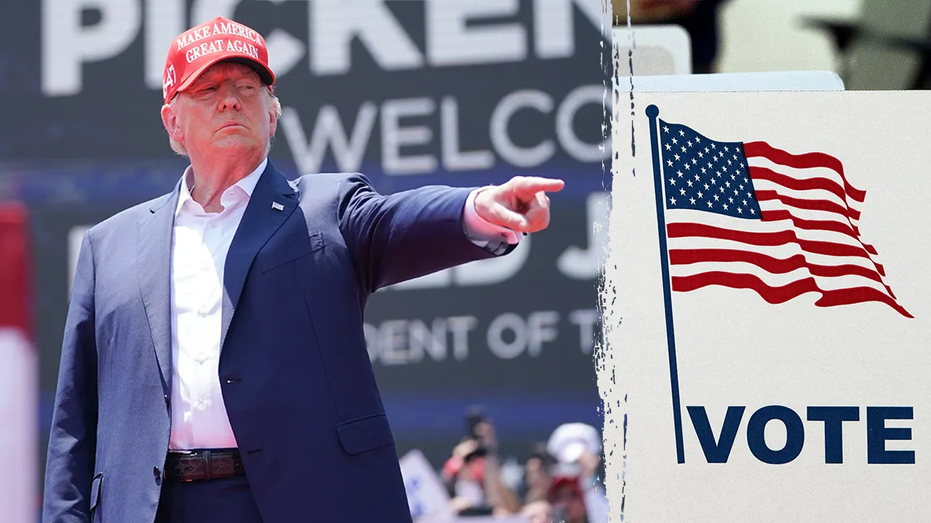
A federal judge in Washington, D.C., blocked a portion of President Donald Trump’s executive order on election integrity that is popular among Americans, according to a Gallup poll. The portion of the order that Judge Colleen Kollar-Kotelly of the U.S. District Court for the District of Columbia struck down included provisions related to requiring proof of citizenship to register to vote. TRUMP’S EXECUTIVE ORDER ON VOTING BLOCKED BY FEDERAL JUDGE AMID FLURRY OF LEGAL SETBACKS Less than two weeks before the 2024 election, Gallup found that 84% of U.S. adults were in favor of requiring voters to show identification and 83% supported requiring proof of citizenship when registering for the first time. When broken down by party, 67% of Democrats, 84% of Independents and 98% of Republicans were in favor of mandating voter ID. The party breakdown over proof of citizenship was similar, with 66% of Democrats, 84% of Independents and 96% of Republicans supporting the idea. CITIZENSHIP VOTER REGISTRATION BILL IS ‘COMMON SENSE,’ GOP LAWMAKER ARGUES Kollar-Kotelly, however, argued that Trump did not have the authority to issue such an order, as the Constitution delegates control of election regulations to Congress and states. “Consistent with that allocation of power, Congress is currently debating legislation that would affect many of the changes the President purports to order,” Kollar-Kotelly, a Clinton appointee, wrote in her order. “No statutory delegation of authority to the Executive Branch permits the President to short-circuit Congress’s deliberative process by executive order.” Earlier this month, the House passed the Safeguard American Voter Eligibility (SAVE) Act, which would require states to obtain proof of citizenship for those registering to vote in a federal election. Additionally, the act mandates that all non-citizens be removed from voter rolls. The Senate still needs to pass the measure before it can reach Trump’s desk. Rep. Chip Roy, R-Texas, who sponsored the bill in the House, wrote, “In order to preserve this republic, we must uphold what it means to be able to vote in a U.S. election. I am grateful that my colleagues answered the call and passed the SAVE Act, as this serves as a critical first step to ensure that we maintain election integrity throughout our country.” So far in 2025, five states have enacted voter ID requirements, and one has mandated proof of citizenship for registration, according to Voting Rights Lab. Additionally, 25 states are considering bills that would mandate proof of citizenship, while 40 are mulling legislation requiring voter ID.
Sister of terrorist, believed to be behind Pahalgam massacre, admits her brother is a ‘Mujahideen’

“My brother is a Mujahideen”, says the sister of one of the terrorists allegedly involved in the Pahalgam massacre in Jammu and Kashmir which claimed 26 innocent lives. Earlier today, the houses of two Lashkar-e-Taiba terrorists, believed to be behind the deadly Pahalgam attack, were demolished.
Trump’s ‘STOP’ message to Putin echoes Biden’s ‘don’t’ from 2022
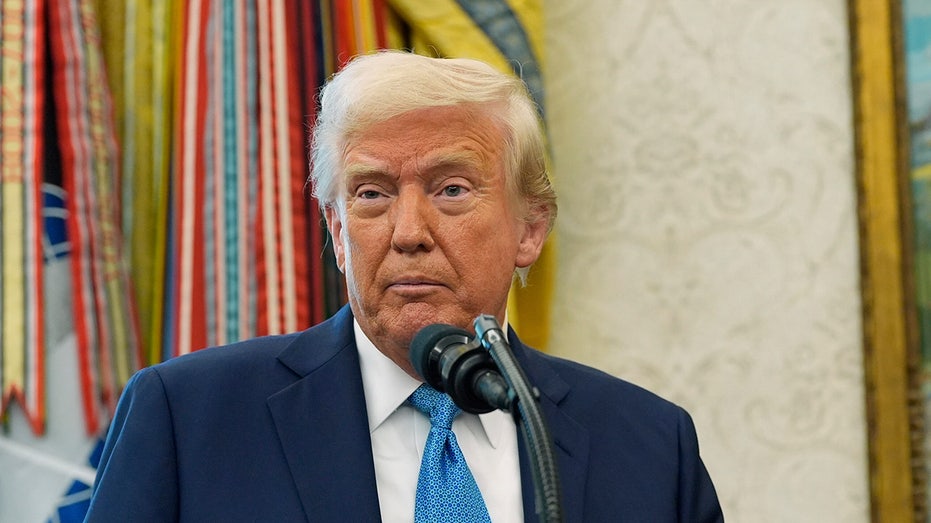
President Donald Trump’s message for Russian President Vladimir Putin to “STOP!” airstrikes on Ukraine echoes a comment made by former President Joe Biden in 2022 in which he repeatedly warned Putin against using chemical or nuclear weapons in the conflict. “I am not happy with the Russian strikes on KYIV. Not necessary, and very bad timing. Vladimir, STOP! 5,000 soldiers a week are dying. Let’s get the peace deal DONE,” Trump wrote on Truth Social on Thursday as Russian airstrikes rocked Kyiv. Three years ago, during an interview with CBS News, Biden was asked, “As Ukraine succeeds on the battlefield, Vladimir Putin is becoming embarrassed and pushed into a corner — And I wonder Mr. President what you would say to him if he is considering using chemical or tactical nuclear weapons?” “Don’t. Don’t. Don’t,” Biden responded. “It will change the face of war unlike anything since World War II.” RUSSIA IS ‘READY TO MAKE A DEAL’ ON UKRAINE WAR, LAVROV SAYS The Thursday attack on Ukraine killed at least 10 and injured at least 90, including children, Ukraine said. Trump’s message to Putin to “STOP!” was criticized on the Friday cover of the New York Post, which featured the headline “Words aren’t enough.” Trump administration officials claimed they had productive talks with Putin, but they have yet to secure a deal that would end the war that has been raging since Russia’s February 2022 invasion. RUSSIAN GENERAL KILLED IN MOSCOW-AREA CAR BOMBING, INVESTIGATORS SAY Recently, several members of the administration suggested that the U.S. could end its efforts to secure a peace deal if Ukraine and Russia do not start making significant moves toward ending the war. White House envoy Steve Witkoff is in Moscow on Friday to meet with Putin. Russian Foreign Minister Sergei Lavrov also told CBS News that the Kremlin is “ready to reach a deal” to end the war. In an excerpt of an interview that is set to air in full on Sunday, Lavrov said he agreed with Trump’s assertion that talks between Ukraine and Russia were “moving in the right direction.” However, Lavrov added there were “some specific points, elements of the deal, which need to be fine-tuned,” but did not explain what was being negotiated. Lavrov also apparently made it clear to CBS News that Russia would not give up Crimea, which the country seized from Ukraine in 2014. Ukrainian President Volodymyr Zelenskyy said this week that his country would not recognize Russian control of Crimea, as it would go against Ukraine’s constitution. Trump slammed Zelenskyy over the “inflammatory” remark and said in a post on Truth Social that the comment was “very harmful” to peace efforts. Fox News Digital’s Rachel Wolf contributed to this report.
Has Islamic State made its bases in Jammu and Kashmir? Why did terrorists ask to recite ‘kalma’?

What has shocked the people most in Pahalgam attack is how the terrorists executed their nefarious designs. The gunmen asked the tourists their names before opening fire. In some cases, they also demanded the tourists recite “kalma” or the Islamic prayers.
Rahul Gandhi visits J-K after Pahalgam massacre, meets terror attack survivor: ‘Nation standing united’
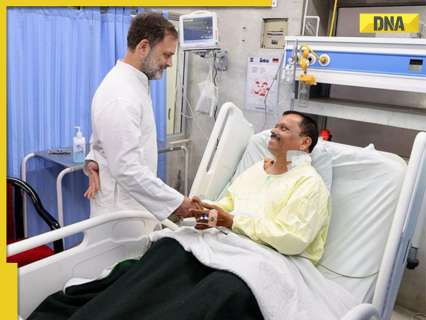
Congress MP and Lok Sabha Leader of Opposition Rahul Gandhi met Jammu and Kashmir Chief Minister Omar Abdullah at his residence in Srinagar on Friday in the aftermath of the Pahalgam terrorist attack. He also met a person injured in the attack at a hospital in Srinagar.
REAL ID sees nationwide state government compliance ahead of deadline, but it wasn’t always that way
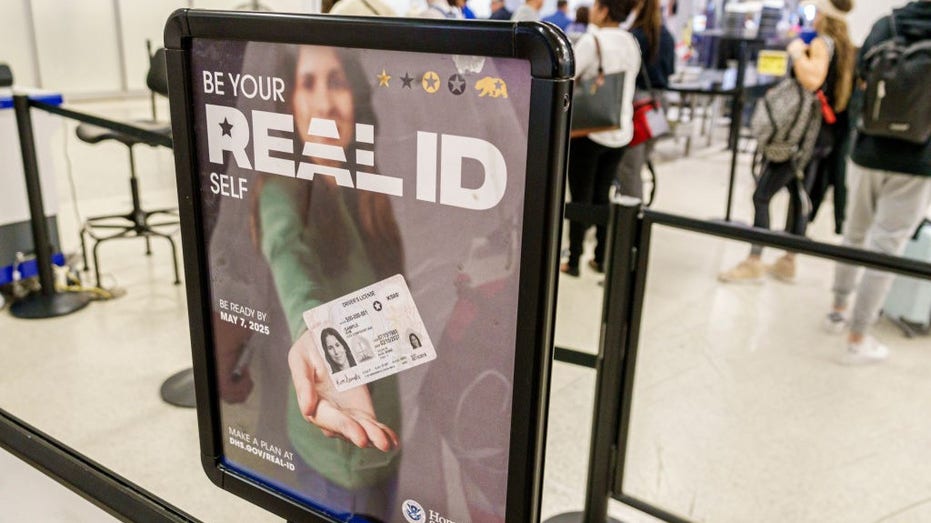
While all 50 states, the District of Columbia and U.S. territories are all currently in compliance ahead of the federal deadline of May 7, REAL ID was once roundly opposed by several state governments. As soon as two years after the law’s 2005 passage by President George W. Bush, several state leaders had already expressed objections to complying with the nationwide standard. Then-Montana Gov. Brian Schweitzer, a Democrat, called REAL ID a “harebrained scheme” in a 2008 NPR interview. “[W]e are putting up with the federal government on so many fronts, and nearly every month they come out with another… unfunded mandate to tell us that our life is going to be better if we’ll just buckle under on some other kind of rule or regulation,” Schweitzer said. NO ‘REAL ID’ APPOINTMENTS OPEN IN NEW JERSEY AS RESIDENTS SOUND OFF: ‘GET WITH THE TIMES, NJ’ “And we usually just play along for a while, we ignore them for as long as we can, and we try not to bring it to a head. But if it comes to a head, we found that it’s best to just tell them to go to hell and run the state the way you want to run your state.” One year prior, Schweitzer signed a law banning Montana’s DMV from enforcing REAL ID stipulations, calling it a “threat to privacy” in a letter to then-Colorado Gov. Bill Ritter, also a Democrat. Not too far west in Washington state, fellow Democratic Gov. Christine Gregoire signed similar legislation that required the feds to appropriate $250 million to cover the unfunded mandate. “[E]ven worse, it doesn’t protect the privacy of the citizens of Washington,” Gregoire claimed when signing the bill. On the Republican side, then-Pennsylvania Gov. Tom Corbett signed a law in 2008 halting PennDOT’s implementation of REAL ID. “Neither the governor nor the Department of Transportation or any other Commonwealth agency shall participate in the REAL ID Act of 2005 or regulations promulgated thereunder,” Act 38’s text read. The policy was later reversed by Act 3 of 2017, signed by Democratic Gov. Tom Wolf. ‘MASS SURVEILLANCE’: CONSERVATIVES SOUND ALARM OVER TRUMP ADMIN’S REAL ID ROLLOUT Meanwhile, New Jersey has the lowest reported compliance with REAL ID, according to a CBS News analysis, with only 17% of the population having one – and many complaining of not enough bandwidth for the state to handle the number of applications. On Wednesday, Kentucky Republican state Sen. Jimmy Higdon, wrote to DHS asking for an extension to the May 7 enforcement date, according to the Lexington Herald-Leader. State compliance with REAL ID means that a state has met the federal security standards outlined by DHS for the actual issuance of drivers’ licenses. Since all states have done so, they are considered compliant. Because the program is optional for the licenseholder – due to the alternatives, like passports – an insufficient proportion of residents not having REAL IDs does not affect statistical state compliance. REAL ID requirements, endeavored out of a post-9/11 national security law from then-Rep. James Sensenbrenner, R-Wis., dictate that the Transportation Security Administration (TSA) will no longer accept a photo-ID that does not have a star in the upper corner denoting verification, unless it is a passport. To become verified, Americans must provide Social Security information or other personal identifiers. CLICK HERE TO GET THE FOX NEWS APP The law’s implementation date has been delayed several times, due to COVID and concerns about varied state compliance and states’ abilities to summon the necessary resources to meet federal standards. Fox News Digital reached out for comment from the current governors of the three states referenced: Democrat Bob Ferguson of Washington, Republican Greg Gianforte of Montana and Democrat Josh Shapiro of Pennsylvania.
Japan introduces urgent economic measures to ease pain from US tariffs
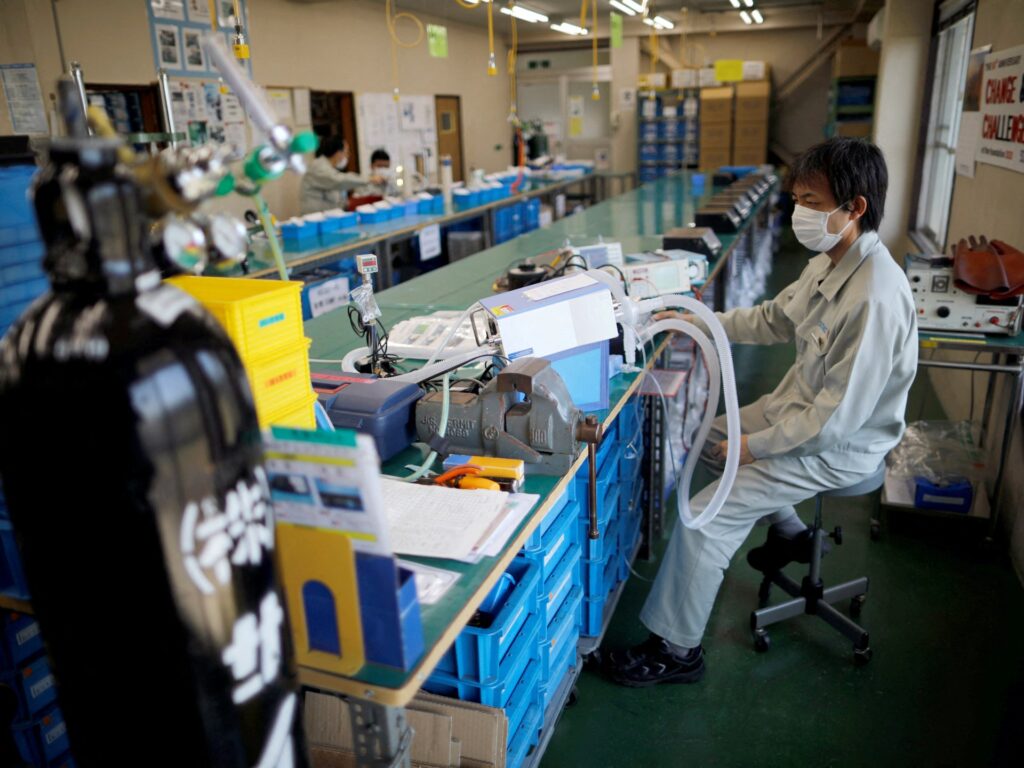
Package includes support for corporate financing, and subsidies to lower petrol prices and partially cover electricity bills. Japanese Prime Minister Shigeru Ishiba has announced emergency economic measures to alleviate any impact on industries and households affected by the United States’s new tariffs on products from Japan. The package unveiled by Ishiba on Friday includes support for corporate financing as well as subsidies to lower petrol prices by 10 yen ($0.07) a litre (0.26 gallons), and partially cover electricity bills for three months from July, a government document showed. “I have instructed cabinet members to make the utmost efforts to aid firms and households that have been worried about tariff impact,” Ishiba said at a tariff task force meeting. US tariffs could have a significant impact on Japanese industries that support the economy such as automobiles and steel, he said. To help small and mid-sized companies more vulnerable to economic swings, a larger scope of firms will be eligible for low-interest loans extended by government-backed banks. The government will also consider additional measures to boost domestic consumption depending on the impact of US tariffs on Japan’s massive automotive industry. Advertisement Friday’s package could be financed by a reserve fund, eliminating the need to compile an extra budget, said economy minister Ryosei Akazawa. Steep US tariffs US President Donald Trump on April 2 introduced a 25 percent tariff on car and truck imports. He also announced a 24 percent tariff on all Japanese goods, later cutting that to 10 percent for 90 days. Akazawa, who serves as Japan‘s top trade negotiator, will visit Washington next week for a second round of trade talks. On Thursday, the Nikkei business daily reported that Japan is considering increasing soya bean imports from the US as part of negotiations. The uncertainty in Trump’s imposition of tariffs has weighed down on markets around the world, including in Japan. But Tokyo’s Nikkei surged 1.9 percent on Friday after Wall Street’s rally streaks for the third day, driven by hopes for the Fed to cut rates and hopes that Trump was softening his approach on tariffs. Adblock test (Why?)
Why the Palestinian Authority’s Abbas is under pressure to pick a successor

The Palestinian Liberation Organization (PLO), under pressure to appoint a second-in-command to its ageing leader, Mahmoud Abbas, created a vice president position after meeting with senior officials on April 24. Abbas, who is also president of the Palestinian Authority (PA), promised during an emergency Arab summit in early March that the position would be created. Yet it remains unclear who will eventually fill the post. The aim is to prevent a power struggle after Abbas vacates his post – a scenario that Israel could exploit to cause the collapse of the PA, fully annexe the occupied West Bank and ethnically cleanse Gaza, experts told Al Jazeera. Yet Dianna Buttu, a former legal adviser to the PLO, believes creating a vice president post in the PA will not avert a power struggle once Abbas is gone – rather, it could exacerbate conflict. “The more fragmented the PA becomes, the more it will create a power vacuum … and that vacuum will be filled by external actors and mainly by the Americans and Israelis,” she warned. Advertisement Legitimacy crisis Abbas, 89, assumed control of the PLO and PA after Palestinian leader Yasser Arafat died in November 2004 and has ruled without a popular mandate since dissolving parliament in 2007. His Fatah party dominates the PA and PLO. The long-defunct parliament has faded away, and critics have slammed Abbas for seeming to undermine attempts to hold elections that could revive it. In the absence of parliament, the PLO controls the succession, a task Abbas has postponed, including by decreeing last year that Rawhi Fattouh, head of the Palestinian National Council, would become interim president if the position became vacant suddenly until elections are held. “Abbas has put this off out of fear that if he brought anyone forward, then they would be a rival,” said Khaled Elgindy, a visiting scholar at Georgetown University’s Center for Contemporary Arab Studies. The PA was created by the Oslo Peace Accords, signed by Arafat and Israeli Prime Minister Yitzhak Rabin in 1993 and 1995. Tasked with governing the West Bank and Gaza until a Palestinian state was created alongside Israel, the PA lost credibility among Palestinians as Israel’s occupation became more violent and oppressive, and land grabs for Israeli settlements continued. Since Oslo, the population of settlements, illegal under international law, built on Palestinian land has risen from about 200,000 to more than 750,000. In 2007, a violent split with Hamas in Gaza constrained the PA’s authority to the parts of the occupied West Bank that it had some limited control over. A Palestinian man inspects the damage in his house in Huwara, south of Nablus in the occupied West Bank, after a reported attack by Israeli settlers on December 4, 2024 [Zain Jaafar/AFP] The PA did manage to become the de facto Palestinian representative on the international stage, replacing the PLO. Advertisement But at home, Abbas’s popularity slipped as people’s suffering increased and the PA continued its security coordination with Israel, which was outlined in the Oslo Accords. The PA is also seen to have failed to protect Palestinians from Israeli troops and settlers while using its authority to crack down on civil activists and opponents. This has resulted in a situation in which whoever he appoints, “Abbas’s handpicked successor probably won’t win people over”, Elgindy told Al Jazeera. The name suggested most often is Abbas’s close confidant and secretary-general of the PLO Executive Committee, Hussein al-Sheikh. Al-Sheikh also heads the PA’s General Authority for Civil Affairs, which issues the Israeli-approved permits that enable a few Palestinians to navigate the movement restrictions Israel has implemented in the occupied West Bank. Human rights groups and the International Court of Justice – the highest legal body in the world – see Israel’s movement restrictions against Palestinians as apartheid. Sheikh’s long-standing relationship with the Israeli authorities has led critics to accuse him of acting as a liaison for the occupation. “Nobody likes him [among Palestinians],” said Omar Rahman, an expert on Israel-Palestine with the Middle East Council for Global Affairs. “[Al-Sheikh] is tainted by his relationship to Israel and perceptions [that he is embroiled in] massive corruption.” External pressure The pressure on Abbas regarding succession has ebbed and flowed over the years, intensifying over recent months as Arab states push him to appoint a successor to prevent the PA from dissolving into chaos, analysts told Al Jazeera. Advertisement Egypt is particularly eager to ensure succession, according to Rahman. In March, Egypt called and hosted an Arab League summit, during which it unveiled its reconstruction plan for Gaza to counter United States President Donald Trump’s proposal to ethnically cleanse Gaza and turn it into a “Middle East Riviera”. Egypt was mentioned as one of the countries where Palestinians could be “moved to”, an idea it firmly rejected and countered with its reconstruction plan. The proposal included creating a Palestinian technocratic administration, supervised by the PA, to oversee the reconstruction of the devastated enclave without displacing anyone. Secretary-General of the PLO Executive Committee Hussein al-Sheikh meets with foreign ministers in Amman, Jordan, in November 2023 [Jonathan Ernst/Pool photo via AP] The path to PA administration of Gaza is not at all clear, however, as both Hamas and Israel object to it – Hamas because it administers Gaza currently, while Israel has panned the PA as ineffective. Abbas appears to have gone on the offensive, delivering angry broadsides against Hamas during the meetings and blaming the group for allowing the continuation of Israel’s genocide in Gaza by not handing over captives and disarming. However, many Arab states blame Abbas for failing to reconcile his Fatah faction with Hamas, making them eager to see a change of guard in the PA, according to Tahani Mustafa, an expert on Palestinian internal politics with the International Crisis Group Advertisement Since 2007, Fatah and Hamas have signed several agreements to heal their divisions after the fighting that split the Palestinian national movement. “I think there has been a lot of frustration [among Arab states] that
West Bank conditions “a strategic erosion” of Palestinian life
[unable to retrieve full-text content] Independent UK MP Shockat Adam describes how conditions in the occupied West Bank are dehumanising Palestinians.