

Al-Shabab battles Somalia’s army for strategic military base

The armed group says it seizes control of Wargaadhi town and its military base, but the Somali army denies the claim. Al-Shabab fighters have battled Somali troops and allied forces for control of a strategic army base in southern Somalia, according to the government and a military official. Capturing the base in Wargaadhi town in the Middle Shabelle region, which houses soldiers, special forces and clan fighters, would enable the al Qaeda-linked group to sever a crucial road between the capital, Mogadishu, 200km (124 miles) to the southwest, and the central Galmudug State as it tries to extend recent gains made in the region. Al-Shabab has been fighting the Somali government for more than 16 years and frequently targets government officials and military personnel. It said in a statement that its fighters had captured the base and Wargaadhi town – a claim the government denied. The Ministry of Information said in a statement that government forces had killed more than 40 people after they tried to attack the base on Thursday morning. However, army officer Hussein Ali told the news agency Reuters that the armed group had taken the town of Wargaadhi after “fierce fighting”. Advertisement “Our forces lost 12 men, mostly [clan fighters]. Around 20 al-Shabab fighters were also killed,” Ali said. “But finally al-Shabab got more reinforcements and managed to capture the town.” He added that Somalia’s military was struggling to send reinforcements because it would need to use routes passing through al-Shabab-held areas. Two soldiers quoted by Reuters said government forces, backed by air strikes, had managed to recapture part of the town by midmorning. It was not possible to independently verify the claims made by either side. Ongoing offensive Last week, al-Shabab claimed to have seized control of nearby Adan Yabal, a town and logistical hub for government forces about 220km (130 miles) north of Mogadishu. However, Captain Hussein Olow, a military officer in Adan Yabaal, denied the report, telling Reuters government troops had pushed the group back. Both attacks are part of an offensive launched by al-Shabab last month. The group briefly captured villages within 50km (30 miles) of Mogadishu, raising fears among the capital’s residents that the city could be targeted. While Somali forces have since recaptured those villages, al-Shabab has continued to advance in the countryside as the future of international security support to Somalia appears increasingly precarious. A new African Union peacekeeping mission, the AU Support and Stabilization Mission in Somalia, replaced a larger force in February, but its funding is uncertain as the United States remains opposed to transitioning to a United Nations financing model. Advertisement Adblock test (Why?)
Made in America

Fault Lines investigates civilian deaths in Lebanon and possible war crimes involving US-made bombs used by Israel. Made in America investigates the devastating impact of air attacks in Lebanon during Israel’s war last year. Israel claimed it was targeting Hezbollah fighters and infrastructure, but more than 4,000 Lebanese people, including women and children, were killed, many inside their homes and residential buildings. On September 23 alone, 558 people were killed — the deadliest day since Lebanon’s civil war — after Israel carried out one of the most intensive air attacks in modern warfare. Among them were a woman and her daughter, killed when their home in southern Lebanon was destroyed — one of several cases the film looks into. With extensive access to victims’ families and collaboration with forensic experts, Fault Lines uncovers evidence of unlawful killings and reveals the central role of US-made weapons in the attacks. The investigation extends to Washington, DC, in pursuit of answers and accountability. Adblock test (Why?)
Pahalgam Massacre: Union Minister Kiren Rijiju hints at ‘stricter action’ after all-party meeting in Delhi concludes

After an all-party meeting in New Delhi to discuss the Pahalgam terror attack, Union Minister Kiren Rijiju emphasized national unity and reaffirmed the government’s zero-tolerance policy towards terrorism.
Trump-appointed judge orders administration to return second deported migrant

A second U.S. judge in Maryland ordered the Trump administration to return another man who was deported from the U.S. to El Salvador last month under the Alien Enemies Act – the latest case in a high-profile legal battle playing out in federal courts across the country. U.S. District Judge Stephanie Gallagher, a Trump appointee, on Wednesday ruled that the Trump administration violated a settlement agreement DHS reached last year with a group of young asylum seekers when it deported a 20-year-old man, referred to in court filings as “Cristian,” to El Salvador last month. He was part of a group of migrants who had entered the U.S. illegally as unaccompanied children and who later filed asylum claims to remain in the U.S. DHS agreed in the settlement that it would refrain from deporting any of the individuals in the class until their asylum claims could be fully adjudicated by a U.S. court. Gallagher ruled that the government breached that agreement when it deported Cristian, a member of the class, and ordered that they return him to the U.S. News of the case and settlement in question was first reported by ABC News. FEDERAL JUDGE JAMES BOASBERG FINDS PROBABLE CAUSE TO HOLD TRUMP IN CONTEMPT OVER DEPORTATION FLIGHTS Gallagher stressed in her ruling that, unlike other court challenges to Trump’s deportations under the Alien Enemies Act, this one centers on a “breach of contract” by the government. Her ruling also alluded to the deportation of Abrego Garcia, an alleged MS-13 member living in Maryland who was deported to El Salvador last month. U.S. officials have resisted court orders to facilitate his return to the U.S. In response to this, Gallagher specifically tasked the Trump administration in her ruling with “making a good faith request to the government of El Salvador and to release Cristian to U.S. custody for transport back to the United States to await the adjudication of his asylum application on the merits by USCIS.” The Trump administration, meanwhile, told the court it had determined that Cristian was eligible for removal under the Alien Enemies Act because he had been arrested and convicted for cocaine possession earlier this year. They told the court that his designation as an “alien enemy pursuant to the AEA results in him ceasing to be a member” of the class that had negotiated a settlement. JUDGES V TRUMP: HERE ARE THE KEY COURT BATTLES HALTING THE WHITE HOUSE AGENDA That agreement did not appear to hold water with Gallagher, who ordered the government not to remove any other members of the class until their asylum claims are properly adjudicated. “Therefore, under the plain terms of the Settlement Agreement and fundamental tenets of contract law, removal from the United States of a Class Member, including but not limited to Cristian, without a final determination on the merits by USCIS on the Class Member’s pending asylum application violates the Settlement Agreement,” Gallagher said. She also granted a temporary restraining order to another member of the class, an 18-year-old referred to as Javier, whom counsel for the group said was in “imminent danger” of being deported earlier this month, as ABC reported. Gallagher agreed that Javier was covered by the settlement with the government and blocked his removal from the U.S.
Federal judge declares Trump admin blocking federal money from sanctuary cities unconstitutional

A federal judge in San Francisco blocked the Trump administration from withholding federal funds from “sanctuary” jurisdictions, claiming doing so would be unconstitutional. U.S. District Judge William H. Orrick – who was nominated to the Northern District of California bench by former President Barack Obama – said that Trump’s executive orders instructing Attorney General Pam Bondi and Department of Homeland Security Secretary Kristi Noem to withhold federal funds from sanctuary cities and counties that do not cooperate with federal immigration law would violate the Constitution’s separation of powers principles and the Spending Clause. The judge said the orders violate the Fifth Amendment “to the extent they are unconstitutionally vague and violate due process.” Trump’s directives to withhold federal funding from sanctuary jurisdictions “also violate the Tenth Amendment because they impose coercive condition intended to commandeer local officials into enforcing federal immigration practices and law,” Orrick wrote. “The Cities and Counties have also demonstrated a likelihood of irreparable harm,” the judge said. “The threat to withhold funding causes them irreparable injury in the form of budgetary uncertainty, deprivation of constitutional rights, and undermining trust between the Cities and Counties and the communities they serve.” In granting the preliminary injunction, Orrick wrote that “defendants and their officers, agents, servants, employees, and attorneys, and any other persons who are in active concert or participation with them ARE HEREBY RESTRAINED AND ENJOINED from directly or indirectly taking any action to withhold, freeze, or condition federal funds.” This is a developing story. Check back for updates.
‘Biden effect’ hits the Senate: Wave of retirements clears path for younger Dems
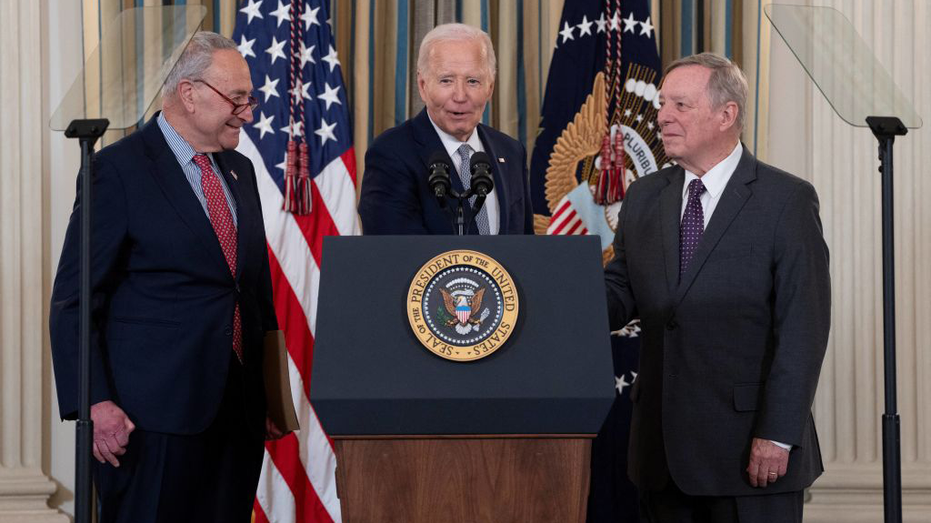
The so-called “Biden effect” appears to be a factor in congressional longevity after Senate Minority Whip Dick Durbin announced he would not seek re-election after nearly four decades in Congress. In 2024, President Joe Biden was politically pushed out after a disastrous debate performance against President Donald Trump in favor of his decades-younger deputy, Kamala Harris. Since then, several senators – mostly Democrats – and many above private-sector retirement age, have announced their retirement. “This is fallout from the ‘Biden Effect,’” said Rutgers University political scientist Ross Baker. “It contaminated old Democrats.” Durbin, 80, Sens. Jeanne Shaheen, D-N.H., 78, Tina Smith, D-Wis., 67, Gary Peters, D-Mich., 66, as well as Mitch McConnell, R-Ky., 83, all announced their exit in 2025. Prior to Biden’s infamous debate, several 2024-cycle Democrats – now-former Sens. Benjamin Cardin of Maryland, 81, Tom Carper of Delaware, 78, Debbie Stabenow of Michigan, 74, and Democrat-turned-independent Joe Manchin of West Virginia, 77 – all declared their exits. SCHUMER SINKS AOC SOARS IN NEW POLL AS LIBERAL VOTERS DEMAND HARDER LINE ON TRUMP Durbin’s seat has already been targeted by up-and-coming Illinois Lt. Gov. Juliana Stratton, 20 years his junior – who announced a bid shortly after he announced his retirement. Of the members still seated in Congress, Senate Minority Leader Chuck Schumer, D-N.Y., 74, is potentially facing a heated primary in 2028 from the likes of progressive star Rep. Alexandria Ocasio-Cortez, 35. After Schumer faced intense backlash from his own party for ultimately supporting the GOP’s government funding bill earlier this month, Ocasio-Cortez’s name returned to the discussion as a young upstart potentially taking out the old guard. MCCONNELL FREEZES AGAIN DURING KENTUCKY PRESS CONFERENCE Schumer saw his worst polling within the Empire State in 20 years, according to a Siena College survey, with the Brooklynite 10 points underwater following the funding bill debacle. Meanwhile, Ocasio-Cortez’s favorables are 47-33 in New York, up about 10 points from 2021. A renewed push for older Democrats to pass the torch came when DNC vice chair David Hogg launched a project to recruit and bankroll primary opponents for older Democratic incumbents. “Today’s party politics has an unwritten rule – if you win a seat, it’s yours for life. No one serious in your party will challenge you. That is a culture that we have to break,” Hogg, 25, wrote on his political website, Leaders We Deserve. The oldest member of Congress – Sen. Chuck Grassley, R-Iowa, at 91 – is the rare example of a lawmaker who has not been in the retirement discussion due to the “Biden effect” or any other phenomenon. On the left, the same appeared to be true for Sen. Bernie Sanders, I-Vt., who – though older than Biden – was contrasted with him on an energy and cognitive level throughout the campaign season. Sanders has signaled he may seek to serve a fourth term in 2030, when he will be 89, according to the Burlington Free Press. “Friends of Bernie Sanders” has already been listed on a Federal Election Commission filing for the 2030 sweeps. McConnell, the former Republican leader, has stepped aside from leadership and was replaced by Sen. John Thune, R-S.D., nearly 20 years younger. During a 2024 press availability, McConnell appeared to freeze up while speaking, though staffers later suggested he was fine. He has also announced his retirement after 40 years in the Senate. Rep. Andy Barr, 51, and former Kentucky Attorney General Daniel Cameron, 39, jumped into the fray to succeed the octogenarian Republican. Of the oldest sitting senators not yet mentioned, Sen. James Risch, R-Idaho, will be 82 by his 2026 potential re-election bid. Fox News Digital reached out for comment from the Gem State senator. On the flip side, even some of the youngest Senate Democrats are seeing their re-election prospects heavily challenged. Sen. Jon Ossoff, D-Ga., is facing potential Republican challengers in what is now a swing state. While none have declared their candidacy, Rep. Marjorie Taylor Greene – who would have the stated backing of President Donald Trump – as well as Rep. Earl “Buddy” Carter and Gov. Brian Kemp are all said to be formidable potential rivals, according to several reports. Fox News Digital reached out to a representative for Biden for comment on the moniker “the Biden effect.” Fox News’ Paul Steinhauser and Chad Pergram contributed to this report.
Too much salt in food saved Kerala family from deadly terrorist attack in Pahalgam. Wondering how?

There’s a common understanding that excessive salt and sugar can wreak havoc on health. Can you imagine an instance where too much of salt saved lives? Maybe in our wildest dreams!
Trump urges Supreme Court to let trans military ban proceed

The Trump administration is asking the Supreme Court to review a lower court’s ruling that temporarily blocked its ban on transgender troops in the military. In a filing on Thursday, the Justice Department requested that the high court stop the lower court’s injunction and allow the military to disqualify from service “individuals who have gender dysphoria or have undergone medical interventions for gender dysphoria.” “Absent a stay, the district court’s universal injunction will remain in place for the duration of further review in the Ninth Circuit and in this Court – a period far too long for the military to be forced to maintain a policy that it has determined, in its professional judgment, to be contrary to military readiness and the Nation’s interests,” lawyers for the Trump administration argued. At issue is President Donald Trump’s Jan. 27 executive order requiring the Defense Department to update its guidance regarding “trans-identifying medical standards for military service” and to “rescind guidance inconsistent with military readiness.” HEGSETH SAYS HE’S SIGNING MEMO ON COMBAT ARMS STANDARDS FOR MEN AND WOMEN U.S. District Judge Benjamin Settle issued a preliminary injunction in March, barring the administration from identifying and removing transgender service members while the case proceeds. The administration appealed to the Ninth Circuit Court of Appeals, but a three-judge panel rejected its request to stay the injunction. The administration argued in court filings that the policy “furthers the government’s important interests in military readiness, unit cohesion, good order and discipline, and avoiding disproportionate costs.” However, the Ninth Circuit declined to grant an administrative stay, which would have let the government enforce the ban while the legal challenge moved forward. “The Department of Justice has vigorously defended President Trump’s executive actions, including the Prioritizing Military Excellence and Readiness Executive Order, and will continue to do so,” a Justice Department official told Fox News Digital at the time. The policy has faced multiple legal challenges, including a high-profile lawsuit filed in Washington, D.C. FEDERAL COURT WARNS PENTAGON NOT TO ACT AGAINST TRANSGENDER SERVICE MEMBERS DURING APPEAL On March 27, a three-judge panel on the D.C. Circuit Court of Appeals paused a lower court’s order blocking the ban. The panel emphasized that the stay “should not be construed in any way as a ruling on the merits” of the case. The panel also said it reserved the right to lift the stay if the military was found to have taken adverse action against transgender service members. U.S. District Judge Ana Reyes on March 26 denied the administration’s motion to dissolve her earlier injunction blocking the Pentagon’s transgender troop ban. The decision came two days before the ban was set to go into effect on March 28. TRUMP’S TRANSGENDER MILITARY BAN DEALT LEGAL BLOW AFTER APPEALS COURT RULING Reyes had asked the government to push its original March implementation deadline, saying she wanted to allow more time for the appeals process. She also said she had previously allowed plenty of time to appeal her earlier opinion blocking the ban from going into effect. “I don’t want to jam up the D.C. Circuit. That’s my main concern here,” Reyes said during the March 21 hearing. “My chambers worked incredibly hard to get out an opinion on time.” Fox News Digital’s Breanne Deppisch contributed to this report.
Dem mayor fed up with homeless crisis proposes jailing vagrants who refuse housing
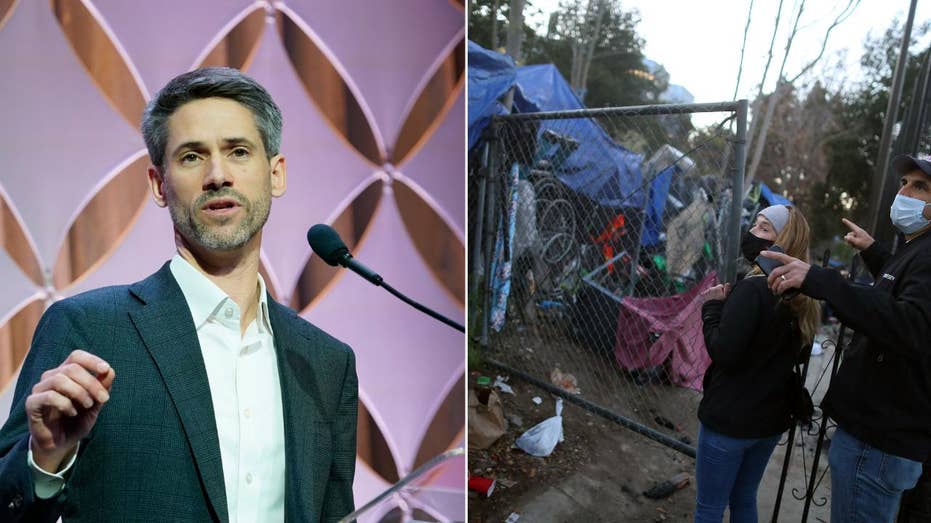
A Democratic mayor fed up with the way homelessness has proliferated in his state has proposed a bold new solution for his city: jailing homeless people who refuse housing services three times. “There’s an extremely vulnerable subset of folks who refuse those options, no matter how nicely designed they are,” San Jose Mayor Matt Mahan told Fox News Digital in an interview Wednesday. “That speaks to me of a persistent challenge we face with addiction and mental illness on our streets, and we’ve sort of built a system that biases toward helping those who want help, while turning a blind eye to those who are trapped in a cycle of addiction. And the reality is it’s deadly. We’re sentencing people to die on the streets.” The move comes as California Gov. Gavin Newsom placed the onus on local governments last year to get homeless encampments in some of the state’s most populous cities cleaned up. In San Jose alone, roughly 6,000 people are homeless, a stark contrast to the city’s image as the heart of Silicon Valley’s tech boom. NEW LAW CLAMPS DOWN ON HOMELESS AS BLUE CITY ADVOCATE ADMITS THE ‘FRUSTRATION’ IS JUSTIFIED Mahan offered the proposal last month after observing how homeless people in his town have avoided the housing services offered as well as talking with recovery groups to find out what most commonly breaks the cycle of addiction. A new study from the University of California San Francisco’s Benioff Homelessness and Housing Initiative (BHHI) last month found that approximately 37% of California’s homeless population are regular illicit drug users. The study also found that 48% have complex behavioral health needs, encompassing regular drug use, heavy drinking, hallucinations or recent psychiatric hospitalization. Additionally, 66% reported experiencing mental health issues such as depression, anxiety, hallucinations or cognitive difficulties. “I think the appropriate response is to say, you’ve got to, at a minimum, come indoors,” Mahan said. “Camping can’t be a choice when we’re offering housing. And if you’re so caught in the throes of addiction that you can’t say yes to interim housing or dignified shelter, we need to create accountability.” Mahan said “it’s the threat of consequence, it’s the intervention, it’s disrupting the pattern” that actually propels people who “are most susceptible to addiction to break out of that cycle.” NEWSOM MAKES GENERIC $24 NARCAN AVAILABLE AFTER PRO-DRUG POLICIES PUSH ‘SAFE’ USE While Mahan’s proposal is a departure from the progressive flank of his party, a poll from Politico and UC Berkeley’s Citrin Center this month indicates that 37% of voters, including political experts, support arresting homeless people if they refuse shelter. As the San Francisco Chronicle has reported, San Francisco and Sacramento are thus seeing an uptick in homeless people being arrested over illegal encampments in the wake of City of Grants Pass v. Johnson, where the Supreme Court ruled municipalities have the power to make public camping illegal. State lawmakers this session are also considering a bill brought forth by Sen. Sasha Renée Pérez, a Los Angeles County Democrat, which would ban measures that result in criminal penalties for refusing housing. But to Mahan, who campaigned on reducing homelessness before taking office in 2023, it’s not a “partisan issue.” “I’m just interested in figuring out what works,” he said. “And clearly, what we’re doing on homelessness in California is not working. We’re about… nearly half of the nation’s unsheltered population, so the status quo is failing, and the sooner we acknowledge that the status quo on homelessness in California is failing, the sooner we will embrace solutions that work to get people indoors and connected to services.” California’s “Housing First” model, adopted statewide in 2016, prioritizes providing permanent housing to homeless individuals without preconditions such as sobriety or participation in treatment programs as prerequisites. Critics of the policy argue that offering housing without mandatory treatments has only made the problem worse and more expensive, as some estimates of building a single unit reach up to $1.2 million in cities like San Francisco. SCOOP: NEWSOM ASKS WORLD LEADERS TO EXEMPT CALIFORNIA EXPORTS FROM RETALIATORY TARIFFS Of that policy, Mahan said, “We have to meet people where they are.” “The insight we have taken from housing first, that I think is very much worth preserving, is that we’ve designed these interim housing communities to be low barrier. We allow people to bring their pets, their partner, their belongings. We do not have a strict sobriety requirement, though I do believe that sober living environments absolutely should be an option and one that the public sector invests in.”
China’s AI DeepSeek faces House probe over US data harvesting, CCP propaganda

FIRST ON FOX: A powerful House Committee is demanding information from DeepSeek on what U.S. data it used to train the AI model as members accuse the company of being in the pocket of the Chinese government. In announcing a new probe into DeepSeek, House Energy and Commerce committee members penned a letter expressing concern that companies like it “harvest Americans’ personal and proprietary information and introduce new data security vulnerabilities into the U.S. economy.” “DeepSeek admits to sending Americans’ personal information to servers in China, where it is undoubtedly accessed by officials connected to the Chinese Communist Party,” Chairman Brett Guthrie, R-Ky., and Gus Bilirakis, R-Fla., said in a statement. “We are concerned that this close relationship with agents having close connections to our primary adversary jeopardizes our data and our national security.” The company’s privacy policy states that it collects user data and stores it “in secure servers located in the People’s Republic of China.” That data entails all questions or chats sent to DeepSeek’s AI model and the answers provided. DEEPSEEK FALLOUT: GOP SEN JOSH HAWLEY SEEKS TO CUT OFF ALL US-CHINA COLLABORATION ON AI DEVELOPMENT A growing number of states – New York, Texas and Virginia – have banned DeepSeek from government devices. It’s reminiscent of the arc of TikTok, where Chinese-owned ByteDance’s video-sharing platform became widely popular in the U.S. before growing skepticism of its data-sharing with the CCP. Now, the app is banned on government devices and may soon be banned entirely in the U.S. Several countries, including Canada, Australia, South Korea, Taiwan and Italy, have already blocked DeepSeek due to security risks. South Korea in February accused DeepSeek of sharing user data with ByteDance. The letter expressed concern about how Chinese companies access U.S. technology to advance AI development. Reports have suggested that DeepSeek trained its R1 model by “distilling” outputs from American competitors. CHINA’S DEEPSEEK AI STARTUP RELEASES NEW MODEL IN RIVALRY WITH OPENAI Guthrie requested DeepSeek offer the committee a description of the types and sources of data used to train its AI models, including any U.S. proprietary or personal information, and confirm whether data collected by DeepSeek is shared with any Chinese state entity. The letter also requests details on how the AI system is trained and whether any steps are taken to influence the system output to align with the CCP’s political goals. The letter requests a response by May 8. DeepSeek sent shockwaves across Silicon Valley and the rest of the U.S. as the company appears to be nearly matching the capabilities of chatbots like OpenAI’s ChatGPT, but at a fraction of the development cost. The Energy and Commerce Committee has jurisdiction over AI and data privacy. Last year’s legislation that forced TikTok to divest from ByteDance, or face a ban in the U.S., originated with the committee. Trump has extended TikTok’s deadline twice, buying more time to work out a deal to keep the app operating in the U.S. In April, the Select Committee on the Chinese Communist Party released a report finding that DeepSeek both funneled American data to China and manipulated the results it offers to align with CCP propaganda.