

Lok Sabha Polls 2024: Who is K Surendran, BJP’s pick against Congress leader Rahul Gandhi in Wayanad?

K Surendran, a prominent leader hailing from north Kerala, rose to prominence within the BJP ranks when he assumed the role of state president in 2020.
Chicago mayor says city returning park to the public after using them to house illegal immigrants

The City of Chicago will return five parks to the public this week after using them to temporarily house illegal immigrants – a move that had irked many residents. The office of Chicago Mayor Brandon Johnson said, beginning this Saturday, the city will “decompress” temporary shelters from five park district facilities. Once all immigrants are transitioned to another shelter, the city’s Park District will begin the process of restoring the parks for the public to use. The mayor’s office said immigrants from Gage Park, the Broadway Armory Park, Brands Park, Leone Park, and Piotrowski Park, will be moved to nearby shelters over the coming weeks, “minimizing disruptions with schooling and work.” Mayor Johnson said he was “proud” of his administration’s efforts and those of other Chicagoans who “stepped up to welcome new arrivals by providing shelter in our Park District field houses at a time when this was clearly needed.” MEXICO TELLS COURT TEXAS IMMIGRATION LAW IS THREAT TO ITS ‘SOVEREIGN’ RIGHTS “We are grateful to the alderpersons and communities who have embraced new neighbors with open arms, and we are pleased that these park facilities will be transitioned back to their intended purpose in time for summer programming,” Johnson said in a statement. The news comes days after the mayor touted the city has being “open” and “accommodating” to illegal immigrants. But he qualified that the current situation was “unsustainable” absent federal intervention. He blamed Texas Gov. Greg Abbott for busing migrants to the sanctuary city. Earlier this year, he argued that Abbott had been “attacking” cities run by Black leaders with waves of migrants. The Republican governor has been bussing illegal immigrants to progressive-run cities for nearly two years to draw attention to the crisis at the southern border.
Imprisoned ex-Ohio Speaker Householder indicted on 10 new charges, one of which bars him from public office
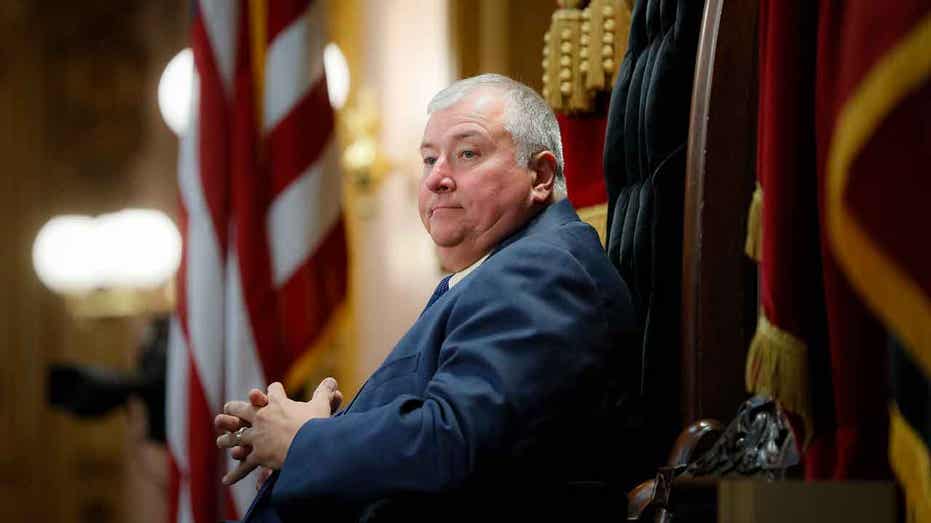
COLUMBUS, Ohio (AP) — Imprisoned ex-Ohio House Speaker Larry Householder was indicted Monday on 10 new felony counts, including one that would ban him from ever holding public office in the state again. The fresh indictments brought by the state extend action in what was already the largest corruption case in state history. OHIO DAD COULD STILL FACE DEATH PENALTY IN MASSACRE OF 3 SONS AFTER JUDGE TOSSES CONFESSION The 64-year-old Householder was convicted of racketeering in June for his role orchestrating a $60 million bribery scheme funded by Akron-based FirstEnergy Corp. in exchange for passage of a $1 billion bailout of two nuclear plants owned by one of its subsidiaries. He was sentenced to 20 years, which he’s serving at Elkton Federal Correctional Institution near Youngstown, and has appealed. On Monday, a Cuyahoga County grand jury indicted Householder on the additional charges, which include alleged misuse of campaign funds, ethics violations and a theft in office charge that would block him from working for the government. “This case seeks to hold Mr. Householder accountable for his actions under state law, and I expect that the results will permanently bar him from public service in Ohio,” Ohio Attorney General Dave Yost said in announcing the indictments. “State crimes have state penalties, and a conviction will ensure that there will be no more comebacks from the ‘Comeback Kid.’” Householder served two separate terms as speaker, in addition to holding county office. A message was left with his attorney seeking comment. The state indictment alleges that Householder misused campaign funds to pay for his criminal defense in his federal case and failed to disclose fiduciary relationships, creditors and gifts on required ethics filings, including in relation to the bailout bill, known as House Bill 6. Specifically, Householder faces one count of theft in office, two counts of aggravated theft, one count of telecommunications fraud, one count of money laundering, and five counts of tampering with records. Two fired FirstEnergy executives — ex-CEO Chuck Jones and Senior Vice President Michael Dowling — and Ohio’s former top utility regulator Sam Randazzo were indicted last month on a combined 27 counts as part of the state’s investigation, led by the Ohio Organized Crime Investigations Commission. All three pleaded not guilty. Householder, lobbyist and former Ohio Republican Party chairman Matt Borges, and three others were indicted on racketeering charges in July 2020. Borges was convicted alongside Householder last summer and sentenced to five years. He has also appealed. Lobbyist Juan Cespedes and Jeffrey Longstreth, a top Householder political strategist, pleaded guilty in October 2020 and cooperated with the the government in its prosecution. The third person arrested, longtime Ohio Statehouse lobbyist Neil Clark, pleaded not guilty before dying by suicide in March 2021. CLICK HERE TO GET THE FOX NEWS APP The dark money group used to funnel FirstEnergy money, Generation Now, also pleaded guilty to a racketeering charge in February 2021. All were accused of using the $60 million in secretly funded FirstEnergy cash to get Householder’s chosen Republican candidates elected to the House in 2018 and then to help him get elected speaker in January 2019. The money was then used to win passage of the tainted energy bill and to conduct a dirty-tricks campaign to prevent a repeal referendum from reaching the ballot.
Lok Sabha Elections 2024: Shiv Sena (UBT) to announce 1st list of candidates today

The list of the Uddhav Thackeray-led opposition party, a constituent of the Maha Vikas Aghadi (MVA) in the state, will contain up to 16 names.
Feds arrest five men accused of smuggling illegally purchased guns to cartels in Mexico

The men were charged with two criminal offenses, including straw purchasing of firearms, created by the 2022 bipartisan gun safety bill authored by Sen. John Cornyn.
Planned aluminum smelter will permanently employ 1,000 in rural Kentucky, governor says
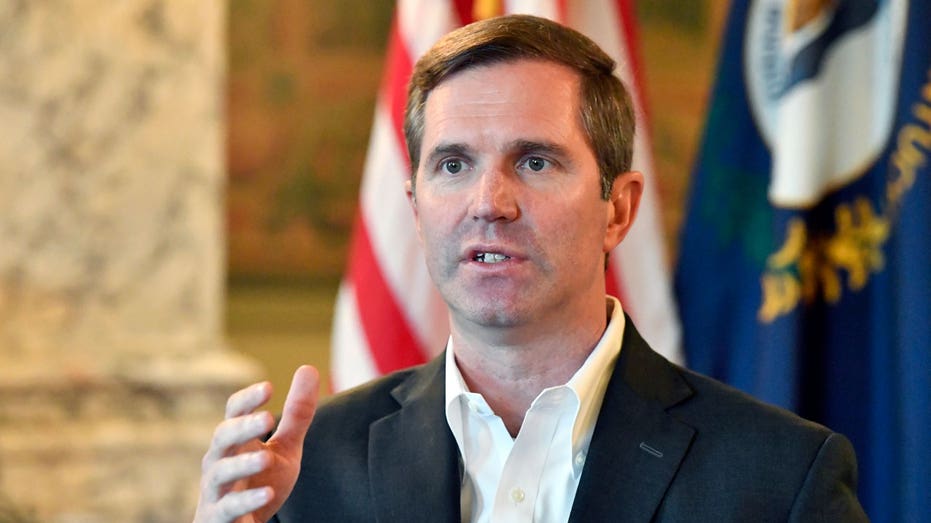
An aluminum company has singled out northeastern Kentucky as its preferred site for a new aluminum smelter that would bring about 1,000 permanent jobs to an Appalachian region hard hit by the loss of coal and steel production, Gov. Andy Beshear said Monday. Plans by Century Aluminum Co. to build a smelter that produces dramatically lower emissions will be supported by $500 million from the U.S. Department of Energy. The project has the potential to become the largest investment on record in eastern Kentucky, Beshear said. “There’s still a lot of steps that we need to take to make this a reality,” the governor said at a news conference. “But this is the first important step.” SYRINGE MANUFACTURING PLANT PLANNED IN EASTERN NORTH CAROLINA WILL EMPLOY 400 The governor is hoping that a state incentives package will help close the deal. He predicted that state lawmakers will provide “the tools that we need” in the closing days of their legislative session. The company’s president and CEO, Jesse Gary, did not attend the news conference but said in a statement that a “myriad of steps” must still be resolved and that multiple locations are still being evaluated, but he pointed to northeastern Kentucky as the preferred location. Issues still pending include development costs for sites under consideration, utility costs, workforce and incentives, he said. Century Aluminum, headquartered in Chicago, already has a significant presence in the Bluegrass State with two aluminum smelters in western Kentucky. Gary referred to the announcement Monday as “another step in our continued long-standing relationship with the state, and we look forward to the opportunity to help be a part of growing commerce in eastern Kentucky, an outcome that is very attractive to Century Aluminum.” Century says it is the largest producer of primary aluminum in the United States and also operates production facilities in Iceland, the Netherlands and Jamaica. Northeastern Kentucky was hit hard several years ago when a steel mill that had been an economic bedrock for generations shut down. The broader eastern Kentucky region has struggled from the sharp drop in coal jobs over the last decade amid shrinking demand for coal. The region had its hopes of landing a massive aluminum plant dashed a few years ago. Another aluminum company planned to build a mill near Ashland in northeastern Kentucky but the project — which was pushed by Beshear’s predecessor, former Republican Gov. Matt Bevin — never came to fruition as the company struggled to line up sufficient financing. Now Beshear, who unseated Bevin in 2019, is trying to deliver on what he says would be a game-changing project for the region and continue the state’s record-setting pace of economic development growth during the Democrat’s tenure. Beshear, seen as a rising star in his party, won reelection to a second term last year in what otherwise has become a Republican-dominated state. The region’s renewed prospect of becoming home to an aluminum smelter offers an “incredible opportunity” for an area that’s “been through the ringer,” said Boyd County Judge-Executive Eric Chaney, who was among several area leaders who attended the news conference with Beshear. “We’re going to work hard to help get this over the finish line,” Chaney said later in a phone interview. “This is a great opportunity for northeast Kentucky and the entire state.” The project would create about 5,500 construction jobs and then about 1,000 permanent union jobs, the governor said. The new smelter would double the size of the current U.S. primary aluminum industry while avoiding an estimated 75% of emissions from a traditional smelter due to its state-of-the-art, energy efficient design and use of carbon-free energy, he said. The Department of Energy, in a separate news release, said the new plant would be the cleanest and most efficient aluminum smelter in the world. Aluminum produced by the new plant will support national defense, electric vehicles, semiconductors, building and construction and green energy applications, Beshear said. While many decisions remain, Beshear pointed to the importance of $500 million in federal support for the project. The funding is provided by DOE’s Industrial Demonstrations Program, and the governor thanked President Joe Biden, Energy Secretary Jennifer Granholm and others. “While we all recognize that it’s not a done deal and there is more work to come, a $500 million grant, if it is built in this region, is a pretty good place to start,” Beshear said. Last week, Beshear announced plans by Rye Development to build a $1.3 billion pumped storage hydropower facility on a former coal mine site in Bell County in southeastern Kentucky. The project — also backed by a federal grant — will create about 1,500 construction jobs, 30 operations jobs and enough energy to power nearly 67,000 homes each year.
‘Not enough’: Why the US did not veto a Gaza ceasefire resolution at the UN
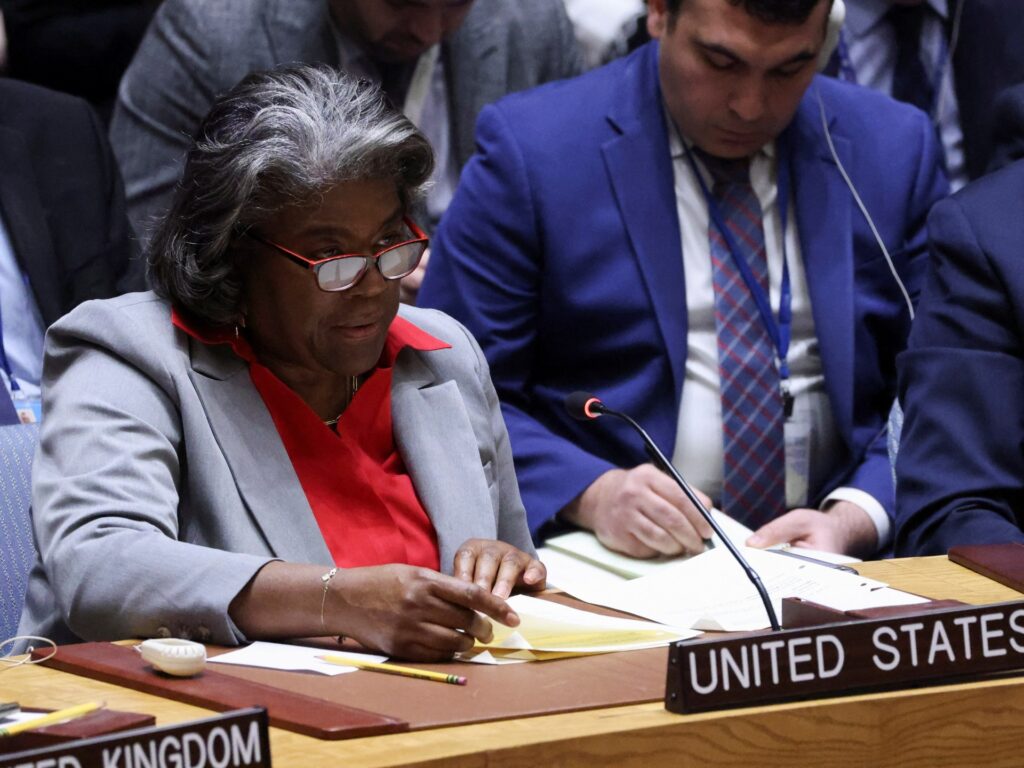
Washington, DC – On three separate occasions, the United States has used its veto power to scuttle United Nations Security Council (UNSC) resolutions aimed at bringing a ceasefire to war-torn Gaza. That streak ended on Monday, when the administration of President Joe Biden decided not to veto the latest ceasefire resolution, allowing it to pass by abstaining from the vote instead. The US move garnered widespread attention as a sign of Biden’s growing frustration with Israeli leadership, which is pressing on with its deadly military campaign in Gaza. But Palestinian rights advocates argue that what is needed is a fundamental rethinking in Washington’s support for Israel — beyond symbolism and rhetoric. “It’s a shift. However, it hasn’t stopped arms transfers from being made. And that’s ultimately what really matters,” said Adam Shapiro, a political analyst. Washington played down the resolution as “non-binding”, but the change in stance was enough to prompt a fiery response from Israeli Prime Minister Benjamin Netanyahu, who lashed out at the US for failing to block the motion. His office issued a statement accusing Washington of harming Israel’s war efforts, underscoring the growing tensions with Biden. ‘A dance’ between leaders Advocates say the question is now whether the Biden administration will use its leverage to pressure Israel to end its abuses against Palestinians in Gaza. Biden officials have urged the Israeli government to protect civilians and allow more aid to Gaza, but they have so far declined to place conditions on aid to Israel to further those goals. Tariq Kenney-Shawa, a US policy fellow at Al-Shabaka, a Palestinian think tank, said the true test of where the US stands is whether it will grant the “wish list” of arms Israel is expected to ask for. Israeli Defence Minister Yoav Gallant is on a visit to Washington, DC, and US and Israeli media outlets have reported that he will request specific weapons for the ongoing war. “The policy of providing Israel and Netanyahu in particular with all the tools he needs to continue the assault on Gaza has continued uninterrupted since October,” Kenney-Shawa said in an email to Al Jazeera. “In many ways, I see this as a dance. The Biden administration is taking what it sees as the necessary public steps to make it look like they’re doing everything they can to hold Israel’s feet to the fire, when in reality, they’re facilitating and enabling Israel to no end. Israel has yet to face any concrete consequences from the US for its war crimes and genocide.” The war started on October 7, after an attack on southern Israel killed 1,139 people. Since then, Israel’s military offensive on Gaza has killed more than more than 32,000 Palestinians and displaced hundreds of thousands more. Its blockade of Gaza has also brought the territory to the verge of famine. Monday’s resolution, which was adopted in a 14-0 vote, called for a “lasting” ceasefire as well as the release of Israeli captives in Gaza and a surge of humanitarian aid to the Palestinian territory. “Our vote does not — and I repeat that, does not — represent a shift in our policy,” White House National Security spokesperson John Kirby told reporters on Monday. “We’ve been very clear, we’ve been very consistent in our support for a ceasefire as part of a hostage deal.” ‘Slap in the face’ That is not how Netanyahu saw it, though. The Israeli prime minister said the abstention “constitutes a clear departure from the consistent US position in the Security Council since the beginning of the war”. In response, Netanyahu cancelled an Israeli delegation’s visit to Washington, DC. The group was meant to discuss ways to avert an Israeli assault on the crowded city of Rafah in southern Gaza. Israel had previously threatened to call off the trip if the US did not veto the resolution. The Biden administration has been urging Israel not to launch a full-scale offensive in Rafah, warning that such an invasion would harm civilians trapped in the city and further isolate Israel on the world stage. Against that backdrop, multiple US officials had talked up the delegation’s now-cancelled visit as an example of Washington’s efforts to contain the war. On Monday, State Department spokesperson Matthew Miller described Netanyahu’s move to nix the trip as “surprising and unfortunate”. Shapiro, the analyst, told Al Jazeera that it was a “slap in the face” to Biden. He questioned why the US — a global superpower — is failing to advance its priorities with Israel, a much smaller ally dependent on US aid. “At this point, the United States is not reacting in accordance with its complete failure to get its policy objectives met, in the current context of what Israel is doing in Gaza or the larger picture in terms of what Israel is doing overall on the occupied territories,” he said. Nancy Okail, the president of the Center for International Policy, a US-based think tank, said this is far from the first time Netanyahu has openly flouted US demands. Last week, for example, Israel announced the illegal seizure of 800 hectares (1,977 acres) in the occupied West Bank, defying US policy. ‘Significant’ vote Still, Okail said Monday’s vote on the ceasefire resolution is “significant” because it brought the US policy closer to its rhetoric on stopping the war and came against Netanyahu’s threats. “However, it’s still very late and still not enough,” Okail told Al Jazeera. “It also needs to be followed with concrete steps to show how serious the US administration is about support for ceasefire and lasting peace and about making sure that humanitarian assistance is delivered adequately and in time for the Palestinian people. “And that means taking steps towards assessing whether the US should continue sending arms to Israel.” So far, US officials have ruled out placing conditions on aid to Israel, often reasserting their commitment to Israel’s security. As the war on Gaza rages on, Israel’s public disregard for the US policy agenda is intensifying calls for
‘Fighting spirit’: How Myanmar’s armed resistance is taking new ground
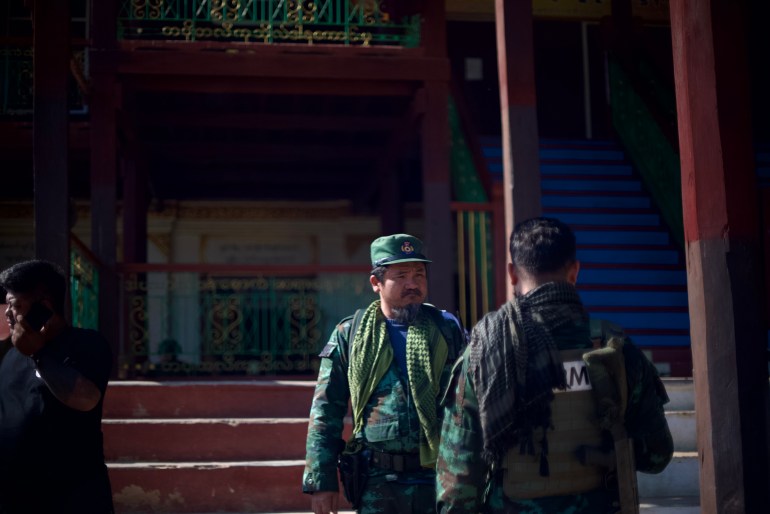
Shan and Kayah States, Myanmar – The truck rocked violently as the driver attempted to manoeuvre the rough terrain of Shan State’s dirt roads. As the wheels spun, trying to find traction, the Pa-O National Liberation Army (PNLA) soldiers inside exchanged glances, nervous about the battle to come, but composed and determined. The platoon was part of a convoy of vehicles making its way towards a small village, high in the mountains, ahead of a new offensive against Myanmar’s armed forces and an armed group aligned with the military government that seized power in a coup in 2021. Armed with AK-47s, M-16s, and rocket launchers, they planned to retake multiple outposts near Hopong Township in Shan State, in the east of the country. “We cannot attack directly, we have to check the area first and then attack slowly,” a PLNA soldier named Kyaw Zin explained at a ridge a few kilometres away from the front line. Further to the north, a key road was under the control of the Myanmar military preventing vital resources from being funnelled to the PNLA and other armed resistance groups further south. Amid the constant threat of weaponised drones and air strikes from military fighter jets, the PNLA said they expected the fight to last at least 30 days. As the sound of gunfire and mortar shelling ricocheted around the amber-coloured hills, the fighters said they were confident they would win. The Pa-O National Liberation Army (PNLA) is one of several ethnic armed groups fighting to remove the military regime [Caleb Quinley/Al Jazeera] The PNLA is riding the momentum of a series of victories for anticoup fighters in northern Shan State since the Three Brotherhood Alliance launched “Operation 1027” towards the end of last year. The coalition of three powerful ethnic armed organisations has taken control of hundreds of military outposts and dozens of towns in Shan and Rakhine States since the offensive began, and reinvigorated the campaign against the military in other parts of the country. Fighting has also escalated in Kayah State (Karenni), just south of Shan State. The Karenni National Defence Forces (KNDF) launched its own offensive on November 11, 2023, “Operation 1111”, aiming to take control of the state capital of Loikaw. About half the city, controlled by the military since the coup, is now in the hands of the Karenni resistance. The KNDF has also taken control of Demoso, Mese and Ywar Thit as well as the strategically important township of Shadaw. Adblock test (Why?)
Russia-Ukraine war: List of key events, day 761
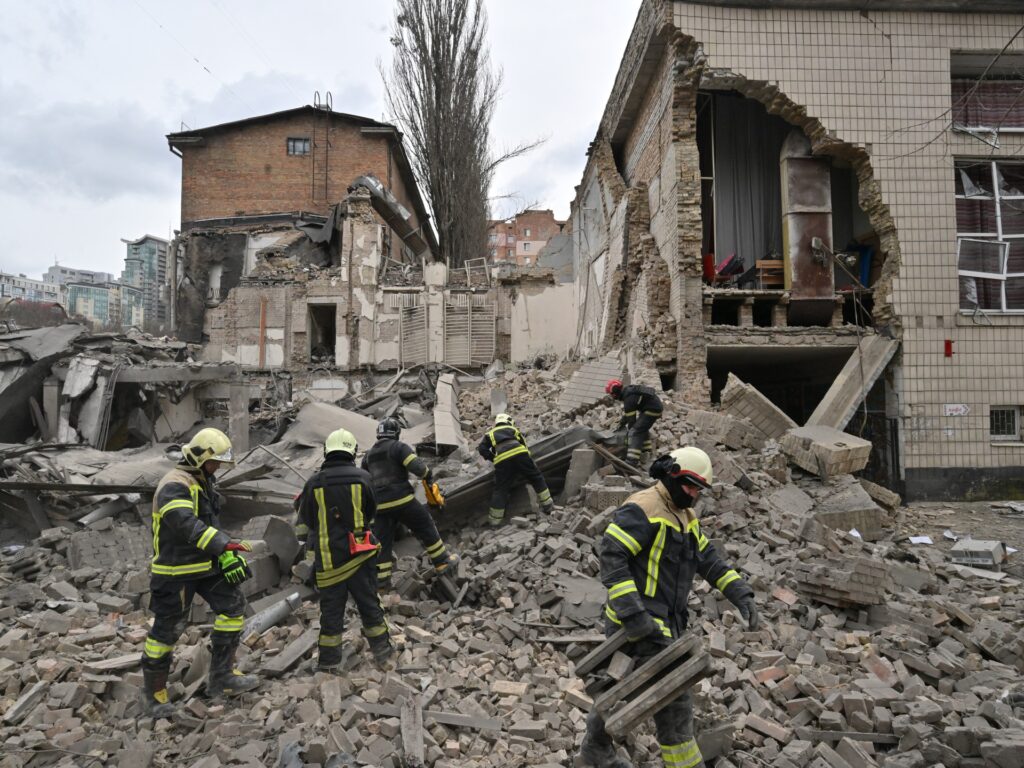
As the war enters its 761st day, these are the main developments. Here is the situation on Tuesday, March 26, 2024. Fighting Ten people, including a teenage girl, were injured after Russia hit Kyiv with missiles in the third bombardment in five days. Air defence shot down the missiles but people were hurt when the debris crashed to the ground in several central districts. Almost a dozen people were injured after Russia attacked the southern region of Mykolaiv and Odesa with drones. The authorities said eight of nine drones were shot down but that a fire at a plant in Odesa forced an emergency power shutdown. Authorities in the northeastern Kharkiv region said a 65-year-old man was killed in the courtyard of his home during Russian shelling. Oleg Kalashnikov, a press officer for Ukraine’s 26th Artillery Brigade, said the eastern city of Chasiv Yar was facing a “difficult and tense” situation, with Russian forces trying to “push through” Ukrainian defences. Kalashnikov said Moscow was dropping powerful guided bombs “on populated areas and on our fortified positions”. A fire broke out at a major Russian power plant in the southwestern Rostov region after a Ukrainian drone attack. Two power units at the Novocherkassk power station, one of the largest in the region, were shut down while the blaze was brought under control. Politics and diplomacy Russian President Vladimir Putin said “radical Islamists” were behind Friday night’s attack on the Crocus City Hall but added, without evidence, that Ukraine had a role. The Afghan branch of ISIL, also known as the Islamic State in Khorasan Province or ISKP, has said it was responsible for the attack, which killed 139 people and injured 182. Speaking in his nightly video address, Ukrainian President Volodymyr Zelenskyy again dismissed Putin’s claim. Ukraine has denied any role in the attack and Zelenskyy has accused Putin of seeking to divert blame. Poland’s Foreign Ministry said that Sergey Andreev, the Russian ambassador in Warsaw, failed to show up for a diplomatic summons issued after a Russian missile breached Polish airspace over the weekend. The wife of jailed Kremlin critic Vladimir Kara-Murza said she was in favour of prisoner exchanges to rescue him and other political detainees in Russia. Kara-Murza, who also has United Kingdom citizenship, was jailed for 25 years last year after saying Russia had committed “war crimes” against Ukraine. Russia’s Foreign Ministry summoned Australia’s chargé d’affaires in Moscow to complain about a social media post that said Russia’s staging of presidential elections in occupied parts of Ukraine, which Moscow claims to have annexed, was a “flagrant violation of international law”. Weapons Ukrainian Foreign Minister Dmytro Kuleba reiterated his call for international allies to supply more air defences, particularly Patriot systems and missiles, after Russia’s latest attack on Kyiv. Adblock test (Why?)
Gun rights YouTuber Brandon Herrera gains momentum in race against U.S. Rep. Tony Gonzales
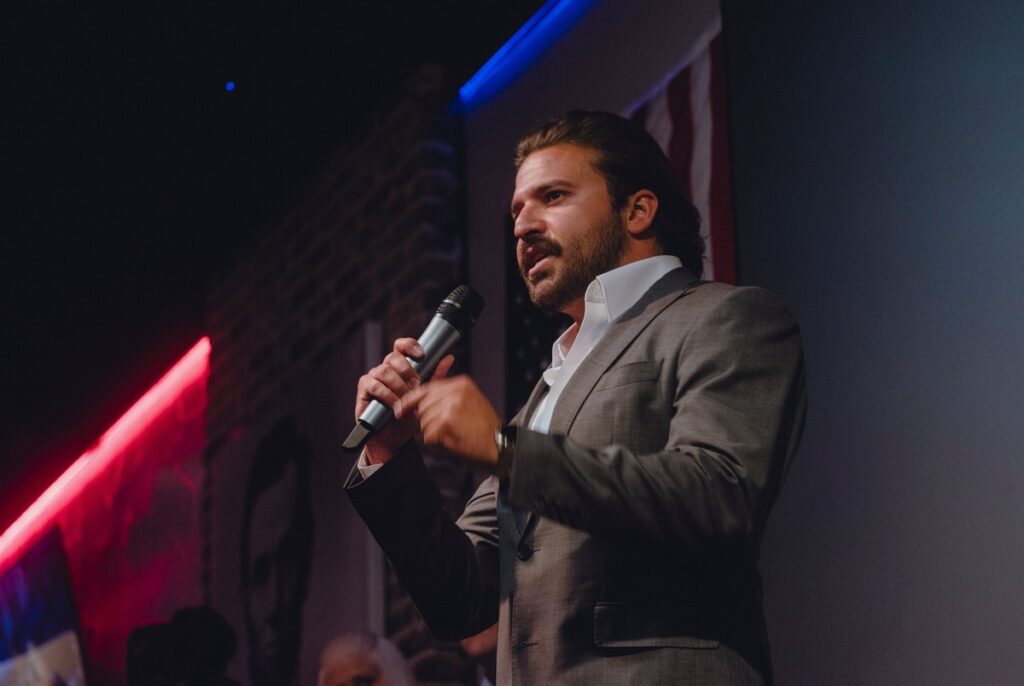
Gonzales is taking heat from the right for his vote in support of the bipartisan gun safety bill passed after the Uvalde school shooting.