

Congress leader Mallikarjun Kharge writes to Rajya Sabha chairman, demands Amit Shah’s statement on Parliament breach

In his letter Vice President Dhankhar, the LoP in the Upper House labelled the breach in Parliament security as a grave matter, demanding that Union Home Minister Amit Shah make a statement on the issue following which a discussion should happen under Rule 267.
Maine lawsuits target decision to limit foreign influence in local elections

Two utilities and two media organizations are suing over a referendum in Maine that closed a loophole in federal election law that allows foreign entities to spend on local and state ballot measures. The three lawsuits take aim at the proposal overwhelmingly approved by voters on Nov. 7 to address foreign election influence. The Maine Association of Broadcasters and Maine Press Association contend the new law that goes into effect on Jan. 5 imposes a censorship mandate on news outlets, which are going to be required to police campaign ads to ensure there’s no foreign government influence. ME VOTERS MAY SOON BAN FOREIGN INFLUENCE IN ELECTIONS Meanwhile, Central Maine Power and Versant, the state’s largest electric utilities, each filed separate lawsuits raising constitutional challenges about the law they claim violates their free speech and engagement on issues affecting them. The Maine Commission on Government Ethics and Campaign Practices is studying the federal complaints filed Tuesday and consulting with the attorney general, Jonathan Wayne, the commission’s executive director, said Wednesday in an email. The attorney general’s office declined comment. State Sen. Rick Bennett, who led the effort to put the proposal on the ballot, said Wednesday that the federal lawsuits “speak volumes about what a deplorable state that we’ve reached in our politics.” MAINE DEMOCRATIC GOV. JANET MILLS VETOES BILL AIMED AT PROHIBITING FOREIGN INFLUENCE IN STATE ELECTIONS “This is something that Mainers are united about. Their voices are being drowned out by these people who are bringing the lawsuits,” he said. The referendum, which was approved by a margin of 86% to 14%, bans foreign governments — or companies with 5% or more foreign government ownership — from donating to state referendum races. The proposal was put on the ballot after a Canadian government-owned utility, Hydro Quebec, spent $22 million to influence a project on which it’s a partner in Maine. That hydropower corridor project ultimately moved forward after legal challenges. But there are implications for Maine-based utilities, too. The law applies to Versant because it’s owned by the city of Calgary in Alberta, Canada. Foreign governments also have a stake in Central Maine Power. CMP’s corporate parent Avangrid narrowly missed the cutoff by one measure. It is owned by a Spanish company — not the government — and minority shareholders owned by foreign governments, Norway’s central bank Norges Bank and the government-owned Qatar Investment Authority, together fall below the 5% threshold. But Qatar also has an 8.7% minority stake in Spain-based Iberdrola, which owns Avangrid and CMP, and that’s part of the reason CMP argues that the law is unconstitutionally vague. ME VOTERS REJECT TAKEOVER OF STATE’S LEADING ELECTRIC COMPANIES, FOREIGN GOVERNMENT SPENDING Before the Maine proposal went to voters it was vetoed by Democratic Gov. Janet Mills, who cited concerns about the proposal’s constitutionality and said its broadness could silence “legitimate voices, including Maine-based businesses.” Federal election law currently bans foreign entities from spending on candidate elections but allows such donations for local and state ballot measures. Maine was the 10th state to close the election spending loophole when the referendum was approved, according to the Campaign Legal Center in Washington, D.C., which supported the Maine proposal. Bennett, R-Oxford, said other states’ laws have withstood legal challenges even though some of their definitions are more stringent than Maine’s. He also said it was ironic that Versant would sue for a right that it doesn’t have in Canada. “In Canada it is completely illegal for any foreign individual or corporation to be involved in any of their elections,” he said.
Ramaswamy says SCOTUS should strike down FDA approval of abortion pill
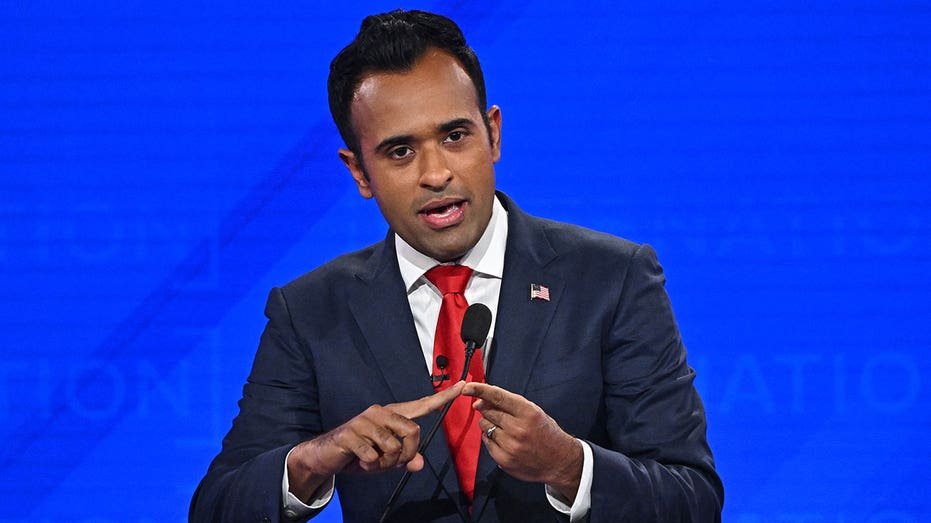
Republican presidential candidate Vivek Ramaswamy said Wednesday that he hopes the U.S. Supreme Court will overturn the Food and Drug Administration’s (FDA) approval of the abortion pill. Ramaswamy appeared in Des Moines, Iowa for a CNN town hall, where anchor Abby Phillip asked him about the Supreme Court’s decision to hear a case that could potentially restrict access nationwide to the abortion drug Mifepristone. Ramaswamy said the case is less about abortion and more about administrative law and the FDA approval process, arguing the agency exceeded its authority by approving mifepristone in 2000. “It’s my opinion — it’s the Supreme Court’s that’ll matter, but I’m pretty sure they’re going to come down right where I am on this — that the FDA exceeded its statutory authority in using an emergency approval to approve something that doesn’t fit Congress’ criteria for what actually counts as an emergency approval,” Ramaswamy told voters at the town hall. The Supreme Court on Wednesday agreed to consider appeals from the Biden administration and drug manufacturer Danco defending several actions by the FDA intended to make it easier to acces and use mifepristone in the wake of overturning Roe v. Wade last year. WATCH: RAMASWAMY’S TOP MOMENTS ON DEI, IMMIGRATION, TAX REFORM, JAN.6 AT CNN TOWN HALL: ‘THIS IS IMPORTANT In overturning Roe v. Wade in June 2022, the Supreme Court ruled in Dobbs v. Jackson Women’s Health Organization that the U.S. Constitution does not guarantee the right to an abortion and that the matter should be decided by the states. In the aftermath, 14 states have banned abortion at all stages of pregnancy, with some exceptions, and two others have banned abortion once a fetal heartbeat is detected, which is around six weeks of gestation. Mifepristone, known by the brand name Mifeprex, is a pill taken with misoprostol in a two-drug regimen that first deprives an unborn baby of hormones it needs to stay alive and then causes cramps and contractions to expel the dead fetus from the mother’s womb. This process is sometimes referred to as a medication abortion or, by critics, as a chemical abortion. According to Danco, more than 5 million women have used Mifeprex in the United States since the FDA approved its use in 2000. The popular drug is 97% effective in terminating early pregnancy, although the company says 3% of women who take it will require surgical intervention for ongoing pregnancy, heavy bleeding, incomplete expulsion or other reasons such as patient request. WATCH: DESANTIS’ TOP MOMENTS ON ISRAEL, IMMIGRATION, TRUMP AND HALEY AT CNN TOWN HALL: ‘AN EASY ANSWER’ Pro-life doctors, represented by the Alliance Defending Freedom, have challenged FDA approval of mifepristone on the grounds that the agency inappropriately expedited the drug’s approval with mixed success in lower courts. The Biden administration and the maker of the drug are asking the high court to reverse an appellate ruling that would cut off access to the drug through the mail and impose other restrictions, even in states where abortion remains legal. The restrictions include shortening from the current 10 weeks to seven weeks the time during which mifepristone can be used in pregnancy. The nine justices rejected a separate appeal from abortion opponents who challenged the FDA’s initial approval of mifepristone as safe and effective in 2000. Ramaswamy said the case is a “symptom” of “what’s going on in the administrative state.” TRUMP HOLDS MASSIVE LEAD IN IOWA 5 WEEKS FROM CAUCUSES THAT KICK OFF GOP RACE: POLL “The people who we elect to run the government, they’re not even the ones who actually run the government right now. It’s the bureaucrats in those three letter agencies that are pulling the strings today,” he said at the town hall. Ramaswamy said that if voters disagree with his position, they should turn to the “Democratic process” and expand abortion access “through the front doors of Congress,” pledging that if he’s elected president he will “rescind those unconstitutional federal regulations that Congress never actually passed.” In a statement, White House press secretary Karine Jean-Pierre said that overturning the FDA’s decisions on the abortion pill “threatens to undermine the FDA’s scientific, independent judgment and would reimpose outdated restrictions on access to safe and effective medication abortion.” “This Administration will continue to stand by FDA’s independent approval and regulation of mifepristone as safe and effective. As the Department of Justice continues defending the FDA’s actions before the Supreme Court, President Biden and Vice President Harris remain firmly committed to defending women’s ability to access reproductive care,” she said. Fox News Digital’s Danielle Wallace contributed to this report. Get the latest updates from the 2024 campaign trail, exclusive interviews and more at our Fox News Digital election hub.
Parliament security breach: 14 opposition MPs suspended, Lok Sabha adjourned till tomorrow

Lok Sabha on Thursday passed a second resolution suspending nine more MPs from various Opposition parties for disrupting House proceedings.
‘National security has become hollow…’: Congress MP Adhir Ranjan Chowdhury on Parliament breach

Reacting to the opposition protests on the security breach incident, BJP MP Gopal Shetty said that they will make an issue out of this seeing their recent loss in elections.
Stigma and language barriers complicate treating Hispanics with Alzheimer’s disease

Border counties in Texas have some of the highest Alzheimer’s diagnosis rates in the nation, with rates ranging from 13% to 18% of people aged 65 and over.
Most Texas border counties lack adequate medical facilities and staff. Local leaders are trying to fix that.

More than 90% of Texas’ 32 border counties don’t have enough primary care services, sites or providers to meet local medical needs, according to federal data.
Conned, exploited, trapped: Romania’s new flock of Asian delivery riders

Names marked with an asterisk have been changed to protect identities. Bucharest, Romania – For six months, Douglas* worked hard at a Bucharest restaurant, cooking more than 200 hamburgers a day in the kitchen. But like many other foreign workers in Romania, he took on a second job delivering takeaway food by motorcycle to supplement his income. On Sundays, his day off from the restaurant, he wakes up at 7.30am in a room provided by his employer. It is crammed, to say the least. Fourteen Sri Lankan men sleep in seven bunk beds, “like in a hospital”, he jokes. Their jackets and towels hang on the edge of the beds. Douglas’s spacious green square backpack, with the words Bolt Food, sits on the floor. He eats rice and lentils for breakfast before getting on his motorcycle for a seven-hour shift, to deliver sushi and pizza to famished customers. Between 2pm and 9pm, he delivers about 14 orders. Afterwards, he eats dinner – rice again, this time with chicken. “The most difficult thing for me is to get used to the idea because I didn’t come for this. But I can do it. I can try for a good salary,” he said. Each week, he makes about 120 Romanian lei ($26) profit as a rider. He pays 250 lei ($54) to rent the motorcycle and 30 lei ($6.50) for petrol. He arrived from Kandy, a lush plateau of tea plantations and Buddhist temples in the heart of Sri Lanka. He had spotted a job offer online last November, to work as a housekeeper in a European Union country. Accommodation and meals would be provided, the advertisement said. The opportunity could see his dreams achieved, he thought. His 12-year-old son – a cricket enthusiast – could eventually study in the United Kingdom after all. He had tried working abroad before, in Dubai, “but it was very expensive”, he said. To secure the European job and work permit, Douglas took on a loan to pay about 3,000 euros ($3,200) to a recruitment agency. A year later, sitting in a café in central Bucharest, he looks over the WhatsApp conversations he had with the agent, a Sri Lankan man. “Things were not as they had told me,” he said. When he arrived in Romania, the job and salary were different from what was initially offered. He had been promised 800 euros ($864) for a housekeeping job, not 500 euros ($540) to flip burgers. “I’m trapped. I can’t go back because I have to pay [off] the loan but earning so little, I don’t know how I’m going to pay it either,” he said with a tired smile. Delivery riders, who often hail from Asia, work relentlessly across Romanian cities [Lola Garcia Ajofrin/Al Jazeera] Ali*, a robust 27-year-old who emigrated with his brother from Colombo in late July, rides for up to 15 hours a day. The siblings had worked as mechanics back home, but “the salary was nothing”, Ali said. Their father knew a Sri Lankan expatriate in Romania, who found them cleaning jobs in Bucharest, but soon after they arrived, their work permits were cancelled. While they get to grips with a new round of paperwork, they deliver food by bike. Food delivery is a booming business in Romania. Tazz, a Romanian enterprise, and international companies such as Glovo, Bolt Food, FoodPanda and Takeaway compete for hungry fingertips in the country’s large cities. According to Glovo, which has 3,000 delivery riders nationally, a rider can earn about 23 lei per hour ($5). Meanwhile, the number of Sri Lankans travelling abroad for work is on the rise. According to Sri Lanka’s labour and foreign employment ministry, more than 300,000 emigrated in 2022. Between January and September this year, more than 200,000 left. Sri Lankans have left the island for a number of reasons – due to security fears after the 2019 Easter Sunday bombings, amid the COVID-19 pandemic and as a result of political and economic crises. The people behind the 100,000 quota Douglas, Ali and several others Al Jazeera interviewed for this story are just some of the people who make up the quota the Romanian government set in 2023, of 100,000 work permits for non-EU workers, a number that will rise to 140,000 in 2024, to alleviate employment gaps. According to The Economist, the Eastern European nation is changing from a country of “emigrants to one of immigrants”. Most of Romania’s foreign workforce, excluding Europeans, are Nepalis. Sri Lankans make up the second largest non-EU expatriate force, with 15,807 people. “It is only in the past year or so that we started to see migrants from Southeast Asia delivering food in the streets of Bucharest,” said Maria-Luiza Apostolescu, a researcher in public policy. “Initially you could see them in the kitchen, in the background.” She said some arrive on a student visa and deliver food part-time, while for others, it’s a second job. But she warned that there are no NGOs supporting “economic migrants”, partly because of a lack of funds. “It is [also] hard for Romanians to understand that other people are coming here to have a better life. We are [usually] the ones who emigrate.” ‘You must assure decent conditions for foreigners’ At the immigration office in Bucharest, an official shouts to the crowd, which has formed into various queues. “If you don’t have an online appointment, get out of the room!” Many waiting are young Asian men. There are also some families. “A significant number of vacant jobs were registered between January and August 2023,” said a spokesperson of the Ministry of Labour, Solidarity and Social Solidarity, citing positions such as couriers, builders, secretaries, kitchen helpers and security guards. “This quota looks very good on paper but if you can’t find Romanian workers, you must assure decent conditions for foreigners,” said Radu Stochita, a Romanian journalist who has investigated the plight of Nepali workers. Like Sri Lankans, many of those from Nepal pay exorbitant sums to recruitment agencies,
US official and Saudi’s MBS discuss sustainable Israel-Palestine peace
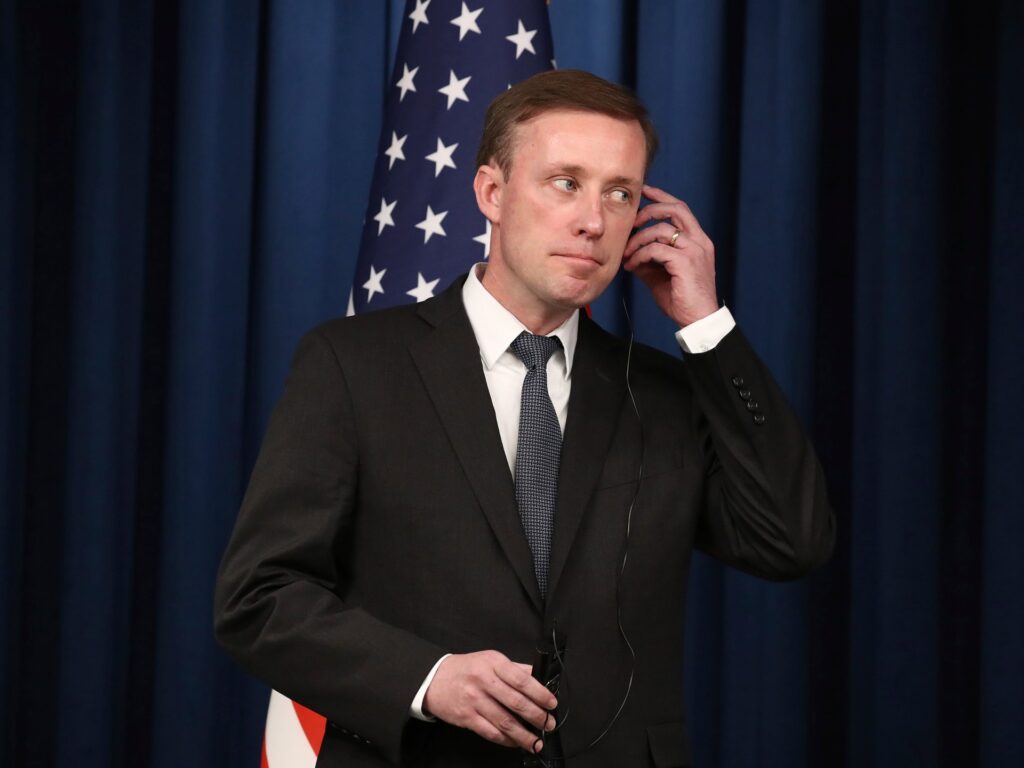
White House national security adviser tours Middle East after Biden warned Israel about ‘indiscriminate’ bombing of Gaza. White House national security adviser, Jake Sullivan, has met the crown prince of Saudi Arabia to discuss the war in Gaza and efforts towards creating sustainable peace between Israel and Palestine. Crown Prince Mohammed bin Salman (MBS) hosted Sullivan on Wednesday during his tour of the Middle East to bolster the United States’s influence in the region. The US official will travel to Israel next to hold talks with Prime Minister Benjamin Netanyahu and members of the war cabinet on Thursday and Friday as President Joe Biden has warned that Israel risks losing international support over its “indiscriminate bombing” of civilians in Gaza. Sullivan and MBS discussed “a number of bilateral and regional matters, including ongoing efforts to create new conditions for an enduring and sustainable peace between Israelis and Palestinians”, a White House statement said. They also discussed the humanitarian response in Gaza, including how to increase the flow of critical aid to the besieged enclave, it added. Earlier, US officials said Sullivan would also discuss with the Saudis efforts to deter ongoing Houthi attacks against international commercial vessels in the Red Sea. Officials from the two countries also revisited the possibility of normalising relations between Israel and Saudi Arabia, which was interrupted by the October 7 Hamas attack and subsequent Israeli offensive. All sides have said they want to resurrect the deal when the time is right. Sullivan and MBS also discussed areas of deepening bilateral cooperation in the fields of security, commerce, space exploration, and advanced technologies, including open radio access (O-Ran) networks, the White House said. [embedded content] US-Israel relations Sullivan’s visit to Israel on Thursday comes after the sharp comments Biden made on Tuesday about Israel’s “indiscriminate” bombing of civilians in Gaza. “[Israel] has most of the world supporting them,” Biden told donors during a political fundraiser in the US. “[But] they’re starting to lose that support by indiscriminate bombing that takes place.” He also said Israel “can’t say no” to a Palestinian state, which Israeli hardliners, including in Netanyahu’s government, have opposed. Washington has been calling for weeks for Israel to take more care to avoid civilian casualties in Gaza, saying too many Palestinian people have been killed. Sullivan will discuss with the Israelis the need to be more precise with their strikes against Hamas targets, spokesperson John Kirby told reporters. More than 18,000 Palestinians have been killed and nearly 50,000 others wounded in the Israeli assault on Gaza since October 7. Israel launched its onslaught in response to a raid by Hamas fighters from Gaza who killed about 1,100 people in southern Israel. [embedded content] Adblock test (Why?)
Pakistan extends deadline for Afghans awaiting third-country resettlement
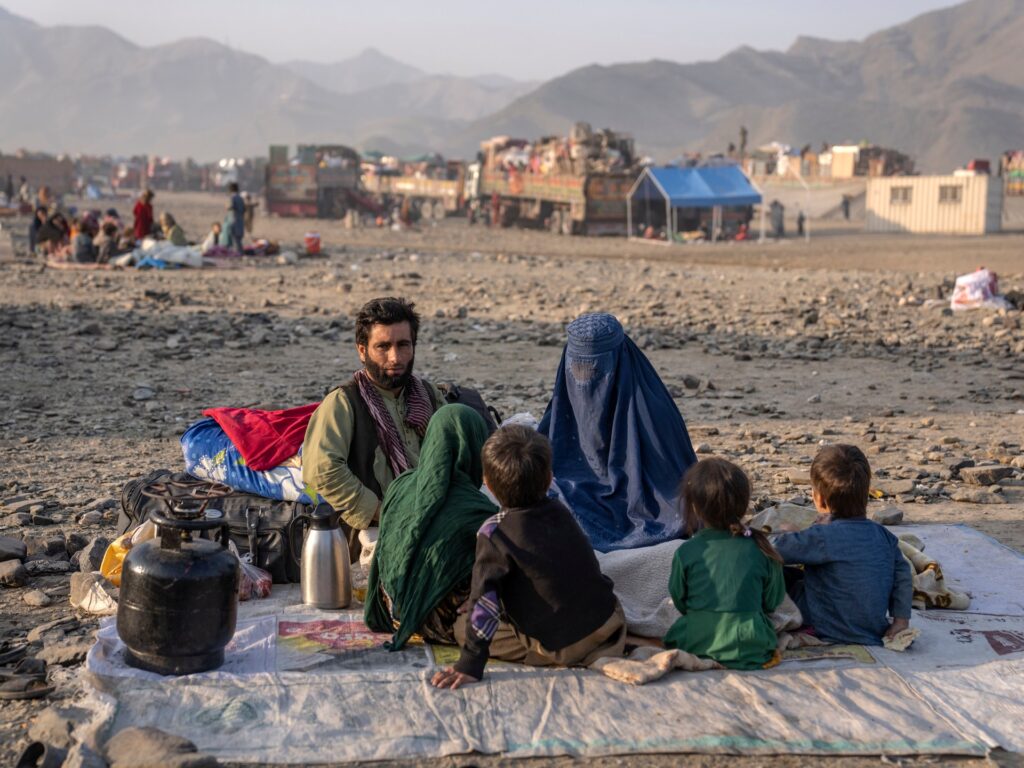
More than 450,000 Afghans have left the country since Pakistani authorities launched a deportation drive in October. Islamabad, Pakistan – The Pakistani government has announced that undocumented Afghans awaiting paperwork to resettle to a third country will be allowed to stay in Pakistan for two more months. The extension of the deadline on Wednesday from the end of this year to February 29 comes amid Pakistan’s drive to expel more than one million foreigners living in the country without paperwork. According to the United Nations refugee agency (UNHCR), more than 450,000 people have returned to neighbouring Afghanistan since the deportation campaign began in early October. Ninety percent of them did so “voluntarily”, according to the Pakistani government, but the UNHCR says they cited fear of arrest as the primary reason for their decision to leave. Announcing the extension, interim information minister Murtaza Solangi said anybody overstaying the new deadline would be fined $100 monthly, with a cap set at $800. “These measures were aimed at encouraging the Afghans residing illegally in Pakistan to obtain legal documents or finalise evacuation agreements as soon as possible in a third country,” Solangi added. The announcement followed a visit to Pakistan by US State Department officials to discuss the issue of Afghan refugees. It is estimated that nearly 25,000 Afghans require paperwork for resettlement in the United States. Pakistan estimates that more than 1.7 million Afghan nationals have long lived in the country without documents, with the majority arriving in different waves since the Soviet invasion in 1979. The last such major influx of an estimated 600,000 to 800,000 people took place two years ago after the Taliban took control of Afghanistan. Pakistani authorities have cited a dramatic surge in violence this year – there have been more than 600 attacks in the first 11 months of 2023 – for the deportation drive. Interim Interior Minister Sarfraz Bugti said in October that 14 out of 24 suicide attacks in the country over that period were carried out by Afghan nationals. He did not provide any evidence. The Taliban has denied any accusations of providing shelter to fighters, maintaining their position that Afghanistan’s soil is not being used for cross-border violence. Adblock test (Why?)