

Trump immunity appeal offers best chance to stave off 2020 election trial
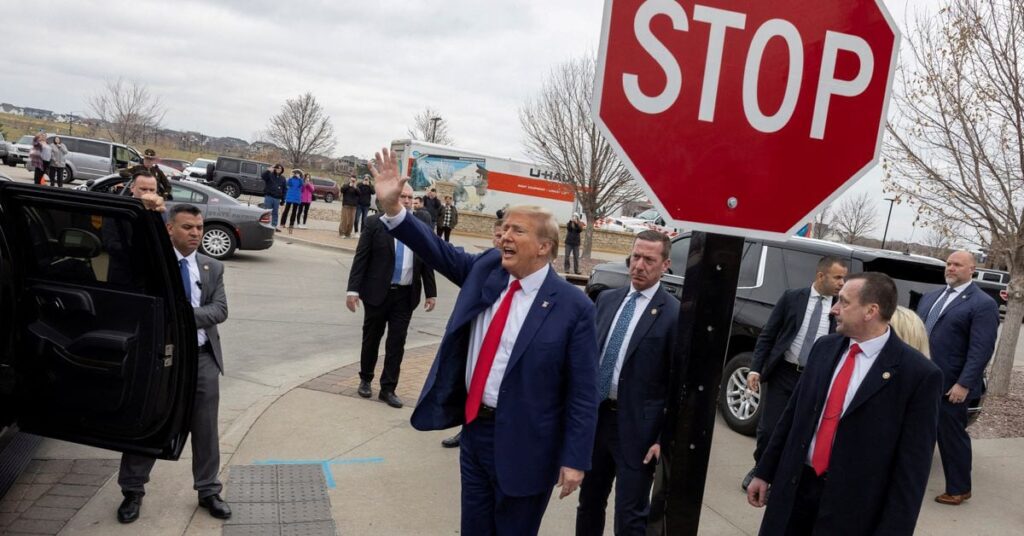
Donald Trump is readying what may be his best shot at avoiding spending much of next year in a courtroom facing criminal charges of trying to overturn his 2020 election defeat, kicking off an appeal that could go to the Supreme Court.
Ohio residents navigate ‘marijuana limbo’: Legal to grow and possess, but buying prohibited
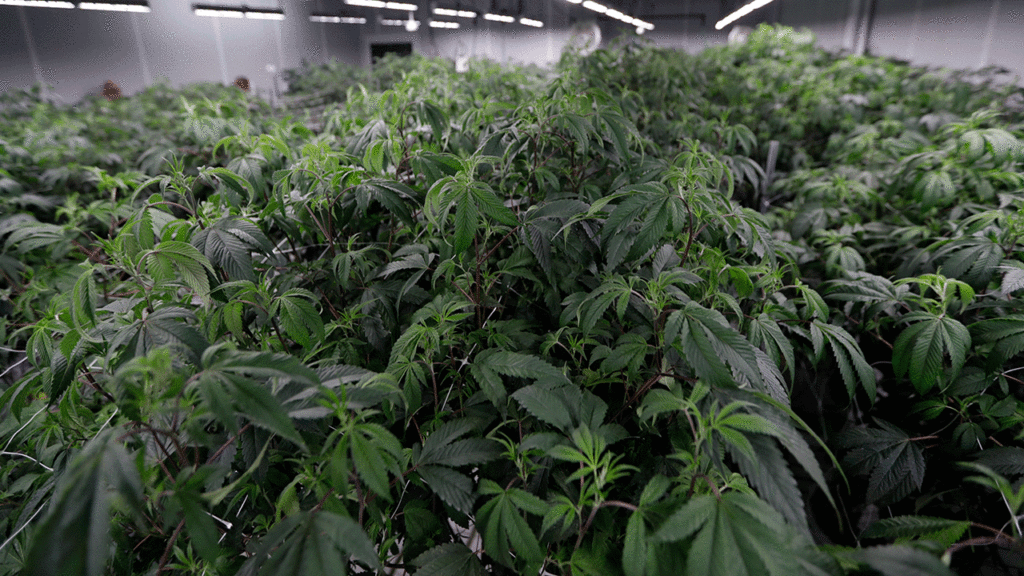
Ohio residents woke up Thursday in a land of limbo for recreational marijuana use: Adults can now legally grow and possess cannabis at home, but cannot legally buy it. On Wednesday night, Republican Gov. Mike DeWine urged lawmakers to quickly set parameters for Issue 2, the citizen initiative voters approved in November. While the state Senate pushed through an 11th-hour deal hours before the law took effect, the Ohio House adjourned without taking it up. Rep. Jamie Callender said there’s “no drop-dead date” for implementing a legal sales scheme, and that growing marijuana at home or allowing possession can proceed according to the voters’ wishes. He said he wants “to make sure we’re thoughtful, that we’ve had adequate time to look at it and deal with the things that don’t go into effect immediately.” Rep. Bill Seitz also defended the decision to adjourn without acting on the 160 pages of related legislation now pending in the House. “We’re not going to pass, sight unseen, such a monstrous proposition in 48 hours. That’s nuts,” Seitz said. Lawmakers need time to work through the complexities of setting up cannabis sales, taxation and a regulatory structure, he said. DeWine, however, worried openly about a worst-case scenario developing, saying black market sales could flourish or that fentanyl- or pesticide-laced marijuana products might become more accessible. He called the current state of affairs a “recipe for disaster.” Lawmakers had four months last year to act. As a citizen-initiated statute, Issue 2 had to be submitted to the Legislature first. After the GOP-controlled Legislature chose to do nothing, the measure was placed on the Nov. 7 ballot and passed with 57% of the vote. It allows adults 21 and over to buy and possess up to 2.5 ounces of cannabis and to grow up to six plants per individual or 12 plants per household at home. It gave the state nine months to set up a system for legal marijuana purchases, subject to a 10% tax. Sales revenue was to be divided between administrative costs, addiction treatment, municipalities with dispensaries, paying for social equity and jobs programs supporting the cannabis industry itself. With just days left before the law took effect, Senate Republicans proposed a sweeping rewrite of what voters approved, angering the issue’s backers and alarming both parties in the House. It would have outlawed growing at home, cut the allowable amount of pot that can be possessed to 1 ounce and raised taxes on purchases to 15%. It would also eliminate tax revenue funding for social equity programs supporting the marijuana industry and direct most of the tax money raised to a general state government fund. The compromise negotiated with DeWine and approved 28-2 by the Senate Wednesday would cut the number of household plants allowed to six, retain the higher 15% tax on purchases and reduce the allowable THC levels for cannabis extracts from 90% to 50%. The deal would restore a 2.5 ounce possession limit and allow 35% THC in plants while nixing state control of most of the revenue. Drafters of the legislation garnered Democratic support in part by adding a provision to expunge the criminal records of people convicted of possession up to 2.5 ounces. That measure would also require child-safe packaging and ban ads targeting children — a priority for the governor. If legislators veer too far from what voters approved, the Coalition to Regulate Marijuana Like Alcohol or other proponents of Issue 2 can always pursue a referendum. That possibility should give lawmakers an incentive to work with proponents of more relaxed marijuana laws, said Steven Steinglass, dean emeritus of the Cleveland State University College of Law and a leading expert on Ohio’s constitution. He said some of the maneuvering going on now is unprecedented. “Voters have only approved three initiated statutes in 111 years, and none of the three have been amended, repealed or fiddled with by the General Assembly,” Senate President Matt Huffman said the Senate compromise respects voters while addressing important concerns. “I’m opposed to (legalization), but it’s the law,” he said. “We don’t want illegal sales — the black market if you will — to get a foothold.” Meanwhile, there are plenty of aspects of the new Ohio law that can be immediately enforced, said Louis Tobin, executive director of the Ohio Prosecuting Attorneys Association. “As of Thursday, it’s going to be very difficult to find probable cause and to prosecute people who are carrying around less than 2.5 ounces of marijuana, but prosecutors and law enforcement are still going to be on the lookout,” Tobin said. “People smoking in cars are still breaking the law, people carrying around more than 2.5 ounces are still breaking the law, people engaging in private sales are still breaking the law, people driving under the influence are still breaking the law.”
VA Gov. Youngkin says budget proposal prioritizes early learning and child care programs
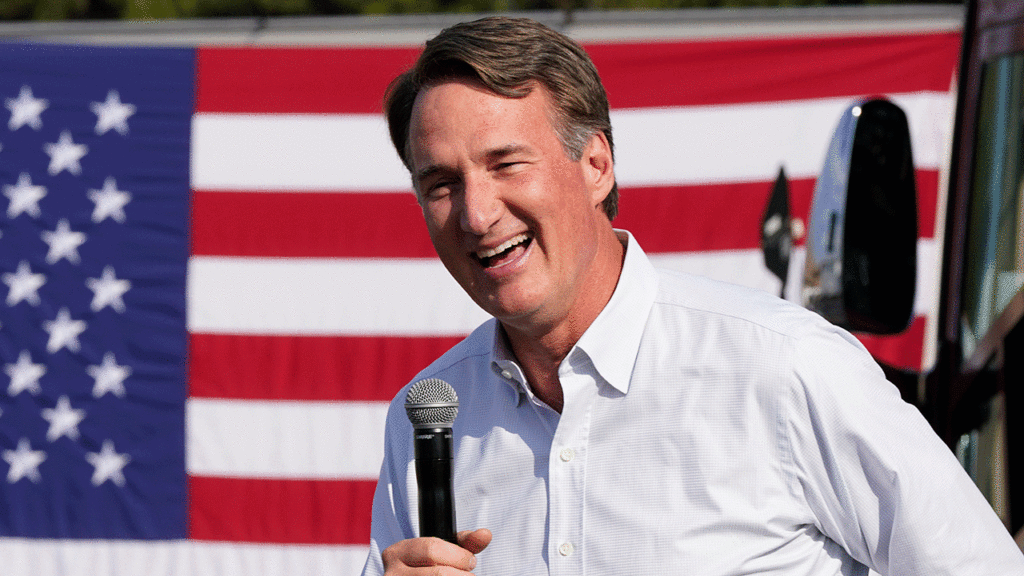
Republican Virginia Gov. Glenn Youngkin announced Thursday that the proposed budget he will soon unveil for the next two fiscal years will include an increase in state spending on early learning and child care programs. The central aim of the proposal is to ensure that the end of federal pandemic-era funds that were used to expand those initiatives doesn’t leave families in the lurch, Youngkin said in a speech in Richmond. Without the increased allocations to improve the long-term viability of the programs, families would start to lose coverage in March 2024, he said. GLENN YOUNGKIN PRESSED ON 2024 PLANS AS SPECULATION SWIRLS “At the heart of this is ensuring that we continue to serve the population being served today and that dollars follow the children on their parents’ best wishes,” he said. The proposal is just one component of a full two-year budget plan the administration is developing, which Youngkin will present to state lawmakers on Dec. 20. GLENN YOUNGKIN BLASTS VIRGINIA ARTS EVENT CANCELING HANUKKAH CELEBRATION: ‘ABSURD AND ANTISEMITIC’ Virginia governors’ introduced budgets typically go through substantial revisions — and Youngkin’s certainly will next year when Democrats are set to control both General Assembly chambers. But they can serve as a jumping-off point for negotiations and offer a roadmap of the chief executive’s priorities. Governors often lay out pieces of their proposals in advance of their formal presentation, as a way to highlight certain elements or show public support for their ideas. Early childhood advocates and a group of young students from a child care center were on hand for Thursday’s speech. According to Youngkin’s remarks and a broad outline released by his office, his budget will call for over $448 million in spending in each fiscal year for the initiative he’s calling “Building Blocks for Virginia Families.” The governor said that figure would represent an increase of $180 million from current levels in each year of the budget. Part of the funding would help ensure low-income working families currently receiving public funding support continue to do so, according to his office. YOUNGKIN FALLS SHORT IN HIS MISSION TO WIN TOTAL GOP CONTROL OF VIRGINIA STATE LEGISLATURE The initiative would also direct $25 million to a capital fund aimed at reducing child care deserts and allocate $10 million per year for “direct-to-child care education incentives” aimed at alleviating teacher shortages. In his speech, Youngkin acknowledged the widely documented struggles U.S. parents face in trying to find and afford high-quality child care. He also cited reports about the number of women who left the workforce amid the pandemic due to child care-related concerns, and recalled his own mother picking him up from daycare, juggling parenting and work. “This is about families. This is about moms,” he said. The issue will also be a focus for House Democrats in the 2024 legislative session, said Morgan Hopkins, the caucus’ communications director. “House Democrats have continuously emphasized the need to prioritize funding for our students, our teachers and especially early childhood education, and we look forward to doing just that in the Majority next session,” she said in a written statement.
‘Modi’s guarantee that every penny…’: PM Modi takes a dig at opposition on corruption issue

The news report also showed a picture of several almirahs stuffed with currency notes. With the Lok Sabha elections approaching, the prime minister has turned up the heat on opposition parties in his X posts of late.
Trump, Republicans push private school options to win over parents across party lines
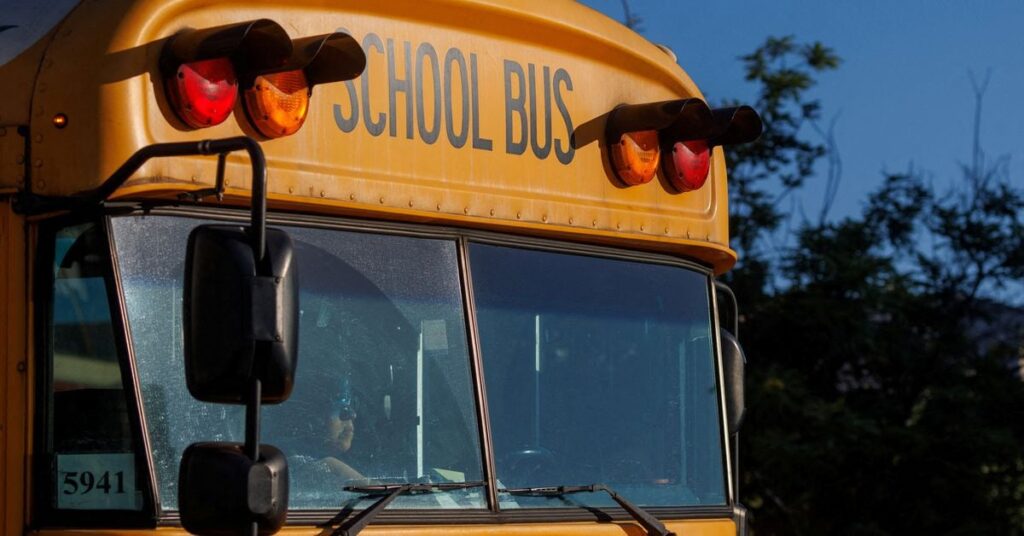
Beyond the tumult surrounding Donald Trump’s presidential bid and his threats to seek revenge against his political enemies should he win, the Republican frontrunner has seized on an issue that even some Democrats say could attract new voters in 2024.
As Israel-Hamas war sparks tensions on Texas campuses, universities struggle with how to respond

A series of incidents across Texas campuses have brought attention to universities’ handling of heated political debates about the war.
With the Mavericks, Miriam Adelson is poised to be Texas political powerhouse. Will it help her legalize casinos?
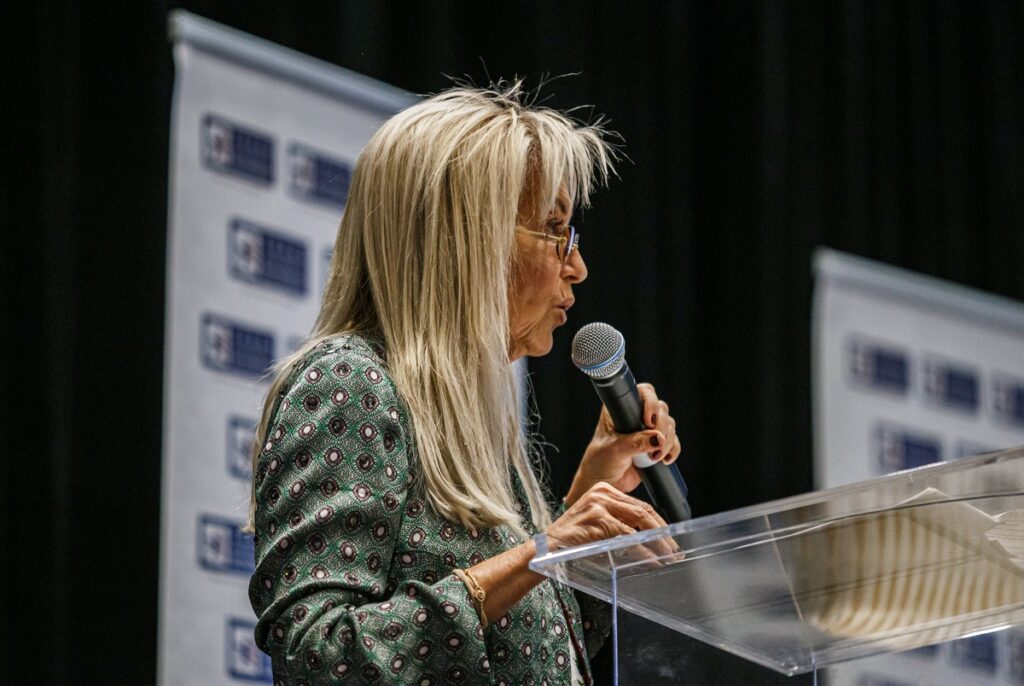
Adelson wasted little time reaching out to the state’s business leaders since news of the deal broke, visiting Austin on Thursday to address the Texas Association of Business, the state’s largest business lobby.
Give at least 48 hours to study ethics panel report on Mahua Moitra: TMC to Lok Sabha Speaker

Moitra can be expelled only if the House votes in favour of the panel’s recommendation.
Assam Rifles conducts fourth Major Bob Khating Memorial Lecture 2023 at USI, Delhi

The Assam Rifles in its quest to add academic content of North East has established ties with various think tanks, through seminars, panel discussions, and guest lectures.
India allows export of non-basmati rice to another 5 countries

Earlier, India allowed the export of such a variety of rice to Nepal, Cameroon, Cote d’Ivoire, Republic of Guinea, Malaysia, the Philippines, Seychelles, UAE, and Singapore.