

Indonesia nickel plant hit by deadly explosion
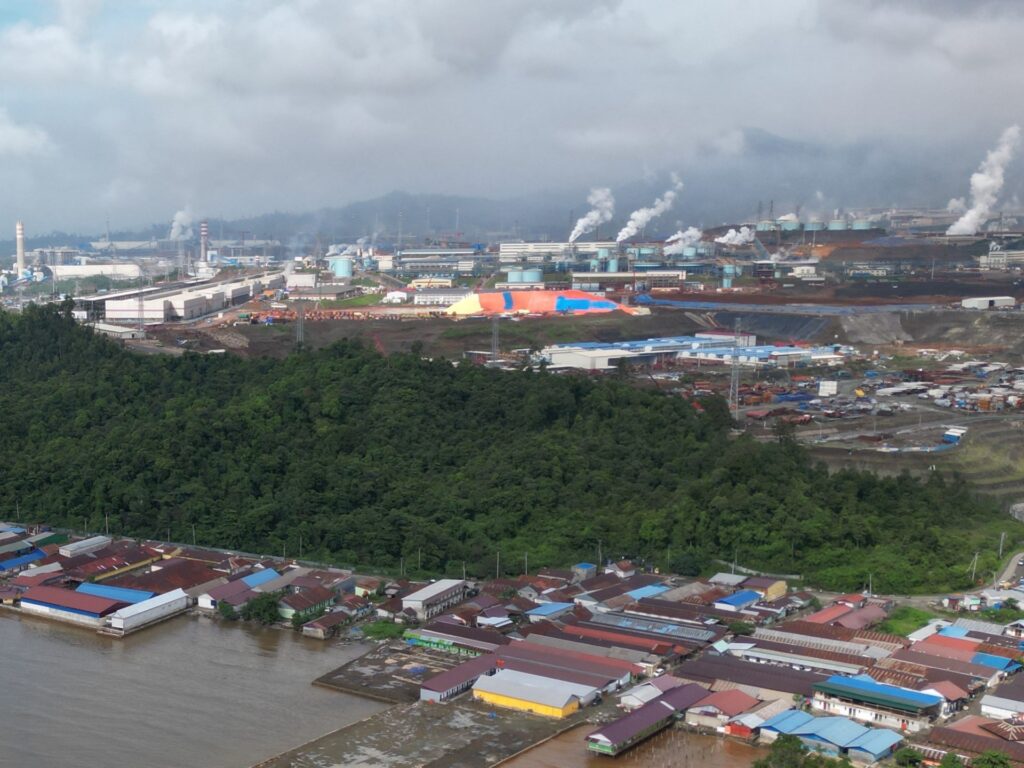
At least 12 dead and 39 injured in the blast at the nickel processing facility, highlighting dangerous working conditions. An explosion at a nickel processing plant in eastern Indonesia has killed at least 12 people and injured 39, according to the facility. The blast at the Chinese-funded Morowali Industrial Park on Sulawesi Island took place at 5:30am on Sunday while workers were conducting furnace repairs. A spokesperson for the complex said those killed include seven Indonesians and five foreign workers, without stating their nationalities. An initial investigation showed the explosion occurred when a flammable liquid ignited and the subsequent blast caused nearby oxygen tanks to explode as well, spokesperson Dedy Kurniawan said on Sunday. The fire was successfully extinguished, according to the official. The firm that runs the industrial park said it was “deeply saddened” by the disaster and said the remains of several identified victims had been flown home. The island is a hub for the mineral-rich country’s production of nickel, a base metal used for electric vehicle batteries and stainless steel, and Beijing’s growing investment has stoked unrest over working conditions at its facilities. In January, two workers, including a Chinese national, were killed at a nickel smelting plant in the same industrial park after a riot broke out during a protest over safety conditions and pay. Adblock test (Why?)
What are Palestine’s unique Christmas rituals, disrupted by Israel’s war?
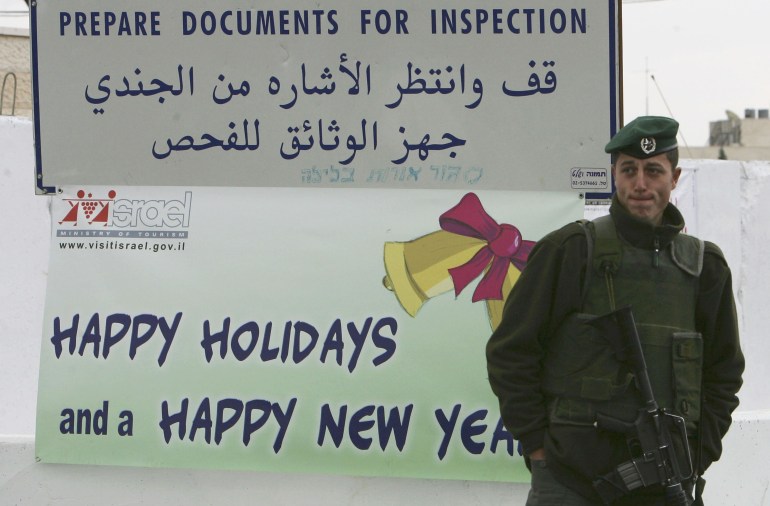
Through carols, cookies and Christmas lights, December 25 is marked by jubilation and celebration of the birth of Jesus for more than 2 billion Christians worldwide. However, a silent night falls on the 50,000 Christians in Palestine – a number that is in rapid decline. The safety of Christians in Palestine was shaken by the bombardment of Gaza’s oldest Greek Orthodox Church of Saint Porphyrius in October, which killed at least 18 people including children. Israeli forces also shot and killed an elderly Christian mother and her daughter in a Catholic church in Gaza on Saturday. This year, the many gleeful rituals that characterise Christmas in Palestine will be replaced by simpler ceremonies, mourning and prayer, shining a harsh light on the current reality of the region. The Lutheran Church, for instance, has the Baby Jesus in a manger of rubble and destruction. Was Jesus Palestinian? Many Christian schools of thought believe that Jesus was born in Bethlehem, in the now Israeli-occupied West Bank. “Jesus was born on our side of the wall,” Palestinian pastor Reverend Munther Isaac told Al Jazeera. Isaac added that the narrative of the birth of Jesus in Bethlehem is backed by archaeology as well as scripture such as Luke’s Gospel. “It’s the year 2023, and you’ve got, on Christmas day, all over the world, millions of, so many, hundreds of millions, if not more, of Christians going to church, reading about Bethlehem, singing about Bethlehem and thinking maybe of Bethlehem as a mythical place, as a fairytale, not realising it’s a real place with people, with a Christian community that has kept the tradition alive for 2,000 years.” What is the story of Christmas? “While the family of Jesus lived in Nazareth back then, they travelled from Nazareth to Bethlehem for that [census] registration,” Isaac narrated, with thoughtful pauses between his sentences. Isaac drew parallels between the story of the birth of Jesus and the current situation in Palestine. “We’ve always been under empires. We’ve always been displaced,” said Isaac, explaining that Jesus was born when Palestine was under the Roman empire. An imperial decree of the empire ordered the family of Jesus to register for the census in Bethlehem, added Reverend Mitri Raheb, another Palestinian pastor from Bethlehem. King Herod ordered the massacre of infant boys, leading to the family of Jesus escaping to Egypt as refugees, explained Isaac. An Israeli border policeman stands guard on Christmas Eve December 24, 2004, at the checkpoint between Jerusalem and Bethlehem where a sign welcomes visitors to the biblical town of Jesus’s birth [David Silverman/Getty Images] According to the Bible, Jesus was born in Bethlehem and then placed in a manger. The Church of Nativity was built at this location and its grotto holds great religious significance, pulling Christians from all over the world into the city of Bethlehem every Christmas. The procession of the patriarchs One of the most important Christmas rituals in Palestine is the procession of the patriarch from Jerusalem. This procession takes place on December 24 for Catholics and January 6 for Orthodox patriarchs. The designated procession route that has been followed throughout the Ottoman Empire and the British mandate is now engraved in tradition, Isaac explained. The patriarch is received from Jerusalem in Bethlehem and then the procession walks through the streets of the old town in Bethlehem until it reaches the Church of Nativity, where prayers are held. Israeli authorities and Palestinian police escort the procession, depending on the territory the procession passes through. Palestinian Christian altar boys and Palestinian police wait for the arrival of the Latin Patriarch, Michel Sabbah, during the annual Christmas Eve procession December 24, 2003 in Manger Square in Bethlehem [David Silverman/Getty Images] The arrival of the procession is a celebrated festivity, welcomed by several scout groups and musical bands from all over Palestine. People leave their homes to walk around the city and witness the spirit of Christmas. This year, the bands and scouts will not be present, instead, the procession will be silent. A Palestinian man holds a golden crucifix as he waits alongside posters of Palestinian leader Yasser Arafat outside the Church of the Nativity in the West Bank town of Bethlehem December 24, 2001, during the traditional Christmas Eve procession [David Silverman/Getty Images] Midnight mass and Manger Square Once the procession reaches the church, prayers begin at 5pm local time and last until midnight, with the midnight mass being broadcast for the world to see, Raheb said. Latin Patriarch of Jerusalem Fuad Twal carries a doll of the baby Jesus following the Christmas midnight mass at the Church of the Nativity, December 25, 2008 in Bethlehem [Musa Al-Shaer-Pool/Getty Images] The Manger Square in Bethlehem is also decorated with a large Christmas tree and performances are held there. This year, there is no Christmas tree at Manger Square. Instead, “the civil society and some artists are working on a new kind of crib that is made out of rubble as a sign to what’s happening in Gaza”, said Raheb. He added that a video will be screened on the wall of the Nativity Church, showing what is happening in Gaza. This 2012 photo shows a crowd gathering around a brightly lit Christmas tree at the Manger Square [Ammar Awad/Reuters] As a child, Isaac would excitedly visit Jerusalem with his parents for Christmas shopping. Several markets sell festive clothes and decorations for the holiday season. It is a tradition to buy the best clothes from Jerusalem and save them for Christmas. “You know how in America you go to a big mall? We used to go to Jerusalem. We can’t any more,” Isaac said, alluding to the stringent permit rules in the region, which constrict the mobility of Palestinians. Christmas is a time when families meet, in Palestine and elsewhere. While family could mean a small group of immediate relatives in the West, “When I say ‘family’ in Bethlehem, I say all 200 or so members of the Isaac family in our town
Staying warm in Gaza: A battle for survival
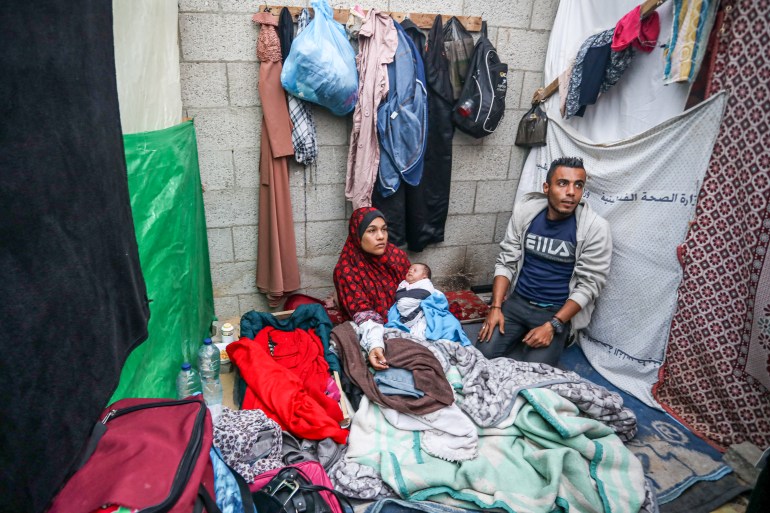
Esraa Kamal al-Jamalan was nearly eight months pregnant when she, her husband and their five-year-old son were forced to flee their northern Gaza neighbourhood of Sheikh Radwan after it was bombed by Israel in late October. They walked more than three kilometres (1.86 miles) to al-Shifa Hospital, where many people were sheltering, taking with them only a few lightweight T-shirts and trousers as they expected to soon return home. Two months later, 28-year-old Esraa and her family are living in one of the hundreds of makeshift tents in Deir el-Balah in central Gaza with no means of protecting her newborn from the harsh winter — cold temperatures combined with rains. “When it first started raining here, I hadn’t given birth yet. Me and my husband were trying to find shelter from the rain, as the water kept seeping through here and there in the tent,” Esraa said, sitting with her daughter in her lap, her skin pale and yellow. “We’ve been through rough days. We have never seen something like this before.” Esraa al-Jamalan gave birth to her daughter on November 24 and now lives in a makeshift tent in Deir el-Balah in central Gaza [AbdelHakim Abu Riash/Al Jazeera] Being unhoused in rough weather conditions and without warm clothing and blankets, the couple are struggling to keep their newborn daughter warm inside their tent. They cannot take her outside either, close to the fires that people are burning for warmth as the smoke gives her breathing difficulties. “The other day, she kept coughing [from wood smoke] until she turned blue. We were terrified she could have died,” Esraa explained, her voice shaking. “I am worried the most about my daughter. She hasn’t even gotten vaccinated yet.” As Israel’s assault on Gaza enters its 12th week, Al Jazeera spoke to Palestinians in the Gaza Strip about the challenges brought on by the arrival of winter for the nearly two million people internally displaced in the enclave. Adblock test (Why?)
COVID-19 news: India logs 656 new covid cases, 1 death reported

The death toll was recorded at 5,33,333 with one new death reported from Kerala in 24 hours, the data updated at 8 am showed.
Sports Ministry suspends WFI Chief Sanjay Singh, here’s what happened
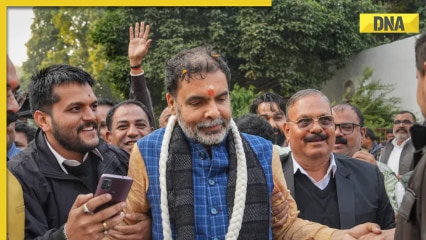
Sanjay Singh announced U-15 and U-20 nationals to take place in Nandini Nagar, Gonda (UP) before the end of this year.
IIT-K professor collapses, dies while delivering speech on stage
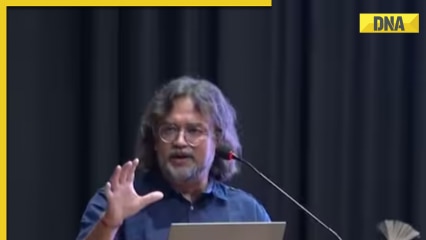
According to IIT-K sources, the professor has been grappling with cardiac health issues since 2019.
Christmas 2023: Delhi Police issues traffic advisory for December 25, know which routes to avoid
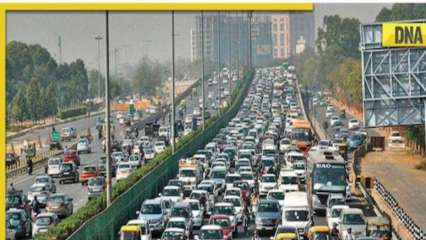
Christmas will be celebrated from the 24th of December in the evening until the 25th of December.
Terrorists open fire at retired police officer at Baramulla mosque in Jammu and Kashmir
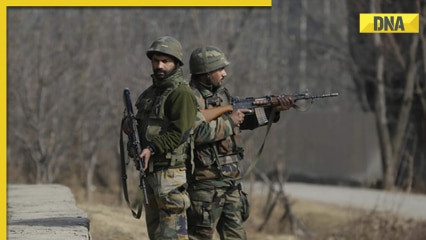
Terrorists opened fire on the retired police officer while he was offering prayers at a mosque, the police added.
‘Hindi speakers from UP, Bihar clean…’: DMK MP Dayanidhi Maran triggers row, BJP reacts
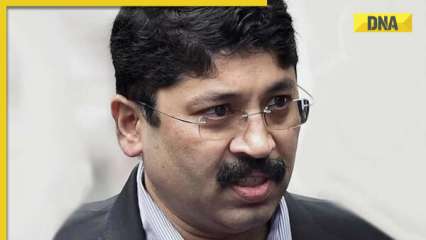
DMK leader Dayanidhi Maran courted controversy by mocking the Hindi-speaking people of Uttar Pradesh and Bihar
Manipur: Ammunition, war-like stores recovered during joint search operation in Noney district
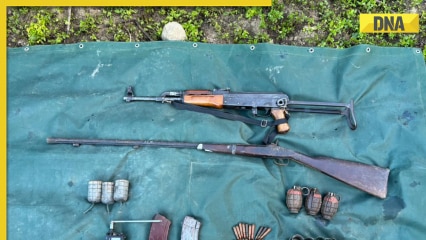
A detailed joint search of the general area was carried out, leading to the recovery of one AK 56 rifle, one single-barrel gun, ammunition, six grenades and war-like stores.