

Drone strikes ship with 20 Indians on board off Gujarat’s coast, crew safe

The Indian Navy warships in the vicinity are also moving towards the distressed vessel with around 20 Indian crew members who are all reported to be safe.
Congress undergoes reshuffle ahead of Lok Sabha Elections 2024, Sachin Pilot gets key role
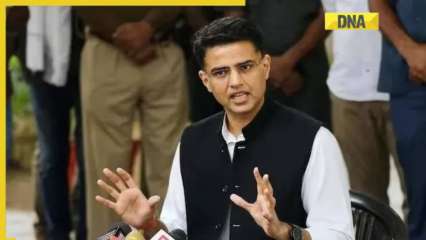
Sachin Pilot has been appointed as the All India Congress Committee (AICC) General Secretary in charge of Chhattisgarh. General Secretary Avinash Pande has been appointed as in-charge of Uttar Pradesh, replacing Priyanka Gandhi.
COVID cases rise by 52% globally last month: WHO

In India, there have been 752 new cases of COVID-19 and four deaths in the past 24 hours.
‘Not done yet’: CM Siddaramaiah clarifies on removal of Hijab ban in Karnataka
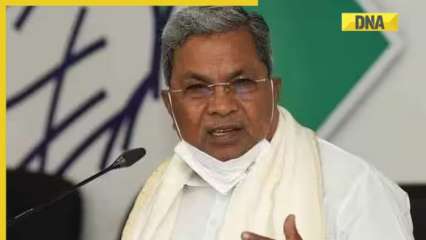
“We have not done it yet (allowing hijab). One person asked me a question, and I replied to that. Yes, the government is considering to end the ban. But the matter will be discussed with government officers first,” said Siddaramaiah.
Lok Sabha Elections 2024: PM Modi advises BJP leaders to work in ‘mission mode’ and aim for over 50% votes
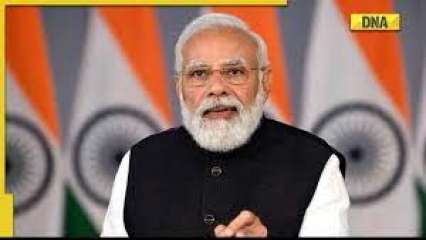
In an important BJP meeting ahead of the 2024 general election, Prime Minister Narendra Modi urged party leaders to aim for over 50 per cent of seats in the Lok Sabha polls.
Taiwan spots Chinese warships, aircraft near island ahead of elections
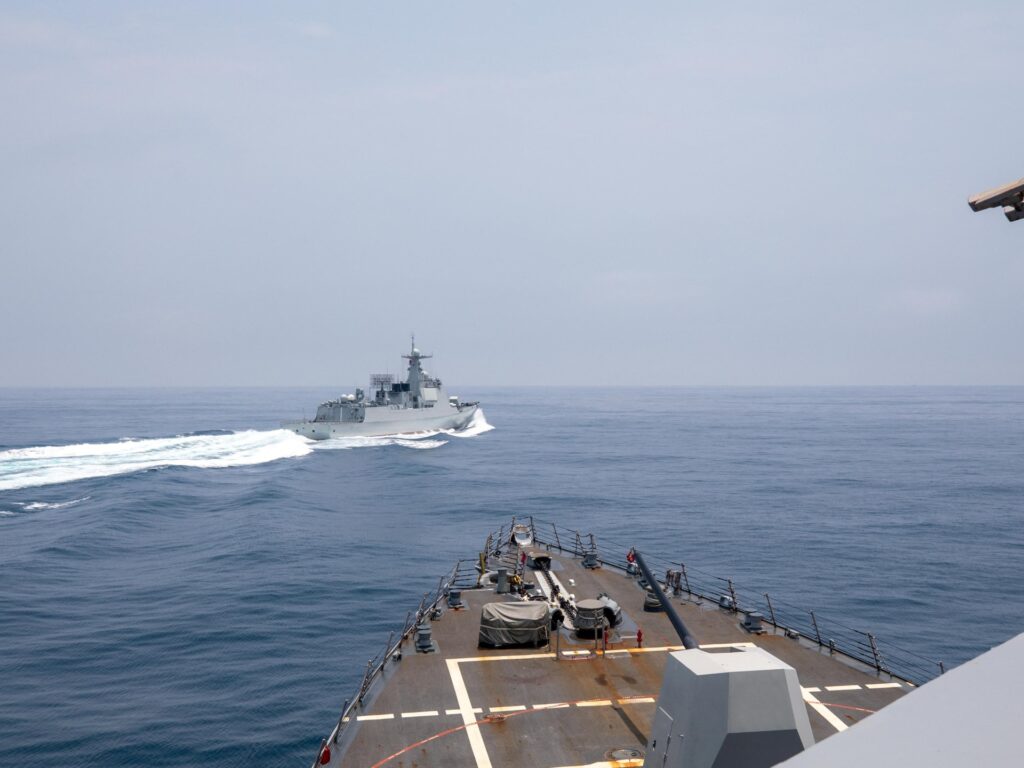
Increased activity along Taiwan Strait comes ahead of January 13 polls. Taiwan has reported spotting Chinese warships around the island and aircraft crossing the Taiwan Strait’s sensitive median line weeks before elections in the democratically governed nation. On Saturday, the Ministry of Defence said in a post on X that since 1:30pm (05:30 GMT) it had detected J-10, J-11 and J-16 fighters as well as early warning Chinese aircraft operating in the airspace to the north, middle and southwest of Taiwan. Ten aircraft crossed the Taiwan Strait, or areas close by, working with Chinese warships to carry out “joint combat readiness patrols”, the ministry said, adding that its armed forces have taken steps to respond. From 1330(UTC+8) today, we have detected PLA aircraft (including J-10, J-11, J-16, Y-8, KJ-500, etc.), 10 of which crossed the median line and entered our North, Central, SW ADIZ. In addition, the aircraft also conducted joint combat patrol with PLAN vessels. — 國防部 Ministry of National Defense, R.O.C. 🇹🇼 (@MoNDefense) December 23, 2023 The uptick in Chinese military activity in the Taiwan Strait comes just weeks before Taipei heads to the polls. Earlier this month, the defence ministry also spotted warships and a balloon near the island at night. While Beijing has been sending warplanes and vessels around Taiwan on a near-daily basis, nighttime activity by Chinese aircraft and the appearance of a balloon are rare. Democratically governed Taiwan, which China claims as its own territory, has complained for years of regular Chinese military patrols and drills near the island. Beijing has not yet commented on the recent military activities near Taiwan. But it has previously described them as aimed at preventing “collusion” between Taiwan separatists and the United States, and protecting China’s territorial integrity. Tensions before elections Ahead of presidential and parliamentary polls on January 13, analysts say China is running a multi-pronged campaign to try to keep the ruling Democratic Progressive Party (DPP) from re-election. Beijing wants the opposition Kuomintang (KMT) party to win as it seeks friendlier relations with China. Polls, however, show Vice President Lai Ching-te and running mate Hsiao Bi-khim from the DPP in the lead. China has refused to engage in dialogue with the DPP, which the ruling Chinese Communist Party (CCP) claims is “separatist”. The DPP rejects such accusations and says it is up to the people of Taiwan to choose their leaders and their future. Beijing has also targeted individuals and public figures in Taiwan through online campaigns and tax probes, seeking to influence how they vote. Ai-Men Lau, a research analyst at the Taiwan-based organisation, Doublethink Lab, which tracks malign Chinese influence operations and disinformation campaigns as well as their impact, told Al Jazeera that while it can be difficult to trace much of the content directly to China, there are often signs pointing in that direction. “We are seeing the PRC increasingly using Taiwanese voices such as journalists, local proxies and social media influencers to get their message across,” she added, using the acronym for the People’s Republic of China. Meanwhile, government authorities in Taiwan have put the region on high alert for Chinese activities, military and political, ahead of the elections. While campaigning has kicked into high gear, how the next government handles relations with China remains a major point of contention. Adblock test (Why?)
Israel says Gaza war is like WWII. Experts say it’s ‘justifying brutality’
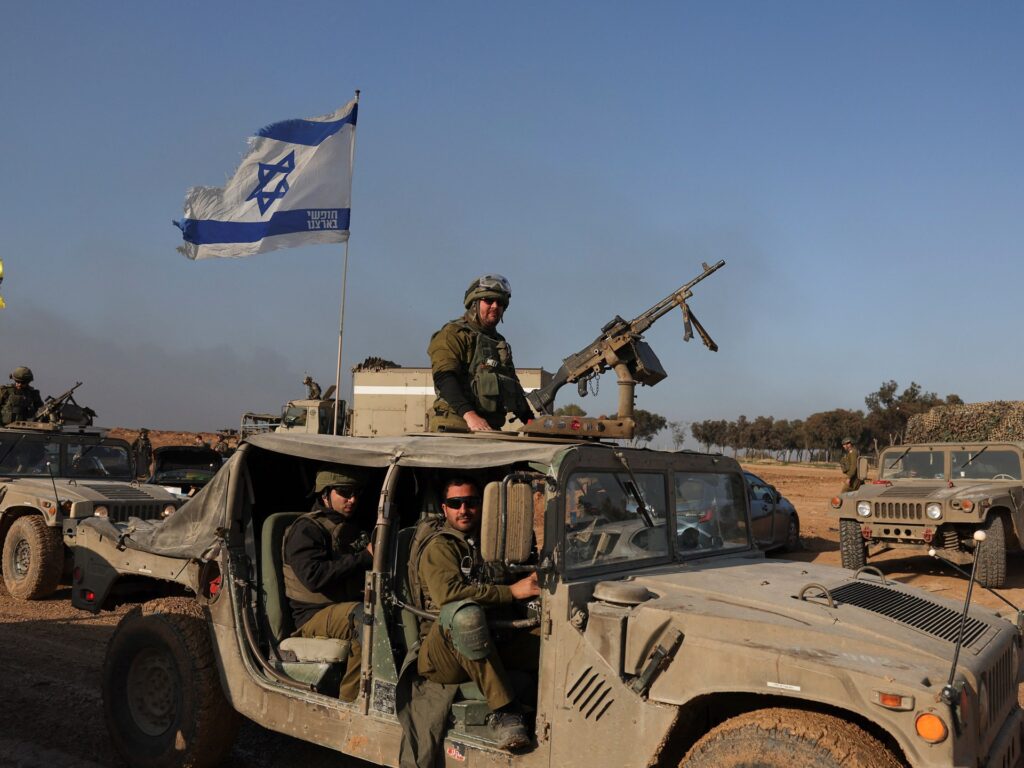
Israel’s campaign of relentless bombardment against the Gaza Strip had been raging for three weeks when the country’s Prime Minister Benjamin Netanyahu was asked to address the heavy civilian death toll in the Palestinian enclave. Netanyahu, who had earlier evoked the 9/11 attacks on New York’s Twin Towers and the Pentagon in 2001 to describe the deadly Hamas assault on southern Israel on October 7, looked to the second world war for validation, on this occasion. The hawkish Israeli premier referred to the time in 1945 – he mistakenly mentioned 1944 – when a British air raid, which had been targeting a Gestapo site, erroneously hit a school in Copenhagen killing 86 children. “That is not a war crime,” he told reporters. “That is not something you blame Britain for doing. That was a legitimate act of war with tragic consequences that accompany such legitimate actions.” Since then, the Allied campaign against Nazi Germany and Japan during World War II has become something of an historical precedent for an Israeli state seeking to justify the large-scale killings of the people of Gaza as it ostensibly pursues Hamas fighters. Israel’s ambassador to the United Kingdom, Tzipi Hotovely, has compared Israel’s campaign with the devastating Allied bombing of Dresden, which, conducted over three nights in 1945, was intended to force the Nazis into surrender, and led to the deaths of some 25,000-35,000 Germans. Non-state affiliated advocates of Israel have also drawn similar comparisons. Yet, these attempts erase the roots of the Israel-Palestine conflict in the expulsion of 750,000 Palestinians from their land during the creation of Israel in 1948, the destruction of 500 towns and villages at the time, and the subsequent illegal occupation of Palestinian territory. They also ignore how World War II led to a new international law regime, and serve to dehumanise Palestinians while justifying Israel’s decades-long violence and discrimination — described by many international rights groups as akin to apartheid — against Palestinians, say historians and analysts. Israeli historian and socialist activist Ilan Pappé told Al Jazeera that these efforts by Israel are aimed “as a justification for its brutal policies towards” Palestinians and that they represent an old playbook used by the country. He cited the instance when former Israeli Prime Minister Menachem Begin compared the then-leader of the Palestine Liberation Organization (PLO), Yasser Arafat, to Hitler, and war-torn Beirut to Berlin, following Israel’s invasion of Lebanon in 1982. “I feel as a prime minister empowered to instruct a valiant army facing ‘Berlin’ where, amongst innocent civilians, Hitler and his henchmen hide in a bunker deep beneath the surface,” Begin said in a telegram to then-United States President Ronald Reagan in early August 1982. But Begin’s words prompted criticism from many in his own country, with Israeli novelist Amos Oz writing that “the urge to revive Hitler, only to kill him again and again, is the result of pain that poets can permit themselves to use, but not statesmen”. Reaching into the past to legitimise modern-day conflicts can also be ahistorical. Scott Lucas, a specialist in US and British foreign policy at the University of Birmingham, said the relentless use of World War II by Israel and its supporters to mitigate criticism of its bloody war on Gaza suggests that Israel wants to “wish away the post-1945 pledge – by lawyers, NGOs, activists and politicians – to say we need a better system so civilians do not suffer needlessly in war zones”. He added that Israel’s decision to opt out of membership of the International Criminal Court (ICC) and its attempts to “actively … undermine [the authority] of the United Nations”, founded after the horrors of World War II and the Holocaust, make its claims to be part of an Allied-like struggle disingenuous. Israel has repeatedly accused the UN’s agencies and its officials, including Secretary-General Antonio Guterres, of bias because they have called for a ceasefire. Meanwhile, Israeli bombs have killed more UN staff members in Gaza since October 7 than in any conflict in the history of the organisation. “Civilians will be killed in wartime,” Lucas acknowledged, but added that Israel appeared to be breaching the international law requirement of proportionality. In essence, a military whose war leads to civilian deaths, including through attacks on hospitals, schools and shelters – targets Israel has repeatedly struck during this war – must be able to show proportionate military gains through those strikes. That’s a bar Israel hasn’t met, according to many experts. “You are currently having an excessive number of civilians who are being killed because there are not adequate protections that are being applied by the power that is carrying out the attack,” Lucas said. “And that’s what the Israelis should be judged by. Bringing in World War II and other narratives is [just] peripheral.” Israel’s supporters continue to argue that the parallel with World War II holds. Jake Wallis Simons, editor of the London-based Jewish Chronicle, said that there were “two points of similarity” between the conflicts. “The first is a sense of existential threat both during World War II and in the attacks by Hamas upon Israel,” claimed Wallis Simons. “The other is the nature of the aggressor.” He described Hamas’s actions as “barbarism”. But UN experts, international human rights groups and many nations around the world have warned that it is Israel’s actions since October 7 – more than 20,000 Palestinians have been killed in Gaza, and almost the entire population of 2.3 million people has been displaced – that could constitute modern-day genocide. Earlier this week, Human Rights Watch accused Israel of using food as a weapon of war. Israel has maintained a blockade on Gaza since 2007, and since the start of the current war, has made it even more difficult for aid to enter the Strip. Right at the start of the current war, Israel also imposed a strict block on the entry of fuel and water – a restriction it has largely kept in place. Against that backdrop, it’s
‘Our lives are still fractured’: Northern Ireland’s ‘peace babies’
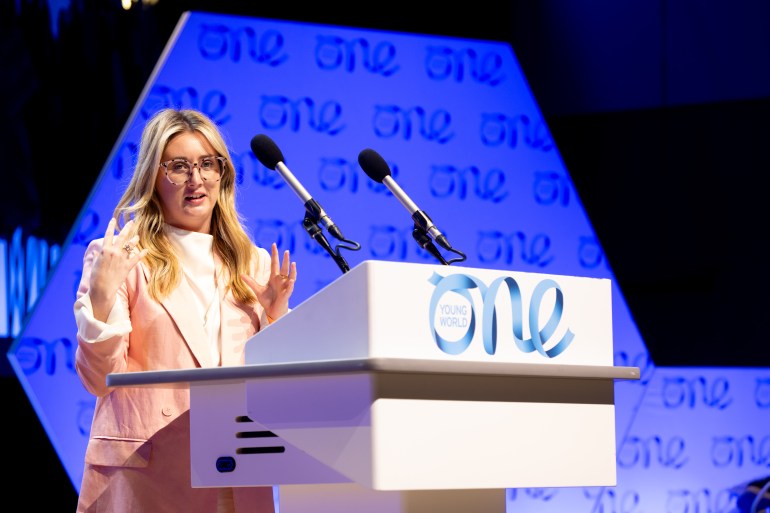
Belfast, Northern Ireland — The political leaders caught up in the 30-year Troubles of Northern Ireland were so consumed with fighting over “land, soil, territory”, that they completely neglected the environmental welfare of that very same land, soil and territory, say young people born since the Good Friday Agreement (GFA) 25 years ago. This is just one of the dismal legacies of the Troubles that young people born at about the time of the 1998 GFA – also known as “peace babies” – say they have been left to clean up. At the One Young World 2023 Summit for young people held in October, marine life researcher Heidi McIlvenny said much of Northern Ireland’s most precious natural resources – including its marine and freshwater ecosystems that sustain life itself – have been badly neglected and mismanaged. “Twelve percent of all species on this island are threatened with extinction,” she said. The Good Friday Agreement, which brought more than three decades of conflict in Northern Ireland to an end, marked its 25th anniversary in April this year. But the occasion was overshadowed by a sixth shutdown of the region’s devolved government which was created by the GFA, but which has been lying dormant for more than 40 percent of the time since 1998 due to disagreements between leading political parties. Political leaders were so consumed with fighting over ‘land, soil, territory’, they neglected the welfare of that land, said Heidi McIlvenny at the One Young World 2023 summit, 25 years after the Good Friday Agreement which brought the Troubles to an end [Courtesy of One Young World 2023 Belfast Summit] ‘Holding us to ransom’ Jacinta Hamley, 27, a climate campaigner who ran as a candidate for the Green Party in this year’s local elections, told Al Jazeera that much of Northern Ireland’s political “stagnation” derives from power-sharing arrangements that allow the biggest Nationalist and Unionist parties to hold devolved government to “ransom”. “Whenever I look at the last 25 years in politics here, what I think we’ve seen is a failing system,” she said. The power-sharing institutions created under the 1998 peace accord require governing agreements between the biggest parties of Nationalists (those who want a united Ireland) and Unionists (those who want to remain part of the UK). However, the region’s devolved Assembly and decision-making Executive at the Stormont Estate collapsed under the largest Unionist formation, the Democratic Unionist Party, last year due to a prolonged row over post-Brexit customs arrangements in the Irish Sea. While these institutions are not functioning, governance is passed to civil servants. This severely limits the actions of the government and often raises questions about overreach by unelected officials. Talks to restore devolved government stalled once again this week, with an Executive now unlikely to be formed until 2024 at the earliest. A religious mural is pictured among houses in the Nationalist Ardoyne area of north Belfast, one of Northern Ireland’s communities rocked during the Troubles and which remains poor [Paul Faith/AFP] Falling between the cracks In the meantime, vulnerable groups are slipping between the cracks of this political dysfunction, youth leaders say. Those who live in areas which bore the brunt of the Troubles – often those which were divided by huge concrete barriers – report seeing higher levels of deprivation than they did during the bitter 30-year conflict that killed more than 3,500 people. Members of communities like the Nationalist Ardoyne enclave and the Unionist Woodvale area, both in north Belfast, say deprivation levels are worse now than they were 25 years ago. At the time of the agreement, such areas were promised a “peace dividend” in the form of economic prosperity which many feel has failed to materialise. “The fact remains that the effects of the Troubles continue to fracture lives,” University of Ulster student Caitlin Ball told delegates on the final day of the summit. “Communities across the North continue to operate under the grip of paramilitary control. And trauma – whether it be from our own lived experience or intergenerational trauma that has filtered down from the conflict – remains rife and unresolved.” Loyalist supporters attempt to march past Nationalist Ardoyne shops in north Belfast, Northern Ireland on July 13, 2015, but are prevented by police [Paul Faith/AFP] Ball also called for Northern Ireland to face down growing xenophobic sentiment in an era of diversifying social shifts. Around 4 percent of people in Northern Ireland are now from a Black, Asian and Minority Ethnic background, according to the 2021 census, while it is thought to be home to about 150,000 migrants. This is double the 2011 figure of 1.8 percent (32,400 people) and more than four times the 2001 figure of 0.8 percent (14,300). Ball highlighted “a rise in racially motivated attacks and intimidation”, with race hate crimes in some parts of Belfast having doubled in the past five years. She argued that anger towards these groups was “misdirected” and that it should instead be aimed at political leaders and institutions that she said had failed many within Northern Ireland. There has been a tendency to overlook the experiences of those left behind during 25 years of relative peace, she said. Ball added it was essential to address the needs of “those who are homeless, who suffer from substance abuse, those who can’t hold down a job because of poor mental health issues, the Irish Traveller community, asylum seekers. “We can’t stand here and talk about peace and reconciliation if that same peace can’t now be extended to the growing communities of people that now call Ireland home.” A mental health epidemic A number of young people, including some who gave speeches at the summit’s “What Next for Northern Ireland?” panel event, highlighted the region’s growing mental health epidemic. In the 20 years immediately following the Good Friday Agreement, suicides in the region outstripped the number of lives lost during the 30 years of the Troubles by nearly 1,000, according to figures presented by a coalition of healthcare professionals
‘Extremism shouldn’t be given…’:S Jaishankar reacts to temple vandalism in US
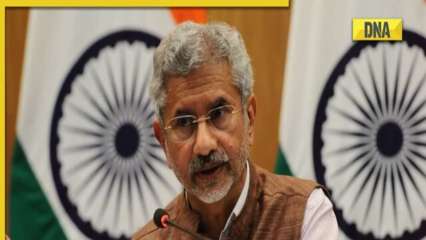
India’s External Affairs Minister S Jaishankar reacts a day after anti-Indian graffiti was written on a Hindu temple in California
Wrestlers Protest: Virender Singh to also return Padma Shri award over Sanjay Singh’s election as WFI president
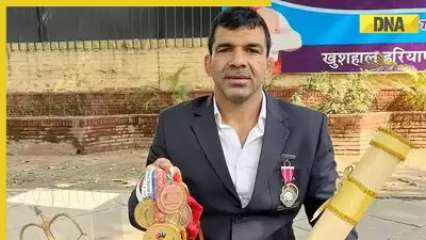
Virender Singh’s move comes a day after another top wrestler, Bajrang Punia said he has written a letter to PM Modi and will return the Padma Shri given to him.