

China’s Gansu earthquake kills 118 people: What to know
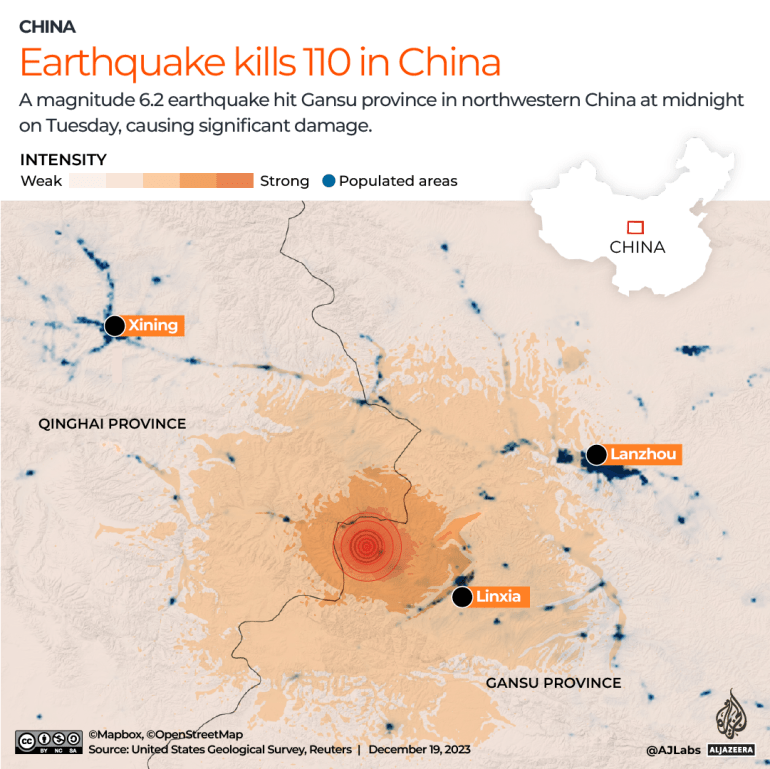
A powerful magnitude 6.2 earthquake hit remote China’s Gansu province, killing 118 people. A powerful magnitude 6.2 earthquake struck China’s remote Gansu province at midnight on Monday, killing at least 118 and injuring more than 500 people. Relief and rescue teams have been facing challenges as roads and public infrastructures have been damaged, with such subzero temperatures further adding to the problem. Here’s what to know about the event and current situation on the ground: When did the quake strike and where? At 23:59pm (15:59 GMT) on Monday, the earthquake hit Jishishan in the northwestern Gansu province, causing people to rush out of their homes out in the cold weather. Initial tremors lasted around 20 seconds. Its tremors were felt as far away as 570km (354 miles) in Xi’an, northern Shaanxi province, while casualties also occurred in Haidong city of neighbouring Qinghai province, some 115km (71 miles) away. The epicentre of the quake Jishishan County and neighbouring areas are still reeling from the aftereffects of the quake. Emergency teams worked through the night to rescue people from the rubble but their efforts were hampered by several aftershocks, Al Jazeera correspondent Katrina Yu, reporting from Beijing, said. Nearly 5,000 houses have been damaged to “varying degrees” while power and water supplies were also disrupted in some villages, according to state media. The magnitude of the quake was 5.9 according to the United States Geological Survey, while the the European Mediterranean Seismological Centre (EMSC) said it was 6.1. But Chinese authorities put it at 6.2. It occurred at a depth of 35km (22 miles). What do we know about the region hit by the earthquake? The earthquake hit the mountainous border region between Gansu and Qinghai provinces, which lies on the east of the Qinghai-Tibetan plateau, a tectonically active area, making earthquakes common in the region. Gansu has a population of about 26 million and in 2022, it ranked 27th out of 31 Chinese provinces and municipalities in terms of GDP size. The rural Jishishan is almost 90km (56 miles) southwest of Gansu’s capital, Lanzhou. What do we know about casualties so far? A total of 105 people were confirmed dead and 397 injured in Jishishan in Gansu province, according to local authorities. An additional 13 people died in Haidong City, about 100km (68 miles) northwest of Jishishan in the neighbouring Qinghai province. More than 180 people were injured and 20 missing remain, according to state broadcaster CCTV. Is Gansu safe now? What is the latest on rescue operations? Rescue efforts are still under way and people have been advised against going to affected areas to prevent traffic jams. Subzero temperatures and roads that are either damaged by the quake or inundated with snow have made it difficult to carry out rescue operations. Overnight temperature on Tuesday dropped to as low as -13 degrees Celsius (8.7 degrees Fahrenheit), according to the China Meteorological Administration. The quake has also wrecked infrastructure and triggered landslides in the mountainous region. People in affected areas have been given essential supplies such as drinking water, blankets, tents, stoves and instant noodles. What are the challenges facing rescue efforts? Emergency vehicles with rescue workers have been driving along snow-lined highways to carry out relief efforts while satellites are monitoring affected areas. Approximately 1,500 firefighters were deployed while another 1,500 are on standby, according to state media. Additionally, 300 officers and soldiers were mobilised for disaster relief. China’s ministries of finance and emergency management have allocated 200 million RMB in emergency relief funds, according to state media. The ministries of finance and emergency management have allocated 200 million yuan ($28m) in emergency relief funds, according to state media. Almost 14,700 students and teachers from all 15 boarding schools in Jishishan County have been evacuated, Chinese state media reported on Tuesday. Reactions Chinese President Xi Jinping called for “all-out efforts” in search and rescue. The country’s arch-foe, Taiwan, expressed condolences and also offered help. “We pray that all those affected receive the aid they need, and we hope for a swift recovery. Taiwan stands ready to offer assistance in the disaster response effort,” said Taiwan President Tsai Ing-wen. The interim prime minister of Pakistan, a Chinese ally, also said he was “deeply saddened” to hear of the quake in a post to X on Tuesday. Deeply saddened to learn about the loss of precious lives due to the earthquake in Gansu province in China. Our sympathies are with our Chinese brothers and sisters in this hour of grief. — Anwaar ul Haq Kakar (@anwaar_kakar) December 19, 2023 Adblock test (Why?)
Israel’s ‘Plan B’ for the Gaza Strip
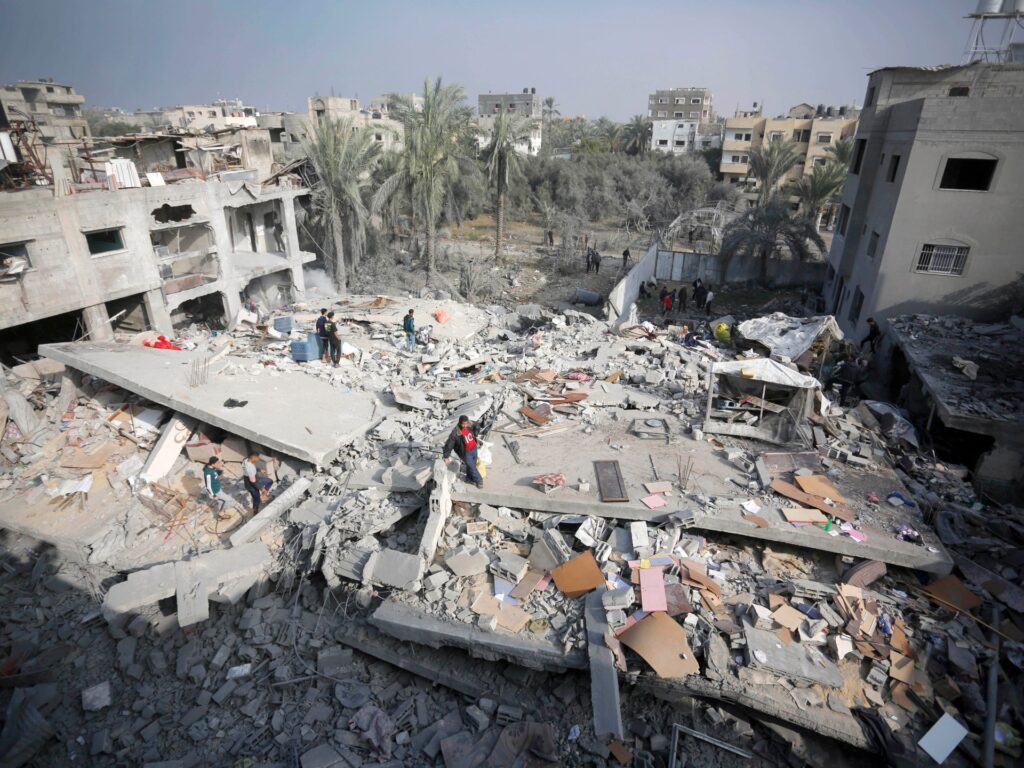
It has been more than two months now since the Israeli authorities launched a war on Gaza in response to Hamas’s attack on its southern territories, which resulted in the killing of about 1,200 people, mostly Israeli civilians. Relentless Israeli bombardment and ground attacks have flattened entire neighbourhoods and killed close to 20,000 Palestinians, more than a third of them children. The declared goal of the Israeli onslaught has been the “eradication” of Hamas from the enclave, but the viability of that being achieved has been increasingly questioned by foreign officials and analysts. Instead, the large-scale destruction wrought on Gaza as well as internal communications point to another aim the Israeli authorities may be pursuing. A document produced by Israel’s Ministry of Intelligence leaked to the Israeli press in late October outlined the forcible and permanent transfer of Gaza’s 2.3 million Palestinian residents to Egypt’s Sinai Peninsula. The document was reportedly created for an organisation called The Unit for Settlement – Gaza Strip, which seeks to recolonise the Gaza Strip 18 years after Israeli troops and settlers withdrew from it. Yet, we are not living in 1948. Today, it is much more difficult to wipe out cities and villages as was done 75 years ago during the expulsion of a large percentage of the Palestinian population from its homeland by Israeli militias, when, among other things, the reach of the media was far less extensive than it is now. The Israeli authorities have therefore turned to what we might term “the plan B”: that is, to make the Gaza Strip unliveable, by dropping tens of thousands of tonnes of bombs. The new strategy is implemented by targeting civilian infrastructure that supports life in the strip, including schools, universities, hospitals, bakeries, shops, farmland and greenhouses, water stations, sewage systems, power stations, solar panels, and generators. This is carried out in parallel with a full siege on Gaza, whereby food, water, electricity and medicine have been cut off. The Israeli army lets in a few trucks a day, if at all, which humanitarian organisations have said does not meet at all the needs of the Palestinian population, 1.8 million of whom have been internally displaced. This has resulted in what has interchangeably been called humanitarian “disaster”, “catastrophe”, “graveyard” and “hell”. The Palestinians of Gaza have been pushed to the brink of survival, while widespread epidemics are perceived by some as a desired goal. As former head of the Israeli National Security Council Giora Eiland has claimed: “Severe epidemics in the south of the Gaza Strip will bring victory closer.” Once the Gaza Strip is rendered unliveable and the population has no choice but to leave voluntarily, the next step is to ensure that neighbouring countries, Egypt first and foremost, are ready to “absorb them”. This has been made clear by several prominent figures in Israel, including former deputy director of its national intelligence agency Mossad, Ram Ben Barak. In a tweet in Hebrew, Ben Barak expressed the need “to build a coalition of countries and international funding that will allow Gazans who want to leave to be absorbed [in those countries] through the acquisition of a citizenship”. Back on November 12, 1914, US President Woodrow Wilson wrote to racial equality advocate William Monroe Trotter that “Segregation is not humiliating but a benefit, and ought to be so regarded by you gentleman”. More than 100 years later, Israel’s plan – which has less to do with segregation and more with ethnic cleansing – is presented in similar terms. The expulsion, in Ben Barak’s words, is an “opportunity [for Gaza residents] to escape the reign of fear of Hamas, which uses them as human shields”. The irony, of course, is that Palestinian civilians are often used as “human shields” by the Israeli army itself. But beyond that, along with the emphasis on “voluntary” departure in this “benevolent approach”, the forced resettlement is also made more palatable for the international community with claims that the Palestinians are really just Arabs, and therefore can easily relocate to other Arab countries. Israel has long called the 156,000 Palestinians (and their descendants) who managed to remain within its borders after 1948 “Arabs”, denying them their Palestinian identity. As Prime Minister Benjamin Netanyahu once claimed, “The Arab citizens [of Israel] have 22 nation states. They don’t need another one.” It is important here to stress that referring to the local populations, from the Strait of Gibraltar to the Strait of Hormuz, as “the Arabs” would be like calling people from South Africa, the United States, Canada, Australia, New Zealand, Ireland and Britain, regardless of their origin, “the English”. They share the language but show very clear peculiar histories, traditions and identities. More than 1,000 years ago, Jerusalemite geographer al-Muqaddasi (946–1000) explained in clear terms that he perceived himself as a Palestinian: “I mentioned to them [workers in Shiraz] about the construction in Palestine and I discussed with them these matters. The master stonecutter asked me: Are you Egyptian? I replied: No, I am Palestinian.” Centuries later, on September 3, 1921, an editorial published in the Arabic-language newspaper Falastin pointed out: “We are Palestinians first, and Arabs second.” These are just two examples, among many others, of written sources where “Palestinian” is clearly used as an identity marker. That Palestinians are not simply “Arabs” appears further evident if we look at the years in which the West Bank was occupied (1948-1967) by Jordan: an occupation which was opposed by the local population at the time, most of all by Fatah fighters, to the point that King Hussein felt obliged to impose martial law. In Gaza, which was under Egyptian control during the same period, Palestinians faced harsh repression, were denied citizenship, and had very little control over local administration. Most of them lived in very poor conditions, largely in refugee camps, having been expelled by Israeli militias from villages around the Gaza Strip, including Huj, Najd, Abu Sitta, Majdal, al-Jura, Yibna, and Bayt Daras. These last three villages, in particular, are the ones from where the
Opposition INDIA bloc meeting commences deliberations in Delhi

A crucial meeting of the Opposition INDIA bloc began in the national capital.
After years of losing battles with GOP leaders, some big city Texas mayors strike friendlier tone

Austin Mayor Kirk Watson and incoming Houston Mayor John Whitmire, two veteran Democratic legislators, are trying to repair their cities’ fraught relationships with the state’s GOP leadership.
A Texas high school is piloting the state’s first-ever Asian American studies course. Could politics stand in its way?

The course highlights Asian Americans’ contributions in U.S. history. It also seeks to offer an honest look at the mistreatment, like the incarceration of Japanese Americans during World War II.
Georgia Gov. Kemp announces $1K year-end bonus for teachers, state employees: ‘Wholly appropriate’

Georgia Gov. Brian Kemp, a Republican, said Monday that the state government will be giving a $1,000 retention pay year-end bonus to more than 300,000 state employees, teachers and school support staff. Around 112,000 eligible, full-time state and university employees will receive their $1,000 by the end of the year while school districts will determine when the roughly 196,000 teachers and school support staff across the state will receive the bonus. Elected officials and judges will not be receiving the year-end payment. “Given how hard these men and women have worked to serve Georgians during the pandemic, to help keep our community safe, and to help make the state government more streamlined and efficient, this seems wholly appropriate to me,” Kemp said at the Georgia State Capitol on Monday. GOV. KEMP RIPS BIDEN FOR HONORING SLAIN ‘COP CITY’ ACTIVIST WHO ALLEGEDLY SHOT GEORGIA OFFICER: ‘DISGRACEFUL’ The Kemp administration said it is still reviewing whether it will propose permanent pay raises in the upcoming budget, although the governor and top Republican state lawmakers are beginning to suggest that they expect permanent pay increases. Lawmakers delivered $7,000 in pay raises for state and university employees, and teachers during Kemp’s time as the state’s top executive. The nearly $330 million in overall bonuses will come out of the current year’s budget and lawmakers will approve the money in a budget amendment when they return to the legislature in January. The bonus is slated to appear in employees’ last paycheck in December. “It’s going to be a good Christmas and New Year here in Georgia,” Kemp said. “And there’s more good news coming in the weeks and months ahead. So, stay tuned.” The bonus, which is expected to be an incentive for teachers and employees to hold their current jobs, comes after Georgia Department of Education data from earlier this year showed statewide teacher retention has dropped for the last two years. “We have heard from our agency heads about the need to retain those with valuable skills and knowledge,” Kemp said. “This one-time end-of-year retention payment will help us do just that.” GEORGIA GOV. KEMP APPOINTS LAUREN CURRY AS FIRST WOMAN CHIEF OF STAFF The governor also said he would propose a permanent $104 million yearly allocation for school security, which would provide $45,000 to every public school in the state and allow for ongoing spending. Kemp said schools could use the money for any security purpose believed to be necessary, but that it is meant to underwrite a school security officer for each school. “This $45,000 number was really a number where if the schools want to hire a school resource officer, this funding should be able to take care of that,” he said. “That’s what it was designed for, really, so we could have a school resource officer in every school, if that’s what the locals want.” Kemp and state lawmakers have previously delivered multiple rounds of one-time school security payments totaling $184 million. GOP Lt. Gov. Burt Jones, who supports Kemp’s plan, has also proposed paying teachers and school employees an additional $10,000 a year to become certified to carry a firearm on campus to further strengthen school security. The state’s amended 2024 fiscal year budget will include both the pay supplement and security funding. “We are remaining competitive and rewarding our teachers and state employees for their diligent and devoted work in service to the people of our state,” Kemp wrote Monday afternoon on X, formerly Twitter. “Let’s keep working to keep Georgia the best place to live, work and raise a family.” Kemp can propose new spending since state tax collections are on track to run another multibillion-dollar surplus despite signs that tax revenue is in a slight decline. Georgia has already created $11 billion in unallocated surplus on top of its legally designated $5.4 billion rainy day account that the governor and lawmakers can spend as they see fit. Georgia’s fiscal year 2023 budget included $2,000 raises for state employees, public university employees, technical college employees, public school teachers, state-funded public librarians and teachers in state-funded preschool programs. K-12 school cafeteria workers, bus drivers and nurses received 5% salary increases. The Associated Press contributed to this report.
Israeli real estate firm pushes settlement building in Gaza
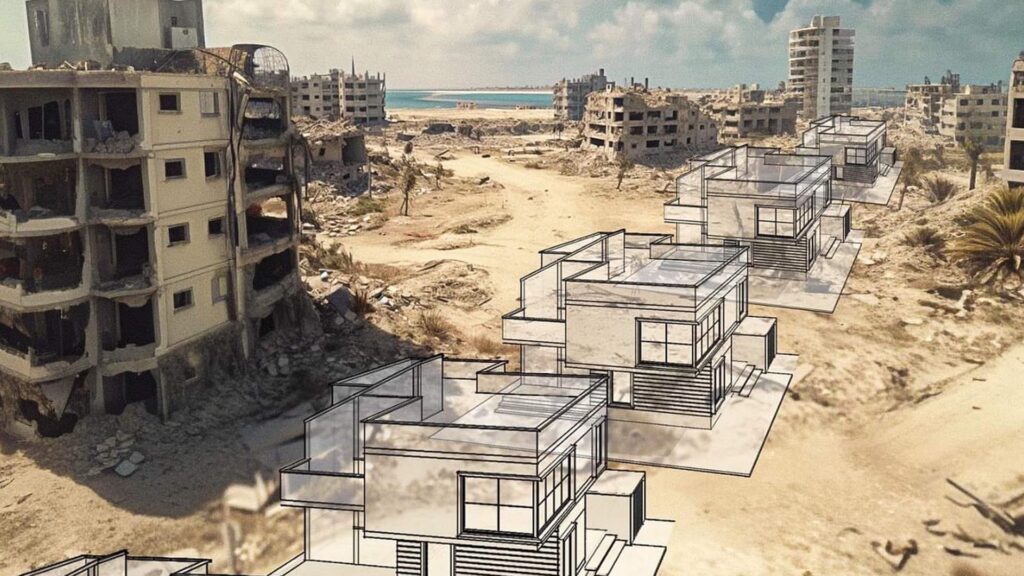
NewsFeed An Israeli real estate firm is pushing to build settlements for Israelis in Gaza, in areas where the army’s bombardment has left Palestinian homes in ruins. Published On 19 Dec 202319 Dec 2023 Adblock test (Why?)
China shaken by the nation’s deadliest quake in a decade
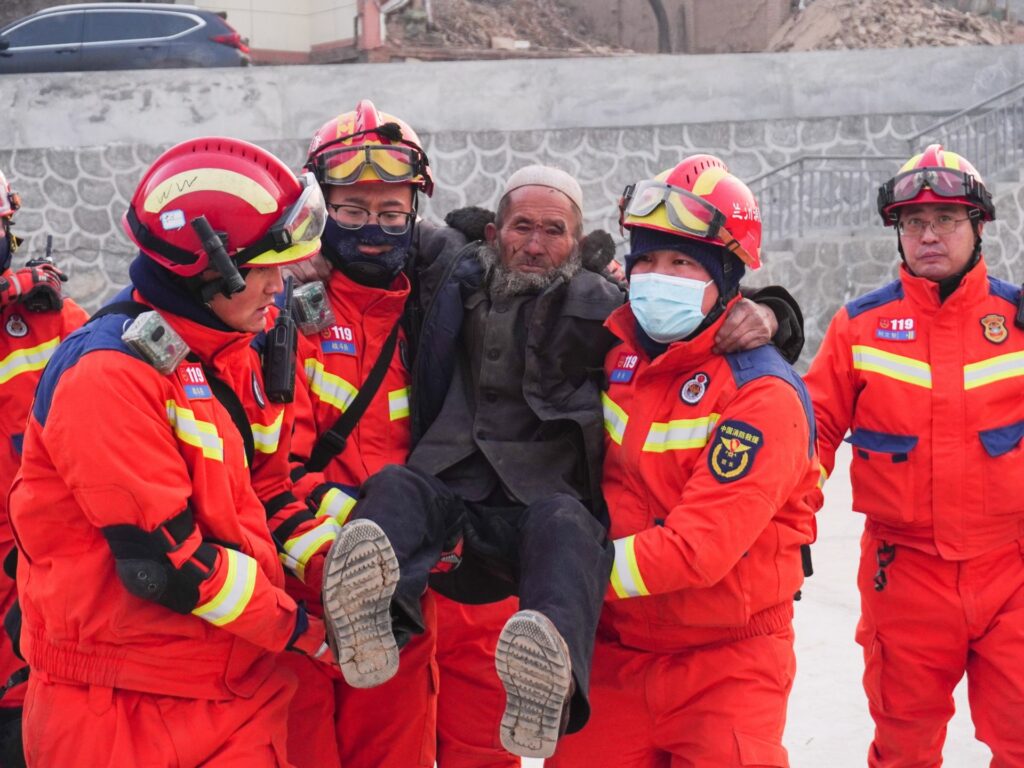
A powerful earthquake killed at least 118 people in a cold and mountainous region in northwestern China, provincial officials said on Tuesday, in the nation’s deadliest quake in 10 years. The magnitude 6.2 quake struck in Gansu’s Jishishan county, about 5km (3 miles) from the provincial boundary with Qinghai. The epicentre was about 1,300km (800 miles) southwest of Beijing, the Chinese capital. There were nine aftershocks by 10am local time, about 10 hours after the initial quake, the strongest one registering a magnitude of 4.1, a Gansu official said. Nearly 4,000 firefighters, soldiers and police officers were deployed or on standby as part of the rescue effort. Emergency authorities in Gansu province also issued an appeal for 300 additional workers to comb through collapsed buildings and for other search and rescue operations. In Qinghai, officials reported 20 people missing in a landslide, according to Chinese state-owned media. The earthquake left more than 500 people injured, severely damaged houses and roads, and knocked out power and communication lines, reports said. It struck just before midnight on Monday near the boundary between the two provinces at a relatively shallow depth of 10km (6 miles), the China Earthquake Networks Center said. China said the quake had a magnitude of 6.2, while the United States Geological Survey reported the magnitude was 5.9, and the European Mediterranean Seismological Centre said it was a magnitude 6.1 earthquake. The death toll is the highest since an April 2013 earthquake killed 196 people in southwest China’s Sichuan province. A 7.9 magnitude earthquake in 2008 was the country’s deadliest in recent years, which killed nearly 90,000 people in Sichuan. Adblock test (Why?)
Five people feared dead in suspected ADF attack in Uganda
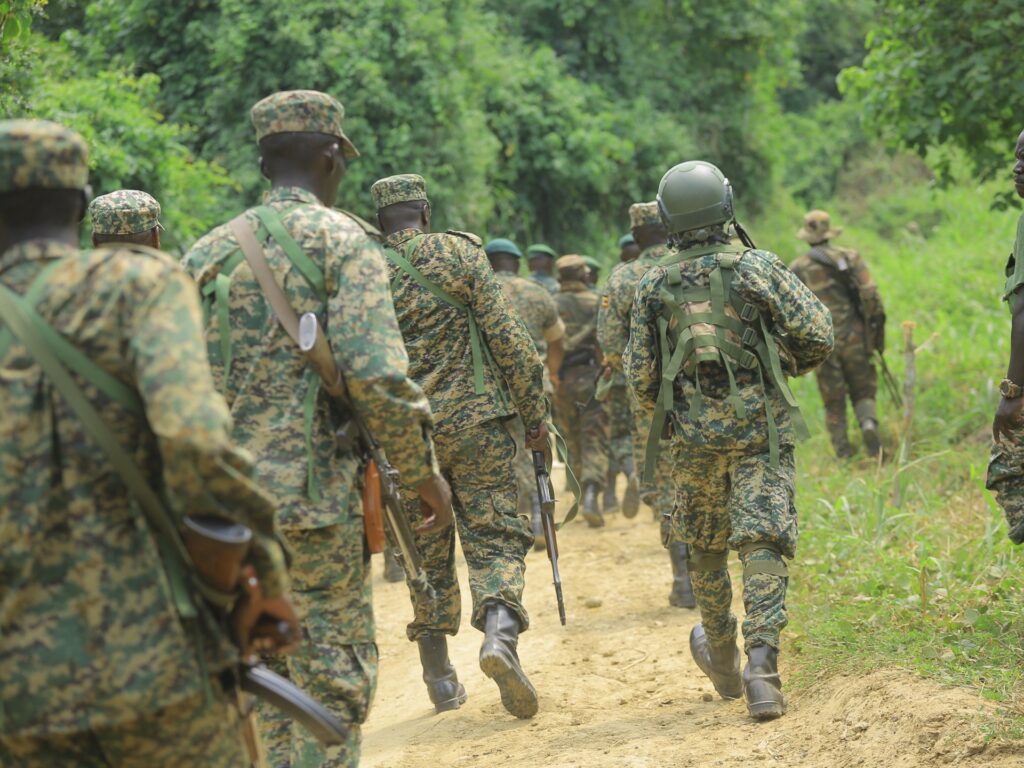
The ADF has carried out multiple attacks in Uganda and neighbouring Democratic Republic of the Congo in the last decade. At least five people were killed, including a local leader, after suspected rebels from an armed group allied to ISIL (ISIS) attacked an area in western Uganda late on Monday, the area legislator told Reuters on Tuesday. On Monday, the Allied Democratic Forces (ADF) attacked Kyabandara parish in Kamwenge district in Western Uganda at about 10pm (19:00 GMT), the lawmaker, Cuthbert Abigaba, said. The attackers then killed a local councillor whom they found in a small roadside restaurant she operated alongside four of her clients who had just sat down for a meal, Abigaba said. “After the killing, they burnt the restaurant and also proceeded and looted items from nearby shops before fleeing,” he said. The deputy spokesperson for Uganda’s military, Deo Akiiki, confirmed the attack and said they would give details later. The ADF was formed as an anti-Kampala rebel group in the mid-1990s and initially battled the government of President Yoweri Museveni from bases in the Rwenzori mountains. After its formation, the group was eventually routed by the Ugandan army, with remnants fleeing into eastern Democratic Republic of the Congo where they have since orchestrated deadly attacks with thousands of casualties in the last decade across both countries. The ADF in 2019 pledged allegiance to ISIL, which has previously claimed responsibility for some of the ADF’s attacks. Uganda launched a ground and air campaign against the ADF in the DR Congo in 2021. Museveni has said the operation has succeeded in killing a large number of rebels, including some commanders. The group has continued to carry out attacks including on a school in Western Uganda in June in which dozens died and another that killed two foreign tourists and their Ugandan tour guide. Adblock test (Why?)
RNC bashes Biden for ‘unaffordable’ holiday costs in festive new attack ad

FIRST ON FOX: The Republican Party is seizing on the rising cost of holiday celebrations, bashing President Biden’s economic policy as the reason for the fiscally tight season. A new digital ad being rolled out by the Republican National Committee (RNC), previewed exclusively by Fox News Digital, features news clips talking about the rising cost of celebrating Christmas. It chalks it up to the rising cost of living under the Biden administration. “This holiday season, Bidenomics has made everything from Christmas trees to gifts unaffordable for middle-class families,” RNC Chairwoman Ronna McDaniel told Fox News Digital. DEMAND FOR CHRISTMAS TREES IN AMERICA REMAINS HIGH DESPITE INFLATION “While Americans struggle to stay afloat, we’re reminding them who the real Grinch is this Christmas: Joe Biden,” she said. The average cost of a Christmas tree has gone up 10% from last year, according to the American Christmas Tree Association. The average cost of one runs between $80 and $100, the group said. Meanwhile, a November 2023 survey from Wallethub, cited in the video, found that more than 30% of Americans would forgo buying gifts this year due to inflation. CHRISTMAS STOCKING STUFFER IDEAS: 5 COOL GIFTS TO GRAB TODAY ON AMAZON The RNC’s video also points out that a quarter of respondents said they still have holiday debt from last year’s season. “Food costs are up 20% on a two-year basis… 42% expect to pay more for holiday gifts due to inflation,” the montage of voiceovers in the video says. “You’re buying less apparel, less items for your home, fewer toys… More than one in three Americans are talking about forgoing gifts altogether because of inflation.” MILITARY CHRISTMAS WISH: DEPLOYED US ARMY UNIT CALLS FOR RESCUE OF PUPPIES AND CAT FROM FREEZING WEATHER PNC Bank’s annual calculation of the cost of the “12 Days of Christmas,” a holiday tradition, has shown that the price tag on those famous items has risen as well. Based on data by the Bureau of Labor Statistics, one would spend $46,729.86 to bring each line of the famous Christmas carol to life – a 2.7% increase from last year. That’s less than the 10.5% price hike that PNC Bank calculated between 2021 and 2022.