

‘My mother’s mangalsutra was…’: Priyanka Gandhi hits back at PM Modi over attack on Congress

Speaking at a rally in Bengaluru, Congress general secretary Priyanka Gandhi also alleged that Bharatiya Janata Party (BJP) leaders do not understand the struggle of women.
Anti-Israel mob stages ‘seder on the street’ near Schumer’s home in NYC
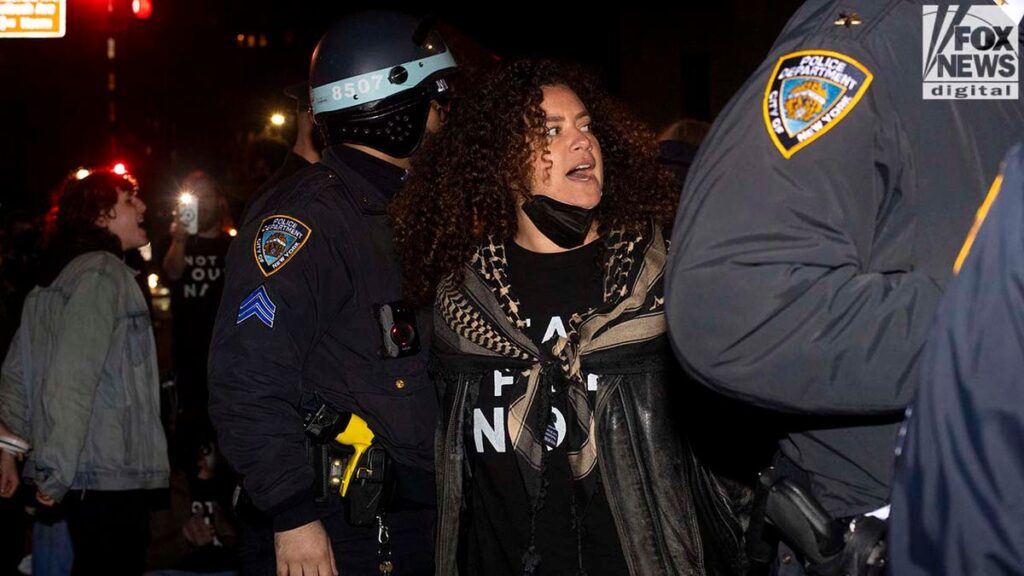
Anti-Israel agitators staged a “sedar on the street” protest in front of the Brooklyn home of Senate Majority Leader Chuck Schumer in protest of American support for Israel. The protests came after the Senate passed a $95 billion emergency foreign aid package to Israel, Gaza and Ukraine. Organized by pro-Palestinian groups, the protest was described as a “seder on the street” for the second night of the week-long Jewish Passover. Photos from the protest showed large groups of demonstrators gathering in front of Schumer’s Brooklyn, New York home. COLUMBIA UNIVERSITY RESPONDS AFTER ROBERT KRAFT SAYS HE’S PULLING SUPPORT OVER ANTISEMITIC VIOLENCE The protesters urged Schumer to support an end to the U.S. providing weapons to Israel for its ongoing conflict in Gaza. Following speeches from pro-Palestinian leaders, several people were arrested by New York Police Department (NYPD) officers. The NYPD did not immediately respond to Fox News’ request on how many protesters were arrested. COLUMBIA PROTESTS ARE ‘WRITING ON THE WALL’ ABOUT ANTISEMITISM ON CAMPUSES, STUDENT ORGANIZATION FOUNDER SAYS The demonstrators at the Senate majority leader’s house came as New York City has faced an eruption of anti-Israel protests. Since Friday, hundreds of students and others have been arrested at Columbia, Yale, New York University and other schools. More than 100 students were arrested at Columbia University last week, and the prestigious university has decided to cancel in-person classes in an attempt to defuse tensions.
Bipartisan lawmakers seek answers from Mayorkas after Russian cyberattacks on water systems in US
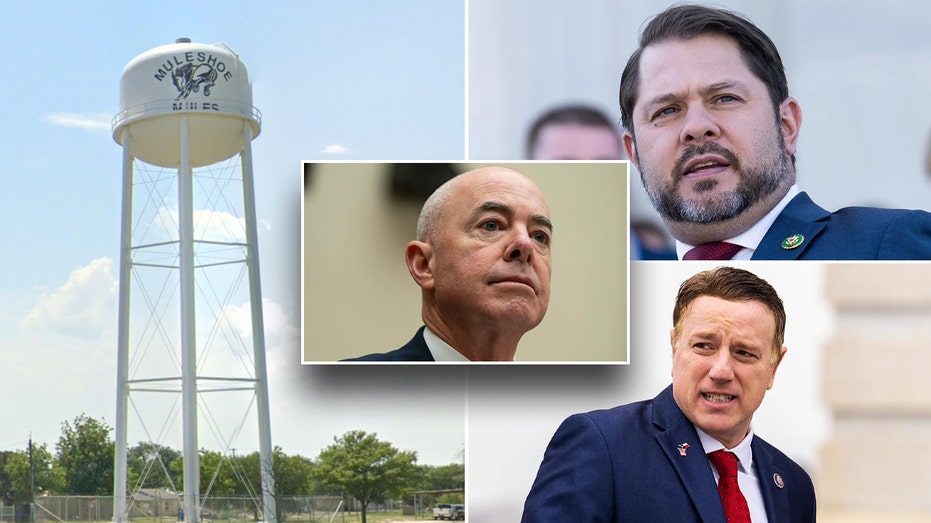
Lawmakers from different sides of the aisle concerned about recent cyberattacks on water systems in drought-stricken areas of the western U.S. are seeking answers from the Department of Homeland Security (DHS) on how hacks are going to be prevented in the future. In a letter to DHS Secretary Alejandro Mayorkas, Reps. Ruben Gallego, D-Ariz., and Pat Fallon, R-Texas, called for a briefing and answers regarding the January cyberattack launched against the water system in Muleshoe, Texas. The hack caused the small Texas town’s water system to overflow, and within two hours, sent tens of thousands of gallons of water flowing out of the town’s water tower. The attack was one of three on small towns in the rural Texas Panhandle and has been linked to a Russian hacktivist group. RURAL TEXAS TOWNS REPORT CYBERATTACKS THAT CAUSED ONE WATER SYSTEM TO OVERFLOW According to Mike Cypert, the city manager of Hale Center, there were about 37,000 attempts in four days to log into the city’s firewall. Ultimately, the attempted hack failed as the city “unplugged” the system and operated it manually. But in Muleshoe, which has a population of about 5,000 people, hackers caused the system to overflow before it was shut down and taken over manually by city officials. In the letter to Mayorkas, the legislators said the cybersecurity firm Mandiant attributed the attack to Sandworm, which is believed to be connected to Russia’s spy agency, the GRU. TEXAS FARMING CRISIS LOOMS AS US, MEXICO SPAR OVER LONG-STANDING WATER TREATY In 2018, Sandworm launched hacks against the Olympic Games in South Korea, and on Ukraine’s electrical grid. Another group connected to Sandworm, the Cyber Army of Russia Reborn, claimed responsibility for the hack in Texas, the lawmakers wrote. “Water facilities continue to be central to our nation’s critical infrastructure, and our water resources face many limitations,” Gallego and Fallon said. “Should a hack similar to the Texas incident occur in Arizona or other states that may lack sufficient water supply, it could disrupt operations across the region with devastating effects.” 4 IRANIANS INDICTED FOR ALLEGED MALICIOUS MULTI-YEAR CYBER CAMPAIGN TARGETING US GOVERNMENT AND DEFENSE FIRMS They added that losing tens of thousands of gallons of water, like Muleshoe did in January, could have “devastating impacts” on rural communities across the country. The two lawmakers sent a list of questions to Mayorkas, asking what actions his department is taking to respond to the hack against Muleshoe’s water system; what steps he is taking to protect the nation’s water facilities and other critical infrastructure from disruption; and what lessons his department has learned from previous hacks, pointing to an incident last year when an Iranian regime-linked cyber group conducted a hack against a water authority in Pennsylvania. The letter marks the second time since December of last year that Gallego has requested a briefing from Mayorkas about DHS protection of U.S. water facilities and other critical infrastructure from adversary disruption. Fox News Digital reached out to DHS for comment and did not immediately hear back. In March, Environmental Protection Agency Administrator Michael S. Regan and Jake Sullivan, assistant to the president for National Security Affairs, sent a letter to the nation’s governors asking them to take steps to protect the water supply, including assessing cybersecurity and planning for a cyberattack. “Drinking water and wastewater systems are an attractive target for cyberattacks because they are a lifeline critical infrastructure sector but often lack the resources and technical capacity to adopt rigorous cybersecurity practices,” Regan and Sullivan wrote. The Associated Press contributed to this report.
North Carolina lawmakers reconvene to address budget, vouchers before key elections
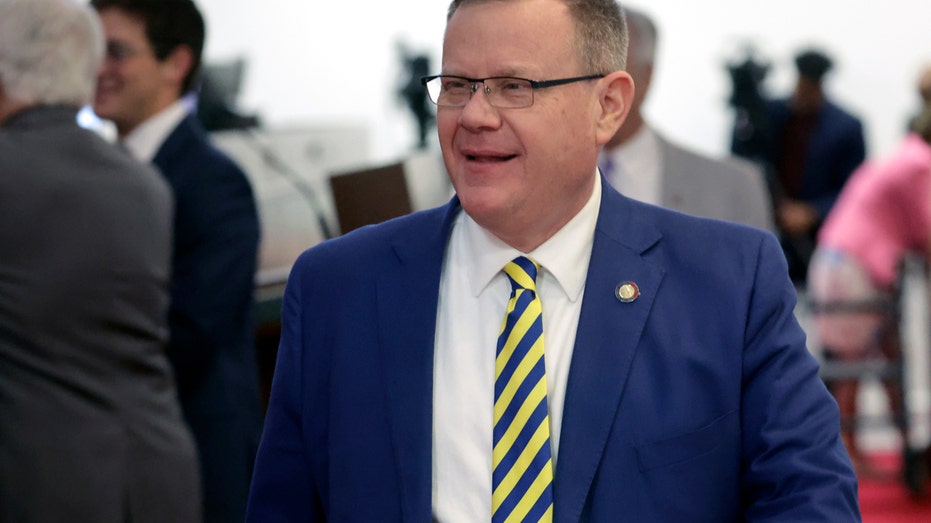
The North Carolina General Assembly begins its annual work session Wednesday with a little extra money to spend and limited pressing issues to address before key elections this fall and longtime state government leaders depart. Following their landmark 2023 session that expanded Medicaid, restricted abortion, broadened gun rights, swelled private-school vouchers and weakened the governor, Republicans leading the House and Senate are talking about the traditionally “short” session to be just that — with a goal to finish by early summer. NORTH CAROLINA GOV. COOPER VETOES 2 MORE BILLS, BUT BUDGET STILL ON TRACK TO BECOME LAW TUESDAY “We dealt with a lot of weighty issues,” House Speaker Tim Moore, a Cleveland County Republican, told reporters recently. “Are there still some things left to be done? Yes, we’re going to deal with those.” With all 170 legislative seats up for reelection in November and Republicans who approved last year’s agenda holding the narrowest of veto-proof majorities, party leaders will be careful to advance measures that won’t sway public opinion against their candidates in key districts. Legislation forcing local sheriffs to assist with federal immigration enforcement and locating more funds for the private-school scholarships could qualify. The legislature’s chief duty in even-numbered years is to adjust the second year of the two-year government operating budget that’s already enacted. A consensus forecast by the legislature and Democratic Gov. Roy Cooper’s administration says the state will collect an additional $1.4 billion through mid-2025 than previously anticipated. This compares to the $30.9 billion currently set to be spent in the fiscal year starting July 1. As much as $400 million could be needed to make Medicaid spending adjustments because of a lower federal government match and the higher use of services by enrollees, Rep. Donny Lambeth of Forsyth County, a House budget writer, said this week. And Moore and Senate Majority Leader Paul Newton said separately that GOP colleagues are prepared to set aside more money for the Opportunity Scholarship Program so that more families in higher-income brackets can receive grants this fall for their K-12 children to attend private or religious schools. The current budget law did away with the program’s income caps to qualify, leading to a six-fold increase in applications this year. But the state authority running the program said there isn’t enough to assist all qualifying applicants, and no aid would go to groups of applicants with the highest incomes. It wasn’t clear whether Republicans would seek to fully fund the scholarships for the coming year, which Moore said could require $300 million more. Still, “I think there’s a high probability that we’re going to make sure the parents who want choice get choice for their children,” said Newton, a Cabarrus County Republican. Cooper, who is term-limited from running for reelection, also will present his last budget proposal Wednesday. Cooper is hoping GOP legislators will listen to his calls to stop spending on the Opportunity Scholarship program that he’s opposed for years until public schools are “fully funded,” and for teachers to receive sizeable pay raises. “We need to invest in public schools,” Cooper told reporters recently. “We know that to sustain the workforce of the future for all these jobs we’re attracting, we’ve got to make sure that our public schools are strong.” On immigration, Newton said he suspects the Senate would take up a bill approved by the House last year that would force sheriffs to help federal agents interested in picking up jail inmates they believe are in the country illegally. Cooper successfully vetoed similar measures in 2019 and 2022, but that’s when GOP legislators lacked supermajorities. State budget approval was nearly derailed last year when Senate Republicans sought to insert language that would have permitted construction of four more casinos in the state and the sanctioning and regulating video gambling machines statewide. But Republicans from both chambers have suggested discussions about sanctioning the gambling machines could resurface. General Assembly staff estimated last year that revenue from the machines could generate over $400 million annually by later this decade. That could help make up for revenue losses now projected as approved individual and corporate income tax rates further decline. Republicans have downplayed talk of long-term shortfalls as hasty. Democratic legislators seeking to halt what they consider bad GOP bills will face the same challenges that began last April when Rep. Tricia Cotham changed her registration to the Republican Party. Her switch secured the veto-proof majority in both chambers. All of Cooper’s vetoes last year were overridden. “The numbers are what they are,” said House Minority Leader Robert Reives, a Chatham County Democrat. “I can still count and I know that the Republican caucus is going to vote 100% together.” This short session also marks the last one for Moore, who is likely on his way to Congress in 2025 after a record five two-year terms leading the chamber. He comfortably won his primary election for the Republican-leaning 14th Congressional District.
Senate approves $95B aid package for Ukraine and Israel, TikTok divestment, awaits Biden’s signature

A $95 billion package with aid to both Ukraine and Israel passed the Senate on Tuesday night after the House’s various adjustments were approved in the lower chamber over the weekend. By a vote of 79 to 18, the Senate sent the package to President Biden’s desk, and he is expected to sign off on the additional foreign aid. It notably passed with more votes than the previous Senate-passed version had garnered in February. The package ultimately included aid to Ukraine, Israel and Taiwan, alongside measures requiring TikTok to divest from Chinese-owned ByteDance and to allow $5 billion in Russian assets held in U.S. banks to be transferred to Ukraine. BIDEN ADMIN NOTES ‘URGENT’ CONCERN OVER ISRAEL IN GAZA HUMAN RIGHTS REPORT Biden had initially requested the supplemental foreign aid in October. A different version of the package with funds for Ukraine, Israel and Taiwan passed the Senate in February but was never voted on in the House. Under the measures, roughly $61 billion is set aside for supporting Ukraine in the war against Russia, about $26 billion is allotted for Israel and humanitarian aid, and nearly $8 billion is provided for the Indo-Pacific and Taiwan. The Senate cleared the way for quick passage of the bills earlier on Tuesday when it voted in favor of invoking cloture, 81-19. DEMOCRATS JOIN REPUBLICANS IN CONDEMNING ANTISEMITISM AT COLUMBIA UNIVERSITY After the cloture motion passed, Senate Majority Leader Chuck Schumer, D-N.Y., celebrated, telling senators in floor remarks, “In a resounding bipartisan vote, the relentless work of six long months has paid off: Congress is sending the supplemental to President Biden’s desk.” “This is an important day for America and a very important day for freedom-loving countries around the world,” Senate Minority Leader Mitch McConnell, R-Ky., remarked to reporters following the vote to invoke cloture. GOP LAWMAKERS DEMAND BIDEN ADMIN PROSECUTE ‘PRO-TERRORIST MOBS,’ HOLD SCHOOLS ACCOUNTABLE Prior to the cloture vote, a significant number of senators sought a motion to table an amendment tree, which blocks other amendments from being considered in regular order. The motion to table was a close vote, with 48 supporting it and 50 voting against, allowing the amendment tree to stand. Sen. Bernie Sanders, I-Vt., released a statement following the motion’s failure, noting that it meant his amendment wouldn’t be considered. He wanted to see votes on his two amendments to the package, which would have ended unconditional aid to Israel and restored funding to the United Nations Relief and Works Agency (UNRWA). FETTERMAN HAMMERS ‘A–HOLE’ ANTI-ISRAEL PROTESTERS, SLAMS OWN PARTY FOR RESPONSE TO IRANIAN ATTACK: ‘CRAZY’ “Polls show that a majority of Americans, and a very strong majority of Democrats, want to end U.S. taxpayer support for Netanyahu’s war against the Palestinian people,” Sanders said in a statement. “It is a dark day for democracy when the Senate will not even allow a vote on that issue.” A number of Republican lawmakers also wanted votes on their respective amendments, including Sen. Mike Lee, R-Utah, who proposed an amendment to require repayment of the foreign aid loan to Ukraine, in order to make it “real.” If any amendments were passed in the Senate, the bill would be sent back to the House for its consideration once again.
‘Squad’ member survives challenge from centrist Democrat after anti-Israel rhetoric threatened re-election

A member of the far-left “Squad” survived a challenge from a centrist Democrat on Tuesday despite her sharp criticism of Israel that threatened her effort to win re-election in a district with a sizable Jewish community. Rep. Summer Lee, a first-term congresswoman, will once again be the Democrat nominee to represent Pennsylvania’s 12th Congressional District, after defeating local councilwoman Bhavini Patel. Lee’s victory follows that of fellow “Squad” member Rep. Ilhan Omar, D-Minn., in 2022, when she was nearly ousted in her own primary after making controversial remarks about police and Israel throughout her political career. COLUMBIA ALUM OBAMA SILENT AS JEWISH FACULTY, STUDENTS FACE ANTISEMITIC HARASSMENT ON CAMPUS The race was viewed as an early test of how progressive Democrats critical of Israel might perform with voters as the party faces a continued divide over support for one of America’s closest allies in the Middle East amid continued Gaza military operations in response to the Oct. 7 Hamas terrorist attack. Since the attack and the war’s escalation, Lee had called for a ceasefire and opposed sending more funding to Israel. She had come under fire in recent months from pro-Israel groups and the Jewish community for her rhetoric on the war, including an open letter signed by dozens of rabbis condemning her “divisive rhetoric” they said had been “perceived as openly antisemitic.” DEMOCRATS HOLD MAJOR 2024 ADVANTAGE AS HOUSE REPUBLICANS FACE FURTHER CHAOS, DIVISION While campaigning, Patel framed Lee’s anti-Israel stance as part of a left-wing politics too extreme for the people of the district, and argued it ran in contrast to President Biden’s agenda as he faces his own challenge of winning Pennsylvania against former President Donald Trump in November. The issue of antisemitism was a particularly potent issue in the 12th district because it is home to the synagogue where a gunman killed 11 congregants in 2018, the deadliest attack on Jews in U.S. history. Lee’s victory helped her avoid being the first House Democrat incumbent to lose a primary this year. Other “Squad” members are also expected to face tough primary challenges from centrist Democrats, including Reps. Cori Bush, D-Mo., Jamaal Bowman, D-N.Y., and Ilhan Omar, D-Minn. Fox News’ Emma Colton and the Associated Press contributed to this report. Get the latest updates from the 2024 campaign trail, exclusive interviews and more at our Fox News Digital election hub.
Texas Supreme Court orders Harris County to not make payments under guaranteed income program
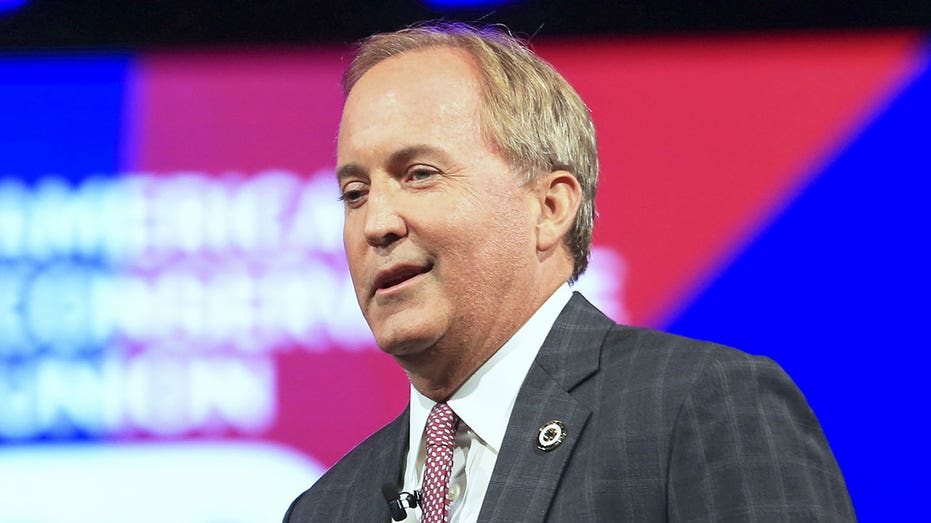
The Supreme Court of Texas issued a ruling Tuesday that prohibits Harris County from launching a guaranteed income program which is currently being disputed by Attorney General Ken Paxton. The decision comes just days after Houston County Judge Ursula Hall struck down Paxton’s arguments that the Uplift Harris program, which distributes monthly stipends to over 1,900 low-income residents, is unconstitutional. “If the program does include a public benefit, it does not violate the constitution,” the Houston Landing reported Hall as saying. Paxton’s attorneys argued that taxpayer money must be used in the public interest for a general benefit. TEXAS LAWMAKER CHALLENGES ‘LOTTERY SOCIALISM,’ URGES STATE AG TO RULE ON THE UNIVERSAL INCOME PROGRAM The Harris County Commissioners Court passed Uplift Harris last year by a vote of 4-1. The guaranteed income pilot would allow participating households to receive $500 per month for 18 months. The program began on Jan. 12, and currently has 1,924 applicants enrolled. Paxton filed a lawsuit seeking an immediate ruling to block Uplift Harris from making payments under the program, which the Texas Supreme Court granted. “Without regard to the merits, the court grants an administrative stay as follows: Real parties in interest and their agents are prohibited from making payments under the Uplift Harris program pending further order of this Court,” the ruling read. JUDGE SHOOTS DOWN TEXAS AG PAXTON’S ATTEMPT TO BLOCK GUARANTEED INCOME PROGRAM UpTogether, an organization with a mission of investing in people in historically undervalued communities by influencing policies and mobilizing systems for change, responded to the court’s ruling on Tuesday, calling the decision “shameful.” “Today’s shameful decision means thousands of Texas residents facing financial hardship will be denied an opportunity for financial stability and upward mobility for the unforeseeable future,” UpTogether CEO Jesús Gerena said. “By blocking Uplift Harris, the state Supreme Court has tossed aside any notion of judicial restraint and joined Ken Paxton’s ongoing circus show, in which he continues to use people’s day-to-day survival as a political football.” Gerena added that what Paxton was doing “is cruel, it is deceitful, and it is opportunistic.” Still, Paxton continues to fight against what he says is unconstitutional. TEXAS SCHOOLS WARNED OF FINANCIAL PENALTIES IF THEY SKIRT DEI BAN: ‘STRONGEST BILL IN THE NATION’ “I’m pleased the Supreme Court of Texas has blocked Harris County from disbursing these unlawful payments,” Paxton said. “I look forward to continuing to defend our Constitution and preventing this egregious misuse of taxpayer money.” Harris County Judge Lina Hidalgo said in February that migrants are living in poverty, “supporting them helps all of us and has good downstream effects on all of us.” After hearing the news that payments would not be able to go out immediately, she said her heart “breaks” for the families. CLICK HERE TO GET THE FOX NEWS APP “This is the state once again trying to bully Harris County, and these families are getting caught in the middle,” Hidalgo said in a statement to Fox News Digital. “The Attorney General has known for a year that we had this program coming, so we really were surprised to see them try to block it once we had already selected and notified the recipients. I’ve already heard stories of people who were expecting these funds and I hate having to give them contradictory information every day, but I can say that we are going to keep fighting.” Harris County has until April 29 to respond to the emergency motion for relief to the Texas Supreme Court. Joshua Q. Nelson of Fox News Digital contributed to this report.
J6 rioter who struck officer with pole sentenced to 6 years in prison

A man who became a fugitive after a federal jury convicted him of assaulting police officers during the U.S. Capitol riot was sentenced on Tuesday to six years in prison. David Joseph Gietzen, 31, of Sanford, North Carolina, struck a police officer with a pole during a mob’s Jan. 6, 2021, attack on the Capitol. JAN. 6 WAS NOT AN INSURRECTION, SAYS TURLEY, WARNS DEMOCRATS OF ‘SLIPPERY SLOPE’ THREATENING DEMOCRACY Gietzen told U.S. District Judge Carl Nichols that he didn’t intend to hurt anybody that day. But he didn’t express any regret or remorse for his actions on Jan. 6, when he joined a mob of Donald Trump supporters in interrupting the joint session of Congress for certifying President Joe Biden’s 2020 electoral victory. “I have to make it explicitly known that I believe I did the right thing,” he said before learning his sentence. The judge said Gietzen made it clear during his trial testimony — and his sentencing hearing — that he clings to his baseless beliefs that the 2020 presidential election was stolen from Trump. “Mr. Gietzen essentially was unapologetic today about his conduct,” Nichols said. Last August, a jury convicted Gietzen of eight counts, including assault and civil disorder charges. After his trial conviction, Gietzen disregarded a court order to report to prison on Oct. 20, 2023, while awaiting sentencing. He missed several hearings for his case before he was arrested at his mother’s home in North Carolina on Dec. 12, 2023. “This pattern of flouting rules and laws and doing what he wants, regardless of the consequences, is how Gietzen operates,” prosecutors wrote in a court filing. Defense attorney Ira Knight said Gietzen apparently remained at his house, “just waiting to be picked up,” and wasn’t on the run from authorities or trying to hide after his conviction. Prosecutors recommended a prison term of 10 years and one month for Gietzen, who worked as a computer programming engineer after graduating from North Carolina State University in 2017 with bachelor’s degrees in computer engineering and electrical engineering. “Clearly, Gietzen is bright and able to get something done when he puts his mind to it – be it a college degree or assaulting officers as part of in a violent mob,” prosecutors wrote. Gietzen’s attorneys requested a four-year prison sentence. “David’s current philosophy is that he no longer wishes to be engaged with the political process,” defense attorneys wrote. “His involvement with politics has concluded and should be an indication to the Court that he is no longer interested in being a threat to the public or political process.” Gietzen traveled to Washington, D.C., with his brother from their home in North Carolina. He attended then-President Donald Trump’s “Stop the Steal” rally near the White House on Jan. 6 before marching to the Capitol. As the mob of Trump supporters overwhelmed a police line on the Capitol’s West Plaza, Gietzen shoved a police officer, grabbed another officer’s gas mask and struck an officer with a pole. “And all of Gietzen’s violence was based on a lack of respect for law enforcement and the democratic process — its goal was to get himself and other rioters closer to the building so they could interfere with the certification of the election,” prosecutors wrote. Gietzen later bragged about participating in the riot in messages to friends and relatives, saying he had “never been prouder to be an American.” More than 1,350 people have been charged with Capitol riot-related federal crimes. Over 800 of them have been sentenced, with roughly two-thirds getting terms of imprisonment ranging from a few days to 22 years.
New bill to fund Theodore Roosevelt Presidential Library announced

Supporters of the Theodore Roosevelt Presidential Library in North Dakota are cheering new federal legislation to help build the library and to showcase artifacts of the 26th president, who as a young man hunted and ranched in the state during its territorial days. Last week, North Dakota’s three-member, all-Republican congressional delegation announced the bill to “authorize funding for the Library’s continued construction and go towards ensuring the preservation of President Roosevelt’s history and legacy.” The bill’s Interior Department grant is for $50 million of one-time money, most of which “will go into creating the museum spaces in our facility,” said Matt Briney, the library’s chief communications officer. WORKERS MAKE HEADWAY ON THEODORE ROOSEVELT PRESIDENTIAL LIBRARY IN NORTH DAKOTA’S BADLANDS The bill also enables and directs federal agencies to work with the library’s organizers to feature Roosevelt items in the library’s museum, he said. In 2019, North Dakota’s Republican-controlled Legislature approved a $50 million operations endowment for the library, available after its organizers raised $100 million in private donations for construction. That goal was met in late 2020. The project has raised $240 million in private donations, and complete construction costs $333 million, Briney said. Covering the library’s construction costs has not been an issue, he said. Construction is underway near Medora, in the rugged, colorful Badlands where the young future president briefly roamed in the 1880s. Organizers are planning for a grand opening of the library on July 4, 2026, the United States’ 250th anniversary of independence. In a statement, the congressional delegation hailed the bill as “a wise investment in our nation’s historical preservation.” In the same press release, the bill drew praise from descendant Theodore “Ted” Roosevelt V and North Dakota Gov. Doug Burgum, who championed the library to the 2019 Legislature. The bill would require a two-thirds match from state funds or non-federal sources, and it would prohibit the federal money from going toward the library’s maintenance or operations. Planned exhibits include a chronological view of Roosevelt’s life, such as galleries of his early life, time in the Badlands, travels to the Amazon and his presidency, Briney said. The 2023 Legislature approved a $70 million line of credit for the library through the state-owned Bank of North Dakota, which Briney said library planners have not tapped. That line of credit drew scrutiny last year from Republican state Rep. Jim Kasper, who called it a “$70 million slush fund” that could leave taxpayers on the hook. Library CEO Ed O’Keefe has said the line of credit was intended as backstop to help ensure construction could begin. In an interview, Kasper called the library, which he supported, “a beautiful thing for the state of North Dakota … but I want private funds raised to pay for it.” “If there’s going to be taxpayers’ dollars that are used, then I’d rather have federal dollars used than taxpayers of North Dakota dollars,” Kasper said. “Obviously there’s still taxpayer dollars. But I really don’t support any taxpayer dollars being used for the project, whether they’re state or federal.” Other presidential libraries have been built with private donations or non-federal money. Some have received funds for construction and development from state and local governments and universities, then have been transferred to the federal government and run by the National Archives and Records Administration through that agency’s budget, according to the National Archives’ website. The Theodore Roosevelt Presidential Library will always be privately held, said Briney, who called the legislation’s money “not necessarily uncommon.”
Crucial Senate showdown in key battleground state officially underway as Casey, McCormick win primaries

It’s officially game on in Pennsylvania, as Republican candidate Dave McCormick and Democratic Sen. Bob Casey Jr. were projected the winners of the two major party Senate primaries in the northeastern battleground state. Both candidates, who were unopposed in Tuesday’s Democratic and GOP primaries, will now face off in a high-profile and expensive Senate showdown that is one of a handful across the country which will likely decide whether the GOP wins back the Senate majority. McCormick, a former hedge fund executive, West Point graduate, Gulf War combat veteran and Treasury Department official in former President George W. Bush’s administration, is making his second straight bid for the Senate. HEAD HERE FOR THE LATEST FOX NEWS ELECTION RESULTS He was part of a crowded and combustible battle for the 2022 GOP nomination. He ended up losing the nomination by a razor-thin margin to celebrity doctor and cardiac surgeon Mehmet Oz, who secured a primary victory thanks to a late endorsement from former President Donald Trump. Oz ended up losing the general election to then-Democrat Lt. Gov. John Fetterman. This time around, McCormick faced no major opposition in the GOP primary. He was backed last year by longtime Senate Republican leader Mitch McConnell as well as the Pennsylvania GOP, and was encouraged to run by the National Republican Senatorial Committee, which is the party’s Senate campaign arm. TRUMP MAKES MAJOR ENDORSEMENT IN KEY SENATE RACE McCormick endorsed Trump early last month after the former president scored major victories in the coast to coast Super Tuesday contests and Nikki Haley – Trump’s last remaining rival for the 2024 GOP presidential nomination – dropped out of the White House race. Trump, the GOP’s presumptive presidential nominee, returned the favor earlier this month, endorsing McCormick. Casey, the son of a popular former governor, is running for a fourth six-year term in the Senate. He served a decade as Pennsylvania’s auditor general and then treasurer before winning election to the Senate in 2006. The most recent public opinion polls indicate Casey holding a single-digit advantage over McCormick. Democrats currently control the U.S. Senate with a 51-49 majority, but Republicans are looking at a favorable Senate map this year, with Democrats defending 23 of the 34 seats up for grabs. Three of those seats are in red states that Trump carried in his 2020 election defeat to President Biden — Ohio, Montana and West Virginia, where Democrat Sen. Joe Manchin is not running for re-election. And Pennsylvania is one of five key general election battlegrounds where the Democrats are defending seats. Democrats may also have to worry about holding the open Senate seat in blue Maryland, where former GOP Gov. Larry Hogan is running. Get the latest updates from the 2024 campaign trail, exclusive interviews and more at our Fox News Digital election hub