

Can Indian billionaire Gautam Adani be tried in the US for India ‘crimes’?
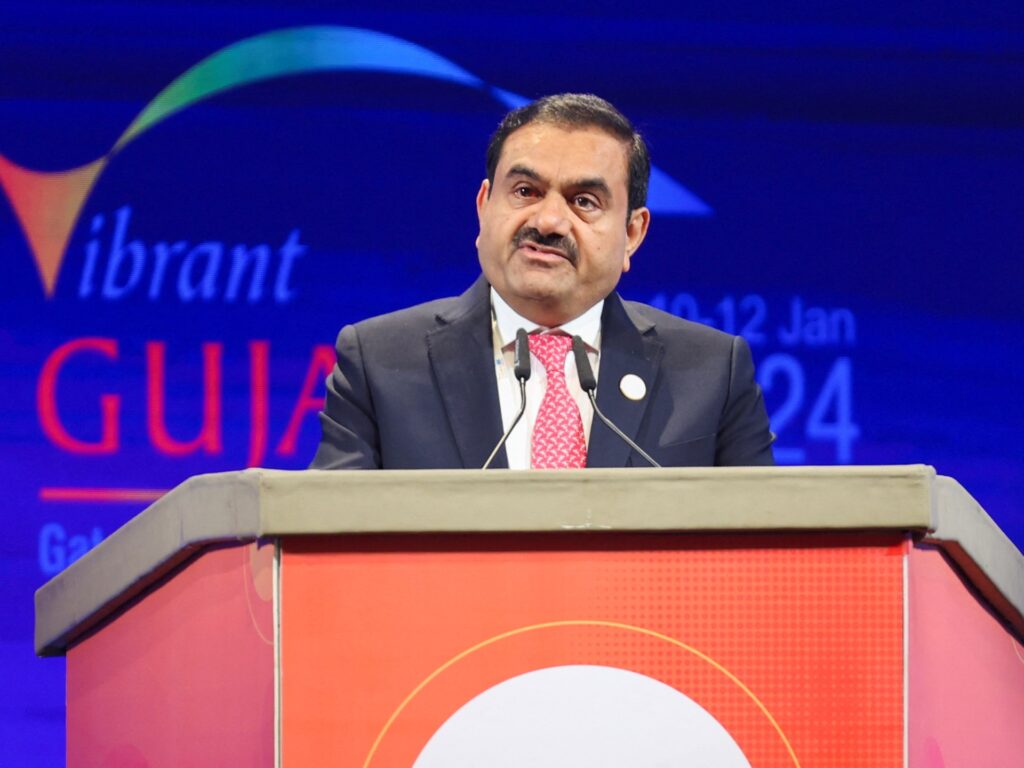
It is a tumultuous time for Gautam Adani, the billionaire chairman of one of India’s biggest corporate conglomerates, the Adani Group, and one of the richest people in the world. The United States Securities and Exchange Commission (SEC) has accused Adani and others of conspiring to pay about $265m in bribes to Indian government officials to obtain contracts and develop India’s largest solar power plant project. US prosecutors unveiled in November an indictment of Gautam Adani, his nephew Sagar Adani and five others. The Adani Group has rejected these claims, calling them baseless. Amid all this, Adani remains defiant. “This is not the first time we have faced such challenges … every attack makes us stronger and every obstacle becomes a stepping stone,” Adani said on Sunday at an award ceremony he was attending in the western Indian city of Jaipur, his first public appearance after the indictment. The indictment and jurisdiction complexities A grand jury indictment means that an empanelled jury, and a judge, are convinced that there is enough evidence to merit a continuing investigation and to potentially move ahead to trial, Irfan Nooruddin, an authority on US SEC corruption cases, told Indian outlet The Print. However, the bar for a grand jury indictment is lower than the bar for a jury trial, he added. Advertisement The recent allegations also highlight jurisdictional complexities. Indian senior criminal lawyer Vikas Pahwa told Al Jazeera, “The Prevention of Corruption Act [PCA] mandates investigations into bribery involving Indian officials be conducted by Indian authorities like the CBI [Central Bureau of Investigation]. Trials, if any, would also fall under Indian jurisdiction.” However, the US Foreign Corrupt Practices Act (FCPA) governs acts of bribery involving US-linked entities, such as those using US financial systems or targeting American investors. Allegations against Adani and others include violations of anti-bribery provisions and misleading US investors during a $600m bond offering (which was withdrawn once the charges became public). While this establishes potential US jurisdiction, such cases must align with international legal principles and respect India’s sovereignty, pointed out Pahwa. Since both nations are signatories to mutual legal assistance treaties (MLATs), they need to cooperate to ensure evidence adheres to international standards. “Adani’s defence may argue the lack of a direct US connection to the alleged acts and emphasise compliance with Indian anticorruption laws,” Pahwa added. Meaning, if an investigation in India clears Adani and his co-accused of these charges, that would work in their defence in the US, he said. In terms of next steps, the US needs to issue a formal extradition request to the Indian government to bring the accused to the US for a trial. Earlier this month New Delhi said it has not received any such request. There has been no update from the government since then. Advertisement For Adani to step forward with his defence, he will have to present his case in a court in the US. It’s unclear if he would do so. He will be entitled to a speedy trial within 70 days if he demands one in a US court. Niranjan Adhikari, managing lawyer at Washington-based Adhikari Law, says, “They can begin the trial in absentia and issue lookout notices to the defendants if they do not present themselves in a defined period of time”, which is set by a jury at the time of trial. US Attorney Breon Peace, who unveiled the charges, can issue international arrest warrants for Adani and his co-defendants. In case of any such lookout notice or international warrant, they could be arrested outside India (Interpol has no jurisdiction within India), curtailing their travel. Since India and the US have an extradition treaty, India is obligated to consider the request should it come. That process would be handled by a court in India, which would need to consider several factors including whether the crime he was charged with within the US is also a crime in India, whether the charges are politically motivated or whether he could face inhumane treatment in the US. However, extradition cases are often prolonged, and Adani could fight it. Adani is also perceived to be close to Indian Prime Minister Narendra Modi and that relationship might help him clear these charges in India, critics say. For now, the government has chosen to distance itself and said “this is a legal matter involving private firms and individuals and the US Department of Justice. We are not part of it in any manner at this point of time,” India’s Foreign Ministry spokesperson Randhir Jaiswal told the media during a news briefing on November 29. Advertisement A jury of 12 would need to unanimously vote to convict Adani, and he could appeal a verdict against him. He could face decades in prison if convicted, but would probably receive far less time. He could also face financial penalties. Any sentence would ultimately be up to the judge overseeing the case. Adblock test (Why?)
Trump taps hawkish former Senator David Perdue as ambassador to China
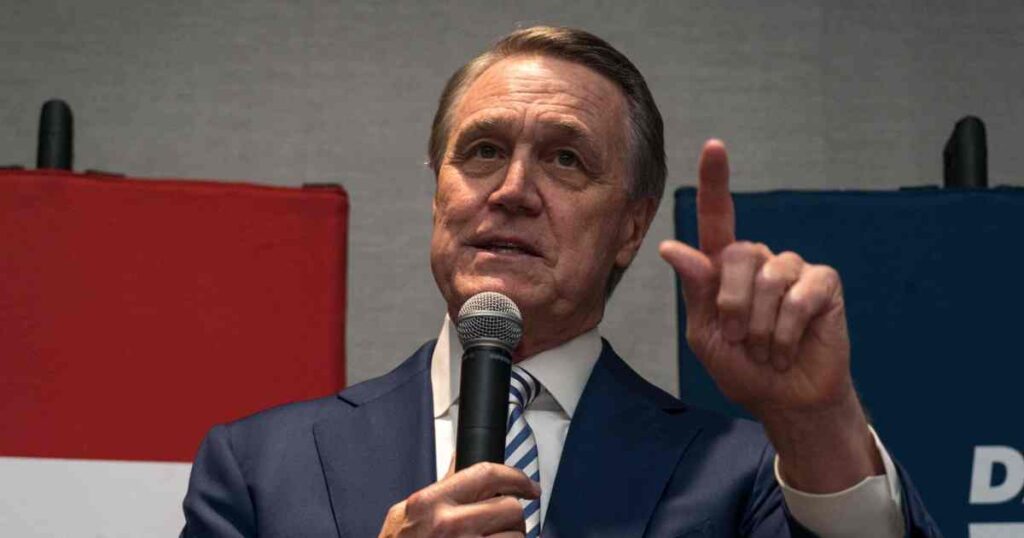
US president-elect says ex-Georgia senator will help maintain a ‘productive working relationship with China’. United States President-elect Donald Trump has named former Georgia Senator David Perdue as his pick for ambassador to China, a post that will require navigating an increasingly tumultuous relationship between Washington and Beijing. “As a Fortune 500 CEO, who had a 40-year International business career, and served in the US Senate, David brings valuable expertise to help build our relationship with China. He has lived in Singapore and Hong Kong, and worked in Asia and China for much of his career,” Trump said in a post on his social media platform Truth Social. “He will be instrumental in implementing my strategy to maintain peace in the region and a productive working relationship with China’s leaders,” Trump said. As a member of the Senate from 2015 to 2021, Perdue took a tough stance on China that has become a hallmark of the Republican Party. “America’s outdated view of China could result in lost opportunities, or even worse, dangerous miscalculations or complacency,” he wrote in a 2018 op-ed for Fox News alongside Republican Senators Steve Daines of Montana, Chuck Grassly of Iowa, and Ron Johnson of Wisconsin. Advertisement “We must have a long-term plan to compete and deal with China’s rising economic and geopolitical influence.” Perdue’s appointment will require the approval of the US Senate, but his confirmation is likely to proceed as Republicans hold a majority in the chamber. As ambassador, Perdue will face a challenging workload right out of the gate, as Trump appears set on steering the US into an all-out trade war with China. Trump has pledged to impose a 10 percent tariff on all Chinese goods when he takes office on January 20 in retaliation for Beijing’s failure to stop the flow of the synthetic opioid fentanyl into the US. During his campaign, Trump also threatened to impose tariffs of 60 percent or more on all Chinese goods. Tensions are already mounting between the two countries. Earlier this week, the outgoing administration of President Joe Biden imposed its third round of export controls on semiconductors and related technology, curbing exports to 140 companies. Beijing in retaliation blocked exports of gallium, germanium, and antimony – materials that are critical to the semiconductor and defence industries. During his first term, Trump imposed tariffs on some $300bn of Chinese goods. Biden kept those tariffs in place and added his own on goods such as electric vehicles and solar cells. Trump on Friday also tapped tech investor David Sacks as his “crypto czar” to oversee artificial intelligence and cryptocurrency policy. “In this important role, David will guide policy for the administration in artificial Intelligence and cryptocurrency, two areas critical to the future of American competitiveness,” Trump wrote on Truth Social. Advertisement “David will focus on making America the clear global leader in both areas. He will safeguard free speech online, and steer us away from Big Tech bias and censorship. He will work on a legal framework so the crypto industry has the clarity it has been asking for, and can thrive in the US.” The appointment is another win for the crypto industry, after Trump named Paul Atkins as his pick to head the Securities and Exchange Commission. Atkins previously served as a SEC commissioner from 2002 to 2008 under President George W. Bush and is known for his pro-crypto and pro-business stances. Adblock test (Why?)
World Bank announces record $100bn support for world’s poorest countries
International development organisation says sum will be deployed to support 78 countries that ‘need it most’. The World Bank has announced that it has raised close to $24bn to provide loans and grants for some of the world’s poorest nations, which it can leverage to generate a record $100bn in total spending power. Donor countries committed $23.7bn to replenish the bank’s concessional lending arm, known as the International Development Association (IDA), a World Bank spokesperson told the AFP news agency, marking a slight increase from the roughly $23.5bn pledged during the last fundraising round three years ago. The bank can use this money to borrow on financial markets, allowing it to leverage the amount raised by around four times, unlocking about $100bn in new loans and grants, up from $93bn in 2021. “We believe the historic success of this IDA21 replenishment is a vote of confidence and support from donors and clients,” a World Bank statement read, referring to the current IDA funding round. “This funding will be deployed to support the 78 countries that need it most,” World Bank President Ajay Banga said in a separate statement, referring to the developing countries that are eligible for IDA support. Advertisement It would, he added, help provide “resources to invest in health, education, infrastructure, and climate resilience,” as well as to help stabilise economies and create jobs. The World Bank’s announcement follows two days of talks in the South Korean capital, Seoul, a city still reeling after President Yoon Suk-yeol declared martial law late on Tuesday local time, before backtracking under pressure from lawmakers. IDA has become the single largest source of concessional, or below-market, climate finance, and about two-thirds of all IDA funding over the past decade has gone to support countries in Africa, according to the World Bank, an international development organisation owned by 187 countries. IDA replenishment is a crucial part of the bank’s operations, and happens once every three years, with much of the funding coming from the United States, Japan and several European countries including the United Kingdom, Germany and France. This year, the US announced ahead of time that it would commit a record $4bn in new funding to the IDA, while other countries – including Norway and Spain – also significantly stepped up their financial support. Thirty-five former recipients of IDA assistance have graduated from developing economy status in recent decades, including China, Turkey and South Korea, with many of them now donors to the fund. Adblock test (Why?)
Mahaparinirvan Diwas Today: Noida Police issues traffic advisory, check routes to avoid

The day marks the death anniversary of Bharat Ratna BR Ambedkar, observed as “Mahaparinirvan Diwas.”
Farmers’ March: Delhi Police on alert, security deployed at border points

Farmers under the banner of the Samyukta Kisan Morcha (Non-Political) and the Kisan Mazdoor Morcha have been camping at the Shambhu and Khanauri border points since then.
Trump continues round of appointments with 3 new picks to top homeland security, immigration
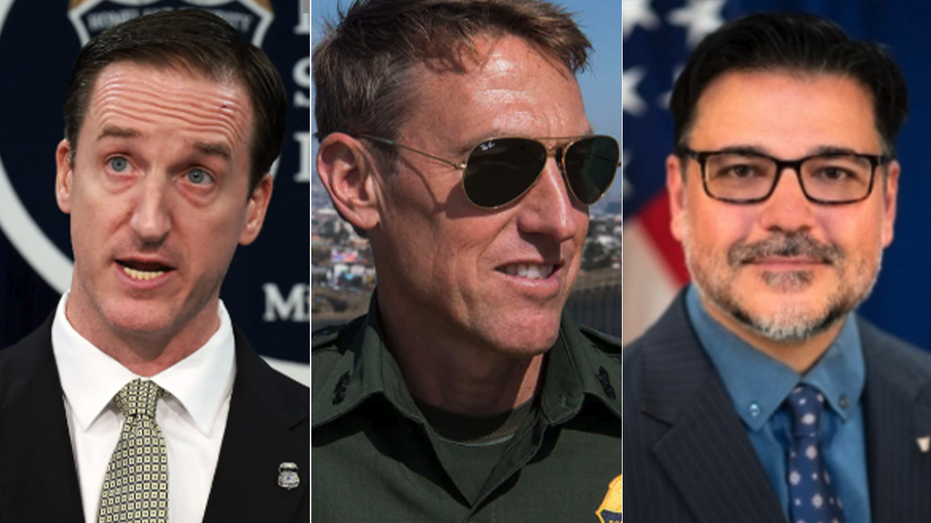
President-elect Donald Trump has been aggressively rolling out his picks to serve in his Cabinet and other top roles. Thursday was no different as he focused on picks that would work hard to secure the border and carry out a mass deportation operation. Trump added nominees for homeland security and immigration, naming Rodney Scott as Commissioner of U.S. Customs and Border Protection (CBP), Caleb Vitello as acting director of Immigration and Customs Enforcement (ICE), and Tony Salisbury to be Deputy Homeland Security Advisor (White House Homeland Security Council). RODNEY SCOTT Scott is a former Border Patrol chief who served as chief from 2020 until he was ousted by the Biden administration in mid-2021. Since then, he has been a fierce critic of the Biden administration’s immigration policies and its handling of the crisis at the southern border. Before being chief, he had led the San Diego Sector, one of the most challenging sectors in the country. He has been highly critical of DHS Secretary Alejandro Mayorkas, and recently accused him of having “intentionally” opened the southern border. TRUMP CABINET NOMINEES, APPOINTEES TARGETED WITH ‘VIOLENT, UNAMERICAN THREATS’ “Rodney served nearly three decades in the Border Patrol, building vast experience and knowledge in Law Enforcement and Border Security. Rodney served as the 24th Chief of the U.S. Border Patrol, where he implemented Remain-in-Mexico, Title 42, Safe Third Agreements, and achieved record low levels of illegal immigration,” Trump said in a statement on Truth Social. “He began his career with the Border Patrol in 1992 at the Imperial Beach Station, San Diego Sector. Following the September 11th terrorist attacks, he served as an Anti-Terrorism Advisor to the CBP Commissioner, and later, as Deputy Executive Director of the CBP, Office of Anti-Terrorism.” CALEB VITELLO Vitello has served at the White House National Security Council as the Director for Interior Enforcement as well as serving as Unit Chief and Deputy Assistant Director of the National Fugitive Operations Program within ERO’s Enforcement Division. “A member of the Senior Executive Service, with over 23 years of service to ICE, Caleb currently serves as Assistant Director of the Office of Firearms and Tactical Programs, where he oversees Agency-wide training, equipment, and policy to ensure Officer and Public Safety,” Trump said in a statement said in a post on Truth Social late Thursday. DEMOCRATS’ FUROR OVER ‘UNQUALIFIED’ TRUMP NOMINEES PUTS BIDEN’S STAFFING DECISIONS BACK IN THE SPOTLIGHT “Caleb led the Fugitive Operations Academy, served as Deputy Assistant Director, and directed the National Fugitive Operations Program, providing policy guidance, strategic planning, and operational oversight for efforts to locate, arrest, and remove at-large, dangerous criminals and illegal aliens from the U.S. As Chief of Staff for Enforcement and Removal Operations, he managed daily operations for an organization with a $4.7 Billion Dollar budget and 8,000 employees. At the White House National Security Council, Caleb led initiatives focused on child safety and national security threats.” TONY SALISBURY Salisbury currently serves as the Special Agent in Charge (SAC) for Immigration and Customs Enforcement (ICE), Homeland Security Investigations (HSI) Miami. He has served as the Acting Deputy Executive Associate Director (EAD) for the entire ICE/HSI workforce and previously held key leadership, field and headquarters assignments for ICE/HIS. Trump noted he was particularly successful at “all of HSI’s complex Federal Law Enforcement investigative programs related to National Security and smuggling violations, including counter-proliferation, financial crimes, commercial fraud, human trafficking, human smuggling, narcotics smuggling, transnational gangs, cyber-crimes, child exploitation, worksite enforcement and document and benefit fraud.” “Tony will bring his vast Law Enforcement, counter-narcotics, and counter-cartel experience to the White House where he will serve under Stephen Miller, Deputy Chief of Staff for Policy and Homeland Security Advisor,” Trump said in a statement.
Weather Update: Delhi wakes up to chilly morning as temperature drops to…
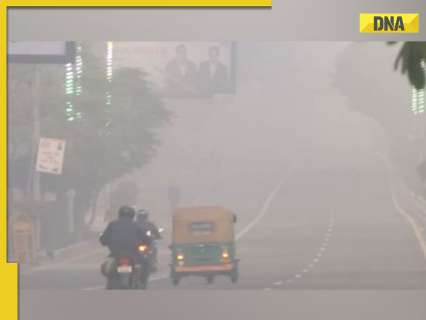
The Indian Meteorological Department (IMD) predicted the minimum temperature to drop to 6 degree Celsius by December 10.
School reopening news: Delhi schools to resume classes in physical mode after SC order on GRAP measures

The bench clarified that GRAP III should be implemented if the AQI surpasses 350, and GRAP IV must be imposed if it exceeds 400.
Meet IAS officer, DU grad who bagged AIR 444 in UPSC exam, know how she aced interview with this question

Shrestha began her educational journey at DAV School, where her interest in political science was ignited. She later pursued a BA in Political Science and International Relations at Miranda House, Delhi, equipping herself with a strong foundation as she prepared for the UPSC.
Delhi AQI: Air quality improves to ‘moderate’, SC relaxes GRAP-4 restrictions in Delhi-NCR

The overall Air Quality Index (AQI) recorded in Delhi was 183, categorised as ‘moderate’ as of 7 am on Friday, according to the data of the Central Pollution Control Board (CPCB).