

Top conservative group reveals roadmap to rebuild new US immigration system ‘from the ashes’
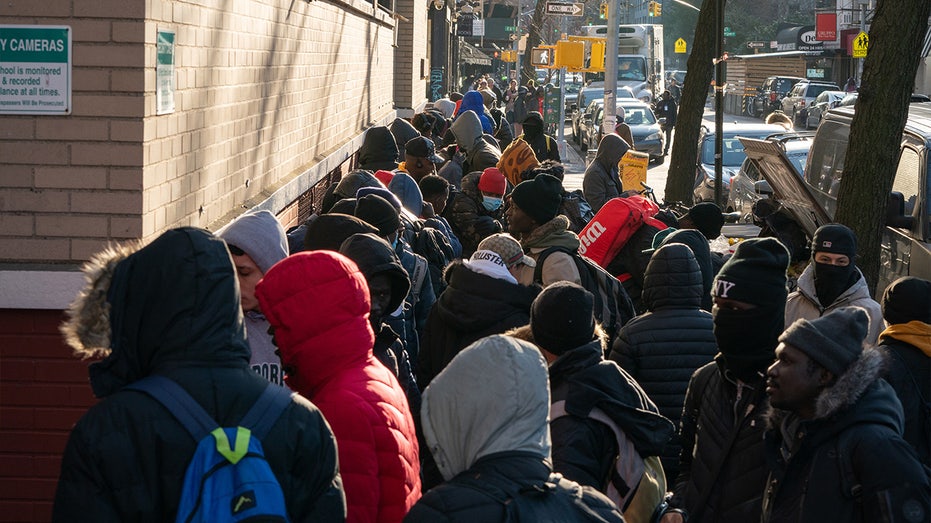
FIRST ON FOX: A conservative think tank is outlining how the incoming Republican Congress can fundamentally overhaul the American immigration system, helping it rise “from the ashes” left by the Biden administration. In a new paper, the Heritage Foundation provides a roadmap to Congress, suggesting it go beyond border security and overhaul the U.S. immigration system. In the paper, author Lora Ries – director of the Heritage’s Border Security and Immigration Center – argues that there has been a dysfunctional immigration system for decades. It made legal immigration complicated and slow, while illegal immigration was rarely punished. FIVE THINGS TO WATCH FOR ON IMMIGRATION AND BORDER SECURITY IN 2025 “In short, it is a slow, frustrating, and expensive hassle to immigrate to the U.S. lawfully. As a result, when it is faster, easier, and cheaper to migrate to America illegally, then that is what some human beings will do – and have done for decades. Others will not come to the U.S. at all to start businesses or incubate new technologies,” she says. She argues that the Biden administration transformed the immigration system further and “erased the line between legal and illegal immigration.” She accuses the administration of abusing humanitarian parole, making asylum meaningless and unleashing an open borders agenda. “America’s immigration system used to be broken both because of a lack of enforcement and because of its overly complicated statutory provisions. Now it is a pile of ashes,” she says. BORDER STATE OFFERS TRUMP MASSIVE PLOT OF LAND TO AID MASS DEPORTATION OPERATION But now, with a hawkish incoming Trump administration and a supportive Republican House and Senate about to be sworn in, Ries and Heritage outline five principles for how to proceed. “However, from the ashes comes a great opportunity to redesign a new, simpler, fairer, and more manageable immigration system that prioritizes America first and legal immigrants second,” she says. “The principles and policies laid out in this report can play a crucial role in shaping just such a new immigration system.” Those principles include upholding the rule of law, acknowledging that the immigration system serves the American people, ensuring the U.S. is secure, creating a system that is simple and sustainable, and eliminating incentives to break immigration laws. As a result, under each principle comes a series of more specific recommendations for Congress to follow. In the area of legal immigration, the roadmap recommends that those who violate visa terms should have them revoked, including those supporting terrorist groups; that proof of citizenship should be required to vote; that only citizens should be counted in the census for congressional apportionment; and that the visa system must ensure that wages for Americans are not flattened. The paper supports the abolition of the lottery system for green cards, says employers should be allowed to hire U.S. citizens over foreign nationals, and calls for assimilation as “critical for America to remain a united country.” It recommends the implementation of E-Verify, and that due process in immigration be limited. CLICK HERE FOR MORE COVERAGE OF THE BORDER SECURITY CRISIS On border security, the paper recommends that Border Patrol should have expulsion authority during national crises, and that immigration detention is necessary to protect public safety and ensure deportations, while security should be fully resourced. It also argues that the government should not “collude” with non-governmental organizations to further illegal immigration. More broadly, the paper calls for the simplification of the Immigration and Nationality Act to make the process less complicated and the elimination of a number of waivers and exemptions. It argues that costs and data on immigration should be made available and that in times of immense backlogs, intake of new immigrants should be paused. Finally, it says Congress should exclude illegal immigrants from benefits such as bank accounts, and that lawmakers “should oppose all forms of amnesty and should not reward illegal behavior or violation of our immigration laws.” President-elect Trump has made it clear he sees immigration and border security as top priorities for his incoming administration. He has appointed former Immigration and Customs Enforcement (ICE) director Tom Homan as the “border czar” and South Dakota Gov. Kristi Noem as his nominee to lead the Department of Homeland Security. A number of Republican lawmakers won their elections in November by focusing on illegal immigration at the southern border and the Biden administration’s handling of the crisis.
This year, Arab-American political power came to the fore
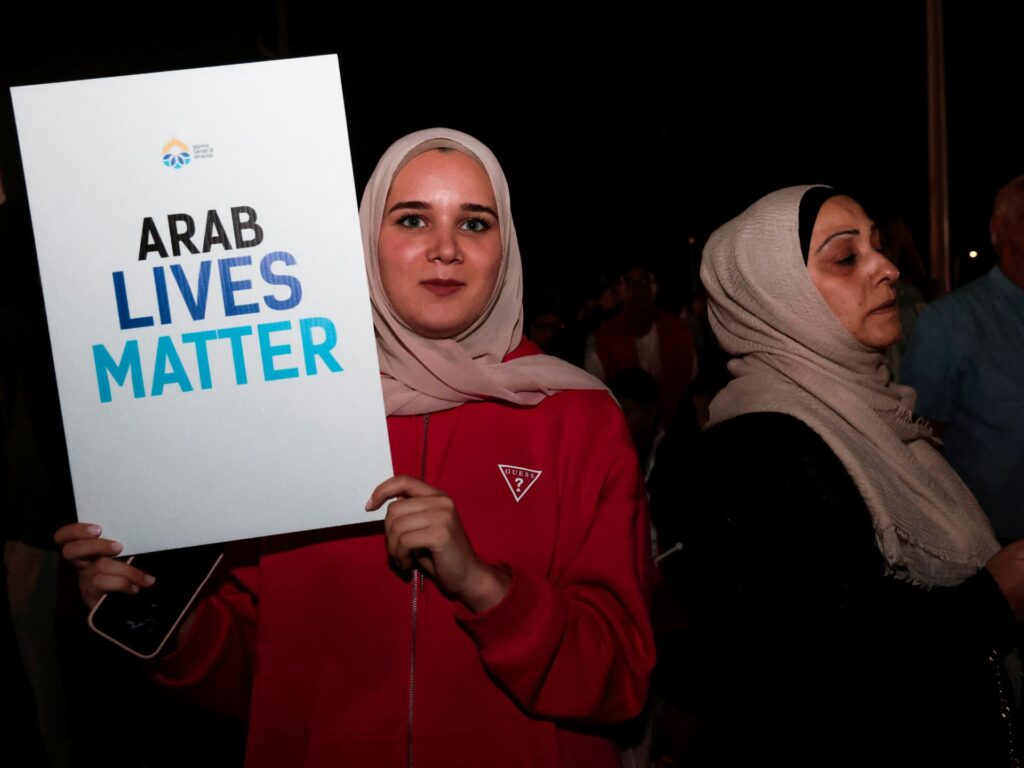
One of the major political developments in the United States that has gotten little attention in the wake of the Democrats’ astounding loss in the November 5 elections is the success of Arab American political organising. A new generation of political activists has emerged that has earned representation in unprecedented numbers and impact for the 3.5-million-strong Arab-American community in elected and appointed political offices. It also put Arab Americans on the electoral map for the first time by launching the Uncommitted movement during the Democratic primaries and making a foreign policy issue – Israel’s genocide in Gaza – a national moral issue. The Democratic Party underestimated the power of this new generation and the intensity of citizen anger, which cost it dearly in the election. What happened in the Arab American community is a vintage all-American tale. They, like other communities, started their pursuit of political impact as a low-profile immigrant group who became dynamic citizens after political developments threatened their wellbeing and motivated them to take action. Advertisement Arab American mobilisation traces its beginnings to small-scale participation in Jesse Jackson’s 1984 and 1988 presidential campaigns for the Democratic Party. Jackson was the first serious presidential candidate to include Arab Americans as Democratic Party convention delegates, part of his Rainbow Coalition of “the white, the Hispanic, the Black, the Arab, the Jew, the woman, the Native American, the small farmer, the businessperson, the environmentalist, the peace activist, the young, the old, the lesbian, the gay, and the disabled [who] make up the American quilt”. His campaign gave momentum to voter registration drives within the Arab American community, which continued in the following three decades. By 2020, nearly 90 percent of Arab Americans were registered to vote. By 2024, the Arab American voter block – in its expansive coalition with other groups – had grown large enough to impact outcomes in critical swing states, especially Michigan and Pennsylvania. The attacks of 9/11 and the subsequent backlash motivated Arab Americans even more to engage in meaningful politics. Many members of the community refused to live in fear, trying to avoid the intimidation and smears that had long kept their parents and grandparents subdued and quiescent politically. As Omar Kurdi, founder of Arab Americans of Cleveland, told me, “We were no longer silent because we saw the dangers to us of being quiet and politically inactive. We refused to live in fear of politics. Since then, we have been proud, confident, and active in public. We no longer accept crumbs, but want our share of the pie, and we understand now how we can work for that.” Advertisement As a result, over the past two decades, Arab Americans have entered the public sphere and politics at all levels: from local, city, and county positions to state and federal ones. Elected officials say they succeeded because their constituents knew and trusted them. Candidates who won state and national congressional seats – like Rashida Tlaib in Michigan – inspired hundreds of younger Arab Americans to enter the political fray. Successful experiences in city politics educated newcomers on how they could impact decision-making, improve their own lives, and serve the entire community. They mastered locally the basics of politics, one Ohio activist told me, “like lobbying, bringing pressure, protesting, educating the public, achieving consensus, and creating coalitions based on shared values, problems, and goals”. All of this momentum, built up over the years, coalesced into the Uncommitted movement in 2024. As the Biden administration unconditionally supported Israel to carry out genocidal violence in Palestine and Lebanon, Arab-American activists moved to use their newfound leverage as voters in electoral politics. They joined like-minded social justice activists from other groups that mainstream political parties had long taken for granted – including Muslim Americans, Blacks, Hispanics, youth, progressive Jews, churches, and unions – and sent a strong message during the primaries that they would not support Biden’s re-election bid unless he changed his position on Gaza. The campaign hoped that tens of thousands of voters in the primaries would send the Democrats a big message by voting “uncommitted”, but in fact, hundreds of thousands of Democrats did so across half a dozen critical states. These numbers were enough to send 30 Uncommitted delegates to the Democratic National Convention in August, where they could lobby their colleagues to shape the party’s national platform. Advertisement One activist involved in the process told me they convinced 320 of the other 5,000 delegates to support their demand for a party commitment to a Gaza ceasefire and arms embargo on Israel – not enough to change the party position, but enough to prove that working from inside the political system over time could move things in a better direction. Intergenerational support and motivation were big factors in the success of the Uncommitted movement. Arab American Institute Executive Director Maya Berry, who has been involved in such activities for three decades, told me that Arab Americans were always in political positions, but in small numbers, so they had little impact. However, they learned how the system works and provided valuable insights when the time came this year to act. She mentioned Abbas Alawiyeh as an example, who co-chairs the Uncommitted National Movement and worked as a congressional staffer for many years. The Uncommitted movement’s precise contribution to the Democratic Party’s defeat is hotly debated right now. One activist told me the movement “placed Arab Americans at the centre of Democratic Party politics, led the progressives, helped Harris lose in swing states, and nationally brought attention to Gaza, divestment, and moral issues in ways we had never been able to do previously.” All this occurs in uncharted territory, with no clarity if Arab Americans can influence both the Democratic and Republican parties who might now compete for their vote. One Arab-American activist in his 30s added, “We are liberated from the Democrats who took us for granted, and we Arab Americans are now a swing vote officially.” Advertisement Other activists I spoke to thought the election experience
Crime against humanity: Why has a court found Belgium guilty of kidnapping?
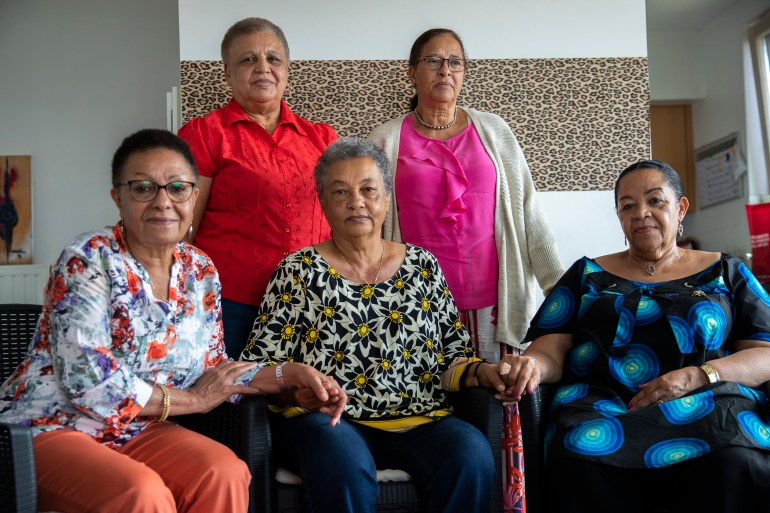
A court has ordered Belgium to pay millions of dollars in compensation to five mixed-race women who were forcibly taken from their homes in the Belgian Congo as children, under a colonial-era practice that judges said was a “crime against humanity”. The landmark ruling on Monday by the Brussels Court of Appeal came after years of legal battle by the aggrieved women. It sets a historic precedent for state-sanctioned abductions that saw thousands of children kidnapped from today’s Democratic Republic of the Congo because of their racial makeup. An earlier ruling from a lower court in 2021 rejected the women’s claims. However, the Appeals court on Monday ordered the Belgian state to “compensate the appellants for the moral damage resulting from the loss of their connection to their mothers and the damage to their identity and their connection to their original environment”. The five women will receive 250,000 euros ($267,000) combined. Monique Bitu Bingi (71), one of the women who brought the case in 2020, told Al Jazeera she was satisfied with the ruling. Advertisement “I am very happy that justice has finally been delivered to us,” she said. ” And I’m happy that this was termed a crime against humanity.” Here’s what to know about the case, and why the court ruling is historic: In this June 29, 2020 file photo, clockwise from top left: Simone Ngalula, Monique Bitu Bingi, Lea Tavares Mujinga, Noelle Verbeeken and Marie-Jose Loshi [File: Francisco Seco/AP] Why were the women kidnapped? The five plaintiffs, including Bitu Bingi, were among an estimated 5,000 to 20,000 mixed-race children who were snatched from their mothers in the former Belgian Congo (today’s Democratic Republic of the Congo) and forcibly taken to faraway cities, or, in some cases, shipped to Belgium for adoption. Following the violent rule of King Leopold II, which resulted in the deaths and mutilations of millions of Congolese, the Belgian state took over the occupation and continued to operate an immensely exploitative system over the colony between 1908 and 1960. Belgium also controlled the then Ruanda-Urundi, or today’s Rwanda and Burundi, where hundreds, if not thousands of bi-racial children were also taken. Now called Metis, a French term meaning ‘mixed’, the children were kidnapped between 1948 and 1961, in the lead-up to Congo’s independence. Belgian colonial authorities believed that bi-racial children threatened the white supremacy narrative they had continually pushed and that they used to justify colonialism, experts say. “They were feared because their mere existence was shaking the very foundations of this racial theory that was at the core of the colonial project,” Delphine Lauwers, an archivist and historian at the State Archives of Belgium told Al Jazeera. Advertisement Authorities systematically discriminated against the children and referred to them as “children of sin”. While white Belgian men were not legally allowed to marry African women, such interracial unions existed. Some children were also born to women as a result of rape, in situations where African housekeepers were treated as concubines. Catholic missions were key to the abductions. From a young age, bi-racial children were snatched or coerced away from their mothers and sent to orphanages or missionaries, some in Congo or Belgium. The state justified the practice based on a colonial-era law that allowed for the confinement of bi-racial children to state or religious institutions. Some of the Belgian fathers refused to acknowledge paternity – because they were from supposedly reputable homes – and so, in many cases, the children were declared to be orphaned or without known fathers. Colonial authorities also changed the children’s names, first so they would not affect their father’s reputation, and also so the children would not be able to connect with their family members. It was not until 1959, when the three colonies were near attaining independence, that the kidnapping and shipping of children from the region began to abate. In Belgium, some of the children were not accepted because of their mixed backgrounds. Some never received Belgian nationality and became stateless. Metis said they were treated as third-class citizens in Belgium for a long time. Most of those affected can still not access their birth records or find their parents. A bust of Belgium former King Leopold II that has been daubed with red paint is removed by a city worker in Auderghem, near Brussels, on June 12, 2020 as several statues of the late monarch, a symbol of Belgium’s bloody history as a colonial power in central Africa, have been defaced [File: Kenzo Tribouillard/AFP] Has Belgium apologised for the kidnappings? Advertisement In March 2018, the Belgian parliament passed a resolution recognising that there had been a policy of targeted segregation and forced abductions of mixed-race children in former Belgian colonies, and that redress was needed. Lawmakers ordered the Belgian state to investigate what means of repair would be proportional for the African mothers who had had their children stolen from them, and to the bi-racial children who had been harmed for life as a result. A year later, in 2019, the then Belgian Prime Minister Charles Michel apologised for the colonial practice, saying Belgium had stripped the children of their identity, stigmatised them, and split up families. In his statement, Michel pledged that “this solemn moment will represent a further step towards awareness and recognition of this part of our national history.” However, Michel stopped short of naming the crimes of forced abductions. Experts say that was because it would have major repercussions for the state, which would then be forced to possibly pay reparations to thousands of people. Although rights groups pushed Belgium to take the apology a step further, the government did not budge. People walking in the village of the Brussels International Exposition, World’s Fair, Belgium, 1935; the theme of the World’s Fair was colonisation to celebrate the 50th anniversary of the establishment of the Congo Free State [Herbert Felton/Hulton Archive/Getty Images] What led to the court case? In 2020, a group of five female Metis, including Bitu Bingi, sued Belgium on
Where was the Lebanese government as Israel waged war?
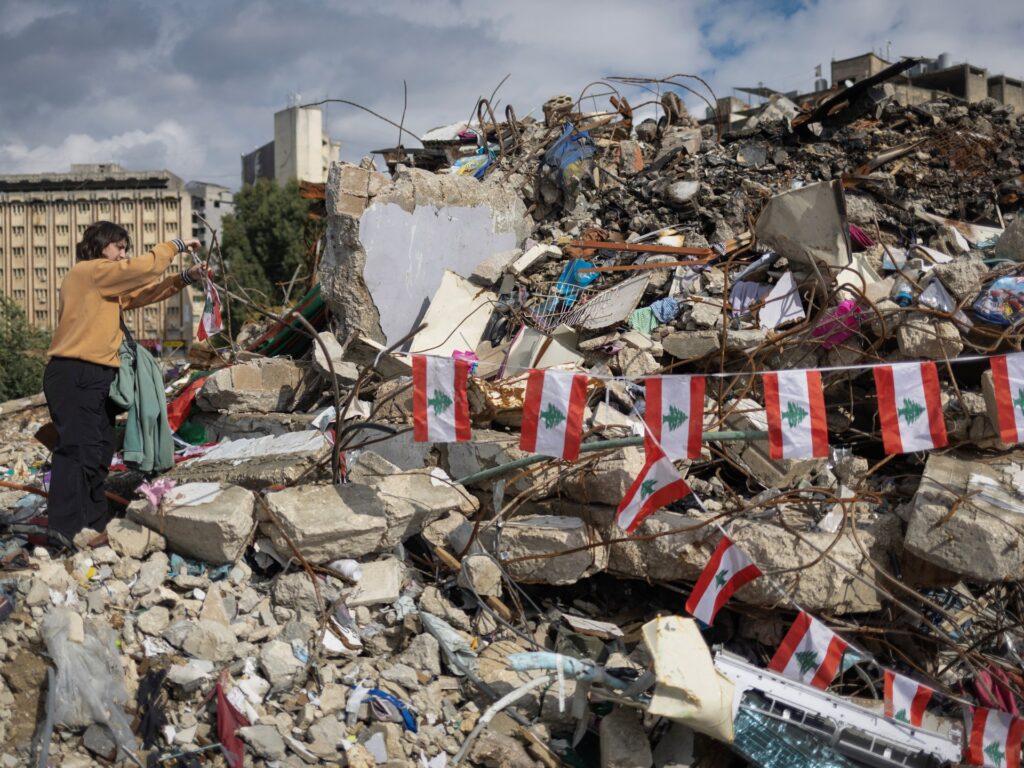
NewsFeed As Israel relentlessly bombed Lebanon, the country’s military largely stayed out of the war. In most countries, the government would be accused of abandoning its people. What makes Lebanon different? Soraya Lennie explains. Published On 3 Dec 20243 Dec 2024 Adblock test (Why?)
Daniel Pullin will become new Texas Christian University chancellor as longtime leader leaves role

Victor Boschini is stepping down next year, but will remain chancellor emeritus. Under his leadership, the university reached a $1 billion fundraising goal.
Elon Musk and Vivek Ramaswamy agree on ‘need to scrutinize’ US funding for NGOs
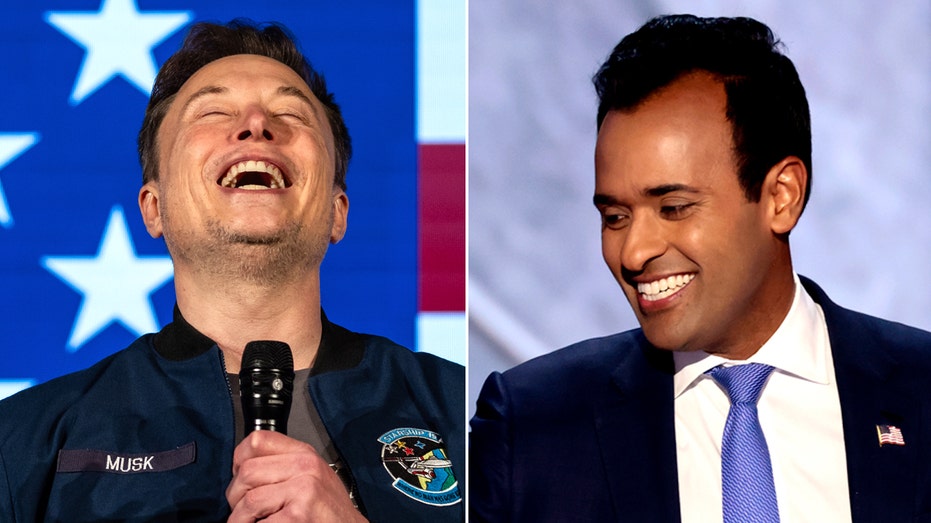
Elon Musk and Vivek Ramaswamy — the duo President-elect Donald Trump tapped for the effort known as the Department of Government Efficiency (DOGE) — have indicated that they plan to examine funding for non-governmental organizations (NGOs). “We need to scrutinize U.S. government funding of ‘non-government organizations,’” Ramaswamy noted in a post on X. “It’s an oxymoron that represents a waste of taxpayer dollars, but the real problem runs deeper: Americans deserve transparency on opaque foreign aid & nonprofit groups abetting our own border crisis.” Musk agreed, commenting, “Absolutely.” ELON MUSK SAYS THERE’S SUBSTANTIAL IGNORANCE ABOUT AMERICA’S NATIONAL DEBT He also agreed with his brother Kimbal Musk, who suggested that NGOs are “mouthpieces” for governments that “need to go.” “NGO’s are the govt’s way of creating mouthpieces that promote their agenda and push for censorship without the normal checks and balances that govt has to follow. They need to go,” Kimbal Musk declared in a tweet. “Yes,” Elon Musk replied. ELON MUSK WANTS TO MEET ALEX SOROS — AND SOROS SAYS HE’S OPEN TO IT Musk and Ramaswamy noted in a Wall Street Journal piece last month that they “will serve as outside volunteers, not federal officials or employees.” Trump had said in a statement that DOGE “will provide advice and guidance from outside of Government, and will partner with the White House and Office of Management & Budget to drive large scale structural reform, and create an entrepreneurial approach to Government never seen before.” ELON MUSK CALLS OUT $2.3 BILLION ALLOCATED TO NGO PERSONNEL FACILITATING ‘ILLEGAL IMMIGRATION’ IN BORDER BILL Musk declared in a recent post that, “Less government means more power to the people.”
Hunter Biden gun case terminated after pardon, but federal judge stops short of full dismissal
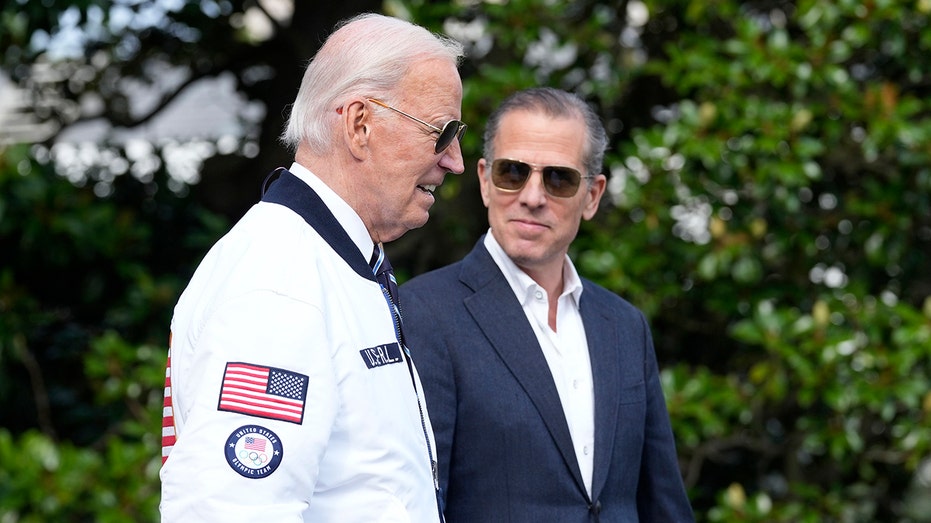
The federal judge overseeing Hunter Biden’s gun trial terminated further court proceedings in his case on Tuesday, in the wake of President Biden’s sweeping pardon that shields his son from being prosecuted for all offenses that he “has committed or may have committed” from Jan. 1, 2014, through Dec. 1, 2024. U.S. Judge Maryellen Noreika, the presiding judge in Biden’s trial in Delaware, announced Tuesday the termination of all further proceedings in the case, citing the clemency grant signed by the outgoing president. Judge Noreika stopped short of dismissing the case outright, however, as requested by Hunter’s legal team. A Delaware jury found Hunter guilty this summer on all three federal felony firearm charges that had been brought before the court by prosecutors. BIDEN’S SWEEPING HUNTER PARDON AT ODDS WITH LONGTIME RHETORIC ON EXECUTIVE POWER: ‘NO ONE IS ABOVE THE LAW’ Prior to the sweeping pardon announcement, his sentencing date had been scheduled for Dec. 12. In announcing the pardon, President Biden criticized the unfair investigation and prosecution of his son, a process he said was “infected” by politics and led to a “miscarriage of justice.” “No reasonable person who looks at the facts of Hunter’s cases can reach any other conclusion than Hunter was singled out only because he is my son — and that is wrong,” the president said in a statement Sunday. However, some critics also noted the pardon broke with Biden’s longtime promises not to pardon his son and risks further eroding the public’s view of the Justice Department. Hunter also pleaded guilty on tax evasion charges in California, which the pardon also covers. The judge in that case, Judge Mark Scarsi, has not yet announced whether he will terminate the proceedings against Hunter or dismiss the case in full. This is a breaking news story. Check back soon for updates.
Recently ousted Dem senator said he’s ‘getting the f— out of here’ when asked about presidential pardon
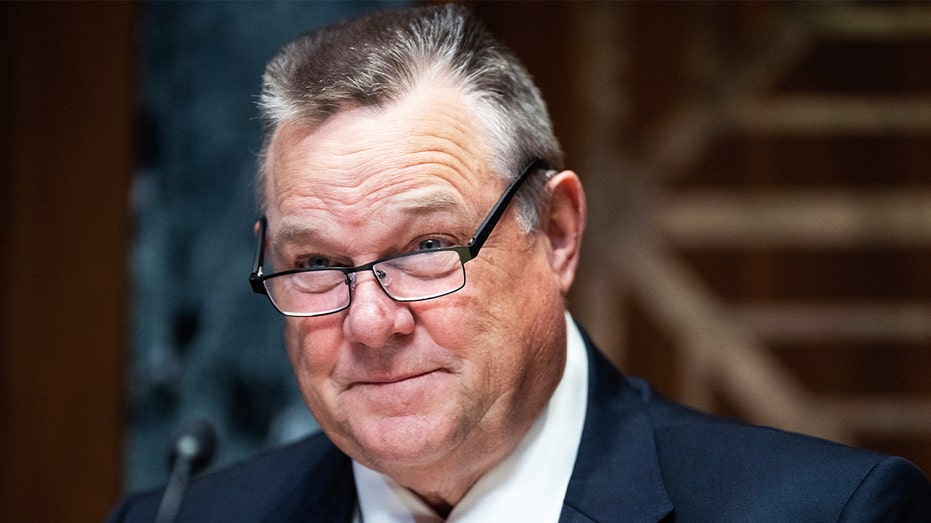
Sen. Jon Tester is getting testy with reporters during his remaining weeks in Congress after being booted from his long-held Montana Senate seat. President Biden pardoned his son, Hunter Biden, on Sunday, absolving him of any charges for crimes he “committed or may have committed” between January 2014 and December 2024. On Monday, Tester was asked about Biden’s controversial move to pardon his son, to which the senator offered a rather blunt response. “I’m one month from getting the f— out of here,” he said with a smile, according to CNN and other outlets. “Ask somebody who counts.” NAVY SEAL TIM SHEEHY OUSTS 3-TERM SEN. JON TESTER IN MONTANA SENATE RACE The comment comes nearly one month after the three-term Montana Democrat was ousted by Republican Navy SEAL Sen.-elect Tim Sheehy in one of the most closely watched races of the 2024 cycle. MONTANA’S ROAD TO RED: HOW THE STATE SHIFTED TO ALL GOP LEADERSHIP FOR THE FIRST TIME IN OVER 100 YEARS While Tester did not answer the question, Democrats on Capitol Hill have been speaking out against Biden’s decision to relieve his son from facing any potential federal charges over the course of the past decade. “President Biden’s decision to pardon his son was wrong. A president’s family and allies shouldn’t get special treatment. This was an improper use of power, it erodes trust in our government, and it emboldens others to bend justice to suit their interests,” Sen. Gary Peters, D-Mich, wrote in a post on X. Sen. Michael Bennet, D-Colo., also said that Biden’s decision “further erodes Americans’ faith that the justice system is fair and equal for all.” Efforts to reach Tester’s office for comment at press time were unsuccessful.
Mar-a-Lago trumps White House as president-elect overshadows Biden on world stage
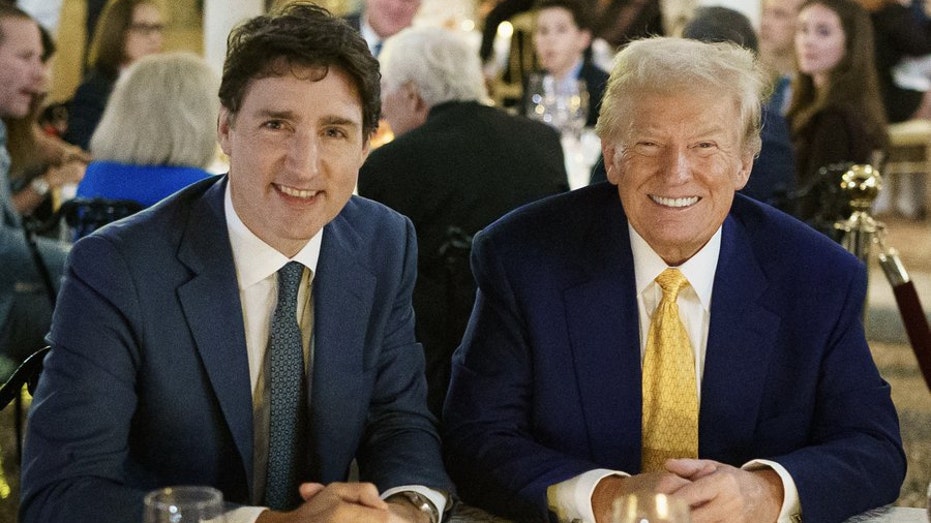
President Biden enjoyed a warm welcome from a crowd of thousands as he arrived in Angola this week, as the president made good on his long awaited first visit to sub-Saharan Africa. Biden, likely on his last overseas trip before President-elect Donald Trump takes over in the White House next month, is already being overshadowed on the world stage by his predecessor and successor. “The Oval Office has been replaced by Mar-a-Lago,” Matthew Bartlett, a Republican strategist who served at the State Department during Trump’s first term, told Fox News. Additionally, Matt Mowers, a veteran GOP national public affairs strategist and former diplomat at the State Department during Trump’s first administration, made the case that “Joe Biden’s essentially been a lame duck” for months and that “world leaders have been shifting their gaze to the next administration.” WHAT TRUMP TOLD CANADA’S LEADER BEHIND CLOSED DOORS Wayne Lesperance, a veteran political scientist and president of New England College, highlighted that “while President-elect is still weeks away from taking the oath of office, loyalties and the attention of world leaders has shifted to the incoming President and from Washington to Mar-a-lago with breathtaking speed.” While members of the Biden White House would likely disagree with such sentiments – especially after the current administration played a large role in hammering out the cease-fire that halted fighting in Lebanon between Israel and Hezbollah – it is undeniable that world leaders have already started to engage directly with the incoming president and administration. TRUMP GETS READY TO MAKE A SPLASH ON THE WORLD STAGE Trump will meet with French President Emmanuel Macron after the French president invited him to attend Saturday’s star-studded VIP event for the official reopening of the newly restored Notre Dame Cathedral, five years after a devastating fire wrecked the Paris landmark. The president-elect’s appearance will serve as Trump’s unofficial return to the global stage, and it is another reminder that he is quickly becoming the center of the world’s attention. The trip to Paris comes a week after Canadian Prime Minister Justin Trudeau hastily made an unannounced stop in Mar-a-Lago to dine with Trump after the president-elect threatened a trade war with Canada and Mexico. Trump argued that Canada had failed to prevent large amounts of drugs and undocumented people from crossing the northern border into the U.S. and also pointed to America’s massive trade deficit with Canada. According to reporting from Fox News’ Bret Baier, Trump suggested to Trudeau that Canada could become the 51st state. Trump also weighed in this week in the volatile Middle East, warning in a social media post that there would be “ALL HELL TO PAY” if Hamas does not release all the hostages held in Gaza before he is inaugurated on Jan. 20. Hours later, Trump pledged to block the purchase of U.S. Steel – a top American manufacturer – by the Japanese company Nippon Steel. “I am totally against the once great and powerful U.S. Steel being bought by a foreign company, in this case Nippon Steel of Japan,” Trump said on social media. “As President, I will block this deal from happening.” Trump, who reiterated comments he made earlier this year on the presidential campaign trail, is on the same page as Biden, who has vowed that U.S. Steel will remain American-owned. Biden’s trip to Africa is putting a spotlight on his administration’s commitment to the continent, which has increasingly been courted by massive investments from China. Biden is also highlighting America’s wide-ranging effort to combat HIV/AIDS in Africa, a continent Trump never visited during his first term in the White House. However, the president’s trip will be overshadowed by Trump’s upcoming stop in France, as the president-elect is increasingly courted by world leaders. While the spotlight traditionally shifts from the outgoing to the incoming president, Mowers argued that “it is more pronounced this time because the difference in the Biden and Trump approach to foreign policy is so different.” Mowers emphasized that Trump is already aiming “to shape world events” by “being bold, not timid, in the statements he’s putting out, and the world is already reacting to that kind of American strength.” Bartlett noted that “the world is demanding leadership.” Mowers added that “world leaders that want to get something done… have to engage with Trump.” Lesperance, pointing to Biden’s swing through Africa, noted that lame duck presidents’ final weeks are “usually filled with celebratory moments and efforts to cement one’s legacy. Often the focus is on their role on the world stage on behalf of America and its allies.’ However, he argued that “Biden’s pronouncements on Ukraine, Gaza and the importance of climate change go largely ignored by world leaders. Instead, they focus on Trump’s picks for his foreign policy team and pronouncements about changes in U.S. foreign policy position. It’s pretty evident that while Biden attempts a victory tour, the world has turned the page.”
Namibia set for first female president as disputed election count advances
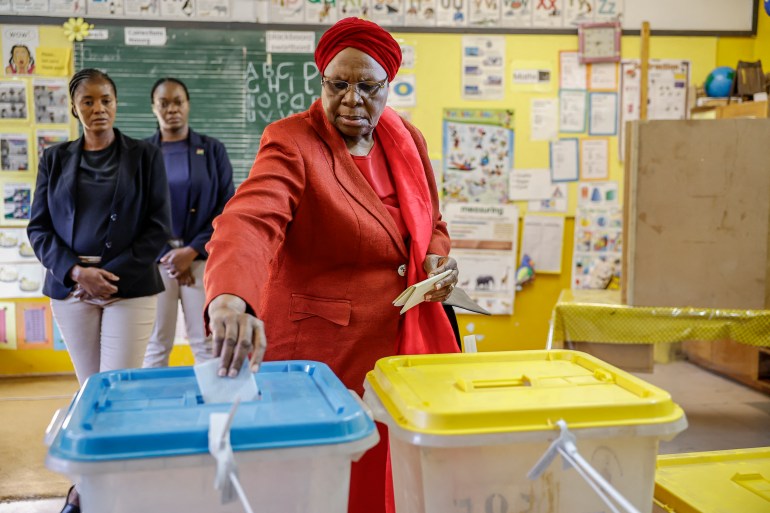
Netumbo Nandi-Ndaitwah is leading the presidential race but could be forced into a run-off vote if she falls short of the 50 percent threshold. Namibia appears set to get its first female president, with Netumbo Nandi-Ndaitwah holding a healthy lead as the count from last week’s disputed election proceeds. With 65.57 percent of votes counted, results released early on Tuesday on the election commission’s portal showed governing party candidate Nandi-Ndaitwah, 72, leading the race with 54.82 percent of the vote. Results were initially expected a few days after the November 27 poll, but voting was extended by three days at several polling stations following technical difficulties and ballot paper shortages. The main opposition Independent Patriots for Change, whose candidate Panduleni Itula trails with 28 percent, has already rejected the election as a sham. The votes counted so far are for 79 of 121 constituencies, including all but two in the capital, Windhoek. Of the nearly 1.5 million registered voters, 73 percent cast ballots, the electoral commission said. Currently vice president, Nandi-Ndaitwah of the South West Africa People’s Organisation (SWAPO), could be forced into a second-round run-off vote if she does not claim more than 50 percent of votes when all results are in later this week. Advertisement Namibians vote separately for members of the National Assembly, and with 66.4 percent of the votes tallied, SWAPO led the ballot with 56.38 percent. Independent Patriots for Change was running at 19.23 percent. Netumbo Nandi-Ndaitwah casts her ballot at the Emma Hoogenhout Primary School polling station in Hochland Park, Windhoek [Simon Maina/AFP] Results were initially expected a few days after the November 27 poll, but voting was extended to November 29 and November 30 at several polling stations after some voters were unable to cast their ballots on election day due to technical difficulties. Logistical and technical problems, including a shortage of ballot papers, led to long queues that meant some voters gave up on the first day of voting after waiting for up to 12 hours. The opposition claimed the extension was illegal, undermining the vote in the Southern African country, which has a largely smooth history of elections and is praised as one of the region’s more stable democracies. SWAPO has led the mineral-rich country of about three million people since leading it to independence from apartheid South Africa in 1990, but high youth unemployment and enduring inequalities have disenchanted younger voters. Opposition parties have promised to challenge the validity of the election in court. Opposition leader Itula said there were a “multitude of irregularities” and no matter the result, “the IPC shall not recognise the outcome of that election”. “The rule of law has been grossly violated and we cannot call these elections by any means or measure as free, fair and legitimate,” he said on Saturday, the last day of the vote. Other opposition parties said they will join the case. “It is about our country, it’s about our democratic credentials, it’s about the country that must work for everybody, the poor and the rich. It cannot only work for those who want to remain in power by hook or [by] crook,” said McHenry Venaani, the leader of the opposition Popular Democratic Movement and a candidate in the presidential election. Advertisement Adblock test (Why?)