

Uttar Pradesh: Sambhal remains tense over mosque survey, security personnel deployed, internet shutdown to continue
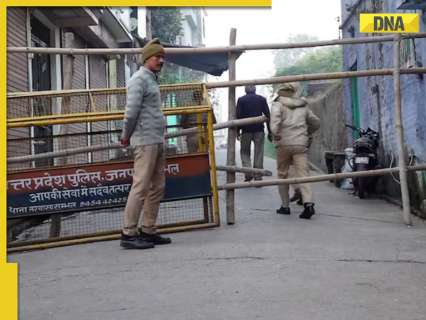
The internet shutdown will continue in the region while all other restrictions have been lifted as the situation has returned to normalcy, Sambhal SP Krishan Kumar said. So far, 27 people, including 25 men and 2 women, have been arrested.
Amitabh Bachchan’s biggest flop film had 4 superstars, made director quit filmmaking, was rejected by Rishi Kapoor and..

We are talking about the 1988 film Gangaa Jamunaa Saraswathi, directed by Manmohan Desai. There were a couple of stars in this action-drama genre film but still, this film could not even recover its budget.
Shillong Teer Result TODAY November 27, 2024 Wednesday: Check 1st, 2nd-round lucky winning numbers
Shillong Teer Lottery November 27, 2024: The complete list of winning numbers from the various games offered by the Meghalaya Lottery Department is shown below. View the results for the following tests: Shillong Morning Teer, Khanapara Teer, Jowai Ladrymbai, Shillong Teer, and Shillong Night Teer.
Tamil Nadu braces for cyclone Fengal: Heavy rain likely, schools, colleges shut in Chennai, Puducherry; check IMD update

According to the IMD, the depression is very likely to continue to move north-northwestwards and intensify further into a cyclonic storm on November 27. Thereafter, it will continue to move north-northwestwards towards the Tamil Nadu coast.
‘Life is about respecting…’: EAM S Jaishankar slams Western criticism of India’s purchase of Russian oil
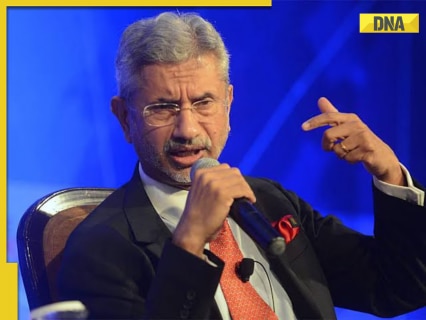
Criticising Europe’s “selective approach,” Jaishankar asked why Europe has not cut its businesses with Russia if it’s a matter of principles. In an interview with the Italian newspaper, Corriere della Sera, in Italy, Jaishankar highlighted Europe’s “unreasonable expectations” from other parts.
Russia expels British diplomat for alleged spying
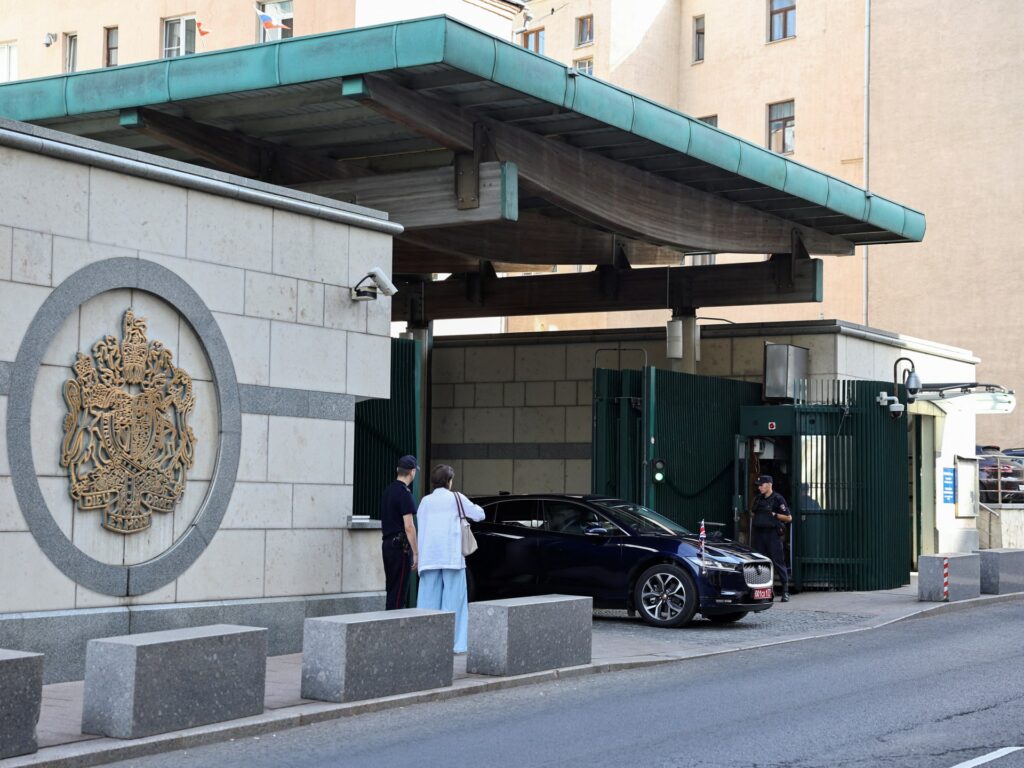
Moscow kicks out the diplomat, who, it says, was ‘conducting intelligence and subversive work that threatens the security of Russia’. Russia has ordered a British diplomat to leave the country for allegedly spying, in the latest blow to the already dire state of relations between the two countries. The FSB security service said on Tuesday that the diplomat, whose photo was splashed across TV news bulletins, had intentionally provided false information when he entered the country. “During counterintelligence work, the Russian Federal Security Service has discovered an undeclared British intelligence presence under the cover of the national embassy in Moscow,” it said. “At the same time, the Russian FSB has discovered signs of the said diplomat conducting intelligence and subversive work that threatens the security of the Russian Federation,” it said in a statement. It named him as Edward Wilkes and said he was a second secretary, a relatively junior diplomatic rank. A spokesperson for British Prime Minister Keir Starmer said he was unaware of the reported diplomatic expulsion, the Reuters news agency reported. Russia’s Ministry of Foreign Affairs spokesperson Maria Zakharova said that a decision was made to revoke the diplomat’s accreditation and he has been ordered to leave the country within two weeks. She said that the ministry had summoned the British ambassador to hand over the notice. The envoy, Nigel Casey, was shown by Russian state media arriving at the Foreign Ministry in Moscow. According to the FSB, the British diplomat was a replacement for one of six British diplomats expelled earlier this year, also on espionage charges. Tense relations Reacting to the earlier expulsions in September, the United Kingdom rejected the spying allegations against its diplomats as “malicious and completely baseless” and said Russia’s behaviour was completely unacceptable. Relations between the UK and Russia have plunged to post-Cold War lows since the start of the Ukraine war. The UK has joined successive waves of sanctions against Russia and provided arms to Ukraine. Russia said Ukraine fired British-made Storm Shadow cruise missiles at its territory last week for the first time. President Vladimir Putin cited the use of the British-made missiles, and the launching of US ATACMS ballistic missiles by Ukraine, as the reason Russia responded by launching a new hypersonic missile at the Ukrainian city of Dnipro last week. Relations between London and Moscow have been repeatedly strained by alleged spy scandals, including the 2006 assassination of former Russian agent and Kremlin critic Alexander Litvinenko in a London poisoning attack. Then in 2018, the UK and its allies expelled dozens of Russian embassy officials they accused of being spies over the attempted poisoning of former double agent, Sergei Skripal, who was living in exile in the UK. Skripal survived the attempted Novichok attack but a British civilian died after touching a contaminated perfume bottle, triggering uproar in London. Adblock test (Why?)
Delhi pollution: Air quality improves in Delhi-NCR, AQI at 312; Anand Vihar at…
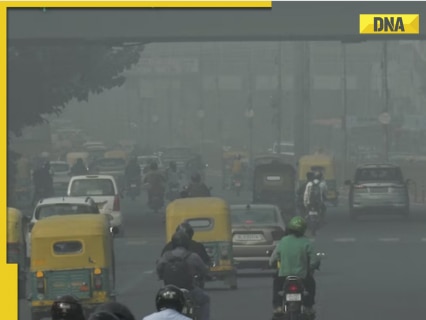
At 6 am, the Central Pollution Control Board (CPCB) recorded an AQI of Anand Vihar at 316, Ashok Vihar at 316, Bawana at 343, and Jahangirpuri at 330.
UP: Man cheated of over Rs 4 lakh after being lured into partnership with Mukesh Ambani, here’s what happened

A man, resident of Varanasi, Uttar Pradesh, has been duped of over Rs four lakhs online after he was lured into partnership with business tycoon and billionaire Mukesh Ambani, as reported by Hindustan.
School reopening news: Will schools in Noida, Greater Noida open for physical classes today?
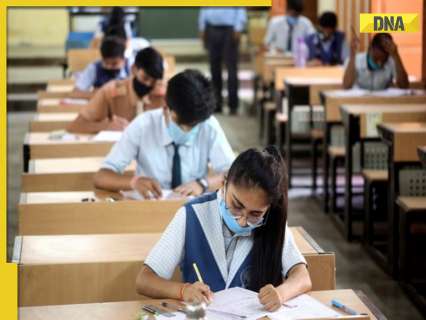
This decision follows a significant deterioration in the Air Quality Index (AQI) in Delhi-NCR, which has exceeded the “Severe+” category with readings above 450.
Jay Bhattacharya, prominent physician and economist, nominated by Trump for NIH director
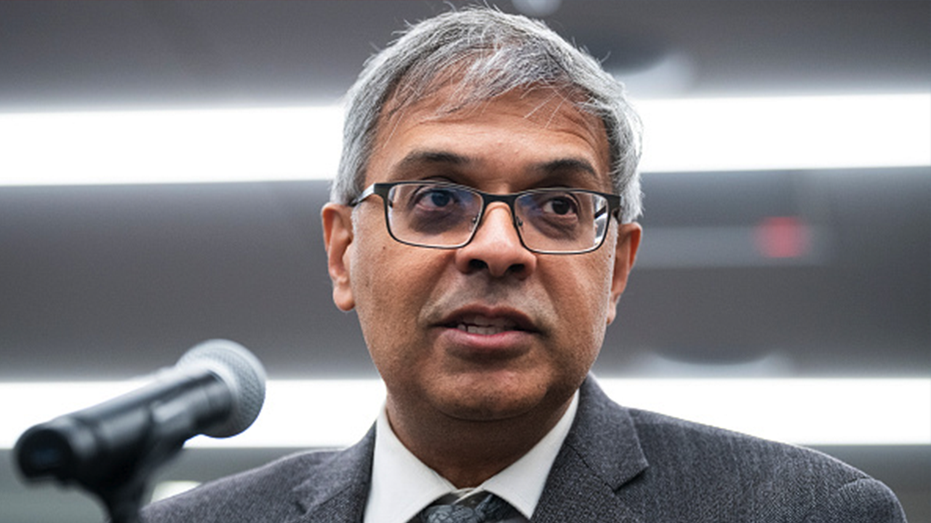
Stanford-trained physician and economist Jay Bhattacharya has officially been nominated by President-elect Donald Trump to serve as the next director of the National Institutes of Health (NIH). Trump made the announcement in a Truth Social post, writing: “I am thrilled to nominate Jay Bhattacharya, MD, PhD, to serve as Director of the National Institutes of Health. Dr. Bhattacharya will work in cooperation with Robert F. Kennedy Jr. to direct the Nation’s Medical Research, and to make important discoveries that will improve Health, and save lives.” Bhattacharya met this week with Robert F. Kennedy Jr., who was nominated by Trump to lead the Department of Health and Human Services, which oversees the NIH and other health agencies, and impressed the former presidential candidate with his ideas to overhaul the NIH, which oversees U.S. biomedical research, according to a report by The Washington Post. The NIH also awards funding grants to hundreds of thousands of researchers, oversees clinical trials on its Maryland campus and supports a variety of efforts to develop drugs and therapeutics. The nominee for the NIH director must be confirmed by the Senate, which will have a Republican majority beginning in January. TRUMP PICKS DR. MARTY MAKARY AS FOOD AND DRUG ADMINISTRATOR COMMISSIONER Bhattacharya has called for moving the NIH’s focus toward funding more innovative research and cutting the influence of some of its longest-serving officials. Kennedy Jr. has played a central role in choosing top health care staff and deputies for Trump’s next administration, including Johns Hopkins surgeon Marty Makary, who Trump selected to lead the Food and Drug Administration, and internal medicine physician and former Republican congressman from Florida Dave Weldon, who Trump chose to head the Centers for Disease Control and Prevention, according to the report. Bhattacharya and Makary worked together on a blueprint for a proposed commission to investigate the nation’s coronavirus response, the report noted. Trump’s selections of Makary, Weldon and family and emergency medicine physician Janette Nesheiwat, who the president-elect nominated to serve as surgeon general, also must be confirmed by the Senate. TRUMP APPOINTS DR. OZ TO KEY HHS POSITION IN NEW ADMINISTRATION Bhattacharya was a prominent critic of the federal government’s COVID-19 response during the early days of the pandemic. He co-wrote an open letter in October 2020, during Trump’s first term, that called for the government to roll back pandemic shutdowns but maintain “focused protections” for vulnerable populations, such as the elderly. The suggestion was supported by Republican lawmakers and many Americans who were critical of shutdowns and wanted to return to pre-pandemic life. However, public health experts, including then-NIH Director Francis S. Collins, criticized the proposal as premature and dangerous amid the spread of COVID-19 at a time when vaccines were not yet available. Bhattacharya has also called for rolling back the power of some of the 27 institutes and centers that make up the NIH, arguing that some career civil servants wrongly shaped national policies at the height of the pandemic and did not allow dissenting perspectives. He, along with other critics of the agency, have criticized former Director of the National Institute of Allergy and Infectious Diseases Anthony Fauci, who helped shape the nation’s coronavirus response during the Trump and Biden administrations before leaving the federal government in December 2022. CLICK HERE TO GET THE FOX NEWS APP The NIH has also been investigated by congressional lawmakers over the pandemic response, with Republicans charging that the agency’s leaders mismanaged the response to the virus and calling for the agency to be overhauled. Current and former NIH officials, including Fauci, have defended the agency’s response, arguing that federal leaders generally did the best that they could to address the virus.