

Mpox outbreak: Kerala confirms 2nd monkeypox case, man had returned to Ernakulam from…

Just last week, a 38-year-old man from Malappuram, also with a travel history to the UAE, tested positive for the highly contagious Mpox Clade 1b strain. He remains in stable condition.
MUDA case: Siddaramaiah refuses to resign as Karnataka CM, says, ‘will not…’
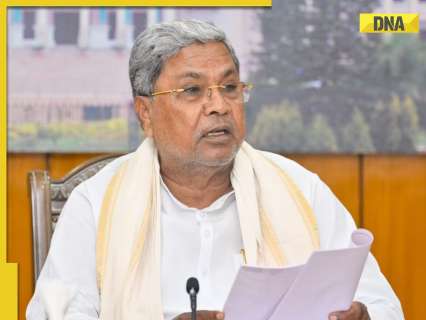
Meanwhile, Senior Minister in the Siddarmaiah government Priyank Kharge challenged the BJP to provide evidence or proof if they have any of any alleged corruption in the MUDA case
Weather update: IMD issues heavy rainfall warning in 17 states for next three days, check details
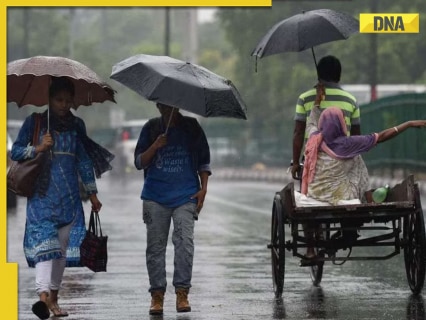
IMD has predicted very heavy rains in many areas of the country including Gujarat, Sub-Himalayan West Bengal and Sikkim, Bihar, Eastern Uttar Pradesh, Konkan and Goa, Central Maharashtra, and Uttarakhand.
Railway Minister Ashwini Vaishnaw announces special trains for upcoming festive season
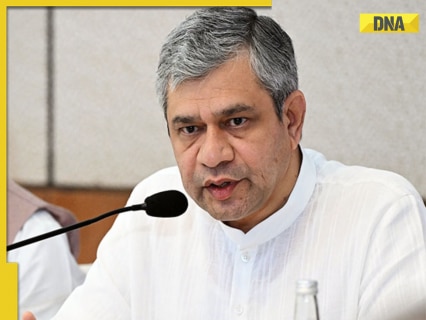
Union Railways Minister Ashwini Vaishnaw has announced special trains for upcoming Diwali and Chhath Puja season.
800-plus bills left on Newsom’s desk illustrate California’s overregulation problem: experts
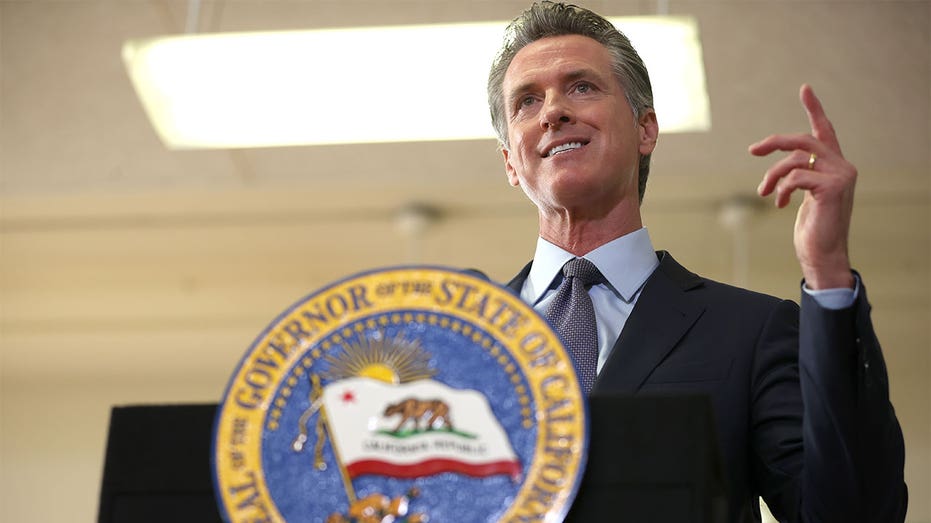
In a legislative session marked by a surge in activity, California Gov. Gavin Newsom has more than 800 bills on his docket to either sign into law or veto by next week. The sheer amount of potential new legislation is further evidence of the Golden State government’s penchant for a heavy touch when it comes to governance, according to critics. As California remains the most regulated state in the country, state lawmakers introduced over 4,400 bills for 2023-2024, eclipsing the 4,100 proposed in the 2020-2021 term, longtime Capitol lobbyist Chris Micheli noted. California public policy expert Lance Christensen warned that many of the bills introduced serve as “vanity projects” for legislators. And with the governor signing the majority, the state’s lawbook is expanding into a labyrinth of complexity that poses significant challenges for citizens and small businesses, driving up compliance costs. NEWSOM VETOES BIPARTISAN ACCOUNTABILITY LEGISLATION AIMED AT STATE SPENDING ON HOMELESSNESS CRISIS “Who has the capacity to read literally millions of pages worth of state law, let alone the millions of pages of regulations … and the answer is zero,” Christensen told Fox News Digital. “Nobody ever reads all this stuff. Very few people really understand how complex it is, and because of that, most people are breaking the law every single day, and they have no idea. “How can you manage that process without somebody else interpreting that for you? So, that increases the cost of knowledge, but it also increases the cost of compliance.” Already, Newsom has signed a package of public safety bills aimed at reducing organized retail theft. He’s also vetoed a number of progressive bills, including several that would have expanded aid to illegal immigrants through housing loans and permitted employment through the University of California (UC) system and a reparations package for Black residents. Promising to tackle the mental health crisis among young people, the blue state governor also signed a historic bill restricting cellphones in schools. NEWSOM VETOES BILL THAT WOULD LET NONCITIZEN STUDENTS WORK AT STATE’S PUBLIC UNIVERSITIES Newsom often vetoes bills if they appear redundant or the cost would further burden the state’s budget shortfall, according to a CalMatters analysis. Last year, Newsom vetoed 156 bills and signed 890, reflecting a veto rate of about 15%, similar to the previous year. His veto rate in 2021 was under 8%. From start to finish, the creation of a bill in California costs roughly $30,000, which does not include more complex legislation that takes longer to draft. Because of this, Christensen said, “money (is) being sucked out of the economy for people just simply to understand — not even comply with — but just simply understand what the legislation is.” NEWSOM’S DEEPFAKE ELECTION LAWS ARE ALREADY BEING CHALLENGED IN FEDERAL COURT Newsom has signed dozens of packages meant to fast-track certain initiatives, like expanding housing development and environmental policies. CLICK HERE TO GET THE FOX NEWS APP “The governor has repeatedly taken action to streamline government,” Brandon Richards, deputy director of Newsom’s rapid response team, told Fox News Digital. “He is intentional with every measure he signs into law — focusing on solving problems and supporting Californians — while recognizing that not every problem warrants a new law.”
Kamala Harris isn’t alone: Vulnerable Dems want current filibuster gone
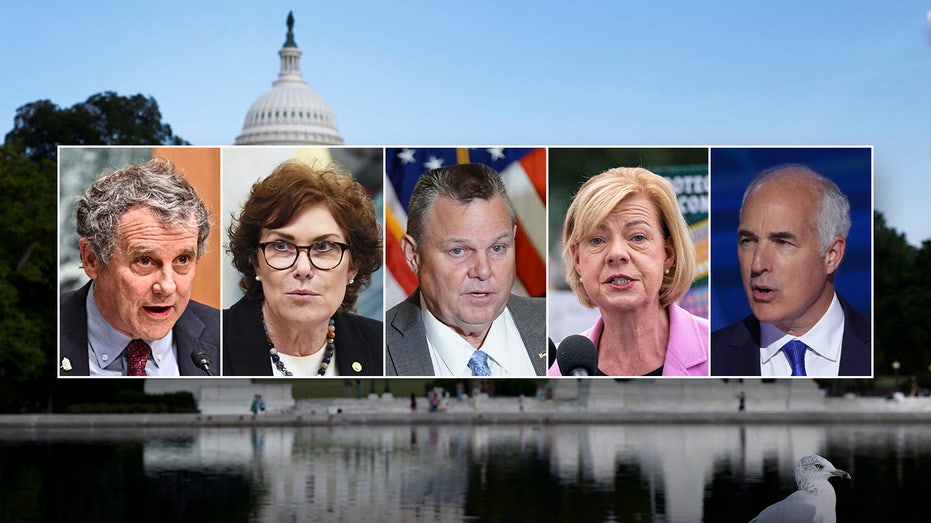
Vice President Harris’ controversial filibuster comment isn’t out of line with a group of vulnerable Democrat senators vying to keep their seats in the upper chamber who are also willing to do away with the legislative filibuster. In fact, Sens. Jon Tester, D-Mont., Sherrod Brown, D-Ohio, Bob Casey, D-Pa., Tammy Baldwin, D-Wis., and Jacky Rosen, D-Nev., all voted to change the rules in 2022 to allow a bill that would loosen federal voting requirements to be passed by a simple majority, which Democrats had in the Senate. “I think we should eliminate the filibuster for Roe,” Harris, a former senator, told Wisconsin Public Radio this week, referencing changing Senate rules to codify the precedent set in Roe v. Wade into law and protect the ability to get an abortion federally. SENATE PASSES FUNDING BILL WITHOUT SAVE ACT, AVOIDING POTENTIAL SHUTDOWN Immediately afterward, Sen. Joe Manchin, I-W.Va., said he would not endorse her for president: “I’m not endorsing her,” he told Fox News. The legislative filibuster requires 60 votes to end debate on a bill and advance to a final vote. If a measure is unable to meet this threshold on a cloture vote, it cannot move forward for final passage consideration. In 2022, both moderate Sens. Kyrsten Sinema, I-Ariz., and Manchin bucked Democrats to join Republicans in preventing the rule change that would have allowed Democrats to pass the voting requirements bill with the party’s razor-thin majority. The senators were both Democrats at the time but subsequently left the party to become independents. They each later announced they wouldn’t seek re-election. Ahead of the filibuster standoff, Brown told one outlet in 2020, “We’ve got to eliminate the filibuster.” Rosen remarked to another in 2021 that she supported suspending the filibuster’s rules “in the case of protecting democracy,” such as passing the voting requirements bill. GOP SENATORS EYE COMPREHENSIVE CHINA STRATEGY TO CURB CCP INFLUENCE Also in 2021, Casey said the threshold was “an arcane Senate procedure” and added, “If the choice comes down to the filibuster or democracy, I know which side I’m on.” Tester told MSNBC during the same summer that if the filibuster continued being “weaponized,” he would be left with few choices. Baldwin backed scrapping the legislative filibuster as far back as 2013, co-sponsoring a bill to do so at the time and reinstitute a “talking filibuster.” Under this change, the 60-vote threshold or legislative filibuster would be eliminated and those who want to filibuster a measure would be required to speak on the chamber floor. If and when those lawmakers stop speaking, a final vote by simple majority would take place. A spokesperson told Fox News Digital earlier in the year that “Senator Tester does not support ending the filibuster.” But Tester told Fox News Digital on Wednesday, “Talking filibuster, that’s what I want, period.” The talking filibuster would effectively eliminate the current legislative filibuster. TOP SECRET SERVICE AGENT IN PITTSBURGH SAYS HE WAS KEPT IN DARK ON ‘CREDIBLE’ THREAT AHEAD OF BUTLER RALLY Casey also reiterated his interest in voting on the 60-vote rule to Fox News Digital in the spring. Baldwin on Wednesday told Fox News Digital she agreed with Harris’ recent comment and still backs returning to the talking filibuster. In response to their interest in a talking filibuster, Manchin told Fox News Digital, “There’s only one filibuster, 60-vote threshold.” Both Brown and Rosen ignored questions about whether they agreed with Harris’ comment from Fox News Digital on Wednesday. Representatives for Casey, Rosen and Brown did not respond to questions from Fox News Digital regarding whether they agreed with Harris or if their positions had changed. JOE MANCHIN SAYS HE WON’T ENDORSE HARRIS OVER SUPPORT FOR ELIMINATING FILIBUSTER Tester is considered the most vulnerable Democrat seeking re-election as top political handicappers predict a Republican win and polls show the Montana senator losing traction. The Ohio race is considered a toss-up by the Cook Political Report as Brown competes to keep his seat. Baldwin, Casey and Rosen’s races in Wisconsin, Pennsylvania and Nevada are rated “Lean Democrat.” In 2021, voters were somewhat divided on the filibuster and many were unsure what they thought about it. According to an April 2021 Fox News Poll, 27% supported eliminating the filibuster while 29% opposed doing so. However, 39% didn’t have an opinion at all. In the aftermath of the dispute over Senate rules in early 2022, even fewer voters reported having an opinion. In a July 2022 Fox News Poll, those who supported eliminating the filibuster and those who opposed it were tied at 26% each, while nearly half, at 47%, said they didn’t have an opinion. Get the latest updates from the 2024 campaign trail, exclusive interviews and more at our Fox News Digital election hub.
Trump-endorsed House candidate sounds alarm on China’s growing influence in battleground state

China’s growing influence in Michigan has brewed into a “huge issue of concern” for voters in the key battleground state, according to a Trump-backed House candidate sounding the alarm on “failed Democratic” policies in the Great Lakes State. “This is a huge issue of concern both from national security and economic security standpoint,” Republican House candidate to represent Michigan’s Tom Barrett told Fox News Digital in a Zoom interview this week. “Here in Michigan, the Democrats are giving nearly $200 million of state tax money to a Chinese-backed, Communist Party affiliated company that’s going to come to Michigan to build a battery plant. They’ve already purchased a bunch of rural farmland to go out and build a Chinese Communist Party-backed battery plant in Michigan, not far from a military installation where I trained for countless hours during my career in the Army.” Barrett is an Army veteran who previously served in Michigan’s state House and state Senate before launching his race to represent the 7th District in the U.S. House. Barrett earned Trump’s “complete and total endorsement” for the House seat earlier this year, and spoke to Fox News Digital about the top issues he’s highlighting from the campaign trail, including spiraling inflation, border policies, fentanyl overdose deaths, as well as China’s growing influence in the state. “While families are struggling in Michigan to make ends meet and just buy groceries, pay for their home heating costs, our state government, backed by my opponent, is sending nearly $200 million of their state tax money to a Chinese communist company just so they can come here and spy on us. This is rotten to the core,” Barrett said. MICHIGAN REPUBLICANS CONTINUE TO SPAR WITH DEMS OVER DEAL WITH CHINESE EV COMPANY IN KEY HOUSE RACE In 2022, Democratic Gov. Gretchen Whitmer announced Gotion, a China-based manufacturer, would construct a $2.4 billion electric vehicle battery plant in a rural area of the state near Big Rapids. The announcement was met with outrage from residents, including local leaders working to reverse a water supply agreement that would have crippled the plant’s construction. Gotion sued the township, Green Charter, and notched a legal victory last month when a federal judge upheld a preliminary injunction allowing construction to continue. Barrett’s competitor this cycle, Curtis Hertel, worked as Whitmer’s director of legislative affairs from 2015 to 2023, before serving in the state Senate. “My opponent signed a nondisclosure agreement to negotiate sending this money to this Chinese company while he was a member of the state Senate and then later went to work as Gov. Gretchen Whitmer’s chief lobbyist. He’s listed in the Foreign Agents Registries Act filings with having secret conversations with this Chinese company about maneuvering through the legislature to get their funding approved,” Barrett said of his competitor and Democrats in the state. Hertell’s campaign and Whitmer’s office did not respond to Fox News Digital’s request for contact. Barrett pointed to remarks from former Obama administration CIA director Leon Panetta, who warned earlier this year that China would likely use the battery plant for espionage purposes. “I don’t think there’s any question that they’re going to take advantage of that situation,” Panetta warned in January when asked about the plant during a House Select Committee on the Chinese Communist Party hearing. “And I think we have to be very vigilant about what the hell is going on. That’s just the way they operate. They’ll establish a manufacturing unit, they’ll establish whatever they can, and then they will use that for their own intelligence purposes. They will use that for their own economic purposes.” Barrett said the deal is not only a national security threat, but also risks American jobs. MICHIGAN REPUBLICAN TOM BARRETT LEAPS BACK INTO CRUCIAL HOUSE RACE AFTER SLOTKIN EXIT “It is all in the pursuit of Joe Biden and Kamala Harris’s electric vehicle mandate that will systematically replace and eliminate existing manufacturing jobs in Michigan that make up the very fabric of our economy here. So we have a Chinese company threatening with national security concerns to replace American jobs in traditional manufacturing with electric vehicle mandates that are borne by the Biden administration. So this has so many problems. It’s an absolutely horrible deal,” he said. “Michiganders are stepping up. They’re aware of this. It is terribly unpopular here. And we need to take this fight to the ballot box to make sure that we don’t let this go forward.” Trump joined farmers during a panel earlier this week in another battleground state, Pennsylvania, where they discussed China’s recent purchases of American farmland and again enforcing a trade deal against China that benefits American farmers. “My first call, I’m going to call up President Xi. I’m going to say, ‘You have to honor the deal you made. We made a deal. You’d buy $50 billion worth of American farm product.’ And I guarantee you he will buy it. 100% he will buy it,” Trump said Monday during a campaign event in Smithton, Pennsylvania. SENATE GOP UNLEASHES CAMPAIGN BLASTING DEM CANDIDATE FOR HUSH AGREEMENT INVOLVING CCP-TIED COMPANY Trump struck a trade deal with China in 2020 that included Beijing’s commitment to halt intellectual property theft, refrain from currency manipulation, cooperate in financial services and purchase an additional $200 billion of U.S. products over two years, including up to $50 billion of U.S. agriculture. “Second thing I’m going to do is, I’m going to say you have to give the death penalty to your fentanyl dealers who are sending fentanyl. You know, in China, they give the death penalty. They don’t have a drug problem because they give the death penalty,” Trump said. Fentanyl and overdose deaths are again one of the top concerns for Americans this election cycle, with Trump tying the fatal drug to the influx of illegal immigrants who have poured over the southern border under the Biden-Harris administration. Barrett said his area and district are among the communities across the nation that have been rocked by the influx of the synthetic
Big blow for BJP as Sunil Jakhar resigns as Punjab chief ahead of Panchayat elections: Report
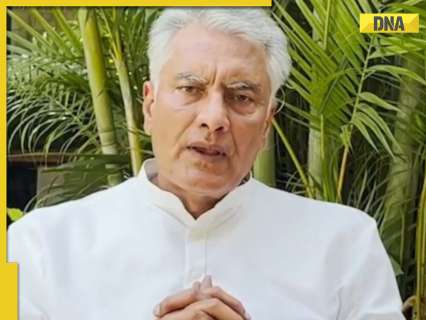
However, sources within the BJP leadership have hinted that Jakhar has expressed a desire to step down from his position as state party president, citing difficulties in working freely within the state.
PM Modi launches 3 Param Rudra supercomputers: Know features, how these will help India
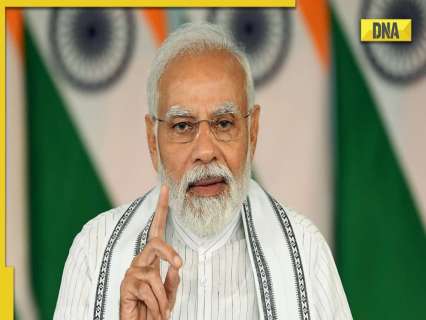
These systems have been installed in Delhi, Pune, and Kolkata, respectively
Who’s in the running to be Japan’s next prime minister?
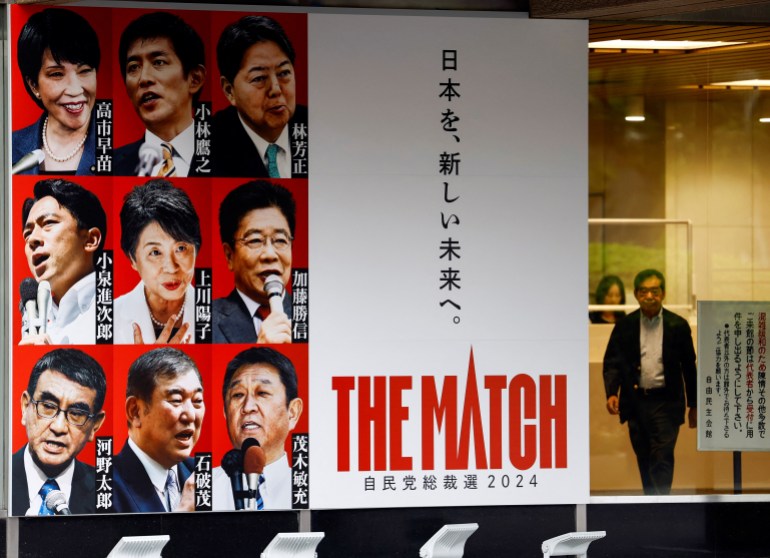
Japan’s governing party will choose a new leader on Friday to replace Fumio Kishida who announced his resignation in August. The winner of the contest for leadership of the Liberal Democratic Party (LDP), the largest in parliament, will become the country’s next prime minister. Most analysts expect the new leader to call a snap election to secure a mandate from voters. A record nine candidates have been campaigning and the break-up of the LDP’s usual power structures as a result of a series of corruption scandals have made it harder to predict the outcome. Many candidates “have claimed that ‘I’m the one who can handle Trump’ or ‘I’m the one who can stand up to China’”, Jeffrey J Hall, a lecturer at Kanda University of International Studies, told the AFP news agency. But there are significant differences in their approach to such issues, and although some of the nine have “no hope whatsoever”, the race remains “a toss-up”. “This is the most unpredictable that an LDP election has been in many years,” Hall said. The first round of voting starts at 1pm (04:00 GMT) with the eventual winner expected to hold a news conference at about 6pm (09:00 GMT). The contest might also produce Japan’s first woman or youngest-ever prime minister. Candidates will go through several rounds of voting to whittle down the field [Issei Kato/Reuters] Here are some of the more prominent contenders: Shigeru Ishiba, 67 A former defence minister, Shigeru Ishiba is popular with the public but has failed four times to secure the post of party leader. Ishiba’s campaign has focused heavily on security issues, and he has indicated he will push for more oversight over Washington’s use of its bases in Japan, and also for Japan to have a say in how the US might use its nuclear weapons in Asia. Other suggestions have included the creation of an ‘Asian NATO’. On the economy, the 67-year-old has questioned the Bank of Japan’s maverick interest rate policy. A former agriculture minister, he has also called for more efforts to address rural depopulation. Takeshi Iwaya, one of the LDP legislators supporting Ishiba’s candidacy, describes the veteran politician as a man with a “sincere and honest attitude towards politics”. Ishiba graduated from Keio University with a law degree. He enjoys making military models, including one of a Soviet aircraft carrier for the visit of a Russian defence minister, as well as trains and 1970s pop idols. Shinjiro Koizumi, 43 The 43-year-old son of popular former Prime Minister Junichiro Koizumi has positioned himself as the change candidate, with the vision and charisma to help the party rebuild after its recent scandals. Koizumi was first elected to parliament in 2009 and established his credentials by working on reconstruction in eastern Japan following the devastating 2011 earthquake. He was environment minister under the administration of Shinzo Abe who was assassinated in July 2022, as well as that of his successor Yoshihide Suga. Koizumi has supported the development of renewables. Unusually, he also took paternity leave for the birth of his children. He has promised to hold a snap election if he wins the party leadership. “With the rapidly declining birthrate and ageing population, we need leaders who have the antennae and sensibility to pick up on diverse voices, including those of young people and women,” said Ayuko Kato, an LDP legislator backing Koizumi’s candidacy. Shinjiro Koizumi is positioning himself as the change candidate. His sign reads ‘Political Reform’ [File: Takashi Aoyama/Pool Photo via AP Photo] Koizumi has an economics degree from Kanto Gakuin University, and a master’s from Columbia University, He also spent time working at the US think tank Center for Strategic and International Studies (CSIS). He enjoys surfing and in July spent a day at the beach with US ambassador to Japan, Rahm Emanuel. Sanae Takaichi, 63 Sanae Takaichi, whose hero is former British Prime Minister Margaret Thatcher, could follow in her idol’s footsteps to become her country’s first woman prime minister. A vocal nationalist popular with the LDP’s conservative faction, Takaichi was close to Abe, whose supporters within the party remain powerful. She has aroused controversy with her promise to visit the Yasukuni Shrine, which honours Japan’s war dead including a number of convicted war criminals. Japanese leaders stopped going to the shrine in 2013 amid criticism from the US and condemnation from South Korea, China and other nations that see it as a symbol of Japan’s wartime aggression. The 63-year-old, who is currently the minister of state for economic security, also supports a strong military and nuclear power and is against social change on issues such as same-sex marriage. She previously ran for leadership in 2021 when she had Abe’s support. Takaichi is a graduate of the Matsushita Institute of Government and Management. The Yasukuni Shrine honours Japan’s war dead, but is controversial because it also includes several war criminals [File: Hiro Komae/AP Photo] Taro Kono, 61 Taro Kono, currently minister for digital transformation, is an experienced and outspoken reformist who also ran for leadership in 2021. Kono has held multiple jobs at ministerial level, including foreign affairs and defence, and is seen as one of the more liberal candidates. The 61-year-old has amassed 2.5 million followers on social media platform X. Opposed to nuclear power after the 2011 quake and nuclear disaster, he has since softened his stance amid growing demands for energy from AI data centres. Kono was first elected to parliament in 1996. He graduated from Georgetown University in the US. Yoko Kamikawa, 71 Currently foreign minister, Yoko Kamikawa was the last to join the race for the presidency, announcing her candidacy on September 11. She is serving her seventh term in the House of Representatives and was appointed to her first cabinet post in 2006 under Abe. The 71-year-old has won plaudits for her work on the international stage, including a visit to Kyiv, but reportedly struggled to secure the support she needed to run as a candidate. Kamikawa graduated from the University of