

Nebraska Supreme Court sets up abortion showdown on Election Day with competing ballot measures
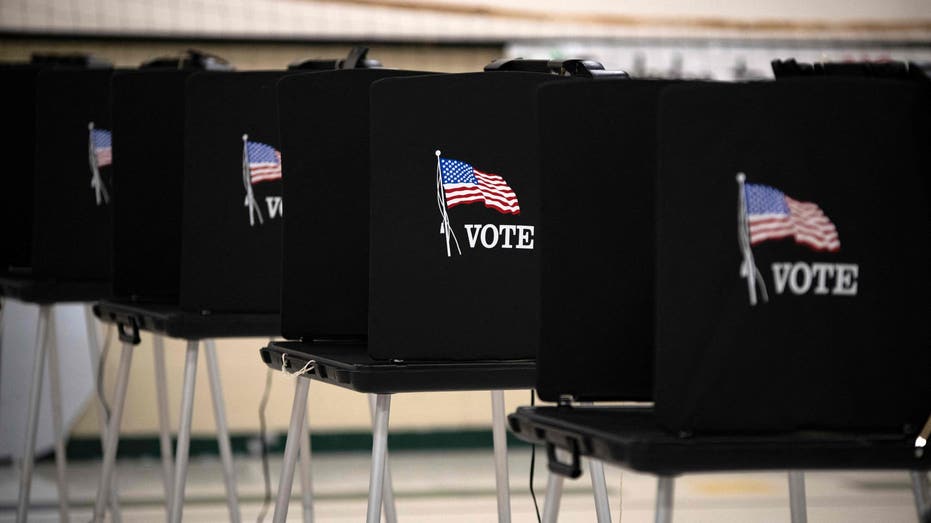
The Nebraska Supreme Court has set up a major abortion policy showdown for election day, approving two competing ballot measures to go before voters. One ballot measure, put forward by abortion advocates, would enshrine a fundamental right to abortion “until fetal viability.” The other measure, put forward by abortion opponents, would codify the state’s current 12-week abortion ban into the state’s constitution. Current Nebraska law allows for exceptions in the case of rape, incest or the life of the mother. Anti-abortion groups had filed a pair of lawsuits challenging the competing ballot measure, arguing it violated state policy requiring that such measures pertain to only one subject. The lawsuits argued the ballot measure deals with abortion rights until viability, abortion rights after viability to protect a woman’s health, and whether the state should be allowed to regulate abortion, amounting to three separate issues. TRUMP AND HARRIS ON COLLISION COURSE AS 2024 CAMPAIGN ENTERS FINAL STRETCH The state Supreme Court struck down those challenges in a Friday ruling, allowing the measure to appear on ballots. ABC’S LINSEY DAVIS RAISES EYEBROWS WITH ABORTION FACT-CHECK AGAINST TRUMP: ‘COMPLETELY INTERJECTS HERSELF’ Organizers for each ballot measure turned in more than 200,000 signatures supporting them, well over the 123,000 requirements. The court battle comes as Democrats across the country seek to use abortion as a key issue to outplay Republicans. The effort was on full display during last week’s presidential debate, with Vice President Kamala Harris blasting the end of Roe v. Wade under former President Trump. Harris argued Trump would sign a national abortion ban into law if he is elected in November. Trump rejected that claim and instead pointed to ballot measures like the ones now playing out in Nebraska. VOTERS GIVE HARRIS THE DEBATE WIN, BUT PRAISE TRUMP ON POLICY: SHE GOT UNDER HIS SKIN “As far as the abortion ban, no, I’m not in favor of an abortion ban, but it doesn’t matter, because this issue has now been taken over by the states,” Trump said. “I believe in the exceptions for rape, incest and life of the mother,” he said. “I believe strongly in it. Ronald Reagan did also. Eighty-five percent of Republicans knew exceptions are very important,” he said. Many states have adopted ballot measures on abortion since the Supreme Court struck down Roe v. Wade in 2022. Some, like California, enshrined abortion rights more firmly into law. Others, like Louisiana, paved the way for more restrictions on abortion.
Arizona’s repeal of 1864 ban on nearly all abortions goes into effect

Arizona’s Civil War-era ban on nearly all abortions is officially being repealed on Saturday. The long-dormant 1864 law, which predated Arizona’s statehood, had no exceptions for rape and incest, only for the life of the mother. The 160-year-old law went into effect after the repeal of Roe vs. Wade in 2022 but faced court challenges which prevented it from being enforced. WHAT TO KNOW ABOUT THE ARIZONA SUPREME COURT’S REINSTATEMENT OF AN 1864 NEAR-TOTAL ABORTION BAN The ban was held up by the Arizona Supreme Court in April, throwing out an earlier lower-court decision that concluded doctors couldn’t be charged for performing abortions in the first 15 weeks of pregnancy. But the decision sparked backlash in the battleground Grand Canyon State, with Democratic Arizona Gov. Katie Hobbs calling on the state legislature to repeal the ban. Republicans hold a narrow majority in both chambers, but House Democrats were then able to garner the support of three Republicans to pass the repeal legislation in April following two previous attempts, sending the measure to the Senate for consideration. Two GOP senators joined with Democrats a week later to grant final approval and then Hobbs signed the bill in May, declaring it was just the beginning of a fight to protect reproductive health care in Arizona. “I will continue doing everything in my power to protect reproductive freedoms, because I trust women to make the decisions that are best for them, and know politicians do not belong in the doctor’s office,” Hobbs said in a statement. Arizona House Speaker Ben Toma, a Republican, said at the time that he was “deeply disappointed” by the bill’s passing. “We should not have rushed this bill through the legislative process,” he said in a statement shared with Fox News Digital. “The pre-Roe law has been on the books for decades and was readopted in 1977 by Democrats and Republicans in the State Legislature and signed by Democrat Gov. Raul Castro. ARIZONA HOUSE LAWMAKERS PASS BILL TO REPEAL 1864 ABORTION BAN “It would have been prudent and responsible to allow the courts to decide the constitutionality of the pre-Roe law. Instead, we are rushing to judgment for reasons I simply cannot understand.” The state’s internal tussle over the issue was thrust into the national spotlight in March when Arizona state Sen. Eva Burch announced on the state Senate floor that she planned to have an abortion after learning that her pregnancy was not viable. Arizona law now allows abortions until 15 weeks. After that, there is an exception to save the life of the mother, but missing are exceptions for cases of rape or incest after the 15-week mark. The state requires those seeking an abortion prior to the 15-week mark to have an ultrasound at least 24 hours before the procedure and to be given the opportunity to view it. Minors must have either parental consent or authorization from a state judge, except in cases of incest or when their life is at risk. CLICK HERE TO GET THE FOX NEWS APP Voters will decide on whether to add the right to abortion to the state constitution when they have their say on Proposition 139 in the general election. The measure secured a spot on the ballot after the pro-abortion group Arizona for Abortion Access, secured nearly 578,000 signatures, well over the 383,923 required from registered voters. If voters approve the measure, abortions would be allowed until fetal viability — the point at which a fetus can survive outside the womb, typically around 24 weeks. It also would allow abortions after that time in cases where the mother’s physical or mental health is in jeopardy. The Associated Press contributed to this report.
Picture of Lord Ganesha’s idol in police van sparks row in Bengaluru: Here’s what we know so far

The protest was organised by the Bengaluru Metropolitan Ganesh Utsav Committee, calling for action against the stone pelters and the release of Hindu members who were arrested after the clash
Ayushman Bharat health insurance for senior citizens: Eligibility, benefits, how to apply
Ayushman Bharat health insurance for senior citizens: It will benefit 4.5 crore families with 6 crore senior citizens with a Rs 5 lakh free health insurance cover on an annual basis.
Delhi records year’s cleanest air quality as AQI drops to…
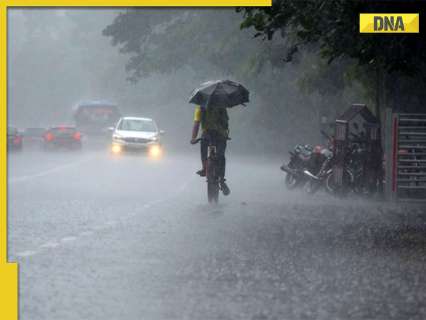
Delhi also exceeded its yearly and seasonal average rainfall in early September, with total precipitation surpassing 1,000 mm.
‘Kings of the world’: The last of the horseback shrimp fishers
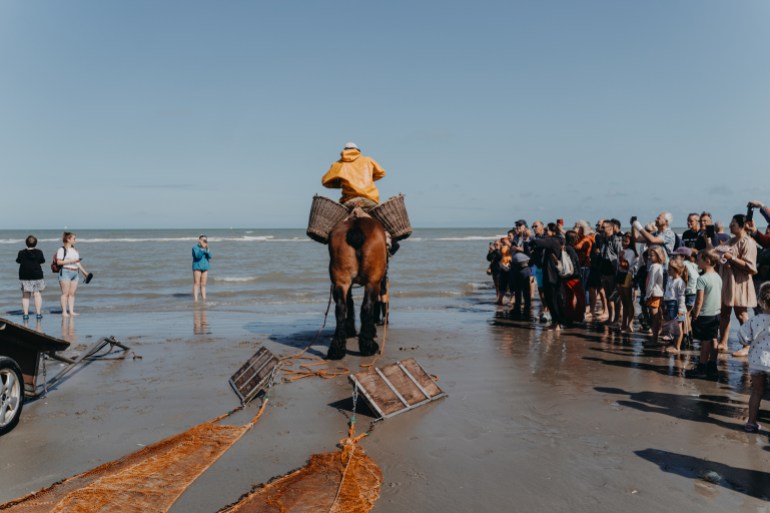
Oostduinkerke, Belgium – A few hours after dawn one late July morning, the sound of Gregory Debruyne’s horse Kelly trotting through the verdant lanes of Oostduinkerke echoes through the quaint coastal village in west Belgium. Pulling a cart filled with fishing gear and equipment to sift shrimps, Kelly – a brown Belgian draught horse – and Debruyne are heading towards the sandy shores of the North Sea to go shrimp fishing. Debruyne is a Belgian horseback shrimp fisherman in Oostduinkerke – the last place in the world where this centuries-old practice of catching shrimp using horses rather than boats continues. “I learned horseback shrimp fishing from my father when I was 11 years old,” Debruyne, now 27, tells Al Jazeera, as he gets Kelly ready to fish for the day in the village centre, close to the sea. Dozens of tourists are crowding around them and eagerly watching as Debruyne covers Kelly with a warm blanket and mounts two brown baskets on either side of her back. He also attaches a chained net to her tail. “Using her hindquarters, Kelly will wade through the shallow waves of the North Sea, until the seawater reaches her chest, pulling the net, which has a chain at the bottom. This pull generates a vibration that disturbs the shrimp in the shallow waters, instigating them to jump into the expanded net,” Debryune explains. Four other fishermen and their horses have joined Kelly and Debruyne in the village. All the horseback shrimp fishermen don bright yellow anoraks – thick waterproof jackets – and black gum boots and head off towards the North Sea on their horses. “I hope to return after about an hour, with a worthy catch,” Debruyne shouts back as the spectators watch him and Kelly heading into the sea. Horseback shrimp fishers in Oostduinkerke attract crowds both from Belgium and abroad, particularly during the summer season [Diana Takacsova/Al Jazeera] Horseback shrimp fishing – which is on the “Intangible Cultural Heritage of Humanity” list maintained by the United Nations Educational, Scientific and Cultural Organization (UNESCO) – began in northern Belgium at the turn of the 15th and 16th centuries, when the region was under the control of Christian monks. While it was also practised in the Netherlands, France and parts of southern England, just 12 families in Belgium still pursue the tradition. In 1502, there was an abbey at Koksijde (in present-day Belgium) and the monks wanted shrimps and fish to eat, something the local religious community was only too happy to oblige. “The local farmers, who owned horses, decided to go to the sea and catch shrimp and fish and give it to the monks of the abbey. This kicked off the practice of horseback shrimp fishing,” Eddy D’Hulster, who worked as a horseback shrimp fisherman for 56 years, tells Al Jazeera. These days, horseback fishermen like Debruyne also work on commercial vessels to earn more money. On vessels, the horseback shrimp fishers also catch other fish and not just shrimp. D’Hustler himself has also worked as a fisherman on vessels, but says he much prefers catching shrimp on horseback since he believes the brown shrimp is tastier when it comes from the shallow waters of the North Sea. ‘Live for the horse and the sea’ Sporting a navy blue cap imprinted with a symbol of a horseback shrimp fisher, 81-year-old D’Hulster is watching the bright yellow anoraks of Debruyne and the other fishermen with their horses out at sea and reminiscing about his first time fishing in such a manner. “I started fishing for shrimp on horseback thanks to a love story,” he chuckles. “I met this beautiful girl in the village and learned that her father was a horseback shrimp fisherman. I began learning the tradition from him when I was around 18 years old, seeking to impress his daughter. We were soon married which was great,” he says, blushing. “But this was also the onset of a bigger love story in my life which always made me feel like the king of the world – horseback shrimp fishing!” he exclaims. Eddy D’Hulster, a former horseback shrimp fisherman, says practising the ancient tradition makes him feel like the ‘king of the world’ [Diana Takacsova/Al Jazeera] Shrimp caught by the horseback shrimp fishermen in the North Sea are greyish-brown in colour and called brown shrimp. They are found in the shallow waters of the sea and Belgians consider them to be the tastiest shrimp in the world due to their sweet and salty flavour. “When I started fishing, it was the beginning of spring and the North Sea back then was brimming with brown shrimp,” D’Hulster says. “Treading into the shallow waves of the sea, we could easily catch about 20-30kg [44-66lbs] of shrimp and make a living through this tradition, earning about 30 Belgian francs [about 0.75 euros] for a kilo.” Today the price is 10 euros ($11.11) for a kilo of shrimp, he says, and “it is the only kind of shrimp I love eating”. While the catch and the money they could earn was an incentive that drew young men and women in Oostduinkerke to horseback shrimp fishing, D’Hulster says that for many of them, it is also a passion for horses and the “mighty blue” North Sea, which keeps the ancient tradition alive here. “Shrimps are what we catch, but as a horseback fisherman, you must live for the horse and love the sea. When I started fishing, the thing I loved the best was my horse, Mina. She was about 10 years old and I bought her from my father-in-law. We learned shrimp fishing together,” he says. Mina died when she was 20 years old, after which it took D’Hulster six months to train another horse to fish. “Mina taught me to love the open sea. I do miss her, but my family now owns around 10 to 20 horses which are trained to fish in the sea,” D’Hulster says. Like Kelly, Mina was a
South Sudan postpones December election by two years

Government says it needs more time to complete a census, draft a permanent constitution and register political parties. South Sudan’s government has announced it is postponing long-delayed general elections until December 2026, citing a lack of preparedness. This is the second time the country, which gained independence in 2011, is postponing elections and extending a transitional period that started in February 2020. President Salva Kiir and his former rival turned deputy, Riek Machar, signed a peace agreement in 2018 that ended a five-year civil war which killed an estimated 400,000 people, triggered a famine and led to a massive refugee crisis. “The presidency, under the chairmanship of President Salva Kiir Mayardit, has announced an extension of the country’s transitional period by two years as well as postponing elections, which were initially scheduled for December 2024 to December 22nd, 2026,” Kiir’s office said on Friday. The government said it needed more time to complete processes such as a census, the drafting of a permanent constitution and the registration of political parties before an election could be held, according to the presidential adviser on national security, Tut Gatluak. Cabinet Affairs Minister Martin Elia Lomuro said the extension followed recommendations from both electoral institutions and the security sector. “There is a need for additional time to complete essential tasks before the polls,” Kiir’s office said. The country is going through an economic crisis that has seen civil servants go unpaid for almost one year, after its oil exports were affected by a damaged pipeline amid the civil war in neighbouring Sudan through which it exports. Andrea Mach Mabior, an independent political analyst, warned that any sham elections may result in a waste of resources and chaos. “Going for elections that do not meet international standards will be a waste of money,” Mabior told The Associated Press news agency. A new security act that allows for warrantless detentions became law in August despite concerns from human rights groups that it would create a climate of fear in the run-up to the elections. An estimated 9 million people – 73 percent of the country’s population – are in need of humanitarian assistance this year, according to the United Nations. Adblock test (Why?)
The optics and strategy of the Harris-Trump debate

With both candidates averse to media scrutiny, the presidential debate took on huge significance. This week marked the first presidential debate between Donald Trump and Kamala Harris. With both candidates giving legacy media the cold shoulder, was it enough to convince voters of their vision for America? Contributors: Shana Gadarian – Professor of Political Science, Syracuse UniversityNatasha Lennard – Contributing Writer, The InterceptJohn Nichols – National Affairs Correspondent, The NationMitchell Robertson – Lecturer in US History, UCL On our radar: US authorities say they are conducting a coordinated operation against Russian foreign influence in this election. Meenakshi Ravi looks at the right-wing online influencers who are accused of taking money from Moscow. Cobalt mining in the DRC: Big Tech’s dark secret Cobalt is one of the most in-demand minerals in the world today. It’s used in the batteries of smartphones, laptops and electric cars. And most of it comes from the Democratic Republic of the Congo. However, covering cobalt extraction in the DRC is notoriously difficult which makes it hard to know what conditions the miners are working under. In the first of a two-part report, the Listening Post’s Nic Muirhead went to the DRC to try and gain access to the mines – to see for himself – what the story is. Featuring: Franck Fwamba – Editor, Mining News MagazineSiddharth Kara – Author, Cobalt RedSylvie Manda – JournalistCandy Ofime – Researcher on Climate Justice, Amnesty International Adblock test (Why?)
‘Nafrat ki dukaan pe…’: PM Modi attacks Rahul Gandhi at election rally in J-K’s Doda

Addressing a public meeting in Doda, PM Modi attacked the Congress party, National Conference and People’s Democratic Party
Kolkata rape-murder case: CM Mamata Banerjee visits protesting doctors, says, ‘last attempt to…’

Accompanied by DGP Rajiv Kumar, Banerjee reached the site in Sector 5 around 1 pm, taking those present there by surprise.