

Borders fully secure; will not allow terrorists to disturb J-K Assembly polls: BSF
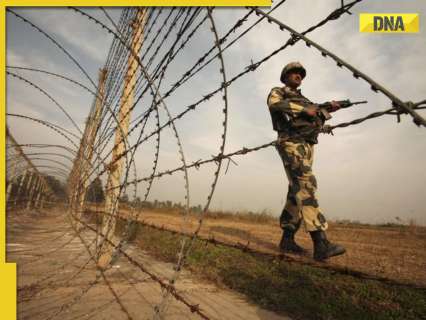
Inspector General of Border Security Force (BSF), Jammu frontier, DK Boora was speaking to reporters in the Bhaderwah area of Doda district which is going to polls in the first phase on September 18.
Debate challenge: The pressure’s on Kamala as she and Trump trade flip-flop charges
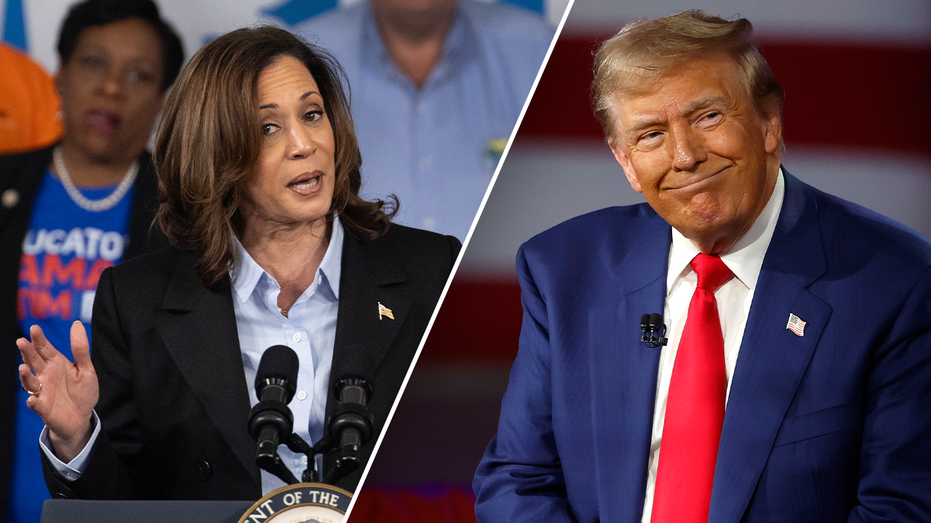
It’s impossible to know just how tonight’s debate will go, but polling suggests the pressure is on Kamala Harris. Almost everyone on the planet knows what they think about Donald Trump, love him or loathe him. But the vice president, who has granted exactly one interview (speaking for 16 minutes) and generally avoids the press, hasn’t debated in four years. In a New York Times/Siena College survey, 28% said they needed to know more about Kamala; only 9% felt that way about Trump. (Who are these 9%??) Some warning signs: More than 60% of likely voters want a major change from Joe Biden, but just 25% said Kamala represented that change, while 53% said Trump did. Not a great sign in what is obviously a change election. HARRIS FINALLY ADDS POLICY PAGE TO CAMPAIGN WEBSITE, DEVOTES SEVERAL SECTIONS TO TRUMP What’s more, while roughly a third of Trump voters say he’s too far to the right, nearly half say the VP is too far to the left. It doesn’t take a rocket scientist to figure out that Trump will try to hang the Biden record around his opponent’s neck – a tricky situation since any veep isn’t in charge. And Kamala will use her prosecutorial skills not just to debate her opponent but to cite low moments from his four years in office – I’d wager Jan. 6 will come up – as well as pushing her top issue, abortion, where Trump has been softening his stance in a confusing manner. Overall, the Times found Trump leading Harris 48 to 47% nationally, quickly noting that’s within the 3-point margin of error. And the average of battleground state polls also shows 1- or 2-point leads for either candidate, which is a virtual tie (so the pundits need to stop saying Trump or Harris is “leading” in this or that state, when they know better). It turns out that Kamala had no second act. Or that she was riding so high that she got virtually no bump from the Democratic convention. After all, the VP had a solid month of the most gushing coverage I’ve ever seen for her joy-filled and vibes-based campaign. Well, maybe Obama in 2008, but even he drew some criticism. Was it a sugar high? Maybe. But the situation has her supporters pretty nervous. Yet all this will be forgotten if she does well in the ABC debate, with Trump working the refs by calling it the “meanest” network. LIBERAL THINK TANK’S DEEP TIES TO BIDEN ADMIN, FAR-LEFT POLICIES COULD COME BACK TO HAUNT HARRIS CAMPAIGN Here is one game that both sides are playing. Since both have flip-flopped as they move toward the middle, they are taking old or outdated positions and pretending they are current stances. This is a particular problem for Kamala, since she has walked away from her left-wing rhetoric of 2019, when she didn’t make it to Iowa. She said she was against fracking, for decriminalizing the border and for abolishing private health insurance. And for the most part, she has done this without explanation, other than having anonymous aides say, oh, she doesn’t believe that anymore. That has enabled Trump to say that despite her reversal, she will ban fracking, a huge issue in Pennsylvania, after all. This is where doing more interviews might have helped her, and I hope she’ll do more after the debate. HOW TRUMP, OR KAMALA, COULD WIN, AS ALL SIDES ZERO IN ON THE DEBATE On the other side, with Trump opposing Florida’s six-week abortion ban, endorsing free IVF treatments and vowing not to sign a national abortion ban, Harris insists he will sign such a ban – and noting that he bragged about his three justices overturning Roe. This, in turn, has sparked a backlash among some pro-life groups. Corey Lewandowski told me on “Media Buzz” that Harris is running on abortion because it’s the only issue that favors Democrats, who he argued have the extreme position by allowing the procedure through the ninth month. In similar fashion, Kamala insists that Trump will carry out the Heritage plan Project 2025, despite the fact that he has repeatedly disavowed it and called parts of it abysmal. For voters who don’t follow the campaign as incessantly as journalists and politicos, this may all seem rather confusing. But ultimately the debate, and the election, won’t turn on policy. Trump has a four-year term in the White House to praise or pick apart. Kamala has to make viewers on all the networks that will simulcast the ABC debate comfortable with her both as a likable person and a potential commander-in-chief. My own gut feeling is that this will be the only debate between the two. If one of them starts agitating for more debates later on, that will be the candidate who feels like he or she needs a do-over.
One killed in Moscow as dozens of Ukrainian drones target Russia
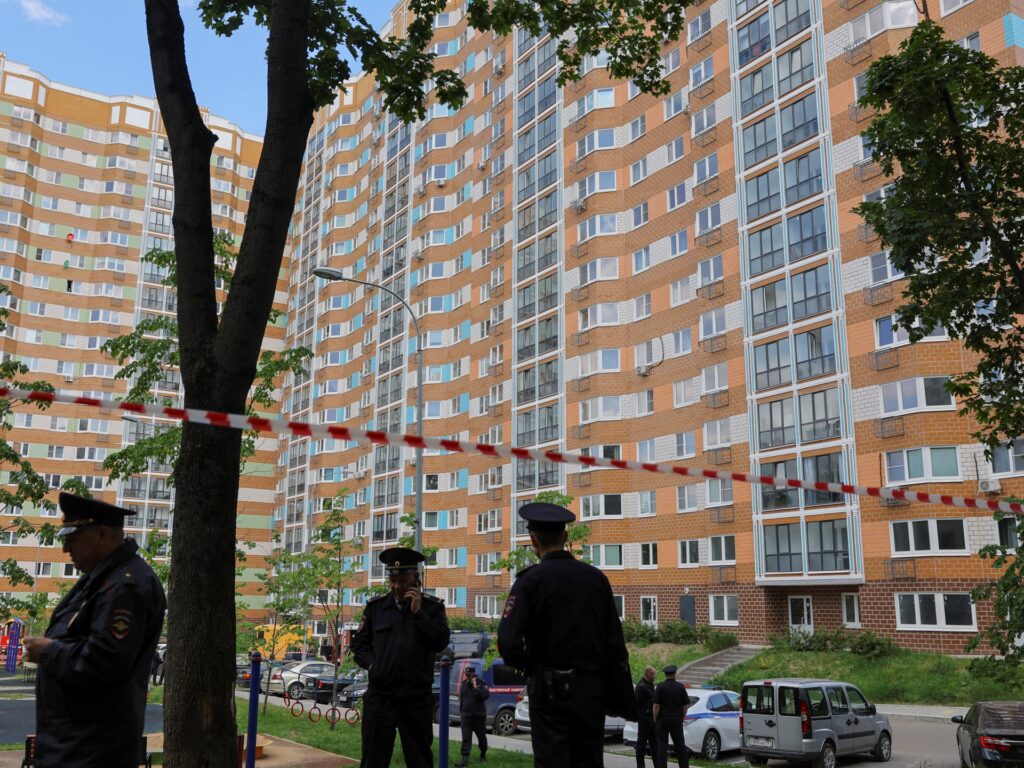
Official says woman died when debris from destroyed drone hit an apartment block starting a fire. A woman has been killed in Moscow after the remnants of a downed Ukrainian drone hit the apartment block where she was living and started a fire, according to Russian officials. Moscow regional Governor Andrei Vorobyov said debris from the drone damaged at least two high-rise apartment buildings in the Ramenskoye district in the early hours of Tuesday, setting several flats on fire. City mayor Sergei Sobyanin said emergency teams had been sent to a number of locations across the region as well as to the area near the Zhukovo airport and around the Domodedovo district – the site of one of Moscow’s largest airports. More than 30 flights were suspended. Russia said its air defences shot down more than 70 Ukrainian drones during the night with at least 15 intercepted in and around Moscow. The Ramenskoye district, some 50km (31 miles) southeast of the Kremlin, has a population of about 250,000 people, according to official data. Russia’s SHOT and Baza Telegram channels, which are close to Russia’s security services, posted videos with flames billowing from a multistorey residential building, saying that five flats had been destroyed. In the region of Bryansk, which borders Ukraine, “59 enemy aircraft-type UAVs have been intercepted and destroyed”, Governor Aleksander Bogomaz said on Telegram. He described the attack as “massive” but said there were no casualties or damage. Two more Ukrainian drones were intercepted in the Tula region, south of Moscow, Russian official news agency TASS reported. More than two and a half years since Moscow launched its full-scale invasion, Ukraine has fast-tracked the development of its domestic drone industry to enable it to attack Russia’s energy, military and transport infrastructure. Ukraine did not comment on the attack, which came as air raid warnings sounded in Kyiv amid another Russian drone assault on the Ukrainian capital. Adblock test (Why?)
Jordan elections: How will electoral reforms impact the September 10 polls?

Amman, Jordan – Citizens will vote in historic elections for the Parliament of Jordan’s 138-seat lower house on Tuesday. The parliamentary elections are the first since the 2022 constitutional amendments and the implementation of new laws governing elections and political parties aimed at democratisation and increasing the role of political parties in a country where tribal affiliations play a dominant political role. What are these laws? And will they make a difference in how Jordan is governed? Here’s what you need to know: When were the reforms approved? Jordan’s King Abdullah II formed the Royal Committee to Modernise the Political System in 2021. The committee’s recommendations were approved in March 2022. The new electoral law paved the way for a bigger role for political parties and also took measures to increase women’s representation in the House of Representatives, the lower chamber of Parliament. People directly elect representatives to the House every four years, but all 65 members of Parliament’s upper chamber are appointed by the king. Jordan’s King Abdullah II gives a speech in 2020 during the inauguration of the 19th Parliament’s non-ordinary session in Amman, Jordan [File: Yousef Allan/The Royal Hashemite Court/AP] What did they change? Candidates will compete in 18 local districts in an open-list proportional representation system (OLPR) – introduced in a 2016 reform – for 97 out of 138 parliamentary seats. The last parliamentary elections in 2020 divided voting into 23 electoral districts for 130 seats. An OLPR system allows voters to cast ballots for individual candidates on a party’s list. Seats reserved for women have increased to 18 from 15 in the past. The number of seats reserved for Christians has decreased from nine to seven since the last elections, and seats reserved for the Chechen and Circassian minorities have decreased from three to two. The key change will be that licenced political parties can now compete in a closed-list proportional representation system (CLPR) for the remaining 41 parliamentary seats allocated to the national district. In a CLPR system, voters can effectively only vote for a political party as a whole, not for an individual candidate. Why were reforms introduced? Jordan’s electoral system has been criticised by rights groups for favouring tribally affiliated independent candidates over political parties. Voting has also been stronger in rural and tribal areas, which the reform tried to address with its national district system. The reforms were an attempt to “de-tribalise Parliament” and “revamp political life in Jordan”, Merissa Khurma, director of the Middle East Program at the Wilson Center, told Al Jazeera. Turnout was just 29 percent in the November 2020 elections, down from 36 percent in 2016, a drop that Khaled Kalaldeh, the chief commissioner of the state-run Independent Election Commission at the time, attributed to the COVID-19 pandemic. A man casts his ballot in the November 2020 elections in Jordan [Raad Adayleh/AP Photo] Sean Yom, an expert on Jordan at Temple University, thinks it is important to view these reforms in the context of economic and political crises unleashed by the Arab Spring. In addition, Jordan has suffered inefficiency, corruption and high unemployment – 21 percent in the first quarter of 2024 – that impact “almost all sectors of society, apart from a very narrow capitalist and political elite”, Yom said. Israel’s war on Gaza and regional tensions have also affected the tourism sector in Jordan, which amounts to around 14 percent of the country’s gross domestic product. The reforms signal an attempt by the state to show that it hears the public’s concerns and “that it does have a positive democratic vision for Jordan”, Yom said. He noted that the steps are also an attempt to show international allies – particularly the United States, the most important donor to Jordan – that it is “a liberal progressive state that is trying to make good on its promise to liberalise”. Who would they impact? Experts say it is unlikely that the reforms will create a completely new political landscape in these elections, but they could lead to incremental improvements. Khurma explained that Jordan does not have an open “political culture” yet, and many new political parties in these elections lack a clear programme. She said they will not greatly impact this election’s turnout, pointing out that it is still expected to be low. The elections come during the “highly tense political environment” created by Israel’s war on Gaza, she said, and Jordan is also in a “very challenging economic environment with very high unemployment”, issues that could dilute public interest in incremental changes to electoral laws. Jordan has attempted to walk a political tightrope during the war by maintaining diplomatic relations with Israel and even intervening in Iran’s retaliatory attack on Israel in April when Jordan shot down missiles as they flew over its territory. This stance has angered a significant portion of Jordan’s citizens, many of whom are descendants of the Palestinians forced out of their lands in both the Nakba and the 1967 war. The turnout among Jordanian citizens of Palestinian origin was particularly low in the 2020 elections, averaging just 10 percent in the country’s capital, Amman. Adblock test (Why?)
Israeli attack on Gaza displacement camp kills dozens
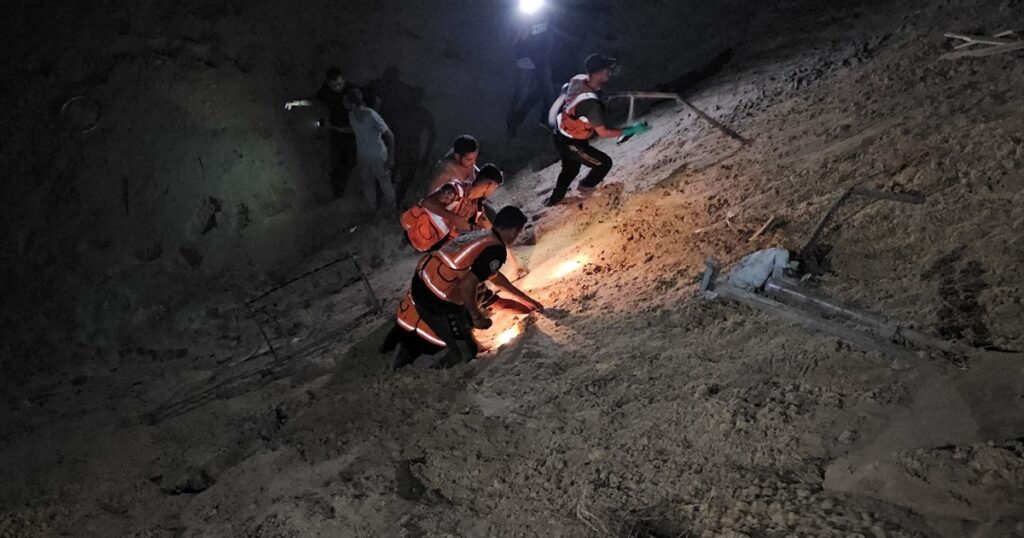
NewsFeed Israel’s military has bombed the al-Mawasi camp in southern Gaza near Khan Younis, killing more than 40 people as it continues its attacks on the territory. Israel’s army said it targeted a Hamas command centre. Published On 10 Sep 202410 Sep 2024 Adblock test (Why?)
Rahul Gandhi says this big thing about Gautam Adani, Mukesh Ambani in US, claims, ‘I don’t think any of you are…’
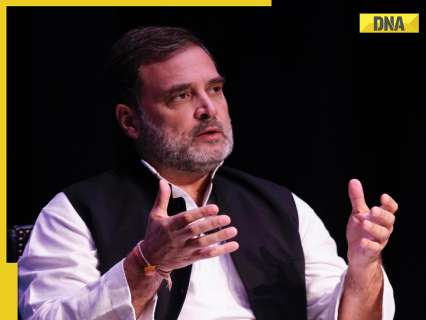
Congress leader Rahul Gandhi was interacting with students and faculty at Georgetown University
‘Moment PM Modi said he speaks directly to God, we saw it as psychological collapse’: Rahul Gandhi
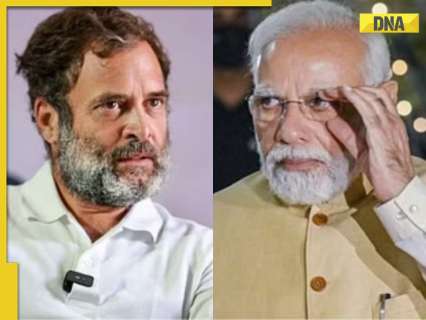
The LoP Lok Sabha further said that the ‘coalition’ that brought PM Modi to power has “collapsed.”
‘Lying’: Kolkata rape-murder victim’s mother responds to West Bengal CM Mamata Banerjee’s no bribery claim
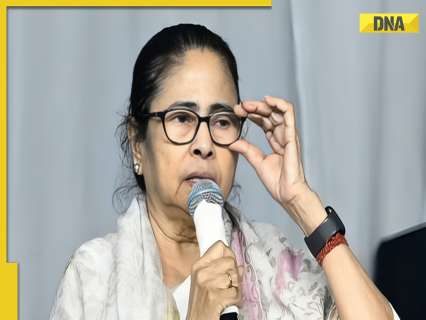
CM Banerjee had earlier directly refuted such an approach, terming it as ‘slander’ and said that she only offered to support to the family
Contingent elections: what they are, and what to expect if 2024 triggers one
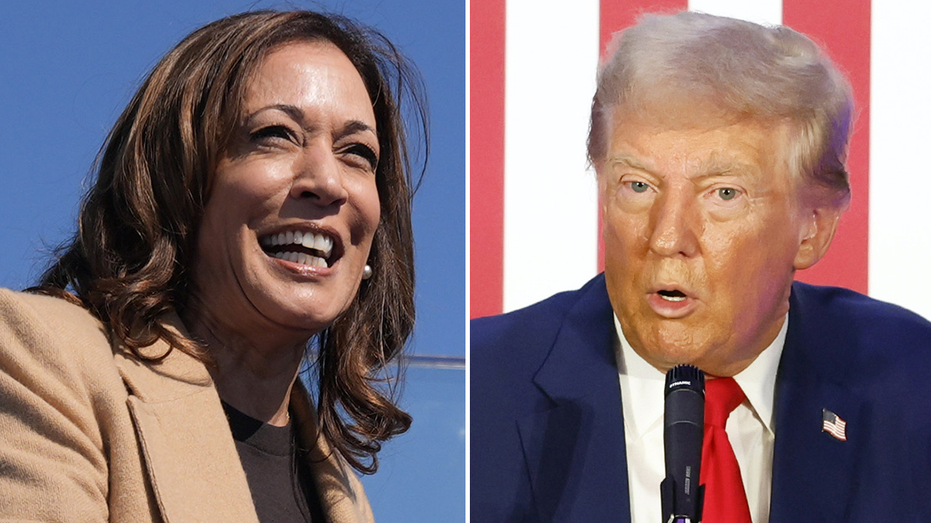
The pundits predict the presidential election will be close. So should people prepare for contingencies? There’s truly only one contingency for this scenario. It’s called a contingent election. What’s that? Don’t feel badly if you’ve never heard of a contingent election. The term is not even mentioned in the Constitution. However, Article II, Section 3 of the Constitution and the 12th Amendment address the process for settling a dispute in the Electoral College where no candidate scores the magic number of 270 electoral votes. Or, if there’s a tie. REPORTER’S NOTEBOOK: WIN OR LOSE, HARRIS MUST ATTEND THE JAN. 6 PRESIDENTIAL ELECTION CERTIFICATION The U.S. has only undergone a contingent election on three occasions: 1801, to elect President Thomas Jefferson. Then in 1825 to pick President John Quincy Adams. Finally in 1837 to elect Vice President Richard Mentor Johnson. In a contingent election, the House selects the President. The Senate picks the Vice President. But let’s first explore scenarios for a complicated Electoral College tabulation – which could trigger a contingent election. The possibility of a 269-269 Electoral College tie is real. Let’s say Vice President Harris loses Pennsylvania and Georgia. But she prevails in Nevada, Arizona, Michigan and Wisconsin. Harris also collects a singular electoral vote in Nebraska’s 2nd Congressional district. Maine and Nebraska distribute their electoral votes based on which presidential candidate prevails in each Congressional district. For instance, in 2020, Rep. Don Bacon, R-Neb., won – even as President Biden carried the district. In Maine’s 2nd Congressional district, Rep. Jared Golden, D-Maine, won. Yet former President Trump bested Mr. Biden in that district. Nebraska has five electoral votes. Mr. Trump received four. President Biden, one. Maine has four electoral votes. The President earned three. But former President Trump collected one. There are other scenarios to get you to an Electoral College tie. Fast-forward to January 6th, the day the House and Senate meet in a Joint Session of Congress to certify the Electoral College. We know what happened in 2021 with Republicans contesting slates of electoral votes from six states. If Congress fails to certify a winner, or, if there are disputes on various batches of electoral votes, it’s possible no candidate hits 270. SENATE TO SWEAR IN MENENDEZ SUCCESSOR FOLLOWING NJ LAWMAKER’S CONVICTION, RESIGNATION So, it’s then up to the House of Representatives to select the President and the Senate, the Vice President, in a contingent election. Here’s the fascinating part. Each state votes as a state delegation – but receives only one vote in a contingent election. In other words, California, with its 52-member delegation comprised of 40 Democrats, counts the same as South Dakota, with its lone Republican. But we don’t truly know the breakdowns of each Congressional delegation for next year which could vote in a contingent election. We only know the breakdown for this Congress. The new Congress isn’t sworn-in until January 3, 2025. So here’s an analysis on where each state delegation stands now, and where they could stand come January. As of this moment, Republicans control 26 state delegations – ranging from all Republican West Virginia to mostly Republican Florida and Texas. Democrats rule in 22 state delegations. That includes mostly Democratic New York and all Democratic Massachusetts and Connecticut. Two states are tied: Minnesota features a 4/4 split between the parties. North Carolina is divided 7/7. REPORTER’S NOTEBOOK: WHY FOREIGN POLICY MIGHT MATTER But what does the House look like next year? Things would still favor the GOP – even if Democrats win control of the House with the most seats. And evaluating the map, the odds favor Republicans to control the most state delegations. But nothing is a done deal. So let’s study state delegations which have a chance of flipping one way or the other in 2025 – and how that could sway a contingent election. Alaska is a fascinating place to start. Rep. Mary Peltola, D-Alaska, won this statewide seat in a special election in 2022 after the death of late Rep. Don Young, R-Alaska. Young represented the state for 49 years. Peltola is up against Republican Nick Begich Jr., grandson of late Rep. Nick Begich, Sr., D-Alaska. Ironically, Young took the seat after the elder Begich died in a plane crash. Also on the ballot: John Wayne Howe and Eric Hafner. If Democrats are to hold the House for a potential contingent election, they need Peltola to win. Former President Trump won Alaska in 2020 with 61 percent of the vote. Where could Democrats flip a Congressional delegation in their favor? Arizona is a case study as to why it’s hard for Democrats to gain traction in state delegations. Arizona is a swing state at the presidential level. But there are two Republicans at risk. Rep. Dave Schweikert, R-Ariz., narrowly won two years ago. Freshman Rep. Juan Ciscomani, R-Ariz., also represents a battleground district. But Republicans currently hold a 6-3 advantage over Democrats in the House delegation. Democrats have an outside shot at moving the delegation to 5-4 in their favor should they knock off two incumbents. But that’s dicey. THE HOME STRETCH: VP HARRIS FILLS DEMOCRATS WITH OPTIMISM AS ELECTION DAY NEARS Colorado’s House districts currently favor the Democrats, 5-3. But in order to maintain that advantage and avoid a 4-4 tie, freshman Rep. Yadira Caraveo, D-Colo., must win re-election. Caraveo won her first term with less than 50 percent of the vote in 2022. As mentioned, Maine awards its electoral vote proportionately. Golden is one of the most moderate Democrats in the House, routinely winning close races. But Maine only has two House seats. Rep. Chellie Pingree, D-Maine, holds the other one. Pingree is favored to win this fall. However, if Golden loses, Maine’s delegation is tied. How that delegation votes in a contingent election is anybody’s guess. A tie essentially nullifies that state’s vote in a contingent election on the House floor. In the contingent election of 1801, the House delegations of Vermont and Maryland were split evenly. The House then
Trump-backed plan to avoid government shutdown advances to House-wide vote as Republicans defect

House Republicans’ plan to avert a partial government shutdown and crack down on election security surpassed a key hurdle Monday evening, though it’s headed for an uncertain fate in a chamber-wide vote this week. Speaker Mike Johnson, R-La., is aiming to pass legislation combining a six-month extension of fiscal year 2024’s federal funding levels, called a continuing resolution (CR), and a House GOP bill to mandate proof of citizenship in the voter registration process. The plan passed the House Rules Committee, 9-4, late Monday, bundled with unrelated bills – the final step for legislation before a House floor vote. House lawmakers are expected to hold a procedural vote allowing for debate on the bill Tuesday, with final passage teed up for Wednesday. CLUB FOR GROWTH POURS $5M INTO TIGHT HOUSE RACES AS GOP BRACES FOR TOUGH ELECTION But it’s not clear yet whether the bill will survive a chamber-wide vote, with at least five House Republicans publicly opposing it as of Monday evening. Johnson only holds a majority of four votes, meaning he will likely need Democratic support for it to pass. Both Republicans and Democrats agree a CR is needed to give congressional appropriators more time to negotiate fiscal year 2025 federal spending and to avoid a partial government shutdown weeks before Election Day. The House has passed four of 12 GOP-led appropriations bills so far, while the Democrat-led Senate has not passed any. House GOP leaders are hoping to use the fiscal pressure to force Senate Majority Leader Chuck Schumer, D-N.Y., into holding a vote on the Safeguarding American Voter Eligibility (SAVE) Act, a bill authored by Rep. Chip Roy, R-Texas, and backed by former President Trump. But Democratic leaders generally see the SAVE Act as a nonstarter. House Minority Leader Hakeem Jeffries, D-N.Y., called it “partisan and extreme” in a letter to House Democrats on Monday, and the White House issued a veto threat. JOHNSON UNVEILS TRUMP-BACKED HOUSE GOP PLAN TO AVOID GOVERNMENT SHUTDOWN, SETS UP BATTLE WITH SCHUMER Schumer wrote to colleagues on Sunday, “As I have said before, the only way to get things done is in a bipartisan way. Despite Republican bluster, that is how we’ve handled every funding bill in the past, and this time should be no exception. We will not let poison pills or Republican extremism put funding for critical programs at risk.” Congressional leaders have until Sept. 30 to find a path forward or risk nonessential government programs being paused and potentially thousands of federal employees furloughed. Meanwhile, Johnson has little room for error in his own conference. MCCARTHY’S ‘FINAL STRUGGLES’ THREATEN TO HAUNT JOHNSON’S GOVERNMENT SHUTDOWN FIGHT The speaker could get some help from Democratic defectors, however. Five House Democrats broke from their party to vote for the SAVE Act earlier this year. A CR through March would mean the government funding debate will be taken up by a new White House – run by either Trump or Vice President Kamala Harris – and a new Congress.