

Lapsed Epstein deadline underscores challenge of reviewing troves of files in 30 days
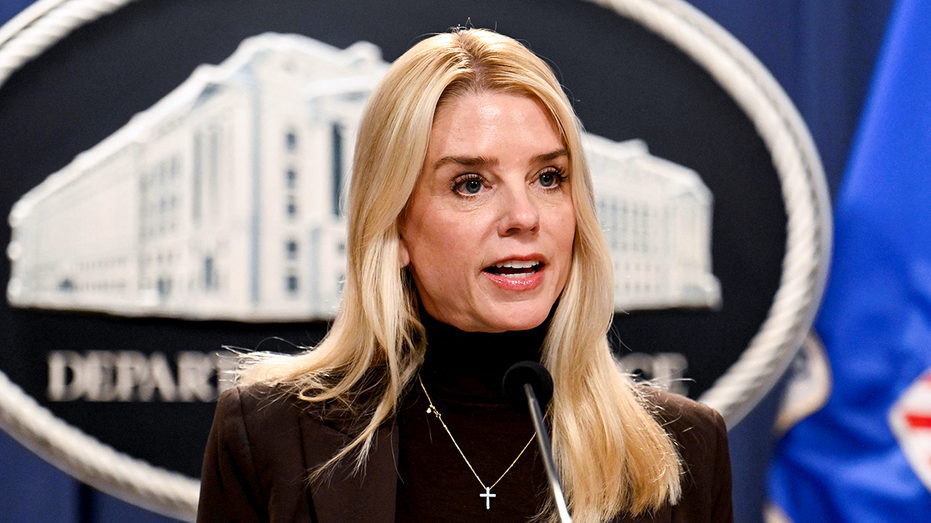
Department of Justice officials are facing threats of legal action after the department missed the Epstein Files Transparency Act’s stated deadline to publish all its documents related to Jeffrey Epstein – but the law may lean in the DOJ’s favor. DOJ officials have continued to review and upload the files more than a week after the congressionally mandated Dec. 19 due date, spurring Democrats and some Republicans to call for a range of consequences, from contempt to civil litigation. The DOJ is, however, defending the drawn-out release process, suggesting that rushing to publish piles of unexamined material would also flout the law. Deputy Attorney General Todd Blanche said in a recent interview on “Meet the Press” there was “well-settled law” that supported the DOJ missing the transparency bill’s deadline because of a need to meet other legal requirements in the bill, like redacting victim-identifying information. EPSTEIN FILE DROP INCLUDES ‘UNTRUE AND SENSATIONALIST CLAIMS’ ABOUT TRUMP, DOJ SAYS The bill required the DOJ to withhold information about potential victims and material that could jeopardize open investigations or litigation. Officials could also leave out information “in the interest of national defense or foreign policy,” the bill said, while keeping visible any details that could embarrass politically connected people. Last week, the DOJ revealed that two of its components, the FBI and the U.S. attorney’s office in the Southern District of New York, had just gathered and submitted more than 1 million additional pages of potentially responsive documents related to Epstein’s and Ghislaine Maxwell’s sex trafficking cases for review. The “mass volume of material” could “take a few more weeks” to sift through, the DOJ said in a statement on social media, adding that the department would “continue to fully comply with federal law and President Trump’s direction to release the files.” The DOJ’s concerns about page volume and redaction requirements echo those frequently raised in similar litigation surrounding compliance with Freedom of Information Act requests, where courts have stepped in to balance competing interests of parties in the cases rather than attempting to force compliance on an unrealistic timetable. The conservative legal watchdog Judicial Watch has seen mixed success over the years in bringing FOIA lawsuits, showcasing the court’s role in mediating such disputes. Judicial Watch brought several lawsuits against the government over Hillary Clinton’s private email server scandal, leading a federal judge at one point to allow the conservative watchdog to move forward with questioning Clinton aides as part of a discovery process as it sought records on the matter. The decision was later reversed at the appellate court level. In a separate case, the appellate court sided with Judicial Watch by reversing a lower court ruling as part of a longstanding legal battle the watchdog waged with the DOJ over obtaining Acting Attorney General Sally Yates’ emails. The D.C. Circuit Court found that the DOJ could not withhold email attachments from Yates’ account and ordered further review on the matter. In the current controversy over the Epstein files, lawmakers are pressuring the DOJ by threatening a combination of political and legal remedies over the 30-day deadline and over what they view as excessive redactions. Senate Minority Leader Chuck Schumer, D-N.Y., vowed to bring a resolution up for a vote when the Senate returns from the holidays that would direct the Senate to initiate a lawsuit against the DOJ for failing to comply with the transparency act’s requirements. “The law Congress passed is crystal clear: release the Epstein files in full, so Americans can see the truth,” Schumer said. “Instead, the Trump Department of Justice dumped redactions and withheld the evidence — that breaks the law.” SCHUMER ACCUSES DOJ OF BREAKING THE LAW OVER REDACTED EPSTEIN FILES Reps. Ro Khanna, D-Calif., and Thomas Massie, R-Ky., who spearheaded the transparency bill, warned that they plan to pursue contempt proceedings against Attorney General Pam Bondi in light of the DOJ missing the deadline and making perceived over-redactions. A group of mostly Democratic senators also called on the DOJ inspector general to investigate the department’s compliance with the law. The DOJ has maintained that releasing unreviewed documents would violate the law, saying last week that it had “lawyers working around the clock to review and make the legally required redactions.”
Trump tells UN agencies to ‘adapt, shrink, or die’ while offering $2B humanitarian funding pledge
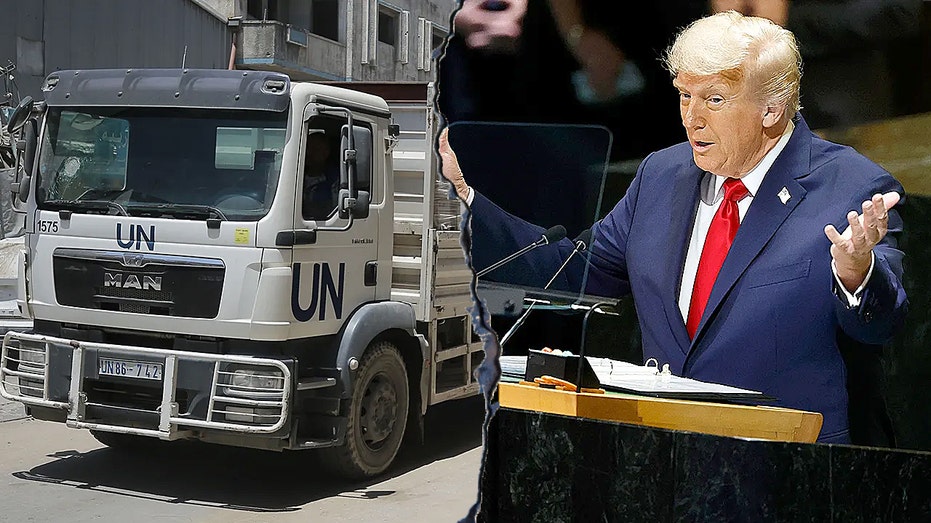
The Trump administration announced a $2 billion pledge for United Nations humanitarian aid Monday and warned that agencies must “adapt, shrink, or die” under its overhaul, according to a statement from the Department of State. The new package comes as the administration reins in traditional foreign assistance and pushes humanitarian organizations to meet stricter standards on efficiency, accountability and oversight. “Individual U.N. agencies will need to adapt, shrink, or die,” the statement said after outlining what it called “several key benefits for the United States and American taxpayers.” TRUMP MUST MAKE UN FUNDING CONDITIONAL ON REAL REFORMS, EX-DIPLOMAT URGES “The United States is pledging an initial $2 billion anchor commitment to fund life-saving assistance activities in dozens of countries,” the State Department said. The administration also said that the contribution is expected to shield tens of millions of people from hunger, disease and the devastation of war in 2026 alone, with a new model significantly reducing costs. “Because of enhanced efficiency and hyper-prioritization on life-saving impacts, this new model is expected to save U.S. taxpayers nearly $1.9 billion compared to outdated grant funding approaches,” the statement said. Secretary of State Marco Rubio said the approach is intended to force long-standing reforms across the U.N. system and reduce the U.S. financial burden. RUBIO UNLOADS ON ‘ALARMISTS,’ TOUTS STATE DEPT DISASTER RESPONSE AFTER USAID CLOSURE “This new model will better share the burden of U.N. humanitarian work with other developed countries and will require the U.N. to cut bloat, remove duplication, and commit to powerful new impact, accountability, and oversight mechanisms,” Rubio said in a post on X. The pledge is smaller than previous U.S. contributions, which officials said had grown to between $8 billion and $10 billion annually in voluntary humanitarian funding in recent years. Administration officials said those funding levels were unsustainable and lacked sufficient accountability. TRUMP ADMIN WEIGHS TERRORISM SANCTIONS AGAINST UN PALESTINIAN AID AGENCY OVER HAMAS ALLEGATIONS Jeremy Lewin, the State Department’s senior official overseeing foreign assistance, underscored the administration’s position during a press conference in Geneva. “The piggy bank is not open to organizations that just want to return to the old system,” Lewin said in the statement. “President Trump has made clear that the system is dead.” The funding commitment is part of a newly signed Memorandum of Understanding between the U.S. and the U.N. Office for the Coordination of Humanitarian Affairs (OCHA). The agreement replaces project-by-project grants with consolidated, flexible pooled funding administered at the country or crisis level. Tom Fletcher, the U.N.’s top humanitarian official and head of OCHA, welcomed the agreement, calling it a major breakthrough. “It’s a very significant landmark contribution,” Fletcher said, according to The Associated Press. U.S. Ambassador to the United Nations Mike Waltz also said the deal would deliver more focused, results-driven aid aligned with U.S. foreign policy interests, while the State Department warned future funding will depend on continued reforms.
Swalwell slammed by Border Patrol commander over imagery showing ICE raiding Jesus Christ’s manger
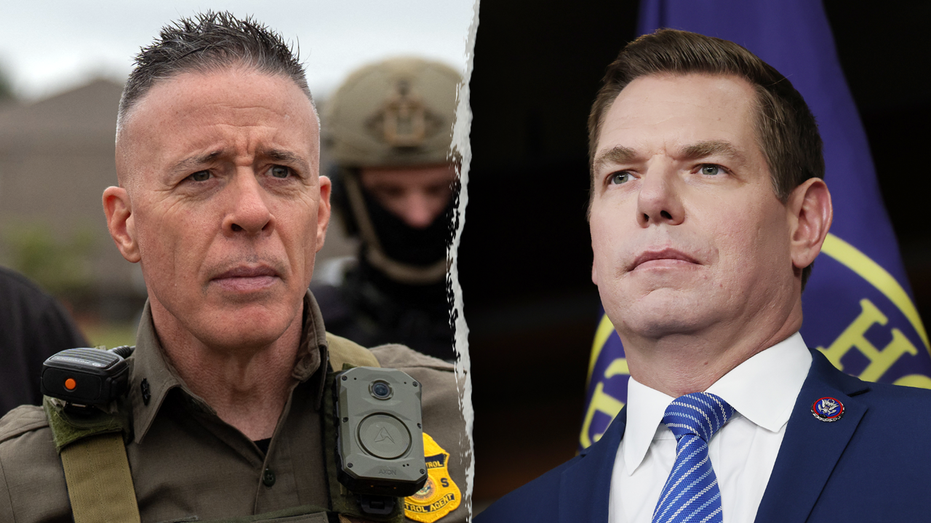
The architect of some of DHS’ most consequential immigration enforcement operations fired back at Rep. Eric Swalwell, D-Calif., after Swalwell posted a Christmas image depicting a helicopter and ICE agents converging on the Bethlehem crèche. “May this be the last Christmas we live this nightmare,” Swalwell captioned the image, which drew widespread backlash during the Twelve Days of Christmas. “Yes, the last Christmas where un-American pedantic dolts choose illegal aliens over US Citizens,” U.S. Border Patrol Commander Gregory Bovino responded, before following up by exchanging with others on social media. Bovino then replied to a Florida woman who told Swalwell: “Yes, the nightmare was [the] last four years prior letting in everyone and their grandma. Insane [a] congressman would post this.” EXCLUSIVE: CATHOLIC BISHOPS CHIDED FOR SOWING ‘CONFUSION’ ON DEPORTATIONS STANCE “Well said… Merry Christmas,” Bovino said, adding he would follow her X account. When another critic brought up Swalwell’s alleged relationship with a Chinese spy named Fang Fang — which the congressman denies – Bovino quipped, “Oh yes, how could I forget to mention that.” Other commentators slammed Swalwell for appearing to misstate the underlying facts of why Joseph and Mary had gone to Bethlehem and why they fled to Egypt soon after Jesus Christ’s birth — a storyline immigration activists sometimes use to counter pro-border security arguments. DHS FIRES BACK AFTER DEM LAWMAKER CLAIMS SHE WAS ‘PUSHED ASIDE AND PEPPER SPRAYED’ DURING ICE RAID One cited a passage from the Gospel of Luke, which recounts that Caesar Augustus ordered a census across the Roman Empire, requiring each man to return to his ancestral town. Joseph, a descendant of King David, therefore traveled from Nazareth to Bethlehem, David’s birthplace. Per the Gospel of Matthew, an angel appeared to Joseph in a dream and told him to take his family and flee to Egypt, as King Herod was seeking to kill young Jesus. Observers often debate the connection, if any, that biblical passages have to contemporary immigration policy arguments. Immigration hawks often cite Egypt as being a province of the Roman Empire, meaning the Holy Family did not immigrate to another country as refugees in a legal sense, but to escape Herod’s rule as a provincial king installed by Rome; similar to a governor; until his death made it safe to return to Judea. Others dispute that characterization. ICE DELIVERS ‘GREATEST GIFT OF ALL’ WITH CHRISTMAS ARRESTS OF CONVICTED CRIMINALS ACROSS MULTIPLE STATES “Eric – Mary and Joseph were legal immigrants complying with the rules of the Roman Empire,” conservative activist Robby Starbuck responded to the congressman. “Rome ordered a census and Joseph had to be counted because Bethlehem was his city; basically the opposite of illegal immigration. Lying about this is Christophobic,” he said. Starbuck added that in the Book of Acts, God “marked out … boundaries of their lands,” which the commentator said was proof that secure borders have scriptural grounding. Another critic posted an image of actor Gerry Bamman as his “Uncle Frank” character sneering in the Christmas classic “Home Alone,” as if to reply to the congressman’s depiction. Fox News Digital reached out to Swalwell for comment for purposes of this story but did not hear back by press time.
Netanyahu says Trump to become first non-Israeli to receive Israel Prize
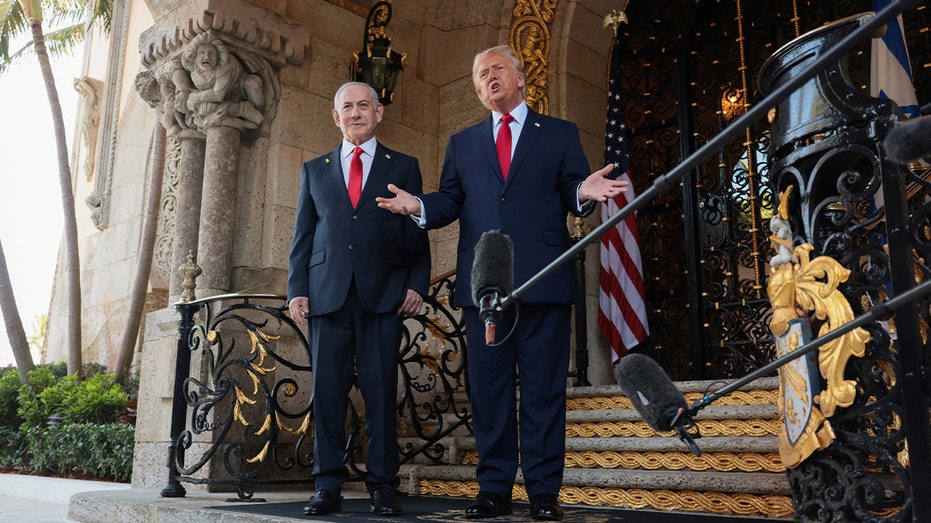
Breaking with decades of tradition, Israel will award President Donald Trump the Israel Prize, Prime Minister Benjamin Netanyahu said Monday after meeting him at Mar-a-Lago. Netanyahu and Trump spoke to reporters following their meeting, during which the Israeli leader announced plans to award Trump the Israel Prize – the nation’s highest cultural honor. “We decided to break a convention, or create a new one, and that is to award the Israel Prize, which in almost our 80 years we’ve never awarded to a non-Israeli, and we’re going to award it this year to President Trump,” Netanyahu said. “This was announced formally over lunch by our minister of education, who is responsible for the Israel Prize. “It’s going to be awarded to President Donald J. Trump for his tremendous contributions to Israel and the Jewish people,” Netanyahu continued, calling it “such a fitting thing.” TRUMP THREATENS HAMAS IF GAZA CEASEFIRE COLLAPSES AS JD VANCE TO VISIT ISRAEL Netanyahu said the gesture reflects the overwhelming sentiment of Israelis across the political spectrum, noting they appreciate what Trump has done to help Israel and support the shared fight against “terrorists and those who would destroy our civilization.” Trump thanked Netanyahu for the honor, saying, “It really is a great honor.” Netanyahu said in October that Trump was the “greatest friend” Israel has ever had, remarks that came after Hamas released the final 20 living hostages under a peace deal brokered by Trump and his administration. IDF ANNOUNCES TRANSFER OF DECEASED ISRAELI HOSTAGE REMAINS THROUGH RED CROSS “No American president has ever done more for Israel,” Netanyahu said at the time. “It ain’t even close.” He credited Trump for standing up for Israel at the United Nations, recognizing Israel’s rights in the West Bank, also known as Judea and Samaria, and withdrawing from what he described as the “disastrous” Iran nuclear deal. MIKE JOHNSON, WORLD LEADERS TO NOMINATE TRUMP FOR NOBEL PEACE PRIZE AFTER ISRAEL-HAMAS DEAL After Hamas terrorists attacked southern Israel on Oct. 7, 2023, killing more than 1,200 people and taking about 240 hostages, the war in Gaza stretched on for nearly two years, leaving tens of thousands estimated dead. Israel and Hamas reached a breakthrough peace deal following months of mediation by Trump administration officials. Hamas released the final 20 living hostages in exchange for Israel freeing 2,000 Palestinian prisoners. The release was part of a sweeping 20-point plan aimed at ending the conflict and rebuilding Gaza. Hamas members who renounce violence would be granted amnesty or safe passage, while those who continue armed resistance would be excluded from Gaza’s future governance. Fox News Digital’s Morgan Phillips contributed to this report.
Swalwell attacks GOP legislative record as Republicans accuse Democrats of engineering shutdown
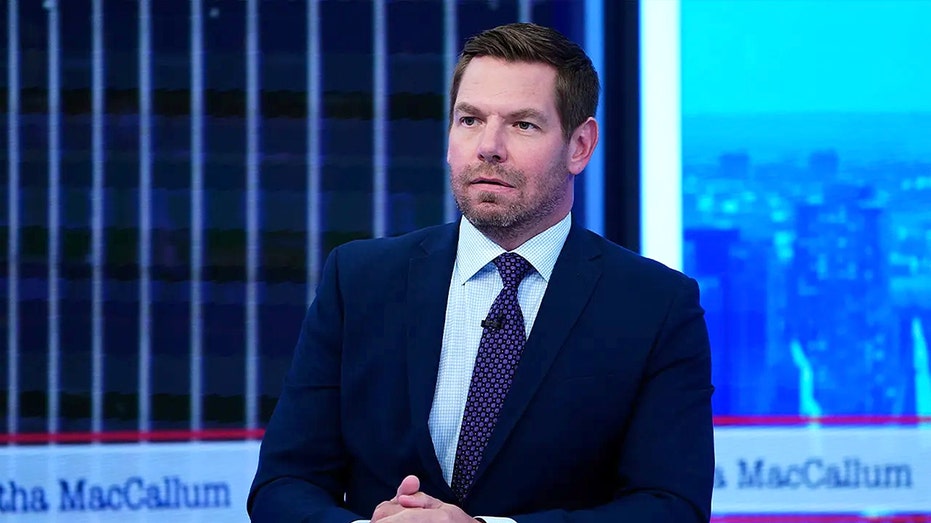
A California lawmaker leaving office to pursue a gubernatorial bid blasted the Congressional Republicans for one of the least productive sessions of Congress — a record Republicans believe Democrats have an equal hand in creating. Rep. Eric Swalwell, D-Calif., who hopes to replace Gov. Gavin Newsom as California’s top executive, said 2025’s low legislative output came about from a lack of focus and a shortage of bipartisan effort. “There wasn’t much else being done in this Congress. And so, as we go into the new year, if Republicans want to work with us to bring down costs, reduce what we spend at the grocery store, they’re going to find partners in us,” Swalwell said on The Weekend. CONGRESS FLEES TOWN AS HEALTH CARE PREMIUMS SET TO EXPLODE FOR MILLIONS OF AMERICANS IN JANUARY “Now, I will say I’m responsible for one of those 40 bills that was passed. It was a bipartisan piece of legislation to make it easier for mothers who are breastfeeding to travel through airports and not have their breast milk screened,” Swalwell said, touting a bill he authored. According to congressional records, the House of Representatives has taken 362 votes in the first session of the 119th Congress. By comparison, under another Republican trifecta in 2015, the House considered 710 measures in the same window. This year, 61 bills cleared both chambers of Congress to become law. Of those, only thirty-eight were something other than a congressional resolution. Despite criticisms from Swalwell, Republicans looking at the productivity picture believe the complaints about productivity go both ways. Sen. Ron Johnson, R-Wis., accused Democrats on Sunday of creating gridlock on issues like government spending to purposefully prevent Republican productivity. SENATE QUIETLY WORKS ON BIPARTISAN OBAMACARE FIX AS HEALTHCARE CLIFF NEARS “The American public is pawns in the dysfunction. But again, understand Democrats, they want the shutdown,” Johnson said on Sunday Morning Features, referring to the record-breaking 43-day shutdown standoff earlier this year. “They were responsible for it because they don’t want President Trump and Republicans to have success.” “So, if the American economy is collateral damage, they don’t care because they just want power. They want to return to power in November,” Johnson added. Although lawmakers have already left Washington, D.C., and won’t return until 2026, Congress has a slew of priorities that remain pressingly on the docket. Among them, the government will need to find a way to pass spending legislation before the end of January or risk another government shutdown. More urgently still, Congress must also decide whether it will extend enhanced subsidies for Obamacare, which was passed as an emergency response to COVID-19. 2026 DEADLINES LOOM AS CONGRESS LEAVES DC WITH SEVERAL UNFINISHED BATTLES Without some sort of extension, Democrats fear that the vast majority of Obamacare’s 24 million enrollees will experience an overnight jump in premium costs when the subsidies expire at the end of the year. Last month, a handful of Republicans broke with the majority of their party and voted with Democrats to tee up consideration of a subsidy extension in January. Swalwell believes that vote offers the opportunity for bipartisan cooperation in 2026 absent in 2025. “The mandate now, the majority of the House of Representatives wants to put these subsidies in place so that Americans can pay less for healthcare. So, it’s now on the speaker, when we reconvene in just a couple of days, whether he will put this up for a vote,” Swalwell said. “But if not, the midterm message will be this, it costs too much. It costs too in what we pay at the groceries store and figuratively, it costs too much in the fights that we’re losing under this administration.”
Minnesota GOP lawmakers cite Constitution in call for Walz to resign over fraud crisis
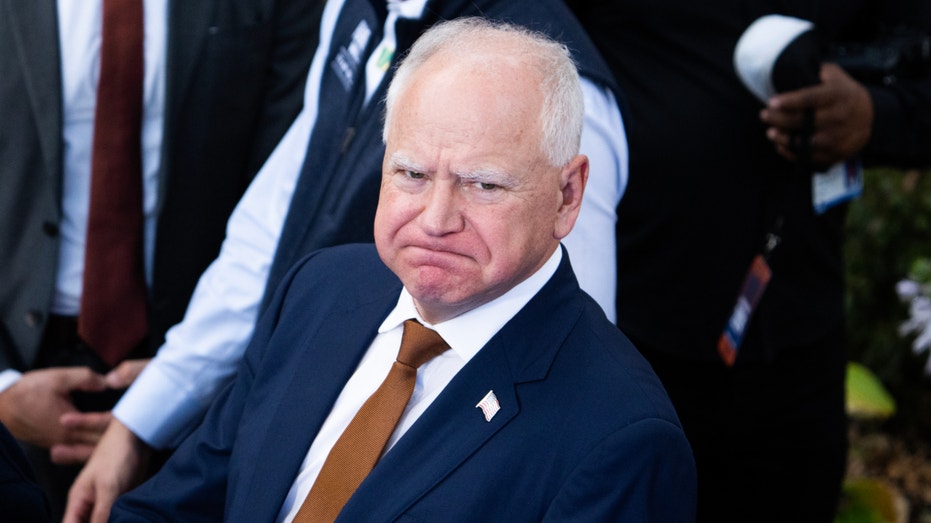
Several Republican lawmakers in Minnesota released a statement officially calling on the state’s Democratic governor, Tim Walz, to resign in light of the unfolding fraud scandal that has spiraled during his tenure. “Minnesotans have been watching the fraud crisis get worse and worse for years. It has gone on long enough,” Minnesota state Senators Bill Lieske and Nathan Wesenberg, along with state Reps. Marj Fogelman, Drew Roach and Mike Wiener, said in a Monday press release. “This is not about politics or stunts, and we do not make a call like this lightly. The office of the governor deserves respect, and we have tried to give Gov. Walz time to act.” The group cites Article 8, Section 6 of the Minnesota Constitution, which lists serious malfeasance in the performance of official duties, as the reason to recall executive and interior officers, but stopped short of calling for an official recall effort. INSIDE MINNESOTA’S $1B FRAUD: FAKE OFFICES, PHONY FIRMS AND A SCANDAL HIDING IN PLAIN SIGHT The lawmakers explained that “leadership means doing the right thing even when it is difficult, which is why we are calling on Gov. Walz to resign.” “We are talking about billions of dollars in fraud that should have gone to vulnerable Minnesotans. The red flags were everywhere. Yet, year after year, the fraud kept growing, and year after year, nothing changed.” HOW FEARS OF BEING LABELED ‘RACIST’ HELPED ‘PROVIDE COVER’ FOR THE EXPLODING MINNESOTA FRAUD SCANDAL Earlier this month, federal prosecutors revealed that the fraud scandal in Minnesota, primarily found within the state’s Somali community, could cost taxpayers as much as $9 billion dollars. The Monday call from Republicans for Walz to resign comes shortly after a viral video by journalist Nick Shirley, seen more than 100 million times on X, highlighting suspected fraudulent daycare locations prompted even more scrutiny on Walz. Walz’s office pushed back on the criticism shortly after the video went viral. “The governor has worked for years to crack down on fraud and ask the state legislature for more authority to take aggressive action,” a Walz spokesperson said. “He has strengthened oversight — including launching investigations into these specific facilities, one of which was already closed.” The spokesperson added that Walz has “hired an outside firm to audit payments to high-risk programs, shut down the Housing Stabilization Services program entirely, announced a new statewide program integrity director, and supported criminal prosecutions.” Calls for Walz to resign have increased in recent weeks, including from Trump’s Education Secretary Linda McMahon, Fox News Digital first reported earlier this month. The lawmakers said in their statement that the fraud scandal is the “number one” issue they hear from their constituents, along with questions about why no one in power has been held accountable. “What we are seeing from the governor is what nonfeasance looks like,” the lawmakers wrote. “When a governor fails to do what he is required to do, when he watches a crisis spiral out of control and does nothing to stop it, that is nonfeasance. The governor had a duty to oversee his administration and protect these programs. He failed. There needs to be consequences. “For the good of the state, Gov. Walz should step aside. Minnesota needs accountability, a reset, and new leadership that can get us back on the right track.”
Trump suggests US hit ‘big facility’ in Venezuela drug fight
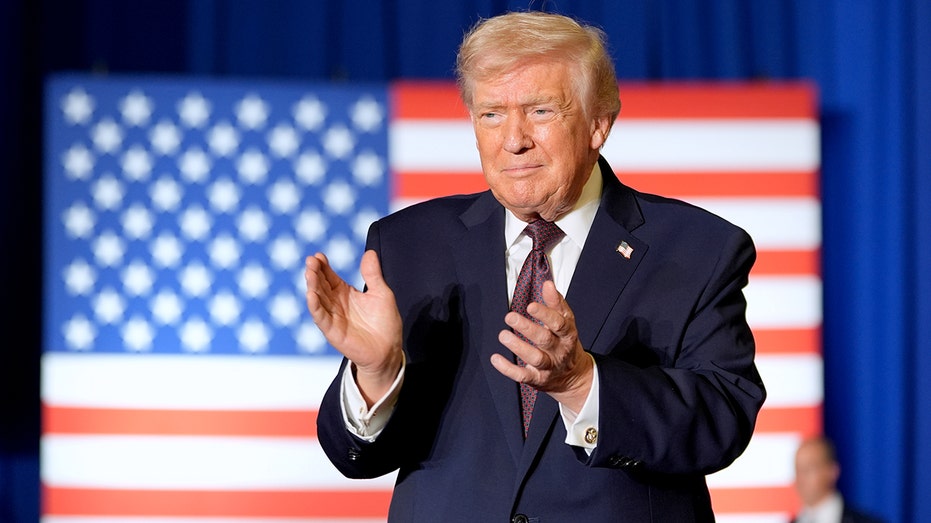
The U.S. may be signaling an expansion of its Venezuela-focused campaign to include ground operations, based on recent remarks from President Donald Trump. Speaking Friday with radio host John Catsimitidis, Trump said the U.S. had struck a “big facility” while discussing Washington’s broader effort against Latin American drug trafficking – an apparent reference to a drug production or trafficking site. “They have a big plant or a big facility where the ships come from,” Trump said, without identifying Venezuela as the target. “Two nights ago we knocked that out.” Asked about the comments on Monday, Trump told reporters the strike was “along the shore” but declined to share whether it was conducted by the U.S. military or another entity like the CIA. SOUTHCOM COMMANDER ABRUPTLY RETIRES AMID ESCALATING SCRUTINY OF CARIBBEAN STRIKES “I don’t want to say that. I know exactly who it was,” he said. “We hit all the boats, and now we hit the area. It’s the implementation area. That’s where they implement. And that is no longer around,” the president said during a news conference at Mar-a-Lago alongside Israeli Prime Minister Benjamin Netanyahu. TRUMP’S VENEZUELA OIL BLOCKADE PUTS CHEVRON IN THE MIDDLE OF A HIGH-STAKES SANCTIONS CRACKDOWN He added there was a “major explosion in the dock area where they load the boats up with drugs.” If the facility was indeed on Venezuelan soil, it would mark the first known attack on land since the U.S. began bombing alleged narco-trafficking boats in the Caribbean and eastern Pacific waters in early September. More than two dozen strikes have killed 105 people so far. While Venezuela is a known hub for trafficking drugs, such as cocaine that originates in Colombia, it is not a production hot spot. Months ago, Trump authorized the CIA to carry out covert action in Venezuela. In recent weeks, Trump has ramped up pressure aimed at pushing leader Nicolás Maduro from power by announcing a blockade of Venezuela and seizing two ships carrying sanctioned oil. The White House and Pentagon have not publicly confirmed whether any recent strike occurred on Venezuelan soil. Maduro’s government has not publicly acknowledged the attack. After prior strikes in the counter-drug campaign, the administration has touted success, even posting footage on social media of boats being struck. However, if the action was carried out covertly, it would limit what U.S. officials could share. Trump’s comments come amid the largest military buildup in the Caribbean in decades, with some 15,000 troops and the world’s biggest aircraft carrier, the USS Gerald R. Ford, stationed in the region.
New Iraqi parliament holds first session, elects speaker
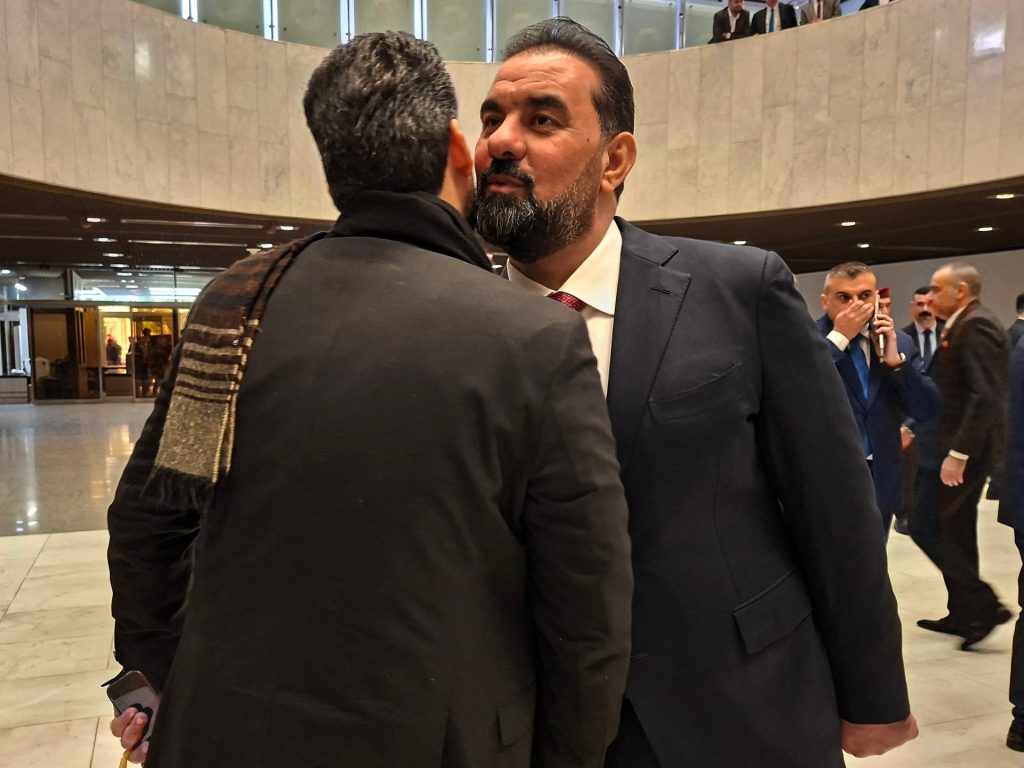
Haybat al-Halbousi, from the Taqaddum (Progress) Party, has been elected as speaker of the new parliament. Published On 29 Dec 202529 Dec 2025 Click here to share on social media share2 Share Iraq’s newly elected parliament has chosen Haybat al-Halbousi as its speaker, a significant step in the formation of the new government after months of political turmoil. Iraqi media reported on Monday, citing parliament’s media office, that al-Halbousi, from the Taqaddum (Progress) Party, had received 208 votes, in a clear victory over two rival contenders with 66 and nine votes, respectively. Recommended Stories list of 4 itemsend of list Al-Halbousi’s party draws its support largely from Sunni heartlands in the west and north of the country. Iraqis have been eagerly awaiting the first sitting of parliament, called the Council of Representatives of Iraq, as they look for certainty over the leadership of the country following the November 11 vote, which left a complicated outlook for the formation of the new government. Under Iraq’s customary muhasasa system, in place since the first government under the post-2003 constitution, parliament is to elect a speaker – a consensus Sunni candidate – along with two deputies during its first session. Following that is the vote for the presidency, a Kurdish candidate, according to muhasasa. The president then nominates the candidate of the largest Shia bloc – the Shia Coordination Framework (SCF) – to be named prime minister. Complicated picture Before the election, Supreme Judicial Council President Faiq Zaidan urged lawmakers to stick to the constitutional timeline for government formation – a maximum of 90 days – and the Federal Supreme Court (FSC) ratified the results faster than usual. Advertisement But few are expecting a swift result. The process typically takes months – in 2021, it took more than 300 days – and there are questions over who the SCF will choose as the right candidate for prime minister. Incumbent Prime Minister Mohammed Shia al-Sudani had been nominated by the SCF four years ago, but had tried to break free from the alliance, running an independent electoral list that won big with about 46 out of 329 seats for his Reconstruction and Development Coalition (RDC). But an FSC decision last month sent him back to the SCF and its leadership, many of whom do not hold parliamentary seats but operate as external power brokers. The SCF now faces the question of whether it backs al-Sudani or an alternative candidate as prime minister, while it grapples with how to respond to the growing parliamentary presence of lawmakers linked to Shia parties with pro-Iran, anti-West armed wings. Of the SCF’s 180-odd lawmakers, 80 to 90 belong to groups and armed factions close to Iran – most of them under United States sanctions. In 2021, such groups held only 17 seats. Their growing presence in parliament potentially presents a problem not only for Iraq’s relations with foreign powers, but for Iraqi Shias who resent Tehran’s powerful influence in the country. Adblock test (Why?)
Ukrainian soldiers target Russian drones with rifles

NewsFeed Video released by the Ukrainian military showed soldiers shooting down small Russian drones with their rifles near the small Donetsk village of Kostiantynivka. Russian forces have made steady yet costly gains in the region, claiming on Monday to have captured nearby Dibrova. Published On 29 Dec 202529 Dec 2025 Click here to share on social media share2 Share Adblock test (Why?)
Deadly protests and clashes in Syria – what happened and what’s next?

Protests have erupted across Syria’s coastal regions, marking a new wave of sectarian upheaval since the overthrow of Bashar al-Assad’s regime a year ago. During the protests on Sunday, gunfire was directed at Syrian security forces at the al-Azhari roundabout in Latakia while unknown assailants threw a hand grenade at the al-Anaza police station in the district of Banias in the Tartous governorate. Recommended Stories list of 4 itemsend of list The Alawite minority, which al-Assad is a member of, held the protests after at least eight people were killed in the bombing of an Alawite mosque in Homs on Friday. They are demanding security guarantees and political reforms. Several cities along Syria’s Mediterranean coast have experienced deadly sectarian violence over the past year, raising questions about whether the interim government can maintain unity in a nation still scarred by 14 years of civil war. So what are the protests about, and what do they mean for political and social stability in Syria? What sparked the protests? The bombing of the Imam Ali bin Abi Talib Mosque in the Wadi al-Dahab neighbourhood of Homs during Friday prayers led to the demonstrations. The bombing was claimed by a little-known group called Saraya Ansar al-Sunna, which said on its Telegram channel that the attack was intended to target members of the Alawite sect. Syria’s security and political establishment was dominated by Alawites until al-Assad’s regime fell in December 2024. Saraya Ansar al-Sunna also had claimed responsibility for a suicide bombing of a Damascus church in June that killed at least 20 people. Advertisement Syria’s government condemned the mosque attack on Friday, describing it as the latest in a series of “desperate attempts to undermine security and stability and sow chaos among the Syrian people”. Who’s leading the protests? The protests were primarily organised after calls for action by Ghazal Ghazal, an Alawite religious figure who lives outside Syria with little known about his whereabouts. He heads a group called the Supreme Alawite Islamic Council in Syria and Abroad. “We want political federalism. … We want to determine our own destiny,” Ghazal said in a video message on Facebook, referring to a system of government under which power is shared between the national government and its states. Protesters also called for greater protections for the Alawite community, accountability for attacks against civilians and political guarantees. In coastal areas, including the cities and wider governorates of Latakia and Tartous, clashes broke out between Alawite protesters and counterprotesters supporting the new government. Al Jazeera’s correspondent in Latakia reported seeing counterprotesters throwing rocks at Alawite demonstrators while a group of protesters beat a counterprotester who entered their area. Syria’s Ministry of Defence said on Sunday that army units had moved into the centres of these cities after assaults by “outlaw groups” targeting civilians and security personnel with the aim of re-establishing stability. Have there been any casualties? SANA, the official Syrian news agency, reported that four people have been killed and more than 100 injured in the unrest in Latakia. Quoting officials from Syria’s Directorate of Health, SANA said injuries included “stabbings, blows from stones, and gunfire targeting both security personnel and civilians”. Later on Sunday, the Interior Ministry reported that one of its security officers had been killed in the clashes. Two security personnel were wounded in Tartous when unknown assailants threw a hand grenade at the al-Anaza police station. Who are the Alawites? The Alawites are a religious minority in Syria and are the second largest religious group after Sunni Muslims. Alawites make up 10 percent of Syria’s 23 million people, but this community was politically dominant under al-Assad, who ruled Syria beginning in 2000 and recruited heavily from the Alawite community for his army and security apparatus. Members of the Syrian security forces stand atop tanks after being deployed during protests in Latakia on December 28, 2025 [Karam al-Masri/Reuters] Since al-Assad’s overthrow, Syria has seen several instances of sectarian violence. In March, violence broke out in coastal cities, including Latakia, Banias, Tartous and Jableh, and government-allied groups were accused of carrying out summary executions, mostly of Alawite civilians. Advertisement A government committee tasked with investigating the attacks concluded that about 1,400 people were killed during several days of violence. In July, violence between Druze and Sunni Bedouin communities flared up in the southern governorate of Suwayda, although experts say this conflict is rooted in more complex issues than just sectarianism, including in historical disputes over land. That unrest escalated into Israel bombing Syria’s Ministry of Defence and other targets in the capital Damascus – ostensibly to protect the Druze, although local activists and analysts said Israel’s aim was to fuel internal instability. Alawites have also voiced grievances about discrimination in public sector hiring since al-Assad’s fall as well as the detention of young Alawite men without charge. Will the Syrian government be able to maintain peace? Syria’s interim president, Ahmed al-Sharaa, has emphasised the need to “preserve national unity and domestic peace”. At the Doha Forum this month, al-Sharaa said people in Syria “simply did not know each other well” due to issues inherited from the al-Assad regime. Syria’s enduring sectarian divides and the central government’s limited authority are fuelling demands from minorities for decentralisation, according to Rob Geist Pinfold, a scholar of international security at King’s College London. The Alawites are not the only minority who have aired concerns about sectarianism since the fall of al-Assad, Geist Pinfold told Al Jazeera. The interim government so far has failed to integrate regions controlled by the Kurdish-led Syrian Democratic Forces (SDF) into the new government, he added, despite a March 10 agreement between them that planned for integration. This is largely down to mistrust, experts said. Minority groups, including Alawites and the Druze, “simply don’t think that the government has their best interests at heart and actually see the government as a security threat”, Geist Pinfold explained. “Syria is caught up in this vicious cycle where the government doesn’t have trust with minority groups.