

Texas House could consider repealing ban on homosexual conduct

The law, on the books since 1973, has been unenforced since 2003, when the Supreme Court ruled it unconstitutional.
The fastest-growing city in the U.S. is in Texas, and it’s not the one you’re thinking of

With Princeton leading the Texas pack, the state continues to set the pace for the rest of the nation, with seven of the 15 fastest-growing cities.
Supreme Court hears challenge to Trump’s birthright citizenship order in major case

The Supreme Court will hear oral arguments Thursday on a challenge to President Donald Trump’s effort to end birthright citizenship, and crucially, whether lower courts that have blocked Trump’s policies from taking force nationwide have acted beyond their authority. Any decision from the 6–3 conservative majority could have sweeping implications for Trump’s presidency as his lawyers spar against an onslaught of lawsuits in federal courts nationwide. The Supreme Court arguments are expected to focus on lower court judges in Maryland, Massachusetts and Washington state who issued “universal” injunctions against Trump’s birthright citizenship executive order earlier this year. The Trump administration asked the Supreme Court in March to intervene and limit the scope of three lower court rulings to cover only individuals directly impacted by the relevant courts (or potentially, the 22 states that challenged Trump’s executive order). But that’s unlikely to be the primary theme at the center of Thursday’s high-profile debate. 100 DAYS OF INJUNCTIONS, TRIALS AND ‘TEFLON DON’: TRUMP SECOND TERM MEETS ITS BIGGEST TESTS IN COURT Rather, justices are expected to use the oral arguments to weigh the authority of lower courts to issue nationwide, or “universal” injunctions blocking presidential policies — teeing up a high-stakes showdown that pits Trump’s Article II powers against Article III courts. The hearing comes as Trump and his allies have railed against so-called “activist” judges, whom they have accused of overstepping their powers and acting politically to block Trump’s policies. The president even suggested that a federal judge in Washington, D.C., be impeached for his ruling earlier this year, which prompted a rare public rebuke from Chief Justice John Roberts. ‘ACTIVIST’ JUDGES KEEP TRYING TO CURB TRUMP’S AGENDA — HERE’S HOW HE COULD PUSH BACK Trump has signed more than 150 executive orders in his second term, inviting a seemingly unrelenting wave of challenges in court. Many of these orders have been blocked by federal judges across the country, who have restricted Trump’s use of a 1798 wartime immigration law to deport certain migrants, ordered the administration to reinstate certain government personnel and sought to impose limits on Elon Musk’s government efficiency organization, DOGE, among other orders. While Trump allies accuse these judges of political bias and overreach, others critical of the administration say the courts have not gone far enough to rein in Trump’s attempts to expand the executive branch’s powers. “The second Trump administration has taken the guardrails off of the norms that historically governed the rule of law, and is undertaking steps to enhance the perceived power of the executive branch to the detriment of the two other co-equal branches,” Mark Zaid, a D.C.-based attorney who has sued Trump in several high-profile cases, told Fox News Digitial in an interview to mark his first 100 days in office. FEDERAL JUDGES IN NEW YORK AND TEXAS BLOCK TRUMP DEPORTATIONS AFTER SCOTUS RULING Justices on the Supreme Court will consider a trio of consolidated cases involving nationwide injunctions handed down by federal judges in Maryland, Massachusetts and Washington state that blocked Trump’s ban on birthright citizenship from taking force. But the policy remains widely unpopular. More than 22 U.S. states and immigrants’ rights groups have sued the Trump administration to block the change to birthright citizenship, arguing in court filings that the executive order is both unconstitutional and “unprecedented.” And to date, no court has sided with the Trump administration’s executive order seeking to ban birthright citizenship, though multiple district courts have blocked it from taking effect.
CJI BR Gavai rebukes Cabinet Minister Kunwar Vijay Shah because…

The Supreme Court bench of Chief Justice of India BR Gavai and Justice Augustus George Masih has rebuked cabinet minister Minister Kunwar Vijay Shah for his remarks against Indian Army spokesperson Colonel Sofiya Qureshi.
Did India attack Kirana Hills nuclear facility in Pakistan? Know global atomic energy agency’s BIG statement on this claim

IAEA, the Vienna-based global nuclear watchdog, clarified this after the Indian Air Force said it did not target Pakistan’s Kirana Hills, which reportedly houses nuclear installations.
Former talk radio host dials into Alaska’s race for governor, says energy is key

In her first interview since announcing her bid for Alaska governor, Bernadette Wilson, a former radio host and longtime conservative figure in Alaska, spoke to Fox News Digital about the issues in the race and working with the Trump administration on energy development. Wilson, a lifelong Alaskan who was born on the Kenai Peninsula and grew up in Anchorage, is a political outsider. Even so, politics does run in her family. Her great-uncle Wally Hickel served as governor, first in the 1960s as a Republican and again in the early 1990s as a member of the Alaska Independence Party. She noted she comes from a long line of business people, including her grandfather, who “built a good chunk” of the state’s largest city. “I myself own a garbage company … and we are celebrating our ninth year in business,” she said. She added that her entrepreneurial experience and knowledge of state politics through her family history and own career in radio and activism is a good mix. RANKED CHOICE VOTING RANKLES ELECTION SEASON Wilson opposes ranked choice voting, in which votes are tallied in a hierarchical manner through several rounds. Conservatives in the red state blamed ranked choice voting for the election of former Democratic Rep. Mary Peltola. Incumbent Gov. Mike Dunleavy is term-limited. “Ranked choice voting disenfranchises voters. We see that it is … so confusing to them. We see people who don’t understand the process, and it absolutely has got to go. That is mission-critical,” she said. In other states, ranked choice voting has had mixed reviews. In Virginia, proponents on the right credited it with helping the state party select businessman Glenn Youngkin as its nominee for governor in 2021, which led to a major Republican upset that fall. ALASKA CAN BE CURE FOR NATION’S ILLS WITH HELP FROM TRUMP ADMIN: GOVERNOR SAYS Energy is the most important economic topic for Alaska, and Wilson said she looks forward to working with the Trump administration on its stated plan for a domestic energy renaissance if she’s elected. “Energy is obviously huge for Alaska. Under the Biden administration, Alaska was sanctioned more times than … the country of Iran,” she said. “We have the ability to lead the rest of the country [in this field].” Asked about another Trump-related topic, the ongoing tit-for-tat with Canada over claims to make it the 51st state and Ottawa’s bipartisan outrage at American tariffs, Wilson said, as governor, she would want to work on cross-border infrastructure projects. CLICK HERE TO GET THE FOX NEWS APP “Obviously, Canada sitting right along the border to Alaska has a huge impact for us. And so getting a railroad through Canada would definitely be a great No. 1 priority when it comes to our interaction with that particular country,” she said. Wilson faces Lt. Gov. Nancy Dahlstrom and State Sen. Click Bishop, R-Fairbanks, in the 2026 contest.
‘Significant step’: Russia-Ukraine talks in Turkiye – what to expect
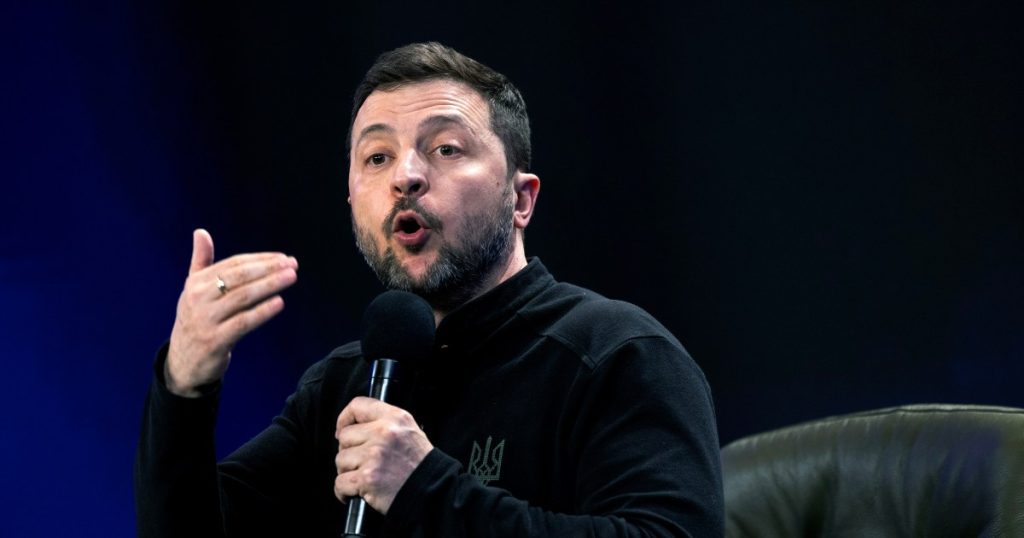
Russia and Ukraine are poised for talks in Turkiye on Thursday, even though the prospects of President Vladimir Putin and his Ukrainian counterpart Volodymyr Zelenskyy meeting directly for the first time in three years were dashed by the Kremlin late on Wednesday. United States President Donald Trump, who had earlier indicated that he might join the negotiations, will also not attend, according to American officials. Here’s what we know about the talks, what prompted them, who’s expected to attend, and why the negotiations matter: Why are the talks being held? On Sunday, Putin proposed the idea of direct negotiations between Russia and Ukraine in Turkiye, instead of the rounds of indirect talks that the US and others have tried to mediate between the neighbours at war. Putin referenced direct talks that took place in 2022 while pitching for their resumption. “It was not Russia that broke off negotiations in 2022. It was Kyiv. Nevertheless, we are proposing that Kyiv resume direct negotiations without any preconditions,” Putin said on Sunday. Advertisement In February 2022, Russia launched its full-scale invasion of Ukraine. Shortly after, Russia and Ukraine held talks in the Turkish capital, Istanbul. According to Zelenskyy, the talks fell apart because Russia demanded that Ukraine concede the Donbas region, which spans Ukraine’s Donetsk and Luhansk regions – parts of which Russia occupied during its invasion. Zelenskyy added that Russia wanted Ukraine to surrender long-range weaponry, make constitutional amendments to declare neutrality and significantly reduce its armed forces. “There were never any negotiations; it was an ultimatum from a murderer,” Zelenskyy said at the time. While Zelenskyy had earlier held that any peace agreement would require Russia to give up Ukrainian territory it had occupied, in December last year, Zelenskyy said the “hot phase” of the war could end if NATO offered security guarantees for the part of Ukraine currently under Kyiv’s control. He added that the return of land that Russia has occupied could be diplomatically negotiated later. “The pressure that the US has exerted to attempt to bring an end to the fighting in Ukraine has evolved over time,” Keir Giles, a senior consulting fellow at the London-based Chatham House think tank, told Al Jazeera. “It appears that the most recent elements in that evolution, particularly in terms of European solidarity with Ukraine, have led Russia to engage in direct talks.” Putin’s recent push for talks came a day after Ukraine’s four major European allies gave Putin an ultimatum to accept an unconditional 30-day ceasefire or face renewed sanctions. This ultimatum came after leaders of the European countries, France, the United Kingdom, Germany and Poland, visited Kyiv. Advertisement They gave Putin a deadline until May 12. On Sunday, May 11, Putin – without committing to a ceasefire – said: “We are committed to serious negotiations with Ukraine. Their purpose is to eliminate the root causes of the conflict, to establish a long-term, lasting peace for the historical perspective.” When and where are they being held? The talks are scheduled to start at approximately 10am local time (07:00 GMT), according to Russia’s TASS news agency. They are being held behind closed doors in Dolmabahce Palace in the Turkish city of Istanbul, which straddles the boundary between Asia and Europe. The palace, which sits on the Bosphorus Strait, was the main administrative complex of the Ottoman Empire for most of the period between the mid-19th century and 1922. What role did Trump play in this? The four European leaders – Britain’s Keir Starmer, France’s Emmanuel Macron, Germany’s Friedrich Merz and Poland’s Donald Tusk – said that they had briefed Trump about their ultimatum to Russia over a phone call and suggested that he was on board. But after Putin called for direct talks between Kyiv and Moscow, Trump issued a statement on his Truth Social platform asking Ukraine to meet with Russia “immediately”. Trump ran his campaign for the 2024 election on the promise to bring a swift end to the Ukraine war. The Trump administration held multiple meetings, starting February, with Russian and Ukrainian representatives separately in Saudi Arabia in attempts to broker a deal. Also in April, the Trump administration indicated that it was taking a step back from providing security guarantees to Ukraine. The Trump administration said it wanted Europe to take the lead in supporting Ukraine’s defence instead, noting that the US had other priorities, including border security. Advertisement In recent weeks, however, Trump and his team, including Secretary of State Marco Rubio, have expressed growing frustration at the lack of meaningful progress in negotiations and have threatened to walk out of efforts to mediate peace. Explaining his insistence that Ukraine join the May 15 Istanbul talks, Trump argued: “At least they will be able to determine whether or not a deal is possible, and if it is not, European leaders, and the US, will know where everything stands, and can proceed accordingly!” Who will be there? “I supported President Trump with the idea of direct talks with Putin. I have openly expressed my readiness to meet. I will be in Turkiye. I hope that the Russians will not evade the meeting,” Zelenskyy wrote in an X post on Monday. On Tuesday, Zelenskyy announced he will be in Ankara on Thursday, where he will meet Turkish President Recep Tayyip Erdogan. The talks with Russia, however, are supposed to be held in Istanbul subsequently. Trump has said he will send Secretary of State Marco Rubio, Middle East envoy Steve Witkoff and Special Envoy for Ukraine and Russia Keith Kellogg to attend the talks in Istanbul. Russia on Wednesday night announced its team for the meeting. Vladimir Medinsky, a close Putin aide and former culture minister who also led previous rounds of unsuccessful talks with Ukraine in 2022, will lead Moscow’s team. With him will be Deputy Defence Minister Alexander Fomin and the director of the Main Intelligence Directorate, Igor Kostyukov. Advertisement Trump’s earlier offer to attend the talks himself had been welcomed by Kyiv. “All of us in Ukraine
Russia-Ukraine war: List of key events, day 1,176

These are the key events on day 1,176 of Russia’s war on Ukraine. Here is where things stand on Thursday, May 15: Fighting A Russian missile strike targeted Ukraine’s northeastern city of Sumy, killing at least three people, Ukrainian officials said on Wednesday. Governor of Kherson, Oleksandr Prokudin, said that on Wednesday until early Thursday, about 35 areas, including the city of Kherson, were under Russian drone “terror” and artillery shelling that injured at least nine people. Russia’s defence ministry said air defence systems downed two Ukrainian drones overnight over the Rostov and Belgorod regions. Diplomacy Ukraine and Russia will hold direct talks in Turkiye on Thursday for the first time since the war started in 2022. The two sides are expected to discuss a 30-day ceasefire and a possible exchange of prisoners. Russian President Vladimir Putin was not listed in Moscow’s delegation to the talks, despite the leader proposing the discussions last week. Deputy Foreign Minister Mikhail Galuzin, Deputy Defence Minister Alexander Fomin and Igor Kostyukov, director of Russia’s GRU military intelligence agency, are part of the Russian delegation. After the Kremlin’s announcement, a United States official said President Donald Trump would also not be attending the meeting. Estonian Foreign Minister Margus Tsahkna said that Putin sending a low-level delegation to Turkiye for talks was “like a slap in the face”. US Secretary of State Marco Rubio met with his Ukrainian counterpart Andrii Sybiha on the sidelines of a NATO summit in Antalya, Turkiye. NATO chief Mark Rutte said he was “cautiously optimistic” for progress towards peace in Ukraine, but that it was up to Russia to take the “next steps necessary”. “[If] the Russians are willing to play ball, and not only the Ukrainians are doing this … that you could get to some breakthroughs over the next couple of weeks,” he said at the NATO summit. Latvian Foreign Minister Baiba Braze said they did not see any indications that Russia wants peace in Ukraine. “Weakening Russia’s military capabilities is the most direct and cheapest way… to achieve peace in Ukraine,” he told reporters in Turkiye. On Wednesday, the European Union approved a new sanctions package on Russia to clamp down on its “shadow” oil fleet. German Chancellor Friedrich Merz said there must not be any deal in Ukraine that is a “dictated peace” from Russia. Advertisement Adblock test (Why?)
‘Adolescence’ is right: We’re failing both young men and women
In 2014, I was teaching English to undergraduate freshers at a university in Massachusetts. A student in class, behind on his work, grew angry with a new assignment we were working on. He picked up a chair and threw it past an aisle of students and across the room. He then sat down as if nothing had happened. The chair did not strike anyone, but several students had to duck their heads. As someone who struggles with (post-traumatic stress disorder) PTSD and dissociation as a result of childhood abuse and domestic violence, I found myself frozen in front of my classroom, momentarily flashing back to previous violent incidents with a former partner. I recalled this scene with my former student when I recently rewatched the four-part series Adolescence on Netflix. The series explores the consequences that befall a 13-year-old boy, his family, and community after he kills a female student who has bullied him online. As the police question Jamie, the main character, he continually denies his involvement. Eventually, a video of the murder is shown with Jamie stabbing the teenage girl. Advertisement To me, the fact that a boy could kill a girl and convince himself that he had done nothing wrong points to a major societal failure. Boys are taught that acting on anger is acceptable. We have normalised it. When I was 25, I had been dating a man for several months. A friend of his was visiting and asked me if I was ready to go on an outdoor adventure with the two of them. In the spirit of the day, I said, “I was born ready.” My boyfriend misinterpreted this as a sexual innuendo and immediately slapped me hard across the face. No one said a word, and the day proceeded as if nothing had happened. My boyfriend’s friend never reached out to me after the incident. He never did or said anything that suggested that he thought the violence was unwarranted. That taught me that the violence was normal, acceptable behaviour. My student’s behaviour frightened me to the point that afterwards, I did not feel confident that I could keep the other 20 class students safe in his presence. I approached my supervisors, who suggested I contact both campus security and our on-campus learning disabilities centre, which offered services for students with physical or cognitive issues. I had expected campus security to have a conversation with the student and to document the chair event, so a paper trail could exist should further acts or threats of violence continue. Instead, campus police said no one had been hurt, so there was no incident to report. The learning disabilities centre could tell me that the student was in their programme, but that they could not share any information with me about the student or how best to handle him. Advertisement Addressing these issues in young boys is critical to preventing serious violence in their behaviour when they grow older. We are failing our children and stand at a crossroads with increased violence in boys and young men that will only escalate if viable solutions are not found. My abusive former partner did not have a healthy male role model as he grew up. According to my abuser and his mother, he was not taught to curb his temper or monitor his anger. I believe that awareness must begin with parents and at an early age. Frustration and anger must be recognised, named and confronted. If young people can be taught to identify the actions that trigger their defensive or even uncontrollable responses, escalation can be prevented. When parents can acknowledge the child’s behaviour and point it out, solutions and alternatives to acting out can be offered. “Time out” at home and school should not be used as a punishment but as an opportunity to step back, take a breath, and re-evaluate the situation. The process must be repeated and reinforced to become a new pattern of response. Encouraging boys to identify and express their feelings, whether they be anger, sadness, or frustration, can be a huge step forward in teaching them to become aware of those feelings, rather than just acting on them. Once children enter school, discussions regarding feelings and appropriate actions must become a regular part of class instruction. A new definition of “time out” can offer students a practice in self-care, a healthy alternative to acting out anger. A time out in a school therapist’s office or with a guidance counsellor, or other trained staff, can become a safe place to calm down and discuss alternative responses to acting on anger. Advertisement In classroom instruction, role-play situations can help students learn and practise alternative responses to anger and aggression when they are confronted with upsetting stimuli. This type of practice and reinforcement can become a new automatic response if children are given sufficient feedback and opportunity in both home and school situations. Teaching issues of mental health in classrooms beginning at an early age can help destigmatise emotions of shame, isolation and powerlessness. Embarrassment and shame can be significant triggers for both boys and girls, and in Adolescence, did in fact lead Jamie to fatally stab the girl who bullied him online. Shame and anger are normal human responses to certain situations, but addressing these feelings from a very young age can assist children in learning healthy and safe ways of coping rather than lashing out against others. My abuser was also experiencing shame when he assumed my response to his friend was sexual. As a society, we teach boys and men that anger is acceptable. TV commercials and movies portray men as both physically and mentally strong to the point where any expression of vulnerability makes them weak and inferior. It is time we teach boys and men that they are stronger, not weaker, when they are aware of and comfortable with their emotions. Until men and boys can identify and switch emotional gears instead of acting on anger, we will
5, including children killed in massive fire on Delhi-Bihar sleeper bus in Lucknow, know more details here

Five people, including two children, died early Thursday morning after a fire broke out in a double-decker bus on Kisaan Path in Lucknow, said an official.