

Episcopal Church refuses to resettle White South African refugees in clash with Trump administration

The Episcopal Church’s migration service said it will refuse the Trump administration’s request to help resettle dozens of White South Africans granted refugee status by the federal government. In a statement, Presiding Bishop Sean Rowe said the Episcopal Migration Ministries will instead terminate its partnership with the government. The announcement came shortly before 59 South Africans arrived in the United States. “In light of our church’s steadfast commitment to racial justice and reconciliation and our historic ties with the Anglican Church of Southern Africa, we are not able to take this step,” Rowe said of the government’s request that the church help resettle the South African citizens. “Accordingly, we have determined that, by the end of the federal fiscal year, we will conclude our refugee resettlement grant agreements with the U.S. federal government.” TRUMP ADMINISTRATION MAKES NEW MOVE TO BRING SOUTH AFRICAN REFUGEES TO US AS PRESIDENT BLASTS NATION’S RULERS AGAIN He cited their “preferential treatment” over others more deserving by jumping ahead of the line. “It has been painful to watch one group of refugees, selected in a highly unusual manner, receive preferential treatment over many others who have been waiting in refugee camps or dangerous conditions for years,” said Rowe. “I am saddened and ashamed that many of the refugees who are being denied entrance to the United States are brave people who worked alongside our military in Iraq and Afghanistan and now face danger at home because of their service to our country.” “I also grieve that victims of religious persecution, including Christians, have not been granted refuge in recent months,” he added. The move came after President Donald Trump fast-tracked refugee status for the White South Africans, citing discrimination by their government, while also shutting down most refugee resettlement programs. JD VANCE CLASHES WITH CBS ANCHOR OVER UNVETTED REFUGEES: ‘I DON’T WANT THAT PERSON IN MY COUNTRY’ The Trump administration has harshly criticized the government of South African President Cyril Ramaphosa over a land expropriation bill, which, under some circumstances, allows for expropriation of land without compensation. Trump has said the bill discriminates against White South Africans. The White House told Fox News Digital that the church’s stance raises questions about its “supposed” commitment to humanitarian aid. “Any religious group should support the plight of Afrikaners, who have been terrorized, brutalized and persecuted by the South African government,” a spokesperson said. “The Afrikaners have faced unspeakable horrors and are no less deserving of refugee resettlement than the hundreds of thousands of others who were allowed into the United States during the past administration. President Trump has made it clear: refugee resettlement should be about need, not politics.” Episcopal Migration Ministries has helped resettled refugees under federal grants for nearly four decades. However, just over two weeks ago, the government told the EMM that under the terms of its federal grant, it was expected to resettle White South Africans whom the U.S. government has classified as refugees, Rowe said. He said the church will work to find other ways to service refugees. Meanwhile, Church World Service, another faith-based agency that assists refugees, said it remains committed to serving eligible refugees. CLICK HERE TO GET THE FOX NEWS APP “We are concerned that the U.S. Government has chosen to fast-track the admission of Afrikaners, while actively fighting court orders to provide life-saving resettlement to other refugee populations who are in desperate need of resettlement,” Rick Santos, CWS president and CEO, said in a statement. Santos urged Congress and the Trump administration to “restore a robust refugee resettlement program that prioritizes refugee families who remain in grave danger.”
Chief Justice Roberts addresses divisions between justices after several recent SCOTUS skirmishes
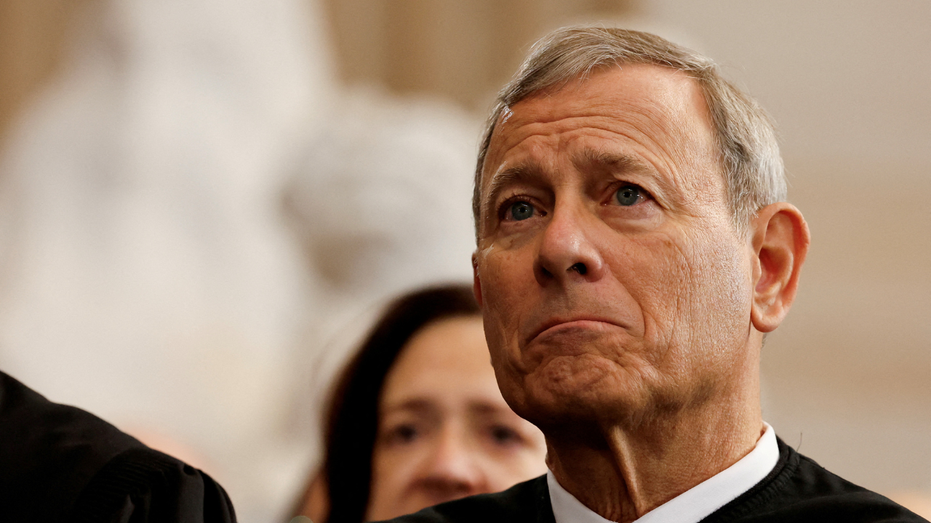
Chief Justice John Roberts on Monday urged Georgetown Law’s newest graduates to collaborate across ideological lines, commenting that on the Supreme Court, it’s necessary for those who disagree strongly to work past their differences. Speaking to the dean of Georgetown Law, William Treanor, at a fireside chat Monday, Roberts lamented current political divisions, and though he was careful not to be specific, his comments came as President Donald Trump has sharply criticized judicial decisions that have set back his second-term policy agenda. It’s “really too bad,” Roberts said of the environment facing aspiring lawyers. “We’re developing a situation where a whole group of young people is growing up having no real sense about how our system of justice works.” He also noted that some of the harshest criticisms of Supreme Court rulings, past and present, often come from fellow justices on the bench. But he also urged the importance of keeping these relationships above the fray and maintaining a sense of decorum. CHIEF JUSTICE ROBERTS DOUBLES DOWN ON DEFENSE OF COURTS AS SCOTUS GEARS UP TO HEAR KEY TRUMP CASES Though Supreme Court justices may “disagree a lot,” such differences have not strained their relationships. “We have to work together on these things that are difficult,” Roberts said. “You find a way to get along.” “It’s a long job. If you’re sort of really at each other’s throats with bad feelings and stuff like that, it’s just not a good way to function,” Roberts said, adding that the justices work to avoid the “toxic” relationships seen in earlier generations of the court. At times, the issues that frustrate the life-time appointed justices aren’t quite as high-minded, Roberts acknowledged. “There’s also the matter of the little things,” he said. “I mean, if you’re sitting next to somebody, and you just can’t stand the way he or she kind of taps the chair, you’re thinking, ‘OK, we’ll be here together for 20 years.’ “And you know, you’ve got to decide, am I going to tell her to stop doing that, or am I going to just get over it, or what? And on a small level, that’s kind of the way we across the board have to make those decisions and move on,” he said. 100 DAYS OF INJUNCTIONS, TRIALS AND ‘TEFLON DON’: TRUMP SECOND TERM MEETS ITS BIGGEST TESTS IN COURT His remarks come as the Supreme Court is slated to hear a number of high-profile cases and emergency appeals filed by the Trump administration in the next few months. Alongside its regular docket – which already includes important cases on education, religious liberty and election redistricting – the Supreme Court has been asked to weigh in on several Trump-era executive actions. These include the ban on transgender military service, efforts to reinstate fired federal employees and the use of the 1798 Alien Enemies Act to expedite deportations. On Thursday, the court will hear arguments over Trump’s executive order ending birthright citizenship, including whether lower courts overstepped by issuing nationwide injunctions blocking the order, as the administration claims in its appeal.
Fox News Politics Newsletter: Bernie and the Jets
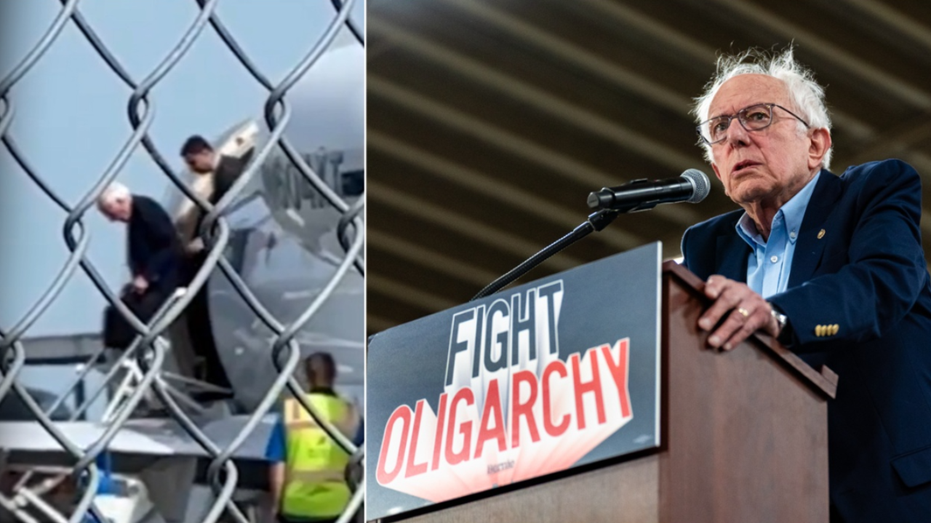
Welcome to the Fox News Politics newsletter, with the latest updates on the Trump administration, Capitol Hill and more Fox News politics content. Here’s what’s happening… –David Hogg slams ‘fast-track’ effort to oust him as DNC vice chair -Small nodule found in Joe Biden’s prostate during physical: report -Knives out for Fetterman: Maverick senator joins long line of Dems punished for breaking from left FIRST ON FOX: As Vermont Sen. Bernie Sanders continues to travel around the country on his “Fighting Oligarchy” tour, while at the same time defending his use of private jets to do so, an energy watchdog group has calculated the true scope of the carbon emissions his flights have emitted. During the 16 stops of the tour, which Sanders embarked on with the help of progressive Rep. Alexandria Ocasio-Cortez, his private jet emitted a total of 62.15 tonnes, or metric tons, of carbon dioxide, according to an estimate from Power the Future. To put that in perspective, Power the Future said in a press release that the emissions equate to burning 62,600 pounds of coal, driving a gas-powered SUV 150,000 miles, powering every home in Sanders’ hometown of Burlington, Vermont, for weeks, and powering nine U.S. homes for an entire year…READ MORE DEMOCRATS’ 2028 FEVER: Less than four months into Trump’s second term, Dems are already eyeing the 2028 race ‘COMMERCE, NOT CHAOS’: Trump condemns ‘interventionalists,’ pitches ‘more hopeful future’ in Middle East speech GOLD AND DIAMOND: Trump’s $400 million Qatar jet gift follows long history of unusual presidential presents BIDEN THEIR TIME: Biden aides allegedly fretted then-president would need wheelchair if re-elected, new book reveals ROAD TO DAMASCUS: Trump’s Mideast tour begins with Syria looming as strategic opportunity ‘MORE VIOLENT’: Emerging Venezuelan gang ‘more violent’ than Tren de Aragua targets rural America, expert warns ‘WINDOW OF OPPORTUNITY’: Edan Alexander’s release offers ‘window of opportunity’ for wider hostage deal amid Trump Mideast visit ‘FULL FORCE’: Netanyahu pledges to ‘complete’ fight against Hamas in coming days ‘SUSPICIOUS’ FIRE: UK Prime Minister Keir Starmer’s London home targeted, suspect arrested TAX DAY: GOP, Dems to square off over Trump’s sweeping tax plan in high-stakes meeting today FROM THE CRADLE: Ted Cruz wants Uncle Sam to give each American baby $1,000 PAYING THEIR SHARE: House Republicans unveil new food stamp work requirements for Trump’s ‘big, beautiful bill’ BILLIONAIRE BOON: Billionaires boomed in Biden era as Fed became ‘engine of income inequality’ powered by pandemic policies ‘POWER DYNAMICS’: Republican group lays out plan to gain ground in 2 key Dem-leaning states in 2025 elections ‘FAST-TRACK’ REMOVAL: DNC panel voids David Hogg’s election as party vice chair Get the latest updates on the Trump administration and Congress, exclusive interviews and more on FoxNews.com.
Bombshell report suggests ‘Chinese spies’ infiltrating prestigious US university: ‘Widespread campaign’
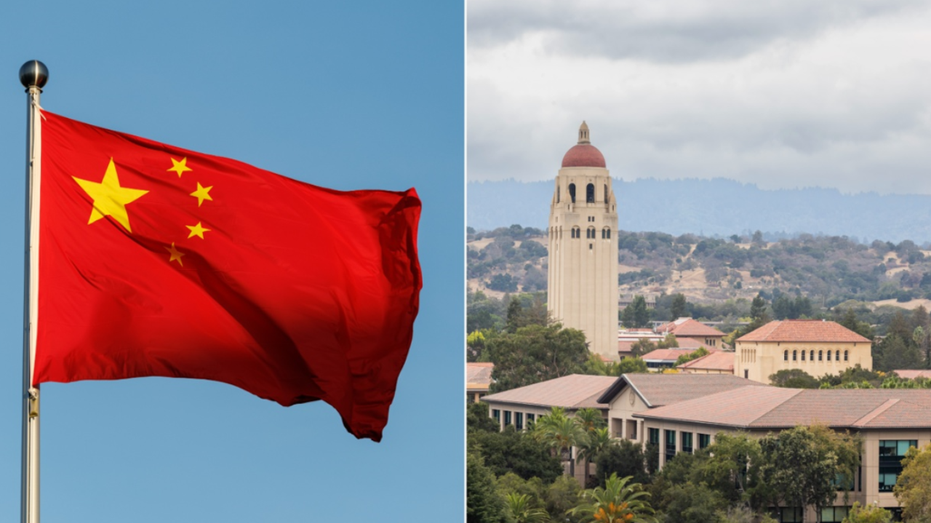
A bombshell report out of Stanford University shed light on the influence of spies from the Chinese Communist Party that the student newspaper says have likely infiltrated the prestigious institution and other universities nationwide to gather intelligence. The report, published by the Stanford Review, tells the story of a Stanford student working on sensitive research at the school – and given the name “Anna” to protect her identity – receiving unexpected messages from a man with the alias Charles Chen asking about seemingly harmless topics like networking opportunities. Those messages soon took a “strange turn,” according to the outlet when Chen’s questions became more personal, asking Anna if she spoke Mandarin, encouraging her to visit Beijing on a trip he would pay for, and referencing details she had never disclosed to him. Charles advised Anna on how to enter China briefly enough to avoid visa scrutiny from authorities, told her to only communicate through the CCP-monitored WeChat and told her to delete screenshots. BLUE STATE GOVERNOR TOUTS MEETING WITH CCP OFFICIAL COZYING UP TO DEMS: ‘GRATEFUL FOR THE OPPORTUNITY’ “Under the guidance of experts familiar with espionage tactics, Anna contacted authorities,” the article explains. “Their investigation revealed that Charles Chen had no affiliation with Stanford. Instead, he had posed as a Stanford student for years, slightly altering his name and persona online, targeting multiple students, nearly all of them women researching China-related topics. According to the experts on China who assisted Anna, Charles Chen was likely an agent of the Chinese Ministry of State Security (MSS), tasked with identifying sympathetic Stanford students and gathering intelligence.” Fox News Digital spoke to students involved in the article who explained that there are three major takeaways from the findings of the report. “Number one, what we saw was a full apparatus for extracting information so they would hit the students they wanted, then two, they would administer loyalty tests and three they would demand the information be sent back,” one of the students said. In some cases, if the students refuse to provide information to the CCP, their parents are threatened back home and sometimes interrogated by police, according to the students who spoke to some Chinese international students. NEW REPORT WARNS OF GROWING NATIONAL SECURITY THREAT TO U.S. AS CHINA BUILDS AI: ‘SIGNIFICANT AND CONCERNING’ ‘To be very clear, what they said is that every Chinese international student at any time can be asked by the CCP to disclose their research information,” Fox News Digital was told. “So what that looks like is, potentially weekly calls with the Chinese ambassador back in China, where they will explain what research they’re doing and if it is particularly sensitive technologies like AI and robotics. This is where the majority of the CCP targeting is happening. They’ll ask them to send back not just public information, they’ll also send back internal lab reports, future directions of the research, recorded conversations with the professor, the methodologies, the other participants in the research, particularly if they’re Chinese international students so they can look for other ones.” The Stanford Review story points out that the House Select Committee on China sent a letter to Stanford last year warning of the risks that China poses to STEM research. The article also explained how concerns about a Chinese spy presence in China have “quietly persisted” for “years” and claimed that several people who were contacted were too afraid to speak publicly. “One student who experienced espionage firsthand was too fearful to recount their story, even via encrypted messaging,” the article states. “‘The risk is too high,’ they explained. “Transnational repression, $64 million in Chinese funding, and allegations of racial profiling have contributed to a pervasive culture of silence at Stanford and beyond.” The authors of the article, after interviewing dozens of people in and around the university, summed up their findings by saying, “The CCP is orchestrating a widespread intelligence-gathering campaign at Stanford.” “In short, ‘there are Chinese spies at Stanford.’” NEWSOM’S TIES TO CCP UNDER MICROSCOPE IN NEW BOOK EXPOSING ALLEGED CORRUPTION: ‘FLEECED AMERICAN CITIZENS’ Fox News Digital spoke to former California GOP Congressman Michelle Steel about the report, and she explained that hundreds of millions of dollars are pouring in from China to prestigious universities. She called the situation “very dangerous.” “President Trump is totally right,” Steel said. “China is the biggest threat to all other industries, but especially universities.” Hudson Institute senior fellow Michael Sobolik, who recently published an article urging the U.S. to “stop giving Beijing an advantage through TikTok,” told Fox News Digital that “sunlight is the best disinfectant” in this situation. “If Stanford is worried about foreign espionage and coercion on its campus – and it should be – then its leadership will need to call it out publicly,” Sobolik said. “Thus far, woke politics have deterred Stanford from speaking out. That’s insane, and it rebounds to Beijing’s benefit. The CCP is one of the most racist political organizations in the world, and it hides behind the Chinese people as a shield,” he continued. “If Americans are afraid to call the party out, we implicitly advance the CCP’s narrative that there’s no difference between the Chinese people and the CCP.” In a statement, Stanford University said it “takes its commitment to national security with the utmost seriousness, and we are acutely aware of the threats posed by the Chinese Communist Party to all research universities.” “Stanford has rigorous policies and processes in place to ensure that research by its faculty and students is conducted in a manner that safeguards America’s interests. Stanford does not conduct classified or secret research,” the statement continued. “Stanford has a university-wide process for reporting threats to research security, and carefully assesses all reports. Stanford consults with federal law enforcement and intelligence agencies to ensure our policies and procedures are rigorous and protect national security.” The university added that it is “looking into” the Stanford Review report and has reached out to federal law enforcement, adding that it is “very important to distinguish between threats
US reality TV star Kim Kardashian testifies about Paris robbery
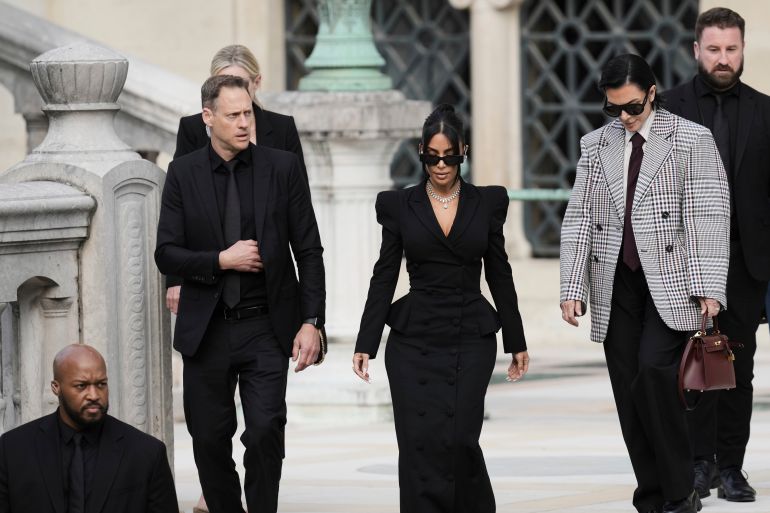
Reality TV star and business mogul Kim Kardashian has testified before a French courtroom about her experience getting robbed at gunpoint in a Paris hotel. Taking the witness stand on Tuesday, Kardashian confronted the suspects accused of tying her up and taping her mouth shut on October 3, 2016, while they stole more than $6m in jewellery. The case concerns a group of about a dozen suspects known in French media as “les papys braqueurs”: the grandpa robbers. The group, many in their 60s and 70s, are part of a crime ring, according to prosecutors. One has died since the robbery took place, while the charges against another have been dismissed due to health concerns. But Kardashian recounted the terror she felt as members of the group burst into her hotel room after a night at the Paris Fashion Week. “We were leaving the next morning, so I was just packing up,” Kardashian said. “It was around three in the morning. I heard stomping up the stairs when I was in bed.” She explained that she figured it was her older sister, Kourtney Kardashian, returning to the hotel room. But instead, it was a group of armed men, dressed as police officers and wearing balaclavas. Advertisement Waving a gun at her, one of the men asked her to surrender her $4m engagement ring, a gift from her then-husband Kanye West, a rapper now known as Ye. “Then I heard one of the gentlemen forcefully say ‘Ring! Ring!’ in English, with an accent, pointing,” she said. At one point, she said the robbers threw her onto the hotel bed. She was wearing a bathrobe at the time. “I was certain that was the moment that he was going to rape me,” Kardashian explained. “I absolutely did think I was going to die.” Her mind flashed to the idea of her sister coming home to find her body, she added. “I thought about my sister, thought she would walk in and see me shot dead and have that memory in her forever.” But the robbers proceeded to restrain her with zip ties and duct tape. They told her she would be safe so long as she remained quiet. “I have babies,” Kardashian, a mother of four, remembered thinking. “I have to make it home. They can take everything. I just have to make it home.” Eventually, she was locked in the hotel room’s marble bathroom while the robbers made their escape. During her testimony, she explained that the suspects did not beat her during the attack. “I was grabbed and dragged into the other room and thrown onto the floor, but wasn’t hit, no,” she said. Kim Kardashian, centre, leaves a Paris courtroom accompanied by her mother Kris Jenner on May 13 [Aurelien Morissard/AP Photo] Eventually, Kardashian said she was able to use the bathroom sink to loosen the restraints on her hands. She hobbled downstairs, where she met with her stylist Simone Harouche, who had locked herself in a bathroom one floor below to call for help during the attack. Advertisement “She was beside herself. I’ve never seen her like that before,” Harouche said of Kardashian. “She just was screaming and kept saying, ‘We need to get out of here. We need help. What are we going to do if they come back?’” The attack prompted the entertainment industry to adopt new procedures around security and social media posts, including through the delayed publication of certain images that might help robbers identify targets and locations. Some critics, however, blamed Kardashian herself for her luxurious lifestyle and lack of on-hand security. The controversial fashion designer Karl Lagerfeld, for instance, was quoted by the Reuters news agency as questioning Kardashian’s habit of posting photos of herself on social media. “You cannot display your wealth and then be surprised that some people want to share it with you,” the late designer said. That kind of commentary has sparked its own backlash, with some denouncing it as victim-blaming. Still, Judge David De Pas in Paris asked those involved if they had not made themselves targets. “Just because a woman wears jewellery, that doesn’t make her a target,” Harouche said. “That’s like saying that because a woman wears a short skirt that she deserves to be raped.” Kardashian added that she had a bodyguard in a separate hotel. “We assumed that, if we were in a hotel, it was safe, it was secure,” she said. She added that she now keeps five or six guards around her. She also blamed the Paris attack for prompting a copycat robbery at her Los Angeles house. Advertisement “I started to get this phobia of going out,” Kardashian said. “This experience really changed everything for us.” Tuesday’s appearance is expected to be the only time Kardashian testifies in the criminal case, which includes 10 defendants: nine men and one woman. Five of the men face armed robbery and kidnapping charges that could result in life imprisonment. Others face lesser charges of being accomplices or possessing unauthorised firearms. Prosecutors say the ringleader in the group was a 69-year-old man named Aomar Ait Khedache, nicknamed “Omar the Old”. He wrote a letter of apology that was read aloud in the court. “I do appreciate the letter, for sure. I forgive you,” Kardashian replied, looking at Khedache. “But it doesn’t change the feelings and the trauma and the fact that my life was forever changed, but I do appreciate the letter, thank you.” Adblock test (Why?)
India expels Pakistan diplomat as war of words simmers in place of fighting
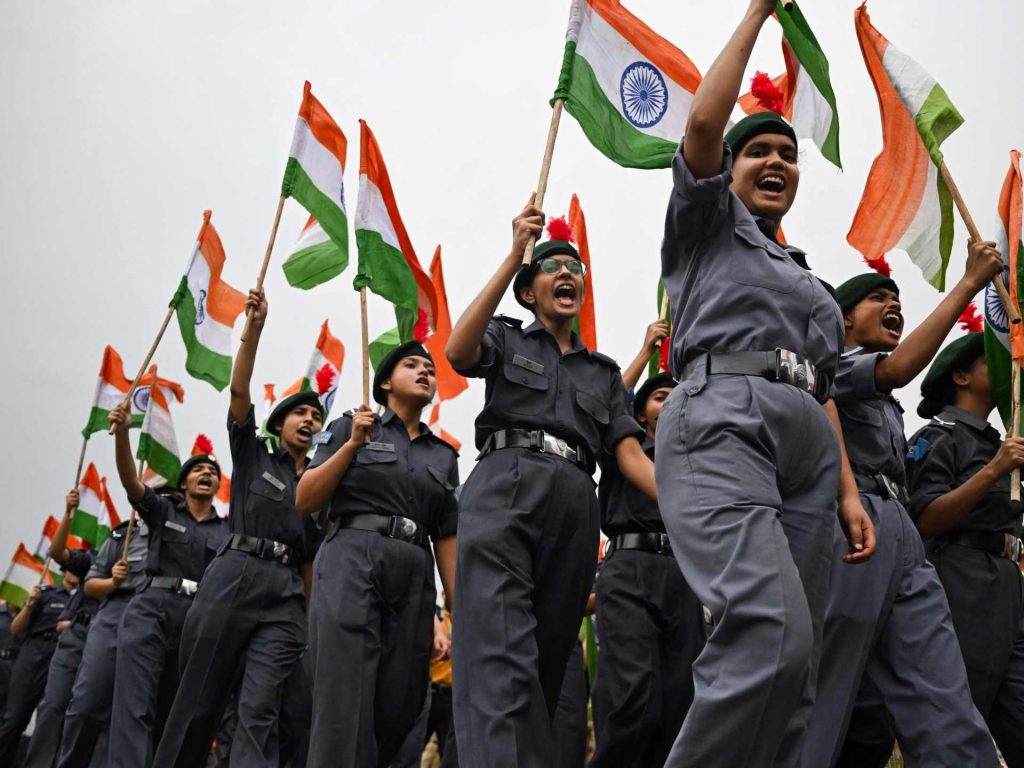
Pakistan reiterates its commitment to the ceasefire but warns it will respond forcefully to any future Indian attacks. India has ordered a Pakistani diplomat to leave the country within 24 hours as tensions simmer in the wake of heavy military exchanges between the nuclear-armed neighbours before a ceasefire was agreed last week. The unnamed official, stationed at Pakistan’s embassy in New Delhi, was accused by India’s Ministry of External Affairs on Tuesday of “indulging in activities not in keeping with his official status”. The move comes after a brief but intense military confrontation last week that threatened to erupt into the fifth full-scale war between the two countries. While the truce brought a temporary halt to cross-border missile and drone strikes, sporadic skirmishes continue along the Line of Control (LoC), the de facto border in disputed Kashmir, a region claimed by both nations. On Tuesday, Pakistan reiterated its commitment to the ceasefire but warned it would respond forcefully to any future attacks. The statement came after Indian Prime Minister Narendra Modi warned in his first national address since the truce that India would strike “terrorist hideouts” across the border if provoked again. Advertisement The ultranationalist Hindu leader added that India “only paused” its military action against Pakistan. Modi’s remarks were swiftly condemned by Pakistan’s Ministry of Foreign Affairs, which called them “provocative and inflammatory”. “At a time when international efforts are being made for regional peace and stability, this statement represents a dangerous escalation,” it said. “Pakistan remains committed to the recent ceasefire understanding and taking necessary steps towards de-escalation and regional stability,” the statement continued, adding that any future aggression would receive a response. The conflict ignited after a deadly April 22 shooting attack in the Pahalgam area of India-administered Kashmir, where 25 Indian tourists and one Nepalese visitor were killed. India accused Pakistan’s government of links to the attacks – an accusation Islamabad strongly denied. India launched strikes on what it called “terrorist infrastructure” in Pakistan and Pakistan-administered Kashmir. According to Islamabad, 40 civilians and 11 Pakistani military personnel were killed in last week’s violence. India said at least 16 civilians and five Indian soldiers were killed. The fighting marked the most severe exchange between the two countries in nearly 30 years and ended only after sustained diplomatic pressure. On Monday, India said it held a rare phone call with Pakistan’s military leaders, agreeing to uphold the ceasefire and explore ways to de-escalate the conflict. Fragile ceasefire Despite the ceasefire, sporadic violence continued on Tuesday with Indian forces reporting a gun battle in southern Kashmir’s Shopian district. The army said three suspected fighters were killed in a “search and destroy” operation launched on intelligence input. Advertisement On Tuesday, Modi visited Adampur airbase near the border and reiterated India’s stance in a speech to air force personnel. “We will not differentiate between the government sponsoring terrorism and the masterminds of terrorism,” he said. “We will enter their dens and hit them without giving them an opportunity to survive.” Meanwhile, both sides have taken a series of retaliatory diplomatic and economic measures. India has suspended most visa services for Pakistani nationals, halted bilateral trade and announced its intention to unilaterally suspend the Indus Waters Treaty, a World Bank-brokered water-sharing agreement in place since 1960 that is critical for farming. In response, Pakistan banned visas for Indians, closed its airspace to Indian aircraft and imposed a reciprocal trade embargo. Adblock test (Why?)
Medical professionals must speak out and act on Gaza now
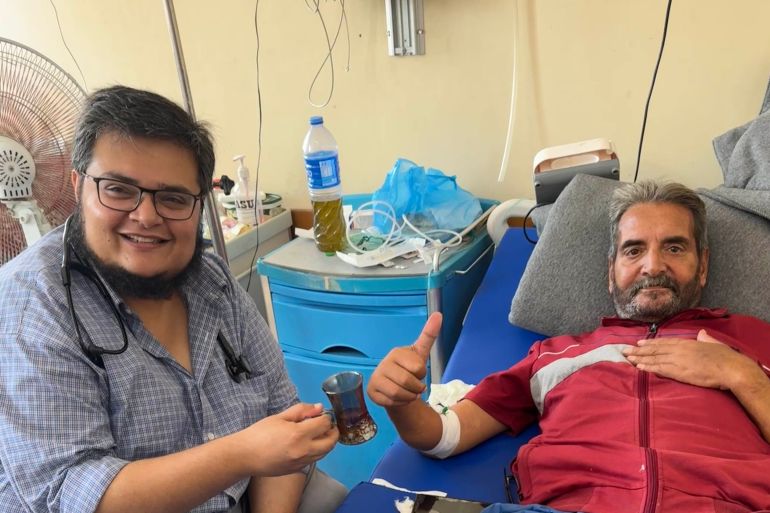
I had closely followed the genocidal war in Gaza for nine months when an opportunity came around to volunteer as part of a medical mission organised by the United Nations, World Health Organization and the Palestinian American Medical Association. As a trained nephrologist, a doctor who treats patients with kidney disease, I felt there was a critical need for specialised medical care amid the collapse of the healthcare system in Gaza and the high number of medical specialists who had been killed. I also felt it was my duty as a Muslim to help the people of Gaza. Islam teaches us that whoever saves one life, it is as if he had saved all of humanity; taking care of others is an act of worship, and standing up against injustice is a moral obligation. I believe my degrees are not meant to simply hang on the walls of an air-conditioned office or help me drive the nicest car or live in an expensive neighbourhood. They are a testament to the fact that I have taken an oath to dedicate my expertise to the service of humanity, to maintain the utmost respect for human life and to offer my medical knowledge and compassion to those in need. Advertisement So on July 16, I departed for Gaza with a few other medics. We entered the strip through the Karem Abu Salem crossing. We went from observing the prosperity, comfort and wealth of the Israeli side to recoiling at the destruction, devastation and misery of the Palestinian side. We basically saw what apartheid looks like. On our short trip through southern Gaza to reach our destination in Khan Younis, we saw many buildings bombed, damaged or destroyed. Homes, schools, shops, hospitals, mosques – you name it. The amount of rubble was sickening. To this day, I can’t unsee the landscapes of destruction I witnessed in Gaza. We were accommodated in Al-Nasser Hospital because it was too dangerous to stay at any other place. We were welcomed and cared for so much that I felt embarrassed. We were seen as saviours. I treated patients with kidney problems, worked as a primary care physician and sometimes helped during mass casualty events in the emergency room. The author with one of his patients at Al Nassar Hospital in Khan Younis, Gaza Strip [Courtesy of Talal Khan] Dialysis requires clean water, sterile supplies, reliable electricity, medications and equipment that must be maintained and replaced – none of which was guaranteed under the Israeli blockade. Each dialysis session was a challenge. Every delay increased the risk of my patients dying. Many of them did die – a fact I struggled to accept, knowing that under normal circumstances, many of them could have been saved and lived normal lives. Advertisement I remember the smiling face of one of my patients, Waleed, a young man who suffered from kidney failure caused by early-onset high blood pressure, a condition that, with access to proper treatment, could have been managed appropriately. Dialysis was Waleed’s lifeline, but he couldn’t get an adequate number of sessions due to the Israeli blockade causing severe shortages of medical supplies. Malnutrition and worsening living conditions only accelerated his decline. I remember how short of breath he was, his body overloaded with fluid and his blood pressure dangerously high. And yet, every time I saw him, Waleed greeted me with a warm smile, his spirit somehow intact, his mother always by his side. A few months after I left Gaza, Waleed passed away. Another patient of mine was Hussein, a gentle, kind-hearted, deeply respected man. His children cared for him with love and dignity. He suffered from severe hypokalaemia and acidosis: His body’s potassium levels were dangerously low, and acid built up to toxic levels. To address his condition, he needed basic medications: potassium supplements and sodium bicarbonate pills. These were simple, inexpensive, life-saving medicines, and yet, the Israeli blockade did not allow them in. Because he could not find these pills, Hussein was hospitalised multiple times for intravenous potassium supplementation. Despite his immense suffering, Hussein remained gracious, brave and full of faith. When speaking, he always repeated the phrase Alhamdulillah (praise be to God). He passed away a few weeks ago, I was told. Waleed and Hussein should be here – smiling, laughing, living happily with their families. Instead, they became casualties of siege and silence. These are two of so many tragic stories I know of and I witnessed. So many beautiful lives that could have been saved were lost. Despite this grim reality, my colleagues in Gaza continue to do their utmost for their patients. Advertisement These are medics who are bruised in every way. They are not only battling the daily struggles of life like all other Palestinians in Gaza but also witnessing daily horrors of headless babies, amputated limbs, fully burned human beings and sometimes the lifeless remains of their own loved ones. Imagine working with no anaesthesia, limited pain medications, very few antibiotics. Imagine surgeons scrubbing with plain water, children undergoing amputations with no sedation, full-body burns patients’ dressings being changed with no pain relief. Still these healthcare heroes just keep going. One of the nurses I worked with, Arafat, made a deep impression on me. He was living in a makeshift shelter with multiple family members. It offered no protection against the elements – the cold winter, the scorching heat or the drenching rain. He starved – like all other Palestinians in Gaza – losing 15kg (33lb) in nine months. He walked 2km to 3km (1 to 2 miles) every day to work with worn-out sandals, facing the danger of Israeli drones bombing or shooting him in the street. And yet, the smile never left his face. He took care of more than 280 dialysis patients, treating them with care, attentively listening to their anxious families and uplifting his colleagues with light humour. I felt so small next to heroes like Arafat. His and his colleagues’ resilience and persistence were
After college students protested Israel-Hamas war, Texas Senate votes to restrict time, place and manner of future events
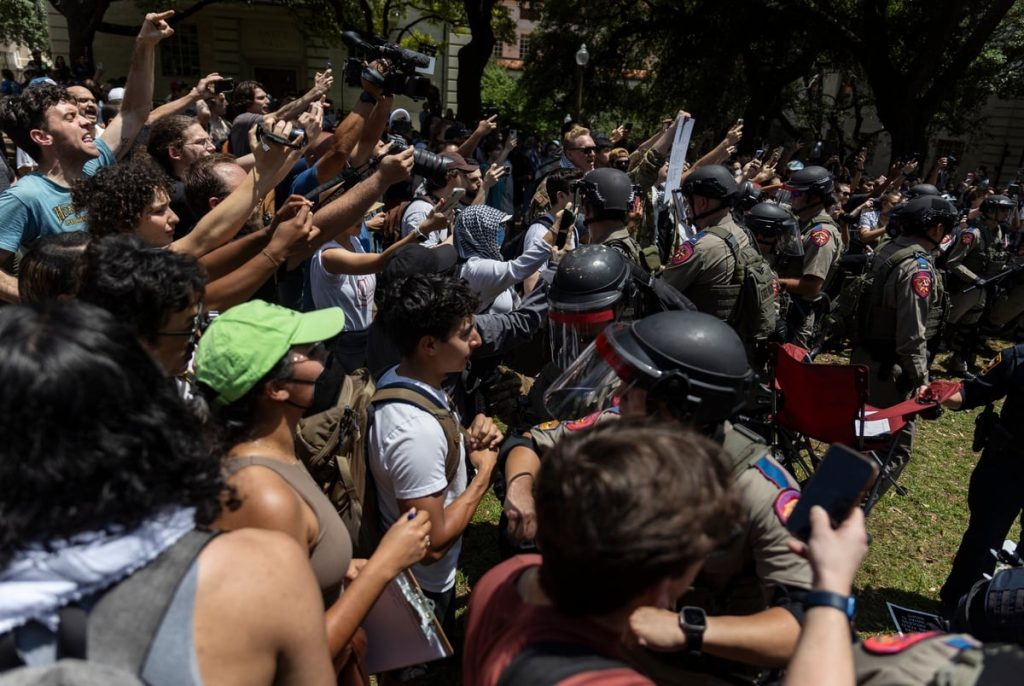
Sen. Brandon Creighton says the bill will prevent disruption. Critics say it walks back conservative lawmakers’ previous pledge to protect campus free speech.
Trump’s remarks could come back to bite him in Abrego Garcia deportation battle
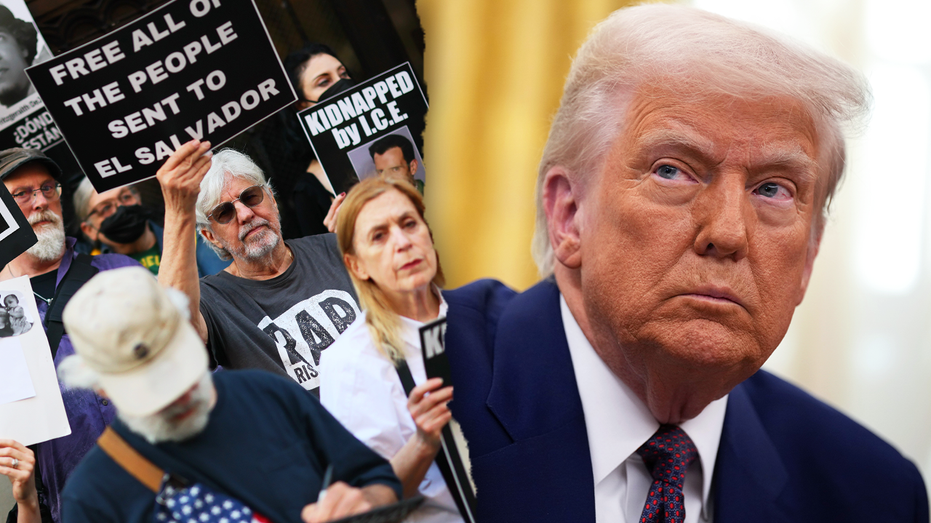
Lawyers for Kilmar Abrego Garcia urged a Maryland judge Monday to reject the Trump administration’s bid to withhold information under national security claims, arguing senior officials, including President Donald Trump, have already compromised any potential harm. In a new court filing, attorneys for Abrego Garcia argued that Trump and top officials have publicly opposed his return from a Salvadoran prison – despite court orders – citing remarks in testimony, interviews and on social media. The contradictions could weigh heavily Friday, when a federal judge considers next steps in the high-profile case. “Plaintiffs have sought discovery to uncover the truth as to the Government’s efforts (or lack thereof) as well as its abilities to facilitate Abrego Garcia’s return – the essential issue in this case. Over and over, the Government has stonewalled Plaintiffs by asserting unsupported privileges – primarily state secrets and deliberative process – to withhold written discovery and to instruct witnesses not to answer even basic questions,” lawyers for Abrego Garcia told U.S. District Judge Paula Xinis, who ordered his return to the U.S. last month. “Even as the Government speaks freely about Abrego Garcia in public, in this litigation it insists on secrecy,” they added. FEDERAL JUDGE’S ORDER FOR TRUMP TO RETURN DEPORTED MIGRANT TEMPORARILY HALTED ON APPEAL Their filing comes one month after the Supreme Court ordered the Trump administration to “facilitate” Abrego Garcia’s return to the U.S., upholding the orders of the lower court judge. Since then, the government and Abrego Garcia’s attorneys have sparred in court over what exactly it means to “facilitate” his return. Trump officials have alleged Abrego Garcia is a member of the MS-13 gang, though any formal ties have not been proven. Xinis ordered expedited discovery in April to determine whether the administration was complying with her directive to return Abrego Garcia to the U.S. On Tuesday, she also ordered the Trump administration to submit a previously requested privilege log related to its invocation of the state secrets privilege. She gave the administration until 3 p.m. Tuesday to comply, warning that failure to file the log – or otherwise respond – would be considered an “intentional refusal” to follow the court’s orders. Last week, the Trump administration appears to have invoked both the state secrets and deliberative process privileges, according to a court order from Xinis. The order granted both parties an extra week to submit new filings on the asserted claims. The state secrets privilege is a national security tool that allows the government to withhold certain information from the courts, so long as it can prove a “reasonable danger” to national security and foreign affairs as a result of the information being made public. Lawyers for Abrego Garcia told the court that the administration’s assertion of state secrets privileges is just another attempt by senior Trump administration officials to “stonewall” the return of their client, who was deported in March due to what administration officials acknowledged was an administrative error. 100 DAYS OF INJUNCTIONS, TRIALS AND ‘TEFLON DON’: TRUMP SECOND TERM MEETS ITS BIGGEST TESTS IN COURT Abrego Garcia’s attorneys on Monday pointed to public remarks made by Attorney General Pam Bondi, Secretary of State Marco Rubio, Homeland Security Secretary Kristi Noem and President Donald Trump stating they do not plan to return Abrego Garcia. These statements, they said, undercut any invocations of privilege in court. “Over and over again, official statements by the Government – in congressional testimony, television interviews and social media – confirm that producing this information would not imperil national security,” lawyers for Abrego Garcia told Judge Xinis on Monday, urging her to consider the administration’s decision to invoke state secrets privilege with a careful and “skeptical” eye. “On its face, there is little reason to believe that compliance with a court order to facilitate the release and return of a single mistakenly removed individual so that he can get his day in court implicates state secrets at all,” they said. The Trump administration, meanwhile, told the court that it had already provided Abrego Garcia’s attorneys with “robust” responses to discovery requests ordered by Judge Xinis last month, noting Monday that granting the new requests for additional information or supplemental documents “would not advance any legitimate end of expedited discovery.” This isn’t the first time the Trump administration has attempted to use state secrets privileges to shield against sharing certain information in court. BOASBERG GRILLS DOJ OVER REMARKS FROM TRUMP AND NOEM, FLOATS MOVING MIGRANTS TO GITMO IN ACTION-PACKED HEARING In March, the Trump administration told U.S. District Judge James Boasberg it was invoking the state secrets privilege in a case challenging its early deportations under the Alien Enemies Act, after repeatedly refusing to provide the court details about those flights. Administration lawyers declined to disclose how many individuals were deported “solely on the basis” of the act, where the planes landed, what time they departed, and from which locations, citing national security concerns. (The case is now pending before the Supreme Court.) It’s not the first time comments from senior Cabinet officials have intensified scrutiny of the government’s legal arguments. Last week, Boasberg pressed Justice Department attorneys in a related case brought by a broader class of plaintiffs, citing public remarks by Trump and Noem about CECOT – the maximum-security prison in El Salvador where the U.S. has deported hundreds of migrants. He also questioned DOJ lawyers about the White House’s role in securing prisoner releases. “Is the president not telling the truth?” Boasberg asked Justice Department lawyer Abhishek Kambli during the hearing. “Or could he secure his release?” On Monday, Abrego Garcia’s lawyers argued there’s little evidence to justify the Trump administration’s use of the privilege, noting no military or intelligence operations are at issue. They wrote it “defies reason to imagine that the United States’ relationship with El Salvador would be endangered by any effort to seek the return of a wrongfully deported person who the Government admits never should have been removed to El Salvador in the first place.” Xinis
Saudis deploy mobile McDonald’s for Trump’s trip to the kingdom

Saudi Arabia rolled out a mobile and operational McDonald’s truck for President Donald Trump’s first visit to the nation since his inauguration in January, Fox News Digital found. A White House official confirmed that a mobile McDonald’s food truck was in Riyadh, Saudi Arabia, during Trump’s visit. Images and video of the truck spread like wildfire on social media Tuesday morning, which marked Trump’s first day in the Middle East. “Saudi Arabia brought in a mobile McDonald’s for President Trump on his visit,” popular conservative social media commentator Benny Johnson posted on X, accompanied by footage showing the massive mobile McDonald’s. Other accounts on X asked, “how’s this real life?” or remarked that the scene of a truck holding Trump’s beloved fast-food was “incredible.” TRUMP MAKES FRIES AT PENNSYLVANIA MCDONALD’S: ‘I’VE NOW WORKED FOR 15 MINUTES MORE THAN KAMALA’ Trump‘s love of McDonald’s has long been documented. The president served a buffet of fast-food options when he welcomed national college football champions the Clemson Tigers to the White House in 2019. He also requested McDonald’s following his COVID-19 diagnosis and recovery in 2020, according to his son-in-law, Jared Kushner. And anecdotes from his former bodyguard say Trump enjoyed Egg McMuffins for breakfast during the 2016 campaign. ‘VINDICTIVE’: DEMOCRAT IN TIGHT SENATE RACE BLASTED BY GOP RIVAL FOR SWIPE AT MCDONALD’S AFTER TRUMP VISIT Trump’s love of the fast-food staple was underscored during the 2024 campaign cycle, when he donned a McDonald’s apron and worked the fryer at a location in the battleground state of Pennsylvania. “Hello, everybody. It’s my first day at McDonald’s. I’m looking for a job,” Trump said as he entered the McDonald’s location in Feasterville-Trevose, which is located near Philadelphia, in October 2024. WOMAN SERVED BY TRUMP AT MCDONALD’S DRIVE-THRU REVEALS DETAILS BEHIND VIRAL EXCHANGE WITH FORMER PRESIDENT Trump also worked the drive-thru window during his McDonald’s shift, greeting customers and vowing that he would make the U.S. “better than ever” if re-elected to the Oval Office. LIBERAL MEDIA HAS MELTDOWN OVER TRUMP’S ‘FIRST DAY’ WORKING AT MCDONALD’S Trump arrived in Riyadh early Tuesday morning, with the nation sending fighter jet escorts to welcome Air Force One to the ground and Saudi Crown Prince Mohammed bin Salman greeting Trump on the tarmac that was adorned with a lavender-colored carpet. “Air Force One about to go wheels down in Riyadh, Saudi Arabia with Saudi F-15 fighter jets bringing us in. On behalf of President Trump, THANK YOU!” White House Deputy Chief of Staff Dan Scavino posted on X while sharing a video of jets flying alongside the U.S. president’s plane. Trump’s trip included the president signing a “strategic economic partnership” with the country for energy, defense, mining and space-based agreements that amount to $600 billion. Trump said the deal could lead to the creation of 2 million jobs in the U.S. Fox News Digital’s Caitlin McFall contributed to this report.