

Kurdish leader Ocalan told the PKK to disband, it did: Here’s what to know
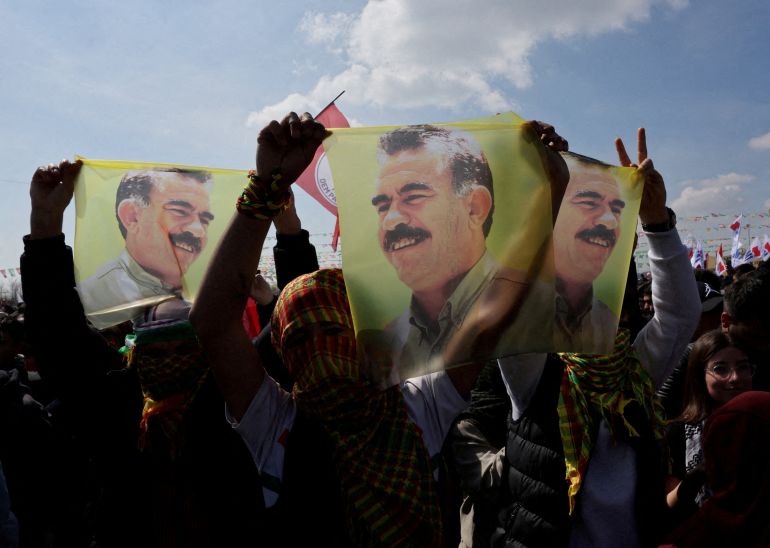
The Kurdistan Workers’ Party (PKK) says it is disbanding after more than 40 years of armed struggle against the Turkish state. The announcement came after the PKK held its congress in northern Iraq on Friday, about two months after its imprisoned founder, Abdullah Ocalan, also known as “Appo”, called on the group to disarm in February. For most of its history, the PKK has been labelled a terrorist group by Turkiye, the European Union and the United States. It fought for Kurdish autonomy for years, a fight that has been declared over now. This is all you need to know about why Ocalan and the PKK have given up their armed struggle. Who is Abdullah Ocalan? Ocalan was born to a poor Kurdish farming family on April 4, 1948, in Omerli, Sanliurfa, a Kurdish-majority part of Turkiye. He moved to Ankara to study political science at the university there, where he became politically active; driven, biographers say, by the sense of marginalisation that many Kurds in Turkiye felt. By the mid-1970s, he was advocating for Kurdish nationalism and went on to found the PKK in 1978. Advertisement Six years later, the group launched a separatist rebellion against Turkiye under his command. Ocalan had absolute rule over the PKK and worked to stamp out rival Kurdish groups, monopolising the struggle for Kurdish liberation, according to Blood and Belief: The PKK and the Kurdish Fight for Independence, by Aliza Marcus. At the time, Kurds were denied the right to speak their language, give their children Kurdish names or show any expression of nationalism. Despite Ocalan’s authoritarian rule, his charisma and positioning as a champion of Kurdish rights led most Kurds across Turkiye to love and respect him, calling him “Appo”, which means Uncle. What was the armed rebellion like? Violent. More than 40,000 people died between 1984 and 2024, with thousands of Kurds fleeing the violence in southeastern Turkiye into cities further north. Throughout the 1980s and 90s, Ocalan led operations from neighbouring Syria, which was a source of tensions between the then-Assad regime and Turkiye. The PKK resorted to brutal tactics beginning in the late 1980s and early 90s. According to a report by the European Council on Foreign Relations from 2007, the group, under Ocalan, kidnapped foreign tourists, adopted suicide bombing operations and attacked Turkish diplomatic offices in Europe. Perhaps even worse, the PKK would repress Kurdish civilians who did not assist the group in its guerrilla warfare. Supporters of pro-Kurdish DEM Party wave flags with portraits of jailed PKK leader Abdullah Ocalan at a rally for Newroz in Istanbul, Turkiye, March 17, 2024 [Umit Bektas/Reuters] Did Ocalan change his views? Eventually, more than a decade after he was caught. Advertisement In 1998, Ocalan was forced to flee Syria due to the threat of a Turkish incursion to capture him. A year later, Turkish agents arrested him on a plane in Nairobi, Kenya, thanks to intel received from the US. He was brought back to Turkiye and handed the death penalty, yet his sentence was changed to life in prison after Turkiye abolished capital punishment in 2004 in a bid to become a member of the EU. By 2013, Ocalan changed his stance on separatism and began lobbying for comprehensive Kurdish rights and greater regional autonomy in Turkiye, saying he no longer believed in the effectiveness of armed rebellion. This radical shift led to the start of a shaky peace process between the PKK and the ruling Justice and Development Party (AK Party), headed by Turkish President Recep Tayyip Erdogan. The peace process led to some freedoms for Kurds, yet fighting erupted between the government and the PKK in 2015 due in part to fears that the party was trying to create a Kurdish statelet in neighbouring Syria during its civil war. At the time, many Kurds from southern Turkiye had left for Syria to help the Kurds there fight against ISIL (ISIS). In 2015, the AK Party had also formed a new alliance with the far-right Nationalist Movement Party (MHP), which was staunchly opposed to any peace process involving the PKK. What’s different about this peace process? In announcing its disarmament, the PKK said it has “completed its historical mission” by “breaking the policy of denial and annihilation of our people and bringing the Kurdish issue to a point where solving it can occur through democratic politics”. Advertisement However, analysts argue that there are other reasons behind the decision. The PKK and its Kurdish allies in the region are more vulnerable than before due to recent developments, according to Sinan Ulgen, an expert on Turkiye and senior fellow at Carnegie Europe in Brussels. “The reason the PKK gave up its armed struggle has to do with the change in the international context,” Ulgen explained. US President Donald Trump does not see Syria as a “strategic focal point” for foreign policy and is, therefore, unlikely to keep supporting Kurdish armed groups in the country as it had during the fight against ISIL, he explained. In addition, the new government in Syria is on good terms with Turkiye, unlike under the now-overthrown Assad regime. This new relationship could significantly hurt the ability of the PKK and its Syrian offshoot, the Democratic Union Party (PYD), to operate along the Syria-Turkiye border. MHP leader Devlet Bahceli, left, and Turkish President Recep Tayyip Erdogan greet supporters at a rally while campaigning for the presidential election on May 7, 2023, in Istanbul [Burak Kara/Getty Images] Will Turkiye follow through? The political climate seems ripe for that. Main political parties, such as the AK Party and its rival Republican People’s Party (CHP), have vocally or tacitly supported a new peace process. But it was the MHP, long opposed to any overtures to the Kurds, that created the window for a new peace process. In April 2024, MHP leader Devlet Bahceli invited Ocalan to renounce “terrorism” in front of Turkiye’s parliament in exchange for possible parole. Advertisement “The fact it was Bahceli … was kind of unbelievable,”
It’s not just about vouchers and school funding. Here are the other Texas public education bills you should track.

Student discipline, uncertified teachers and school bans on DEI and cellphones are some of the topics being debated at the Texas Legislature this session.
“A gift to our mothers”: Moms could drive solo in car pool lanes under Texas House bill
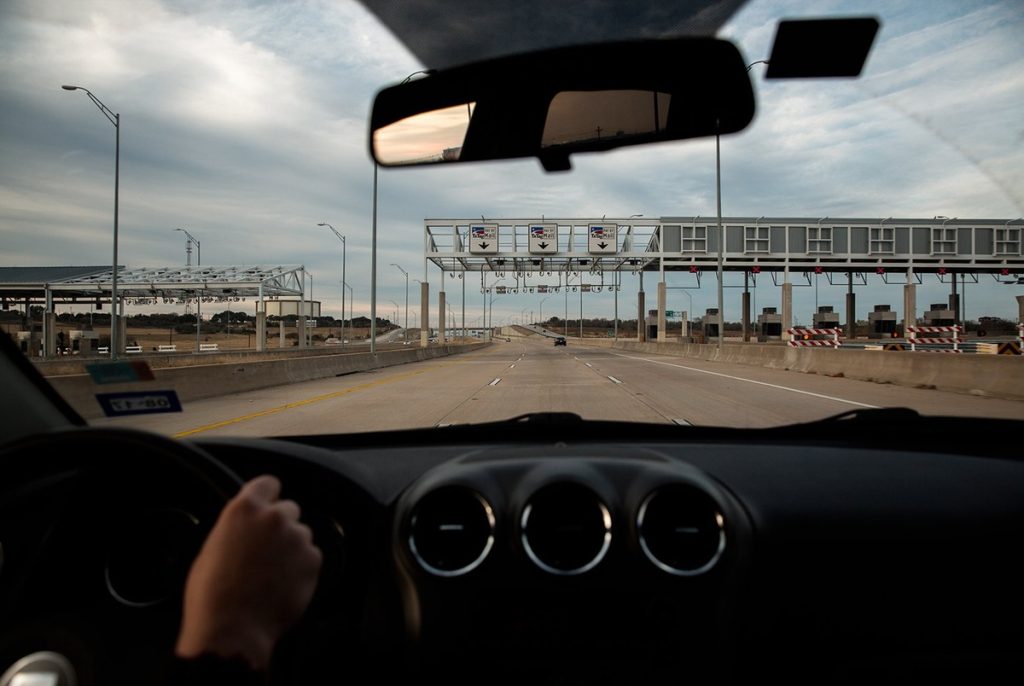
The bill originally allowed pregnant women to drive in HOV lanes, to be consistent with Texas abortion laws, but legislators extended it to all mothers.
Saudi fighter jets escort Air Force One as Trump arrives to meet crown prince
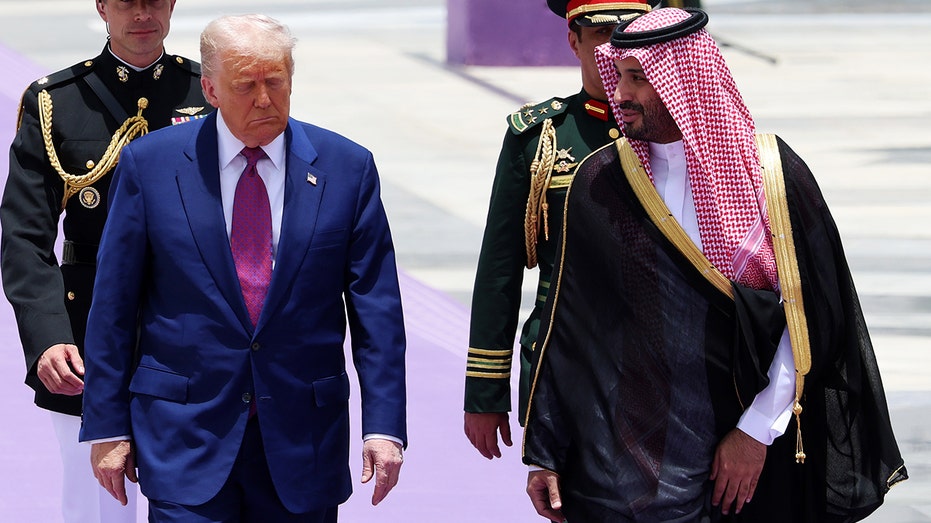
Saudi Arabian fighter jets appeared to escort Air Force One as President Donald Trump arrived in the country on Tuesday for a meeting with Crown Prince Mohammed bin Salman. “Air Force One about to go wheels down in Riyadh, Saudi Arabia with Saudi F-15 fighter jets bringing us in. On behalf of President Trump, THANK YOU!” White House deputy chief of staff Dan Scavino posted on X while sharing a video of jets flying alongside the U.S. president’s plane. Two jets flew on the left side of AF1 and three flew on the right. TRUMP TARGETS MASSIVE INVESTMENTS IN FIRST MIDDLE EAST TRIP Scavino also shared a video of the crown prince greeting Trump on a purple carpet after he landed at King Khalid International Airport. The two leaders had a coffee ceremony shortly after greeting one another. The president brought a slew of administration leaders with him, including Secretary of State Marco Rubio, Defense Secretary Pete Hegseth, Commerce Secretary Howard Lutnick and Energy Secretary Chris Wright. Trump arrived at the Royal Court in Riyadh at around 5:30 a.m. EST where he was welcomed with a ceremony and then participated in greetings with Saudi officials and U.S. guests. Trump is expected to have lunch and meetings over a three-hour period.
Knives out for Fetterman: Maverick senator joins long line of Dems punished for breaking from left
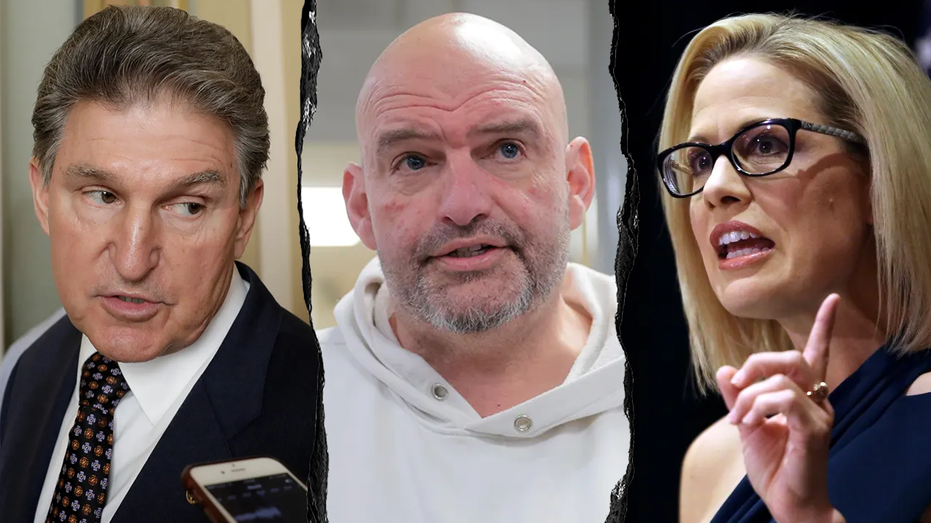
On border security, support for Israel and diplomacy with President Donald Trump, Sen. John Fetterman, D-Pa., has bucked the Democratic Party on key issues since assuming office in 2022. A string of media reports emerged this month detailing Fetterman’s alleged cognitive decline and waning support within the Democratic Party. A New York Magazine report sparked questions about Fetterman’s mental stability. Subsequent reports by the Associated Press, detailing an outburst during a union meeting, and by Politico, which indicated he is losing traction among Pennsylvania Democrats, were slammed by several of his Capitol Hill colleagues as a coordinated smear campaign. In an era of partisan politics, Fetterman has embraced bipartisanship with newly elected Sen. Dave McCormick, R-Pa. When McComrick was elected in November, the Pennsylvanians traded jabs for joint dinners as Fetterman built his reputation for being willing to reach across the aisle. Fetterman also met with Trump’s controversial Cabinet picks and worked with Sen. Katie Britt, R-Ala., to pass the Laken Riley Act this year. While Fetterman, who suffered a stroke during his 2022 Senate campaign, shut down questions about his mental fitness amid the relentless reports, it’s not the first time a Democrat has been targeted after falling out of line with the party. LEAKS TO MEDIA ABOUT FETTERMAN ARE A COORDINATED SMEAR CAMPAIGN, HILL COLLEAGUES SAY Sen. Chuck Schumer, D-N.Y., faced the ire of the Democratic Party earlier this year when he joined Fetterman in voting to pass the Republicans’ spending bill and avoid a government shutdown. Schumer, currently Senate minority leader, was slammed by progressive Democrats while the future of party leadership hangs in the balance. DEMOCRATIC SENATOR SAYS THERE ‘NEEDS TO BE SPACE’ FOR FETTERMAN IN PARTY AS REPUBLICANS COME TO HIS DEFENSE Former Sen. Kyrsten Sinema, I-Ariz., was once a Democrat but later registered as an independent. While she continued to caucus with her party, Sinema ruffled liberal feathers by opposing efforts to eliminate the filibuster rule and opposed former President Joe Biden’s “Build Back Better” plan. In 2022, Sinema said she was leaving the party, adding that “nothing will change about my values or my behavior.” Sinema became the first senator to switch parties since the late Pennsylvania Sen. Arlen Specter – then Republican – famously announced that “my change in party will enable me to be re-elected” in 2009. Soon after Sinema came now-former West Virginia Sen. Joe Manchin. Long seen as a moderate thorn in the side of the increasingly liberal Democrats, Manchin often clashed with his former party on environmental issues, given the Mountain State’s reliance on the fossil fuel industry. Things came to a head in Charleston when then-Gov. Jim Justice held up his bulldog Babydog backward in the legislative chamber and told actress Bette Midler – who had trashed the state over one of Manchin’s such votes – to “kiss her heinie.” Former Hawaii Rep. Tulsi Gabbard was once considered a rising star in the Democratic Party until her comments and behavior drew the ire of party elders like Hillary Clinton. The anti-interventionist Gabbard, who had appeared in the Moscow media, was anonymously slammed by Clinton in 2019 when she said that “somebody who is currently in the Democratic primary” was a “favorite of the Russians.” An advisor later said Gabbard was the figure in question. Since then, Gabbard has gone on to make a full partisan 180, becoming a member of President Donald Trump’s Cabinet. During Rep. Nancy Pelosi’s, D-Calif., historic speakership, another Democrat famously bucked the party and ultimately retired soon after trying to proverbially oust the queen. North Carolina Rep. Heath Shuler became disaffected by the liberal progression of the party and mounted an unsuccessful challenge to Pelosi’s leadership role after Democrats suffered massive losses in the 2010 midterms. Shuler, a former then-Washington Redskins quarterback, had been the leader of the moderate Blue Dog Democrat caucus when he took aim at the speakership. Fetterman’s office did not respond to Fox News Digital’s request for comment.
Trump criticizes Biden admin’s ‘reckless, soft-on-crime policies’ while announcing National Police Week
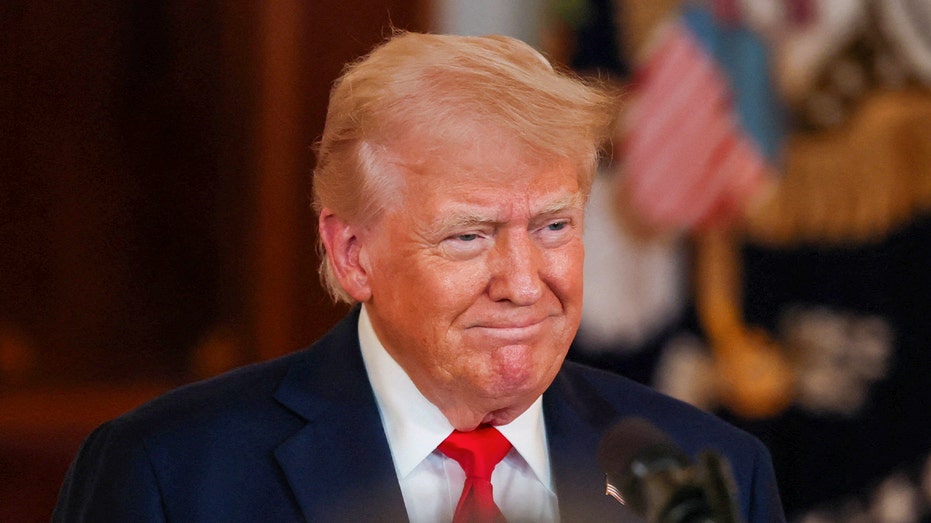
President Donald Trump criticized former President Joe Biden’s administration on Monday for allowing “lawlessness to permeate our country” while announcing Peace Officers Memorial Day and police week. Trump proclaimed Thursday as Peace Officers Memorial Day, continuing a 63-year tradition of honoring fallen officers on May 15. He also declared this week as National Police Week, beginning this past Sunday and going through Saturday. “This week and always, we honor the courageous men and women serving in law enforcement and memorialize those who sacrificed their lives defending the thin blue line,” he wrote in the proclamation. In the presidential action, Trump also called out the Biden administration for its “reckless, soft-on-crime policies,” which he said made it harder for police officers to do their jobs. CELEBRATE LAW ENFORCEMENT DURING NATIONAL POLICE WEEK “A nation in chaos ceases to be a citadel of liberty. Tragically, the previous administration allowed lawlessness to permeate our country, making it harder for our law enforcement officers to do their jobs,” the president wrote in the order. “Their reckless, soft-on-crime policies emboldened criminals and thugs; wreaked havoc on the sanctity of our homes, businesses, and public spaces; instilled fear; and jeopardized public trust.” Trump continued by saying he is fulfilling the promises that he campaigned on to make America safe again, including taking authority at the border and “restoring the rule of law in communities nationwide.” He also said that under his administration, all available resources will be utilized to ensure that officers will be equipped and trained to be the best they can be, qualified officers will be retained and recruiting will focus “on the basis of meritocracy.” NATIONAL POLICE WEEK IS AN OPPORTUNITY TO SHOW COPS WE HAVE THEIR BACKS Trump also called on Congress to codify his executive order mandating the death penalty for those who murder a police officer and to pass a bill enhancing protections for police officers. “I stand in steadfast solidarity with those who defend our freedoms and the families who love and support them,” Trump said. “We pray for those who grieve the fallen and pledge that their lives, legacies, and sacrifices will forever be remembered by our grateful Nation.” Governors have been asked to direct that the American flag be flown at half-staff on Thursday, and Trump has called on all Americans to observe National Police Week with “appropriate ceremonies and activities.”
India-Pakistan tensions: ISRO reveals how space tech played big role in Operation Sindoor, know here
The Army received support from commercial satellite operators such as Maxar, a US-based company that provides satellite images to governments and non-governmental organizations worldwide.
India attacks THESE Pakistan Air Force bases during Operation Sindoor
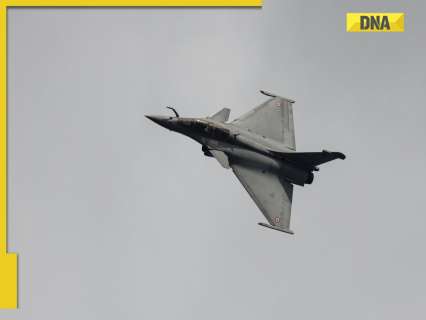
Lying at the heart of the Pakistani military establishment, the Pakistan Air Force base at Chakalala was the prime target of the Indian Air Force that was caught in the combat after it struck the terrorist hideouts.
GOP Rep. Randy Feenstra files paperwork for Iowa gubernatorial run
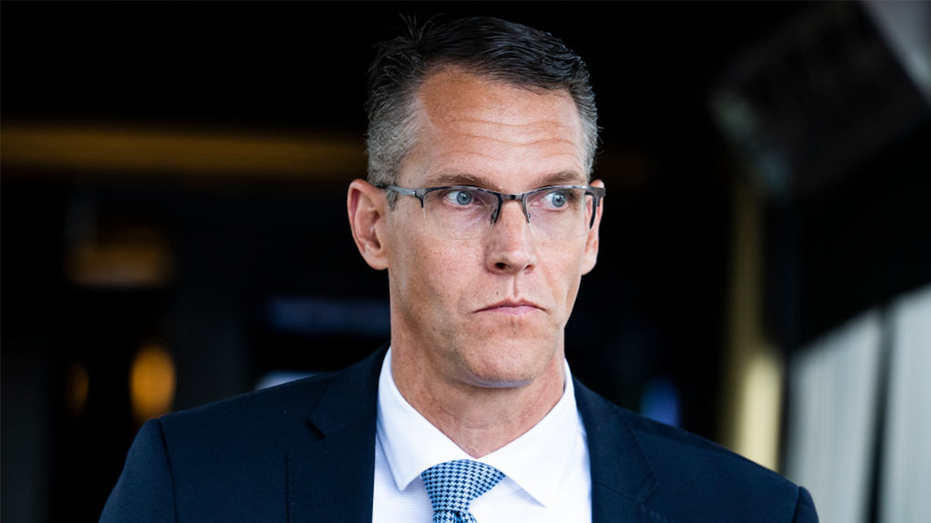
U.S. Rep. Randy Feenstra, R-Iowa, filed paperwork on Monday to run for Iowa governor in the 2026 election. Feenstra, who was first elected to the U.S. House in 2020, filed the paperwork for “Feenstra for Governor” with the Iowa Ethics and Campaign Disclosure Board, which is needed to launch a gubernatorial campaign, according to the Iowa Capital Dispatch. The congressman is seeking to replace Republican Gov. Kim Reynolds, who said last month she would not run for a third term in 2026. Feenstra has been considering a gubernatorial run since Reynolds’ announcement. THIS LONGTIME REPUBLICAN GOVERNOR WILL NOT SEEK RE-ELECTION IN 2026 “I’ll tell you right now, I’m focused on fulfilling and making sure that we get Trump’s agenda completed,” Feenstra told reporters on April 23. “However, I always want to do what’s best for our state, and I will continue to look at all aspects of what that looks like.” Feenstra has not publicly announced a campaign for governor. The GOP primary in the Hawkeye State could potentially be crowded, although former state Rep. Brad Sherman is the only Republican to have officially joined the race after he launched his campaign in February. DOGE SENATOR TELLS OUTDOORS GROUP TO ‘GO FISH’ AFTER DISCOVERING MASSIVE GRANT TIED TO HIGH SALARIES But others have taken steps toward a gubernatorial bid, including Iowa state Sen. Mike Bousselot, who launched an exploratory committee last month, as well as Iowa Attorney General Brenna Bird and House Speaker Pat Grassley — the grandson of U.S. Sen. Chuck Grassley, R-Iowa — who each said they are considering a run for governor. Iowa Auditor Rob Sand filed paperwork on Monday to run in the state’s Democratic primary. Feenstra is the only U.S. House member from Iowa considering a run for governor. The other three — U.S. GOP Reps. Ashley Hinson, Mariannette Miller-Meeks and Zach Nunn — all said they will not launch a gubernatorial campaign. Before he was elected to the U.S. House in 2020, when he defeated then-incumbent U.S. Rep. Steve King in the Republican primary, Feenstra served as a state senator since 2009. Before that, he was Sioux County treasurer from 2006 until 2008.
PM Modi visits Adampur air base amid India-Pakistan tensions, interacts with Air warriors, salutes their courage
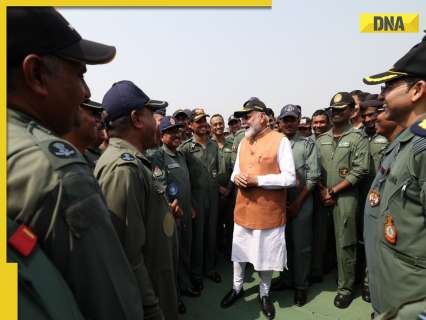
PM Modi was also briefed by Air Force personnel at the base. The Adampur base was one of the Air Bases active during Op Sindoor.