

Russia-Ukraine war: List of key events, day 1,381
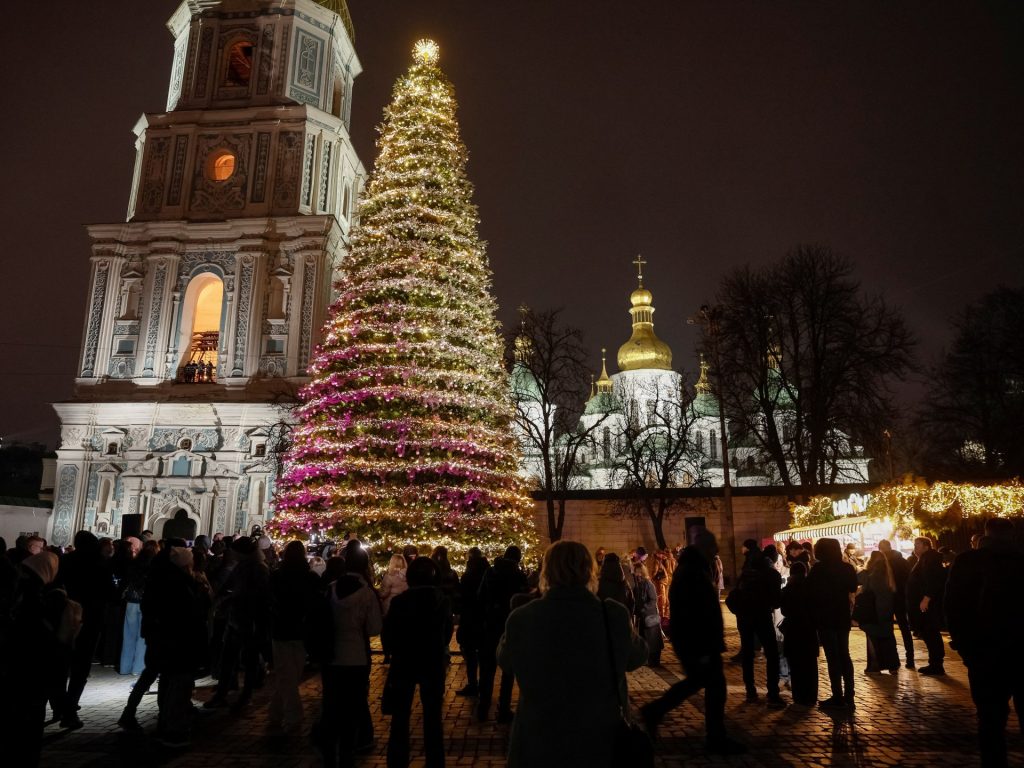
These are the key developments from day 1,381 of Russia’s war on Ukraine. Published On 6 Dec 20256 Dec 2025 Click here to share on social media share2 Share Here’s where things stand on Saturday, December 6: Fighting A Russian drone attack killed two men, aged 52 and 67, in the Ukrainian city of Izyum as they were unloading firewood from a truck, according to local officials. Russian forces also killed a 12-year-old boy in an attack on the Vasylkivska community in Ukraine’s Dnipropetrovsk region, and wounded more than a dozen Ukrainians in attacks on the Kherson, Donetsk and Sumy regions, local officials said. Ukraine’s national grid operator, Ukrenergo, announced that electricity restrictions would be in place nationwide from Saturday due to “previous Russian massive missile and drone attacks on energy facilities”, in a post on Telegram. Chechen leader Ramzan Kadyrov said that a Ukrainian drone hit and damaged a building in Grozny, the capital of Russia’s southern Chechnya region, and promised to retaliate. The attack caused no casualties, he said. A Ukrainian drone attack on Russia’s Belgorod region wounded the mayor of the village of Berezovka, according to officials, while Ukrainian assaults on energy facilities in Russian-occupied Luhansk caused electricity outages. Ukraine’s HUR military intelligence agency claimed attacks on military targets in Russian-occupied Crimea, including a Su-24 tactical bomber, while the Ukrainian military said it launched drone assaults on Russia’s Temryuk seaport in Krasnodar Krai and the Syzran Oil Refinery in Samara region overnight on Friday. The Russian Ministry of Defence said it downed 41 Ukrainian drones overnight on Friday, according to the TASS news agency. Russian investigators charged a Ukrainian Armed Forces commander with terrorism, in absentia, over the death of journalist and Russian Channel One military correspondent Anna Prokofieva in March this year, TASS reported. Politics and diplomacy Advertisement United States President Donald Trump’s special envoy Steve Witkoff held “productive” talks with Ukraine’s senior negotiator Rustem Umerov in Miami, Florida, on Thursday, a White House official said on Friday. “Progress was made,” the White House official said, according to the Reuters news agency. “They will reconvene later today after briefing their respective leaders.” The meetings in Florida came after Witkoff met Russian President Vladimir Putin in Moscow earlier this week, in what Yury Ushakov, the Kremlin’s top foreign policy adviser, described on Friday as “truly friendly” discussions. Ushakov also said that Jared Kushner, Trump’s son-in-law, is working “frantically” to resolve the war between Russia and Ukraine in his role as a US negotiator, TASS reported. European Commission President Ursula von der Leyen and German Chancellor Friedrich Merz said they held “very constructive” talks with Belgian Prime Minister Bart De Wever on Friday over a European Union plan to use Russian frozen assets to fund Ukraine, which Belgium has so far refused to endorse. The Save Ukraine NGO said it has returned 18 Ukrainian children, aged two to 17, from Russian-occupied territories in Ukraine’s Kherson region over the last week. International Criminal Court (ICC) prosecutors said on Friday that arrest warrants for Putin and five other Russians accused of war crimes in Ukraine will stay in place even if a blanket amnesty is approved during US-led peace talks. Putin said that Moscow is ready to provide “uninterrupted shipments” of fuel to India, as he met with Indian Prime Minister Narendra Modi in New Delhi on Friday, despite US sanctions. Bulgaria’s maritime authorities, border police and navy are attempting to recover sanctioned Russian tanker Kairos, which was hit in the Black Sea last week by a Ukrainian drone in Turkiye’s exclusive economic zone, leading to its crew being rescued after it caught fire. Adblock test (Why?)
Afghan, Pakistani forces exchange heavy fire as tensions flare
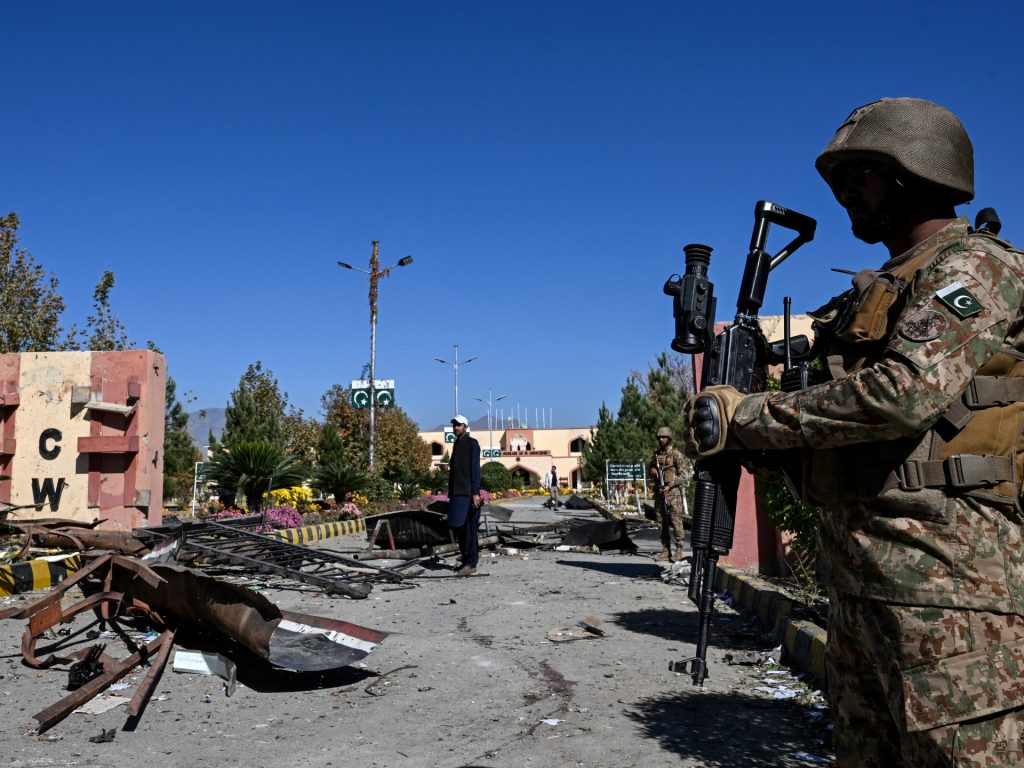
Relations have soured between former allies Afghanistan and Pakistan since the Taliban returned to power in 2021. By News Agencies Published On 6 Dec 20256 Dec 2025 Click here to share on social media share2 Share Afghanistan and Pakistan’s forces have exchanged heavy fire along their border as tensions between the South Asian neighbours escalate after peace talks in Saudi Arabia failed to produce a breakthrough. Officials from both sides said the skirmishes broke out late on Friday night, with the two countries accusing one another of opening fire first. Recommended Stories list of 3 itemsend of list In a post on X, the spokesman for Afghanistan’s Taliban government, Zabihullah Mujahid, said Pakistani forces had “launched attacks towards” the Spin Boldak district in the Kandahar province, prompting Afghan forces to respond. A spokesman for Pakistani Prime Minister Shehbaz Sharif said it was the Afghan forces who carried out “unprovoked firing” along the Chaman border. “Pakistan remains fully alert and committed to ensuring its territorial integrity and the safety of our citizens,” spokesman Mosharraf Zaidi said in a statement. Unfortunately, this evening the Pakistani side once again launched attacks towards Afghanistan in the Spin Boldak district of Kandahar, prompting the Islamic Emirate forces to respond. — Zabihullah (..ذبـــــیح الله م ) (@Zabehulah_M33) December 5, 2025 Residents on the Afghan side of the border told the AFP news agency that the exchange of fire broke out around 10:30pm local time (18:00 GMT) and lasted about two hours. Ali Mohammad Haqmal, head of Kandahar’s information department, told AFP that Pakistan forces attacked with “light and heavy artillery” and that mortar fire had struck civilian homes. “The clashes have ended, both sides agreed to stop,” he added. Advertisement There were no immediate reports of casualties from either side. Strained ties Relations have soured between Afghanistan and Pakistan since the Taliban returned to power in 2021, largely due to Islamabad’s accusations that Kabul is providing sanctuary to several armed groups, including the Pakistan Taliban (TTP). The TTP has waged a sustained campaign against the Pakistani state since 2007 and is often described as the ideological twin of the Afghan Taliban. Most recently, on Wednesday, a roadside bombing in Pakistan near the Afghan border claimed by the TTP killed three Pakistani police officers. Pakistan also accuses Afghanistan of sheltering the Balochistan Liberation Army and a local ISIL/ISIS affiliate known as the ISKP – even though the ISKP is a sworn enemy of the Afghan Taliban. The Afghan Taliban denies the charges, saying it cannot be held responsible for security inside Pakistan, and has accused Islamabad of intentionally spreading misinformation and provoking border tensions. A week of deadly fighting on their shared border erupted in October, triggered after Islamabad demanded that Kabul rein in the fighters stepping up attacks in Pakistan. About 70 people were killed on both sides of the border and hundreds more wounded before Afghan and Pakistani officials signed a ceasefire agreement in Qatar’s capital Doha on October 19. That agreement, however, has been followed by a series of unsuccessful talks hosted by Qatar, Turkiye and Saudi Arabia aimed at cementing a longer-term truce. The latest round of talks, held in Saudi Arabia last weekend, failed to produce a breakthrough, although both sides agreed to continue their fragile ceasefire. Despite the truce, Kabul has accused its neighbour of carrying out repeated air strikes in Afghanistan’s eastern provinces over recent weeks. One attack reportedly carried out by the Pakistani military on a house in Afghanistan’s southeastern Khost province in late November reportedly killed nine children and a woman. Pakistan denied that it carried out any such attack. Adblock test (Why?)
Australia sanctions Afghan Taliban officials over women’s rights abuses
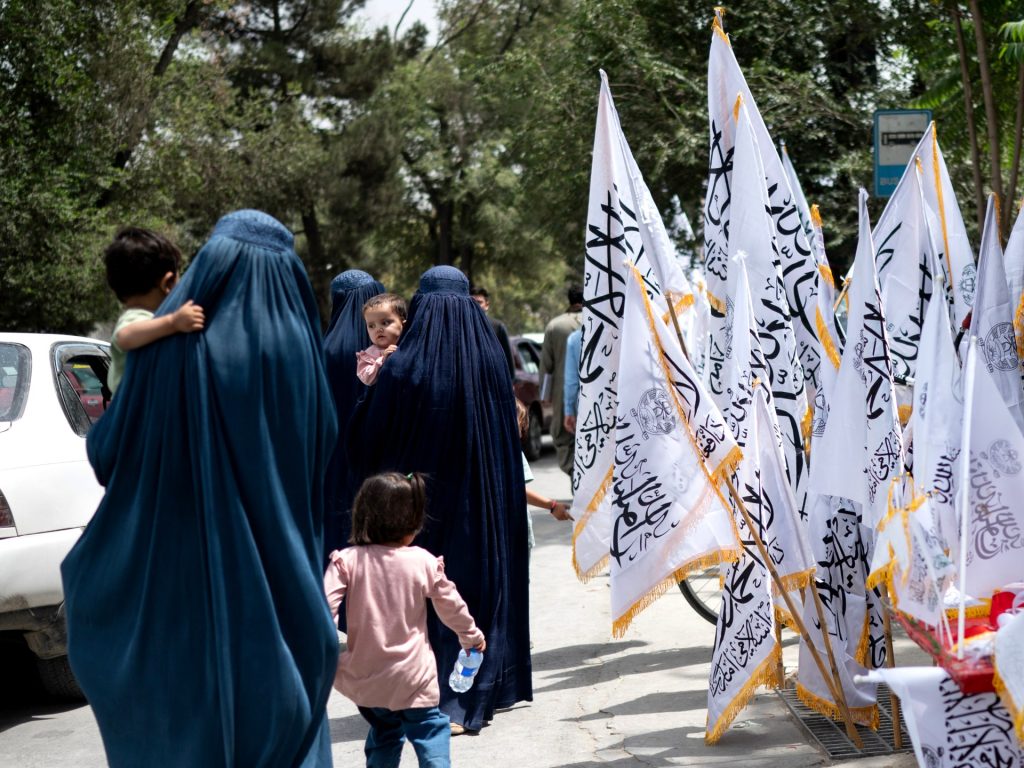
Canberra said the Taliban officials are guilty of oppressing women and girls, as well as ‘undermining good governance’. The Australian government has imposed financial sanctions and travel bans on four officials in Afghanistan’s Taliban government, citing the deteriorating human rights situation in the country, particularly for women and girls. Australia’s Foreign Minister Penny Wong said in a statement on Saturday that Canberra had established a “world-first” autonomous sanctions framework for Afghanistan, which would allow it to “directly impose its own sanctions and travel bans to increase pressure on the Taliban”. Recommended Stories list of 3 itemsend of list The new framework also introduces an arms embargo, Australia’s Department of Foreign Affairs and Trade said, as well as prohibitions on “providing related services and activities to Afghanistan”. The department named the sanctioned Taliban officials as Minister for the Propagation of Virtue and the Prevention of Vice Muhammad Khalid Hanafi; Minister of Higher Education Neda Mohammad Nadeem; Minister of Justice Abdul-Hakim Sharei; and Chief Justice Abdul Hakim Haqqani. The Australian Government has established a world-first autonomous sanctions framework for Afghanistan, as part of our ongoing efforts to hold the Taliban to account. In effect from today, we have also announced the first listings under the new framework. — Senator Penny Wong (@SenatorWong) December 5, 2025 Wong said the officials had been sanctioned due to their involvement “in the oppression of women and girls and in undermining good governance or the rule of law”. “This includes restricting access to education, employment, freedom of movement and the ability to participate in public life,” she said. Advertisement Canberra said its new framework “builds on” the 140 individuals and entities it already sanctions as part of the United Nations Security Council’s Taliban framework. Afghanistan’s Taliban government is yet to publicly respond to Canberra’s latest measures. In July, the International Criminal Court (ICC) issued an arrest warrant for Chief Justice Haqqani, alongside the Taliban’s supreme leader, Haibatullah Akhunzada, for alleged crimes against humanity for persecuting women and girls. Announcing the sanctions, the ICC said the Taliban has “severely deprived” girls and women of the rights to education, privacy, family life and the freedoms of movement, expression, thought, conscience and religion. Since returning to power following the withdrawal of United States and NATO troops – of which Australia was a part – from Afghanistan in August 2021, the Taliban has enacted severe restrictions on the rights and freedoms of women and girls, including the right to work and study. The Taliban has rejected accusations of violating women’s rights, claiming they are respected “within the framework of Islamic law”. In December 2022, Afghanistan’s Ministry of Higher Education banned female students from the country’s universities until further notice, in a move widely condemned by the international community. Last year, the UN said the Taliban government had “deliberately deprived” at least 1.4 million girls of their right to an education during its time in power, totally about 80 percent of school-age girls. Afghans have also been plunged further into poverty since the Taliban takeover, fuelled in part by the ban on female participation in the workplace, with vast swaths of the country’s population now heavily reliant on humanitarian aid to survive. In her statement, Wong said the Australian government “remains deeply concerned at the deteriorating situation” in the country, continuing that a “humanitarian permit” had been carved out in the new sanctions framework, allowing the continued provision of aid. “Our thoughts are with those suffering under the Taliban’s oppression, as well as the Afghan community in Australia,” she said. Adblock test (Why?)
India makes BIG move amid PM Modi-Putin meet, announces free 30-day e-visa facility for Russians
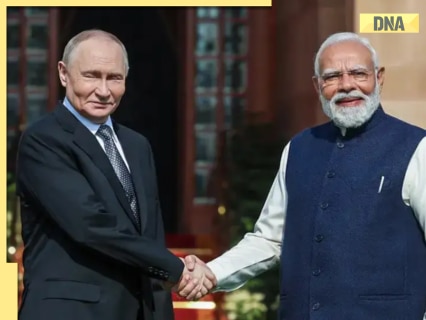
In a joint press statement with Russian President Vladimir Putin following their talks at the Hyderabad House in New Delhi on Friday, PM Modi stated that for decades, the people of both countries have shared deep affection and that several new steps have been taken to deepen these bonds.
IndiGo disruption: Centre orders high-level inquiry, anticipates normalcy within…; sets up 24X7 control room for monitoring
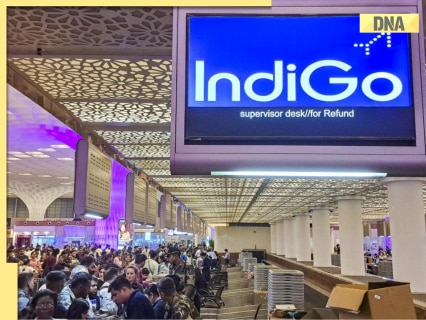
As thousands of passengers faced a harrowing time at airports across the country, Civil Aviation Minister Ram Mohan Naidu said in a statement that “we expect that flight schedules will begin to stabilise and return to normal by tomorrow.
Kavach 4.0 commissioned on 738 route km on Delhi-Mumbai and Delhi-Howrah lines, Railway Minister shares BIG update
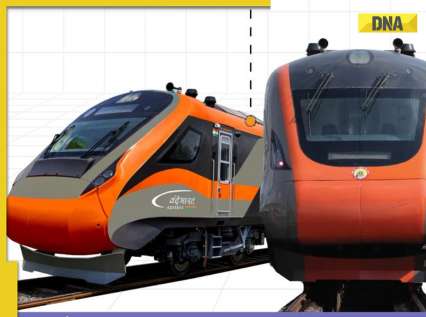
Kavach 4.0 features higher location accuracy, improved yard signal information, OFC-based station interface and direct interface to electronic interlocking integration to enhance passenger safety.
Amid IndiGo disruption, revisiting 9 airlines that once dominated skies but collapsed
IndiGo’s recent struggles have sparked concerns about the airline’s future, with many recalling the downfall of other Indian carriers. The airlines’ current turbulence has reminded many of India’s aviation industry’s pattern over the past 25 years. Time and again, airlines have dominated during their glory years and eventually lost once they collapse. Here are nine airlines that have ceased operations, failed to adapt to changing market conditions and disappeared entirely.
Vande Bharat Sleeper Train: Railway Minister Ashwini Vaishnaw shares BIG update, says, ‘Two such…’

Earlier this year, the Railway Minister clarified that the launch will take place only after the second train is fully ready for regular service.
What was Russian President Vladimir Putin served at state banquet at Rashtrapati Bhawan? Lavish MENU reveals, Jhol Momos, Kulfi, Laccha Parantha,…’
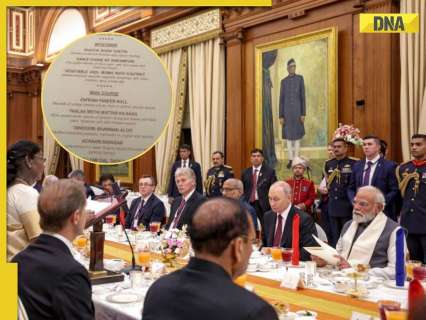
President Droupadi Murmu hosted a state banquet for Russian President Vladimir Putin at the Rashtrapati Bhavan, just before the latter concluded his visit and departed for Moscow. The main course featured Zafrani Paneer Roll, Paalak Methi Mattar Ka Saag, Tandoori Bharwan Aloo…
Good News for Kanpur-Lucknow residents: 63 km long six-lane expressway, to cut travel time between these two cities, check details here
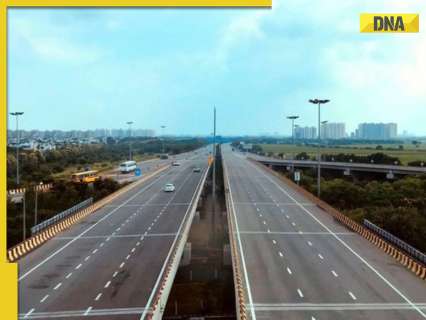
The expressway, being built at a cost of approximately Rs 4700 crore, will significantly reduce travel time between the two cities. The expressway is designed to allow vehicles to travel at speeds of 100-125 kms per hour, reducing the travel time between Lucknow and Kanpur to just 35-45 minutes.