

Complete blackout in Poonch as escalations with Pakistan continue

Jammu and Kashmir’s Poonch has observed a total blackout amid escalations with Pakistan.
Amid India Pakistan Tension, Delhi AIIMS, Jay Prakash Narayan hospitals cancel leaves until further notice

Amid this India Pakistan conflict, banks, schools, hospitals and many establishments have been on alert and have equipped security measures. Delhi AIIMS and Jay Prakash Narayan Trauma Centre have cancelled the leaves of all officers/officials.
Total blackout in Srinagar amid India-Pakistan tensions

Total blackout in Srinagar amid India-Pakistan tensions
India-Pakistan Conflict: PM Modi meets Rajnath Singh, army veterans amid Operation Sindoor

Prime Minister Narendra Modi on Friday met Defence Minister Rajnath Singh, NSA Ajit Doval, CDS General Anil Chauhan and the three service chiefs in the backdrop of the ongoing ‘Operation Sindoor’.
THIS UK party supports India, What has Rishi Sunak said on India-Pakistan tension?
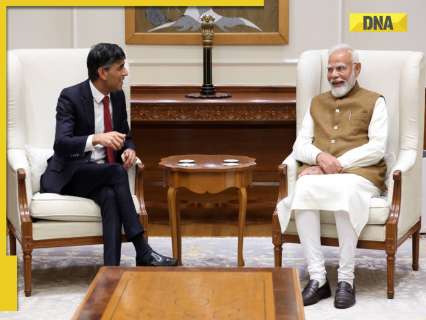
External Affairs Minister (EAM) S. Jaishankar on Friday held a telephonic conversation with the UK Foreign Secretary David Lammy as both leaders discussed combatting terrorism with a zero tolerance approach.
India Pakistan Tension: Blackout in Rajasthan’s Jaisalmer

India Pakistan Tension: In Rajasthan, Jaisalmer has been under blackout. A complete blackout has been ordered in Jammu, Samba, Pathankot, Rajouri, Udhampur, Akhnoor and other areas and in Ambala and Panchkula area of Haryana.
India-Pakistan Tensions: Drone attack foiled in Amritsar

India-Pakistan Tensions: Drone attack foiled in Amritsar
Blue state Republicans threaten mutiny over state and local taxes in Trump’s ‘big, beautiful bill’
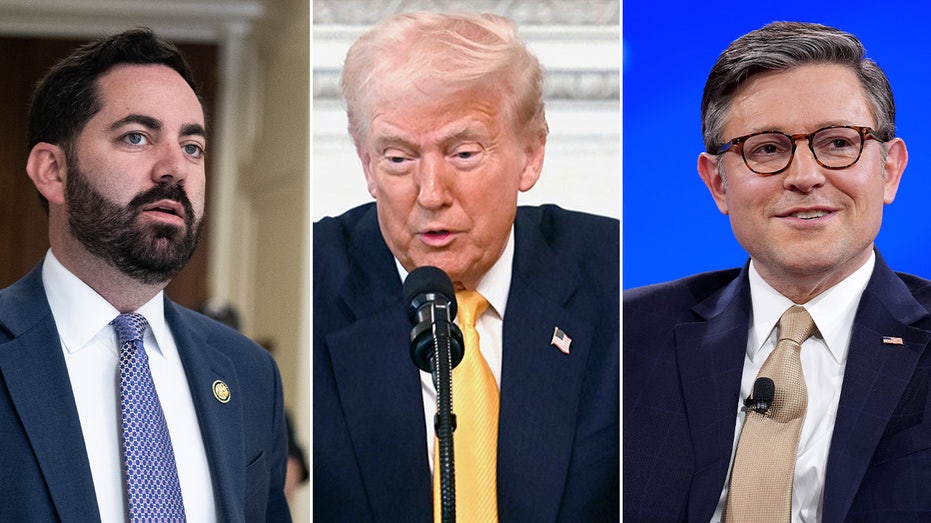
Sparks are flying over taxes that primarily affect Republicans representing districts in Democrat-controlled states, sending tensions skyrocketing as GOP lawmakers negotiate President Donald Trump‘s “big, beautiful bill.” The fight more specifically is about state and local tax deductions, colloquially known as SALT. Republican lawmakers representing high-cost-of-living areas outside big cities had been pushing leaders to raise the current cap on SALT deductions – $10,000 for both single filers and married couples – in Trump’s bill. However, on Thursday night, leaders of the House’s SALT Caucus emphatically rejected what they said was an offer from GOP leaders to raise that deduction to $30,000. SCOOP: REPUBLICANS DISCUSS DEFUNDING ‘BIG ABORTION’ LIKE PLANNED PARENTHOOD IN TRUMP AGENDA BILL “We’ve negotiated in good faith on SALT from the start— fighting for the taxpayers we represent in New York. Yet with no notice or agreement, the Speaker and the House Ways and Means Committee unilaterally proposed a flat $30,000 SALT cap — an amount they already knew would fall short of earning our support,” the statement said. “It’s not just insulting — it risks derailing President Trump’s One Big Beautiful Bill. New Yorkers already send far more to Washington than we get back — unlike many so-called ‘low-tax’ states that depend heavily on federal largesse. A higher SALT cap isn’t a luxury. It’s a matter of fairness. We reject this offer.” The statement was signed by Reps. Mike Lawler, R-N.Y., Nick LaLota, R-N.Y., Elise Stefanik, R-N.Y., and Andrew Garbarino, R-N.Y. However, not all of their delegation is on board. Rep. Nicole Malliotakis, R-N.Y., whose district spans a sliver of south Brooklyn and all of Staten Island, told Fox News Digital first that she could support a $30,000 cap. “Everyone needs to advocate for the needs of their district. Tripling the deduction to $30,000 will provide much-needed relief for the middle-class and cover 98% of the families in my district,” she said. However, a spokesperson for Johnson pointed out that there was no commitment made on any number. Press secretary Athina Lawson wrote on X alongside a report that Johnson “acknowledged” the $30,000 number, “To add vital, missing context: What the Speaker actually said is this is one number among others in ongoing discussions amongst members.” She referenced comments Johnson made to reporters on Thursday when asked about the figure. “I’ve heard that number, and I’ve heard others as well.” “It’s still an ongoing discussion amongst the members,” Johnson said. “I’m not going to handicap it because I’m not sure exactly what that is, but there’s a lot of analysis that’s going into it.” The Republican majorities in the House and Senate are working on advancing Trump’s agenda via the budget reconciliation process, which allows the party in power to move a massive piece of legislation without the opposing party’s input, provided it deals with budgetary and other fiscal matters. It is a massive effort across multiple committees of jurisdiction. The Ways & Means Committee, the House’s tax-writing panel, is expected to unveil its portion of the bill within days. BROWN UNIVERSITY IN GOP CROSSHAIRS AFTER STUDENT’S DOGE-LIKE EMAIL KICKS OFF FRENZY A meeting to advance that legislation is expected Tuesday afternoon, people familiar with the planning told Fox News Digital. Malliotakis is the only member of the committee who is also a member of the SALT Caucus. Republicans in California, New York and New Jersey have been pushing for the reconciliation bill to lift the SALT deduction cap, which was first implemented in Trump’s 2017 Tax Cuts and Jobs Act. Some lawmakers have proposed lifting the cap to as high as $100,000, which Republicans in other areas have largely rejected. The blue state Republicans pushing for a larger deduction have argued the issue is critical for their constituents. They are also the most vulnerable lawmakers in the House GOP Conference, and their seats are key to Republicans holding onto their slim majority. Republicans in favor of raising the SALT deduction have also pointed out that while it benefits people in high-cost-of-living areas outside big cities, it is those states that send more tax dollars back to Washington for programs that ultimately benefit the entire country. However, others in conservative circles have pushed back on their efforts. “The Republican margin is so small in the House that a handful of New England Republicans have a lot of sway over this bill and are pushing to raise that deduction,” said Marc Short, an alumnus of Trump’s first administration who played a key role in the 2017 tax negotiations. “I think from a tax perspective, what’s unfair about that is you’re basically taking much of middle America that live in states that are better governed and asking them to subsidize the residents in states that are poorly managed and continue to generate huge deficits.”
Veteran advocacy leader defends Trump’s shake-ups at VA, calls for reform to support veterans
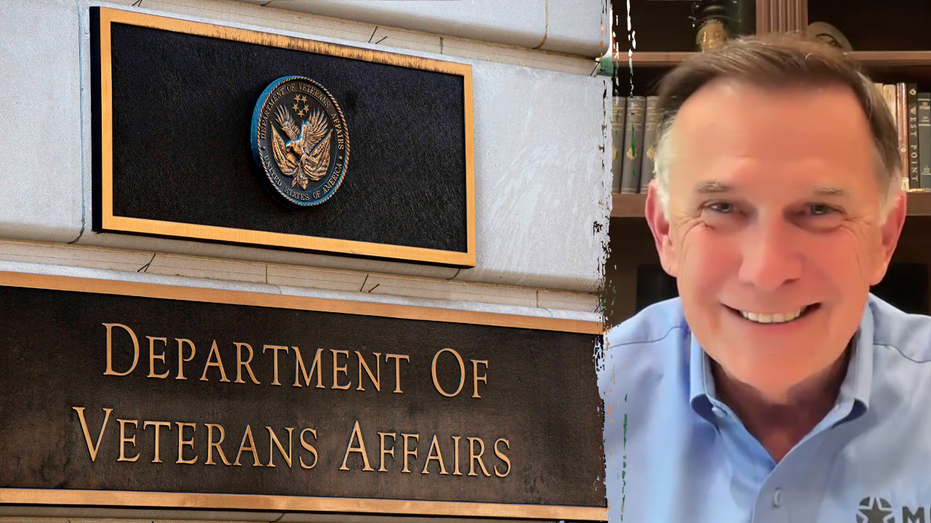
EXCLUSIVE: President Donald Trump‘s Secretary of Veterans Affairs, Doug Collins, has proposed a 15% workforce reduction with a goal of cutting 80,000 jobs at the VA. Retired Lt. Col. Jim Whaley, CEO of Mission Roll Call, a veteran advocacy non-profit, said such VA reform is necessary to improve veterans’ lives across the United States. Whaley told Fox News Digital that veterans want to see less bureaucracy at the VA and more “community care” to cut wait times and increase services at local VA hospitals, but “if it was easy, somebody would have solved it.” “Every American and politician, from both sides of the aisle, can agree that we want to make sure we take care of our veterans,” Whaley said. “We just got out of over 20 years of war, so there are a lot of veterans and their families that need help. We want to make sure that every dollar that the American taxpayer is paying to support the VA is spent wisely, and that veterans are getting the care that they need. And more importantly, that they’re getting the care when they need it, where they need it and how they need it.” ‘CHANGES THAT ACTUALLY HELP OUR VETERANS’: VA SECRETARY DEFENDS PROPOSED 15% WORKFORCE REDUCTION The VA serves only half of U.S. veterans. While Whaley said Collins is trying to reach the other 50% through TV and podcast appearances, he encouraged more transparency about the VA’s services to reach the other half of veterans who still need care. “One hundred days into the second Trump administration, and VA is no longer content with poor results. Under President Trump’s leadership, we have already stripped away many of the costly distractions that were coming between VA beneficiaries and the benefits they have earned. And we’re looking to make even more historic reforms to better serve our veterans,” Collins said. Trump and Collins have faced controversy in the media and among Democrats for cutting VA jobs and for their efforts to overhaul the department. Whaley, whose organization conducts veteran polling, said more than half of veterans are worried about VA cuts. ‘DOWN TO ZERO’: VETERAN SUICIDE CRISIS TARGETED IN VA BILL BY BIPARTISAN HOUSE COALITION “When all you hear is about the cuts versus what the philosophy is behind why you’re making those changes in an organization, there’s going to be fear. Change is hard. It’s important that the VA stays as transparent as possible and reports on what is being done and what improvements are being made,” Whaley said. However, Whatley, a veteran himself, said all veterans want to see an improved VA. “They want to see services improve, they want to see wait times reduced. As time goes on and Veterans Affairs communicate more and more with veterans, they will know a little bit about what’s going on, and they’ll be a little less anxious about it. I think it’s all about making sure that veterans are getting the news, making sure they understand why they’re making these cuts.” Whaley encouraged Collins and the VA to include more veterans in the conversations surrounding the VA’s reform by listening to families and caregivers to learn how to best invest in veteran care. “Veteran affairs are very important to recruitment issues, and that, of course, affects national security. So they’re not all separate, it all wraps together. When a veteran gets out of the service after a few years of serving their country, we have to make sure that the transition to the civilian world and finding a job and plugging into the community goes smoothly, because if we don’t, then we have an issue,” Whaley said. According to the 2023 National Veteran Suicide Prevention Annual Report, more than 17 veterans committed suicide per day in 2021. “We need to get the number of suicides as close to zero as possible. That’s the number one priority,” Whaley said, adding that community care is also a top priority, so veterans don’t have to drive long distances and wait a long time to get the services they need. “We need to make sure that the Department of Defense and the VA are working together when veterans are transitioning out of the military to make sure they’re plugged into the VA and that the transition goes well. Because the fact of the matter is, the majority of suicides among veterans are from veterans that have recently transitioned to the civilian world.”
India Pakistan Tension: Pakistan firing along LoC, gunshots, explosions heard in Jammu Kashmir’s Uri sector

Amid escalating tensions, Pakistan resorted to small arms and artillery fire along the Line of Control (LoC) in the Uri sector of Jammu and Kashmir on Friday evening. The Indian Army has been responding proportionately.