

Mughal descendant seeks possession of Red Fort, Know about great- grand daughter of Bahadur Shah Zafar II

The woman from Howrah claims to be the great-granddaughter of the last Mughal Emperor, Bahadur Shah Zafar II, whose grave Prime Minister Narendra Modi visited when he had gone to Yangon in Myanmar.
Senate Democrats predicting ‘brutal’ UN ambassador confirmation hearing for Mike Waltz
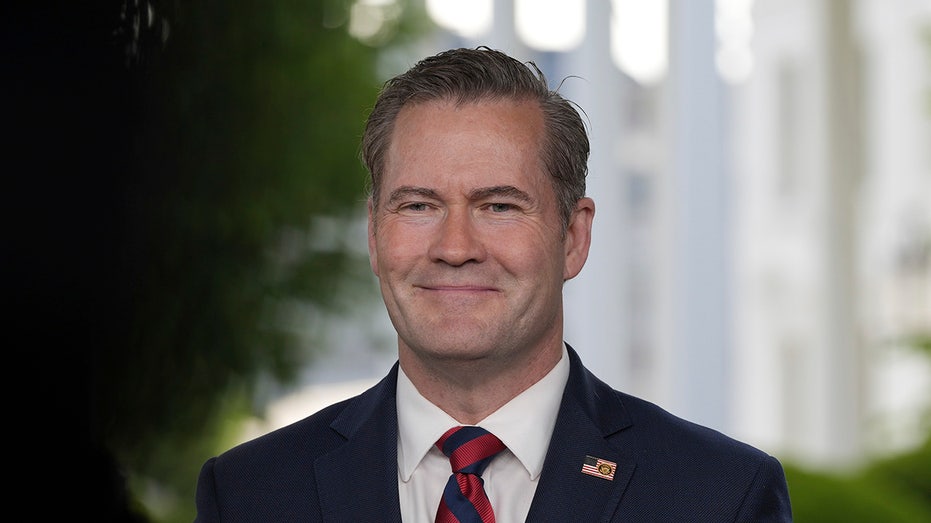
Senate Democrats are warning that Mike Waltz is going to have a very difficult time during his confirmation hearing for the role of United Nations ambassador. “It will be a brutal, brutal hearing. He’s not qualified for the job, just by nature of the fact that he participated in this Signal chain,” Sen. Tammy Duckworth of Illinois told CBS News’ “Face the Nation.” “Mike Waltz is doing what we call – he is failing up,” added Duckworth, a member of the Senate Foreign Relations Committee. “He is failing in his job and getting promoted to be ambassador. That’s not what our nation needs at the United Nations.” “I think it will be a brutal confirmation hearing,” Sen. Mark Warner of Virginia also said to CNN’s “State of the Union.” “I think he’s going to have tough questions, not only from Democrats but from Republicans.” HEGSETH, SIGNAL QUESTIONS DOG WALTZ AS POTENTIALLY PERILOUS UN AMBASSADOR CONFIRMATION HEARING LOOMS The White House did not immediately respond to a request for comment from Fox News Digital on Monday. Waltz has been facing scrutiny after The Atlantic magazine exposed a Signal group chat that his team had set up to discuss strikes against the Houthis in March. President Donald Trump said Sunday that he plans to appoint a new national security adviser in about six months, telling reporters Waltz did not resign, but was instead tapped for an upgraded position as the administration’s ambassador to the United Nations. TRUMP TO TAP NEW NATIONAL SECURITY ADVISOR IN 6 MONTHS; CALLS WALTZ MOVE ‘UPGRADE’ Democrats appear hungry to use Waltz’s nomination as a forum to air grievances against other foreign policy leaders in the Trump administration – particularly Secretary of Defense Pete Hegseth. While the exact timeline for a potential confirmation vote in the Senate is unclear, the first hurdle that Waltz must clear is a confirmation vote out of the Senate Foreign Relations Committee. Although it is uncertain when the Senate Foreign Relations Committee will schedule the nomination hearing for Waltz and the subsequent vote, the committee said his nomination is a “priority.” Fox News Digital’s Diana Stancy and Greg Wehner contributed to this report.
Trump fields question about his timeline for judicial nominations: ‘We’re putting ’em in rapidly’
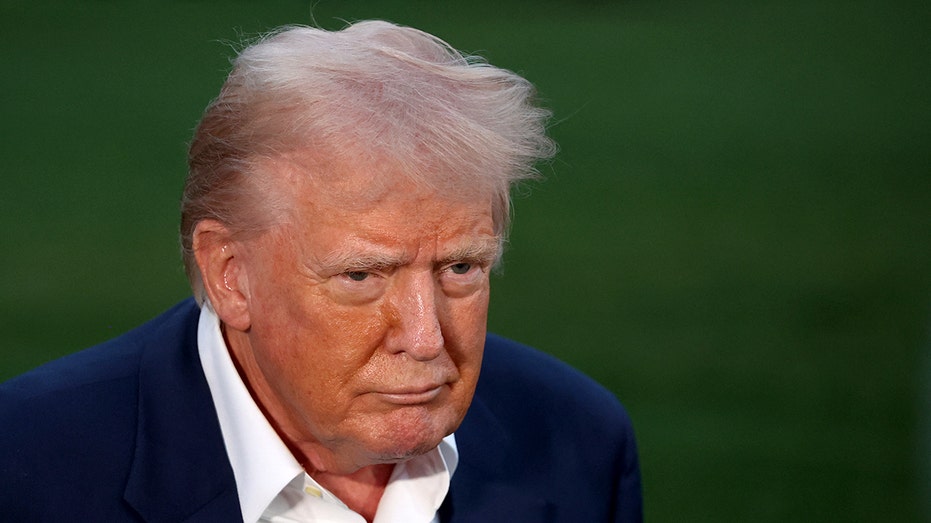
Responding to a question from the Daily Signal about his timeline and criteria for making future judicial nominations, President Donald Trump said, “we’re putting ’em in rapidly,” and seeking to “get very good ones.” Trump suggested there are “radicalized” and “crazy” judges who want a trial for each illegal immigrant who enters the U.S. The nation needs judges who will not demand a trial “for every single illegal immigrant,” he indicated. “We have millions of people that have come in here illegally, and we can’t have a trial for every single person, that would be millions of trials.” TRUMP ORDERS FEDS TO REOPEN ALCATRAZ TO HOUSE ‘AMERICA’S MOST RUTHLESS AND VIOLENT’ CRIMINALS Asked how he will ensure the judges he taps will be different, the president said, “All you can do is do the best you can.” The president — whose second-term agenda has been stymied by judicial roadblocks this year — announced the nomination of Whitney Hermandorfer for the U.S. Court of Appeals for the Sixth Circuit last week. TRUMP ADMIN SUES COLORADO, DENVER OVER ‘SANCTUARY LAWS,’ ALLEGED INTERFERENCE IN IMMIGRATION ENFORCEMENT “Whitney is a Fighter who will inspire confidence in our Legal System,” Trump declared in his post. That marked the president’s first judicial nomination of his second term, according to reports. TRUMP QUESTIONS JUDGES WHO BLOCK DEPORTATIONS OF ‘CRIMINALS, INCLUDING MURDERERS’ “Can it be so that Judges aren’t allowing the USA to Deport Criminals, including Murderers, out of our Country and back to where they came from? If this is so, our Country, as we know it, is finished! Americans will have to get used to a very different, crime filled, LIFE. This is not what our Founders had in mind!!!” Trump declared in a Truth Social post last week.
Senator warns of ‘unconstitutional’ judicial overreach ahead of SCOTUS showdown
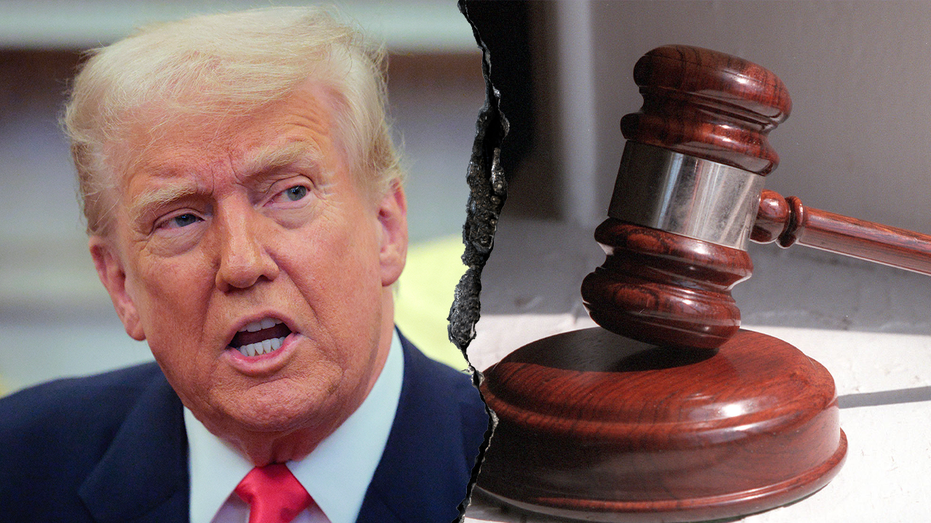
Sen. Charles Grassley, R-Iowa, told Fox News Digital this week that he remains confident there will be a sunset to the trend of nationwide injunctions by federal judges whose rulings reverberate far beyond their judicial districts. “Universal injunctions are an unconstitutional abuse of judicial power,” Grassley, chairman of the Senate Judiciary Committee, told Fox News Digital. “Just this past week, a D.C. district judge issued a universal injunction blocking the president’s executive order requiring voter ID or proof-of-citizenship prior to voting in national elections.” That ruling ignores the idea that “judges are not policymakers,” he said. NUMBER OF INJUNCTIONS HALTING TRUMP POLICIES TROUNCES PREDECESSORS BY DOUBLE “Allowing them to assume this role is very dangerous.” With the Supreme Court primed to hear a case on May 15 regarding nationwide injunctions on President Donald Trump‘s order reinterpreting birthright citizenship, Grassley noted the high bench “could and should take action.” “In the meantime, I’m continuing to work with my colleagues to advance my critical Judicial Relief Clarification Act (JRCA) and put an end to universal injunctions,” he said. TRUMP ADMINISTRATION ASKS SUPREME COURT TO REVIEW EL SALVADOR DEPORTATION FLIGHT CASE While some proponents had suggested using the reconciliation process to force through Grassley’s bill in a closely divided Senate, that would be prohibited because of the so-called “Byrd Rule” barring non-financial bills from going through the process, according to a person familiar with the reconciliation process. The May 15 case challenges precedent from the 1898 ruling in U.S. v. Wong Kim Ark – which defined birthright citizenship in a broad context after Wong, a child of Chinese immigrants, was denied entry to San Francisco after returning from China. Judges in Massachusetts, Maryland and Washington state issued nationwide injunctions blocking Trump’s birthright citizenship order, while the president defended his move, saying the 14th Amendment section outlining the idea was clearly directed at former slaves. In March, Grassley first spoke against what he called the promotion of unchecked judicial power after Senate Minority Whip Richard Durbin, D-Ill., requested passage of a resolution ordering Trump to comply with all federal court rulings. CLICK HERE TO GET THE FOX NEWS APP “The President of the United States shouldn’t have to ask permission from more than 600 different district judges to manage the executive branch he was elected to lead,” Grassley responded. “I happen to agree with some Democrats that in previous years have said some judges have gone way beyond what a judge should do on national injunctions. I hope to find a solution for that, and I hope that you and I could work on that together,” he added.
EXCLUSIVE: Cornyn bringing bill to enshrine Trump EO renaming refuge after Jocelyn Nungaray into law
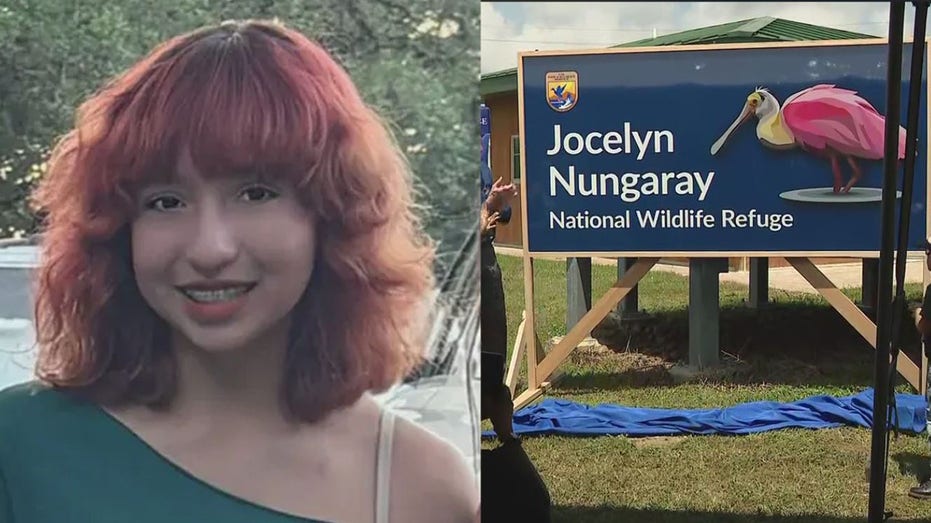
EXCLUSIVE: Sen. John Cornyn, R-Texas, is planning to introduce a bill that would enshrine into law President Donald Trump‘s executive order to rename a national park after a 12-year-old Houston girl allegedly killed by two illegal immigrants. The bill is being brought forward by Cornyn and U.S. Rep. Brian Babin, R-Texas, to make it more difficult for future administrations, Republican or Democrat, to change the name of the Jocelyn Nungaray National Wildlife Refuge. “Jocelyn Nungaray was taken from this world far too soon at the hands of brutal killers who were in the U.S. illegally due to President Biden’s open-border policies, and her legacy deserves to live on forever,” Cornyn told Fox News Digital. “I am proud to lead this legislation alongside Congressman Babin to ensure President Trump’s renaming of this sanctuary to the Jocelyn Nungaray National Wildlife Refuge is made permanent.” JOCELYN NUNGARAY MURDER: HOUSTON PROSECUTORS SEEK ICE, CBP RECORDS ON ILLEGAL ACCUSED OF CHILD KILLING During his joint address to Congress in March, Trump announced the renaming of the 39,000-acre sanctuary, formerly known as the Anahuac National Wildlife Refuge, along the Texas Gulf Coast. In April, officials held a renaming ceremony for the park. “One thing I have learned about Jocelyn is that she loved animals so much. She loved nature. Across Galveston Bay, from where Jocelyn lived in Houston, you will find a magnificent national wildlife refuge, a pristine, peaceful, 34,000-acre sanctuary for all of God’s creatures on the edge of the Gulf of America,” Trump said during his address. The bill would codify the park’s new name into law, making the process to change it more difficult. “The heartbreaking murder of Jocelyn Nungaray shook our community to its core, and it never should have happened,” Babin said in a statement. “Today, we are introducing legislation to honor Jocelyn’s life and to send a clear message: securing our border and restoring the rule of law is not optional, it’s essential. President Trump’s leadership is making America safe again, and we are proud to stand with him to ensure that no family ever has to endure such a tragedy again.” “Honoring Jocelyn isn’t a Republican or Democrat issue — it’s an American issue,” he added. ELYN NUNGARAY’S MOTHER REVEALS HORRIFIC TIMELINE OF DAUGHTER’S MURDER IN HEARING ON OPEN-BORDER CRIME “Ms. Nungaray loved animals and, given the close proximity of her hometown of Houston, it is fitting that the Anahuac National Wildlife Refuge be renamed in her honor,” the bill’s text states. Cornyn said he learned of Nungaray’s love of nature while getting to know her family. Nungaray’s killing, as well as others involving illegal immigrant suspects, became a flash point during the 2024 presidential election as Trump campaigned on a platform of deporting criminals in the U.S. illegally. Nungaray, who lived in Houston, was kidnapped, sexually assaulted before she was strangled to death and left dead under a bridge in June 2024 by Franklin Pena, 26, and Johan Martinez-Rangel, 22, Harris County prosecutors said. Both men, alleged members of the bloodthirsty Venezuelan gang Tren de Aragua who entered the United States illegally, face capital murder charges and the death penalty.
Real ID is about to go into effect. Here’s how it may impact voting
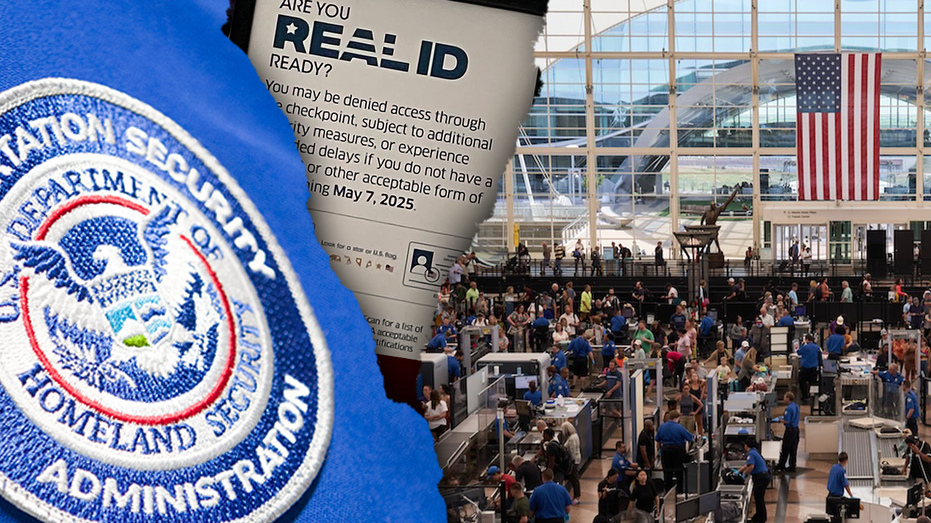
The federal government’s push to finally execute REAL ID travel requirements will take effect Wednesday, amid a push from some Republicans to crack down on voter registration to ensure that those registered to vote are U.S. citizens. While voters may use REAL ID as an additional acceptable form of identification when heading to the polls, REAL ID goes into effect as legislation makes its way through Congress to verify that only U.S. citizens are casting their ballot in U.S. elections. The implementation of REAL ID coincides with the House’s passage of the Safeguard American Voter Eligibility Act in April, which demands that states require in-person proof of citizenship from those seeking to vote in federal elections. The measure, known as the SAVE Act, is now headed to the Senate. DEMS FIGHT BILL TO STOP ILLEGAL IMMIGRANT VOTING DESPITE POLLS SHOWING VOTER SUPPORT Among the documents used to prove U.S. citizenship, as outlined in the SAVE Act, is a REAL ID, a form of identification that meets higher security standards up to par with those the federal government has established. Those that are REAL ID compliant have a star on them. Other documents that may be used as proof of citizenship under the SAVE Act include a U.S. passport, a military ID with a U.S. birthplace listed, a valid government-issued photo ID that either lists a U.S. birthplace, or is coupled with a birth certificate indicating a U.S. birthplace. Still, having a REAL ID does not necessarily prove U.S. citizenship, since there is a REAL ID option available for legal residents as well. However, some states, including Michigan, Minnesota and Vermont, do provide a REAL ID option only for U.S. citizens that does comply with the SAVE Act. As a result, lawmakers who have backed the SAVE Act are hopeful that more states will start implementing citizen-only REAL IDs to comply with SAVE Act requirements. “The structure is put in place now to — I think there’s at least five states that do have the citizenship status as part of the REAL ID — encourage more states to do so,” said Rep. Chip Roy, R-Texas, according to The Associated Press. “That would be part of the goal here.” VAST MAJORITY OF AMERICANS SUPPORT PHOTO ID REQUIREMENT TO VOTE, NEW POLL SAYS REAL ID will take effect Wednesday, decades after Congress passed the legislation establishing REAL ID in 2005 in response to the 9/11 terrorist attacks to create enhanced security standards for driver’s licenses. However, the federal government has postponed its rollout and implementation — until now. The Trump administration has firmly said that May 7 is the final deadline for traveling or entering certain federal facilities like military bases, asserting that REAL ID will assist the government address illegal immigration as it steams ahead with its mass deportation initiative. Those without a REAL ID who are traveling after Wednesday must use identification like a U.S. passport or military ID instead. Meanwhile, REAL ID has become a controversial issue among lawmakers — with some Republicans speaking out against it. While proponents of REAL ID argue it enhances national security, critics claim it compromises individual liberty and amounts to a national ID system. The Associated Press and Fox News’ Elizabeth Elkind contributed to this report.
New link expressway to connect Noida airport to Ganga expressway, will pass through these cities, check route, other details

After the Yamuna and Ganga Expressways, a new link expressway is being built to connect the two main expressways and newer routes in the region. The Yamuna Expressway Industrial Development Authority has given nod to connect Noida International Airport in Jewar to new expressway.
How do you keep going in Gaza when everything tells you to stop?
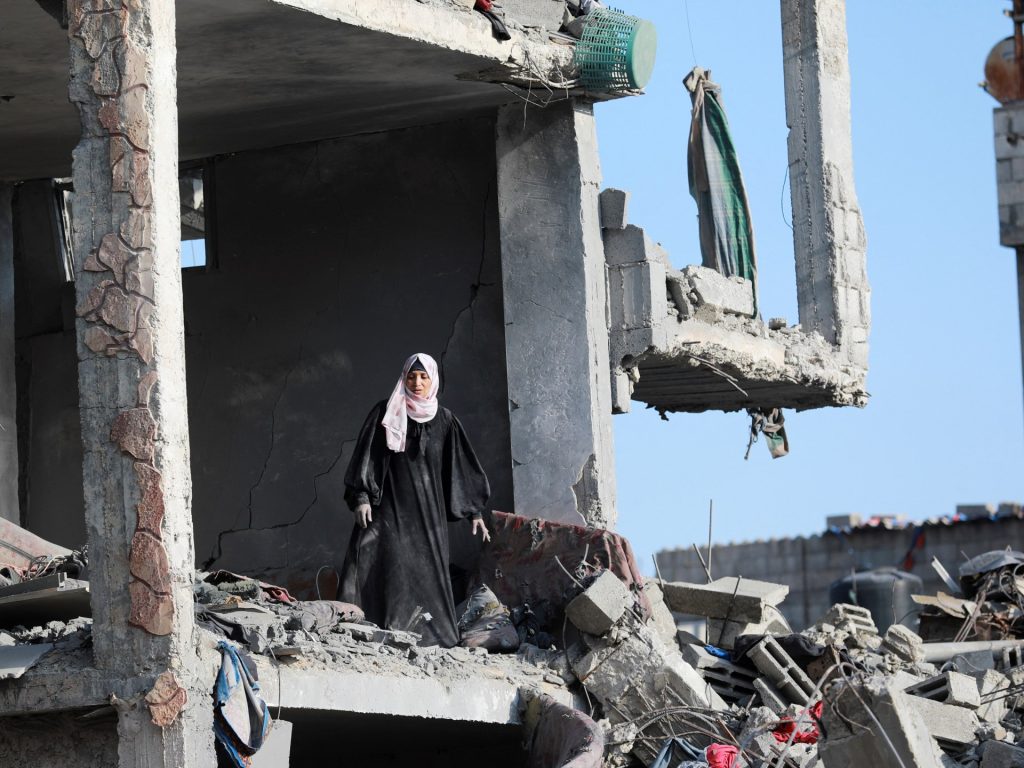
Before the war, my life was simple. Like many young women in Gaza, I carried within me a mixture of ambition and anxiety. My dream was to graduate from the Islamic University with honours and become a writer. My fear was that the constant attacks and instability in Gaza would somehow impede my pursuit of education and a writing career. However, I never imagined that everything I knew – my home, my university, my friends, my daily routine and my health – could vanish, leaving me struggling to keep going. When the war began, we thought it was just another short round of fighting – one of the many escalations we had grown used to in Gaza. But something about this time felt different. The explosions were closer, louder, and lasting longer. We soon realised that this nightmare was not going to end; it was only going to get worse. On December 27, 2023, we received our first “evacuation order”. There was no time to think. We had just begun gathering a few belongings when the sound of bombing grew louder. The upper floors of the building we lived in were being targeted. Advertisement We fled the building in a hurry, carrying only a small bag. My father was pushing my grandmother in her wheelchair, while I held my younger brother’s hand and ran into the street, not knowing where we were going. The neighbourhood looked like a scene from the horrors of the Day of Judgement: people were running, screaming, crying, and carrying what remained of their lives. Night fell, and we found temporary shelter at a relative’s house. Sixteen of us slept in one room, without privacy or comfort. In the morning, we made the difficult decision to take refuge in one of the displacement camps declared a “humanitarian zone”. We owned almost nothing. The weather was bitterly cold, water was scarce, and we had only a few blankets. We washed, cleaned, and cooked using primitive methods. We lit fires and prepared food as if we had gone back to the Stone Age. Amid all of this, we received the news: our home had been bombed. I refused to believe what I had heard. I sat and cried, unable to comprehend the tragedy. My father’s goldsmith workshop was on the ground floor of the building, so when it was destroyed, we did not just lose walls and a roof – we lost everything. The days passed slowly and heavily, wrapped in longing and misery. I lost contact with most of my friends, and I no longer heard the voices that used to fill my days with warmth. I would check in on my closest friend, Rama, whenever I had a brief chance to connect to the internet. She lived in northern Gaza. On January 15, 2024, my friend Rawan sent me a message. It did not reach me immediately. It took days because of the communications blackout. Advertisement The words were simple, they shattered me from the inside: “Rama was martyred.” Rama Waleed Sham’ah, my closest friend at university. I could not believe it. I read the message over and over again, searching for a different ending, a denial. But the truth was silent, harsh, and merciless. I didn’t get to say goodbye. I didn’t hear her last words, I didn’t hold her hand, or tell her “I love you” one last time. I felt as though I was breathing without a soul. While I was still processing that grief, I received even more devastating news: on February 16, 2024, my father’s entire extended family – all his cousins, their wives, and their children – were killed. I saw my father break in a way I had never seen before. His grief was so deep that words could not describe it. Then, death knocked on our door. On June 8, 2024, we had just moved from our tent to a rented apartment, trying to start our lives over, when the Israeli army surrounded the area. I was the first to see the tank slowly moving up the street. I panicked and ran towards my father, shouting. But I didn’t reach him. In that moment, a missile struck the building we were in. All I saw was thick smoke and dust filling the air. I didn’t know if I was alive or not. I tried to say the shahada, and by the grace of God, I managed to do so. Then I started screaming, calling for my father. I heard his voice faintly from a distance, telling me not to go out because the drone was still bombing. I took a few steps, then lost consciousness. All I remember is that they carried me down the building and covered me with a blanket. I was bleeding. I would regain consciousness for a few seconds, then lose it again. Advertisement The ambulance could not reach our street because the tank was at the entrance. My mother, my sister, and I bled for two hours until some young men from the area managed to find a way to get us out. They carried me in a blanket to the ambulance. The paramedics started bandaging my wounds right there in the middle of the street, in front of everyone. All the way, I heard their whispers, saying that I was between life and death. I heard them, but I could not speak. When I reached the hospital, they told me that I had sustained injuries to my head, hands, legs, and back. The pain was unbearable, and my mother’s absence added to my fear. I was rushed in for an emergency surgery. I survived. After leaving the hospital, I had to go back for dressing changes. Each visit was a painful experience. I would choke every time I saw the blood. My father, who accompanied me every time, would try to ease these visits, telling me, “You will be rewarded, my dear, and we will get through all of this.” I fell into a
The last nomads of Nepal
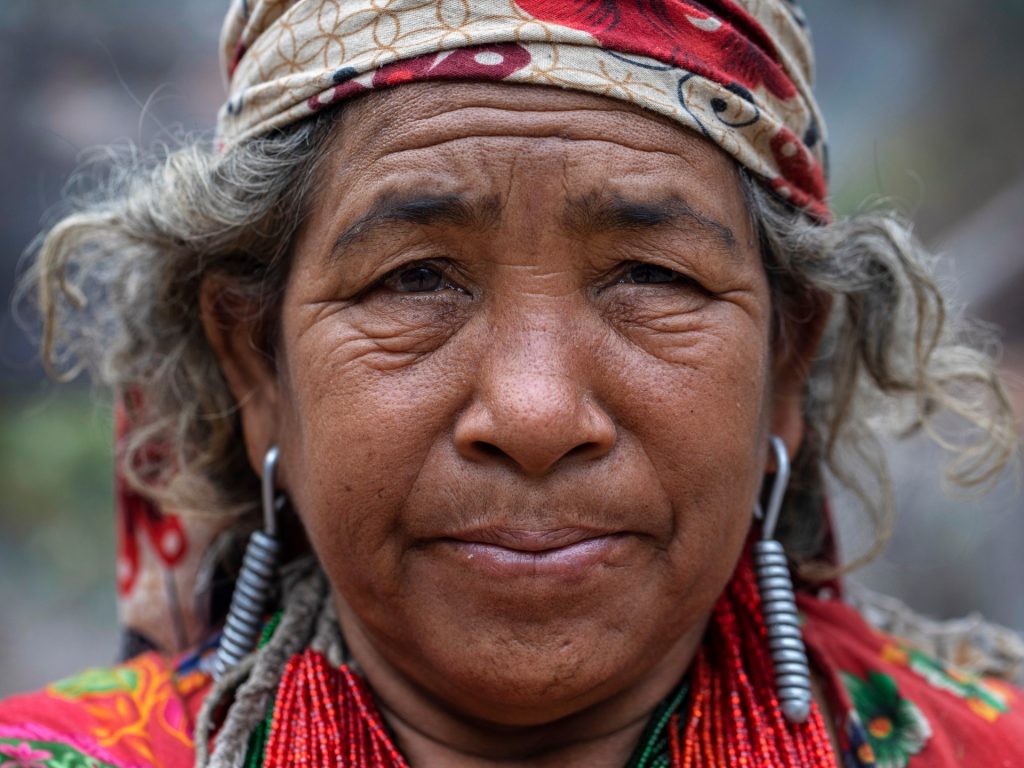
In the dense forests of Girighat in Surkhet district, makeshift tents serve as the temporary shelter for Nepal’s last nomadic tribe, the Raute. As urbanisation sweeps across the country, this small, isolated community clings to its ancient traditions. Yet, their numbers are dwindling rapidly, placing their unique way of life in jeopardy. For generations, the Raute have followed a seasonal migration pattern, descending to the lowlands in winter and retreating to the hills during the summer. Unlike other Indigenous groups, they steadfastly reject agriculture, permanent settlements, and formal education. Their subsistence revolves around hunting monkeys, gathering wild tubers, and bartering handmade wooden goods for essentials like rice, tools, and clothing. The Nepalese government has officially recognised the Raute as an endangered Indigenous group. According to Nepal’s 2021 National Census, their population was recorded at 566. However, the Social Service Centre (SOSEC) Nepal, an organisation working closely with the community, reports that their number has plummeted. Advertisement “Over the past six years, 32 children have been born, but 42 individuals, including newborns, have died,” said Lal Bahadur Khatri, a SOSEC teacher working with the Raute community. “This means their population is declining, and now only 137 individuals remain.” Women hold a central role in the Raute community, managing daily tasks such as cooking, fetching water, and gathering food. However, they have little say in decisions related to healthcare and education. “Moving from one place to another is very hard because a new place means more work,” said Gajali Sahi, a 22-year-old Raute woman. “It is the women’s job to prepare the new settlement and build new houses. Additionally, fetching water and cooking meals are also women’s responsibilities. However, relocating to a new place is the hardest part. Sometimes, I feel that I would have been happier if I were born outside the Raute community, in the outside world. Being a Raute woman is very difficult — we have to carry heavy loads all day. It is truly hard.” “Getting an education would be good for our community, but we are not allowed to study,” Gajali added. “The older generation does not permit us, even though I and other children in the community want to learn. Deepak, Nabin, and our group of younger people want to go to school because we do not feel happy here. We struggle to find warm clothes in the winter.” Khatri explained that he and others have begun providing basic education in secret. “Although parents do not allow their children to study, the children are very eager to learn,” he said. “So, we have been secretly teaching them how to write their names and practise daily hygiene without the elders knowing.” Advertisement To support the Raute’s food and healthcare needs, the Nepalese government provides a monthly social security allowance of 4,000 Nepalese rupees ($29.5) per person. However, many Raute elders remain resistant to any form of change. “Raute children don’t go to school. Raute children are used to eating kandmool [wild roots], and frogs,” said Surya Narayan Sahi, a 49-year-old Raute leader. “The Nepal government has already been asking us to send our children to school.” He remains unwavering in his commitment to preserving the Raute way of life. “If the Rautes live in one place, we will vanish, which will lead to unrest. There will be no existence of the Rautes,” he said. “Similarly, agriculture will finish our existence.” Gajali, however, believes change is inevitable, but it will take time. “I think change will take time — perhaps after the older generation passes away,” she said. “But for now, I don’t know how long it will take. If I were the leader of the community, I would send all the children to school. Unfortunately, I am not.” Adblock test (Why?)
Have scientists solved the mystery of gold’s origin in the universe?
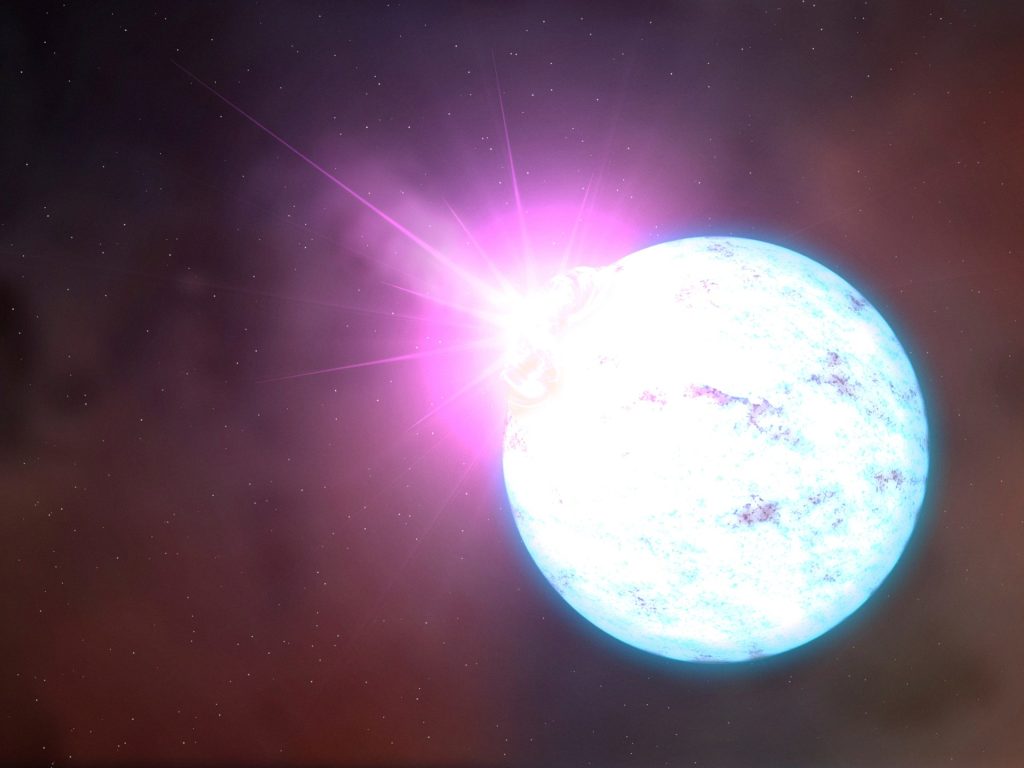
The origins of heavy elements such as gold have been one of the biggest mysteries of astrophysics. A study has now provided a clue about the precious metal’s cosmic origins. Scientists have found that explosions in highly magnetised neutron stars, called magnetars, could have created gold in the universe. Here is more about the study: What is the latest discovery about the origins of gold? Analysis of archival data from space missions shows that a large amount of heavy metals, including gold, come from giant flares from magnetars, according to a study published in The Astrophysical Journal Letters on April 29. Anirudh Patel, a doctoral student at the Department of Physics at Columbia University in New York, led the study, which used 20-year-old archival telescope data from NASA and European Space Agency telescopes to investigate how heavy elements such as iron and gold were created and distributed throughout the universe. “It’s a pretty fundamental question in terms of the origin of complex matter in the universe,” Patel was quoted as saying in an article on the NASA website. “It’s a fun puzzle that hasn’t actually been solved.” Advertisement The authors estimated that magnetar giant flares could contribute up to 10 percent of the overall abundance of elements in the galaxy that are heavier than iron. Co-authors of the study are affiliated with Columbia University, Charles University in the Czech Republic, Louisiana State University, the Flatiron Institute in New York and Ohio State University. What is a magnetar, and how could gold be formed on it? A magnetar is a type of neutron star that is highly magnetised, which means its magnetic field is extremely powerful. When a massive star explodes, it leaves a very dense, collapsed core behind, which is called a neutron star. Astronomers theorise that the first magnetars were formed after the first stars about 13.6 billion years ago, according to study coauthor Eric Burns, assistant professor and astrophysicist at Louisiana State University in Baton Rouge. The Big Bang created the universe 13.8 billion years ago. On rare occasions, magnetars can release high-energy radiation by undergoing a “starquake”. Like an earthquake, a starquake can fracture the magnetar’s crust. Sometimes, magnetar starquakes bring with them a magnetar giant flare, a rare explosive event that releases gamma rays. The researchers found that magnetars release material during giant flares. However, they do not yet have a physical explanation for this. The researchers speculated about whether magnetar giant flares formed gold through the rapid process of neutrons forging lighter atomic nuclei into heavier ones. An element’s identity is defined by the number of protons it has. However, if an atom acquires an extra neutron, it can undergo nuclear decay, which can turn a neutron into a proton. Advertisement A changed number of protons can change the element’s identity. Neutron stars have an extremely high density of neutrons. If a neutron star is disrupted, singular atoms can quickly capture a number of neutrons and undergo multiple decays. This leads to the formation of much heavier elements like uranium. Before this study, the creation of gold was attributed only to neutron star collisions, or kilonovas. When astronomers observed a neutron star collision in 2017 through telescopes, they found the collision could create heavy elements such as gold, platinum and lead. However, these collisions are believed to have happened relatively later in the history of the universe, in the past several billion years. However, the archival telescopic data, which was previously indecipherable, showed that magnetar giant flares formed much earlier. Hence, the study indicates that the first gold could have been made from magnetar giant flares. What’s next? NASA has an upcoming mission that can follow up on these results. The Compton Spectrometer and Imager (COSI) is a gamma-ray telescope that is expected to launch in 2027. COSI will study energetic phenomena in the Milky Way and beyond, such as magnetar giant flares. According to the NASA website, COSI could identify individual elements created in the giant flares, helping to form a better understanding of the origin of the elements. Adblock test (Why?)