

Afghan evacuees with child-fondling, terror arrests swept up in DHS crackdown after botched vetting exposed
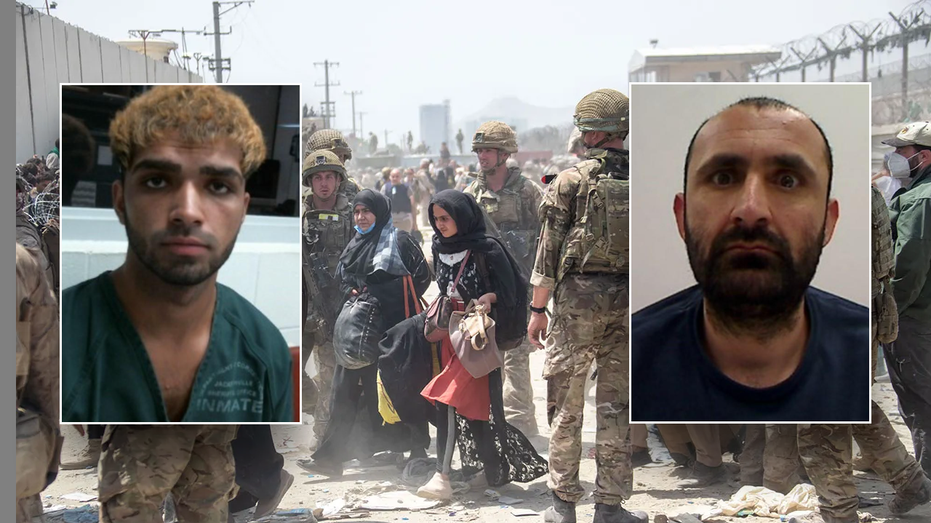
EXCLUSIVE: Afghan evacuees with rap sheets that include convictions for sexual battery and lewd acts with a minor and arrests for alleged child-fondling and terror-group support were among the “worst of the worst” recently swept up by ICE and the Department of Homeland Security. DHS released the list days after one former Afghan evacuee allegedly shot two West Virginia National Guard members, killing one, and another was charged in a Newark, Del., terror plot. The agency says the arrests reveal explosive failures in the 2021 vetting system that rushed evacuees into the country after Kabul fell. Biden administration officials insisted their 2021 Operation Allies Welcome vetting was sound, but a senior DHS official said the president’s “trust without verification” approach to evacuee backgrounds helped drive the recent surge in attacks and plots. “Under Secretary Noem, DHS has been going full throttle on identifying and arresting known or suspected terrorists and criminal illegal aliens that came in through Biden’s fraudulent parole programs,” Assistant Secretary Tricia McLaughlin said. “When Joe Biden let 190,000 Afghan nationals in, they didn’t do criminal background checks, vet social media, someone just vouched for them, and they took the words as truth.” BONDI WARNS OF VETTING FAILURES AFTER ‘FRIGHTENING’ ARREST OF AFGHAN NATIONAL FOR BOMB THREATS IN TEXAS DHS has captured sexual predators, terror suspects, pedophiles and other violent “unvetted” foreigners in their persistent daily work of executing President Donald Trump’s immigration enforcement orders, the agency added in a statement. Not all of the arrests have involved Afghan evacuees. ICE arrests have included Iraqi “criminal illegal alien” Ziaulhaq Faqiri, who entered the U.S. as a “special immigrant Iraqi employee” during former President Joe Biden’s term. Faqiri’s criminal history includes convictions for “carnal abuse” and sexual assault. PATEL BLASTS BIDEN’S ‘EMBLEMATIC FAILURE’ AFTER AFGHAN NATIONAL CHARGED IN GUARD SHOOTING But many arrests have involved those who came to America in the aftermath of the U.S. withdrawal from Afghanistan. One of the evacuees from Operation Allies Refuge – the mass exodus upon the immediate fall of Kabul often involving third-party countries, versus “Allies Welcome,” the process that utilized domestic military bases as housing – was arrested recently as a “criminal alien” residing in the U.S. Qesmat Din Zafran was apprehended around the fourth anniversary of the 2021 Afghan withdrawal and has convictions for lewd and lascivious acts with a minor. Other recent captures include the October arrest of Operation Allies Refuge participant Mansour Walizada, who has convictions for sexual battery and an arrest for child fondling, according to DHS. ALLEGED DC SHOOTER ENTERED US UNDER AFGHAN RESETTLEMENT PUSH MAYORKAS VOWED WOULD BE DONE ‘SWIFTLY AND SAFELY’ Mohammad Tabesh Rasoli was recently arrested by ICE, which found him to have a conviction for hit-and-run. The case involved Rasoli seriously injuring a pedestrian he struck while driving 50 miles per hour, the agency said. Iowa authorities honored a request to transfer another Afghanistan evacuee: Javid Ghamgeen. Ghamgheen had been convicted of two meth-possession counts, as well as burglary and assault on a public officer. DC NATIONAL GUARD SHOOTING SUSPECT FORMALLY CHARGED Two others arrested after coming to the U.S. following the American withdrawal were Asirullah Khalid-Khan and Said Mohammad Tanai. Tanai had a prior conviction for assault with intent to commit sexual abuse, while Khalid-Khan’s record included sexual assault and kidnapping. In yet another incident, an Afghan evacuee was arrested in Virginia’s Shenandoah Valley on allegations he provided support to the Khorosan Group, also known as ISIS-K. USCIS HALTS ‘ALL ASYLUM DECISIONS’ AFTER DC SHOOTING OF NATIONAL GUARD MEMBERS Jaan Shah Safi was arrested on Wednesday in Waynesboro – just outside Staunton. DHS officials said Safi’s father is currently a commander of an Afghan militia group. Safi was brought to Philadelphia about one week after the Afghanistan evacuation commenced and applied for Temporary Protected Status (TPS) – but saw it terminated by Homeland Security Secretary Kristi Noem earlier this year. NATIONAL GUARD KILLING REIGNITES IMMIGRATION WAR IN CONGRESS AS REPUBLICANS DEMAND SWEEPING REFORMS Officials said Safi was the third Afghan terror suspect arrested in “recent days” who was brought to the U.S. during the Biden-era operations. Meanwhile, a Mideast-born student at Biden’s alma mater was arrested in Delaware on Wednesday after police conducted a traffic stop near Newport. Police encountered 25-year-old University of Delaware student Luqmaan Khan with a Glock handgun, multiple magazines, a ballistic-armored plate and a notebook that included handwritten descriptions of how the weapons could be used in an attack. The book also included the name of a University of Delaware police officer, the layout of a university building and the words “UD Police Department.” Pakistan’s foreign office disputed reports Thursday that Khan was of “Pakistani-origin,” with spokesman Tahir Andrabi telling Arab News that Islamabad’s investigation of the situation found Khan to instead be an Afghan national who fled to Pakistan with his family as a refugee. Biden graduated from UDel in 1965 with a double-major in history and political science before heading to Syracuse for law school. Biden did not immediately respond to a request for comment from Fox News Digital. Fox News Digital’s Louis Casiano contributed to this report.
Walz bears ‘full responsibility’ for $1B fraud scandal, GOP challenger Demuth declares
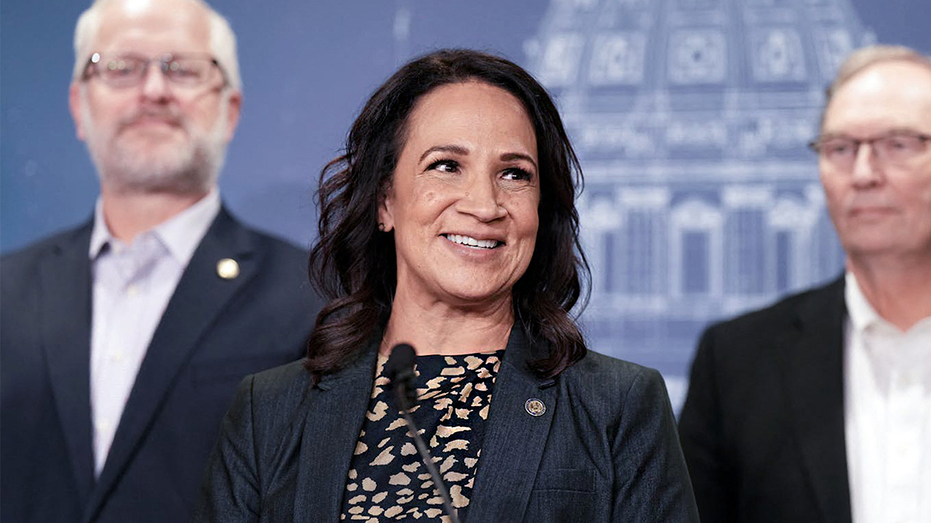
As the House Oversight Committee opens an investigation into Gov. Tim Walz’s role in what federal prosecutors have described as the largest COVID-19 fraud scheme in the country, Minnesota House Speaker Lisa Demuth told Fox News Digital it’s just the “tip of the iceberg.” In a crowded Republican primary of candidates hoping to unseat Walz, one of Demuth’s core campaign promises is to eliminate the fraud she said has “exploded” under Walz’s administration. The governor bears “full responsibility” for the roughly $1 billion in fraud uncovered so far, Demuth said in an exclusive interview. “This is probably the tip of the iceberg,” Demuth said, adding: “This falls squarely on his shoulders. He’s the governor of the state and needs to take full responsibility.” The scandal rocking the North Star State stems from allegations that a Minnesota nonprofit and its associates defrauded federal child-nutrition programs for hundreds of millions of dollars in COVID-19 aid — a failure Walz’s Republican challengers have described as a breakdown in systemic oversight. COMER TARGETS WALZ IN NEW HOUSE INVESTIGATION, CITING NEARLY $1B IN ALLEGED MINNESOTA FRAUD “There has been that lack of accountability and lack of oversight that’s been needed,” Demuth said. “The governor has chosen the commissioners, put them into place, and there needed to be an accountability where he or his office were overseeing the work done by the commissioners in every agency.” “That is not what we’re finding, to the best of my knowledge. Now, if that oversight was going on and this continued under his watch, knowing that it was going on, that’s even more concerning,” she added. MINNESOTA GOVERNMENT WORKERS BLAME WALZ FOR ‘MASSIVE FRAUD’ AMID ALLEGATIONS AGAINST SOMALI COMMUNITY Federal prosecutors said about $300 million in taxpayer funds that were allocated to feed low-income children through COVID-era nutrition programs was diverted through the Minnesota nonprofit Feeding Our Future. As of late November, at least 78 defendants have been charged in what has widely been considered the largest pandemic relief fraud scheme in the U.S. While the Feeding Our Future scandal spans the COVID-19 pandemic, Demuth said she heard concerns about fraud in the childcare assistance program in 2017 and 2018 before she even served in the legislature. “This has been bubbling,” Demuth said before adding, “When I think about someone leading the state, regardless of how it happened, the fact that it has continued on this far, and I don’t think we’re done yet. I think this is probably the tip of the iceberg, and I’ve heard others say that also.” House Oversight Chairman James Comer, R-Ky., has claimed that “because of Governor Walz’s negligence, criminals — including Somali terrorists — stole nearly $1 billion from the program while children suffered.” He is leading the probe into Walz’s role in the Feeding Our Future scandal. When asked about the accusations that Walz was more worried about losing political points than accountability against groups tied to Somali Minnesotans, Demuth told Fox News Digital: “Fraud in any way is wrong, no matter where it occurs, who is committing the acts of fraud. That is wrong. But to not handle the investigations or to not handle things and investigate things further because of a fear of some type of accusation is not leadership.” While Demuth cautioned against “[demonizing] an entire community,” she said fraud in any community cannot be allowed to continue. “To ignore things or not handle it because you are afraid of how that would be perceived, I think the worst thing is knowing that our tax dollars from the entire state have been wasted and lost in fraud. That is wrong for all Minnesotans,” she said. As Demuth vies for the Republican nomination to challenge Walz for his gubernatorial seat next year, she said her administration would immediately open an investigation, look into every agency, hold those responsible accountable and work to ensure it doesn’t happen again. According to Demuth’s campaign website, as governor, she would commit to ending “the culture of fraud and corruption in state government and demand accountability from state workers responsible for managing the state programs that have been abused by fraudsters.” “I will work with the legislature to pass a non-partisan Office of Inspector General who will be empowered to root out fraud in all parts of government, and be a partner for my administration in stopping fraud before it starts instead of waiting until the fraudsters have walked out the door with your money,” Demuth said on her website. Walz’s office did not immediately respond to Fox News Digital’s request for comment. NBC’s Kristen Welker on “Meet the Press” on Sunday asked Walz if he would take “responsibility” for failing to stop fraud in his state. “Well, certainly I take responsibility for putting people in jail,” Walz said. “Governors don’t get to just talk theoretically. We have to solve problems, and I will note, it’s not just Somalis. Minnesota is a generous state, Minnesota is a prosperous state, a well-run state, we are AAA bond-rated, but that attracts criminals. Those people are going to jail, and we are doing everything we can, but to demonize an entire community on the actions of a few, it’s lazy.” Demuth responded to those comments while speaking to Fox News Digital. “If we are a well-run state and prosperous and doing what we need to, this would be the last place criminals would come and try to do any type of criminal activity,” she said. Fox News Digital’s Michael Dorgan and Hanna Panreck contributed to this report.
Reporter’s Notebook: House exodus threatens Johnson’s grip on power as over 40 members head for exit
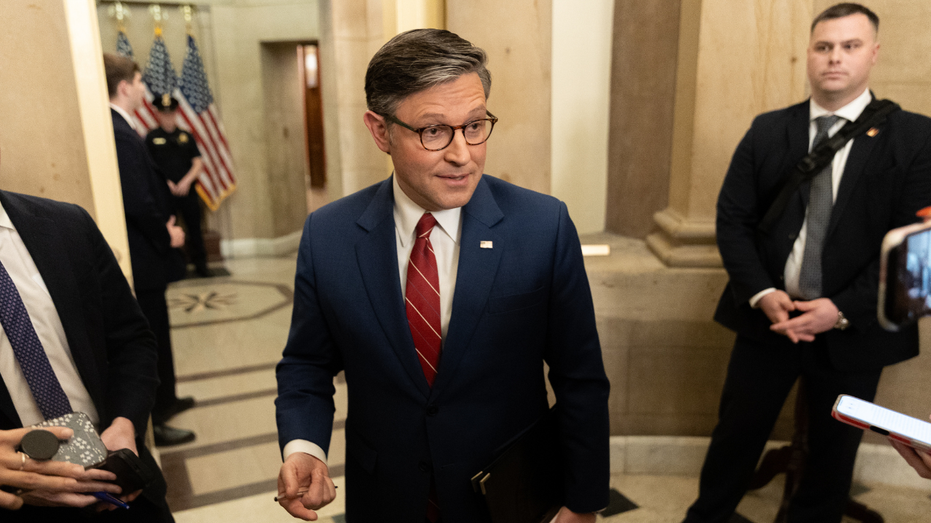
Over 40 House members plan to exit Congress this year, posing risks to Speaker Mike Johnson’s narrow majority and reflecting a wider trend driven by safety worries, reduced civility and dwindling enthusiasm for the job. Recent cycles show similar churn: 36 members had exited by this point in 2023, 34 in 2021 and 46 in 2017. DEM REP MIKIE SHERRILL SKIPS 145 HOUSE VOTES AS NJ GOVERNOR’S RACE HEATS UP The House was inactive for nearly two months during the government shutdown. When lawmakers returned, they faced five efforts to rebuke or discipline colleagues. But frustration with leadership isn’t the only issue. JASMINE CROCKETT CALLS OUT MARJORIE TAYLOR GREENE FOR RESIGNING FROM CONGRESS AMID TRUMP FEUD Surging threats to lawmakers, their families and aides have many questioning whether the job is worth it. History shows parties with more pre-election departures often lose seats and even the majority. Johnson, however, doubts more members will resign soon. SHOWDOWN FOR THE HOUSE: DEMOCRATS, REPUBLICANS BRACE FOR HIGH-STAKES MIDTERM CLASH “You have a duty here when you run for office, run for a two-year term, you know, you should stay and fulfill that,” said Johnson. Still, Fox News is told some disgruntled Republicans may leave early.
Who is Brian Cole Jr, the DC pipe bomb suspect?

The suspect who allegedly planted pipe bombs blocks from the U.S. Capitol on January 5, 2021, has been identified as Brian Cole Jr. of Woodbridge, Va., according to two sources briefed on the arrest. The sources say Cole, 30, is in FBI custody as of Thursday following roughly five years of investigation. The FBI arrested Cole in northern Virginia. Authorities have not released further details about the man, but one federal law enforcement source told Fox that the FBI is carrying out “court-enforced activity” at Cole’s residence. FBI ARRESTS SUSPECT IN DC PIPE BOMB CASE AFTER 5-YEAR INVESTIGATION Authorities discovered the two pipe bombs near the Republican and Democratic National Committees’ headquarters around the same time that thousands of protesters a few blocks away began to storm the Capitol over the 2020 election results. FBI DEPUTY DIRECTOR CLAIMS BUREAU ‘CLOSING IN’ ON SUSPECTS WHO PLANTED JAN. 6 PIPE BOMBS Neither bomb detonated, but authorities say both were viable and dangerous. Video footage released by the FBI showed the suspect placing the pipe bombs near the two headquarters more than 16 hours before law enforcement found them. The suspect was seen wearing a gray hoodie, Nike Air Max Speed Turf sneakers, a mask, glasses and gloves, but Cole’s identity had long been unknown.
Schumer unveils Democrats’ Obamacare fix plan, likely dead in the water
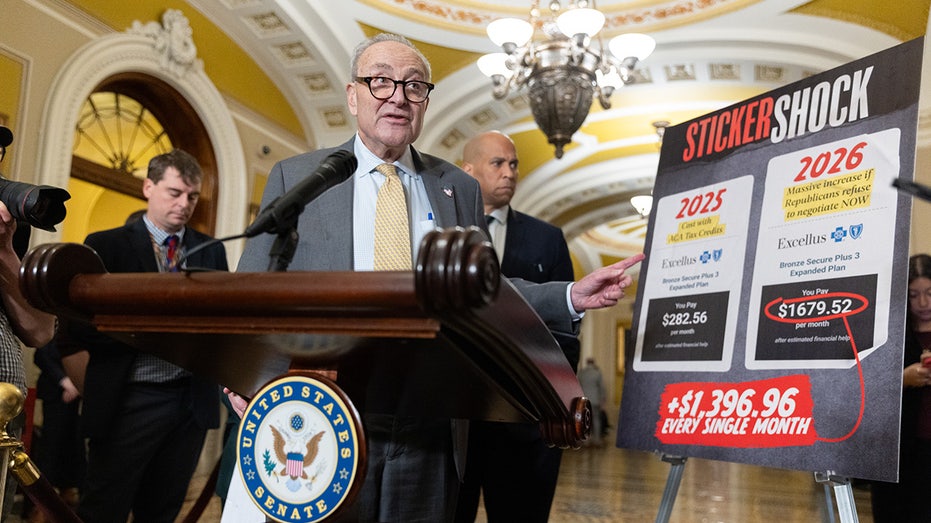
Senate Democrats now have their plan to extend expiring Obamacare subsidies, but it’s unlikely that Senate Republicans will give it the green light. Senate Minority Leader Chuck Schumer, D-N.Y., unveiled Democrats’ plan to prevent the subsidies from expiring by the end of this year on Thursday. Senate Democrats’ strategy, which mirrors the option on the table put forth by House Democrats, would extend the subsidies for three years with no tweaks or reforms. “I’m announcing that Senate Democrats will introduce legislation for a clean, three-year extension of the current [Obamacare] tax credits,” Schumer said on the Senate floor. “This is the bill, a clean, three-year extension of [Obamacare] tax credits that Democrats will bring to the floor of the Senate for a vote next Thursday. And every single Democrat will support it.” BIPARTISAN DEAL ON OBAMACARE SUBSIDIES FADES AS REPUBLICANS PUSH HSA PLAN Senate Majority Leader John Thune, R-S.D., guaranteed Senate Democrats a proposal of their choosing, but the hope in the upper chamber is that a bipartisan compromise would emerge in time for the vote next week, which is expected to come by Dec. 11. However, no such plan has materialized given a litany of issues both sides have with moving forward. Senate Republicans want reforms, like income caps and the inclusion of language that would prevent the enhanced subsidies from using taxpayer dollars to fund abortions, while Democrats, who are open to some reforms, largely want a clean extension of the subsidies as illustrated by Schumer’s plan. Schumer’s plan is also farther reaching than what Senate Democrats initially offered as the government shutdown still raged last month. At the time, the top Senate Democrat pitched a clean, one-year extension of the subsidies, which was universally panned by Senate Republicans, who demanded that healthcare would be considered only after the government reopened. CONGRESS RACES AGAINST 3-WEEK DEADLINE TO TACKLE MASSIVE YEAR-END LEGISLATIVE AGENDA Senate Majority Whip John Barrasso, R-Wyo., railed against the proposal, and charged that after shutting the government down for 43 days, Democrats had, “finally, after all this time, decided what they want.” He predicted that not enough Republicans would support the offer for it to advance. “It is a complete failure, and the best they can do is say three-year extension,” Barrasso said. “It’s not really a credible offer at all. That’s what the Democrats are talking about. I don’t, I cannot in any way, imagine supporting such a thing, because it just highlights the fact that they don’t have a solution for the problem they’ve created with the failure of Obamacare.” Then there is the factor of President Donald Trump, who has signaled that he is not open to just a simple extension of the subsidies, further adding to the futility of Democrats’ pitch. Whether Senate Republicans put forth their own plan also remains in the air. GOP WRESTLES WITH OBAMACARE FIX AS TRUMP LOOMS OVER SUBSIDY FIGHT Senate Health, Education, Labor and Pensions Committee Chair Bill Cassidy, R-La., and Senate Finance Committee Chair Mike Crapo, R-Idaho, have been working on a Republican proposal, which likely largely centers on funneling the subsidy money into Health Savings Accounts (HSAs) rather than directly to insurance companies. The duo pitched ideas and proposals to Republicans during their weekly closed-door meeting on Tuesday, but no unified strategy emerged. Schumer argued that Democrats’ proposal would be the last shot the Republicans and Congress would have to prevent the subsidies from lapsing and stopping healthcare premiums from skyrocketing. “If Republicans block our bill, there’s no going back,” he said. “We won’t get another chance to halt these premium spikes before they kick in at the start of the New Year. Those insurance premiums in January will land like a hammer blow on the American people.”
Did a military lawyer witness the Venezuela ‘double tap’ boat strike? Experts say one should have

The Pentagon’s account of the September 2 “double tap” strike that killed two survivors of an initial attack on a suspected Venezuelan drug boat is coming under renewed scrutiny after ABC News reported that a military lawyer was present when Adm. Frank “Mitch” Bradley authorized the follow-on strike. The new detail raises a sharper legal question: if real-time legal counsel was available, what advice did the judge advocate general (JAG) provide when Bradley approved a second round of lethal force? Pentagon officials have framed the operation as a counterterrorism mission targeting members of Venezuela’s Tren de Aragua criminal network. Experts say that distinction matters because U.S. counterterrorism missions normally embed a JAG in the operations center to determine whether a target remains lawful — oversight not typical for routine maritime counter-narcotics patrols. Todd Huntley, a former Navy JAG officer at U.S. Special Operations Command, said the presence of a lawyer would fit that framework. “In normal maritime counter-narcotics operations, a JAG isn’t advising in real time because those missions rarely involve lethal force,” Huntley said. “But these strikes are being handled as counterterrorism strikes. The targets just happen to be on the water.” In those missions, he said, the JAG participates directly in the real-time targeting cycle. “The JAG works with intelligence and operations personnel to make sure the target is lawful, that the planned strike is lawful, and whether the commander has the authority to approve it or needs to send it higher.” He emphasized that commanders, not attorneys, ultimately make the call. “JAGs only advise. They can’t override the commander’s decision.” TRUMP ANNOUNCES US MILITARY CONDUCTED ‘LETHAL STRIKE’ ON VENEZUELAN DRUG BOAT IN CARIBBEAN The central legal dispute now turns on the condition of the survivors at the time of the second strike. According to ABC News, U.S. personnel believed the two men in the water may have been calling for help, potentially attempting to bring reinforcements. The Pentagon did not respond to Fox news digital’s requests for comment. Under the U.S. Law of War Manual, attacking persons rendered “helpless” due to “wounds, sickness or shipwreck” is explicitly prohibited and described as “dishonorable and inhumane.” Shipwrecked individuals are protected unless they resume hostile action or otherwise regain the capacity to pose an immediate threat. Calling for help does not automatically remove those protections. Legal experts say the key question is whether U.S. forces had credible evidence that the survivors were attempting to direct further hostilities — or whether they were simply clinging to debris and making distress calls. The Pentagon has said Bradley authorized the second strike that killed the two alleged traffickers, and that War Secretary Pete Hegseth was not involved in that decision. Officials say Hegseth monitored the first strike but did not view the footage of the follow-on strike. Rachel VanLandingham, a former Air Force JAG who advised on operations at U.S. Central Command, said she “would be surprised that there wasn’t a JAG” present if the administration viewed the mission as armed conflict. With ABC now reporting that a lawyer was in the room, she said attention shifts to what the operations center understood about the men’s status in the water. SPEC OPS CHIEF ORDERED DEADLY CARIBBEAN STRIKE ‘IN SELF-DEFENSE’ WITH HEGSETH’S SIGN-OFF, WHITE HOUSE SAYS But she cautioned that the presence of an attorney does not change the underlying legal standards. Shipwrecked personnel, she said, remain protected unless they take clear steps to rejoin the fight. “Whether a JAG was consulted is almost irrelevant here,” she said. “You don’t need a lawyer to know you can’t kill shipwrecked survivors. This is the classic example we use in professional military education of a clearly unlawful order.” “Even if they’re the worst criminals in the world, you don’t kill them once they’re helpless and clinging to the side of a boat,” she said. “Killing shipwrecked persons is a textbook war crime.” She also rejected the Pentagon’s claim that the survivors could have summoned additional boats. “The idea that survivors could have called for backup is absolutely irrelevant,” she said. “Unless they were actively shooting, they remained protected and could not be lawfully targeted.” Hegseth and Bradley have continued to defend the operation. Hegseth wrote on X that Bradley “is an American hero, a true professional, and has my 100% support,” adding that he stands by Bradley’s decisions “on the September 2 mission and all others since.” President Trump has also repeatedly highlighted the strikes, releasing video of the second engagement on Truth Social and praising the campaign against what he calls “narcoterrorists.” With new reporting that a JAG was physically present, and with legal experts emphasizing that shipwrecked personnel retain protection unless they rejoin the fight, the unresolved issue is what specific intelligence the operations center relied upon when Bradley approved the second strike. Did the JAG conclude that the survivors had regained the capacity to pose an imminent threat? Did the attorney object? Did the operations team interpret the alleged call for help as an active step toward hostile action? Until the Pentagon releases a fuller accounting, the legality of the follow-on strike — and the role of the military lawyer who reportedly witnessed it — remains sharply contested.
Putin visits India amid Ukraine peace push: What’s on the agenda?
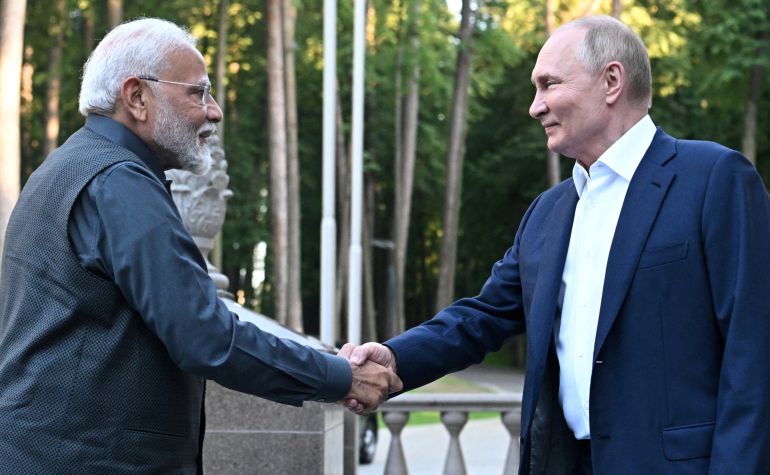
New Delhi, India – Russian President Vladimir Putin is visiting India starting Thursday for the first time since Moscow’s war on Ukraine broke out more than four years ago, even as a renewed push by the United States to end the conflict appears to have stalled. Putin’s 30-hour speed trip also coincides with a tense turn in relations between Washington and New Delhi, with the US also punishing India with tariffs and a sanctions threat for its strong historic ties with Russia and a surge in its purchase of Russian crude during the Ukraine war. That tension has, in turn, made India’s longstanding balancing act between Russia and the West an even more delicate tightrope walk. Since gaining independence from Britain in 1947, India has tried to avoid getting locked into formal alliances with any superpower, leading the non-aligned movement during the Cold War, even though in reality it drifted closer to the Soviet Union from the 1960s. Since the end of the Cold War, it has deepened strategic and military ties with the US while trying to keep its friendship with Russia afloat. Yet, Russia’s war on Ukraine has challenged that balance – and Putin’s visit could offer signs of how Indian Prime Minister Narendra Modi plans to juggle New Delhi’s competing relationships without sacrificing any of them. Russia’s President Vladimir Putin, right, shakes hands with India’s Prime Minister Narendra Modi during their meeting at the Novo-Ogaryovo state residence near Moscow, Russia, July 8, 2024 [Sergei Bobylyov/Sputnik/Pool via Reuters] What’s scheduled for Putin? Putin is expected to land on Thursday evening and head for a private dinner with Modi at the prime minister’s residence in the heart of the Indian capital, New Delhi. Advertisement On the morning of Friday, December 5, Putin is scheduled to visit Rashtrapati Bhavan, the presidential palace, for a guard of honour and a meeting with India’s ceremonial head of state, Droupadi Murmu. He will then, like all visiting leaders, travel to Raj Ghat, the memorial to Mahatma Gandhi. Then, Putin and Modi will meet at Hyderabad House, a complex that hosts most leadership summits for the latest chapter of an annual India-Russia summit. After that, they are scheduled to meet business leaders, before attending a banquet thrown in Putin’s honour by Murmu, the Indian president. Earlier, the Kremlin said in a statement that Putin’s visit to India was “of great importance, providing an opportunity to comprehensively discuss the extensive agenda of Russian-Indian relations as a particularly privileged strategic partnership”. Putin will be joined by Andrei Belousov, his defence minister, and a wide-ranging delegation from business and industry, including top executives of Russian state arms exporter Rosoboronexport, and reportedly the heads of sanctioned oil firms Rosneft and Gazprom Neft. Russian President Vladimir Putin, left, and Indian Prime Minister Narendra Modi greet each other before their meeting in New Delhi, India, on December 6, 2021. That was Putin’s last visit to India before the trip that starts on Thursday [Manish Swarup/AP Photo] Why is the timing of the visit significant? The visit comes as India and Russia mark 25 years of a strategic partnership that began in Putin’s first year in office as his country’s head of state. But even though India and Russia like to portray their relationship as an example of a friendship that has remained steady amid shifting geopolitical currents, their ties haven’t been immune to pressures from other nations. Since 2000, New Delhi and Moscow have had in place a system of annual summits: The Indian prime minister would visit Russia one year, and the Russian president would pay a return visit to India the following year. That tradition, however, was broken in 2022, the year of Russia’s full-scale invasion of Ukraine. Modi was supposed to visit Russia for the summit, but the conclave was put off. In 2023, Putin skipped a visit to India for the G20 summit in New Delhi. At the time, Putin was rarely travelling abroad, largely because of an International Criminal Court (ICC) warrant against him related to the Ukraine war. India is not a member of the ICC – and so it would have been safe for Putin to attend, but Western members of the G20 made it clear that their leaders would be uncomfortable sharing the room with the Russian president. Advertisement Finally, in 2024, the annual summit resumed, with Modi visiting Russia. And now, Putin will land in New Delhi after four years. A Russian S-400 anti-missile system launcher moves along Tverskaya Street towards Red Square ahead of a Victory Day parade rehearsal in Moscow, Russia, April 29, 2025. India used S-400 systems during its May air war with Pakistan [Pavel Bednyakov/AP Photo] What’s on the agenda? Trade analysts and political experts expect Putin to push for India to buy more Russian missile systems and fighter jets, in a bid to boost defence ties and explore more areas to expand trade, including pharmaceuticals, machinery and agricultural products. The summit “offers an opportunity for both sides to reaffirm their special relationship amidst intense pressure on India from [US] President [Donald] Trump with punitive tariffs,” Praveen Donthi, a senior analyst for India at Crisis Group, a US-based think tank, told Al Jazeera. Putin, analysts said, will be seeking optical dividends from the summit. “President Putin can send a very strong message to his own people, and also to the international community, that Russia is not isolated in the world,” said Rajan Kumar, a professor of international studies at Jawaharlal Nehru University in New Delhi. “Russia is being welcomed by a democracy when Putin faces pressure for the war in Ukraine,” Kumar told Al Jazeera. But visuals aside, a key driver of the India-Russia relationship – oil trade – is now at risk. And that, along with the shadow of the man responsible for the disruption, will be hovering over talks, said experts. President Donald Trump greets Russia’s President Vladimir Putin at Joint Base Elmendorf-Richardson in Alaska, August 15, 2025 [Julia Demaree Nikhinson/AP Photo] Is Trump
‘What’s our fault?’: India’s expulsion of Pakistanis still splits families
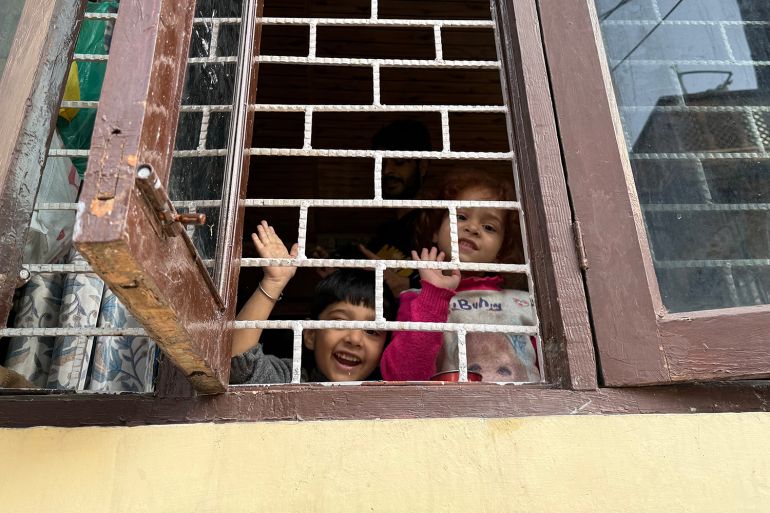
Srinagar, Indian-administered Kashmir – The silence of a narrow alley in Srinagar, the main city of Indian-administered Kashmir, is broken by the rehearsed beckoning of street vendors and the restless cries of two little children. “Auntie, please take me to my mother; the police took her away,” shouts three-year-old Hussein, as he and his sister Noorie, a year younger than him, cling to the window of their one-room house, their faces pressed against rusted iron bars. Recommended Stories list of 4 itemsend of list Their father, Majid*, says the two have been calling out like that to almost every passer-by since their mother, Samina*, a Pakistani national, was forcibly taken away by Indian authorities and deported more than seven months ago. The family’s ordeal began a week after half a dozen gunmen, a couple of them alleged to be Pakistani nationals, stormed a scenic tourist spot in Indian-administered Kashmir’s Pahalgam area and shot 26 people dead on April 22, 2025 in one of the worst attacks in the disputed region. The Muslim-majority region of Kashmir is divided between India and Pakistan, though the nuclear-armed neighbours claim it in full, while regional superpower China also controls a sliver of Kashmir’s land. Since India’s independence from British rule and its partition to create the state of Pakistan in 1947, the two countries have fought two of their three full-scale wars over Kashmir. In the late 1980s, an armed rebellion against New Delhi’s rule erupted on the Indian side, which has since claimed tens of thousands of lives, most of them civilians. The rebellion saw the deployment of nearly a million Indian soldiers, making it one of the world’s most militarised regions. The rebels aim to either carve an independent nation out of Kashmir or merge the region with Muslim-majority Pakistan. Advertisement The anti-India sentiments in Kashmir intensified in 2019 when Prime Minister Narendra Modi’s Hindu majoritarian government scrapped a law that granted the region partial autonomy in matters of land ownership and livelihoods, and split it into two “union territories” to be directly governed by New Delhi. Since then, suspected Kashmiri rebels have launched several attacks against Indian security forces and government employees. India accuses Pakistan of training and financing the rebels, but Islamabad dismisses the charge, claiming it only provides diplomatic backing to Kashmir’s struggle. India blamed Pakistan for the Pahalgam attack as well, and swiftly moved to downgrade all diplomatic ties, suspend bilateral trade, and place a key water treaty in abeyance. Two weeks after the killings, in early May, India and Pakistan engaged in an intense four-day air war, each striking the other’s military bases. Dozens of people were killed on both sides — India insists it only hit “terrorists” in Pakistan, while Islamabad said civilians were principally the victims — before the neighbours agreed to a ceasefire. But seven months later, the pause in fighting has meant little for hundreds of families, like Majid’s and Samina’s, that were broken apart by one of India’s moves. In the aftermath of the Pahalgam attack, India revoked all visas issued to Pakistani citizens residing in India, including medical and diplomatic visas, giving them an April 29, 2025 deadline to leave the country, and closing the Attari-Wagah border in Punjab province’s Amritsar district on May 1. Nearly 800 Pakistanis – many of them married to Indian nationals in Kashmir and other parts of India – were deported. With authorities providing no clarity on whether those families will ever be reunited, the wait drags on for relatives on both sides of the border. ‘I think of ending my life’ Majid married Samina, his 38-year-old Pakistani cousin, in 2018. Despite tense relations between their countries, their marriage was not especially rare. When millions of Muslims moved to a newly-created Pakistan in 1947 – as did Hindus to India – many left behind relatives on both sides of the border. Over the years, these blood ties gave rise to cross-border marriages between citizens of the two countries. But on April 28, Samina was summoned to the local police station in Srinagar’s Dalgate area. Noorie and Hussein slept on their laps as the couple met the police officer. When the children woke up, they realised their father had brought them back home, their mother no longer around. Advertisement Samina was detained at the police station and informed that she would be deported to Pakistan — she is originally from Lahore — the next day. Sitting quietly in a dimly lit room that served as a bedroom and kitchen, Majid said he is still struggling to process the events that turned his life upside down. Majid’s children looking out of the window of their one-room home [Arjumand Shaheen/Al Jazeera] He used to wait tables at a local restaurant and earned about $70 a month. But since his wife was taken away, he has not been able to leave his little children alone. He is now jobless. “I have not slept properly for six months now. My whole time is spent taking care of the children. I cannot think about doing anything else,” he told Al Jazeera. Confined to his room, Majid says he is unable to go out even to buy groceries. “Sometimes, I think of ending my life,” he said. “But I stop myself, wondering who would take care of them when I am gone.” Majid’s children, Hussein and Noorie, also do not know when they will be able to see their mother. “The sudden separation from Samina has traumatised them. They call out to their mother in sleep,” Majid told Al Jazeera as he made a futile attempt to distract his children by showing them cartoons on his mobile phone. “All they know is that the police took her away. Whenever they see any police or army officer, they ask them to bring their mother back.” Meanwhile, forcibly separated from her children, Samina is struggling with health issues in Pakistan. Her blood pressure is unstable due to stress. “She gets hospitalised every now and
Somalis call Trump’s comments insulting their country a ‘grave mistake’
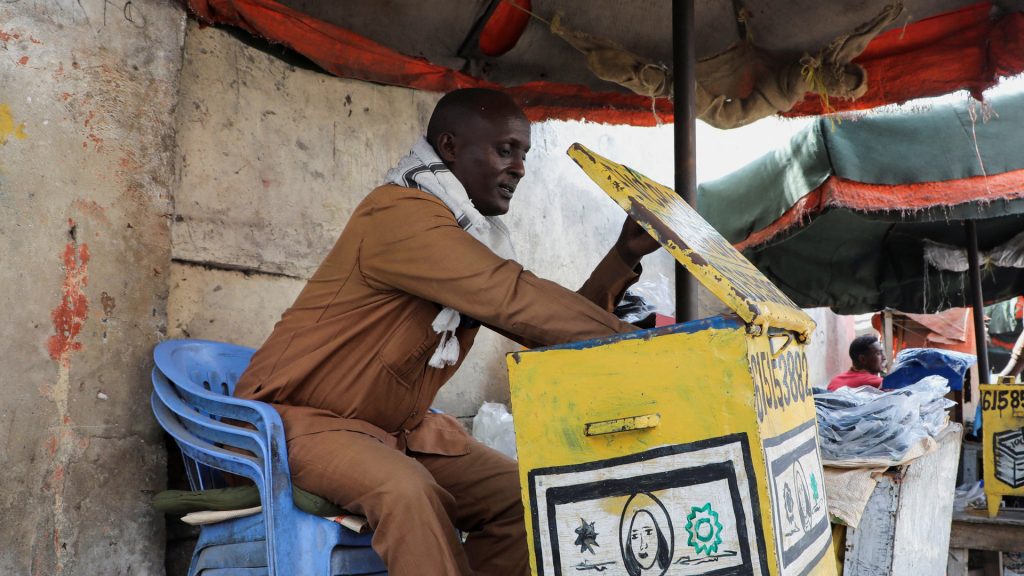
NewsFeed Somalis are condemning recent comments made by US President Donald Trump calling their country a place where people ‘just run around killing each other’. Published On 4 Dec 20254 Dec 2025 Click here to share on social media share2 Share facebooktwitterwhatsappcopylink Save Adblock test (Why?)
What is Mumbai’s Orange Gate to Marine Drive Tunnel Project? To connect residents to Navi Mumbai international airport, check details

Maharashtra Chief Minister Devendra Fadnavis launched the Coastal Road tunnel between Orange Gate and Marine Drive, marking a revolution in Mumbai’s transportation. The underground road project will help residents access Navi Mumbai International Airport.