

Stefanik undercuts Speaker Johnson in stunning public House GOP spat
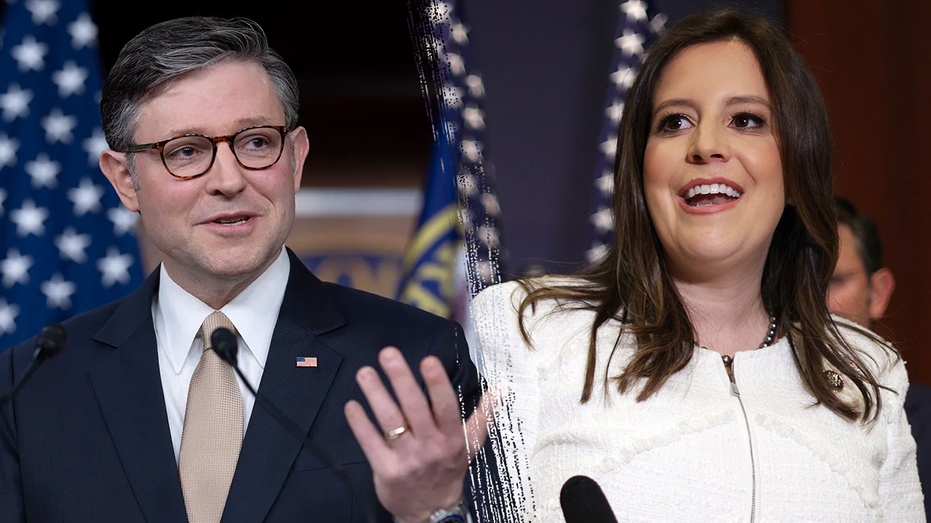
Rep. Elise Stefanik, R-N.Y., appeared to accuse Speaker Mike Johnson, R-La., of lying about discussing the New York governor’s race with her on Tuesday. Johnson said he was having “conversations” with Stefanik and her fellow New Yorker, Rep. Mike Lawler, R-N.Y., when asked whether he discussed the upcoming gubernatorial election with the two potential candidates. Stefanik cited a Punchbowl News report on Johnson’s comments at the public press conference and wrote on X, “This is not true. I have had no conversations with the Speaker regarding the Governor’s race.” “Looking forward to the conversation about [State and Local Taxes] with NY Members tomorrow. Stay tuned,” Stefanik wrote. MEET THE TRUMP-PICKED LAWMAKERS GIVING SPEAKER JOHNSON A FULL HOUSE GOP CONFERENCE Fox News Digital reached out to both Johnson and Stefanik for further comment but did not hear back by press time. It’s a stunning public clash between two members of House GOP leadership that comes shortly after Stefanik returned to her House role full-time. SENATE GOP PUSHES TRUMP BUDGET FRAMEWORK THROUGH AFTER MARATHON VOTE SERIES She had been poised to easily sail through the Senate confirmation process to become President Donald Trump’s new ambassador to the United Nations. But the House’s razor-thin majority and concerns about the race to replace Stefanik in her upstate New York district eventually forced Trump to have her drop out of the process. Stefanik had given up her role as House GOP Conference chair and two high-level committee positions on the House’s intelligence and education panels to take the new job. But Trump directed Johnson to find a new top role for Stefanik, and he soon announced her as chair of House Republican leadership. Days after that, however, sources told Fox News Digital and other outlets that Stefanik was considering a run for New York governor. When asked about speaking to her and Lawler about potentially running, Johnson told reporters on Tuesday, “I have lots of conversations.” “I love them both. They’re two of my favorite people in my most trusted colleagues. And, and they’re both super talented, which is why they get talked about for doing other things…I mean, my preferences at the all stay here with me, right,” Johnson said. “But I don’t begrudge anybody for having other opportunities. And we ultimately support them in whatever they do. But, are we having conversations? We are. Yeah. And that’s all I’m going to say about it.”
Potential 2028 hopeful accused of ‘inciting violence’ after call for ‘mass protests’ against Trump
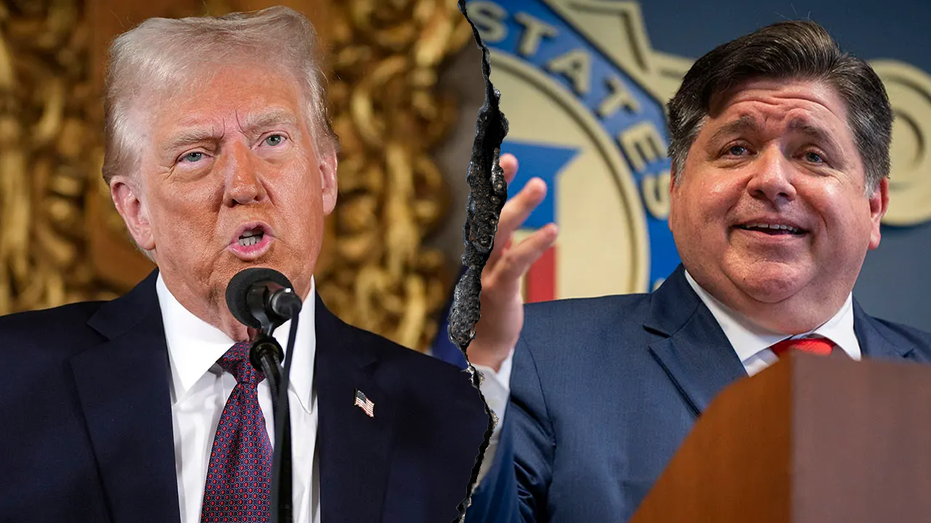
Gov. J.B. Pritzker, D-Ill., reignited speculation about his 2028 presidential ambitions this weekend, but his call for “mass protests” dominated headlines as Republicans accused him of “inciting violence.” Speaking at the New Hampshire Democratic Party’s annual fundraising gala this weekend, Pritzker became the first potential Democratic candidate to visit New Hampshire, or any early primary state, since Democrats’ big November losses. “Never before in my life have I called for mass protests, for mobilization, for disruption. But I am now. These Republicans cannot know a moment of peace. They have to understand that we will fight their cruelty with every megaphone and microphone that we have. We must castigate them on the soapbox and then punish them at the ballot box,” Prtizker said, triggering outrage among President Donald Trump’s supporters. “His comments, if nothing else, could be construed as inciting violence,” Stephen Miller, Trump’s deputy chief of staff for policy and homeland security advisor, told reporters outside the White House on Monday. 2028 AUDITIONS FOR DEMOCRATIC PRESIDENTIAL NOMINATION KICK OFF AS BLUE-STATE GOVERNOR VISITS KEY EARLY STATE Pritzker told the first-in-the-nation primary crowd this weekend, “It’s time to fight everywhere and all at once,” in a comment that seemed to refer to political action, like protesting, voting and challenging the Trump administration in the courts. Pritzker later clarified to reporters he was referring to political action, but Trump’s base wasn’t so convinced. ILLINOIS GOV CALLS FOR MASS PROTESTS AGAINST TRUMP ADMIN: GOP ‘CANNOT KNOW A MOMENT OF PEACE’ “Are you trying to inspire a 3rd assassination attempt on my dad? Two wasn’t enough for you?” Donald Trump Jr. asked on X. Sen. Dave McCormick, R-Pa., said Pritzker’s comments are the latest demonstration that Democrats are “out of touch” with American voters. “One of the biggest successes of President Trump’s first 100 days has been securing our southern border and keeping Americans safe. Democrats drumming up ‘mass protests’ opposing this obvious success story shows just how out of touch they are with everyday Americans,” McCormick said on X. “…and Pritzker cannot know a moment of a presidency. He is only the last Democrat to fuel the rage in calling ‘for mass protests, for mobilization, for disruption,’” Fox News contributor Jonathan Turley said, arguing that Democrats have consistently called for “mass protests” since Trump returned to the Oval Office in January. House Minority Leader Hakeem Jeffries, D-N.Y., made headlines earlier this year when he called for Democrats to “fight” Trump’s agenda “in the streets.” Sen. Eric Schmitt, R-Mo., joked on X that Illinois Republicans are welcome in Missouri: “We welcome the Republican refugees from the Land of Lincoln suffering under the tyranny of the Pritzker regime to the free state of Missouri!” And the Illinois Republican Party chimed in as well, slamming Pritzker’s presidential ambitions and what the party chair described as a politically divisive speech. “JB Pritzker’s ego-driven obsession with becoming president is putting Illinois, and Republicans across the country, at risk. His inflammatory and dangerous speech is focused on further dividing our country and I hope to see Illinois Democrats condemn his call for violence,” Illinois Republican Party Chair Kathy Salvi said in a statement. Salvi said it’s “clear that Pritzker’s only priority is what’s best for him and his presidential bid,” and his trip to New Hampshire is “further proof that he’s already left Illinois behind.” DEM GOVERNOR SLAMS TRUMP’S ‘AUTHORITARIAN RULE’ DURING ‘BETTER WAY FORWARD’ SPEECH Trips to New Hampshire, which, for over a century, has held the first primary in the race for the White House, are seen as an early indicator of a politician’s interest in running for president in the next election. The billionaire Democrat has emerged during the president’s first 100 days as one of the most vocal critics of Trump’s executive actions, Elon Musk’s Department of Government Efficiency (DOGE) cuts, and the administration’s policies, including immigration reform and federal funding. Pritzker’s comments are the latest in a long-standing feud between the two politicians. Trump often evoked Pritzker’s name on the campaign trail as an example of the downfall of Democratic-run states. “Sloppy J.B. Pritzker… has presided over the destruction and disintegration of Illinois at levels never seen before in any State,” Trump wrote on Truth Social last year. “Crime is rampant and people are, sadly, fleeing Illinois. Unless a change is made at the Governor’s level, Illinois can never be Great Again!” Pritzker’s office did not immediately respond to Fox News Digital’s request for comment.
David Perdue confirmed as Trump’s top China diplomat after key Senate vote
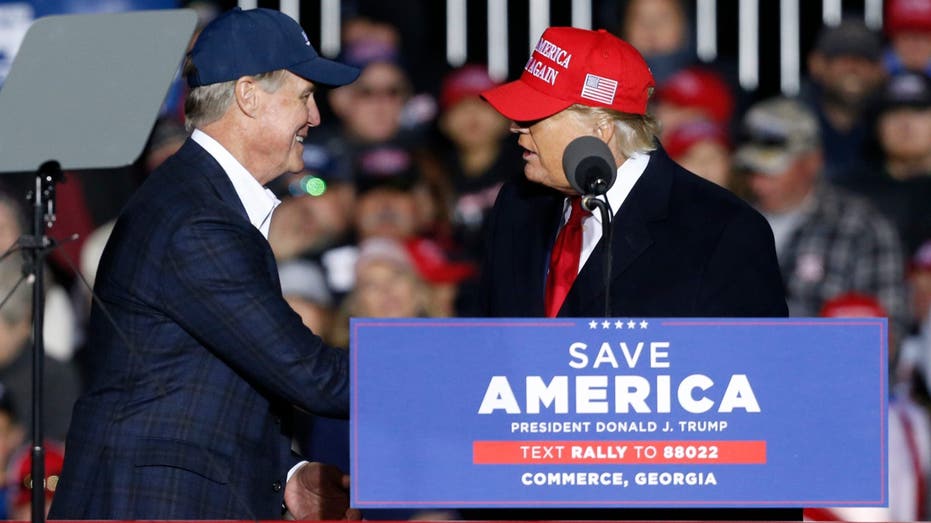
Former Georgia GOP Sen. David Perdue was confirmed Tuesday by the Senate 67-29 as President Donald Trump‘s ambassador to China. Perdue, a former business executive with companies like Tennessee-based Dollar General and experience in global supply chains, including through Beijing, has long been a close ally of the president. The ex-lawmaker, who is also the cousin of former Gov. Sonny Perdue, passed his critical cloture vote by 64-27 on Monday evening, which ended further substantial debate on his nomination. Perdue narrowly lost his 2021 runoff election with Sen. Jon Ossoff, D-Ga., by just over 1%, or about 55,000 votes, and also, despite a presidential endorsement, failed in his quest to defeat Georgia Gov. Brian Kemp in 2022’s Republican primary. DAVID PERDUE, FORMER SENATOR AND LONGTIME TRUMP ALLY PASSES KEY HURDLE TO CHINESE AMBASSADORSHIP Fox News Digital also reached out to Ossoff for comment on his former foe’s confirmation. During his confirmation hearing, Perdue said, “Marxist nationalism” is reshaping China and that their global ambitions threaten the world order. “Since 2000, China has doubled its nuclear arsenal and grown its military at a pace unseen since WWII. They have militarized the South China Sea and violated their agreement in Hong Kong.” “Their Social Credit Score system and extensive policing capability are designed to enforce domestic state control. Their Belt and Road Initiative and their Made in China 2025 statements demonstrate their global ambitions,” Perdue said. “They speak of a global ‘community of common destiny for all mankind.’ Put simply, they want a world more in line with their authoritarian principles.” Perdue went on to argue that Trump’s “America First” strategy that greatly affects the U.S.’s relationship with China is not isolationist, but “just the reverse.” TRUMP SAYS CHINA’S XI CALLED HIM AMID ONGOING CONFUSION OVER TRADE TALKS “America will be a stronger ally and partner by rebuilding our strategic supply chains at home and with our friends.” He said Chinese President Xi Jinping, like Trump, only respects strength and that, if confirmed, he will work on reciprocity and security agreements with Beijing. “Our approach to China should be nuanced, nonpartisan, and strategic,” Perdue said. On Taiwan, which China views as a breakaway province, Perdue said he will support the longstanding “One China” policy while remaining committed to a “peaceful resolution” of tensions that is acceptable to both Beijing and Taipei. “I will also ensure focus on our priority to eliminate fentanyl precursors and hold China accountable on human rights.” The Senate recently confirmed former Arkansas Gov. Mike Huckabee to be the U.S. ambassador to Israel. Three more Trump-diplomat nominees will see votes on cloture and likely ensuing tallies on their confirmations later Tuesday. Former Reagan staffer and New York real estate investor Tom Barrack is up for an ambassadorship to Turkey, while Landry’s Restaurants and Houston Rockets owner Tilman Fertitta is looking to serve as ambassador to Italy and San Marino, and Arkansas investment banker billionaire Warren Stephens has his sights on being the U.S.’ top diplomat to its closest European ally, the United Kingdom of Great Britain.
Democrat Beto O’Rourke says he’ll run for Senate if Texans want him to
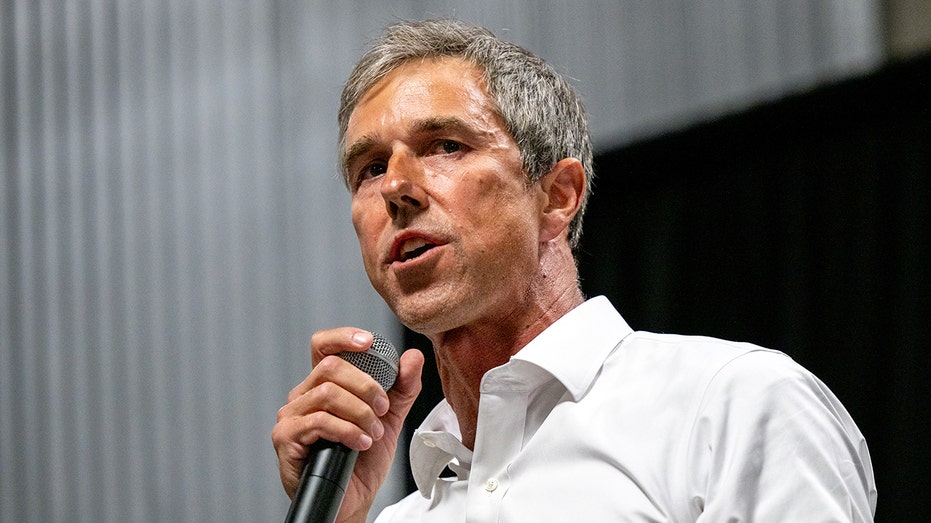
Former Rep. Beto O’Rourke, a Democrat, indicated that if Texans want him to run for the U.S. Senate, he will mount another election bid. “But if it comes to pass that this is what the people of Texas want, that it’s the highest and best use of what I can give to you, then yes I will,” O’Rourke said while responding to someone at a town hall event who asked the former lawmaker if he would run. O’Rourke served in the U.S. House of Representatives from early 2013 through early 2019, but he has fallen flat in bids for U.S. Senate, president, and governor. WHO IS BETO O’ROURKE? He lost a 2022 Lone Star State gubernatorial bid to incumbent GOP Gov. Greg Abbott. The Democrat announced but later dropped a presidential bid in 2019. He lost a 2018 U.S. Senate contest to incumbent Republican Sen. Ted Cruz. CORNYN’S RE-ELECTION CAMPAIGN SPARKS QUESTIONS ON BOTH PARTY FLANKS AS DEMS CHASE ‘THE GHOST OF A BLUE TEXAS’ Responding to a post on X regarding O’Rourke’s comment that he would run if that’s what Texans want, GOP Sen. Mike Lee of Utah tweeted, “They don’t.” Texas state Rep. Mitch Little, a Republican, tweeted, “‘THIS SUMMER…from the producers who brought you ‘BETO’ and ‘BETO,’ you’ll fall in love—again—with ‘BETO.’” Incumbent Sen. John Cornyn, R-Texas, who has served in the Senate for more than two decades, is up for re-election in 2026. TEXAS AG KEN PAXTON ANNOUNCES RUN FOR US SENATE Texas Attorney General Ken Paxton has mounted a Republican Senate primary challenge against Cornyn.
The case for REAL ID: Why Congress passed this requirement in 2005
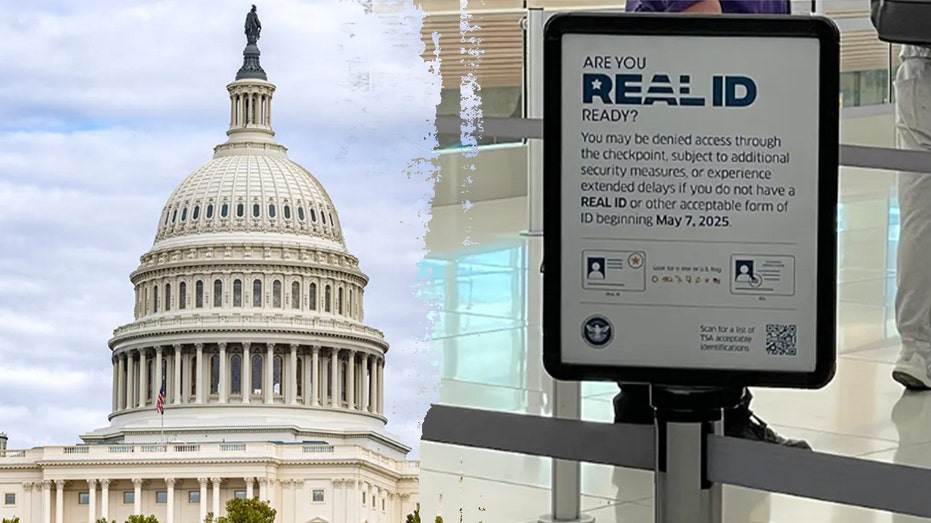
In the years following the Sept. 11, 2001 attacks, policymakers’ intense focus on national security led to sweeping changes in air travel; however, more than two decades later, one major requirement born out of that era has still not fully taken effect. On May 7, Americans will finally be required to present a REAL ID-compliant identification card to board domestic flights. The law mandating REAL ID passed in 2005, but its implementation has been delayed repeatedly over the years. The Trump administration argued that the deadline had already been postponed long enough, asserting that travelers had ample time to gather the necessary documents for the more rigorously verified form of identification. Critics, however, contend that if the deadline could be pushed back by nearly 20 years without any flight-based terrorist attacks during that time, the urgency and necessity of the measure are questionable. WHAT IS REAL ID? DEADLINE APPROACHES FOR NEW IDENTIFICATION CARDS REQUIRED TO FLY DOMESTICALLY At its core, the REAL ID Act aimed to close security gaps that terrorists could exploit. Before 9/11, standards for issuing driver’s licenses and other IDs varied widely among states, with little coordination or verification of critical documents like birth certificates and Social Security numbers. Several of the 9/11 hijackers were able to obtain legitimate state IDs using fraudulent documents, enabling them to move freely and board planes without detection. The 9/11 Commission Report, released in 2004, strongly recommended establishing national standards for identification as a counterterrorism measure. Congress acted quickly, embedding the REAL ID provisions within a broader defense and emergency spending bill – a strategic move that helped ensure its swift passage. REAL ID requires states to verify the authenticity of key documents – birth certificates, Social Security numbers and proof of address. It also mandates that IDs use security features that are more resistant to tampering. WHAT DID THE BUSH ADMINISTRATION, 9/11 COMMISSION SAY ABOUT REAL ID LEGISLATION? The law was controversial from the start. Civil liberties groups raised concerns about privacy, data security and the emergence of what some called a “national ID card.” Many states resisted, citing costs, logistical challenges and fears of federal overreach. Compliance deadlines were extended multiple times as states upgraded their systems and negotiated the balance between security and individual rights. The ID will be required not only for flights but also for access to some government facilities and nuclear sites. Some advocates, like the New York chapter of the American Civil Liberties Union, have expressed concerns that the ID could eventually be required to obtain government benefits and apply for a job. “American people need to know that Real ID will be required to travel on May 7th, so those governors have been notified to communicate that at home. We don’t want anybody to get delayed and not be able to travel when they get to an airport,” Department of Homeland Security Secretary Kristi Noem said at a Cabinet meeting earlier this month. CLICK HERE TO GET THE FOX NEWS APP President Donald Trump reiterated the Real ID requirement in an executive order signed on March 25 focused on election integrity. “This will also help us bring integrity back to all of our IDs and how they’re used, how they’re used for issuing driver’s licenses. And governors know how I feel about making sure their driver’s licensing system has integrity, because a lot of people use their driver’s license to vote, and the backbone of our country and the foundation is election integrity.”
Trump’s executive order blitz: What he’s signed and what’s changed
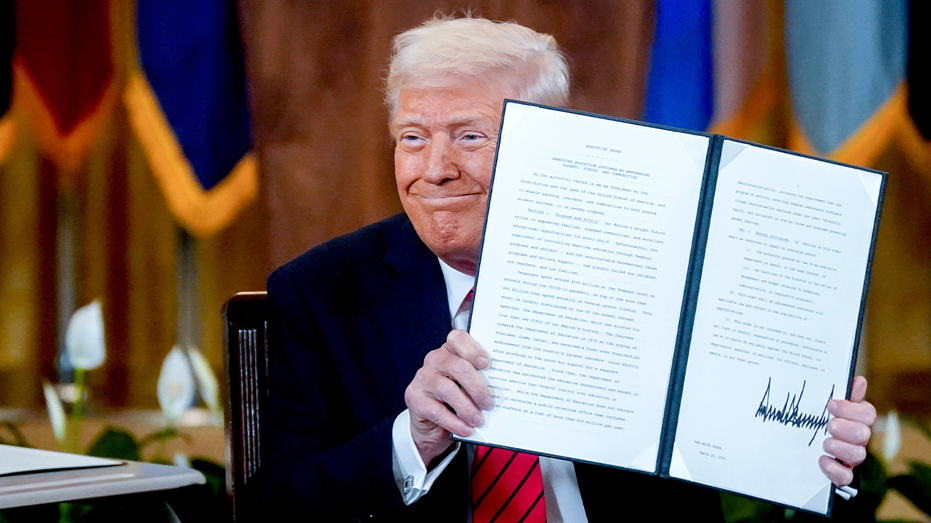
President Donald Trump signed at least 137 executive orders in his 100 days in the Oval Office, trouncing his predecessors’ respective records on signed EOs in the same time period, dating back to at least President Franklin D. Roosevelt. Trump signed 26 executive orders in his first day back in the Oval Office, and a total of 45 in his first 10 days. His 137 executive orders in his first 100 days is a benchmark that has not been met since at least Roosevelt, whose presidency began in 1933. Trump’s executive order blitz has included rescinding dozens of policies implemented by the Biden administration, including cutting red tape surrounding the energy industry, striping diversity, equity and inclusion initiatives from the fabric of the U.S. government and promoting the proliferation of artificial intelligence. Trump kicked off his executive order blitz on Jan. 20, his inauguration day, by focusing on rescinding Biden-era policies, as well as other orders such as ending the “weaponization” of the federal government, “restoring” free speech and designating certain cartels as terrorist organizations. DEFUNDING DEI: HERE’S HOW THE TRUMP ADMINISTRATION HAS UNDONE BIDEN’S PRIZED PROGRAMS Trump’s Jan. 20 order called Initial Rescissions of Harmful Executive Orders and Actions revoked dozens of Biden-era policies, including Biden’s 2021 order titled Advancing Racial Equity and Support for Underserved Communities Through the Federal Government; the 46th president’s 2021 executive order called Rebuilding and Enhancing Programs to Resettle Refugees and Planning for the Impact of Climate Change on Migration; and Biden’s 2022 executive order called Advancing Equality for Lesbian, Gay, Bisexual, Transgender, Queer, and Intersex Individuals. “The previous administration has embedded deeply unpopular, inflationary, illegal, and radical practices within every agency and office of the Federal Government,” reads Trump’s order rescinding Biden’s presidential actions. “The injection of ‘diversity, equity, and inclusion’ (DEI) into our institutions has corrupted them by replacing hard work, merit, and equality with a divisive and dangerous preferential hierarchy. Orders to open the borders have endangered the American people and dissolved Federal, State, and local resources that should be used to benefit the American people. Climate extremism has exploded inflation and overburdened businesses with regulation.” WHITE HOUSE OPM ORDERS ALL DEI OFFICES TO BEGIN CLOSING BY END OF DAY WEDNESDAY Trump’s second presidency has made education a top priority amid the flurry of executive orders across his first few months. Trump signed an executive order in March to dismantle the Department of Education and return oversight power of school systems to state leaders after years of the U.S. dragging behind other nations such as Finland and Japan in overall student performance. “Everybody knows it’s right, and we have to get our children educated,” Trump said while signing the order. “We’re not doing well with the world of education in this country, and we haven’t for a long time.” Trump also signed an executive order in January that removes federal funding from K-12 schools that teach critical race theory and DEI curriculum. TRUMP SIGNS EDUCATION-FOCUSED EXECUTIVE ORDERS ON AI, SCHOOL DISCIPLINE, ACCREDITATION, FOREIGN GIFTS AND MORE “In many cases, innocent children are compelled to adopt identities as either victims or oppressors solely based on their skin color and other immutable characteristics,” reads the order called Ending Radical Indoctrination in K-12 Schooling. “In other instances, young men and women are made to question whether they were born in the wrong body and whether to view their parents and their reality as enemies to be blamed. These practices not only erode critical thinking but also sow division, confusion, and distrust, which undermine the very foundations of personal identity and family unity.” Trump signed an executive order in February that prohibits schools and colleges that receive federal funds and are subject to Title IX from allowing men on women’s sports teams and in women’s locker rooms, and another in January expanding school choice. The Trump presidency established the Department of Government Efficiency (DOGE) in January through an executive order that renamed the Obama-era United States Digital Service to the United States DOGE Service. DOGE has been a thorn in the side of Democrats since Musk, the office’s public leader, and his teams began working through various federal agencies in the search of government overspending, mismanagement and corruption. DOGE has since saved an estimated $160 billion through cancellations of government contracts, grant cancellations, workforce reductions, asset sales and other cuts, according to the DOGE website. ‘THIS IS INDOCTRINATION, NOT EDUCATION’: PLAINTIFF IN SCOTUS CASE SLAMS SCHOOLS FOR FORCING LGBTQ+ CURRICULUM “He’s an incredible … brilliant guy,” Trump said of Musk this month. “He was a tremendous help both in the campaign and in what he’s done with DOGE.” Energy has also been a top priority for the Trump administration, with the president vowing to “unleash U.S. energy” that he said would lower prices for American consumers while bolstering the U.S. job market. DOGE SLASHES ‘WASTEFUL’ ‘PROBLEM-SOLVING’ CONTRACT WORTH $50K IN LATEST ROUND OF ELIMINATIONS Trump signed an executive order this month called Reinvigorating America’s Beautiful Clean Coal Industry and Amending Executive Order 14241 that will work to cut through red tape in the coal industry, including directing the National Energy Dominance Council to designate coal as a “mineral,” end a current pause to coal leasing on federal lands, promote coal and coal technology exports and encourage the use of coal to power artificial intelligence initiatives. The order also instructs the Department of Justice to identify every “unconstitutional” state or local regulation that is “putting our coal miners out of business,” according to Trump. “The value of untapped coal in our country is 100 times greater than the value of all the gold at Fort Knox, and we’re going to unleash it and make America rich and powerful again under this order,” Trump said Tuesday ahead of signing the order. “Pound for pound, coal is the single most reliable, durable, secure and powerful form of energy,” Trump said. “It’s cheap, incredibly efficient, high density, and it’s almost indestructible. You could drop a bomb on it, and
Russia dismisses Ukraine’s proposal to extend brief ceasefire to 30 days

Kremlin spokesman slams Kyiv after Ukraine’s President Volodymyr Zelenskyy says Moscow’s brief unilateral ceasefire is ‘manipulation’. Russia has rejected a proposal from Ukraine to extend Russian President Vladimir Putin’s unilateral three-day ceasefire as the United States grows increasingly impatient with stalled efforts to find a long-term solution to end the war. Kremlin spokesman Dmitry Peskov confirmed on Tuesday that Moscow had seen Ukrainian President Volodymyr Zelenskyy’s offer to extend Putin’s brief early May pause in fighting to 30 days. But Peskov said it would be “difficult to enter into a long-term ceasefire” without first clearing up a number of “questions”. Zelenskyy had branded Putin’s unilateral truce, which will last from May 8 to 10 and coincides with Moscow’s celebrations to mark the 80th anniversary of its victory over Nazi Germany in World War II, as an “attempt at manipulation”. The Ukrainian leader also questioned why Moscow would not agree to Kyiv’s call for a ceasefire lasting at least 30 days and starting immediately. Peskov threw the Ukrainian president’s words back at him, saying that the absence of a “direct response” from Ukraine to Putin’s three-day pause, which the spokesman described as a “gesture of goodwill”, was itself “a manipulation”. The to-and-fro comes amid pressure from an increasingly impatient White House to agree on a deal to end the conflict. Advertisement On Sunday, US President Donald Trump told Putin to “stop shooting” and sign an agreement, after earlier voicing concerns that Putin was “just tapping me along”. Last month, Russia stymied a US proposal for a 30-day halt in fighting by calling for far-reaching conditions, including a ban on Ukraine using the pause to regroup and rearm its forces and on Western arms supplies to Kyiv. It offered no concessions in return for those demands. Ukraine has accepted the US proposal, with Zelenskyy saying late on Monday that the ceasefire “must be immediate, full, and unconditional – for at least 30 days to ensure it is secure and guaranteed”. Deadly drone attacks Meanwhile, Russian and Ukrainian forces carried out dozens of drone attacks early on Tuesday. A Russian attack on Ukraine’s southeastern Dnipropetrovsk region killed a 12-year-old girl and wounded three others, including a six-year-old. Russia also launched 20 drones and 31 powerful guided bombs at Kharkiv, Ukraine’s second-largest city. Debris from an intercepted Russian drone started a fire in a neighbourhood of the capital, Kyiv, according to officials. In total, Russia fired 100 drones at Ukraine between late Monday and early Tuesday, the Ukrainian air force said. In Russia’s Belgorod region, which borders Ukraine, “an enemy drone deliberately struck a moving vehicle carrying five men”, said regional Governor Vyacheslav Gladkov, who reported that two people were killed. The Russian army said it shot down 40 drones over various regions overnight, including four over the Russian-controlled Crimean Peninsula. Advertisement Reporting from Moscow, Al Jazeera’s Yulia Shapovalova said civilians living in Russian border communities have faced regular attacks. “They’ve been suffering since the beginning of this conflict; dozens of towns and villages in Russia’s border regions, in particular in Belgorod … they constantly come under attack,” she said. “Hundreds of thousands of people have been displaced,” Shapovalova added. “And there are also reports that the Ukrainian army is continuing to build up near the border with the Belgorod region.” Adblock test (Why?)
How falsehoods drove Trump’s immigration crackdown in his first 100 days
In his first 100 days in office, United States President Donald Trump invoked archaic immigration laws, questioned judges’ power to rule against his decisions and attempted to end several legal immigration pathways. Trump began laying the groundwork for his immigration plans long before his January 20 inauguration. For years, Trump and his allies have said falsely or without evidence that the US is being invaded by immigrants who are driving up crime rates and that foreign countries are sending their prisoners and mentally ill people to the US. Several Trump administration officials also said courts cannot and should not rule on Trump’s immigration actions because they deal with national security and foreign policy issues. In doing so, Trump “is seeking a lack of accountability to do things that the law otherwise prohibits”, said Matthew Lindsay, a University of Baltimore law professor. The Trump administration’s use of national security or foreign policy as a shield against judicial overview is a stark difference from other administrations, Lindsay said. Advertisement We talked to lawyers, historians and criminologists to examine the false narratives and spin propelling Trump’s immigration policies in the first 100 days. Trump’s case for an ‘invasion’ leads to mass deportation efforts In 2018, during his first term, Trump described a caravan of thousands of immigrants walking towards the US southern border as an invasion. Many of them were expected to request asylum in the US. Constitutional law experts say that what legally counts as an invasion is an armed attack by militaries or paramilitaries. Many Gang Members and some very bad people are mixed into the Caravan heading to our Southern Border. Please go back, you will not be admitted into the United States unless you go through the legal process. This is an invasion of our Country and our Military is waiting for you! — Donald J. Trump (@realDonaldTrump) October 29, 2018 During the 2024 presidential campaign, as immigration reached historic highs during Joe Biden’s presidency, Trump began tying the invasion narrative to one of his signature policy promises: Mass deportations. “I will stop the migrant invasion, and we will begin the largest deportation operation in the history of our country,” he said at an October rally. Ten days later, at another rally, he said: “We will not be occupied. We will not be conquered. That’s what they’re doing. This is an invasion into our country of a foreign military.” So Trump upon taking office issued an executive order declaring a national emergency at the southern border. In two other directives, he described immigration as an invasion. Advertisement One of the laws he eventually invoked – the Alien Enemies Act of 1798 – lets the president detain and deport people from a “hostile nation or government” without a hearing when the US is either at war with that country or the country has “perpetrated, attempted, or threatened” an invasion against the US. “This is a time of war because Biden allowed millions of people, many of them criminals, many of them at the highest level,” Trump told reporters on March 16. “That’s an invasion. They invaded our country.” The Alien Enemies Act has been used only three times in US history, each during wartime. In February, the State Department designated Tren de Aragua – a gang that formed between 2013 and 2015 in a Venezuelan prison – as a foreign “terrorist” organisation. In March, Trump invoked the Alien Enemies Act to deport hundreds of Venezuelans whom he said were Tren de Aragua gang members who had “infiltrated” cities across the country. They were sent to the Terrorism Confinement Center, or CECOT, a maximum-security prison in El Salvador. They were deported without due process; the government didn’t present evidence of their gang membership before a judge and the migrants weren’t given the opportunity to defend themselves. CECOT is the largest prison in Latin America and has been decried for human rights abuses, such as torture and lack of medical care. Trump broadly portrays immigrants as criminals, but the data says otherwise Trump has repeatedly said that countries – namely the Democratic Republic of the Congo and Venezuela – send people from prisons and mental hospitals to the US. He has not cited evidence. Advertisement “We were elected to clean up the mess of this country, and we had millions and millions of people come in who were criminals, who were murderers, who were everything you can imagine,” Trump said on April 21. “Drug lords, drug dealers, they came in from prisons and from mental institutions. And I was elected to move them out.” The immigrant crime narrative drove his successful presidential campaign. Vice President JD Vance pointed to Haitian immigration in Springfield, Ohio, cherry-picking from limited statistics to say immigrants raised the number of murders. In addition to targeting Springfield, Trump said Tren de Aragua took over Aurora, Colorado. To support its deportation efforts, the White House said Kilmar Armando Abrego Garcia, a Salvadoran immigrant who the US government said it mistakenly deported to CECOT, is an MS-13 gang member. The administration has exaggerated findings from earlier judges on his case and highlighted tattoos that don’t correspond with MS-13. Criminologists who study potential links between migration and crime say despite some high-profile crimes committed by immigrants, they commit crimes at lower rates than native-born US citizens. The Marshall Project found no link between crime and migrant arrivals from April 2022 to May 2023 in New York, Chicago, Washington, DC and Denver, after Texas Governor Greg Abbott began busing immigrants into those cities. The Marshall Project’s 2024 report looked at policing data in cases involving crimes such as robbery, murders and shootings. Advertisement A 2018 national study by University of Wisconsin and Purdue University sociologists found that increases in the immigrant population in the US are associated with significant decreases in violence. The study analysed violent crime from 1990 to 2014, examining the association between changes in undocumented migration and violent crime at the state level in all 50 states and Washington, DC. A National Institute
Trump’s 100-day scorecard: Executive orders, tariffs and foreign policy
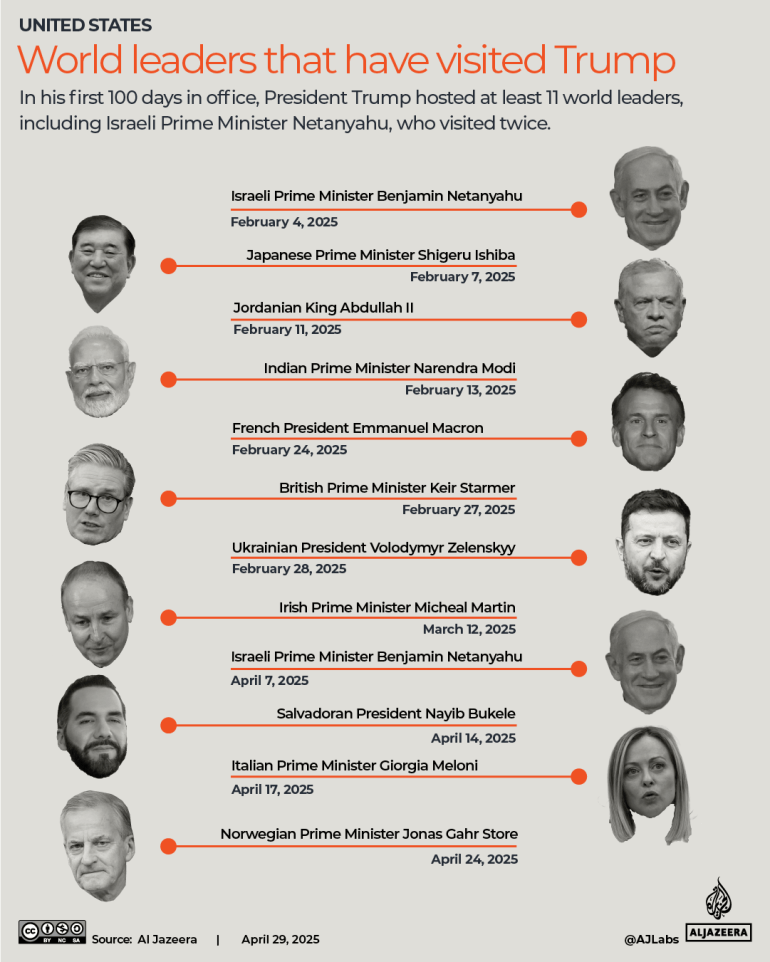
United States President Donald Trump is marking his first 100 days back in office with a rally in Macomb County, Michigan, just north of Detroit, a city renowned for its automotive industry. In the space of just more than three months, he has signed more executive orders than any other president, sent markets spiralling with tariffs and for the most part stuck to his America First policy, except when it comes to Israel. Al Jazeera looks at some of his biggest decisions in numbers: How did he use his executive powers? Trump has signed at least 142 executive orders so far, which, according to the American Presidency Project, is more than any other US president in their first 100 days in office. An executive order is a directive issued by the president to federal agencies that has the force of law but does not require congressional approval. On January 20, his first day in office, Trump signed 26 orders, which included pardoning more than 1,500 people convicted on January 6, 2021, Capitol riot charges; withdrawing from the World Health Organization; and renaming the Gulf of Mexico to the Gulf of America. Advertisement The majority of Trump’s executive orders have focused on immigration and border security as well as energy and trade. How many people were pardoned? Since returning to office, Trump has pardoned more than 1,500 people, including his supporters convicted in connection with the January 6, 2021, US Capitol riot after he lost the 2020 presidential election. Other notable pardons include Ross Ulbricht, founder of the Silk Road dark web marketplace, who was serving a sentence for drug trafficking and money laundering. DOGE cuts and layoffs Tech billionaire Elon Musk’s Department of Government Efficiency (DOGE) was created by Trump through an executive order on January 20, in which he gave DOGE a mandate to slash government spending. According to figures published on DOGE’s website, the organisation is estimating that it has cut $160bn from the federal budget, representing about 8 percent of the $2 trillion Musk had initially pledged to save. DOGE said the biggest cuts have been made to the Department of Health and Human Services ($47.4bn), Agency for International Development ($45.2bn) and Department of State ($2.6bn). These figures have, however, been criticised for lacking sufficient evidence to back them up. According to data collated by CNN, at least 121,000 workers have been fired from federal agencies with about 10,000 employees fired from the Agency for International Development (USAID), where 100 percent of the jobs were culled. USAID was the first agency Trump went after, and it has now been almost dissolved. Advertisement Tariffs and the economy Trump’s administration has implemented a flurry of tariffs to, in his words, reduce the US trade deficit, remedy unfair trade policies against the US, bring manufacturing jobs back to the country and generate income for the US government. Starting on February 1, Trump imposed 25 percent tariffs on Canadian and Mexican goods, including a 10 percent levy on Canadian energy, and hit Chinese goods with a 10 percent tariff. In the weeks that followed, Trump targeted steel and aluminium as well as auto imports with tariffs of 25 percent. By April, Trump had placed a baseline 10 percent tariff on goods imported from the rest of the world. China received the highest tariff rate at 145 percent. However, some exemptions have been applied to technology-related items, such as smartphones. Canada and Mexico are facing tariffs of 25 percent on goods that are noncompliant with the trilateral USMCA trade deal they have with the US, affecting $63.8bn worth of trade, according to Bloomberg News. The European Union is facing what is for now a suspended 20 percent tariff rate. How have the markets reacted? Since coming into office, Trump has sent shockwaves through the markets, largely due to his flip-flopping tariff announcements, which have caused uncertainty and volatility. Since the November election, despite an initial spike, all major indices have fallen: S&P 500 – down about 3.3 percent Nasdaq – down about 4.5 percent Dow Jones – down 5.3 percent Since inauguration day, the markets have fallen even further: Advertisement S&P 500 – down about 7.9 percent Nasdaq – down about 12.1 percent Dow Jones – down 8.9 percent Which world leaders have visited Trump? In his first 100 days in office, Trump has hosted at least 11 world leaders. Unsurprisingly, Israeli Prime Minister Benjamin Netanyahu was the first leader to arrive at the White House on February 4. It was during this visit that Trump said he would turn Gaza into the “Riviera of the Middle East”. (Al Jazeera) World leaders who have visited Trump include: Netanyahu on February 4 Japanese Prime Minister Shigeru Ishiba on February 7 Jordanian King Abdullah II on February 11 Indian Prime Minister Narendra Modi on February 13 French President Emmanuel Macron on February 24 British Prime Minister Keir Starmer on February 27 Ukrainian President Volodymyr Zelenskyy on February 28. This meeting was notable for its war of words between Trump and US Vice President JD Vance on one side and Zelenskyy on the other, which led to the US withdrawing military aid from Ukraine Irish Prime Minister Micheal Martin on March 12 Netanyahu for the second time on April 7 Salvadoran President Nayib Bukele on April 14 Italian Prime Minister Giorgia Meloni on April 17 Norwegian Prime Minister Jonas Gahr Store on April 24 Foreign policy: Stance on Ukraine, Gaza and Yemen Since entering office, Trump has said he maintains an America First policy. On Ukraine, Trump has criticised the scale of US spending under former President Joe Biden, arguing that European countries should shoulder a greater share of the burden. On March 3, Trump ceased all military aid to Ukraine, a move that drew sharp criticism from European allies. The Trump administration has held several meetings with Ukrainian and Russian officials to try to end the fighting. Advertisement In the Middle East, Trump has brandished proposals to take control of Gaza and redevelop
Fewer Texans see immigration as helping the U.S., poll finds

Eight years ago, 62% said immigration was more helpful than harmful. This year, that has fallen to 32%, according to the Texas Lyceum poll.