

Pope Francis and US presidents: A look back at his legacy with the nation’s leaders
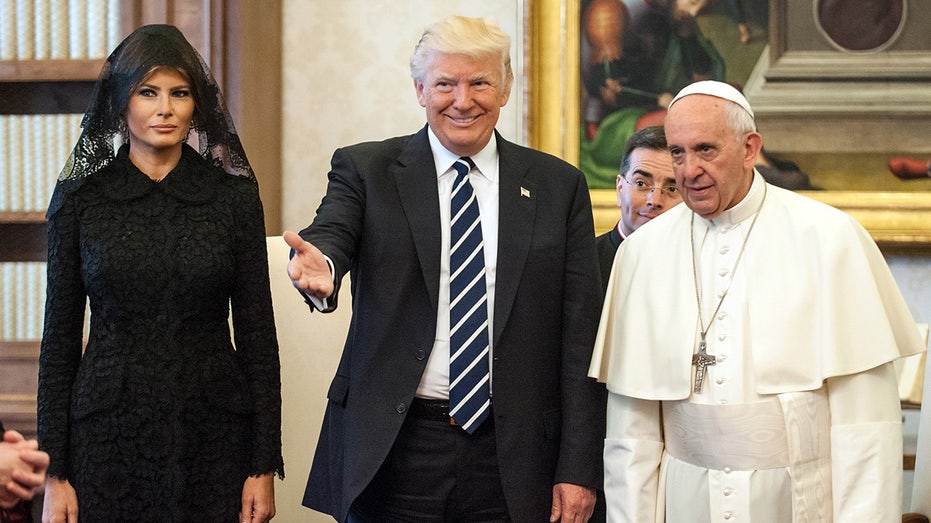
U.S. presidents mourned the death of Pope Francis, who served as the leader of the Catholic Church for 12 years, on Monday following the Vatican’s announcement of the pope’s passing. “Rest in Peace Pope Francis!” President Donald Trump said in a post on Truth Social on Monday. “May God Bless him and all who loved him!” The College of Cardinals elected Pope Francis, 88, to serve as the pope following Pope Benedict XVI in March 2013. His election marked the first time a non-European served as pope in more than 1,000 years. Pope Francis, born with the name Jorge Mario Bergoglio, originally hailed from Argentina. Pope Francis, who was hospitalized in February due to complications stemming from bronchitis and pneumonia, died Monday at the Vatican’s Casa Santa Marta. Vice President JD Vance, who converted to Catholicism in 2019, met with Pope Francis on Sunday in one of the reception rooms of the Vatican hotel just hours before the pope’s death. Vance acknowledged the visit in a post on X Monday while expressing his condolences to Christians who loved the pope, and shared a link to the transcript of one of the pope’s 2020 homilies. POPE FRANCIS DEAD AT 88, VATICAN SAYS “My heart goes out to the millions of Christians all over the world who loved him. I was happy to see him yesterday, though he was obviously very ill,” Vance said in a post on X on Monday. “But I’ll always remember him for the below homily he gave in the very early days of COVID. It was really quite beautiful. May God rest his soul.” Trump also signed an executive order Monday ordering all U.S. flags be flown at half-staff on all public buildings and grounds, at all military posts and naval stations, and on all naval vessels to remember Francis. The order also applies to all U.S. embassies, legations, consular offices, and other facilities abroad, including military facilities and naval vessels and stations. Here’s a look at Pope Francis’ legacy with other U.S. leaders: Pope Francis met with former President Barack Obama at the Vatican in March 2014. The two met again in September of the following year during Pope Francis’ visit to the White House, where the pope delivered a statement urging action on climate change. Following his visit to the White House, Francis also visited New York City and Philadelphia. Obama issued a statement Monday morning lauding the pope for his leadership. POPE FRANCIS EXPOSES CONFIDENTIAL DETAILS ABOUT HIS ELECTION AND RELATIONSHIPS IN LENGTHY INTERVIEW “In his humility and his gestures at once simple and profound – embracing the sick, ministering to the homeless, washing the feet of young prisoners – he shook us out of our complacency and reminded us that we are all bound by moral obligations to God and one another,” Obama said in a post on X Monday morning. “Today, Michelle and I mourn with everyone around the world – Catholic and non-Catholic alike – who drew strength and inspiration from the Pope’s example,” Obama said. “May we continue to heed his call to ‘never remain on the sidelines of this march of living hope.’” Trump met with Pope Francis in 2017 during a trip to the Vatican, and told reporters later that they had a “fantastic meeting.” However, the two remained at odds with one another over Trump’s border policies for the last decade. “A person who thinks only about building walls, wherever they may be, and not building bridges, is not Christian,” Pope Francis said in February 2016 amid Trump’s push on the campaign trail to build a border wall and crack down on illegal immigration. In response, Trump said: “For a religious leader to question a person’s faith is disgraceful.” Pope Francis routinely issued similar statements, and in February penned a letter to U.S. Catholic bishops and voiced concern about the Trump administration’s mass deportation plans. “The act of deporting people who in many cases have left their own land for reasons of extreme poverty, insecurity, exploitation, persecution or serious deterioration of the environment, damages the dignity of many men and women, and of entire families, and places them in a state of particular vulnerability and defenselessness,” Pope Francis said in the letter. Former President Joe Biden, the second Catholic U.S. president, visited the Vatican in October 2021, where he and Pope Francis met to discuss topics including climate change and advocacy for the poor, according to a readout of the meeting. Biden had previously met Pope Francis on several other occasions, including during the pope’s visit to the U.S. in 2015. Biden also met with Pope Francis in June at the G7 Leaders’ Summit in Apulia, Italy, where the two discussed the ongoing Israel-Hamas war, the humanitarian crisis in Gaza, and the conflict between Ukraine and Russia, according to a readout of the meeting. Biden, who awarded Pope Francis the Presidential Medal of Freedom in January, described him as a “consequential” leader on Monday who was a “Pope for everyone.” “He was unlike any who came before him,” Biden said in a post on X Monday morning. “Pope Francis will be remembered as one of the most consequential leaders of our time and I am better for having known him. For decades, he served the most vulnerable across Argentina and his mission of serving the poor never ceased. As Pope, he was a loving pastor and challenging teacher who reached out to different faiths.” Fox News’ Emma Colton contributed to this report.
Israeli report on killing of Gaza medics “full of lies” say critics

NewsFeed An Israeli military investigation says “professional failures” and poor night vision led its troops to shoot dead 15 Palestinian rescue workers in Rafah on March 23. The report contradicts weeks of Israeli statements which claimed the medics posed a threat to Israeli troops. Published On 21 Apr 202521 Apr 2025 Adblock test (Why?)
Trump risks leaving behind a legacy of failure in Ukraine
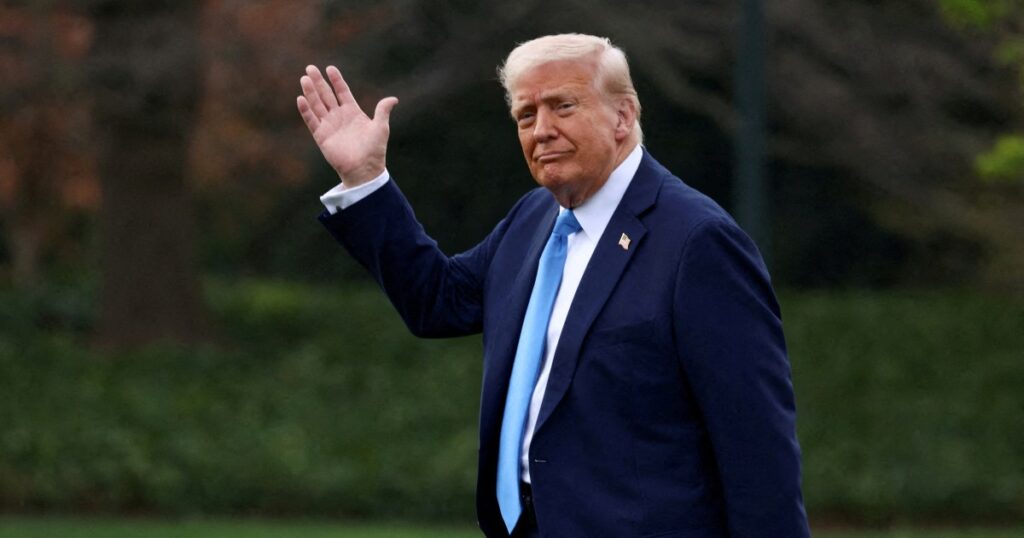
A day before Easter, Russian President Vladimir Putin announced a temporary ceasefire for the Christian holiday. Like other Russian promises, this one was broken too. Ukrainian media reported Russian drone attacks, shelling and firefights across the front lines. Ukrainian civilians were also targeted. This ceasefire that wasn’t came on the tail of another one: a 30-day ceasefire that was supposed to cover energy infrastructure. That was violated at least 30 times, per Ukrainian media reports. Throughout this time, United States President Donald Trump has continued to maintain that peace could be achieved. Even after his own Secretary of State Marco Rubio warned that the US could walk away from its mediator role because of lack of progress, the president still showed optimism that a deal was possible. On Easter Sunday, Trump wrote on Truth Social: “Hopefully Russia and Ukraine will make a deal this week.” A week earlier, Russia struck the Ukrainian city of Sumy with ballistic missiles. The death toll from the attack reached 34 people, including two children, with more than a dozen injured. Even this bloody attack did not sway the US president, who called it “a mistake”. Advertisement It is by now clear that three months into his presidency, Trump is failing dramatically in Ukraine. He must now realise that bold promises are easier made than fulfilled. He has not ended the war in 24 hours and will not do so in 100 days either, as he has promised. Under his leadership, Washington’s mediating drive appears stalled and its strategy unclear. A president who prides himself on deal-making and strength now stands indecisive and ineffective. If this continues, Trump risks failing twice: once as a negotiator and again as an ally. His current approach is not only weakening the role of the US in the world but also emboldening Russia to continue its aggression. Despite the Trump administration’s outreach to the Kremlin, it has received nothing more than empty rhetoric and broken promises for ceasefires. Putin’s stance hasn’t changed: He demands recognition of Russia’s claim to Crimea and four Ukrainian regions the Russian army partially occupies, no NATO membership for Kyiv and a limit on the size of its army. He has also openly called for regime change in the country, demanding elections during the war. Putin feels he’s negotiating from a position of strength and refuses to compromise. Trump currently lacks the leverage to make him reconsider, and so his strategy is to pressure Ukraine into capitulating to Russia. He is making the situation worse with his policies on military aid for Ukraine. After initially halting the transfer of weapons and munitions and intelligence sharing with Ukraine, Trump partially reversed his stance. He allowed military assistance approved by the administration of his predecessor President Joe Biden to resume, but he has refused to consider a new package once the current one comes to an end. Advertisement His administration still has several billion dollars available for drawdown, which could be allocated for further security support to Ukraine, but Trump has not signalled he is willing to approve it. That means Ukraine will soon face a situation in which key munitions stocks run out. Russia knows this, and it is using negotiations with the US to buy time. While it is waiting for the Ukrainian army to run out of vital supplies, Moscow has also initiated a large troop mobilisation. The call-up of 160,000 new conscripts marks a significant escalation. Ukrainian commanders have warned that major offensives could begin within weeks across multiple fronts. Putin’s aim is to use the Trump administration’s self-professed “peace-making” ambitions to his advantage. His strategy is to drag out ceasefire negotiations until US military aid runs out and the Russian army is able to advance far enough into Ukrainian territory to force Kyiv into capitulation. For Ukraine, defeat is not an option. The nation is still standing and will continue fighting because its freedom and independence are at stake. Even if Trump puts more pressure on Kyiv to consider a bad “peace deal” with Russia in which it makes all the concessions Putin wants, no Ukrainian leader would sign it because that would mean political ruin. Europe, for all its hesitations and internal divisions, has little choice now but to become a full-fledged ally of Kyiv. Europeans know Russia would not stop at Ukraine, and the threat is existential for them as well. The Kremlin is already preparing the Russian population through a large-scale propaganda campaign that a “great war” with NATO countries is necessary. Advertisement In the face of this threat, European countries are looking to rearm, and for this, they need time. This means that Ukraine’s war of liberation will continue for years, with or without US involvement. Meanwhile, the US under its current course will sink deeper into domestic crises, consumed by the aftershocks of self-isolation and haunted by costly decisions in a world it no longer leads. This will be what Trump leaves behind: a legacy not of resolution but of retreat. If he does not change course, history will remember him not as a strong leader who brought peace but as a boastful, naive man who made promises he could not fulfil. The views expressed in this article are the author’s own and do not necessarily reflect Al Jazeera’s editorial stance. Adblock test (Why?)
‘A cancer’: UN warns Asia-based cybercrime syndicates expanding worldwide
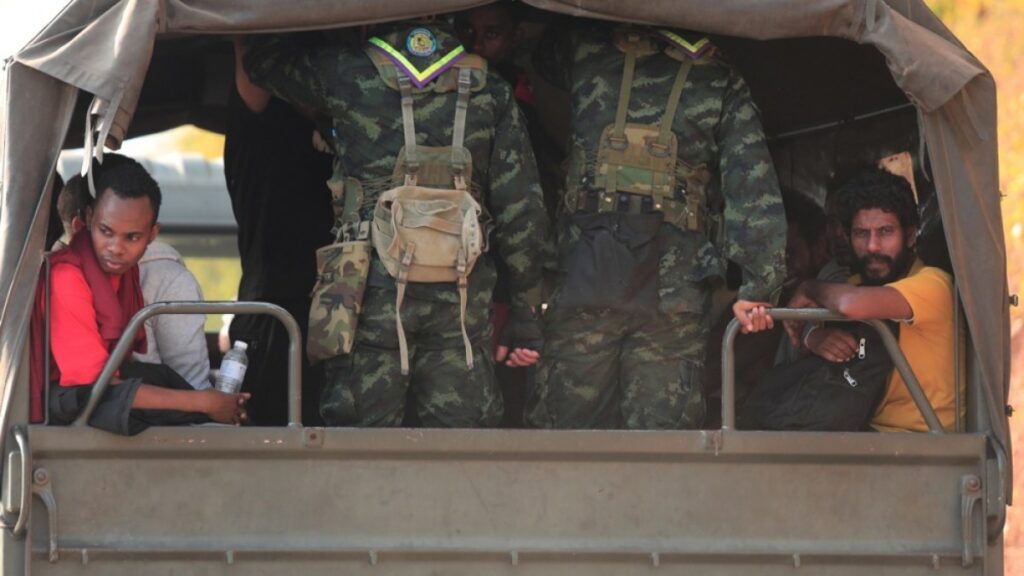
Agency says gangs caused $37bn in losses in Asia as they gain new footholds in Africa, South America, and Middle East. Asian cybercrime syndicates have caused an estimated $37bn in losses in the East and Southeast Asian regions, with the United Nations warning that the reach of the criminal networks is expanding globally. In a report released on Monday, the UN Office on Drugs and Crime (UNODC) detailed how Chinese and Southeast Asian gangs have been raking in tens of billions of dollars annually targeting victims in an array of cybercrimes, including fake investments, cryptocurrency, romance and other scams. The criminal organisation have largely operated out of squalid compounds in the border areas of Myanmar, as well as in so-called “special economic zones” designed to attract foreign investment in Cambodia and Laos. They have relied on often trafficked workers forced to work in squalid compounds. While the report said countries in East and Southeast Asia lost an estimated $37bn to cyber-fraud in 2023, there were “much larger estimated losses” worldwide. The report warned that the networks have been spreading to South America, Africa, the Middle East, Europe, and the Pacific Islands. Advertisement “We are seeing a global expansion of East and Southeast Asian organized crime groups,” said Benedikt Hofmann, UNODC acting regional representative for Southeast Asia and the Pacific. “This reflects both industry growth and a strategy to evade crackdowns in Southeast Asia,” Hofmann said. ‘Spreads like a cancer’ The report said the syndicates have established footholds in African nations, including Zambia, Angola, and Namibia, as well as Pacific island nations, including Fiji and Vanuatu. They have also expanded their money laundering strategies, forging alliances with South American drug cartels, the Italian mafia, and Irish mobsters, according to the report. Cryptocurrency mining – typically referring to the creation of new cryptocurrencies and the validation of transactions – has become a key tool for obscuring illicit funds, according to the report. In one instance, in June 2023, Libyan authorities raided an illegal crypto mining operation in a militia-controlled area, arresting 50 Chinese nationals. Recent crackdowns in Myanmar, backed by China, also freed about 7,000 trafficked workers. However, the UN warned that while enforcement disrupts operations temporarily, the syndicates have proven adept at adapting. “It spreads like a cancer,” said Hofmann. “Authorities treat it in one area, but the roots never disappear, they simply migrate.” New technologies have further complicated the situation, with criminal networks operating self-contained digital ecosystems, using encrypted messaging, payment apps, and cryptocurrencies to evade law enforcement, the report said. Advertisement The UN agency further warned of “potentially irreversible spillover has taken place…leaving criminal groups free to pick, choose, and move … as needed”. It urged countries to collaborate and intensify efforts to disrupt criminal networks’ financing. Adblock test (Why?)
Pandemic, price tags and privacy concerns: Why it took 20 years to implement REAL ID

Secretary of Homeland Security Kristi Noem’s announcement that REAL IDs will be required to fly starting May 7 has forced Americans to finally get compliant – 20 years after Congress passed the law. On May 11, 2005, President George W. Bush signed the REAL ID Act into law to enhance national security in the aftermath of the Sept. 11, 2001, terrorist attacks. Passed by the U.S. Congress, the act set federal standards for issuing identification cards, like driver’s licenses. Starting next month, REAL ID will be required to access federal facilities, enter nuclear power plants and board commercial aircraft. REAL ID’s rollout has faced nearly two decades of political pushback, setbacks and delays. In the two years after it was passed, the National Governors Association (NGA), the National Conference of State Legislatures (NCSL) and the American Association of Motor Vehicle Administrators (AAMVA) called for delaying its implementation, citing logistical concerns. ‘MASS SURVEILLANCE’: CONSERVATIVES SOUND ALARM OVER TRUMP ADMIN’S REAL ID ROLLOUT Since its passing, states and advocacy groups have rejected its implementation. The American Civil Liberties Union (ACLU) – a longtime opponent of REAL ID implementation – called it “discriminatory, expensive, burdensome, invasive, and ultimately counterproductive” in 2007 as disapproval grew nationwide. By 2009, at least 25 states had enacted legislation opposing the REAL ID Act. TOP TRUMP AGENCY REVEALS KEY REASON WHY REAL ID WILL BE ENFORCED States rejected REAL ID for a range of reasons, including costs, states’ rights and privacy concerns. Three years after the law was passed, REAL ID’s first deadline was set for May 11, 2008. But in the face of opposition, DHS extended the deadline to May 11, 2011, under President Barack Obama’s administration. DHS later implemented a four-phase plan that extended beyond the 2011 deadline. By 2016, 23 states were fully compliant with the REAL ID Act, 27 states and territories were granted extensions, and six were noncompliant without extensions, according to a DHS letter. By Jan. 22, 2018, travelers would no longer be allowed to use a state-issued ID for domestic travel, and by Oct. 1, 2020, REAL ID “or another acceptable form of identification” would be required for domestic air travel. Due to the COVID-19 pandemic, President Donald Trump extended the REAL ID deadline to Oct. 1, 2021. That deadline was later extended to May 3, 2023, by President Joe Biden’s administration “due to circumstances resulting from the ongoing COVID-19 pandemic.” The Biden administration finally extended the deadline to May 7, 2025, to give states “additional time to ensure their residents have driver’s licenses and identification cards that meet the security standards established by the REAL ID Act.” CLICK HERE TO GET THE FOX NEWS APP Noem announced the May 7, 2025, deadline would hold as the Trump administration seeks to prevent illegal immigrants from traveling within the United States. “Starting May 7, you will need a REAL ID to fly. REAL IDs make identification harder to forge, thwarting criminals and terrorists. If you plan to fly, make sure you get a REAL ID so you won’t be denied from your flight or face travel delays!” Noem said.
Media personality Steve Hilton enters California gubernatorial race
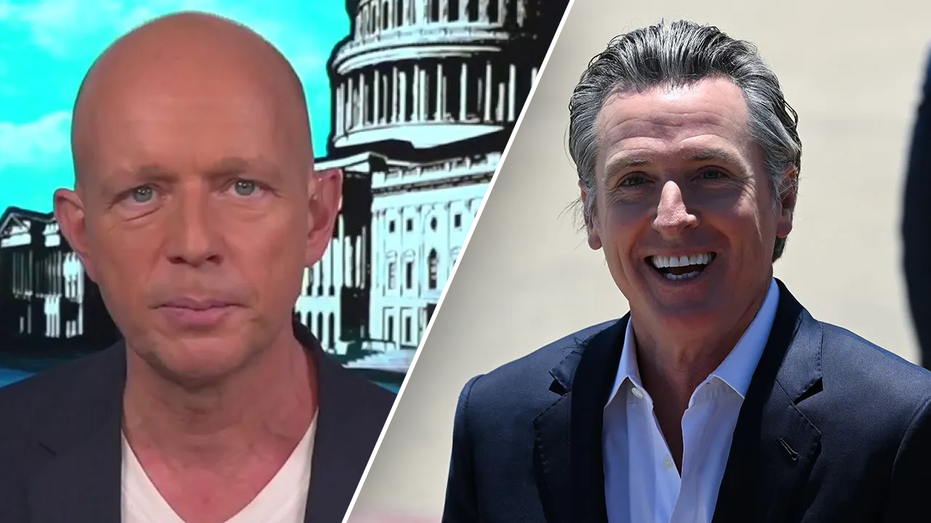
EXCLUSIVE: The California 2026 gubernatorial race just got a major shakeup with Republican Steve Hilton entering the race to be Gov. Gavin Newsom’s successor. The former Fox News contributor and author of “Califailure” said he’s hoping to “Make California Golden Again,” especially for the “working people” of the state. “A big decision that I’ve made, which I can now share with you, that I am, in fact, going to be running for governor of California for 2026. I love this state. It’s the best place in the world as far as I’m concerned,” Hilton told Fox News Digital in an exclusive interview. THIS IS HOW WE’LL KNOW IF CALIFORNIA GOV. GAVIN NEWSOM’S EPIPHANY ON ‘LIBERAL GOVERNANCE’ IS REAL “But after 15 years of one-party rule, this state is barely recognizable. And I honestly think that the 2026 election in California is a life-or-death moment because if we continue with this one-party rule by the Democrats, things are just gonna really start to deteriorate very rapidly,” he added. Hilton was born in the U.K. and graduated from New College at Oxford. He served as a senior advisor to former British Prime Minister David Cameron, who was the leader of the Conservative Party. “[California] really reminds me of Britain in the 1970s. The UK was called the ‘sick man of Europe’, Hilton explained in a campaign announcement video obtained by Fox News Digital. “There’s no other way of looking at California today than the ‘sick man of America’.” After moving to California in 2012, Hilton embraced the American entrepreneurial spirit and co-founded Crowdpac.com, a Silicon Valley tech start-up company. Hilton’s contribution to the conservative media across various outlets throughout his time in the U.S. landed him his own show, ‘The Next Revolution’, on Fox News Channel. The Sunday night program aired weekly from 2017 to 2023. Newsom is termed out, and candidates are lining up for a shot for his spot in Sacramento. On the Democratic side, Lt. Gov. Eleni Kounalakis, former Health and Human Secretary Xavier Becerra, former Los Angeles Mayor Antonio Villaraigosa and former Rep. Katie Porter are among the long list of names seeking the job. On the Republican side, Riverside County Sheriff Chad Bianco has been on the campaign trail for the job. Although Democrats have a supermajority in the legislature, a recent poll of likely California voters indicated that 48% would consider backing a Republican for governor, according to the Sacramento Bee. “We have a combination of idiots and ideologues who’ve been running this state into the ground, ruining what I consider to be the greatest state and the greatest nation on earth, and it’s time for change,” Hilton said. FOR KAMALA HARRIS, CHANCES OF A POLITICAL COMEBACK MAY BE BLEAK Most notably, former Vice President Kamala Harris is weighing a run following her 2024 presidential loss. Harris would quickly be considered the Democratic front-runner if she were to decide to join in. The Golden State is facing serious questions about its future in the wake of not only the fires that ripped through Los Angeles County, but as it navigates issues such as crime, homelessness, and fiscal management for programs like Medi-Cal. Hundreds of thousands of Californians have moved out of the state each year at an accelerated rate after the pandemic, according to U.S. Census Bureau data. The cost of living for many Californians is higher than in the rest of the nation, including when it comes to taxation and gas prices. LOS ANGELES ISSUES ONLY 4 PERMITS TO REBUILD HOMES AFTER DEVASTATING PALISADES FIRE: REPORT “We have the highest taxes in the country, but also the highest rate of poverty. You have one-third of Californians who can’t meet their basic needs. We have the highest housing costs. It’s the number one reason people are leaving the state,” Hilton said. The Republican said that the Golden State was once known for “upward mobility” and being the land of opportunity, but it’s become much more difficult to survive. “California represented the best of America. I think for many people, when they thought of the American dream, they thought of California and the California Dream,” he added.
State Dept defends human rights abuse report changes, says streamlined process eliminates ‘political bias’

The State Department is pushing back against criticism of its changes to the process of reporting human rights abuses. NPR reported last week that the Trump administration was scaling back annual reports meant to inform congressional decisions on allocating foreign aid to countries, claiming the State Department was “changing its mind on what it calls human rights.” Fox News Digital is told the 2024 Human Rights Report has been restructured to remove redundancy, increase readability, and return the focus to human rights abuses – instead of a “laundry list of politically biased demands and assertions.” RUBIO ANNOUNCES CLOSURE OF STATE DEPARTMENT EFFORT THAT ‘WAS SUPPOSED TO BE DEAD ALREADY’ “NPR’s report that the State Department is scaling back the Human Rights Report is misleading and misguided,” a senior State Department official told Fox News Digital. “This year’s modifications are critical for removing report redundancy, increasing readability, maintaining consistency to U.S. statutes, and returning focus to human rights issues rather than political bias.” Fox News Digital is told the restructuring of the reports “will be more responsive to legislative mandates that underpin the report” and “does not reflect a change in U.S. policy on promoting respect for human rights around the globe or in any particular country.” The State Department notably has attempted to streamline the reports to better align with statutory requirements under both Republican and Democratic administrations. NPR and Politico reported on an internal memo that purportedly showed the 2024 Human Rights Report, which was finished in January but has been adjusted under the new administration, will no longer include references to diversity, equity and inclusion (DEI) or sections on discrimination or abuse against the LGBTQ+ community. STATE DEPARTMENT’S ‘GLOBAL ENGAGEMENT CENTER’ ACCUSED OF CENSORING AMERICANS SHUTS ITS DOORS The annual reports – known as “Country Reports on Human Rights Practices” – normally come out in March or April. NPR said sections that called out countries for “forcibly returning a refugee or asylum-seeker to a home country” or the “serious harassment of human rights organizations” would be absent this year. NPR also stressed that prior reports had sections detailing countries’ “involuntary or coercive medical or psychological practices,” “arbitrary or unlawful interference with privacy,” “serious restrictions to internet freedom,” “extensive gender-based violence,” and “violence or threats of violence targeting people with disabilities,” but the new report would not. Paul O’Brien, executive director of Amnesty International, USA, criticized the changes under the Trump administration. He told NPR: “What this is, is a signal that the United States is no longer going to [pressure] other countries to uphold those rights that guarantee civic and political freedoms – the ability to speak, to express yourself, to gather, to protest, to organize.” During President Donald Trump’s first term, former Secretary of State Mike Pompeo cited what he categorized as a “proliferation of human rights” on the global stage. CLICK HERE TO GET THE FOX NEWS APP “We wanted to go back to first principles, back to our founding documents, our Declaration of Independence, our Bill of Rights to focus on those things that are central to the understanding of rights here in America,” he said in July 2020. Secretary of State Marco Rubio is overseeing changes at the department during Trump’s second term. Last week, he announced the closure of the State Department’s Counter Foreign Information Manipulation and Interference (R/FIMI), formerly known as the Global Engagement Center (GEC), which he accused of costing taxpayers more than $50 million per year and spending “millions of dollars to actively silence and censor the voices of Americans they were supposed to be serving.”
What American Catholics thought about Pope Francis
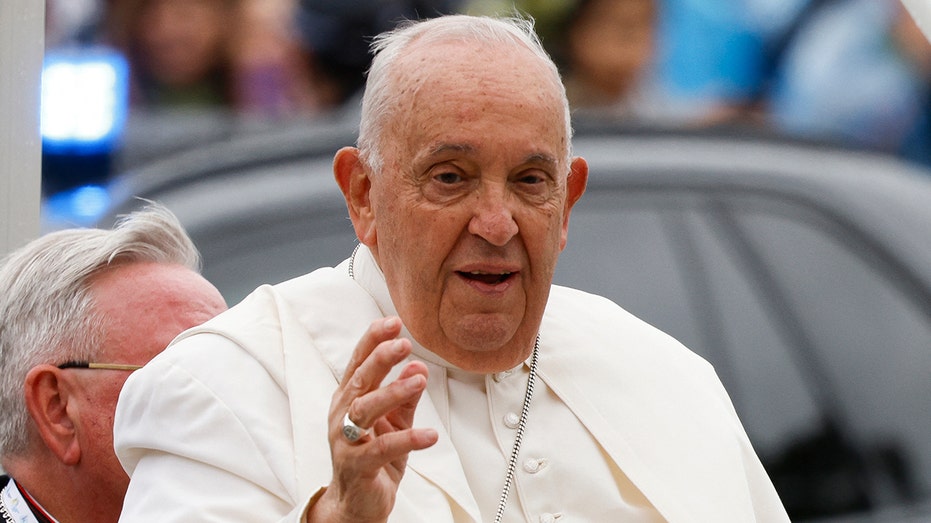
Pope Francis, who changed the face of the papacy, was broadly popular with the more than 60 million U.S. Catholics, according to recent public opinion polling. Seventy-eight percent of American Catholics expressed a favorable opinion of the pope in a Pew Poll conducted in early February, shortly before Francis’ lengthy hospitalization for a case of double pneumonia. The 88-year-old pope died on Monday Francis’ popularity among American Catholics was constant throughout his dozen-year tenure as pope, with his favorability peaking at 90% in a February 2015 poll by Pew. CLICK HERE FOR LIVE FOX NEWS UPDATES ON THE PASSING OF POPE FRANCIS “Pope Francis enjoyed broad support among American Catholics – certainly exceeding the popularity of any elected officials in the U.S.,” veteran political scientist Wayne Lesperance, the president of New England College, told Fox News. U.S. Catholics also generally viewed Francis more positively than his immediate predecessor in the Vatican, Pope Benedict XVI. FIVE WAYS POPE FRANCIS IMPACTED THE CATHOLIC CHURCH Benedict’s favorability ratings ranged between 67% and 83% in Pew polling during his eight years as pope. While popular with many Catholics, Francis’ attempts to make the church more inclusive made him an enemy to some in the conservative wing of the church. And there was plenty of pushback against the pope’s moves to overhaul a very divided church. Those divisions may have contributed to a partisan divide when it comes to U.S. Catholics’ views of Francis. According to the February Pew Poll, 88% of U.S. Catholics who identified as Democrats or leaned toward the Democratic Party had a positive view of the pope. But favorable opinions of Francis dropped to 69% among U.S. Catholics who said they were Republicans or leaned toward the GOP. “His reform agenda, emphasizing values that sought to lift up the poorest, most marginalized individuals in the world, played better with Catholic Democrats than Republicans,” Lesperance noted. “And despite being critical of the current administration’s position on building the wall, mass deportations, and migrants, the late pope enjoyed the support of nearly two-thirds of Catholic Republicans. His legacy will be one of reform and social justice for Catholics across the globe.”
Delhi ready against heatwaves, govt to deploy warning system, cool roof technology, under Delhi Heat Action Plan

An early warning system for heatwaves, green roofs at bus stops, deployment of ‘Aapda Mitra’ volunteers, installation of 3,000 water coolers, and dedicated heatstroke wards in hospitals are among the key measures outlined in the Delhi Heat Action Plan 2025. The action plan, aimed at combating the effects of rising temperatures, was launched at an event on Monday by Chief Minister Rekha Gupta, who also inaugurated three Cool Roof pilot projects in the city. “Our mission is to make Delhi heat-resilient, protect lives and make every season livable for its residents,” the chief minister said.
Do you know PM Modi had a special gift for JD Vance’s children?

Prime Minister Narendra Modi on Monday, i.e., April 21, welcomed US Vice President JD Vance, his wife Usha Vance and their three children – Ewan, Vivek and Mirabel to his official residence, 7 Lok Kalyan Marg, New Delhi.