

“It’s what’s best for a very select few”: Some Texans are skeptical about vouchers as they near the finish line
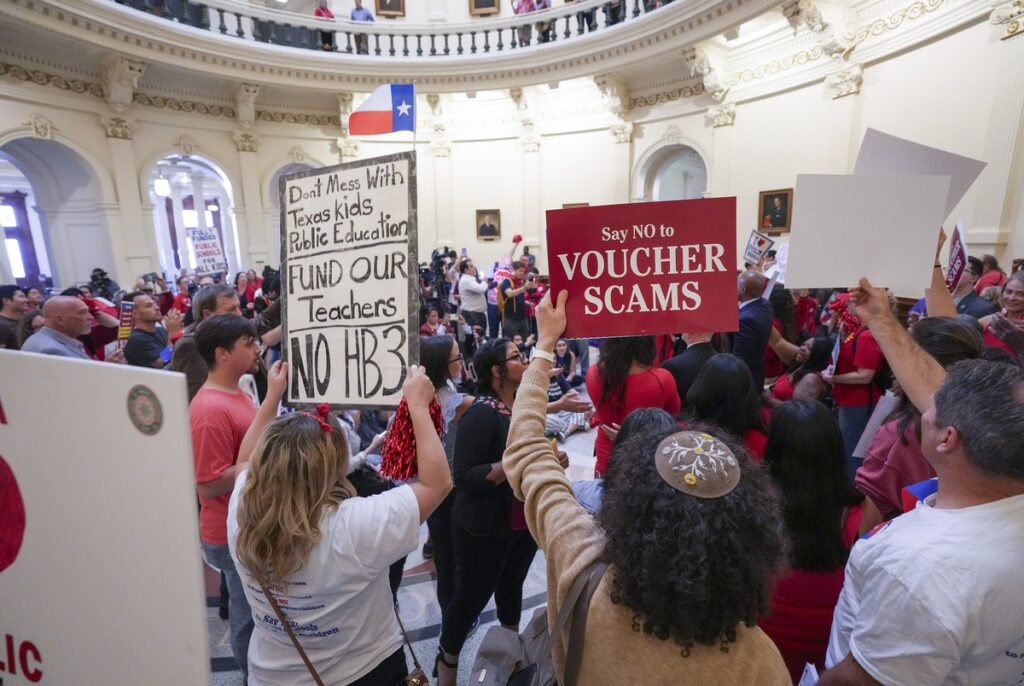
Texas Republican lawmakers in regions known for support of public schools defended voting for vouchers, saying they gained leverage to seek concessions.
With the border quiet, Texas ponders spending another $6.5 billion on border security
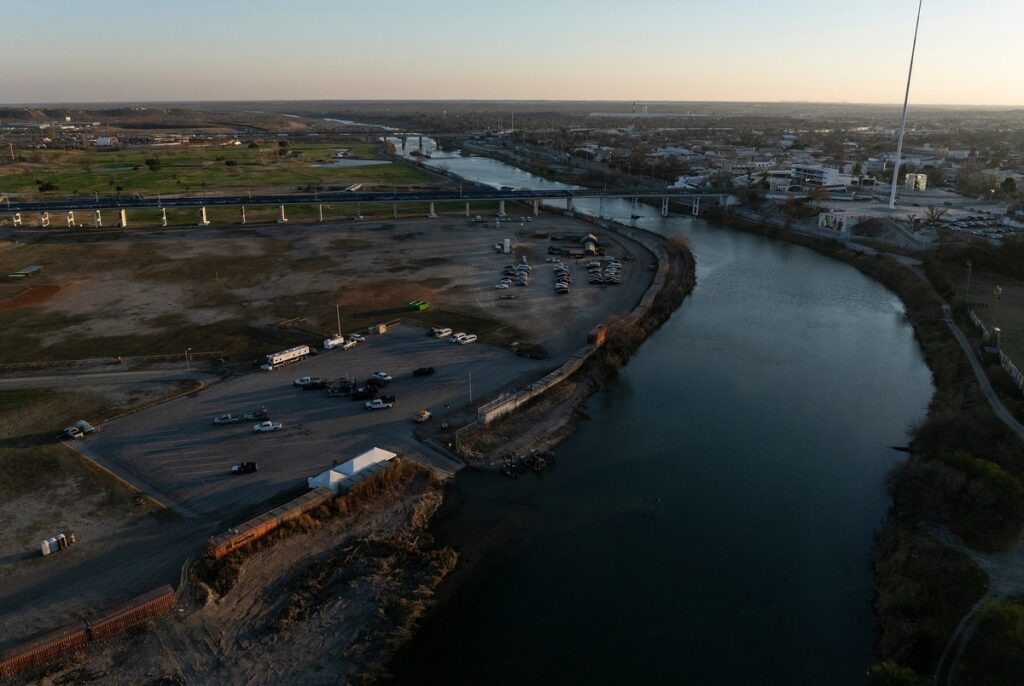
Some are questioning whether lawmakers should commit billions more to border security with illegal crossings dwindling and a Trump immigration crackdown.
California mayor wants to give homeless people ‘all the fentanyl they want’: ‘Need to purge these people’

A Southern California mayor said he wants to eliminate his city’s homeless population by “giving them all the fentanyl they want,” a controversial comment he doubled down on by saying he supports a federal “purge” of homeless people. Lancaster Mayor R. Rex Parris, a Republican, made the comments during a city council meeting on Feb. 25 when a resident questioned him about the city’s plan to address the homeless crisis by “enclosing” the homeless population in a single encampment in an abandoned golf course near a residential neighborhood. “What I want to do is give them free fentanyl. That’s what I want to do,” Parris responded. “I want to give them all the fentanyl they want,” he reiterated. NECKTIES IN DRESS CODES MAY BE NEXT TO FACE A BAN IN CALIFORNIA, IF MAYOR’S PROPOSAL GAINS TRACTION The resident replied that the mayor’s approach “was not kind.” The mayor is now facing a recall effort following his comments at the city council meeting, although it has only collected 6% of its goal of 20,000 signatures. He has faced past scrutiny over his controversial moves, including his decision to extend mayoral terms from two years to four. “For too long, Mayor R. Rex Parris has prioritized personal gain over the well-being of residents. His administration has been marked by mismanagement, controversial policies, and a disregard for transparency,” a recall petition reads. “Lancaster deserves leadership that listens, serves, and uplifts the community – not one that divides and exploits it,” it adds. But Parris has reaffirmed his position about wanting to give homeless people the illicit drug that kills thousands of Californians per year. He told Fox 11 on Friday that he has no regrets about his remarks and that he was referring to homeless criminals who “refuse” to seek help. “I made it very clear I was talking about the criminal element that were let out of the prisons that have now become 40 to 45% of what’s referred to as the homeless population,” Parris said. “They are responsible for most of our robberies, most of our rapes, and at least half of our murders,” he continued. “There’s nothing that we can do for these people.” The mayor did not provide data to back up his claims about the number of crimes homeless people are responsible for. Parris said he did not expect his comments to be taken “literally,” telling the outlet that fentanyl is “so easy” to obtain on the streets that it would not make a difference if the city offered the opioid to homeless people for free. The mayor sought to credit Lancaster for providing more “innovative” solutions to the homeless crisis than other U.S. cities and floated the idea of a federal “purge” to cut down on the homeless population. HOMELESS MAN WINS $1 MILLION ON LOTTERY SCRATCHER FROM CALIFORNIA LIQUOR STORE: REPORT “Quite frankly, I wish that the president would give us a purge. Because we do need to purge these people,” Parris said. “Now, is it harsh? Of course, it is harsh,” he continued. “But it’s my obligation as the mayor of the city of Lancaster to protect the hardworking families that live there, and I am no longer able to do it… It’s an untenable situation, and I’m open to any solution… I want these people out of our city.” Parris, who has been mayor since 2008 and won re-election last year, also made a controversial move in 2018 when he proposed banning workplace dress codes that require wearing neckties over claims that they restrict blood flow to the brain.
Biden green energy project halted by Trump admin relied on rushed, bad science, study finds
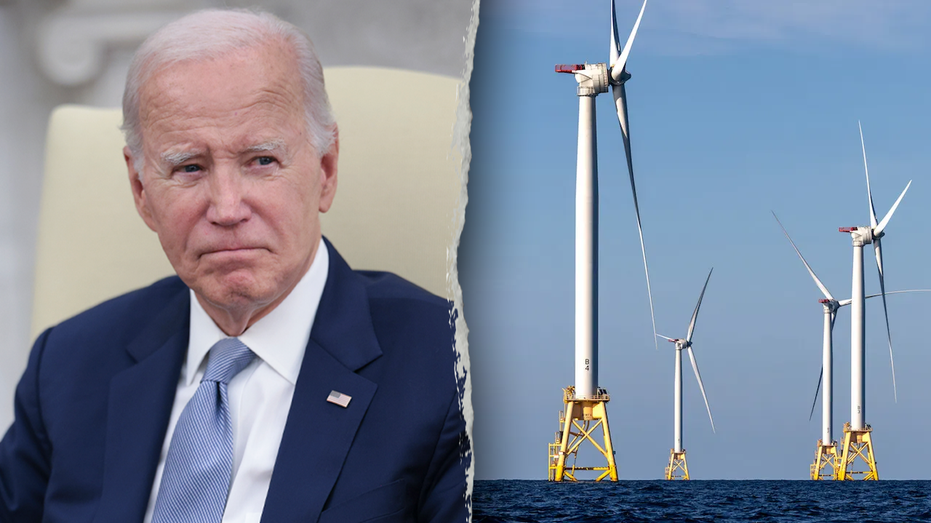
A $5 billion green energy project touted by the Biden administration and Democrats was rushed and relied on faulty science that could have resulted in severe negative environmental impacts, a new study found. The Empire Wind Project, which was being developed by energy company “Equinor” and was slated to see the construction of 147 ocean wind turbines off the coasts of New York and New Jersey, was halted by the Trump Department of the Interior in a move announced this week. The project was estimated to cost a total of $5 billion and was being developed under contract with the New York State Energy Research and Development Authority. On Wednesday, Secretary of the Interior Doug Burgum said the project would remain halted pending “further review of information that suggests the Biden administration rushed through its approval without sufficient analysis.” COAL IS A ‘TRIPLE WIN’ AND TRUMP UNDERSTANDS THAT, DOUG BURGUM SAYS A review by the National Oceanic and Atmospheric Administration (NOAA) appears to back up the Trump administration’s concerns. The agency found the Empire Wind approval process relied on rushed, outdated and incomplete scientific and environmental analysis, leading to project leaders making decisions not based on the best available information. The NOAA said that “monitoring plans to assess project effects on fisheries and habitat resources were inadequate, and existing compensation mechanisms fell short due to flawed scientific methodologies.” Ultimately, these deficiencies “limited the ability to avoid and minimize conflicts between development and marine resources at both stages.” REPUBLICANS SEEK TO END TAXPAYER FUNDING OF ‘GREEN ENERGY BOONDOGGLES’ ON AGRICULTURAL LANDS The result was that several sensitive habitats, spawning grounds, and important regional commercial and recreational fishing areas were included within the wind farm area. “Critical areas that support commercial and recreational fisheries were not excluded from leasing, and proposals that emphasized maximum development scenarios further restricted opportunities to reduce impacts on fisheries and important habitats,” the NOAA’s study found. In total, approximately 139 acres of seabed would have been permanently altered by wind turbine generators and equipment and an additional 1,554 acres would have been altered by the installation of a submarine cable connecting the turbines to the land. Additionally, the project did not account for new information about adverse construction impacts of other ocean wind farms, such as the catastrophic turbine blade failures that occurred in 2024 at another Biden wind farm off the coast of Massachusetts, as well as problems with persistent fish kills associated with the Coastal Virginia Offshore Wind project. BIDEN ADMIN QUIETLY RELEASED STUDY SHOWING GREEN ENERGY RECEIVES FAR MORE SUBSIDIES THAN FOSSIL FUELS Despite these concerns, New York Governor Kathy Hochul, a Democrat, has vowed to fight the Trump administration’s decision to halt the project. After Burgum announced the project was being halted, Hochul slammed the decision, saying, “Permits secured. Shovels in the ground. 1,000 union workers earning a paycheck. Now the federal government wants to kill Empire Wind 1, putting jobs, affordable energy, and our economic future at risk.” Hochul pledged to “fight them every step of the way.” A Thursday statement by Equinor said that Empire is complying with the government’s order to halt construction but noted it is “engaging with relevant authorities to clarify this matter and is considering its legal remedies, including appealing the order.”
US Vice President JD Vance visits Delhi’s Akshardham Temple with wife Usha Vance and kids, watch here

Akshardham temple spokesperson, Radhika Shukla, said that the US Vice President spent 55 minutes exploring the temple, appreciating its intricate carvings, and offering prayers for world peace.
Nishikant Dubey: From ATC trespass to allegations against judiciary, does BJP Godda MP enjoy controversies?

After targeting the CJI, Godda BJP MP Nishikant Dubey attacked former Chief Election Commissioner SY Quraishi. He wrote in Hindi, “You were not an election commissioner, you were a Muslim commissioner.”
Mumbai to Goa in 6 hours as this highway will cut travel time between these two cities, project set to be competed by…

The project has faced several delays over the years. The main reasons included problems with land acquisition, legal hurdles, and issues between different departments.
Bitter truth: Why has chocolate become so expensive?
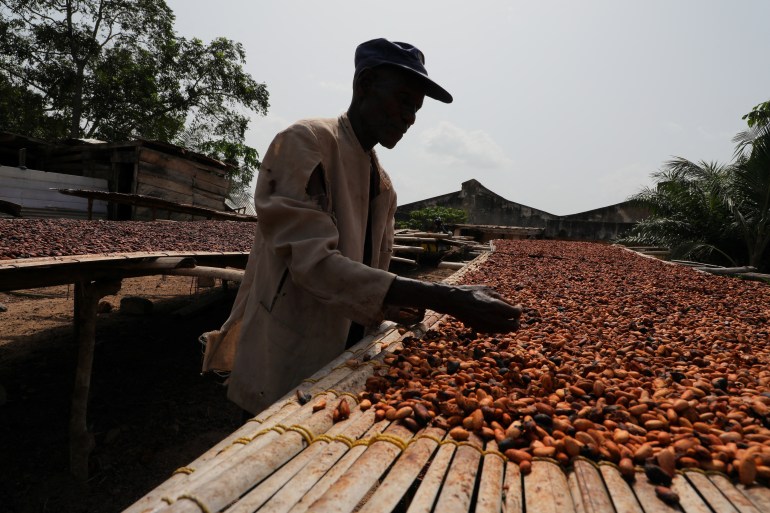
Cocoa prices surged almost 300 percent last year, making chocolate bars, Easter eggs and cocoa powder much more expensive this year than last. In the United States, retail chocolate prices were one-fifth higher this Valentine’s Day compared with last year, according to Wells Fargo Bank. The price of a king-size US-sold Reese’s Hearts chocolate bar was 13 percent higher in February 2024 than in the same month the year before. In the United Kingdom, meanwhile, a Twix white chocolate Easter egg rose in price from 5 to 6 pounds ($6.63 to $7.96) at Tesco supermarkets in the run-up to Easter (year-on-year) and was reduced in size from 316g (11oz) to 258g (9oz). In all, the unit price rose by a whopping 47 percent. While the price of cocoa – the key ingredient in chocolate made from roasted raw cacao beans – has fallen back by about 20 percent since its all-time high in December 2024, consumers are still paying record prices for chocolate. The spike in the price of cocoa can be chalked up to several factors. Chief among them is extreme weather, which has hit cocoa producers in West Africa, from where most of the world imports cocoa. Advertisement According to Amber Sawyer, an analyst at the environmental think tank Energy and Climate Intelligence Unit (ECIU), expensive chocolate should not come as a surprise. “Chocolate is just one of the many foods being made more expensive by climate change-driven extreme weather,” she said. “These extremes will keep getting worse.” And so might the prices. A farmer sun-dries cocoa beans at home in Assin Fosu, Ghana, on November 20, 2024 [Francis Kokoroko/Reuters] What has happened to the price of cocoa? Benchmark New York futures contracts, used to exchange cocoa at a specified future date and price, hit a high of $12,565 per metric tonne in December 2024. Last year’s meagre cocoa harvest led to record supply shortfalls, as poor weather and disease devastated crops in Ghana and the Ivory Coast, where two-thirds of the world’s cocoa beans are grown. Crop shortages were also observed in Nigeria and Indonesia, the third- and fourth-largest cocoa producers. In all, there was a 500,000-tonne deficit of cocoa in global markets in 2024, which is continuing to keep prices high. The latest cocoa harvest – which ran from October 2024 to March 2025 – did get off to a bright start, with 33 percent more beans arriving at Ivory Coast ports compared with last year, Commerzbank analyst Carsten Fritsch said in a note to clients. But while the New York cocoa futures price is currently hovering at about $8,350 per tonne – a significant drop from December – concerns are growing that the same dry weather that wrecked last year’s crop will take a similarly devastating toll this year, Fritsch said. The uncertainty is taking a toll on chocolate producers. Swiss chocolate maker Barry Callebaut slashed its annual sales forecasts on April 11 due to what it called “unprecedented volatility” in cocoa prices, sending its shares falling almost 20 percent – its biggest ever one-day drop. Employees of chocolate and cocoa product maker Barry Callebaut prepare chocolates after the company’s annual news conference in Zurich, Switzerland, November 7, 2018 [Arnd Wiegmann/Reuters] What is causing the rise in prices? Advertisement Weather Volatile weather is one major factor. West Africa experienced extreme rainfall in 2023, with total precipitation more than double the 30-year average in some places, while 2024 saw extreme heat and drought. Many climate scientists point to the El Nino weather phenomenon, which produces warmer-than-average sea surface temperatures in the central and eastern tropical Pacific Ocean, as the primary driver for volatile weather patterns. However, they also expect a transition to the La Nina pattern – the cooling of ocean surface temperatures in the central and east-central equatorial Pacific every three to five years – to revive cocoa yields at least temporarily. Indeed, the International Cocoa Organization in February forecast a global cocoa surplus of 142,000 megatonnes for 2024-25, the first surplus in four years. That partly explains the recent fall in price. But according to Felipe Pohlmann Gonzaga, a Switzerland-based commodity trader, the larger picture of “climate change is only going to make supply concerns worse” in the longer term. Scientists at the research group Climate Central published a paper this year showing that climate change compromised cacao trees during the harvest season in Ivory Coast and Ghana. Laws against deforestation Besides changing weather patterns, several other issues are also driving recent price hikes in cocoa. Across West Africa, new deforestation laws have prevented farmers from expanding cocoa plantations, keeping a lid on supply. West Africa is also grappling with an ageing tree stock. “Older trees are not being replaced,” Pohlmann Gonzaga told Al Jazeera. “There has been under-investment in the industry.” Advertisement Disease At the same time, the spread of the cocoa swollen shoot virus (CSSV) has hit harvests. Tropical Research Services, a market research group, recently found that Ivory Coast cocoa production could halve due to the spread of CSSV. An artisanal miner inspects an excavated rock for traces of gold at the Prestea-Huni Valley Municipal District in the Western Region, Ghana, on August 17, 2024 [Francis Kokoroko/Reuters] Illegal gold mining Meanwhile, Ghanaian cocoa farmers are abandoning beans for gold in an illegal mining boom that has hit Ghana’s cocoa production and helped drive up prices. In recent months, investors have been buying up the precious metal to shield themselves from the financial market turmoil unleashed by United States President Donald Trump’s trade tariffs. On April 16, gold reached $3,357 per ounce for the first time. As a result, many farmers are selling their holdings to illegal miners who have decimated swaths of land in pursuit of gold. Ghana is Africa’s leading producer of gold – and the sixth-largest globally. Will cocoa prices continue to rise? “Tariffs have had an impact on the value of commodities, and cocoa is no exception,” says Pohlmann Gonzaga. “At first, you’d think trade levies would
Russia-Ukraine war: List of key events, day 1,152
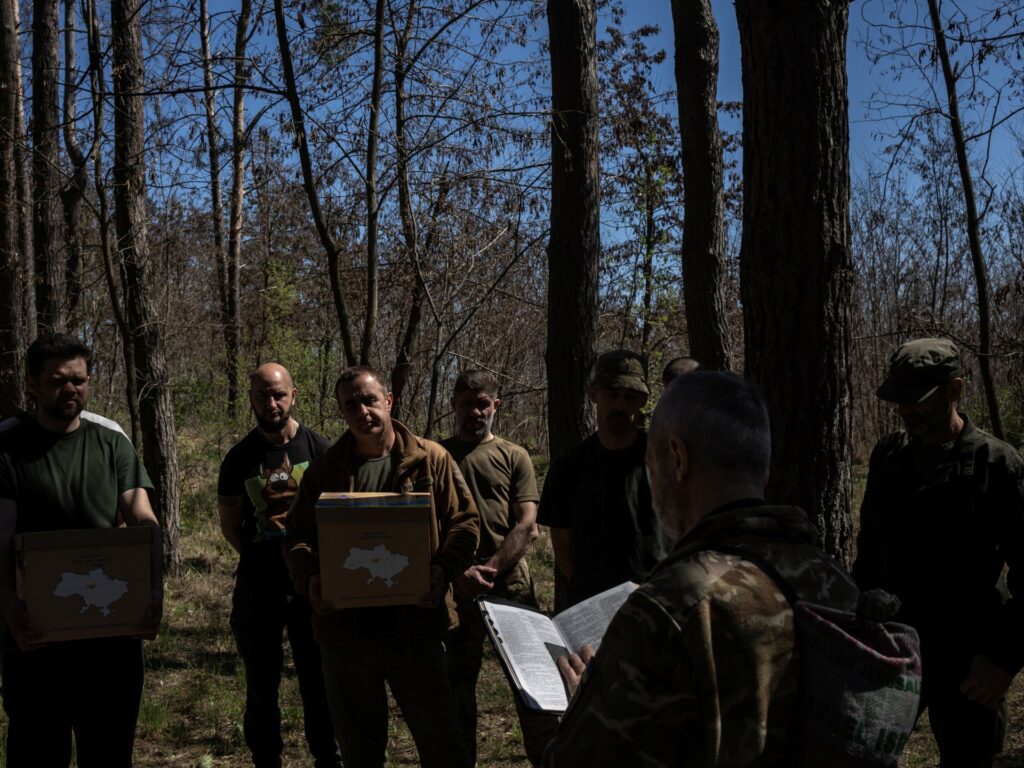
These are the key events on day 1,152 of Russia’s war on Ukraine. Here is where things stand on Monday, 21 April: Fighting At least three blasts were heard in the Russian-controlled Donetsk region in eastern Ukraine amid an Easter ceasefire declared by Moscow, Russian state news agency TASS reported, citing local “operative services.” Ukraine’s forces reported nearly 3,000 violations of Russia’s own ceasefire pledge, Ukrainian President Volodymyr Zelenskyy said, adding that Kyiv’s forces were instructed to mirror the Russian Army’s actions. Russia’s Ministry of Defence said Ukraine had broken the Easter ceasefire declared by the Kremlin more than a thousand times, claiming that Ukrainian forces shot at Russian positions 444 times. The ministry also said Kremlin forces encountered more than 900 Ukrainian drone attacks during this time. The ministry also said Moscow took control of the village of Novomykhailivka, in Ukraine’s Donetsk region, before the Easter ceasefire. Ukraine’s authorities are yet to comment on this claim. Oil and gas Advertisement Ukraine may need to import up to 6.3 billion cubic metres of gas for the 2025-26 winter season due to record low levels of reserves because of war-related damage to some facilities, said Sergiy Makogon, the former head of Kyiv’s gas transit operator. Ceasefire Zelenskyy said the Russian Army made attempts to “advance and inflict losses” on Kyiv’s army overnight despite Russian President Vladimir Putin’s declaration of an Easter ceasefire. “Either Putin does not have full control over his army or the situation in Russia is that they have no intention of making a genuine move towards ending the war,” Zelenskyy said. The United States Department of State said it would welcome the extension of the Easter ceasefire. However, the Kremlin said earlier there was no order for an extension. Zelenskyy proposed suspending drone, cruise missile and rocket attacks on civilian targets for at least 30 days, after Russia revealed there were no orders to extend the ceasefire. Adblock test (Why?)
Jailed for fishing: India-Pakistan tensions trap families in debt, poverty
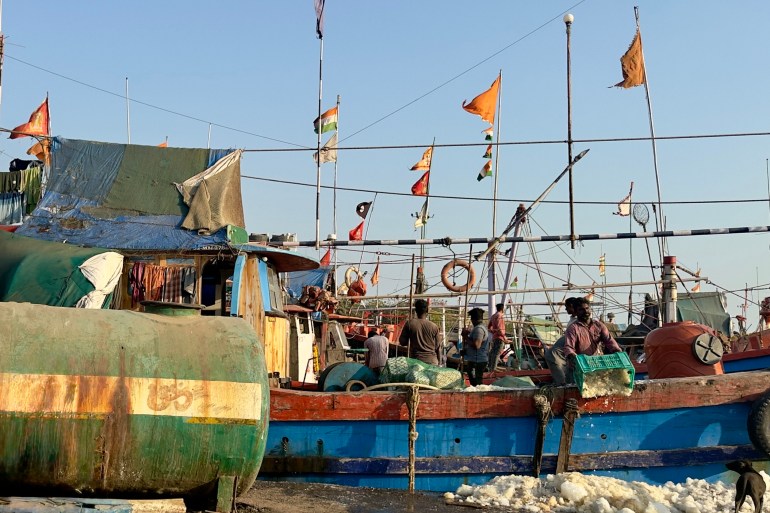
Diu, India – Boxes of sweets are being passed around as cheers and joy surround Rajeshwari Rama’s brick house, insulated with tin sheets, in the Vanakbara village of Diu, a federally-controlled island along the India-Pakistan coastline near Gujarat state in western India. Rama’s relatives and friends are talking at the top of their voices as they celebrate the release of her husband, fisherman Mahesh Rama, from the Landhi jail in neighbouring Pakistan’s largest city of Karachi, in February this year. Among the attendees is Laxmiben Solanki, 36, standing quietly in one corner. She does not taste the sweets. She is only marking her presence there, but remains preoccupied with thoughts of her husband, Premji Solanki. Premji, 40, has also been in Pakistan’s Landhi jail since December 2022, along with several other Indian fishermen. Their crime: crossing a disputed border in the Arabian Sea, which divides the South Asian nuclear powers and sworn enemies, for fishing. A fisherman unloads chunks of ice from his boat at Diu port, India [Tarushi Aswani/Al Jazeera] In February, Pakistan released 22 Indian fishermen who had been imprisoned by Pakistan’s Maritime Security Agency between April 2021 and December 2022, while they were fishing off the coast of Gujarat – also the home state of Indian Prime Minister Narendra Modi. Three of those released are from Diu, 18 from Gujarat, and the remaining one person from the northern Indian state of Uttar Pradesh. Advertisement Though India and Pakistan share a heavily militarised land border, their International Maritime Boundary Line in the Arabian Sea is also largely disputed, especially in a zone called Sir Creek, a 96km (60-mile) tidal estuary that separates India’s Gujarat and Pakistan’s Sindh provinces. It is in this patch that fishermen from both India and Pakistan wander into deeper waters, often without realising they have entered foreign territory. Due to the terrain of the disputed territory, there is no border fencing, with a marshland acting as a natural boundary between the two nations. Several years and rounds of diplomatic talks between India and Pakistan have not been able to resolve the dispute, which has even seen military tensions between them. In 1999, India shot down a Pakistani aircraft carrying 16 naval officers over the alleged violation of Indian airspace near their maritime border. The incident occurred just a month after the two countries fought a war in Kargil, a snowy district in Indian-administered Kashmir. On March 17, India’s Ministry of External Affairs revealed that out of 194 Indian fishermen currently imprisoned in Pakistan, 123 are from Gujarat. According to the Indian government, it has 81 Pakistani fishermen in its custody. Families on both sides say their loved ones have been jailed for a crime they committed “unknowingly” – because they did not know they had ventured inside waters claimed by another country. Trapped in debt Pakistan released Mauji Nathubhai Bamaniya, 55, in February because his osteoporosis had gotten worse. “I still can’t believe that I am sitting in my house, in my country, with my family. My decaying bones brought me back to my homeland,” Bamaniya tells Al Jazeera in Vanakbar village. Advertisement Another fisherman, Ashok Kumar Solanki, is also back at home in Ghoghla village in Diu. He has hearing and speaking impairments and was among the 22 fishermen released on health grounds. Family members of Indian fishermen jailed in Pakistan sit outside a house in Diu [Tarushi Aswani/Al Jazeera] But it is the families of those still imprisoned in Pakistan that find themselves caught in a cycle of recurring debt and debilitating anxiety. In another house, hidden amid palm trees in Vanakbara, Kantaben Chunilal, 60, looks with tired eyes at the dusty path leading to her home. She has been waiting for her son, Jashvant, since December 2022. Jashvant was barely 17 when he was arrested by Pakistani forces. He was the family’s sole breadwinner. Kantaben says she feels too ashamed to ask her relatives for more loans to fill the empty grain jars in her kitchen. She has borrowed nearly 500,000 rupees ($5,855) from several relatives for sustenance. “The government offers us a financial aid of $3 per day. It is not even half of what our men would earn,” she tells Al Jazeera. Out of desperation, Kantaben says she sometimes randomly visits relatives during mealtimes, hoping they will accommodate her as a guest and she may save some money that day. In the same village, Aratiben Chavda married fisherman Alpesh Chavda in 2020. Less than a year later, Alpesh was arrested by Pakistani forces while he was out fishing in the Sir Creek area. Aratiben tells Al Jazeera their 3-year-old son Kriansh, born about four months after Alpesh’s arrest, has never seen his father. “We make him see his father’s photos, so that one day, when Alpesh comes back, my child can recognise him,” she says, sobbing. Advertisement Aratiben’s house is shaded by palm and coconut trees, insulating her and her son from India’s scorching heat. But there is no escaping the poverty that has gripped the household. Selling the refrigerator her parents had given her as a wedding gift supported her for about two months during the winter of 2023. Aratiben and her mother-in-law, Jayaben, also sell vegetables at the local market, making about $5 to $7 on good days. But she says there are too many days in between when they are unable to afford two meals. Fishing boats at Diu’s port, India [Tarushi Aswani/Al Jazeera] Indian activists and fishermen’s unions have been campaigning for the release of all the fishermen imprisoned by Pakistan. Chhaganbhai Bamania, a social worker in Diu, points out that under Pakistani law, fishermen who stray into that country’s waters should not be sentenced for more than six months. “But due to the hostility between India and Pakistan, citizens are caught in a crossfire for no fault of theirs. Their jail time is increased without them knowing or understanding it,” he says, adding that some Indian fishermen end up spending years behind bars. Bamania says