

GOP rep weighs bolting California for Texas seat as dueling redistricting wars upend 2026 map: report
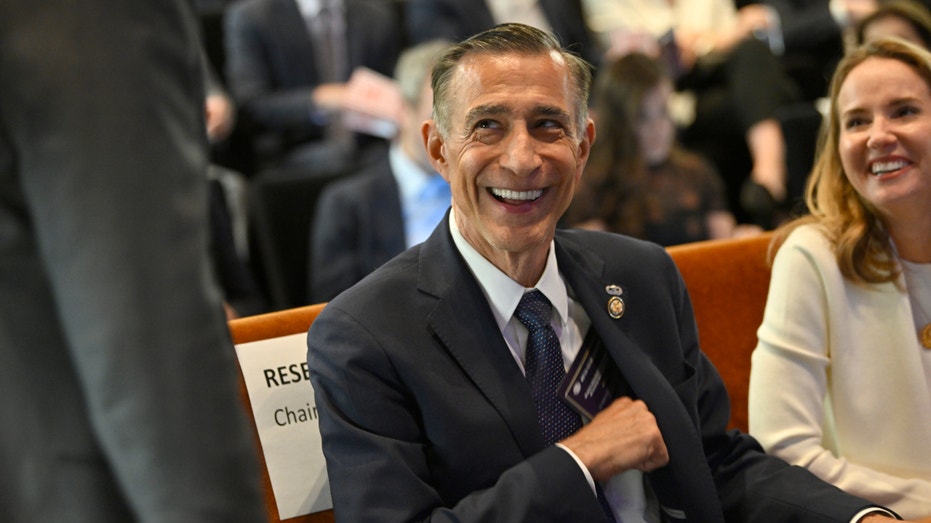
GOP Rep. Darrell Issa is reportedly considering a run for Congress in Texas next year rather than his current district in California as major redistricting in California and Texas continues to change the political landscape for the midterm elections. Issa could head to Texas to run in the state’s 32nd Congressional District currently represented by Democratic Rep. Julie Johnson after Texas split her district in the controversial GOP-friendly redistricting effort. The redistricting incited California to redraw its districts in favor of Democrats, which made the path forward more difficult for Issa, Punchbowl News reported on Monday. Issa was significantly affected by California’s newly redrawn maps that voters approved last month. The change transformed the landscape from a district where Trump won by 15 points to new boundaries where former Vice President Kamala Harris would have won by 3 points, according to the Cook Political Report. A source told Fox News Digital Issa did not “go looking” for the opportunity but that friends in Texas encouraged him to run, and he is “working through it.” GOP LAWMAKER FLIPS SCRIPT ON NEWSOM, BASS BY DEFINING ANTI-ICE RIOTS WITH 1 WORD Further complicating the situation is the fact that redistricting in both California and Texas is facing legal challenges. And it is unclear whether they will be in effect for next year’s critical midterm election that will decide the balance of power in Congress. The Supreme Court is expected to decide on Texas’ redistricting in the next few days after a panel of federal judges blocked the state from using its redrawn congressional map, calling it “racially gerrymandered,” a ruling which Republicans across the country have blasted as a “double standard.” CALIFORNIA VOTERS PASS CONGRESSIONAL REDISTRICTING PROPOSITION IN VICTORY FOR NEWSOM, DEMOCRATS In California, where Gov. Gavin Newsom successfully backed a ballot measure to erase the new seats Republicans were likely to pick up in Texas, Trump’s Department of Justice has filed a lawsuit challenging the redistricting, arguing that race was “used as a proxy” in California to justify creating districts favorable to Democrats. The move by Republicans in Texas to attempt to add more GOP seats has created a political firestorm across the country as lawmakers in other states have pledged to make counteracting moves as Republicans try to defend a razor-thin majority in the House of Representatives, where Democrats need a pickup of just three seats to win back control. Lawmakers in Indiana, North Carolina, Missouri, Maryland, Utah and Virginia are exploring or moving forward with plans to change their maps. “We must keep the Majority at all costs,” Trump wrote recently. Fox News Digital’s Ashley Oliver and Paul Steinhauser contributed to this report.
DHS demands Letitia James take action over New York’s refusal to honor ICE detainers
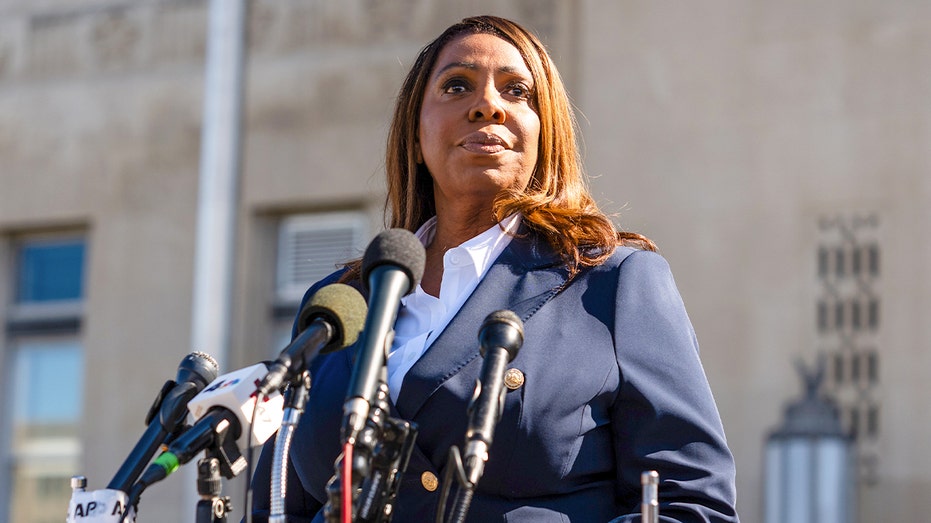
The Department of Homeland Security is calling on New York Attorney General Letita James to take action against New York City over its handling of illegal immigrants. “New York City’s failure to honor ICE detainers has resulted in the release of 6,947 criminal illegal aliens since January 20. There are another 7,000 still in the custody of a New York jurisdiction with an active detainer,” DHS wrote on X. “We are calling on NY Attorney General Letitia James to stop this dangerous derangement and commit to honoring our ICE arrest detainers. It’s common sense.” In response to a request for comment, James’ office referred Fox News Digital to a letter that the state attorney general sent to Acting U.S. Immigration and Customs Enforcement (ICE) Director Todd Lyons in September. The letter from James was sent in response to a Sept. 10 message from Lyons. First, she stated that the New York Attorney General’s Office does not receive detainer requests “as we rarely take custody of individuals.” ICE OFFICERS IN ILLINOIS TARGETED BY ILLEGAL IMMIGRANTS WHO USED ‘VEHICLES AS WEAPONS,’ OFFICIALS SAY She said “detainer requests are sent to a variety of entities within the State of New York, many of them local police department and local jails, each of which may have applicable laws and policies with respect to whether, to what degree, and under what circumstances to respond to federal detainer requests.” “This creates a range of lawful practices that we cannot address in our capacity as the attorney general,” James’ letter reads. On Monday, Lyons sent a fresh letter to James. In the letter, which was obtained by Fox News Digital, he included details about criminals in New York’s custody and examples of instances in which ICE was able to capture illegal immigrants accused of criminal activity. “These are people who are not only in the country illegally but who have committed additional crimes, including heinous crimes like murder, rape, possession of child pornography, armed robbery, and many others. Virtually all Americans agree that people like this should be swiftly removed from the United States when they leave New York’s custody and not be returned to our streets to wreak havoc on law-abiding citizens,” Lyons wrote. RIOTERS ARRESTED AFTER ATTACKING ICE VEHICLES IN NEW YORK CITY; OFFICIALS SAY GROUP ORGANIZED ON SOCIAL MEDIA One of the men mentioned in Lyons’ letter was Steven Daniel Henriquez Galicia, who was arrested by local authorities for attempted murder and criminal possession of a weapon. ICE later nabbed him in the Bronx, New York, and he remains in federal custody pending the outcome of immigration proceedings. Vyacheslav Danilovich Kim, who was also featured in Lyons’ letter, was arrested by New York State Police for “use of a child less than 17 years of age in a sexual performance; rape in the second degree; disseminate indecent materials to minors; and patronizing a person for prostitution in the second degree of a person less than 15 years of age.” Lyons said Kim was convicted in February 2013 and was sentenced to time served as well as five years’ probation. He also alleged that “Albany County and New York Probation refused to assist ICE in locating and/or arresting Kim.” However, ICE was able to arrest him in September 2024 as he was leaving an appointment with his probation officer. He was deported, according to the letter. Another man mentioned in the letter was Anderson Smith Satuye-Martinez, an accused Crips gang member. The Department of Homeland Security (DHS) noted that Satuye-Martinez had a conviction for assault. He was arrested in August for criminal possession of a weapon and possession of a controlled substance. Despite having an active ICE detainer, Satuye-Martinez was released. However, ICE arrested him in September. He remains in federal custody. US ATTORNEY NARROWLY ESCAPES KNIFE ATTACK BY ILLEGAL IMMIGRANT, BLAMES NEW YORK’S SANCTUARY POLICIES “Attorney General James and her fellow New York Sanctuary politicians are releasing murderers, terrorists, and sexual predators back into our neighborhoods and putting American lives at risk,” DHS Assistant Secretary Tricia McLaughlin said in a statement provided to Fox News Digital. “We are calling on Letitia James to stop this dangerous derangement and commit to honoring the ICE arrest detainers of the more than 7,000 criminal illegal aliens in New York’s custody. It is common sense,” she added. “Criminal illegal aliens should not be released back onto our streets to terrorize more innocent Americans.” McLaughlin also directed her ire at New York Gov. Kathy Hochul, writing in a post on X, “Under [Gov. Hochul] New York has refused to honor [ICE] detainers and RELEASED back onto New York’s streets 6,947 criminal illegal aliens since January 20.” McLaughlin said that the crimes committed by the nearly 7,000 illegal immigrants include 29 homicides, 2,509 assaults, 207 sexual predatory offenses, 199 burglaries, 305 robberies, 392 dangerous drug offenses and 300 weapons offenses. There are currently 7,113 illegal immigrants with active retainers in custody in New York, according to DHS. The individuals who are locked up are accused of committing 148 homicides, 717 assaults, 134 burglaries, 106 robberies, 235 dangerous drug offenses, 152 weapons offenses and 260 sexually predatory offenses. ICE has faced challenges in New York City as it engages in a crackdown on illegal immigrants in Chinatown. The operation has sparked protests in the area for over a month. On Saturday, police confirmed officers made multiple arrests during a protest in Lower Manhattan. The NYPD told Fox News Digital that upon arriving at the scene, officers found agitators blocking the street and its exits at different locations. Video footage showed rioters pushing large potted plants in front of ICE vehicles, throwing trash at officers and screaming obscenities. They were also spotted hurling trash cans and recycling bins and pushing barricades against officers. Many were arrested after failing to comply with police demands that they disperse. Fox News Digital reached out to Hochul’s office for comment. Fox News Digital’s Alexandra Koch and Fox News’ CB Cotton contributed to this report.
Experts dispute Nigerian government’s claims amid congressional probe of escalating attacks on Christians
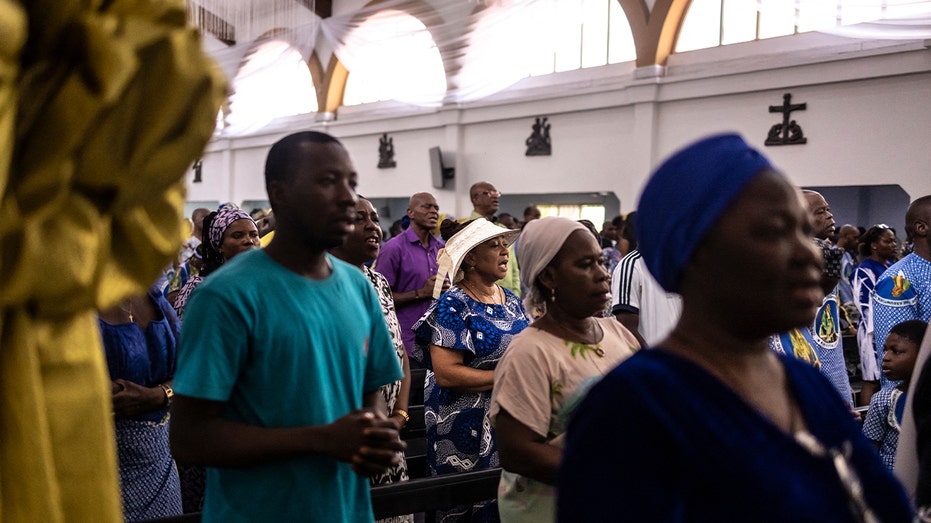
House appropriators and foreign affairs leaders convened a rare joint briefing Tuesday as part of a broader congressional investigation into what lawmakers and experts describe as escalating and targeted violence against Christians in Nigeria. The session — led by House Appropriations Vice Chair and National Security Subcommittee Chairman Mario Díaz-Balart, R-Fla. — is feeding into a comprehensive report ordered by President Trump on recent massacres of Nigerian Christians and potential policy steps the U.S. could take to pressure Abuja to respond. Trump directed Congress, led by Reps. Riley Moore, R-W.Va., and Appropriations Chairman Tom Cole, R-Okla., to probe Christian persecution in Nigeria and produce a report for the White House to review. He has floated the idea of taking direct military action against Islamists who kill. Vicky Hartzler, chair of the U.S. Commission on International Religious Freedom, told lawmakers that “religious freedom [is] under siege,” citing the abduction of more than 300 children and attacks in which “radical Muslims kill entire Christian villages [and] burn churches.” She said violations are “rampant,” “violent,” and disproportionately affect Christians, who she argued are targeted “at a 2.2 to 1 rate” compared with Muslims. ARMED ATTACKERS IN NIGERIA KIDNAP 25 GIRLS FROM BOARDING SCHOOL Hartzler said Nigeria has taken some initial corrective steps — including reassigning about 100,000 police officers from VIP protection details — but warned the country is entering a “coordinated and deeply troubling period of escalated violence.” She recommended targeted sanctions on Nigerian officials “who have demonstrated complicity,” visa restrictions, blocking U.S.-based assets, and conditioning foreign and humanitarian aid on measurable accountability. She also urged Congress to direct the Government Accountability Office to conduct a review of past U.S. assistance and said Abuja should retake villages seized from Christian farming communities so widows and children can return home. Dr. Ebenezer Obadare of the Council on Foreign Relations offered the sharpest challenge to the Nigerian government’s claim that the violence is not religiously motivated. He said the idea Boko Haram and other militant groups target Christians and Muslims equally is a “myth,” arguing the groups “act for one reason and one reason only: religion.” Any higher Muslim casualty count, he said, reflects geography, not equal targeting. ‘GENOCIDE CAN’T BE IGNORED’: GOP LAWMAKER BACKS TRUMP’S THREAT OF MILITARY ACTION IN NIGERIA Obadare described Boko Haram as fundamentally opposed to democracy and said the Nigerian military is “too corrupt and incompetent” to dismantle jihadist networks without strong external pressure. He urged the U.S. to press the Nigerian government to disband armed groups enforcing Islamic law, confront corruption inside the security forces, and demonstrate genuine intent to curb religious violence. He added that Washington should insist Nigerian officials respond immediately to early warnings of impending attacks. Sean Nelson of Alliance Defending Freedom International added that Nigeria is “the deadliest country in the world for Christians,” claiming more Christians are killed there than in all other countries combined and at a rate “five times” higher than Muslims when adjusted for population. He said extremists also target Muslims who refuse to embrace their extreme ideology, which he argued further undercuts Abuja’s narrative that the crisis is driven mainly by criminality or local disputes. With a population of more than 230 million, Nigeria’s vibrant and often turbulent cities and villages are home to people of strikingly diverse backgrounds. The nation’s roughly 120 million-strong Muslim population dominates the north, while some 90 million Christians are centered in the southern half of the country. Nelson urged tighter U.S. oversight of assistance to Nigeria, including routing some aid through faith-based organizations to avoid corruption. He called for greater transparency in how Abuja handles mass kidnappings and ransom payments and said sustained U.S. and international pressure is essential because “without transparency and outside pressure, nothing changes.” Díaz-Balart criticized the Biden administration for reversing the Trump administration’s designation of Nigeria as a “country of particular concern” in 2021, arguing the change has had “clearly deadly consequences.” Lawmakers on the Appropriations, Foreign Affairs and Financial Services committees signaled additional oversight actions in the months ahead as they prepare the Trump-directed report to Congress. Hartzler noted that Nigeria has recently begun taking several steps that could signal a shift toward confronting the crisis more directly. She pointed to President Bola Tinubu’s decision to pull about 100,000 police officers from VIP bodyguard assignments and redistribute them across the country, calling it “a promising start after years of neglect.” She said the move reflects growing recognition inside Nigeria’s political leadership that the violence has reached an intolerable level. She also highlighted comments last week from Nigeria’s speaker of the House, who acknowledged the country is facing a “coordinated and deeply troubling period of escalated violence.” Hartzler said that acknowledgment — coupled with a push from the Nigerian House majority leader for more intensive legislative oversight — suggests the government may finally be admitting the scale and severity of the attacks. Even with these developments, Hartzler warned the measures are far from sufficient. She emphasized that the Nigerian government must show clear intent to “quell injustice,” act quickly when early warning signs of attacks appear, and commit to transparency and accountability if the recent steps are going to amount to meaningful progress. The Nigerian Embassy did not immediately respond to a request for comment.
Dem free-for-all engulfs NJ as 13 contenders scramble for Sherrill’s House seat ahead of critical 2026 fight
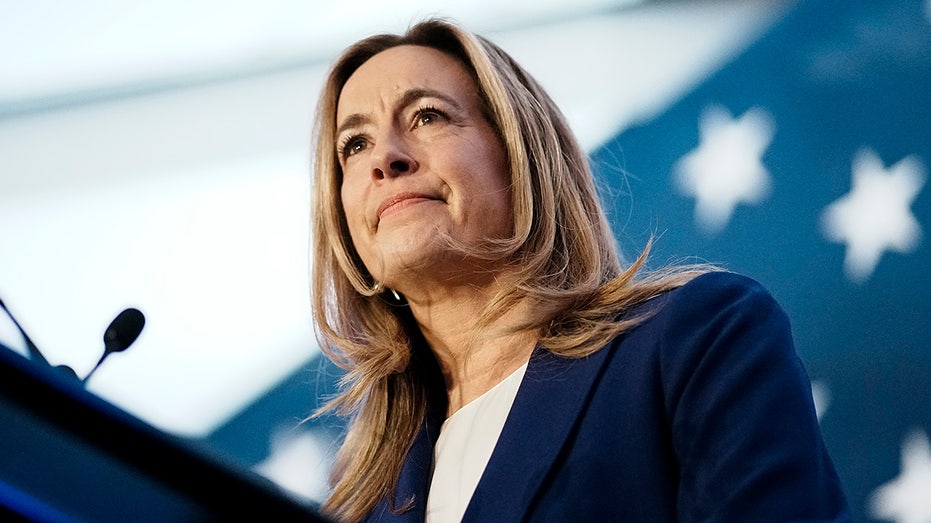
Gov.-elect Mikie Sherrill’s win in New Jersey’s gubernatorial race has triggered a crowded special election to fill her U.S. House seat, with 13 Democrats contending for the nomination to face the lone Republican candidate in the race. The staggering 13-candidate Democratic field in New Jersey’s 11th Congressional District could set the tone for Democrats’ messaging priorities as the country heads into a midterm election year that could determine if Republicans maintain control of the House and Senate in 2026 amid President Donald Trump’s second-term. Monday marked the filing deadline for candidates vying to replace Sherrill, where candidates were required to secure at least 500 signatures to make the special election ballot. Outgoing Gov. Phil Murphy, D-N.J., issued the writ of election on Friday, Nov. 21, after Sherrill formally resigned from office on Thursday, Nov. 20. The special primary election is set for Feb. 5, 2026, and the special general election will be held on April 16, 2026. FORMER OBAMA STAFFER, EX-CONGRESSMAN AMONG CANDIDATES IN CROWDED DEMOCRAT PRIMARY FOR MIKIE SHERRILL’S SEAT The election comes as Democrats secured gubernatorial victories in New Jersey and Virginia and passed Proposition 50 in California this year, allowing the state to move forward with a new congressional map that is expected to add up to five Democratic-leaning districts. FORMER HOUSE DEMOCRAT TARGETS TRUMP IN BID FOR POLITICAL COMEBACK Murphy has already endorsed Essex County Commissioner Brendan Gill, touting his commitment to affordability and protecting “freedoms” in the fight against Trump. As the Essex County commissioner-at-large, Gill represents 22 towns in Essex County, and according to his campaign website, is committed to “taking on tough fights and delivering results that make our communities stronger, safer, and fairer.” While Gill has secured a coveted endorsement from the outgoing governor, Democratic voters in New Jersey’s 11th will have 12 more candidates to choose from in February. Progressive star Sen. Bernie Sanders, I-Vt., has also thrown his hat in the ring to endorse the national political director of his 2020 presidential campaign, Analilia Mejia. “As oligarchs and corporate interests continue to capture our government, we need true progressives to take our country back for working people. Analilia’s experience and deep dedication to working families make her the best choice for this seat. I’m proud to endorse her,” Sanders said last month. Mejia served in the Department of Labor under President Joe Biden and is currently the co-executive director of Popular Democracy, a progressive grassroots advocacy group demanding “transformational change for Black, brown, and low-income communities.” Another high-profile candidate with his own high-profile endorsement, former Rep. Tom Malinowski is running to return to Congress after losing his re-election for New Jersey’s 7th District in 2022. Sen. Andy Kim, D-N.J., has endorsed Malinowski, touting his experience fighting the Trump administration. Malinowski served as President Barack Obama’s assistant secretary of state for democracy and human rights and was a senior director on President Bill Clinton’s National Security Council. Outgoing Lt. Gov. Tahesha Way is also in the running for New Jersey’s 11th. The Democratic Lieutenant Governors Association has endorsed Way, spotlighting her commitment to “expanding opportunity and delivering results.” Way has also served as New Jersey’s secretary of state and was the first Black person and first secretary of New Jersey to lead the National Association of Secretaries of State as president. SHERRILL PULLS OUT ALL STOPS WITH OBAMA ENDORSEMENT, STAR-STUDDED NEW JERSEY CAMPAIGN PUSH AS RACE TIGHTENS Meanwhile, Chatham Councilman Justin Strickland, a U.S. Army veteran, Bronze Star recipient and former Pentagon official, is also competing for the Democratic nomination. Strickland has centered his campaign on affordability — the winning issue in the past two election cycles. “Our campaign revolves around one simple principle: ensuring everybody has the economic liberty to fulfill the American Dream,” Strickland said on his campaign website. Another Democratic candidate, Anna Lee Williams, is an activist who, according to her campaign website, has spent the past decade in the “nonprofit and private sectors bringing people together around causes that matter to them.” Democratic candidate Jeff Grayzel is a local leader who currently serves as a committeeman for Morris Township, as chairman of the police commission and on the Board of Health. He is the former mayor of Morris Township who is “committed to solving everyday problems facing residents, such as keeping taxes stable, controlling over-development, improving our infrastructure, and addressing our deteriorating environment,” according to his campaign website. U.S. veteran and former Army paratrooper Zach Beecher said he is “running for Congress because Donald Trump and a failed Congress are putting our people and our country at risk,” citing rising costs, healthcare and leadership on the world stage. Per his campaign website, Beecher is currently a major in the U.S. Army Reserves, and his congressional run marks his political debut. Passaic County Commissioner John Bartlett, who is also competing for the Democratic nomination, said he is running because New Jersey deserves “another fighter who’s ready on day one, with a record of results and a focus on what really matters to us here” and “because it’s clear that Washington needs leaders who believe in the idea of public service and are willing to put country over party.” Another Democratic candidate, Cammie Croft, helped the Obama administration pass the Affordable Care Act, touting her commitment to “advancing humane, bipartisan immigration reforms, to building a clean energy nonprofit that helps families lower their energy bills.” Her priorities in Congress are “lowering costs for families, ending corruption, and building a stronger, fairer economy that works for everyone,” according to Croft’s campaign website. Marc Chaaban, a former congressional staffer for Sherrill, is seeking to replace his former boss in the office he once served. Reflecting the sentiment of his fellow Gen Z activists and politicos, the 25-year-old said “too many Democrats in Washington are asleep at the wheel” and the moment “demands a different kind of politics.” His commitments include rejecting Trump’s agenda, banning members of Congress from stock trading, prohibiting corporate PAC money in elections and investigating the “Trump-Epstein cover-up.”
Isack Hadjar to replace Yuki Tsunoda at Red Bull for 2026 F1 season

Red Bull Racing will pair another new driver with Max Verstappen after Isack Hadjar replaced Yuki Tsunoda for next year. Published On 2 Dec 20252 Dec 2025 Click here to share on social media share2 Share Isack Hadjar will replace Yuki Tsunoda as Max Verstappen’s Red Bull teammate next season, with Arvid Lindblad joining Liam Lawson at Racing Bulls, the Formula One (F1) teams announced on Tuesday. Frenchman Hadjar, 21, has made a big impression in his debut season with sister team Racing Bulls, including taking his first podium with third place in the Dutch Grand Prix at the end of August. Recommended Stories list of 4 itemsend of list British-born Lindblad, who also has Swedish nationality and Indian heritage through his mother, moves up from Formula Two to partner with Lawson and will be the sole rookie on the 2026 grid. Tsunoda’s departure leaves Formula One without a Japanese driver on the starting grid. Red Bull said he will remain in the team as a reserve. Hadjar is the third driver to fill the second Red Bull Racing seat in the past 12 months. Lawson was named as the replacement for Sergio Perez in December. The New Zealander was then replaced by Tsunoda in March after the opening two Grand Prix of 2025. Verstappen will compete for the fifth straight World Drivers’ title at the season-ending Abu Dhabi Grand Prix on Sunday. Max Verstappen, left, and Isack Hadjar will form the Red Bull Racing driver lineup for the 2026 Formula One season [File: Clive Rose/Getty Images] Adblock test (Why?)
Europe should seize Russia’s frozen assets now
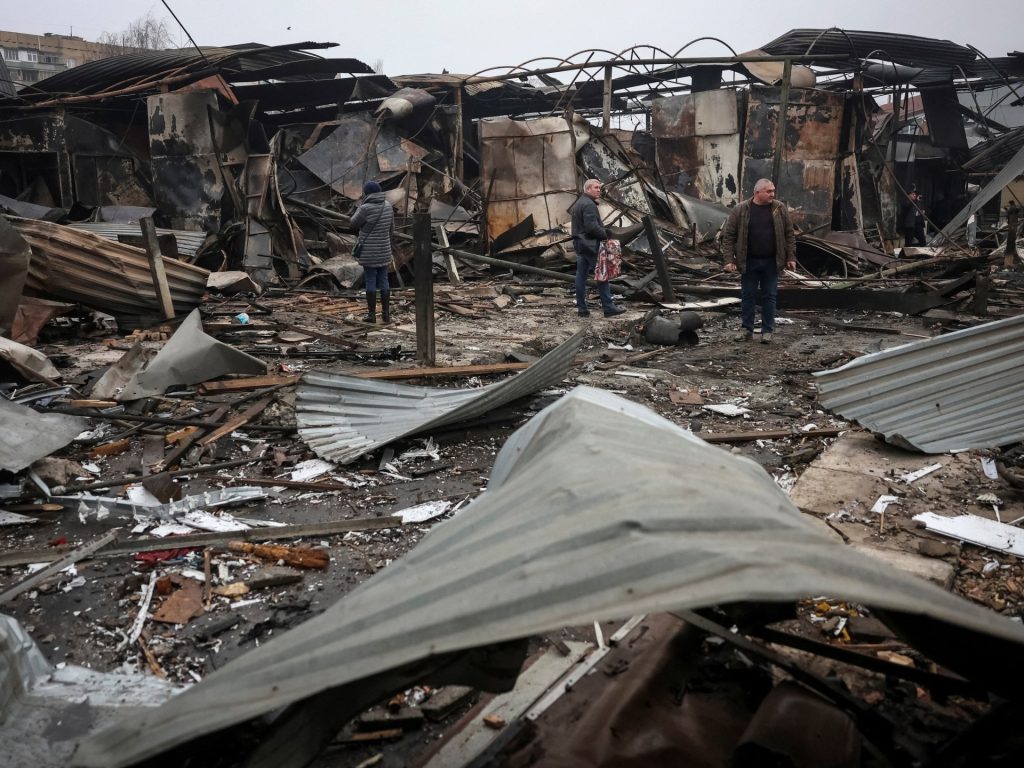
The Trump administration is now determining what the future holds for Ukraine, and by extension for Europe, in matters of territorial integrity, sovereignty and security. Washington aims to make a deal to end the full-scale war Russia launched in February 2022 that Russian President Vladimir Putin has waged against Ukraine, even if it means abandoning longstanding international principles that prohibit the recognition of territory acquired through military occupation. For Europe more broadly, and the European Union in particular, however, there is far more at stake than those principles, which Washington has rarely prioritised in its own foreign policy. Deterring Putin from further aggression, and ensuring that Ukraine is stable both politically and economically, lies at the core of the bloc’s security and political concerns. A settlement to the conflict that fails to achieve either would risk the bloc’s own long-term security. Of course, all of this must be managed while ensuring that the Trump administration does not itself further endanger European security by once again casting doubt on its commitment to NATO’s security infrastructure. But Europe has already, if belatedly, begun to wake up to these concerns. By last year, 23 NATO members were spending the target 2 percent of GDP on defence, and the alliance agreed a new goal of raising core defence spending to at least 3.5 percent of GDP by 2035, with up to another 1.5 percent of GDP to be spent on critical infrastructure and on expanding their defence industrial bases. Advertisement More immediately, Europe has also surpassed the US for the first time since June 2022 in total military aid for Ukraine, with 72 billion euros ($83.6bn) allocated compared with Washington’s 65 billion euros ($75.5bn) by the end of April, according to the Ukraine Support Tracker. Yet, regardless of the outcome of the Trump administration’s efforts to push Ukraine towards a negotiating position that Putin might be willing to accept, the increased European support is not enough to offset the standstill in US funding. Military aid is also only one part of the picture: Kyiv is dependent on the West’s fiscal aid as well, to ensure the continued functioning of its government. And the bill for reconstruction only continues to grow as Russia’s assaults and aerial attacks continue. In February, the World Bank estimated it at $524bn (506 billion euros) —about 280 percent of Kyiv’s 2024 GDP. Without dramatic action, Europe risks being left to Trump’s whims as to its future security, despite having bowed to his demands not only on NATO spending and military support for Ukraine, but also on trade through agreements that have seen the US’s average tariff rate on imports from the EU and UK rise sharply. But there is a clear policy choice that Europe can make to ensure that financial support for Kyiv remains sufficient over the coming years and to shape the outcome of any settlement to the conflict, while simultaneously further deterring Putin. The European Union and the United Kingdom can move to confiscate the sovereign Russian funds frozen in their jurisdictions since 2022. Most importantly, they can seize the 185 billion euros ($214.8bn) frozen at the Belgium-based clearing house Euroclear – the majority of which is now in cash and can thus rapidly be deployed or reinvested – as well as the Russian government funds frozen at Euroclear’s Luxembourg-based rival, Clearstream, which are estimated to amount to around 20 billion euros ($23.2bn). Europe is not unaware of this possibility, and in fact, it has been debating doing so for months. The Euroclear assets have already been used to underpin an earlier $50bn (43 billion euros) loan to Ukraine finalised in January 2025, which is secured over earnings from those assets. Europe had been expected to advance a plan to create a new loan – one amounting to as much as 140 billion euros ($162.6bn) – secured over the assets at the European Council meeting on December 18-19, after delaying a final decision at the previous council meeting on October 23. The delay was largely due to obstinacy from the Belgian government, which has demanded indemnification from the rest of Europe while endorsing Kremlin talking points that such a move would be unprecedented. Advertisement Yet there is ample precedent. German and Japanese government assets were seized by the United States in the course of the second world war. In the latter case, Japan’s assets were even frozen before the attack on Pearl Harbour, the majority of which were later retained under the San Francisco Peace Treaty of 1951. The Kremlin’s threats to tie up Belgium in decades-long litigation are also overblown. They rely on a pre-Soviet-collapse bilateral investment treaty that Putin and his proxies have already failed to invoke successfully to unfreeze their assets or challenge previous sanctions. Additionally, there are dozens of unresolved claims worth tens of billions of dollars against Russia in European courts — including the roughly 13-billion-euro ($15bn) arbitration award won by energy firm Uniper against Gazprom for disruption to gas supplies in 2022. The largest and most significant case remains the 2014 award to former shareholders of Yukos, over the Kremlin’s expropriation of their company. That award survived all appeals: in October 2025, the Supreme Court of the Netherlands rejected Russia’s final challenge, confirming that the award — now valued at more than $65bn, including interest — is final and enforceable against Russian state assets worldwide. Enforcement, however, will still depend on locating suitable Russian assets that courts are willing and able to seize. The Kremlin will certainly engage in lawfare and litigation over these disputes, as it has repeatedly throughout Putin’s tenure. But it will lose, and when its national interests are at stake, it will pay. Russia has repeatedly complied with adverse rulings when vital access to Western markets or assets was at stake. The only clear-cut cases of either the West or Russia returning funds owed as a result of litigation arising from Russia’s war have been the settlements paid by Russian state insurer NSK and aviation firm
Juan Orlando Hernandez freed after Trump’s ‘full and complete’ pardon
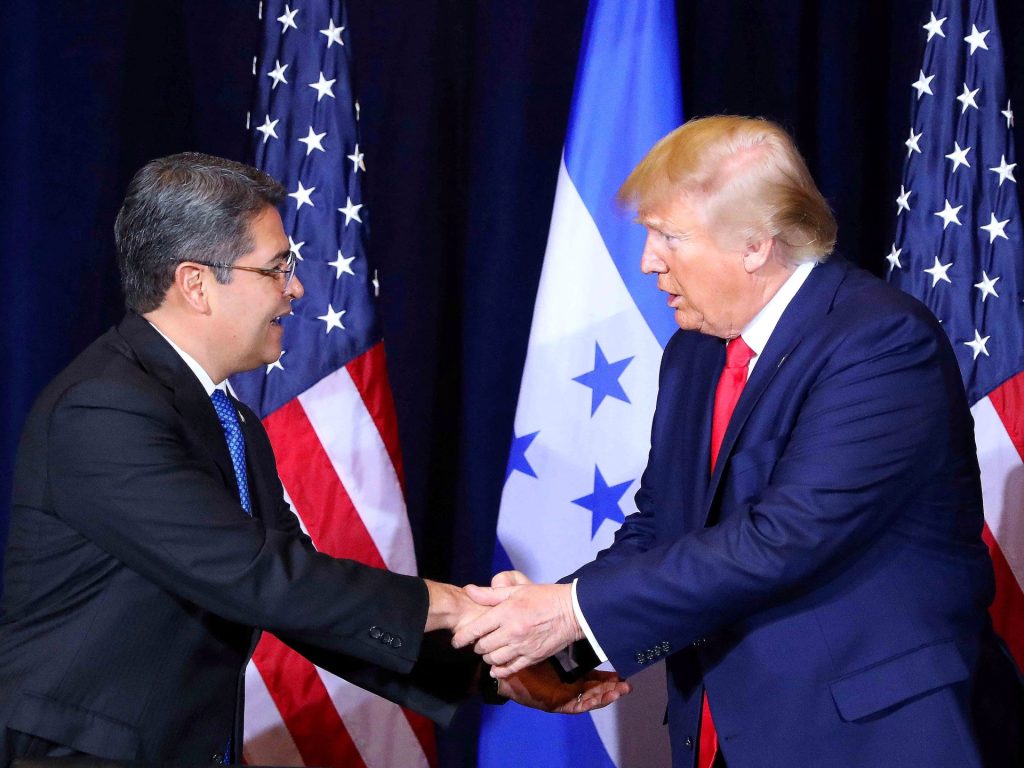
Hernandez, who was serving a 45-year sentence for drug conspiracy, received ‘full and unconditional pardon’, lawyer says. Authorities in the United States have released former Honduran President Juan Orlando Hernandez, who was serving a lengthy prison sentence for drug trafficking, after US President Donald Trump pardoned him. Hernandez’s lawyer, Renato Stabile, confirmed that the former Honduran president was freed on Tuesday, a day after being pardoned. Recommended Stories list of 3 itemsend of list “President Trump has issued a full and unconditional pardon, signed, Dec 1, 2025. President Hernandez was released from prison early this morning,” Stabile told Al Jazeera in an email. A federal prison database showed that Hernandez was released from a detention centre in West Virginia after spending more than three years in US jail. Last year, Hernandez was sentenced to 45 years for involvement in a scheme to export cocaine in the US, which prosecutors described as “one of the largest and most violent drug trafficking conspiracies in the world”. Trump announced plans to pardon the former Honduran president last week as he called for the people in the Central American country to back right-wing candidate Nasry “Tito” Asfura, a member of Hernandez’s party. “I will be granting a Full and Complete Pardon to Former President Juan Orlando Hernandez who has been, according to many people that I greatly respect, treated very harshly and unfairly,” Trump wrote in a social media post on Tuesday. “This cannot be allowed to happen, especially now, after Tito Asfura wins the Election, when Honduras will be on its way to Great Political and Financial Success.” Hernandez was convicted of accepting millions of dollars in bribes from violent drug-trafficking organisations over 18 years, which he used to fuel his rise in politics. Advertisement “During his political career, Hernandez abused his powerful positions and authority in Honduras to facilitate the importation of over 400 tons of cocaine into the US,” the US Justice Department said after he was sentenced last year. “Hernandez’s co-conspirators were armed with machine guns and destructive devices, including AK-47s, AR-15s, and grenade launchers, which they used to protect their massive cocaine loads as they transited across Honduras on their way to the United States, protect the money they made from the eventual sale of this cocaine, and guard their drug-trafficking territory from rivals.” During his trial, Hernandez denied taking bribes from drug dealers, arguing that he cracked down on the narcotics trade and citing his administration’s cooperation with the US military. Trump’s pardon of Hernandez comes at a time when his administration is carrying out deadly air strikes against boats in the Caribbean Sea and Atlantic Ocean that it says are carrying drugs – a campaign that critics say violates domestic and international law. Trump has also been issuing threats against Venezuelan President Nicolas Maduro after accusing him without evidence of leading a drug cartel that the US labelled as a “terrorist” group. Washington has also been ramping up its military presence in the Caribbean in what it calls an anti-drug trafficking operation, which raised speculations about a possible war to topple Maduro. Pardoning Hernandez has intensified criticism of the Trump administration’s approach to Latin America. “As President, Juan Orlando Hernandez personally helped the Sinaloa Cartel and El Chapo traffic deadly drugs into the United States. Drugs that killed Americans,” Democratic Senator Catherine Cortez Masto said in a social media post on Monday. “But instead of standing with law enforcement who brought Hernandez to justice, Trump is letting this criminal go free.” In Honduras, an election took place on Sunday, but the race is still too close to call, with sports journalist Salvador Nasralla leading against Asfura by only hundreds of votes. Trump – who continues to falsely claim that his 2020 election loss to former US President Joe Biden was due to widespread fraud – is already casting doubt over the outcome of the vote in Honduras. “Looks like Honduras is trying to change the results of their Presidential Election,” he wrote on his Truth Social platform on Monday. “If they do, there will be hell to pay!” Adblock test (Why?)
Beware travelers! Waiting for more than 8 mins at Bengaluru Airport to now fetch heavy fines, check charges, new rules

To ease passenger movement and reduce congestion, the Bangalore International Airport Limited will introduce a lane segregation system to prevent long waiting of private cabs and vehicles at the pickup zone of Kempegowda International Airport.
Sanchar Saathi app: Is your mobile phone genuine? Here’s step-by-step guide to check

The Department of Telecommunications (DoT) has taken a big step ?to safeguard the citizens from buying the non-genuine handsets, and has mandated the the (Cybersecurity) Sanchar Saathi mobile application to be pre-installed on all mobile handsets manufactured or imported for use in India.
Centre reveals key details on Census 2027, will be held in two phases, check schedule here

Rai also informed the Lok Sabha that the census questionnaire is prepared on the basis of inputs and suggestions from different ministries, departments, organisations, and census data users before each exercise.