

White House proposal axes UN, NATO funds and halves State Department budget
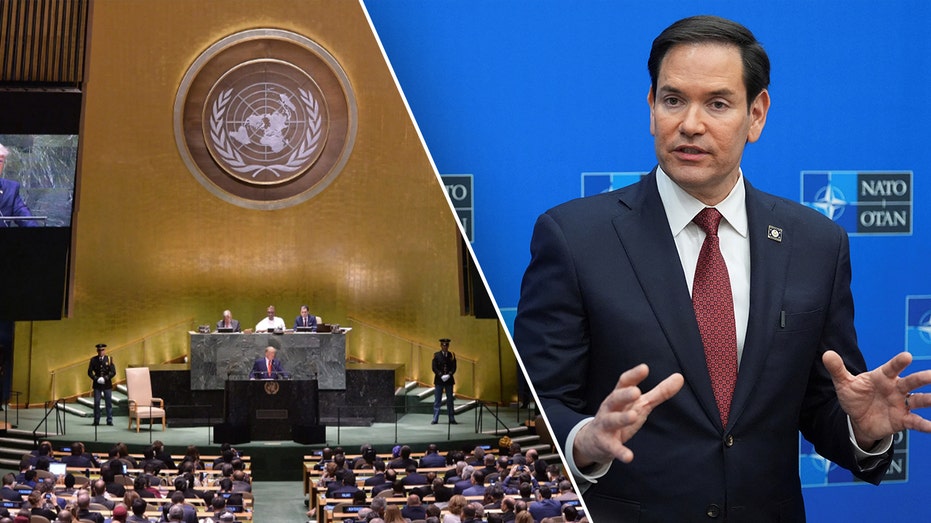
The Trump administration is mulling a proposal that would slash the State Department budget by $27 billion – nearly in half – and shutter smaller embassies and consulates across the globe. The proposal calls for the elimination of funding for more than 20 international organizations, including the United Nations, NATO and the Organization of American States, a diplomatic source in possession of the document told Fox News Digital. The U.S. contributed around $13 billion to the United Nations in 2023 and around $3.5 billion to NATO. The proposed budget calls for allocating $2 billion for “America First” priorities. Those coffers could be used for “specific partners” like India and Jordan, according to the document, or broader priorities, like the South Pacific Tuna Treaty. However, a State Department spokesperson said Tuesday, “there is no final plan, final budget.” PETE MAROCCO, MASTERMIND BEHIND DISMANTLING OF USAID PROJECTS, LEAVES STATE DEPARTMENT The proposal is an early draft and has to pass layers of approval within the administration before it even gets to Congress. Congress can then take it as an outline but ultimately draw up its own budget figures. The foreign service travel budget and benefits would be scaled back, and the Fulbright scholarship program would be eliminated. The document calls for a 2% reduction in diplomatic security, cuts to the inspector general’s office and the closure of smaller embassies in countries such as the Maldives, Malta, Luxembourg and the Central African Republic. It also proposes a 54% cut to global public health funding, with carve-outs for malaria, HIV, and tuberculosis, and a complete elimination of international peacekeeping funds. When asked about the budget plan during a State Department briefing, spokesperson Tammy Bruce said, “Throughout the history of the United States, everyone has a budget plan and everyone has ideas for budgets. And every president has a budget plan and sends it to Congress. And then Congress either accepts it or they have their own ideas, which happens more often than not.” “There is no final plan, final budget,” she emphasized. The Trump administration has moved quickly to dismantle foreign aid, eliminating nearly 90% of USAID projects and merging the agency with the State Department and defunding “soft power” institutions like Voice of America, Radio Free Europe, Radio Free Asia and Middle East Broadcasting networks. STATE DEPARTMENT WILL ABSORB REMAINING USAID PROGRAMMING AS INDEPENDENT AGENCY IS DISMANTLED The White House budget is set to be transferred to Congress next month before the Republican-led House and Senate get to work on passing appropriations bills for each agency of government. Meanwhile, agencies are expected to present their own plans for reorganization to the White House this week, outlining what cuts they believe are necessary to further shrink the federal government. The State Department has not yet publicly detailed its plans for downsizing. As reports of the cuts emerged, Democrats warned that U.S. adversaries would fill the vacuum left by America around the world. The cuts “would leave our country alone and exposed and allow China and Russia to fill the vacuum made vacant by this administration,” according to Sen. Jeanne Shaheen, N.H., top Democrat on the Foreign Relations Committee. “Why in the world would we cut funding for NATO at a moment when war is raging in Europe and security threats on the continent grow?” she added. It is not clear whether Secretary of State Marco Rubio endorses the initial proposal. “I want to hear from Secretary Rubio directly,” said Sen. Brian Schatz, Hawaii, top Democrat on the Senate Appropriations subcommittee that handles State funding, calling the reports “deeply troubling.”
Russia’s largest military call-up whips up fear among young men

On April 1, Russia began a new conscription drive with the goal of enlisting 160,000 military-age men between 18 and 30. It is the largest such call-up since 2011, aiming to fulfil last year’s presidential decree to boost the armed forces to 2.5 million personnel. And it is making Bogdan, a 21-year-old on the outskirts of Moscow, nervous. Some young men often try to avoid mandatory military service. But as Russia’s war against Ukraine stands at a critical juncture, with the rival sides desperately attempting to appear triumphant amid peace talks, there is a particular urgency to the matter. “I received a summons to be drafted in the spring of 2024, despite my hypertension. And by the autumn the police were searching to forcibly conscript me,” Bogdan told Al Jazeera, requesting to withhold his surname fearing reprisal. He is currently hiding from the authorities. “I hope that I will be able to register for military service in Saint Petersburg, undergo a new medical examination there and receive a military [exception] due to hypertension. Because in Moscow and the Moscow region, no complaints and court hearings have yielded results. In Moscow, they do not allow me to undergo a new medical examination and want to enlist me according to my summons.” Advertisement Rights advocates have warned that the cracks which one might have earlier been able to slip through are tightening, while being a conscript is increasingly risky. “A year ago there was an age amendment, and now summons are issued to young people from 18-30 years old,” Ivan Chuviliaev, spokesman for the organisation Go By The Forest, which helps people escape the ranks, told Al Jazeera. Previously, the maximum age for conscription was 27. “Now the decision of the draft board will be valid not until the end of the draft, but for a whole year. This means it won’t be as easy to run away by simply not showing up when you receive the summons. [Another] major change is that they’re revising the list of illnesses of those ineligible for military service,” Chuviliaev said. “Those conditions they wouldn’t accept before, they now accept. It’s clear this is simply an artificial creation of chaos, so that doctors will simply stamp Category A fitness for everyone without bothering to dig through their papers. [Thirdly,] various sanctions will be imposed for failure to appear in response to a summons, such as a ban on taking out loans, a ban on opening an individual enterprise, a ban on leaving the country, and so on and so forth.” According to an open-source tally compiled by the BBC and independent Russian outlet Mediazona, more than 100,000 Russian soldiers have been killed since 2022 – a figure that frightens young men like Bogdan. While conscripts are not technically supposed to be deployed to the front lines, “conscripts can be deployed in regions that border Ukraine, including the Belgorod and Kursk regions, and therefore can theoretically participate in combat operations in these regions”, Oleg Ignatov, senior Russia analyst at Crisis Group, told Al Jazeera. Advertisement “Conscripts have been repeatedly targeted by Ukrainian attacks in the border regions,” he said, adding, “I have not seen any information that conscripts are being sent to the occupied territories” like Donetsk and Luhansk. Since the onset of the full-scale war in 2022, Russia’s Kursk and Belgorod regions have come under bombardment and cross-border raids. “If someone comes into contact with the Ministry of Defence, they will likely sooner or later find themselves in the midst of hostilities,” said Chuviliaev. “Not to mention the fact that any conscript deployment, at any time, even without your own knowledge, can turn out to be a contract.” He pointed to a recent case in Russia’s Chelyabinsk region in which the local prosecutor’s office recognised that at least 13 conscripts had contracts signed on their behalf illegally and ordered their discharge. In that case, the commandant simply ignored the court’s order. Mikhail Liberov, of the Conscientious Objectors’ Movement, told Al Jazeera that while the likelihood of someone receiving a summons actually ending up in combat is “less than one percent … any conscript can, at any time, under one or another form of duress, sign a contract, become a formal soldier and immediately be sent to that very hell”. “Practice shows that even the prosecutor’s office helps the actions of commanders to force [conscripts] into signing contracts illegally,” he continued. “The prosecutor’s office doesn’t really care about protecting citizens’ rights and does not file lawsuits in their interests. Sometimes signatures on conscripts’ contracts are simply forged.” Advertisement There are ways, lawful and otherwise, to evade military service. These include health grounds and unfitness to serve; court appeals; higher education; certain family circumstances; feigning mental or physical illness; going into hiding; leaving the country; or applying for alternative civil service. Politicians and members of certain professions – for example, in the military-industrial complex – are also exempt. “Each of these deferrals requires you to take action – the draft board won’t do it automatically,” Chuviliaev explained. “You need to go [to the office], bring all the necessary documents, [or] draw up a power of attorney, preferably for relatives, so they can present those documents to the enlistment office and not the draftee themselves.” Liberov listed a number of other complications that might arise. “[Educational] deferrals are not available to everyone, and only postpone the problem – those who have completed a bachelor’s and master’s degree inevitably face the same problem at about 22 and 24 years old, respectively,” he said. “Not everyone can afford to leave the country: often the lack of an overseas passport becomes an obstacle, the registration of which is mistakenly considered impossible without a military ID or a visit to the military registration and enlistment office.” Liberov said that while alternate civil service – for example, working in state-run services such as hospitals or libraries – is an option for conscientious objectors, whose religious or personal beliefs are incompatible with military service, in
China’s Xi hails ‘new golden era’ with Malaysia during trade tour
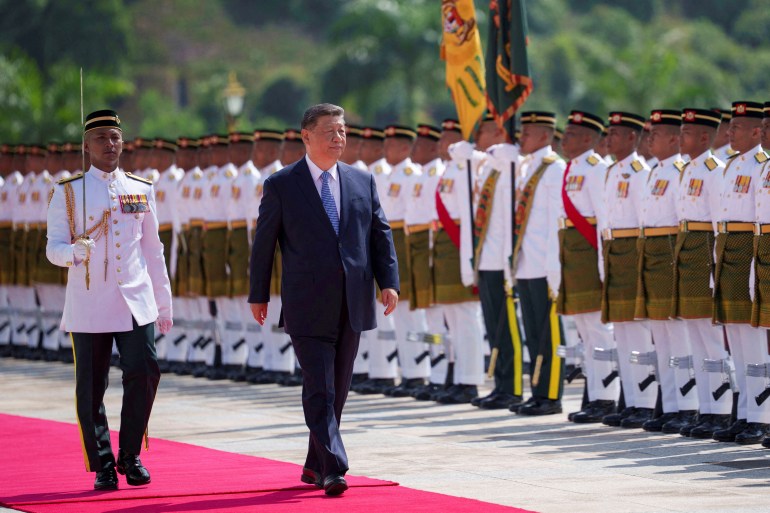
Xi’s visit to Malaysia is part of a regional diplomatic charm tour amid stinging US tariffs. Chinese President Xi Jinping has met Malaysia’s King Sultan Ibrahim in Kuala Lumpur as part of a regional push to shore up Beijing’s trade relationships. The diplomatic stop on Wednesday marks the second leg of Xi’s three-nation tour, which also includes Vietnam and Cambodia, and comes amid sharp tariffs imposed by the United States that are reshaping the global economic landscape. Sultan Ibrahim welcomed Xi in a colourful ceremony at the golden-domed Istana Negara palace before his meeting with Malaysian Prime Minister Anwar Ibrahim at the administrative capital of Putrajaya. Xi touted a “new golden era” of Chinese-Malaysian relations, following the 50th anniversary of diplomatic ties last year. The king announced new cooperation between the countries in various fields, including artificial intelligence. Chinese President Xi Jinping inspects an honour guard during the official welcoming ceremony at the national palace in Kuala Lumpur, Malaysia, April 16, 2025 [Vincent Thian/Pool via Reuters] “This is a hugely significant visit,” said Al Jazeera’s Rob McBride, reporting from Putrajaya. “It takes place during this unprecedented trade war that is developing with the United States, with both Malaysia and China finding themselves in the middle.” Advertisement Khoo Ying Hooi, an associate professor in the department of international and strategic studies at Malaya University, said the visit offered a chance to “test the waters for regional solidarity” amid the US trade disruptions. “It’s not just about friendship, it’s about realigning the regional centre of gravity towards Beijing,” she said. ‘Wake-up call’ Malaysia is the current chair of the Association of Southeast Asian Nations (ASEAN) bloc, whose members are among the hardest hit by new US tariffs. ASEAN member Vietnam, a manufacturing powerhouse, was slapped with 46 percent tariffs, and Cambodia, a significant producer of low-cost clothing for big Western brands, was hit with a 49 percent duty. Malaysia, Southeast Asia’s third-largest economy, was hit with a lower tariff of 24 percent. Though the measures have been paused for 90 days, President Donald Trump has warned that no country is “off the hook”. McBride said Malaysia, a longstanding US ally, was likely “genuinely alarmed to find itself on this list of reciprocal tariffs” and saw it as “a wake-up call … to deepen ties with its biggest trading partner”, China. Despite robust economic ties, the two countries have had tensions over the South China Sea, where Beijing claims sweeping sovereignty over waters also claimed by Kuala Lumpur. “There has been an extraordinary sea change here, with a lot of the norms of international trade completely upended in a few short months,” McBride said. In Asia Pacific generally, he added, countries that usually align with the US economic model are increasingly turning to Beijing as a reliable trade partner. Advertisement Xi’s next trip will be to Cambodia, one of China’s staunchest allies in Southeast Asia and where Beijing has also extended its influence in recent years. On Thursday, he is expected to meet Cambodia’s King Norodom Sihamoni as well as the prime minister and head of the senate. Adblock test (Why?)
After two years of war in Sudan, the world can no longer plead ignorance
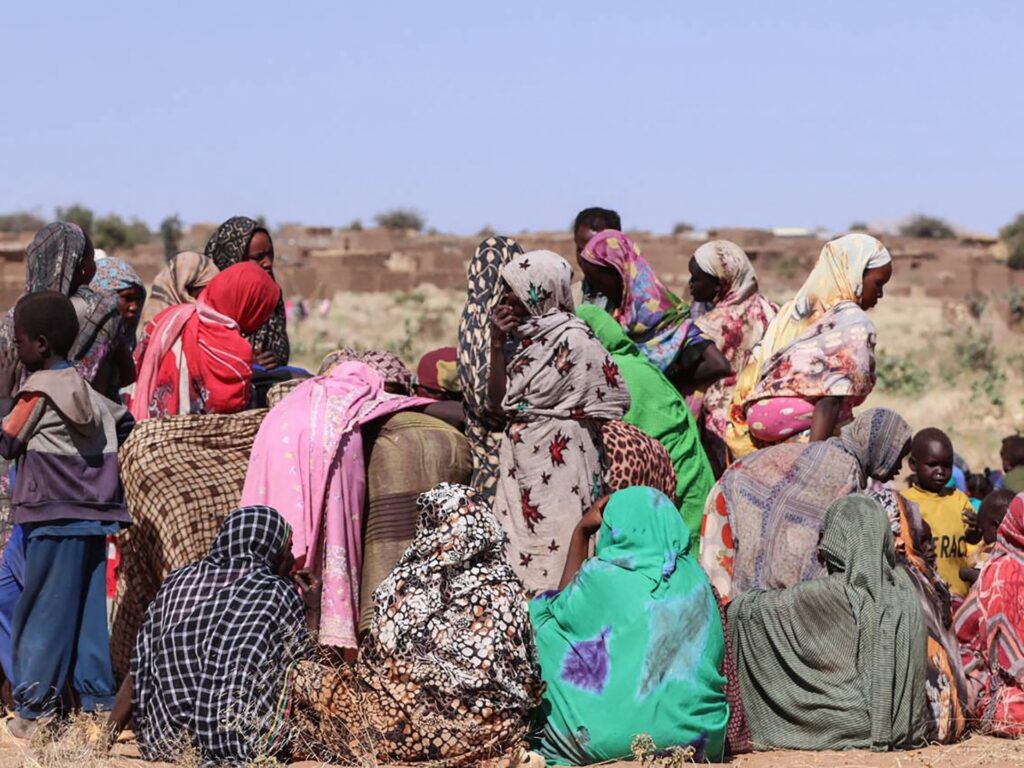
Two years ago this week, a conflict erupted in Sudan that few anticipated would escalate so rapidly or persist for so long. What began as a violent power struggle has become one of the worst and most neglected humanitarian crises of our time. The country has been plunged into a state of devastation marked by mass displacement, hunger, violence and disease. The numbers are staggering. More than 30 million people need humanitarian aid. At least 15 million people are currently displaced. Some 11.3 million are displaced inside Sudan and 3.9 million people have fled to neighbouring countries, making this the world’s largest displacement crisis. More than 20 million people urgently need access to healthcare. Behind these numbers are millions of individual stories. Parents fearing for the life of their child suffering from severe malnutrition. Families stranded in areas with no food, safe water or medical care. Women, men and children dying because it is too dangerous to go to a health centre. A whole generation of children missing out on routine vaccinations. Advertisement When I visited Sudan last September, I met Soueda, a bright nine-year-old girl who fled her hometown and was living in a displacement camp in Port Sudan, where the World Health Organization (WHO) is supporting primary healthcare services. She left everything she knew behind and told me she hadn’t been to school in two years. In Port Sudan, WHO colleagues spoke with Ashwa and her youngest child, who was being treated for severe acute malnutrition at one of the WHO-supported stabilisation centres operating there. “When my baby stopped taking any food or drink, and stopped moving, with swelling in his arms, I knew his life was in grave danger,” she said, while holding her son. “I feared I would lose him until we came to this hospital where he is getting special milk and medicines. He is now able to move, has resumed breastfeeding and can even smile. Without the care at this stabilisation centre, I would have lost him.” Yet, too few of these stories reach the headlines. This silence is dangerous. It breeds indifference and will cost more lives. The war has left Sudan’s health system devastated, especially in hard-to-reach areas. In assessed states, 62 percent of health facilities are partially functional and the remaining 32 percent are not functional, with a lack of clarity from other hard-to-reach areas like the Darfurs and Kordofans. Patients can’t access basic treatments due to ongoing fighting and repeated attacks on health facilities and health workers. Two-thirds of all states in Sudan are experiencing more than three different disease outbreaks, including cholera, measles, malaria, dengue and diphtheria. Cholera alone has killed at least 1,500 people. Advertisement Malnutrition is widespread among children, pregnant women and breastfeeding mothers. Famine has been confirmed in five areas and is projected to expand to 17, with tens of thousands of lives at immediate risk. With our partners, WHO is in Sudan, working to ensure people can access the required care. Despite severely restricted access to people in need and ongoing attacks on healthcare facilities, we deliver life-saving medical supplies, support hospitals and health centres, and run vaccination campaigns. Since the conflict started, with WHO’s support, over one million patients have received treatment in hospitals, health centres and mobile clinics. Some 11.5 million children have been vaccinated against polio and measles, and 12.8 million people have received cholera vaccines. WHO is supporting stabilisation centres, where during the last two years, 75,000 children suffering from severe acute malnutrition with medical complications have received treatment. WHO’s response to this crisis has been made possible by generous contributions from partners like the Central Emergency Response Fund, the Japan International Cooperation Agency, the King Salman Humanitarian Aid and Relief Center, the European Union, France, Germany, Italy, the United States and others. Yet, continuous support is critical in 2025 for WHO’s $135m response plan, 79 percent of which is unfunded. WHO is determined to continue supporting Sudan’s people but we need access to and protection of civilians, humanitarians and medical personnel. Since the conflict started, WHO has verified 156 attacks on health facilities, ambulances, staff and patients, resulting in 318 deaths and 273 injuries. Health workers and facilities must never be targets. In fact, they are protected under international humanitarian law. But there has been blatant disregard for these obligations. Advertisement Sudan’s crisis is no longer a national tragedy, it has become a regional threat. The conflict threatens to destabilise neighbouring countries and risks fuelling further displacement, disease and insecurity. A week after my mission to Sudan, I was in Chad, which is hosting over 750,000 Sudanese. I met families who had walked for days to cross the border in search of safety. Some said their homes had been burned, crops destroyed and animals stolen. They left, and arrived with nothing. When I asked what they needed most, the awful answer I heard again and again was: “Food. We are hungry.” We can’t say we don’t know what’s happening. The facts are clear and the stories are harrowing. What is missing is more action. We need sustained, unhindered humanitarian access to reach those in greatest need, adequate funding to supply life-saving aid, and above all, a high-level commitment to ending the war. The views expressed in this article are the author’s own and do not necessarily reflect Al Jazeera’s editorial stance. Adblock test (Why?)
Who is Yakub Habeebuddin Tucy claiming to be Mughal descendant, know why he is seeking UN intervention to protect Aurangzeb’s tomb amid rising tension

Tucy, in his letter to UN Secretary-General Antonio Guterres, emphasised that the tomb is a protected monument under the Ancient Monuments and Archaeological Sites and Remains Act, 1958, having been declared a ‘Monument of National Importance’.
Easter Monday could soon become federal holiday under new GOP proposal
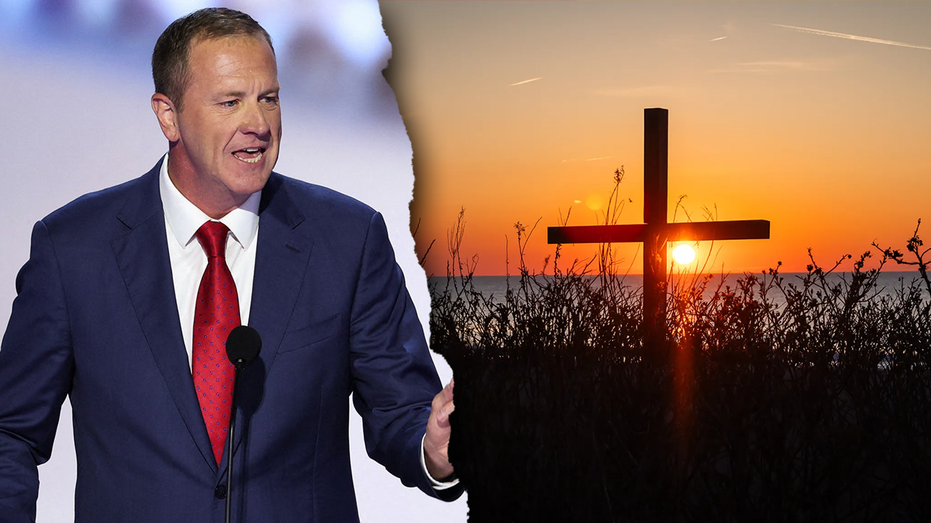
Easter Monday could soon be a federal holiday under a new legislative proposal. Sen. Eric Schmitt, R-Mo., and Rep. Riley Moore, R-W. Va., are leading the way on legislation to make the day following Easter Sunday a holiday amid several other countries also recognizing the holiday. In a thread posted to X, Schmitt cited a poll that 81% of Americans celebrated Easter as of 2023, according to the National Retail Federation and Prosper Insights & Analytics. “This isn’t a radical idea. It’s a federal recognition of a tradition that is central to Western civilization—a tradition that’s already recognized as a public holiday in nations across (and beyond!) the West, including Canada, Australia, New Zealand and most of Western Europe,” the Republican lawmaker said. WHITE HOUSE PLANS ‘EXTRAORDINARY’ HOLY WEEK AS TRUMP HONORS EASTER WITH ‘THE OBSERVANCE IT DESERVES’ “Easter is a floating holiday, it can fall from Mar 22 to April 25. The only two-month gap in our federal holiday calendar is April-May. An Easter Monday holiday fills the gap—creating a three-day weekend when workers and families need it most. Pro-worker. Pro-family. Pro-faith,” he added. “There are plenty of practical arguments for it, too. Easter weekend already generates around $15 billion for our economy. Making it a three-day weekend could boost that by an estimated 10-15%, adding up to $2 billion in economic activity while strengthening American families.” There are 11 public federal holidays, which means that the federal public sector is closed, along with many private sector businesses. AHEAD OF EASTER AND AMID BIRD FLU, IS IT SAFE TO COLOR EGGS? The most recently added public holiday is Juneteenth, which is meant to recognize the abolition of slavery in the United States. It was signed into law by former President Joe Biden in 2021. Christmas Day is the only traditionally religious holiday on the list. Easter is on Sunday, and it is often considered the highest holiday in the Christian faith as it honors the resurrection of Jesus after the crucifixion on Good Friday. Additionally, it is also widely regarded in the U.S. as a spring celebration with the Easter Bunny and egg hunts. UK SCHOOL FACES BACKLASH AFTER CANCELING EASTER CELEBRATION FOR ‘INCLUSIVITY’ “The passion, death and resurrection of Jesus Christ is the most important event in the history of the world. ‘Christ broke the prison-bars of death and rose victorious from the underworld,’” Moore tweeted. Senate bill 1426 was introduced by Schmitt on Thursday, and it’s been referred to the Senate Judiciary Committee.
Major university medical center accused of hiding DEI programs, influential Senator calls them out
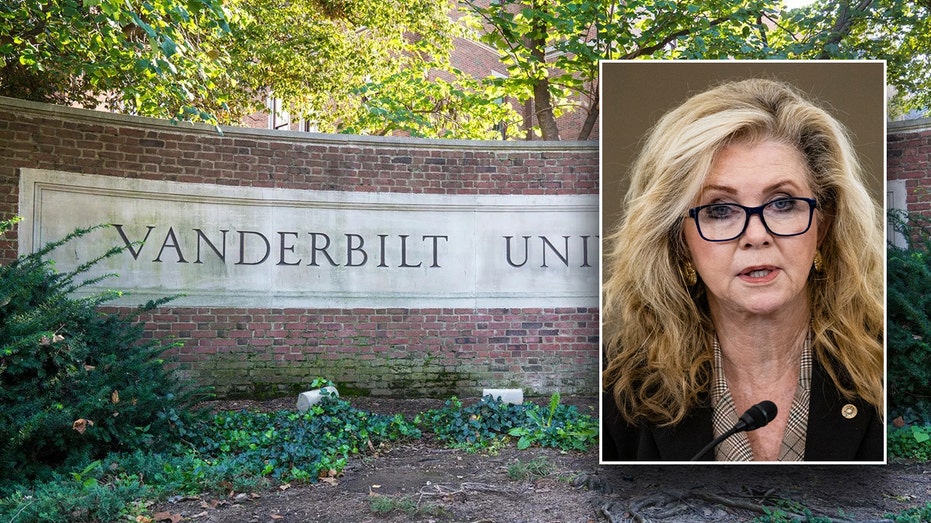
FIRST ON FOX: Tennessee GOP Sen. Marsha Blackburn sent a letter Tuesday to Vanderbilt University Medical Center (VUMC) calling on the medical school to comply with President Donald Trump’s Executive Order on ending diversity, equity and inclusion programs at educational institutions. The letter comes after VUMC reportedly took steps to hide many of its DEI resources as opposed to getting rid of them, following the president’s Executive Orders. Consumers Research, a conservative nonprofit that was following medical schools’ responses to Trump’s orders on ending DEI discovered that VUMC was taking steps to hide some of theirs behind password-protected web pages. In response to criticism, a VUMC spokesperson told Fox News Digital at the time that it was undergoing “a thorough review” of its programs to figure out “where revisions may be required to remain in compliance, including updating information on websites and other public platforms.” VANDERBILT MED CENTER ‘HIDING’ DEI RESOURCES BEHIND PASSWORD-PROTECTED WEB PAGES: REPORT According to an updated review, VUMC’s Office of Diversity and Inclusion website remains behind a password-protected web page. Same with the DEI web page on VUMC’s Department of Medicine website, resources touting “climate care is health care,” and a web page for the school’s “Inaugural Climate Change Action & Sustainability Summit.” Other resources which had previously appeared to be hidden behind password protected web pages – rather than deleted – such as a YouTube video about “The War on DEI,” appear to have been deleted since criticism over the matter was unleashed against the school. “Offices such as the Office of Health Equity, the Office of Diversity and Inclusion, and the Office for Diversity Affairs are seemingly still active,” Blackburn said in her letter. “These offices have advocated for ‘collectively addressing systemic inequities’ and ‘confronting structural racism.’” Among the priorities of this program, was to hire “diverse biomedical researchers,” Black burn pointed out. Blackburn also noted that VUMC was the recipient of more than $66 million this fiscal year from the National Institutes of Health – alone. Meanwhile, VUMC has invested over $17 million to support its “DEI and Belonging Program,” she said. “This is only one of many examples of VUMC investing in DEI initiatives instead of lifesaving medical research,” Blackburn’s letter continued. “Additionally, VUMC’s track record on embracing harmful woke initiatives is grim,” Blackburn added. “VUMC has previously performed sex-change surgeries on minors before suspending the program after public outrage.” RED STATE LAWMAKERS WARNED ABOUT ALLEGEDLY ACCEPTING ‘DEI DOLLARS’ FROM HOSPITAL ASSOCIATION: WATCHDOG VUMC was investigated by Tennessee’s Attorney General’s Office in 2023 amid allegations that a doctor at VUMC was manipulating medical billing codes to evade insurance coverage-limitations for transgender treatments. The investigation followed a video released in 2022, which allegedly showed a VUMC doctor touting transgender surgeries for minors as “huge money makers” and telling anyone with a religious objection to providing them should quit. “President Trump has been clear on this issue. His recent executive orders correctly prohibited DEI programs at federally funded research institutions and ended the recognition of gender identity apart from biological sex,” Blackburn concluded in her letter. “As a beneficiary of federal funding, VUMC has a responsibility to align with the President’s executive orders and return to a focus on lifesaving research as opposed to woke DEI initiatives. Instead of covering up VUMC’s DEI initiatives, I urge you to comply with President Trump’s effort to responsibility allocate taxpayer dollars and immediately cease all DEI initiatives.” CLICK HERE TO GET THE FOX NEWS APP The Senator told Fox News that “discriminatory” DEI programs, such as those at VUMC, actually serve to “do more harm than good.” She also urged VUMC to “put Tennesseans first” by fully complying with the president’s Executive Orders. In a statement to Fox News Digital on Tuesday, VUMC said, “Vanderbilt University Medical Center is eliminating all DEI programs and is fully complying with Executive Actions on DEI. Shortly after the Executive Orders were issued, VUMC began removing related content on internal and external websites to reflect the termination of these programs. VUMC will continue to comply with federal mandates and directives.”
Texas poised to create its own version of DOGE as bill passes both chambers
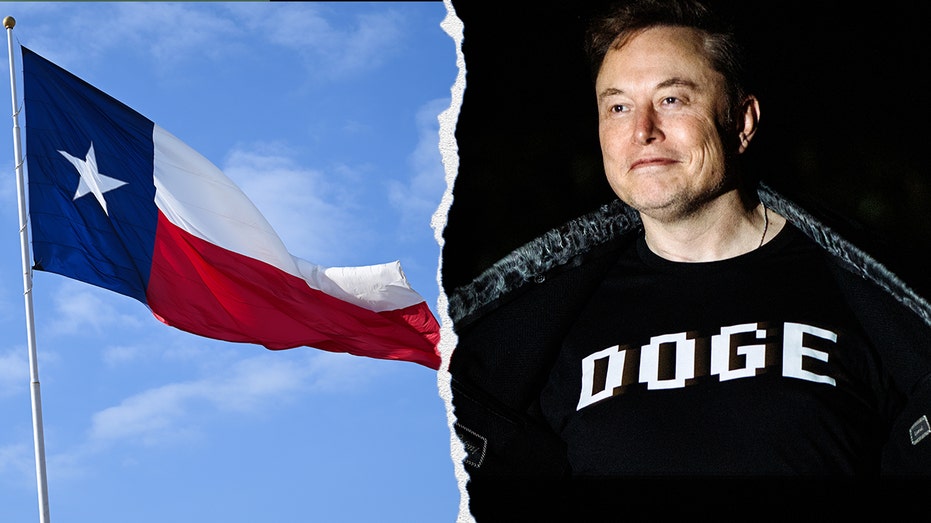
Texas will likely have its own Department of Government Efficiency (DOGE) very soon after lawmakers passed a bill to create an efficiency office within the governor’s office. The bill, known as Senate Bill 14 (S.B. 14) and inspired by Elon Musk’s DOGE, would create a new Texas Regulatory Office which aims to streamline state regulations and eliminate unnecessary rules. An advisory panel would also be established to work with the governor and help Texas state agencies cut red tape, eliminate unnecessary or burdensome rules and make regulations more cost-effective and transparent. The panel would be made up of business owners, researchers, state agencies and the public. DOGE UNCOVERS MASSIVE VA CONTRACT FOR ‘SALARY SURVEY DATA AND ANALYSIS’ — SAYS IT CANCELED IT, SAVING MILLIONS S.B. 14 has passed both chambers of the Texas Legislature and is heading to Gov. Greg Abbott’s desk to be signed into law. Abbott has not publicly stated whether he will sign the bill. The bill was authored by Weatherford Republican Phil King while Lt. Gov. Dan Patrick said previously that it would help save taxpayers money and grow the Texas economy by “cutting red tape.” JASON CHAFFETZ: DEMOCRATS HAVE MADE A FATAL ERROR OPPOSING DOGE “I prioritized SB 14 because President Trump’s creation of the ‘Department of Government Efficiency’ inspired me to find ways Texas can save taxpayers and businesses money by cutting burdensome regulations,” Patrick said, according to Fox 26. “The Texas Miracle will continue long into the 21st century because our common-sense, conservative approach to regulation will keep Texans prosperous and our economy strong.” The bill also requires agencies to write rules in plain language, reduce paperwork and fees, and justify new rules with clear cost and benefit analyses. It also gives courts more power to challenge agency interpretations of laws, shifting legal authority away from agencies. Additionally, it requires the development of an interactive website where the public can easily search for agency rules and forms as well as regulatory information by topic, industry, or North American Industry Classification System (NAICS) code. The Elon Musk-led DOGE has shaken up federal bureaucracies and uncovered billions of dollars in wasteful spending. Through canceling contracts, workforce reductions and more, DOGE says it has so far saved taxpayers $155 billion.
Waqf case: SC asks Centre whether it is willing to allow Muslims to be…
As many as 72 petitions, including those by AIMIM leader Asaduddin Owaisi, have been filed challenging the validity of the Waqf Amendment Act 2025.
Hawley urges Republicans to cut taxes for working-class voters who ‘put Trump in the White House’
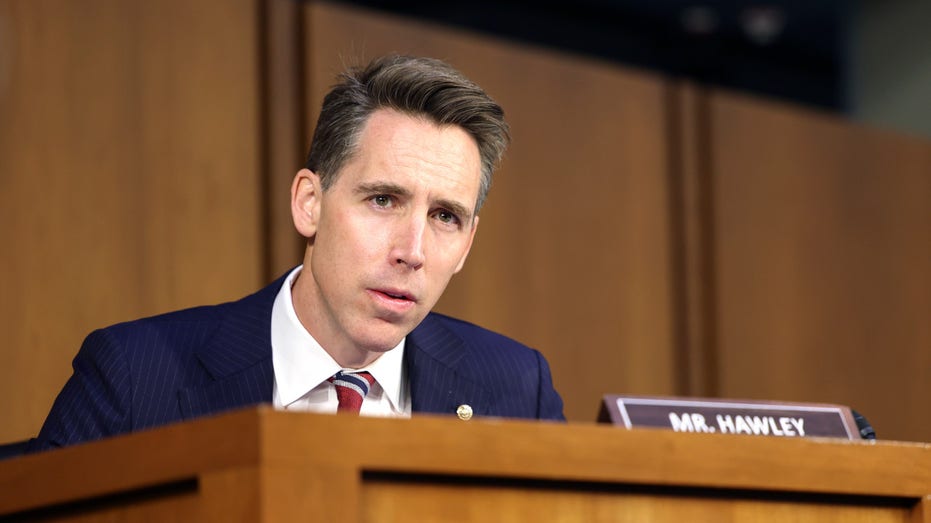
Sen. Josh Hawley, R-Mo., is urging his Republican colleagues to double down on tax cuts for the working-class Americans who make up President Donald Trump’s base. Hawley told Fox News Digital in an interview that tax cuts are “what Republicans are good at,” calling specifically for changes to the payroll tax. He says Americans should be able to apply income tax credits like the child tax credit, the mortgage deduction and charitable deduction, to their payroll taxes. Hawley, who first made the push in a Tuesday op-ed for the Washington Post, says he has spoken with Trump about the potential tax breaks and the president is “very supportive.” “These are the people who put Trump in the White House,” Hawley told Fox, referring to Americans who earn less than $80,000 per year. ELON MUSK DUNKS ON SEN CHUCK SCHUMER, DECLARING ‘HYSTERICAL REACTIONS’ DEMONSTRATE DOGE’S IMPORTANCE Debate over tax policy is raging in Washington as Republicans weigh what to put in Trump’s “big, beautiful” budget bill. Many Republicans support re-upping the 2017 tax cuts, but there are calls for more changes. Some Republicans, including the White House, have even flirted with raising taxes on the uppermost brackets in order to offset costs. “We’ve got this incredible national debt, and so at some point you’ve got to address the elephant in the room,” Sen. Bill Cassidy, R-La., told the New York Times on Tuesday. “Can’t tell you if it’s going to happen or not.” Hawley has also said he would support raising some taxes to offset cuts in lower tax brackets if the president makes a push for it. TRUMP OPEN TO SENDING VIOLENT AMERICAN CRIMINALS TO EL SALVADOR PRISONS He proposed to Fox that one path toward raising more revenue would be to start taxing the endowments of America’s largest universities. MEET THE TRUMP-PICKED LAWMAKERS GIVING SPEAKER JOHNSON A FULL HOUSE GOP CONFERENCE Trump’s administration is already engaged in a pitched battle to reform America’s top educational institutions, threatening to withhold federal funding if they do not adequately address anti-Semitism and other issues on their campuses. Harvard, the university that has pushed back the hardest on Trump’s administration, has an endowment of roughly $53 billion. The other seven Ivy League schools have endowments totaling over $139 billion. Regardless of offsets, however, Hawley says the top priority should be securing tax breaks for the people who voted Trump into office. Hawley emphasized this focus in his op-ed for the Post, quoting Reagan-era columnist Robert Novak. “God put the Republican Party on Earth to cut taxes.”