

Jeffries: SCOTUS should hold Trump admin in contempt over deported Salvadoran migrant
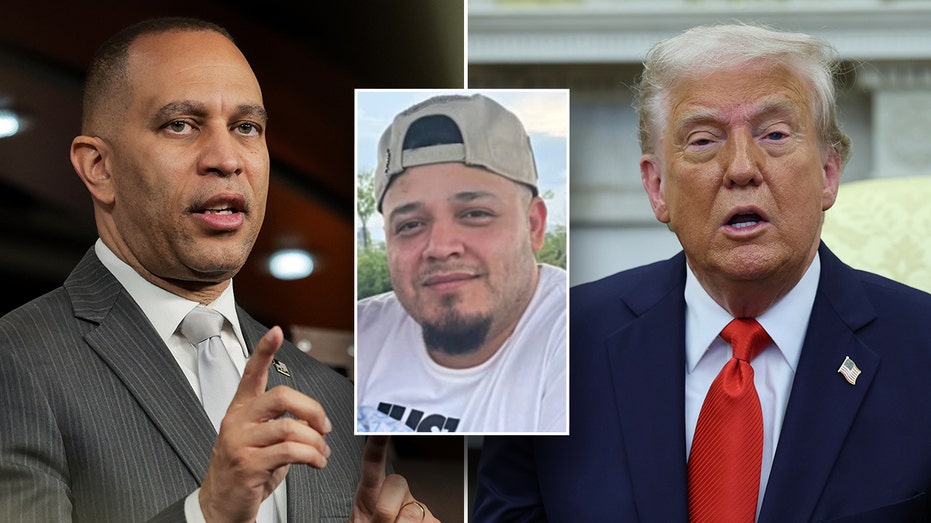
House Minority Leader Hakeem Jeffries, D-N.Y. on Tuesday said that the Supreme Court should consider holding the Trump administration in contempt over its deportation of Kilmar Armando Abrego Garcia, an El Salvadorian illegal migrant and former Maryland resident. The Supreme Court on Thursday upheld a lower court’s decision to facilitate the return of Abrego Garcia from an El Salvador prison where federal officials sent hundreds of suspected criminals and gang members last month. “The Supreme Court has made clear that Mr. Abrego Garcia should not have been deported,” Jeffries said at a Tuesday press conference on Democrats’ upcoming “Save Social Security Day of Action” to oppose what he claims will be cuts to social security. ‘UP TO EL SALVADOR’: TRUMP ADMIN PUNTS ON RETURN OF WRONGFULLY DEPORTED MARYLAND RESIDENT “In fact, the Trump administration has acknowledged that fact and so they need to comply with the Supreme Court’s directive or the Supreme Court needs to enforce its order aggressively, which should include contempt.” The Supreme Court acknowledges that Abrego Garcia was subject to a 2019 withholding order forbidding his removal to El Salvador, and that the removal to El Salvador was “therefore illegal.” The Court stressed that the government must facilitate his release from custody in El Salvador and treat his case as if he were never deported. One immigration judge in 2019 found that Garcia had not sufficiently refuted evidence of MS-13 affiliation and was thus removable to anywhere other than El Salvador because of a threat from a rival gang, this is called a withholding order. The Trump administration has faced criticism from Democrats, left-wing media and human rights advocates for sending Abrego Garcia back to his home country. Trump officials initially acknowledged his removal was due to an “administrative error.” FEDERAL JUDGE HAMMERS DOJ ON WHEREABOUTS OF ALLEGED MS-13 GANG MEMBER FOLLOWING SCOTUS ORDER White House Deputy Chief of Staff Stephen Miller on Monday said that two courts found Abrego Garcia to be an MS-13 gang member, and he was deported after Trump declared the violent gang a terrorist organization. Miller said that when Trump declared MS-13 a terrorist organization, Abrego Garcia was no longer eligible for any form of immigration relief in the United States. Miller said that Abrego Garcia had an outstanding deportation order, meaning he wasn’t even allowed to be present in the U.S. and had to be removed because of the foreign terrorist designation. Abrego Garcia is married to a U.S. citizen, and they are raising three children. Jeffries, meanwhile, added that he was supporting the efforts of Sen. Chris Van Hollen, D-Md., who is trying to meet with El Salvadorian President Nayib Bukele while he is here in the country. Van Hollen is trying to get Abrego Garcia sent back to the U.S. Bukele met with Trump at the White House on Monday for a bilateral summit focused largely on immigration. “I support the efforts and leadership of Senator Chris Van Hollen,” Jeffries said. “The president should accept that meeting request and have a real discussion as to when Mr. Abrego Garcia is going to be returned to his family in the United States of America.” Van Hollen said he also wants to see the Trump administration held in contempt. “It’s absolutely unjust and illegal to have this Marylander detained one more day in a notorious prison in El Salvador,” Van Hollen said, per WBAL-TV. “I saw that the families, the lawyers, have asked that the administration lawyers be held in contempt, and I think that’s an absolutely appropriate move to take right now. They’re absolutely snubbing their nose at the courts right now, including the Supreme Court.” Fox News’ Kerri Urbahn contributed to this report.
Schumer calls on Leland Dudek, acting commissioner of SSA, to resign
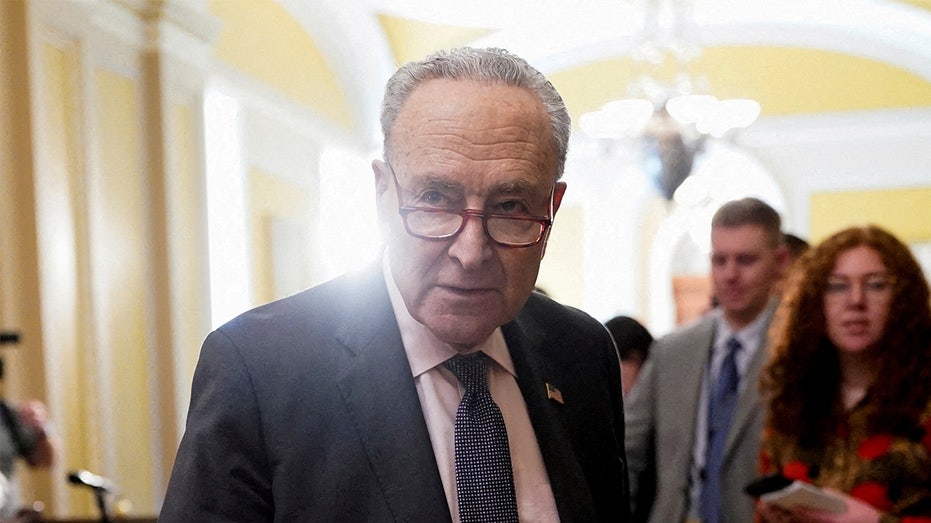
Senate Minority Leader Chuck Schumer, D-N.Y. called on the head of President Donald Trump’s Social Security Administration to resign on Tuesday. Schumer declared a “Social Security Day of Action” during a press conference in New York on Tuesday, accusing Trump, Elon Musk and the Department of Government Efficiency (DOGE) of cutting Americans’ social security. Schumer called on acting SSA Administrator Leland Dudek to resign. “Dudek is bad medicine for our seniors,” Schumer said from the podium. “Donald Trump and Elon Musk have a hatchet man in Leland Dudek, an acting Commissioner with an emphasis on the ‘acting,’ because his real role is to dismantle the very office he is supposed to lead, make better, and protect,” he continued. “We have seen his audition and his work on the stage, and it is clear: Dudek is incapable of doing this job in the way it needs to be done. He won’t protect seniors. He will hurt them. Leland Dudek should resign.” ELON MUSK DUNKS ON SEN CHUCK SCHUMER, DECLARING ‘HYSTERICAL REACTIONS’ DEMONSTRATE DOGE’S IMPORTANCE “Republicans are trying to kill Social Security from the inside – it is a cut by another name – and we won’t let that happen,” Schumer said in another statement. The press conference comes after Schumer feuded with Musk on social media. The Tesla founder reacted to Schumer’s criticism of DOGE by suggesting the lawmaker was “getting a piece of the action with the government fraud.” MUSK SPARS WITH WHITE HOUSE TRADE ADVISOR PETER NAVARRO: ‘DUMBER THAN A SACK OF BRICKS’ “Another Elon lie. He wants you to think anyone who dares to stand up to him is committing fraud, meanwhile he’s taking tens of billions from the government,” Schumer declared in a post last week. Musk also fired off a response to a post in which Schumer suggested that Musk is slashing Social Security benefits. “Make no mistake: What Elon Musk is doing at Social Security is cutting benefits,” Schumer said. “The intern running Schumer’s social media account is lying,” Musk shot back. During a Senate speech, Schumer claimed that “Elon Musk is cutting Social Security benefits.” “When offices close down, when websites crash, when phone lines shut off, that’s no different than cutting benefits,” Schumer said.
Shapiro leads lawsuit against Trump admin for pulling COVID-era school funding
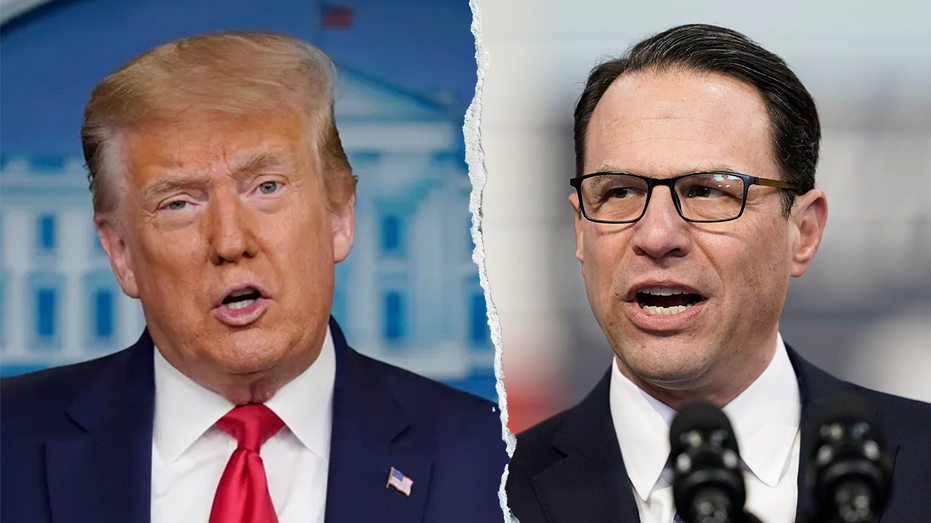
Gov. Josh Shapiro, D-Pa., joined 15 states and Washington, D.C., to challenge President Donald Trump’s Department of Education for revoking millions in pandemic-era education funding for their states. Shapiro and the group of attorneys general from across the country filed a complaint to Education Secretary Linda McMahon and the Education Department, challenging the federal government’s rescission of funding allocated to “combat the devastating and ongoing effects” of the COVID-19 pandemic. The complaint alleges the funding was allocated through March 2026, and states were informed on March 28 “with no advance notice or warning” that the Department of Education had “rescinded extensions of time to liquidate grant funds previously approved by ED.” The complaint says the funds in question were allocated by Congress using a pandemic-era law. “Every Pennsylvania student deserves the freedom to chart their own course and the opportunity to succeed. I’m taking action to preserve that freedom and ensure no Pennsylvania student is harmed by the federal government’s decision to go back on its word,” Shapiro said. ‘DULY OWED TO US’: BLUE STATE GOVERNOR SAYS $2.1B IN FEDERAL FUNDING RESTORED AFTER SUING TRUMP ADMIN Shapiro said the $185 million in federal funding “owed to Pennsylvania” supports academic and mental health programs, implements and modernizes new technology and provides infrastructure improvements in schools. SENATORS FORMALLY INTRODUCE BILL TO ELIMINATE DEPARTMENT OF EDUCATION The Pennsylvania governor argued that school districts and education agencies have already spent the allocated money, so canceling $185 million forces Pennsylvania taxpayers to pick up the tab on projects already underway. The complaint is co-signed by attorneys general from Arizona, California, Delaware, Hawaii, Illinois, Maine, Massachusetts, Maryland, Michigan, Minnesota, New Jersey, New Mexico, New York, Nevada, Oregon and Washington, D.C. The state leaders claim the Department of Education could not rescind their federal funding due to the “end of the pandemic,” because the pandemic had already ended when the funding extension was granted, and they argue they were not limited to COVID-19 specific programs. Madi Biedermann, a spokesperson for the Education Department, told Fox News Digital in a statement, “COVID is over. States and school districts can no longer claim they are spending their emergency pandemic funds on ‘COVID relief’ when there are numerous documented examples of abuse and misuse.” “The Department established a process to consider funding extension requests on a project-specific basis where it can be demonstrated that funds are being used directly mitigate the effects of COVID-19 on student learning. If the states suing were using these funds to remediate learning loss and support students, there would be no need for this lawsuit.” The recession in pandemic-related federal education funding follows Trump’s fulfillment of a key 2024 campaign promise to dismantle the Department of Education. Trump signed an executive order last month directing McMahon to close the department and return educational authority to the states – a Republican idea often floated by presidential hopefuls but implemented for the first time during Trump’s second term. Shapiro has relied on the judicial system during Trump’s second term to unlock federal funding for Pennsylvania. Earlier this month, the Pennsylvania governor joined 22 states and Washington, D.C., in a lawsuit against Secretary Robert F. Kennedy Jr. and the Department of Health and Human Services for canceling public health grants that prevent the spread of infectious diseases. Shapiro also sued the Trump administration on Feb. 13, challenging Trump’s allegedly “illegal” federal funding freeze. Soon after, Shapiro celebrated that $2.1 billion in federal funds had been unfrozen and restored to Pennsylvania following his lawsuit and direct confrontation with the Trump administration.
Trump admin defies court over Maryland deportation, ignites legal showdown
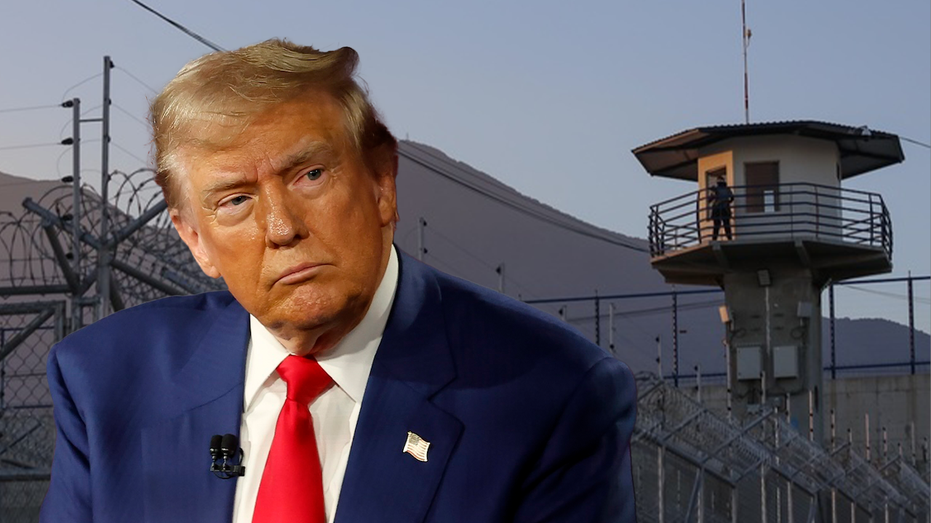
Trump administration officials are slated to appear in federal court this afternoon for what’s expected to be a fiery hearing over the deportation of Kilmar Armando Abrego Garcia, a Maryland resident removed to El Salvador last month in what officials have acknowledged was an “administrative error.” U.S. District Judge Paula Xinis ordered the hearing after government lawyers failed to comply with multiple court directives regarding Abrego Garcia’s return to the U.S. – with the Supreme Court most recently ordering the administration to “facilitate” his release from Salvadorian custody and resume his immigration proceedings as if he were never removed. The administration’s apparent refusal to act – or even clarify Abrego Garcia’s whereabouts – has pushed the case to a boiling point, raising the prospect that Xinis could hold the Trump administration in contempt. In addition to filing incomplete status updates and refusing to answer questions about Abrego Garcia’s whereabouts or efforts to secure his return, Trump officials suggested at the White House on Monday that the U.S. lacks the authority to bring him back. ‘UP TO EL SALVADOR’: TRUMP ADMIN PUNTS ON RETURN OF WRONGFULLY DEPORTED MARYLAND RESIDENT Xinis will weigh these developments as the court considers next steps in the case, including whether to pursue civil contempt proceedings against the administration. Last night, the Trump administration failed to include in its daily status update to the court answers to any of the three questions sought by the judge. These included the location and custodial status of Garcia; what steps the government has taken to facilitate his return, and what steps the government is planning in order to make that happen. Xinis previously called the government’s refusal to answer these questions “extremely troubling.” Tensions soared Monday during a White House visit from Salvadorian President Nayib Bukele, whose government is receiving $6 million from the U.S. to detain migrants at its sprawling maximum-security prison, CECOT – including alleged members of MS-13 and the Venezuelan gang Tren de Aragua. While Trump allies and immigration hawks have praised the removals, critics warn these rapid deportations may violate due process protections under the U.S. Constitution, and they cite concerns that the individuals deported may not have had a chance to challenge their removals in court. APPEALS COURT BLOCKS TRUMP ADMIN’S DEPORTATION FLIGHTS IN ALIEN ENEMIES ACT IMMIGRATION SUIT Abrego Garcia, for his part, was deported from the U.S. to El Salvador last month without a hearing. The Trump administration, including U.S. Solicitor General John Sauer, has acknowledged in court documents his removal was an “administrative error.” Asked Monday about progress in returning Abrego Garcia to U.S. soil, Trump officials said his return was “up to El Salvador” and that the U.S. would “provide a plane” – appearing to ignore a court order to facilitate his return. “That’s up to El Salvador if they want to return him,” Attorney General Pam Bondi told reporters. “That’s not up to us.” This contention was backed by other Cabinet officials, including White House deputy chief of staff Stephen Miller, and by Salvadorian President Bukele himself. “How can I return him to the United States? Like if I smuggle him into the United States?” Bukele told reporters Monday during a sit-down with President Donald Trump and other senior administration officials. “Of course I’m not going to do it. The question is preposterous,” he said. JUDGE BOASBERG POISED TO HOLD TRUMP ADMIN IN CONTEMPT, TAKES DOWN NAMES OF DHS OFFICIALS: ‘PRETTY SKETCHY’ Hours later, Trump administration lawyers breezed past a 5 p.m. court-ordered deadline set by Xinis to file a daily status update on their efforts to return Abrego Garcia to U.S. soil. Justice Department lawyers said in a weekend filing they are not required to comply with a judge’s order to “facilitate” his return, arguing the courts, in their view, “have no authority to direct the Executive Branch to conduct foreign relations in a particular way, or engage with a foreign sovereign in a given manner.” Trump officials continue to publicly rail against so-called “activist judges,” whom they have argued are attempting to stymie Trump’s agenda and his priorities on immigration enforcement. As of this writing, the Trump administration has not returned any of the individuals who have been sent to El Salvador’s sprawling, high-security prison, including any Venezuelan nationals who may have been mistakenly identified as members of the Tren de Aragua gang, as well as Abrego Garcia.
The human cost of two years of war in Sudan
[unable to retrieve full-text content] After two years of war in Sudan, millions of people are on the brink of starvation.
Trump-China trade war: Which US companies could be worst hit

From Apple to Nvidia, United States tech companies have received a temporary exemption from President Donald Trump’s sky-high tariffs. For other businesses, the damage imposed by existing levies on Chinese exports may prove fatal. While Trump stepped back from the edge for most countries – announcing a 90-day pause on the bulk of his “reciprocal” tariffs on Wednesday – he doubled down on China, eventually increasing import taxes on its goods to 145 percent. Trump has pitched his protectionist agenda as essential for reviving US industry. However, many US firms have grown used to cheap imports from China. For many of them, prices will rise and profits will fall. Beijing has also responded to Trump’s moves with retaliatory tariffs of its own, now at 125 percent. US exports to China, and agricultural products in particular, will be hit badly by China’s blanket levy. Here is the state of trade ties between the world’s two largest economies and the US companies that could be worst affected: Advertisement State of US-China trade Despite growing tensions between the US and China, Washington and Beijing remain major trading partners. According to data from the Office of the US Trade Representative, the total goods trade between the US and China stood at $582.4bn in 2024. After Canada and Mexico, China is America’s third largest trading partner. US imports from China totalled $438.9bn while its exports the other way tallied in at $143.5bn. The upshot is that the US trade deficit with China was $295.4bn last year, bigger than for any other country. On Friday, China’s Ministry of Commerce said it was increasing tariffs on US goods from 84 percent to 125 percent, reiterating that Beijing would “fight to the end” shortly after Washington raised US duties on Chinese imports to 145 percent. Late that same day, the Trump administration announced temporary exemptions for smartphones, solar panels and other electronic products like semiconductor chips – most of which are made in China – from Trump’s “reciprocal” tariffs, which he has said are meant to level the playing field with trading partners who impose duties on US goods and run trade surpluses with the US. China’s government welcomed the exemptions and urged Trump to go further. However, the US president has said those products will ultimately be subject to their own different levy. As of now, they are still subject to the 20 percent tariffs that Trump imposed on all Chinese goods before April 2. In the meantime, companies will be forced to pass down at least some of Trump’s tariffs onto consumers to try to preserve their profit margins. That will result in higher inflation and lower business output. Advertisement According to an analysis from the Yale Budget Lab, tariffs could cause 740,000 people to lose their jobs across the US by the end of 2025. But which sectors will be most exposed to these trade disruptions? Textiles and apparel The price of Nike trainers, Levi jeans and Gap T-shirts will almost certainly rise in the US as tariffs undermine the Asian factory hubs that underpin the global clothing industry. In 2024, factories in China, Vietnam and Indonesia made 95 percent of all Nike footwear. Trump has already introduced 145 percent tariffs on China while Vietnam and Indonesia currently face 10 percent tariffs, which could go up in July if they don’t succeed in striking a trade deal with Washington by then. Vietnam, in particular, is seen as a major indirect source of Chinese imports, both by rerouting Chinese goods through Vietnamese ports and by using Chinese parts in its exports to the US. Gap is also highly exposed to production processes in Vietnam. Since Trump’s “reciprocal” tariff announcement on April 2, Gap shares have fallen by 14 percent. For Nike, it’s 14.7 percent. Elsewhere, Levi’s stock price has plunged by 10.6 percent. Smartphones and semiconductors On Friday night, US Customs and Border Protection (CBP) issued a notice exempting some technology products from the tariffs placed on Chinese goods. The CBP listed 20 product categories, including computers, smartphones and automatic data processors. It also included semiconductor equipment, memory chips and flat panel displays. The exemptions were a welcome relief to major technology firms, including Apple, which relies heavily on Chinese manufacturing. But even with all post-April 2 tariffs on them waived for now, these electronic goods still face 20 percent tariffs that Trump had imposed on them before April 2. Advertisement Trump has also said the exemptions are temporary, and new tariffs might be coming soon. Additionally, on Monday he announced an investigation into the national security implications of importing semiconductors and chip-making equipment, injecting new insecurities for electronics firms. Supply chains in general are hard to move. For electronic goods, they are particularly difficult to replace – lining up industrial processes across different locations requires time and investment. Bradley Saunders, a North America analyst at Capital Economics, told Al Jazeera that technology goods assembly processes have been “built up over years. … Markets have found the most efficient supply chains that they can.” For now, Apple outsources most of its assembly operations to China. Smartphone companies are not alone. Almost 90 percent of gaming consoles sold in the US by Sony, Microsoft and Nintendo have been shipped in from China. Elsewhere, Nvidia relies heavily on components from China. The technology giant relies on Taiwan Semiconductor Manufacturing Company to manufacture its cutting-edge graphics cards and AI chips. Apple and Nvidia led a broad advance across US stock markets after Trump announced his recent exemptions. According to Saunders, any new tariffs could hit US technology sectors “hard”. US agricultural exporters Trump’s first trade war with China from 2018 to 2019 resulted in billions of dollars of lost revenue for American farmers. “The agriculture industry always tends to lose out in trade wars,” Saunders said. Advertisement He pointed out that “about 15 percent” of US farm exports went to China in 2024. The soya bean sector, in particular, stands to lose because China is its largest export
Severe sandstorms engulf southern Iraq

NewsFeed A severe sandstorm blanketed southern Iraq on Monday, causing airports to close down and sending over 3,500 people to hospitals. Experts warn sandstorms are becoming more frequent in Iraq due to climate change and desertification. Published On 15 Apr 202515 Apr 2025 Adblock test (Why?)
CDC eyes narrower COVID-19 vaccine guidance ahead of 2025–2026 season

The Centers for Disease Control and Prevention’s (CDC’s) vaccine advisory committee will meet on Tuesday for a two-day session to lay out new recommendations, including a proposal to scale back current COVID-19 vaccine guidelines. Dr. Lakshmi Panagiotakopoulos of the CDC is expected to present guidance on COVID-19 vaccine use for 2025–2026 and suggest the department adopt a “narrow” recommendation for it, “and only maintain this series for certain populations within these groups who we determine should be vaccinated.” When polled on April 3, a majority of advisors – 76% – expressed support for a risk-based, rather than universal, COVID-19 vaccination recommendation for the 2025–2026 schedule, up 10% higher from February polling. UTAH BANS FLUORIDE FROM PUBLIC DRINKING WATER, ALIGNING WITH MAHA MOVEMENT The 70-page presentation outlines three possible policy options for COVID-19 vaccines, including a shift away from recommending annual shots for everyone over 6 months old. Currently, annual COVID-19 shots are recommended for ages 6 months and older. One proposed policy option would continue the current universal policy, while another would recommend vaccines only for people at higher risk of severe illness, such as older adults, those with underlying health conditions, pregnant women and healthcare workers. A third option would blend the two, keeping universal recommendations for people 65 and older but limiting shots for younger groups to those at higher risk. “When initially presented with 2025–2026 COVID-19 vaccine policy options in November 2024, the Work Group appreciated pros and cons of both risk-based and universal vaccine recommendations,” Panagiotakopoulos wrote. “At that time, there was not yet a consensus on what the recommendation for the 2025–2026 COVID-19 vaccine should be. The Work Group requested additional information to help inform the decision-making process on risk-factors for severe COVID-19, transmission and immunity, vaccine implementation and access, and cost-effectiveness.” HOSPITALS WARNED THEY MUST PROTECT CHILDREN FROM CHEMICAL AND SURGICAL MUTILATION: HHS AGENCY MEMO The presentation will also propose how to define “increased risk,” looking at both health factors and increased exposure, like living in long-term care facilities or working in high-contact jobs. The two-day meeting of the Advisory Committee on Immunization Practices will examine information for members to vote on as official recommendations, which will then be passed on to the CDC for consideration in June. The end of the presentation will include discussion questions about the pros and cons of a universal vs. risk-based COVID-19 vaccine recommendation for 2025 to 2026. Key discussion points include whether any groups should be excluded from vaccination, what data is still needed to guide decisions, and whether a risk-based approach makes sense if most people are already considered “at risk.” HHS DOWNSIZING BEGINS AMID RFK JR. ‘MAKE AMERICA HEALTHY AGAIN’ PUSH: ‘WIN-WIN FOR TAXPAYERS’ According to the CDC, the vaccine committee’s agenda will also include a session about the measles outbreak and an update “on literature related to reduced number of doses for HPV vaccine.” Members of the committee will vote on Wednesday on recommendations for the Meningococcal Vaccines, Meningococcal Vaccines VFC, RSV Adult and the Chikungunya Vaccines. The meeting comes as Health and Human Services Secretary Robert F. Kennedy Jr. is overseeing a major reorganization of the CDC. Plans include transferring non-infectious disease-related divisions to the Administration for a Healthy America to focus on chronic disease management. This move follows significant downsizing under President Donald Trump’s directive, which has already reduced the CDC workforce by roughly 4,000 people.
Marjorie Taylor Greene brings town hall to Harris-won Georgia county, shrugs off possible ‘outbursts’
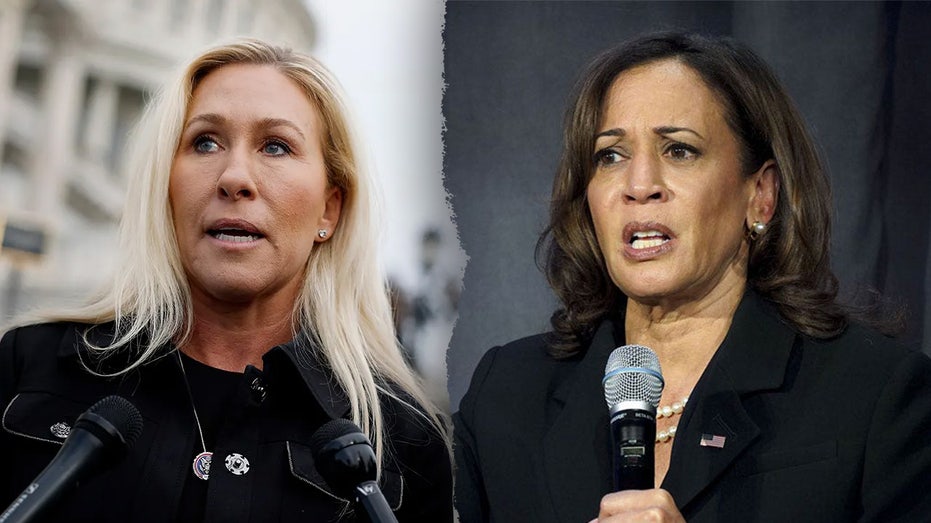
Rep. Marjorie Taylor Greene, R-Ga., is facing her constituents in a critical swing county for an in-person town hall on Tuesday, despite House GOP leaders’ warnings earlier this year to step back from such events amid progressive groups’ coordinated efforts to derail them. Greene said she organized her event months before House Republican leaders’ guidance but that it did not dissuade her from hosting them. “This has been on my calendar for a long time. And yes, we have seen Republican town halls targeted by Democrat protesters, and it’s well-organized by the Democrat Party,” Greene told Fox News Digital in a brief interview. “We even had leadership recommend to do tele-town halls. And for me that that is absolutely unacceptable. There’s no way I’m going to sit on a telephone and talk to the people in my district… I’ve done town halls ever since I was elected, starting back in 2021. So I love to do them.” Known as a conservative bomb-thrower and close ally of President Donald Trump, Greene is hosting her event in Cobb County – an area encompassing the Atlanta suburbs that former Vice President Kamala Harris won by roughly 15% last November. SENATE GOP PUSHES TRUMP BUDGET FRAMEWORK THROUGH AFTER MARATHON VOTE SERIES It’s a more moderate spot in Greene’s otherwise deep red district – but the congresswoman said its politics did not factor into her decision. “The reason why we picked that part of the district is it’s the newest part of the district for me, because of redistricting. And so this is a new part of Cobb County that I’ve gained in my district, and I think they’re great, and I want to go down there and speak with them,” Greene said. “They just voted for me for the first time in November. I like to pay attention to my district. And so I want to do my first town hall there.” “It has nothing to do with population or anything. Actually, I can tell you right now, I can get in much deeper red parts of my district and draw much bigger crowds. So this was about paying attention to the newest part of my district,” Greene added. She’s one of few Republican lawmakers holding an in-person town hall during Congress’ two-week Easter break away from Washington. It comes after progressive groups like Indivisible and MoveOn staged a series of coordinated protests at GOP lawmakers’ town halls and other events. Even town halls held by Greene’s fellow Georgia delegation members have been derailed by activists – who in some cases have traveled from other districts – jeering and booing GOP policies. MEET THE TRUMP-PICKED LAWMAKERS GIVING SPEAKER JOHNSON A FULL HOUSE GOP CONFERENCE But Greene’s town hall will see additional security measures aimed at ensuring disruptions are at a minimum. The address is only provided to registered attendees, who must be living in Greene’s district to gain entry. “I’m not sure how other members do it, but we only allow people that actually live in the district to come to the town hall. This isn’t a place for political grandstanding, protesting and outbursts,” Greene said. “We take their sign-up information. They have to show their ID when they come in the door and match up the sign-up list. And then we told them well ahead of time, if they want to stand up and interrupt and scream and yell, and have big outbursts, and use this as a protest, they’re going to get thrown out.” She added that she welcomed all of her constituents, Republicans and Democrats. “We expect them to behave well. And we expect them to be, you know, respectful. And we’re going to have a great town hall, and I cannot wait for it,” Greene said. The majority of coordinated protests have centered on the Department of Government Efficiency (DOGE) and Elon Musk – one of Indivisible’s specific protest campaigns was labeled “Musk or Us,” and one of its most recent off-shoots targeted a town hall held by Rep. Mike Flood, R-Neb., in his red Midwestern district. Greene, who chairs the House Oversight Committee’s subcommittee on DOGE, said she anticipated the topic would come up, albeit under calmer circumstances. “DOGE, I think, is going to be a big topic. And being the chairwoman of the DOJ’s subcommittee on Oversight, I cannot wait to inform my constituents about what’s happening there, as well as reconciliation, which is what Congress will be working on over the next few weeks and even further until we get that done,” she said. Another topic Greene anticipated was Trump’s tariffs, and “how that’s helping America.” “And I think there’ll be questions about immigration enforcement deportations. And I can’t wait to talk about that, because I think President Trump and his entire administration is literally saving our country by deporting murderers and rapists and cartels,” Greene said. “When I come back home to my district, I grocery shop by myself, I go to Home Depot, I go to restaurants. I literally live in my community. So I really know people here. I know what they care about. So I feel very confident to be able to answer their questions.”
Trump says Harvard should lose its tax exempt status, be treated as ‘political entity’ amid funding dispute

President Donald Trump suggested Tuesday that Harvard University should lose its tax-exempt status and be considered a “political entity,” a day after his administration pulled $2.2 billion in funding from the Ivy League school. “Perhaps Harvard should lose its Tax Exempt Status and be Taxed as a Political Entity if it keeps pushing political, ideological, and terrorist inspired/supporting ‘Sickness?’” Trump wrote on TRUTH Social. “Remember, Tax Exempt Status is totally contingent on acting in the PUBLIC INTEREST!” the president added. TRUMP ADMIN SLASHES OVER $2.2B IN FUNDING TO HARVARD AFTER SCHOOL DEFIES DEMANDS The Trump administration on Monday said it was freezing more than $2.2 billion in grants and $60 million in contracts to Harvard University after the institution refused to comply with a set of terms set forth by the Department of Education, Department of Health and Human Services and the General Services Administration last week. Framed as “an expanding list of demands” by Harvard’s leadership, the administration asked the university to make changes to adhere to “merit-based” hiring and admissions practices and reform its recruitment of international students to “prevent admitting students hostile to the American values and institutions inscribed in the U.S. Constitution and Declaration of Independence, including students supportive of terrorism or anti-Semitism.” Other requested reforms included ensuring “viewpoint diversity in admissions and hiring,” changing programs with “egregious records of antisemitism or other bias,” and discontinuing diversity, equity and inclusion (DEI) policies and initiatives. In an April 11 letter to Harvard leadership, Trump administration officials said that U.S. government “investment is not entitlement” and “depends on Harvard upholding federal civil rights laws, and it only makes sense if Harvard fosters the kind of environment that produces intellectual creativity and scholarly rigor, both of which are antithetical to ideological capture.” In a statement on Monday, Harvard University President Alan Garber said the terms of agreement make “clear that the intention is not to work with us to address antisemitism in a cooperative and constructive manner.” HARVARD WON’T COMPLY WITH TRUMP ADMIN’S DEMANDS AMID THREATS OF CUTTING FEDERAL FUNDING “Although some of the demands outlined by the government are aimed at combating antisemitism, the majority represent direct governmental regulation of the intellectual conditions at Harvard,” Garber wrote. He argued the terms required an “audit” of the student body, faculty and staff “viewpoints” and to reduce the power of certain students, faculty, and administrators “targeted because of their ideological views.” “No government – regardless of which party is in power – should dictate what private universities can teach, whom they can admit and hire, and which areas of study and inquiry they can pursue,” Garber wrote. Harvard’s response was praised by Democrats, including former President Barack Obama and Massachusetts Gov. Maura Healey, while conservatives mocked the Ivy League school’s outrage given its $53.2 billion endowment. “There is another way: Refuse taxpayer money,” Hillsdale College, a private Christian institution in Michigan, posted on X. “Time to defund,” Rep. Brandon Gill, R-Texas, wrote on X. “And tax that $50 billion endowment.” Richard Grenell, a longtime Trump ally who served in multiple administration roles, had a message to Harvard: “Don’t ask for taxpayer money if you don’t want taxpayer strings.” “You’ve ruined my degree with your far left activism,” Grenell wrote. “As a Harvard graduate, I support the Federal government enforcing laws that you violate.”