

Trump prosecutor to investigate blue state governor, AG over reported order to ignore ICE warrants
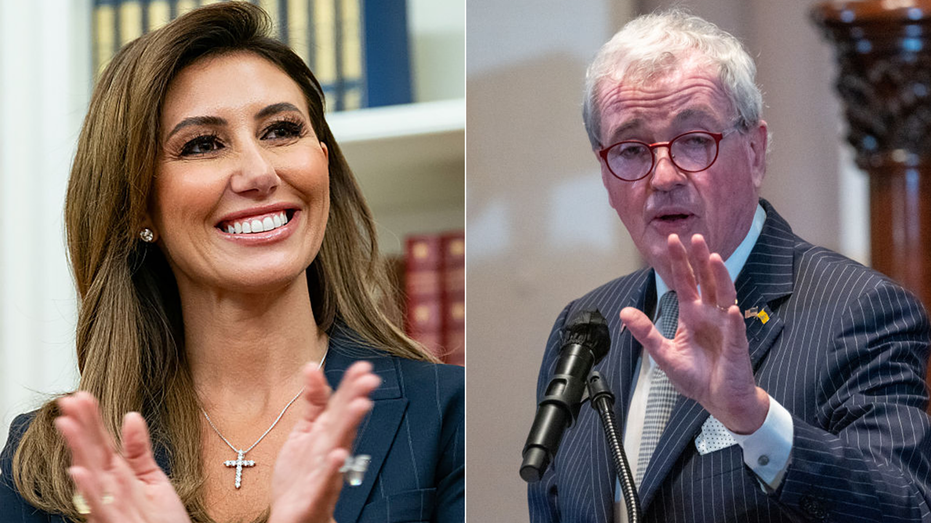
President Donald Trump’s longtime legal counsel and appointee as U.S. attorney for New Jersey announced Thursday she will launch a probe into Gov. Phil Murphy and Attorney General Matt Platkin over reports that state police were asked to ignore new immigration warrants. Alina Habba said on “Hannity” she decided to launch the probe following a Shore News Network report that an internal memo from New Jersey State Police (NJSP) Col. Patrick Callahan revealed Murphy and Platkin ordered that officers not pursue thousands of immigration warrants recently added to the National Crime Information Center. The move was reportedly meant to be in line with former Attorney General Gurbir Grewal’s 2018 “Immigration Trust Directive,” which limited the types of voluntary assistance state and local police could offer the feds. “We know that the governor has on his website, currently, dos and don’ts for his local state of law enforcement. Those dos and don’ts instruct them not to cooperate with illegal immigrants who have administrative warrants that have been issued by the court after due process,” Habba said. NJ GOV SAYS HE’LL ‘FIGHT TO THE DEATH’ AGAINST TRUMP ACTIONS HE DEEMS ‘CONTRARY TO VALUES’ “It is instructing them to go against our federal rules, our executive orders.” She said her new probe into Murphy and Platkin should be a warning to all other state leaders that if they hinder the FBI, DEA or other federal law enforcement agencies, they will be held accountable. “[W]e are to take all criminal, violent criminals and criminals out of this country and to completely enforce federal law. And anybody who does get in the way of what we are doing – which is not political, it is simply against crime – will be charged in the state of New Jersey for obstruction, for concealment, and I will come after them hard.” Habba, whose office is based in Newark, said she met with state law enforcement on Thursday and noted they do not have the same authority as federal officers, but they can still legally notify U.S. Immigration and Customs Enforcement to hand off or alert them to immigration-related investigations. DEMOCRATS RAIL AGAINST ‘EGREGIOUS’ ICE RAID IN NEW JERSEY AFTER MILITARY VETERAN QUESTIONED “If anybody wants to use politics or their position to go and violate any federal law or any executive order in this state, and that includes sanctuary cities, and I’m looking at you in Paterson – I will be investigating you, and if you did commit a crime, if you ordered obstruction, if you are ordering concealment and harboring, you will be charged.” Fox News Digital reached out to Murphy, Platkin and Paterson, New Jersey, Democratic Mayor Andre Sayegh for comment. Sayegh recently made waves politically last month, when he declared Paterson the American “capital of Palestine.” The city has a large Muslim and Arabic population. Murphy recently suggested he was housing a migrant at his Monmouth County home and went on to dare Trump to do something about it. CLICK HERE TO GET THE FOX NEWS APP In February, he said he and New Jersey first lady Tammy Murphy were talking about “someone in our broader universe whose immigration status is not yet at the point that they are trying to get it to.” “And we said, you know what? Let’s have her live at our house above our garage,” Murphy said. “Good luck to the feds coming in to try to get her.” Fox News Digital reached out to NJSP for more information on the memo and its actions in regard to Murphy’s order. Fox News Digital’s Greg Norman and Deirdre Heavey contributed to this report.
United States is no longer a safe destination for international students
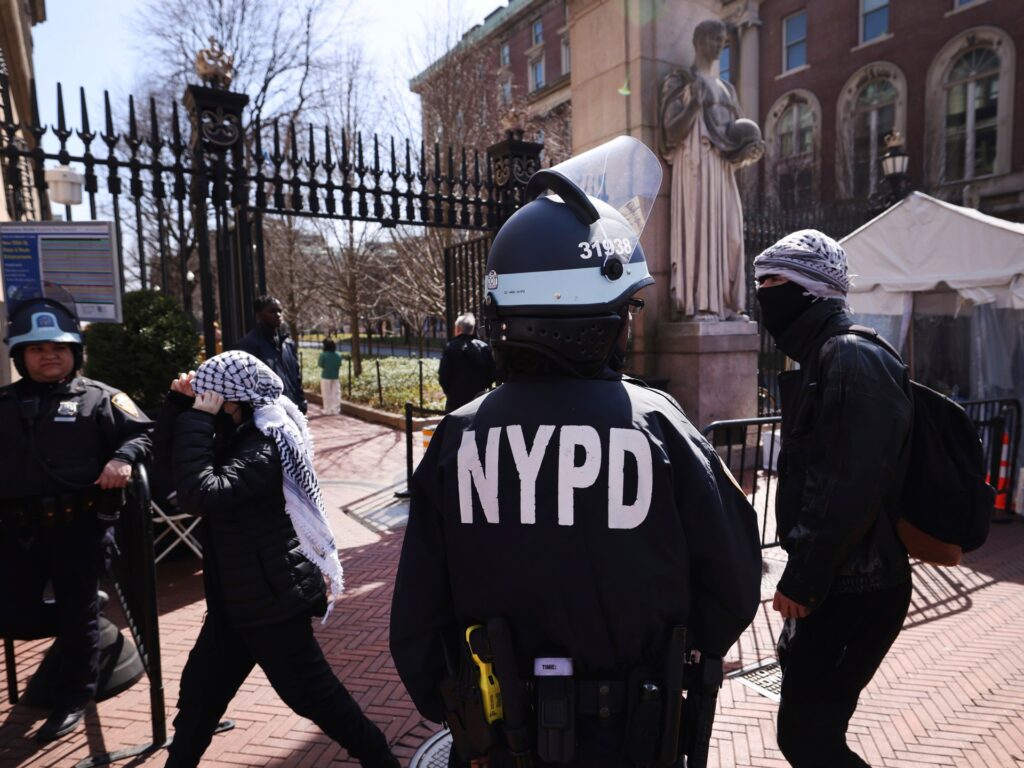
One cannot underestimate the precarity that orders the lives of international students in the United States. I remember making my maiden journey from Kolkata to upstate New York as an international student to pursue an undergraduate degree at a small liberal arts college. This was back in 2003 when the US-led so-called “war on terror” was in full swing. The US had invaded Iraq only a few months before my arrival in New York. Be it the on-campus jingoism inspired by America’s battle against the “Axis of Evil” that left little room for critical assessments of US foreign policy in the classroom, the “random” airport security checks at airports or the near-consistent racism and Islamophobia on the American airwaves – it was soon painfully apparent to me that someone who “looked like me” didn’t belong in the “Land of the Free”. In the years since, things hardly got any better for international students making their way to America. They remained untrustworthy and unwelcome outsiders in the eyes of many Americans, and the sense of precarity surrounding their lives persisted. Advertisement Under Trump 2.0, however, this sense of precarity has reached unprecedented levels. In fact, these days the US appears to be not only unwelcoming, it is a blatantly unsafe destination for international students. Trump has made the lives of international students much more difficult than before. This did not come as a surprise, as he had promised to do just that on the campaign trail, well over a year ago. Besides claiming that universities and various accreditation bodies were dominated by Marxists and radical leftists, he made his particular hatred for Palestine solidarity activists on campus well-known. He declared that, if re-elected, he would revoke the student visas of “radical, anti-American and anti-Semitic foreigners” participating in pro-Palestinian protests on US college campuses as early as October 2023. After his return to the White House, he made targeting pro-Palestine international students and faculty a priority. One of his highest-profile targets was Mahmoud Khalil, a Columbia University graduate. Khalil, who was on the front lines of Columbia’s pro-Palestine protests as a negotiator between the student protesters and university leadership, is a green card holder. However, the Trump administration is pushing to deport him, claiming that he was engaging in pro-Hamas, un-American activities. Khalil was abducted by Immigration and Customs Enforcement (ICE) officers from his home in New York in front of his pregnant American wife in early March, and has been held at a detention facility in Louisiana for over a month. Advertisement In a similar case, Tufts University PhD student and Turkish citizen Rumeysa Ozturk was abducted by masked, plain-clothed officers in Boston. She, too, was transferred to the detention facility in Louisiana. Her crime? Co-authoring an op-ed in Tufts Daily calling for her university to divest from Israel. Indian citizen and Georgetown University postdoctoral scholar Badar Khan Suri has also been targeted for deportation and is faced with an uncertain future at an ICE detention facility in Texas. Suri didn’t even participate in any Palestine solidarity protests. His crime seems to be that he is the son-in-law of a former adviser to the Hamas government in Gaza, Ahmed Yousef. Yousef, however, left the position in the political wing of Hamas more than a decade ago and has called the group’s attack on Israel on October 7, 2023 “a terrible error”. Then there is the case of Cornell University PhD candidate Momodou Taal, a dual citizen of the United Kingdom and Gambia. He participated in Palestine solidarity protests and was called upon by immigration authorities to surrender. After going into hiding for two and half weeks in fear for his personal safety, Taal decided to leave the US. These few high-profile cases are just the tip of the iceberg. The Trump administration has revoked the visas of hundreds of international students for their pro-Palestine activism and social media posts. As of April 10, more than 600 international students in over 100 colleges and universities across the country are believed to have been affected. And there seems to be no end in sight. The Department of Homeland Security has begun screening the social media accounts of non-citizens and says it will deny visas and green cards to all individuals it deems as having participated in pro-Palestine activism or, as the Trump administration deems it, “anti-Semitic activities”. Advertisement America’s leading universities, meanwhile, appear more than willing to capitulate to Trump’s demands, and are throwing their international students to the wolves, to stay on the good books of the administration and keep federal funding. Columbia University, for instance, quickly caved when the Trump administration decided to withhold $400m in federal funding due to the university’s supposed inaction during the Palestine solidarity protests. Despite sitting on an endowment valued at just under $15bn, Columbia’s leadership responded to Trump’s funding threats by overhauling the university’s protest policies and introducing new security measures that would swiftly crack down on any possible return of Palestine solidarity encampments and protests on the campus. The Trump administration also demanded that Columbia’s Middle Eastern, South Asian and African Studies Department be placed on academic receivership for five years. Typically, academic receivership involves internal processes and measures implemented by the university leadership to bring a dysfunctional department or programme “back on track”. Seemingly agreeing to Trump’s demands, the university appointed a new senior vice provost to oversee the department. Harvard University – another institution with a massive endowment – faced similar demands from the Trump administration in return for federal funding. Specifically, its leadership was asked to make “necessary changes” to “address bias, improve viewpoint diversity and end ideological capture” in “programs and departments that fuel antisemitic harassment”. Unlike in the case of Columbia, there was no mention of specific programmes or departments. Advertisement But it would seem that the Harvard leadership knew what Trump meant. Harvard’s interim dean of social sciences David M Cutler dismissed the leadership of the Center for Middle Eastern Studies. He justified his decision by claiming that
Tottenham have leak inside club, says manager Postecoglou
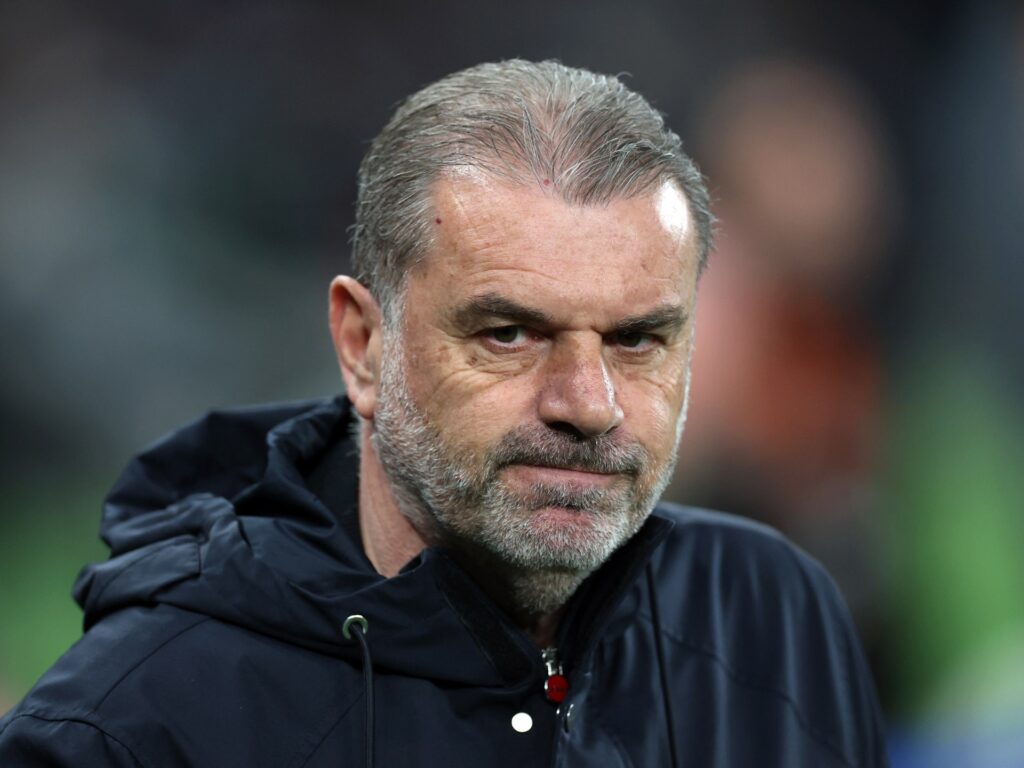
Tottenham manager Ange Postecoglou believes there is a leak inside the north London club affecting his role. Tottenham boss Ange Postecoglou said a leak of information from inside the club is making his job more difficult as the Australian closes in on finding the source of the problem. Injury news has regularly found its way onto social media in advance of Spurs’ games during a troubled second season for Postecoglou. Before Thursday’s 1-1 Europa League quarterfinal, first-leg draw against Eintracht Frankfurt, Wilson Odobert’s absence from the starting lineup was leaked long before the team was officially announced. “There is no doubt we’ve got a leak inside the club,” Postecoglou said on Friday. “Someone continues to leak out information and they have all year. I don’t know why as it just makes our job even more difficult. It doesn’t help us as you don’t want to give the opposition a helping hand. “We’ve narrowed it down. I’ve got a fair idea where it’s coming from. We will deal with it. “It certainly doesn’t help us on game days. It’s sometimes half-truths and sometimes more. You’d like to think that everyone within our camp is working with us rather than against us.” Advertisement Tottenham’s lengthy injury list has played a major role in their disappointing Premier League season. Spurs sit 14th with seven games to play and are on course to miss out on the top 10 for the first time since the 2007/08 campaign. Postecoglou’s future at the club next season appears to solely depend on winning the Europa League and ending a 17-year wait for silverware. With that in mind, he is expected to make changes for Sunday’s trip to Wolves with one eye on the second leg in Frankfurt on Thursday. “We’ll need a big game, a big performance on Sunday, so having some fresh legs will help,” he added. “But also looking into next Thursday, it’s not about resting guys or managing guys, it’s also about having guys ready. It could go to 120 minutes and we’ll need people ready to go, so with a combination of those factors, we’ll make some changes.” Adblock test (Why?)
Trump’s tariffs: A simple illustrated guide to 15 economic terms to know
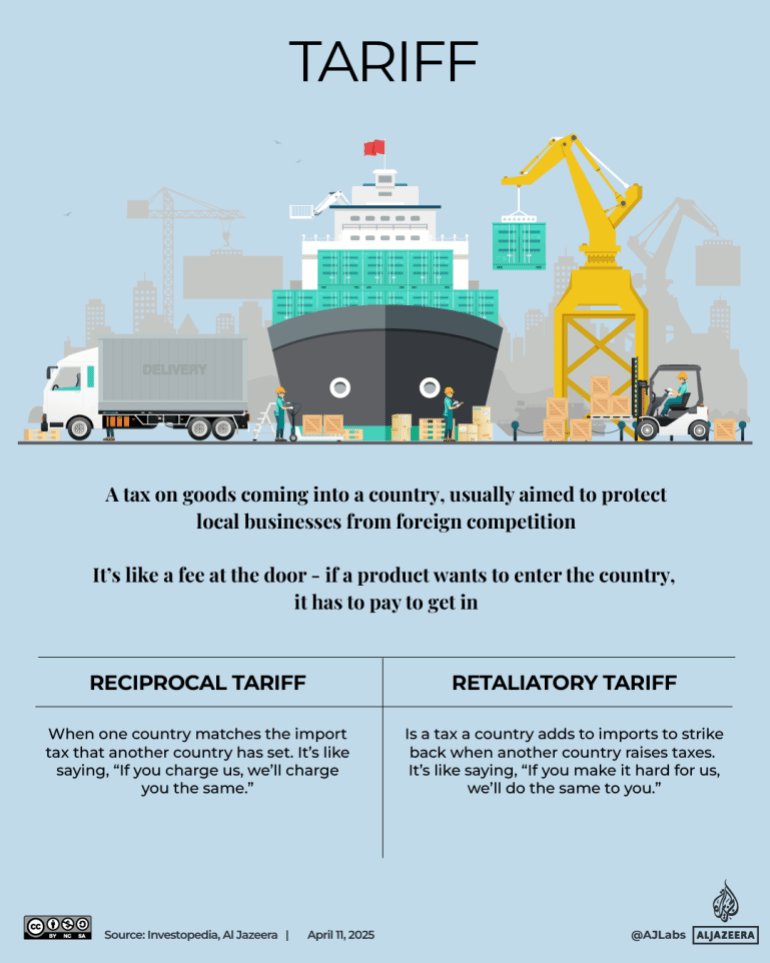
Throughout the past few weeks, United States President Donald Trump has announced a series of tariff policies, with shifting statements that have led to growing concerns about global economic instability. With Trump’s tariffs affecting nearly every country, many terms have been thrown around to describe the potential results. From trade wars to stock market drops, this article explains, in simple terms with illustrations, what these key terms mean, including those that may become more important in the coming months. 1. Tariff Tariffs are simply taxes imposed at the border by one country on the goods of a foreign country. They are usually aimed to protect local businesses from foreign competition. Reciprocal tariffs have come to define Trump’s trade policy of imposing the same tariffs on other countries that those countries impose on US goods. It’s like saying, “If you charge us, we’ll charge you the same.” Retaliatory tariffs are taxes imposed by a country on imported goods from a foreign country to strike back at that country’s imposition of similar taxes. It’s like saying, “If you make it hard for us, we’ll do the same to you.” 2. Trade war A trade war occurs when, for example, two countries dispute trade practices and one country places extra tariffs on goods from another that it believes is engaging in unfair trade practices. The other country retaliates with tariffs and this tit-for-tat continues, thus escalating into a trade war. Advertisement It’s like an economic tug-of-war where both sides keep pulling harder instead of finding a way to agree. A good example is the US-China trade war, which has been in effect since 2018 when the US first placed tariffs on Chinese goods. More recently, the tit-for-tat between Washington and Beijing has seen tariffs on China rise to 145 percent. 3. Trade deficit and surplus A trade deficit occurs when a country buys (imports) more goods than it sells (exports), meaning the demand for foreign goods is greater than the supply of its own products. For example, the US has a trade deficit with China because it buys more goods from China, like electronics and clothing, than it sells to it. A trade surplus is the opposite. This happens when a country sells more goods than it buys. For example, the US has a trade surplus with The Netherlands because it sells more goods, like machinery and agricultural products, to the Netherlands than it buys from it. 4. Subsidies Subsidies are financial support or money given by the government to help local businesses or industries, making their products cheaper or more competitive. For example, following Trump’s 25 percent tariff on all foreign automobiles and auto parts, South Korea announced emergency support for its auto sector by raising electric vehicles subsidies to boost demand. 5. Stock market The stock market is a place where shares of companies and other financial instruments are bought and sold. For example, if you buy Amazon shares, you’re owning part of the company, and the stock’s value can go up or down, meaning you can make or lose money. Advertisement An index is a way to measure how a group of stocks is performing. In the US, three of the biggest indices are: S&P 500 tracks the 500 largest companies in the US. Nasdaq Composite mainly tracks tech stocks such as Amazon and Google. Dow Jones Industrial Average tracks 30 large US companies like Coca-Cola and Walmart. 6. The Fed The Fed (short for the Federal Reserve) is the central bank of the United States. It helps control the country’s money supply, sets interest rates, and tries to keep the economy stable – more on these later. 7. Interest rates Interest rates are the cost of borrowing money, usually expressed as a percentage. For example, when the Fed raises interest rates, borrowing money becomes more expensive, and when it lowers rates, borrowing money becomes cheaper. Interest rates go up when central banks want to slow inflation or cool down an overheating economy. 8. Inflation Inflation measures how quickly the price of things rises over time. This means that money doesn’t buy as much as it used to. For example, if a sandwich cost $2.50 a year ago and now the same sandwich costs $3.00 then the inflation rate for the sandwich is 20 percent. Inflation can occur when demand for a product is higher than supply, or when it costs more to make the product. It can also occur if there’s too much money in the economy, like when a country prints more cash. The Fed tries to keep inflation steady. If prices rise too fast, it can hurt the economy by making goods and services too expensive. The Fed changes interest rates to help keep prices under control. 9. Exchange rate The exchange rate is the value of one country’s money compared to another’s. Advertisement For example, one US dollar will get you about 0.90 euros. Exchange rates are important because they affect the cost of buying and selling goods between countries. A strong currency makes imports cheaper and exports more expensive, while a weak currency makes exports cheaper and imports more expensive. The rates also affect travel, investments and global business. 10. Market trends Market trends are the general direction in which prices or markets are moving over time – going up, down, or staying stable. They help investors and businesses understand what’s happening in the economy. Economists use terms like “bull” and “bear” market to refer to these trends. Bull market – When the economy is doing well, prices go up and people feel confident. Think of a bull pushing up with its horns (prices rising) Bear market – When the economy is doing badly, prices fall and people feel cautious. Think of a bear swiping down with its paws (prices falling). Economists often use a formula based on the S&P 500 to determine if we’re in a bull or bear market, with a 20 percent change from the last high as the key threshold.
Delhi-NCR weather: Strong, dusty storms brings down temperature from 40 degrees celsius to…
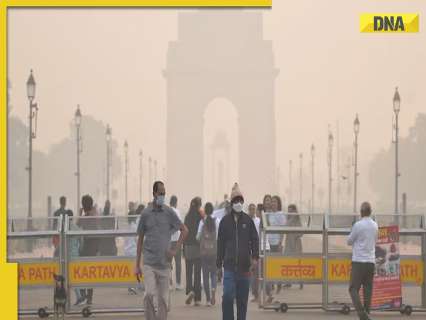
For the second day in row, Delhiites witnessed strong, dusty winds hitting the national capital on Friday evening, i.e., April 11.
Delhi-NCR weather: Over 15 flights delayed at IGI airport due to adverse weather conditions, check details here
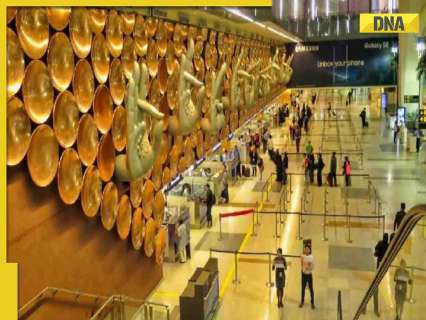
After days of soaring temperatures, the national capital and the adjoining areas breathed a sigh of relief with a slight change in weather. Strong winds and light rain showers were witnessed in several parts of Delhi and the adjoining NCR region.
Gold rate today: Yellow metal hits all-time high of Rs 96540, what’s the reason behind it

Gold prices in India hit a record high of Rs 96,450 per 10 grams due to strong demand and global tensions, especially the US-China trade war.
Pentagon fires Greenland US base commander who ‘undermined’ JD Vance after Pituffik visit
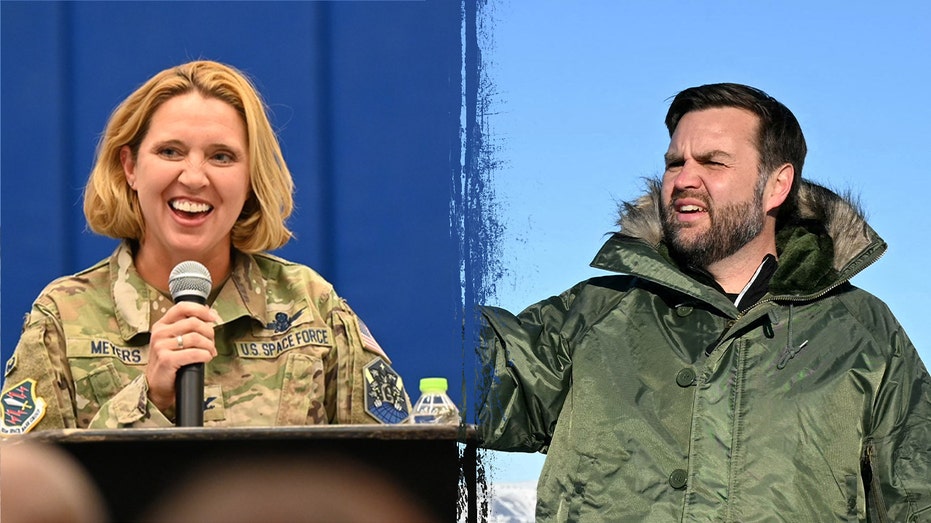
The Pentagon fired the commander at the U.S. Space Force base in Greenland after she distanced herself from Vice President J.D. Vance, who recently visited the headquarters. After the vice president’s visit, Col. Susannah Meyers emailed base personnel on March 31, writing, “I do not presume to understand current politics, but what I do know is the concerns of the U.S. administration discussed by Vice President Vance on Friday are not reflective of Pituffik Space Base.” She added that she had “spent the weekend thinking about Friday’s visit – the actions taken, the words spoken, and how it must have affected each of you.” The email was first reported by Military.com. The Space Force said in a public statement Meyers had been relieved of command “due to loss of confidence in her ability to lead.” US ACCUSES DENMARK OF TREATING GREENLANDERS AS ‘SECOND-CLASS CITIZENS’ DURING VANCE VISIT TO ARCTIC BASE “Commanders are expected to adhere to the highest standards of conduct, especially as it relates to remaining nonpartisan in the performance of their duties,” the statement read. Col. Shawn Lee has now assumed the command, Space Force said. “Actions to undermine the chain of command or to subvert President Trump’s agenda will not be tolerated at the Department of Defense,” Pentagon chief spokesperson Sean Parnell posted on X. Meyers became commander of the 821st Space Base Group in July, according to a Facebook post about the change-of-command ceremony. Republican Sens. Tommy Tuberville, Ala., Eric Schmitt, Mo., and Jim Banks, Ind., all praised the firing of the commander on X. “Colonel Meyers tried to politicize the Space Force and was held accountable. Lloyd Austin isn’t SecDef anymore,” Banks wrote. ‘MIND-BOGGLING’: SPACE FORCE CHIEF FIRES OFF DIRE WARNING ABOUT CHINESE CAPABILITY TO KNOCK OUT US SATELLITES Vance, during his visit to the snow-covered island, criticized Denmark for treating Greenlanders as “second-class citizens.” “Our message to Denmark is very simple,” Vance said. “You have not done a good job by the people of Greenland. You have underinvested in the people of Greenland, and you have underinvested in the security of this incredible, beautiful landmass.” The vice president further accused Denmark of not keeping Greenland safe from China and Russia. Vance was the highest-ranking official to ever travel to the base in Pituffik, the White House said. The Trump administration has made acquiring Greenland a top goal. “We need Greenland for national security and international security,” Trump said on March 11. CLICK HERE TO GET THE FOX NEWS APP “So, we’ll, I think, we’ll go as far as we have to go,” the president continued, speaking from the Oval Office. “We need Greenland. And the world needs us to have Greenland, including Denmark. Denmark has to have us have Greenland. And, you know, we’ll see what happens. But if we don’t have Greenland, we can’t have great international security.” “I view it from a security standpoint, we have to be there,” Trump added.
Reviving ties: BJP, AIADMK set to contest upcoming Tamil Nadu assembly polls together
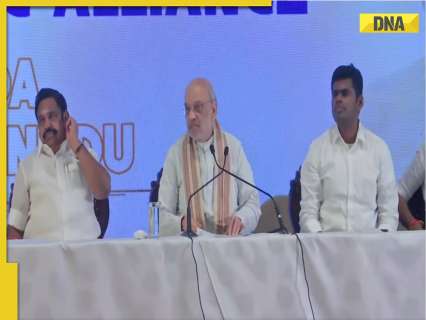
Union Home Minister Amit Shah on Friday said that AIADMK, BJP and all the alliance parties will contest the upcoming Vidhan Sabha elections in Tamil Nadu together under the National Democratic Alliance.
Trump to get annual physical, saying he’s ‘never felt better’
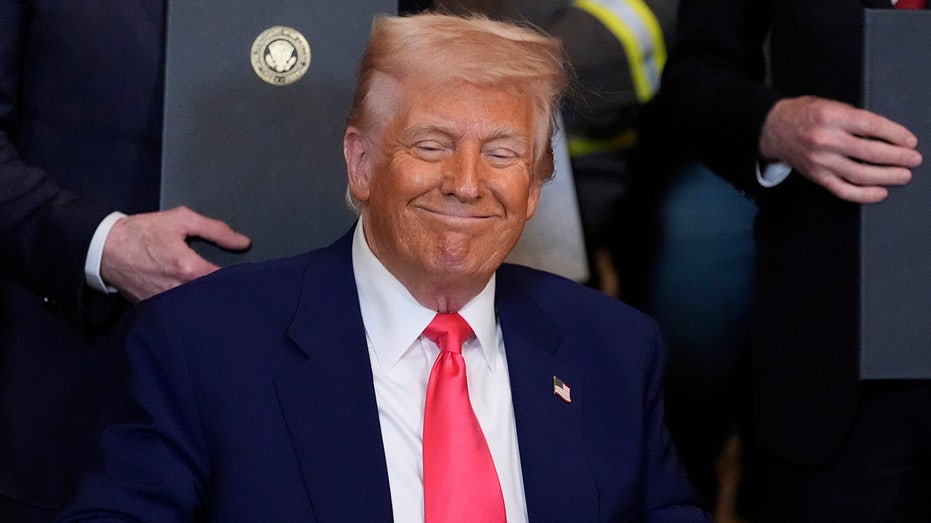
President Donald Trump is heading to get his annual physical Friday after declaring earlier this week that he’s “never felt better.” The 78-year-old announced the medical appointment on his Truth Social account, writing, “I am pleased to report that my long-scheduled Annual Physical Examination will be done at Walter Reed Army Medical Center on Friday of this week. “I have never felt better, but nevertheless, these things must be done!” Trump added. The physical, which will take place early Friday afternoon in Bethesda, Maryland, comes less than a year after Trump survived an assassination attempt in Pennsylvania while on the campaign trail. TRUMP DEMANDS DO-OR-DIE NUCLEAR TALKS WITH IRAN – WHO HAS THE LEVERAGE? At the time, Trump released a letter from his former physician Ronny Jackson, who wrote that “it is an absolute miracle he wasn’t killed.” “The bullet passed, coming less than a quarter of an inch from entering his head, and struck the top of his right ear,” Jackson added. Months later, in November, Florida neurosurgeon Dr. Brett Osborn told Fox News Digital that Trump remained in good health. TRUMP THREATENS TARIFFS AND SANCTIONS ON MEXICO FOR ‘STEALING’ WATER FROM TEXAS FARMERS “The fact that he attended 120 events in seven months, often multiple rallies in a single day in different states, is proof-positive that Trump has a tremendous amount of stamina, mentally and physically,” Osborn noted. But Democrats have disputed Trump’s health in the past, and members of the medical community have demanded Trump release his medical records. In an open letter from Oct. 13, over 230 doctors, nurses and other healthcare professionals asked for a record release. The physical on Friday will be the first one of Trump’s second term in office. In 2020, during his first administration, Trump was treated for COVID-19 at the Walter Reed Army Medical Center. Fox News’ Andrea Margolis contributed to this report.