

Myanmar confirms 180,000 Rohingya eligible to return, Bangladesh says
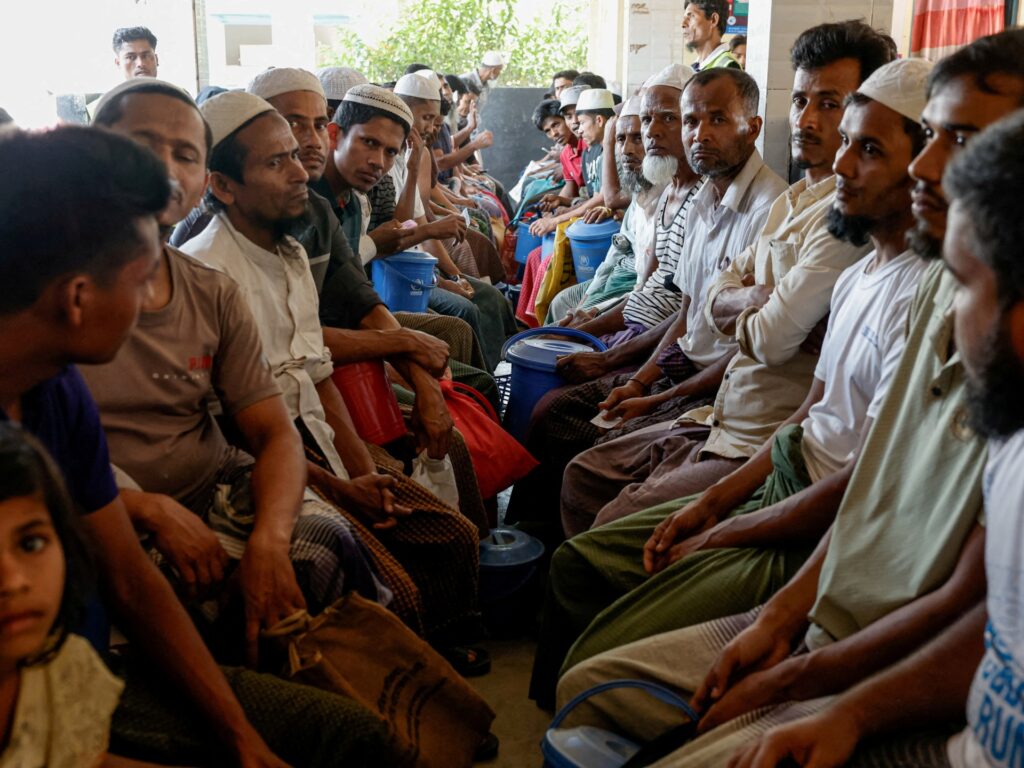
The 180,000 names were part of a list of 800,000 Rohingya that Bangladesh submitted to Myanmar in six batches, Bangladesh government says. Myanmar has confirmed that 180,000 Rohingya refugees living in Bangladesh since fleeing their homeland are eligible to return, the Bangladeshi government has said. Friday’s announcement, following talks in Bangkok, offered a possible breakthrough in the long-stalled repatriation process, although many Rohingya refugees say all of them should be allowed to go home. More than a million Rohingya people have been crammed into camps in southeastern Bangladesh, the world’s largest refugee settlement. Most fled a brutal crackdown by Myanmar’s military in 2017. About 70,000 Rohingya crossed into Bangladesh last year, many fleeing worsening hunger and violence in Myanmar’s Rakhine State. The Bangladeshi government’s announcement comes after a meeting between Khalilur Rahman, high representative of Bangladesh’s interim government led by Nobel laureate Muhammad Yunus, and Than Swe, Myanmar’s deputy prime minister and foreign minister, on the sidelines of the 6th BIMSTEC Summit in Bangkok. The 180,000 names were part of a list of 800,000 Rohingya that Bangladesh submitted to Myanmar in six batches between 2018 and 2020. Myanmar has also indicated that final verification of another 70,000 refugees is pending further review of photographs and identity details. Advertisement The statement said Myanmar had pledged to expedite the verification process for the remaining 550,000 names on the original list. There was no immediate comment from Myanmar’s government on the outcome of the Bangkok talks. Many Rohingya refugees have little hope of returning to their homeland, where they continue to face systematic denial of citizenship and basic rights. Attempts to begin repatriation in 2018 and 2019 failed as the refugees, fearing persecution, refused to go back. “After all these years, they are confirming only 180,000 names. This feels like nothing more than an eyewash. We want a genuine solution,” one Rohingya refugee, Shafiqur Rahman, told the Reuters news agency. “Myanmar must take all of us back — not just a selected few — and they must ensure we return with full rights, dignity, and citizenship. Without that, this process means nothing to us.” Adblock test (Why?)
Trump DOJ, Education Dept form task force to protect female athletes from ‘gender ideology’ in schools, sports
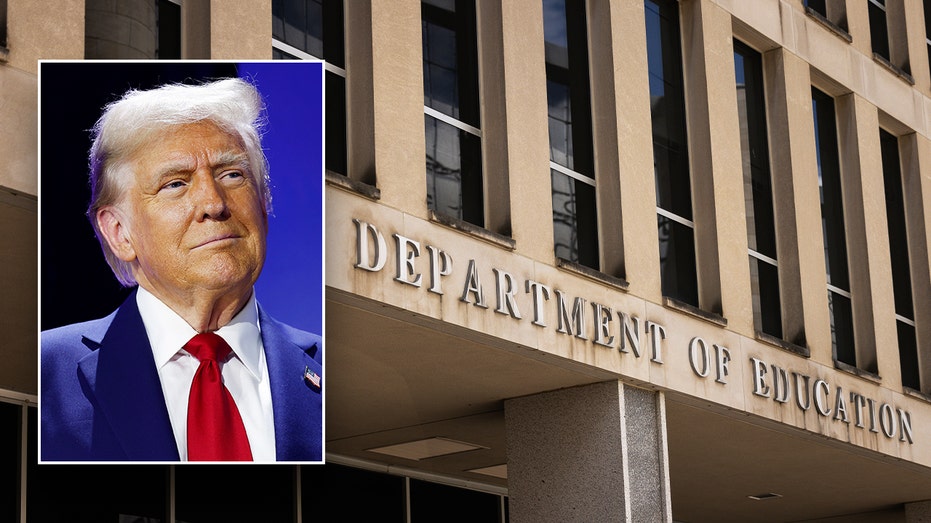
The Trump administration launched a new investigative unit to protect “female athletes, from the pernicious effects of gender ideology in school programs and activities” on Friday, further clamping down on transgender women in school sports and sending a warning signal to states defying the president’s executive orders. The Department of Education (DOE) and the Department of Justice (DOJ) announced the Title IX Special Investigations Team (SIT) to handle cases, particularly targeting transgender women in sports, because “traditionally, our Office for Civil Rights [OCR] takes months, even years, to complete Title IX investigations,” Education Secretary Linda McMahon said Friday. “OCR under this Administration has moved faster than it ever has, and the Title IX SIT will ensure even more rapid and consistent investigations,” McMahon said. “To all the entities that continue to allow men to compete in women’s sports and use women’s intimate facilities: there’s a new sheriff in town. We will not allow you to get away with denying women’s civil rights any longer.” CONCERNED PARENTS OF TRANS KIDS COMPARED TO ‘HATE GROUPS’ BY COLORADO DEM: WOULDN’T ‘ASK THE KKK’ FOR OPINION The team, drawn from both agencies, will implement a rapid process to handle the growing number of cases to hand over investigations to potential DOJ enforcement. McMahon said the Title IX unit “will benefit women and girls across this nation who have been subjected to discrimination and indignity in their educational activities.” “Protecting women and women’s sports is a key priority for this Department of Justice,” Attorney General Pam Bondi said Friday. “This collaborative effort with the Department of Education will enable our attorneys to take comprehensive action when women’s sports or spaces are threatened and use the full power of the law to remedy any violation of women’s civil rights.” The unit comprises investigators and attorneys from the OCR, DOE Office of General Counsel, and the DOE Office of Student Privacy and Protection, along with caseworkers and an FSA Enforcement investigator. The unit also includes attorneys from the DOJ’s Civil Rights Division. TRANS INMATE IN PRISON FOR KILLING BABY MUST GET GENDER SURGERY AT ‘EARLIEST OPPORTUNITY’: JUDGE The investigative unit will enforce Title IX protections with President Donald Trump’s executive orders on “Keeping Men Out of Women’s Sports” and “Defending Women from Gender Ideology Extremism.” The unit comes as Trump has been facing pushback from both lawmakers and judges for his gender-related orders. Trump and Democratic Maine Gov. Janet Mills sparred in February over Trump’s order banning biological males from women’s sports. During a National Governors Association meeting, Trump accused Mills of defying federal orders by continuing to allow transgender women to compete in women’s sports. Following the confrontation, the Trump administration launched investigations into Maine’s education department. The U.S. Department of Agriculture also froze funds to certain educational programs in Maine due to the state’s rebellion. Agriculture Secretary Brooke Rollins indicated the funding freeze could be lifted if Maine aligns with federal interpretations of Title IX. BAN ON TAXPAYER-FUNDED SEX CHANGES FOR PRISONERS SPARKS DEM WALKOUT IN GEORGIA HOUSE VOTE Trump’s Title IX unit comes after the Biden administration updated Title IX regulations in 2021 and 2022 to expand protections for LGBTQ+ students, interpreting the law’s prohibition on sex discrimination to include gender identity and sexual orientation. Under then-President Joe Biden’s interpretation, transgender students were protected in sports, bathrooms, changing room facilities and in other educational programs.
Trump shakes up NSA leadership, appoints new acting director and deputy to replace Biden appointees
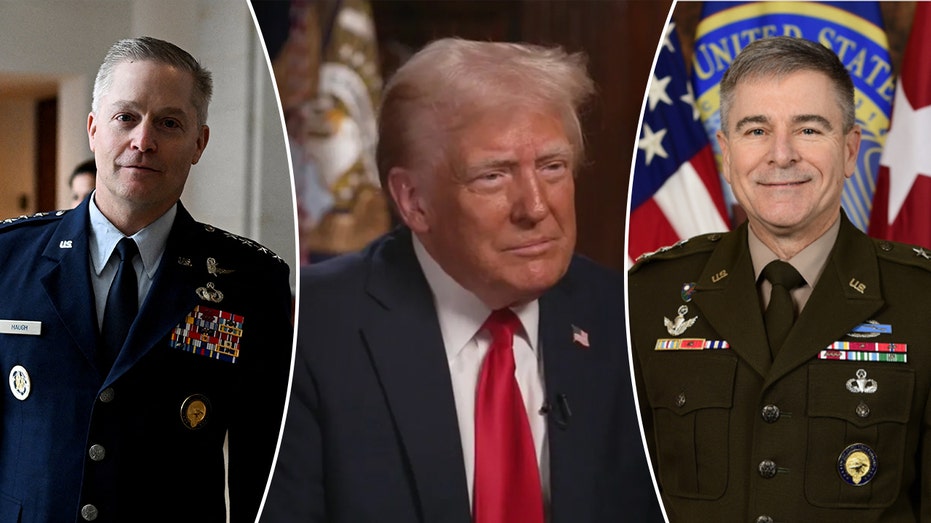
President Donald Trump has fired the head of the National Security Agency (NSA), a high-level move driven by mounting pressure from conservative allies to purge officials they view as insufficiently loyal to the president’s “America First” agenda. Lt. Gen. Timothy Haugh and civilian Deputy Wendy Noble were let go from their roles as director and deputy director of the NSA. Lt. Gen. William Hartman, who also leads U.S. Cyber Command, will serve as acting director, while Sheila Thomas will take over as deputy. Hartman previously commanded the Cyber National Mission Force and has served in intelligence, cyberspace operations and infantry roles during deployments around the world. Thomas most recently headed NSA’s cryptologic partnership with the United Kingdom and served as director of engagement and policy at NSA. TRUMP CONFIRMS NATIONAL SECURITY COUNCIL FIRINGS AS WALTZ’S SIGNAL CHAT WOES SNOWBALL The shake-up comes as some right-wing figures have turned against members of Trump’s national security team. Far-right provocateur Laura Loomer met with Trump this week to share her “research” on officials she believes should be fired. As Loomer pointed out on X, both Haugh and Noble were Biden appointees. She seemingly took credit for the firing, claiming Haugh had “no place” in the Trump administration because he was “hand-picked” by former Joint Chiefs Chairman Mark Milley. “Why would we want an NSA Director who was referred to Biden after being hand selected by Milley,” Ms. Loomer wrote. “Why would we want Milley’s hand picked choice for NSA DIRECTOR? We do not! And he was referred for firing.” NATIONAL SECURITY AGENCY DIRECTOR GEN. HAUGH FIRED, CIVILIAN DEPUTY DIRECTOR REASSIGNED The White House and NSA did not respond when asked if Loomer had influenced the president’s decision. Trump also fired several National Security Council (NSC) staffers on Thursday, adding to national security adviser Mike Waltz’s recent woes after he accidentally included The Atlantic editor-in-chief Jeffrey Goldberg in a Signal chat about Houthi strikes. “We’re going to let go of people we don’t like, or people we don’t think can do the job, or people who may have loyalties to somebody else,” Trump told reporters about the firings. He confirmed that NSC members had been fired, but remarked it was not many individuals. The NSA shuffle also came after Trump recently let go of C.Q. Brown, former chairman of the Joint Chiefs, and Adm. Lisa Franchetti, former chief of naval operations. The White House has insisted Waltz’s job is not under threat. “As the president has made it very clear, Mike Waltz continues to be an important part of his national security team,” Trump administration press secretary Karoline Leavitt told the media in brief remarks outside the White House’s press room on Monday afternoon. “And this case has been closed here at the White House, as far as we are concerned.”
UK comedian Russell Brand faces rape, sexual assault charges
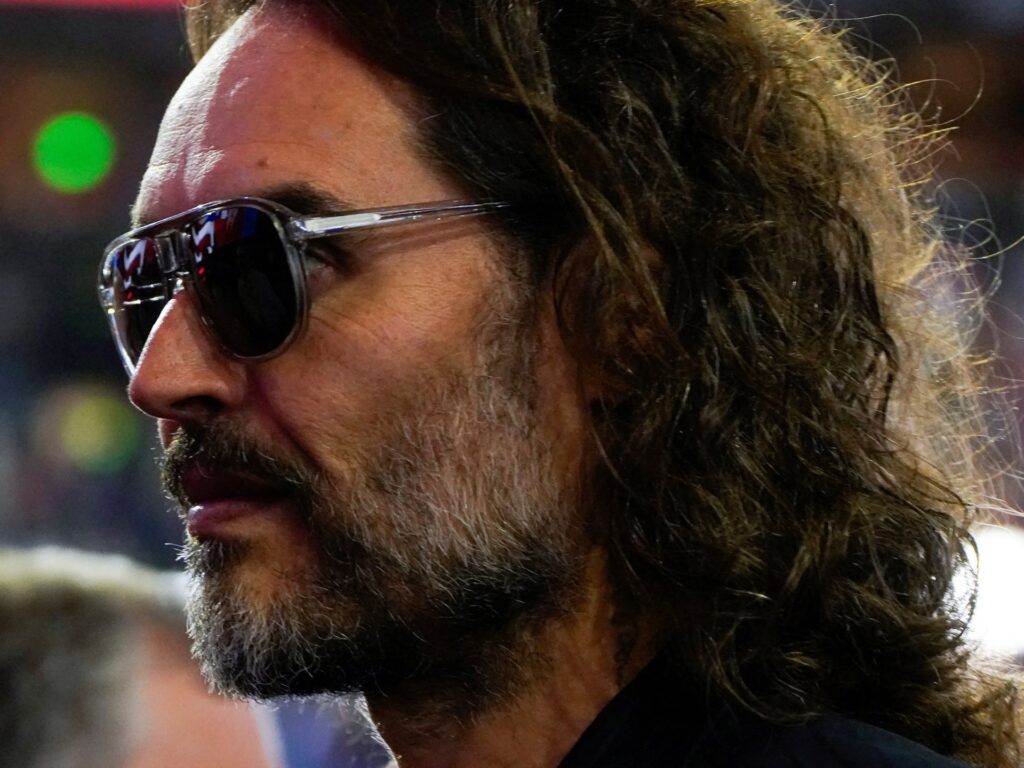
Police say Brand faces one count of rape, one of indecent assault, one of oral rape and two of sexual assault. British comedian Russell Brand has been charged with several counts of sexual assault in the United Kingdom. Brand, once one of Britain’s most high-profile entertainers and broadcasters, faces one count of rape, one of indecent assault, one of oral rape and two of sexual assault, according to a statement from London’s Metropolitan Police published on Friday. The charges stem from complaints by four women over alleged offences that took place from 1999 to 2005. The police said an investigation into Brand “remains open” and encouraged anyone who has been affected or may have information regarding the case to come forward. The charges come more than a year after British media outlets Channel 4 and The Sunday Times revealed assault allegations by four women against Brand. The 50-year-old comedian has denied any wrongdoing, stating that while he had numerous sexual relationships, they were “always consensual”. Speaking to conservative American political commentator Tucker Carlson in January 2024, Brand described the accusations against him as “very, very painful”. Advertisement “I’m aware that I put myself in an extremely vulnerable position by being very, very promiscuous. That is not the type of conduct I endorse, and it’s certainly not how I would live now,” he said. Known for his risque stand-up routines, Brand also hosted numerous shows on radio and television, wrote memoirs charting his battles with drugs and alcohol, appeared in several Hollywood movies and was married to pop star Katy Perry from 2010 to 2012. In recent years, Brand has been largely absent from mainstream media but has built up a large following online with videos mixing wellness and conspiracy theories. He recently said he had moved to the United States. Police said Brand is due to appear in a London court on May 2. Adblock test (Why?)
Mbappe and Rudiger cleared for Champions League but fined by UEFA

Real Madrid pair cleared to play against Arsenal in their Champions League quarterfinal after UEFA issues suspended bans. Real Madrid stars Kylian Mbappe and Antonio Rudiger have been fined by UEFA but escaped bans from the Champions League quarterfinals over “indecent” postgame celebrations in the previous round. Mbappe and Rudiger were both given a suspended one-game ban for “violating the basic rules of decent conduct”, UEFA said on Friday. Both are subject to a one-year probationary period. Madrid plays at Arsenal on Tuesday in the first leg of the quarterfinals. Real Madrid’s Antonio Rudiger celebrates with teammates after the match [Juan Medina/Reuters] The charges followed Madrid players celebrating a penalty shootout win over city rival Atletico Madrid in the round of 16 on March 12. Video clips circulating on social media showed Mbappe grabbing his crotch on the field. UEFA said Rudiger was fined 40,000 euros ($44,000) and Mbappe 30,000 euros ($33,000). A third Madrid player, Dani Ceballos, was fined 20,000 euros ($22,000) with no suspended ban. UEFA said no charges were made against Vinicius Junior, who also had been under investigation. Advertisement Adblock test (Why?)
Zimbabwe must abandon Rhodesian style of governance
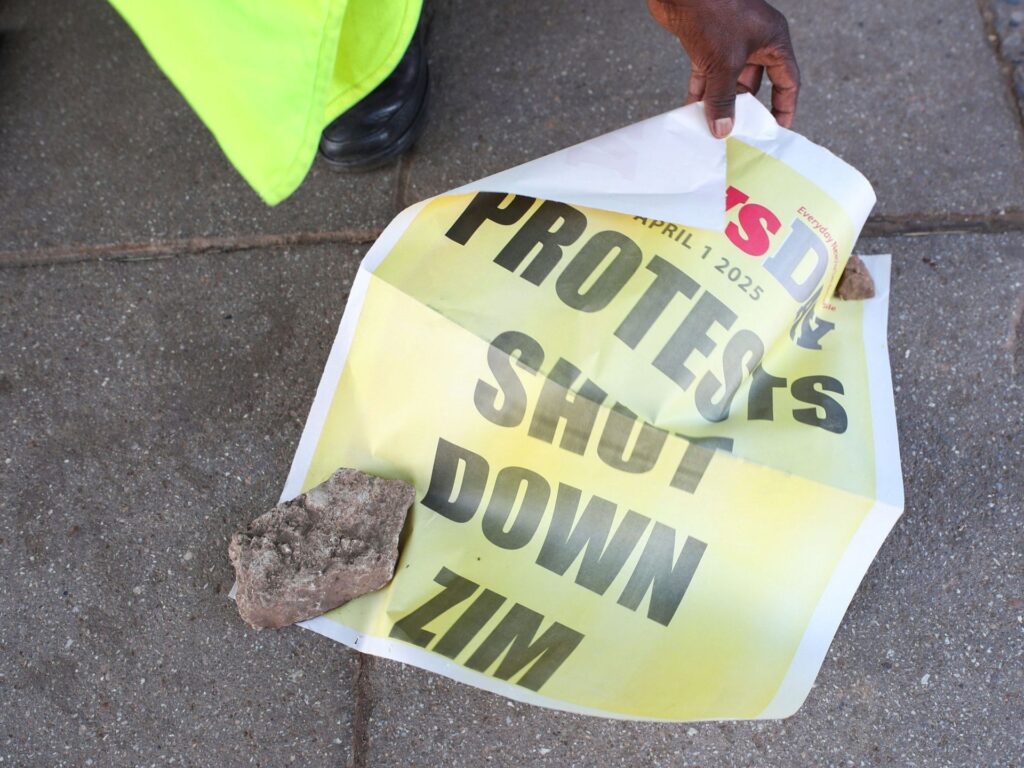
On March 31, Zimbabwean security forces spent the entire day dispersing small gatherings of people who were trying to stage a peaceful protest against the ruling ZANU-PF party’s attempts to secure an unconstitutional third term for President Emmerson Mnangagwa. By day’s end, the police had apprehended 95 demonstrators for allegedly promoting “public violence” and causing “breaches of peace”. However, the police did not manage to detain the man behind this protest, Blessed Geza. A veteran of the 1970s liberation war, Geza remains at large despite being sought by law enforcement on four criminal charges since February. He was expelled from the ZANU-PF party on March 6 for supposedly undermining the party’s leadership by calling on Mnangagwa to step down. Subsequently, on March 26, Geza took to YouTube, dressed in military fatigues, to criticise Mnangagwa and many key figures associated with the 82-year-old leader. He warned that he was starting to take unspecified action against “Zvigananda” – people who are accruing wealth through illegal means and looting the nation’s wealth. The “Zvigananda” on Geza’s list include numerous government ministers, senior civil servants, party officials, war veterans and three wealthy, highly influential businessmen with close ties to the government who are widely believed to be corrupt: Scott Sakupwanya, Wicknell Chivayo and Kuda Tagwirei. Advertisement According to local media investigations, Chivayo, an ex-convict, made millions of dollars by selling exorbitantly priced electoral materials to Zimbabwean authorities for the highly disputed August 2023 general election. An investigation conducted by NewsHawks, a local newspaper, concluded that he later funnelled millions in kickbacks to influential Zimbabwean figures. Tagwirei is at least as controversial as Chivayo. A July 2023 report published by The Sentry and Open Secrets revealed how he built a shadowy business empire and enormous wealth using complex, controversial corporate structures and seemingly preferential government treatment. Former Finance Minister Tendai Biti has stated that Tagwirei controls the Southern African nation’s fuel sector, more than 60 percent of its gold mines, two of the largest banks and its only gold refinery. Both Chivayo and Tagwirei are believed to have exploited their close ties to Mnangagwa and the ZANU-PF party to land government contracts and further their business interests. On March 28, Geza made it known that he was responsible for setting alight several vehicles parked outside the offices of Tagwirei and Chivayo. His voluntary admission was designed to reflect his “revolutionary” intent to confront the “Zvigananda” and the “political criminals” associated with Mnangagwa. For the past year, Zimbabwe’s leader has been trying to secure a third term even though he has publicly denied this goal and the constitution restricts him to two terms. Advertisement This disastrous ambition, however, appears to be facing notable resistance from his deputy, Vice President Constantino Chiwenga, a former military chief. There is widespread speculation that Chiwenga, who still retains substantial backing within the Zimbabwean military, is the principal force driving Geza. On March 27, Mnangagwa moved General Anselem Sanyatwe – a key Chiwenga ally – from the position of army chief to minister of sports, art and recreation in a manoeuvre to diminish Chiwenga’s influence among the defence forces. The intensifying struggle for power may lead to a coup similar to the military takeover on November 15, 2017, led by Chiwenga, which ousted Zimbabwe’s strongman Robert Mugabe. Nonetheless, the primary issue extends beyond Mnangagwa’s alarming malfeasance, as suggested by Geza. It lies in the ZANU-PF party’s conspicuous failure to establish a strong, effective and transparent democratic framework. While Geza’s various perspectives on Zimbabwe’s governance challenges are certainly a positive contribution, his narrow-minded interpretations tend to oversimplify an extremely complex situation. Attributing Zimbabwe’s intricate issues solely to Mnangagwa’s unquestionably poor and corrupt leadership is both misleading and counterproductive. In truth, Chiwenga and Geza – a former ZANU-PF Central Committee member – are also deeply embedded in the systemic issues affecting Zimbabwe. “Zvigananda” have been an integral part of Zimbabwe’s economic environment since the country gained independence from Britain on April 18, 1980. From the early 1980s, prominent businessmen such as Samson Paweni and Roger Boka were closely linked to senior ZANU-PF officials and were involved in financial misconduct amounting to millions of dollars. Thus, Geza’s evaluations are certainly superficial and fail to offer effective solutions to the ongoing democratic deficit in the nation. Rather than challenging the existing political structure, he aims to maintain the status quo, albeit with a new leader and possibly a different set of “Zvigananda”. The reality is that all factions within the ZANU-PF party – new, old and emerging – are woefully corrupt and shockingly averse to the rule of law. Advertisement In April 2018, Marry Mubaiwa, the ex-wife of Chiwenga, found herself embroiled in allegations of corruption. Only 55 days after the coup in November 2017, she was awarded a lucrative multimillion-dollar contract to provide travel services to the office of the president and cabinet, all without going to tender and following the proper procedures. Then, in December 2019, the Zimbabwe Anti-Corruption Commission arrested Mubaiwa on charges of money laundering, fraud and violations of exchange control regulations. A month later, during court testimony in divorce proceedings against Mubaiwa, Chiwenga did not fare any better, openly acknowledging that he had received luxury vehicles from state entities and wealthy “well-wishers”. The ever scheming Tagwirei, for example, had donated a Mercedes Benz E350, which was used to transport Chiwenga’s children. So Chiwenga, too, is not in any way untainted by allegations of corruption – and definitely not the breath of fresh air he is made out to be. That Zimbabweans have not mobilised in large numbers to express their displeasure with the overt and infinite sleaze involving high-ranking ZANU-PF officials is primarily due to harsh restrictions placed upon them. The government has persistently weaponised the law and used violent measures to silence dissent. Zimbabwe, unfortunately, currently resembles Rhodesia, the colonial state that preceded its formation in 1980. A defining characteristic of Rhodesia was the state’s steadfast resistance to the unencumbered expression of civil rights and majority rule. In May 2020,
Democrat Rep Jared Golden says his party’s moving in ‘wrong direction’ on trade
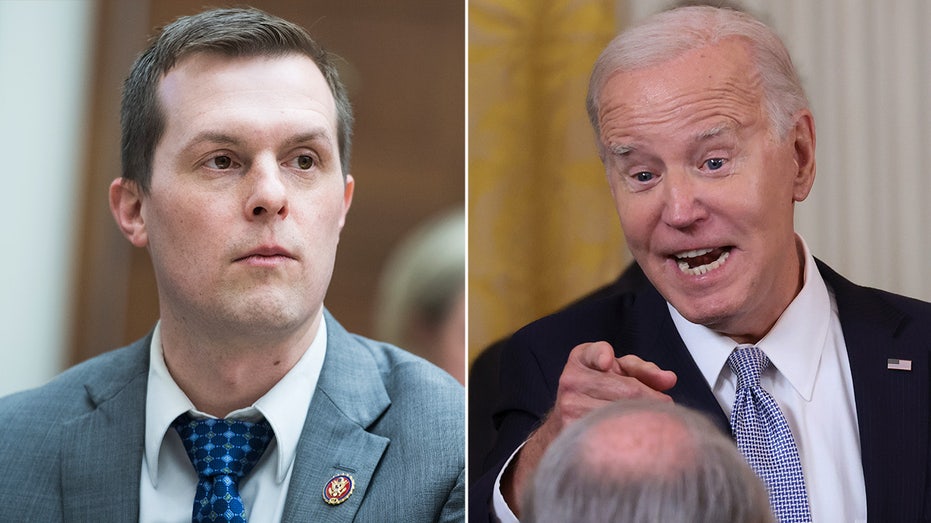
EXCLUSIVE: A key moderate Democrat is warning his party they are heading the “wrong” way on trade. Rep. Jared Golden, D-Maine, was one of the few Democrats to express some optimism at President Donald Trump’s support for tariffs, specifically his move to add a 10% baseline duty to all U.S. imports. Golden noted in a brief interview with Fox News Digital on Thursday that he himself proposed legislation for a 10% universal tariff earlier this year and in the previous Congress. When asked how his stance on tariffs has been received by fellow House Democrats, Golden said, “Well, I think that they are moving in the wrong direction when it comes to trade.” TREASURY SECRETARY BESSENT TELLS COUNTRIES NOT TO RETALIATE AFTER SWEEPING ‘LIBERATION DAY’ TARIFFS “I think it’s been a knee-jerk reaction to the president,” the Maine Democrat explained of the more recent furor. He said the Democratic Party he joined in his “formative years” was “the party that was warning about things like the World Trade Organization or [the North American Free Trade Agreement (NAFTA)].” “It has kind of, I think, had a sudden movement in the opposite direction, and that’s unfortunate,” Golden said. “You’ve got to look beyond, you know, who the president is…to ask themselves what would be good for rural communities or working-class people, or cities like Detroit, whatever it may be – those who have been hit hardest by the existing trade regime.” He added, however, “I think that this debate has been brewing since the ’90s, so it’s not only about Trump.” Golden has been known to break from his own party on issues like trade, border security, and notably, former President Joe Biden’s student loan relief efforts. He won his seat in Maine’s 2nd Congressional District by less than 1% in 2024, while Trump carried the district by 10%. He said on Wednesday that he was “pleased” Trump’s tariff plan lined up with his own ideas for a universal tax on foreign goods. “I’m eager to work with the president to fix the broken ‘free trade’ system that made multinational corporations rich but ruined manufacturing communities across the country. But tariffs must be paired with policies that prioritize American families’ prosperity.” FRANCE ASKS US TO BE ‘COOPERATIVE’ INSTEAD OF ‘CONFRONTATIONAL’ FOLLOWING TRUMP’S ‘LIBERATION DAY’ TARIFFS He pointed out, however, that Trump “introduced a number of new tariff policies” alongside the 10% universal tax, and that he would need time to review the policies in detail before weighing in on them further. Trump’s plan involves a 10% blanket tariff on all imports into the U.S., as well as reciprocal tariffs as high as nearly 50% on both adversaries and allies. Golden added, “We need to make sure that the new approach benefits working people — that means supporting unions, the trades and apprenticeship programs, cutting regulations that hold back production, unleashing American energy and using tariff revenue to support domestic manufacturers that create good-paying jobs for Americans.” “Tariffs are a first step in rewriting a rigged trade system, but they cannot be the last one.”
The trade surplus that Trump never mentions
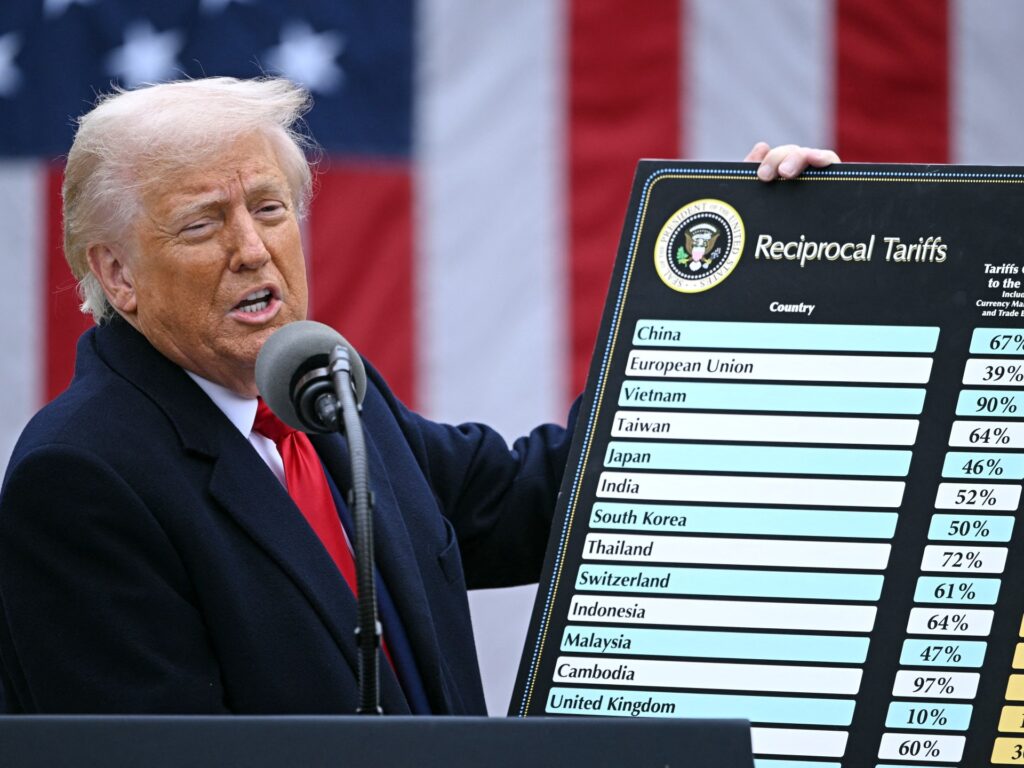
In justifying his latest tariffs announcement, President Donald Trump complains of unfair trade deficits, saying the US has been “looted, pillaged, raped, plundered” by other countries for decades. He has blamed China for exploiting the United States through unfair trade agreements, condemned Canada’s high tariffs on American dairy as unacceptable, and criticized Cambodia for imposing excessive tariffs and benefiting at the US’s expense for years. What he has left out in his repeated criticisms is the trade surplus the US benefits from when it comes to his country’s service industry. Services make up about 70 percent of the US economy. That includes a wide range of businesses, including education, healthcare, travel and hotels, financial services, as well as media and entertainment, insurance, maintenance and repair, and charging for the use of intellectual property, among others. Exports of these services contribute approximately 25 percent of the US economy, economists say. “The US has a strong comparative advantage in several major service industries: education, health, finance, law, accounting, entertainment. That explains the trade surplus,” said Gary Huffbauer, nonresident senior fellow at the Peterson Institute for International Economics. Advertisement In 2023, the US exported services worth $1.02 trillion, up 8 percent from a year earlier, and imported services for $748.2bn, up 5 percent. That left it with a trade surplus of $278bn, a trend stretching back at least two decades. “Trump may be ignorant of the services trade surplus, but more likely he thinks he can get more popular approval by talking about deficits in manufactured goods,” Huffbauer added, pointing to the auto worker who Trump brought during his tariff announcement on Wednesday as an example of support for tariffs among the US working class. Rachel Ziemba, an economist and adjunct senior fellow at the Center for a New American Security, agreed that it was “a puzzlement” that Trump never referred to this metric. “He was the same way in his first term, underemphasising services, despite the fact that he spent his career in services,” said Ziemba, referring to Trump’s real estate, tourism and entertainment ventures, all of which come under services. Trump’s focus on goods reflects the fact that manufacturing is important to the industrial base, including the defence sector, and it would be problematic if too much manufacturing capacity erodes as it hits productivity, said Ziemba. “But it is surprising he doesn’t look at the whole picture and at the ways in which his policies put services at risk. Plus, cutting research undermines advanced manufacturing. His whole team underestimates services,” Ziemba said. Vulnerable to retaliation There is the reality that a lot of Trump’s voters are in the manufacturing belt, where jobs and lifestyles have been eroded as many plants shut down as the work was relocated to cheaper destinations overseas – one reason Trump has given for his focus on trade imbalances. Advertisement That lack of domestic manufacturing and supply chains was also felt during the COVID pandemic when trade came to a screeching halt and resumed initially at a snail’s pace when international borders started to reopen. But none of that takes away from the reality that Trump’s latest harsh tariff policies will leave the US services sector vulnerable to retaliation. Foreign countries can deny operating permits for US business firms and can tax digital services, Hufbauer said. They can also temporarily suspend copyright, trademark and patent rights or prohibit the payment of royalties. For decades, the US has worked to secure foreign market access and intellectual property protection for US service firms. “Some countries have tried limiting the reach of Hollywood entertainment through screen quotas and other devices. On the whole, those have not been successful. But this time they could invoke stricter measures,” Hufbauer said. “US service and tech companies could lose a lot of market access, and share market value, as a consequence of Trump’s tariff war,” he added. While there may not necessarily be alternatives at scale for US software, countries have imposed taxes like digital service taxes and data localisation requirements, albeit those are more driven by privacy needs than as a source of revenue. There are already some “buy local” – and boycott US – trends in parts of the world which could be formalised by government policies. However, warned Ziemba, for any country that plans to apply taxes on these US services, there is always the danger that the move could backfire as it would increase the costs for the domestic market and prompt further retaliation from Trump. Advertisement By focusing on manufacturing over services, Trump is using “his judgement as to where he can marshal political support”, Hufbauer said. Adblock test (Why?)
‘Death is becoming very imminent now’
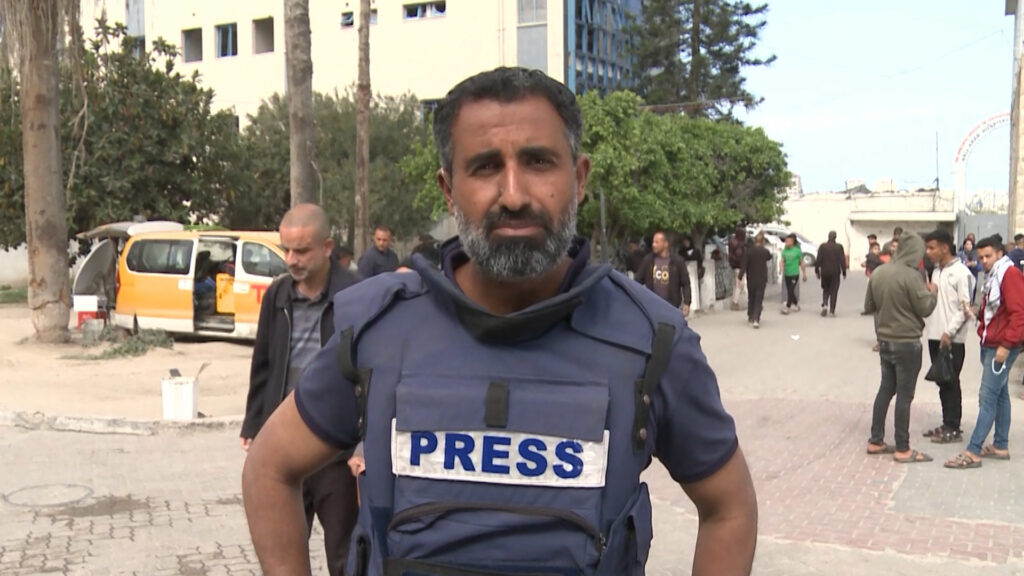
NewsFeed “And as I speak, this is the sound of huge explosions.” Israeli strikes could be heard as Al Jazeera’s Hani Mahmoud reported live from Gaza on the many ways Israel is killing Palestinians and instilling the sense that “death is becoming very imminent.” Published On 4 Apr 20254 Apr 2025 Adblock test (Why?)
Trump tariffs could lead to a new world order: Economist Ha-Joon Chang
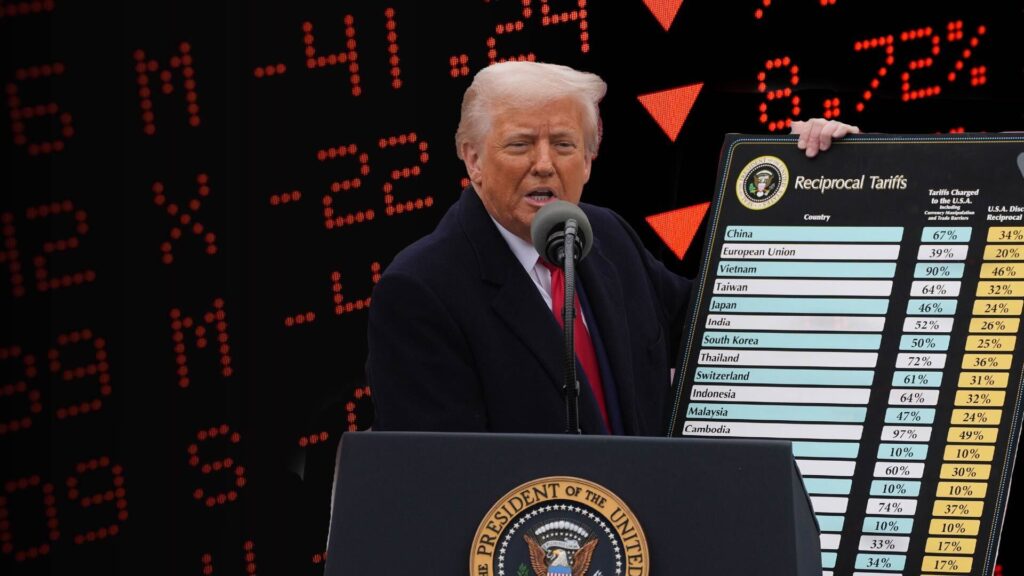
What’s next for the US and global economy after Trump’s new tariffs? Redi Tlhabi talks with economist Ha-Joon Chang. On Wednesday, US President Donald Trump unveiled his new global tariff plan, imposing a 10% tariff on all imports, and targeting dozens more countries with additional tariffs on what he called his “Day of Liberation”. So, with Trump’s economic plan set in motion – what will be the fallout? And what will happen next? This week on UpFront, Redi Tlhabi discusses with economist and author, Ha-Joon Chang, Trump’s new tariffs and their global implications. Adblock test (Why?)