

Dem congressman lashes Musk in opening salvo of populist bid in 2026 swing-state Senate race
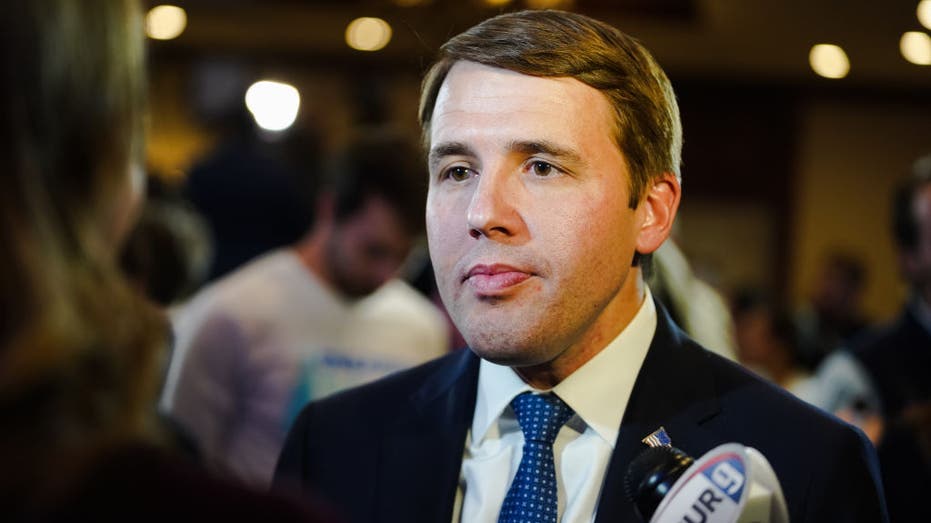
Striking a populist theme and showcasing that he is a fighter, Democratic Rep. Chris Pappas on Thursday declared his candidacy in the 2026 race to succeed retiring Sen. Jeanne Shaheen, a fellow Democrat, in the key swing state of New Hampshire. “What I hear from people, they want someone who shows up, someone who listens and someone who isn’t afraid to take on the big fights, and more importantly today, who knows how to win them,” Pappas said in a campaign launch video posted on social media. Using clips of a listening tour he made through all 10 of New Hampshire’s counties last month as he ramps up toward running for the Senate, Pappas said voters feel like “the system’s rigged.” “You think about the Social Security office that’s going to be closed in Littleton, drastic cuts to Medicaid, all in the name of giving big tax breaks to billionaires like Elon Musk,” he argued, as he pointed to President Donald Trump’s top donor and the world’s richest person, who is leading the administration’s controversial downsizing of the federal government workforce. WHY THIS LONGTIME DEMOCRATIC SENATOR ISN’T RUNNING FOR RE-ELECTION NEXT YEAR Pappas emphasized, “I do get angry, because when you’re talking about public service, you should be focused on how you can help people, how you can make people’s lives better.” The four-term congressman, who represents the eastern half of the state, is the first major candidate in the race to succeed the 78-year-old Shaheen. RISING DEMOCRATIC PARTY STAR CRITICAL OF SCHUMER’S LEADERSHIP LAUNCHES SENATE RUN IN KEY BATTLEGROUND Shaheen, the first woman in the nation’s history elected governor and to the Senate, announced last month that she would not seek a fourth six-year term representing New Hampshire when she is up for re-election next year. The seat is one of the Senate Republicans’ top targets as they aim to expand their 53-47 majority in the chamber in next year’s midterms. For its part, the National Republican Senatorial Committee (NRSC) instantly took aim at Pappas as being out of step with everyday New Hampshire voters. “Chris Pappas supports biological males competing in women’s sports, wants to ban gas-powered vehicles, and voted to raise taxes on hard-working Granite Staters,” NRSC regional press secretary Nick Puglia charged in a statement. “Pappas is extremely out of touch, and New Hampshire families deserve better.” Additionally, Fox News obtained a memo from the NRSC to donors making the case that the GOP can flip the seat. “Our internal polling data in New Hampshire demonstrates a favorable political environment for Republicans in this toss-up Senate race,” the NRSC argued in the memo. “With a registration advantage, edge on the generic ballot, stronger enthusiasm among our voters, and alignment with independents on core party policy issues, Republicans are well positioned to flip this open Senate seat in New Hampshire regardless of who either party nominates.” ONLY ON FOX NEWS: SENATE REPUBLICAN CAMPAIGN CHAIR REVEALS HOW MANY SEATS HE’S AIMING FOR IN 2026 In the race for the GOP Senate nomination in New Hampshire, former longtime Gov. Chris Sununu told Fox News Digital last month that he was holding a dialogue with national GOP leaders about potentially running. Sununu, who enjoys a large national profile thanks to his regular appearances the past few years on the cable news networks and Sunday talk shows, said he expected to make a decision in the coming weeks. However, Sununu noted that while “the door’s open” to running, he emphasized “it’s not open a lot, to be honest.” The former governor’s comments in recent interviews are a switch from last year, when he repeatedly said he would not seek to run for the Senate in 2026. A POPULAR FORMER REPUBLICAN GOVERNOR MULLS SENATE RUN Four years ago, Sununu expressed interest in running for the Senate against his predecessor as governor, Democrat Sen. Maggie Hassan, who was up for re-election in 2022. The popular governor was heavily courted by national Republicans to take on Hassan. However, on Nov. 9, 2021, Sununu announced that he would instead run for a fourth term as governor, upsetting many Republicans in the nation’s capital. He also heavily criticized the Senate. “They debate and talk and nothing gets done,” he said at the time. Sununu is not the only Republican mulling a Senate bid in New Hampshire. Former Sen. Scott Brown of Massachusetts, who later narrowly lost to Shaheen in New Hampshire in the 2014 election, is seriously considering a 2026 run. Brown, who served four years as U.S. ambassador to New Zealand during President Donald Trump’s first administration, has been holding meetings with Republicans across New Hampshire for a couple of months and has met multiple times with GOP officials in the nation’s capital. TOP POLITICAL HANDICAPPER REVEALS DEMOCRATS CHANCES OF WINNING BACK THE SENATE MAJORITY Pappas may not have the Democratic Senate primary in New Hampshire all to himself. Sources close to Rep. Maggie Goodlander in New Hampshire’s 2nd Congressional District said last month that the first-term representative is considering a Senate run. Pappas, in his launch video, highlighted his Granite State roots, his business background and his record on Capitol Hill. Pappas, a former state representative and county treasurer who later served on New Hampshire’s five-member executive council before winning election to Congress in 2018 — including a re-election victory in 2022 over now-White House press secretary Karoline Leavitt — hails from a family that has owned and operated the famed Puritan Backroom restaurant and conference center for over a century. The restaurant, in Manchester, for decades has been a must-stop for White House hopefuls campaigning in New Hampshire’s first-in-the-nation presidential primary. “I learned about serving the community, running our family business, which has been around for over 100 years, every day at the restaurant, you need to bring hard work and determination to get the job done,” Pappas highlighted in his video. However, Brown took to social media to take aim at Pappas, in a possible preview of a potential general election
Top House Republican backs Byron Donalds for Florida governor
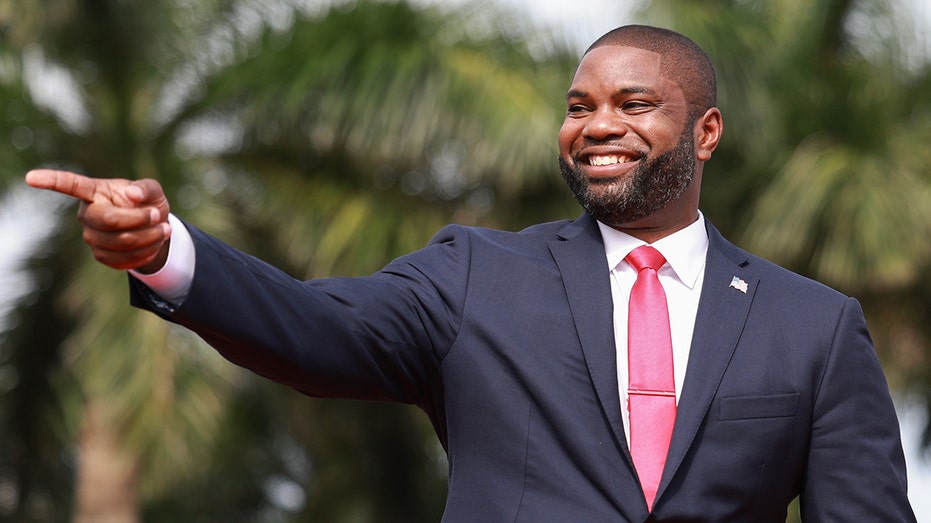
House Speaker Mike Johnson, R-La., is backing Rep. Byron Donalds, R-Fla., for Florida governor. “Byron Donalds is a principled conservative leader who Floridians can trust as their next Governor,” Johnson said in a statement obtained by Fox News Digital, which was first reported by Politico Playbook. “In Congress, Byron has been tenacious in standing up for Florida and President Trump’s America First agenda. I have no doubt he will bring that same fighting spirit with him as Governor, working every day to improve the lives of Florida families. My good friend Byron Donalds has my full support,” Johnson added. SCOOP: TRUMP ALLY DONALDS SHOWCASES CAMPAIGN CASH SURGE SINCE ANNOUNCING FLORIDA GOVERNOR RUN The Sunshine State Republican thanked Johnson for his support, calling him a “good friend” in a post on X. “From local Tea Party Activism to the State House & the halls of Congress to my candidacy for Governor of Florida, my fight for the Sunshine State has been unwavering. Together, we are Making America Great Again,” Donalds added. The congressman announced his gubernatorial bid in February after President Donald Trump had already pledged to endorse him if he chose to run. ‘SHOW OF FORCE’: TRUMP ALLY KICKING OFF CAMPAIGN IN RACE TO SUCCEED FLORIDA GOV DESANTIS “Byron Donalds would be a truly Great and Powerful Governor for Florida and, should he decide to run, will have my Complete and Total Endorsement. RUN, BYRON, RUN!” Trump declared in a February Truth Social post. Last month Rep. Vern Buchanan, R-Fla., endorsed Donalds’ gubernatorial bid. Current Florida Gov. Ron DeSantis, who is serving his second consecutive term, is not eligible to run again in 2026. DESANTIS REBUKES REPUBLICANS FOR BACKING BILL FOR CARBON SEQUESTRATION TASK FORCE: ‘ABSOLUTELY EMBARRASSING’ CLICK HERE TO GET THE FOX NEWS APP The Florida constitution stipulates, “No person who has, or but for resignation would have, served as governor or acting governor for more than six years in two consecutive terms shall be elected governor for the succeeding term.”
Newsom foe picked by Trump for key prosecutor job vows to ‘dismantle’ sanctuary state shields
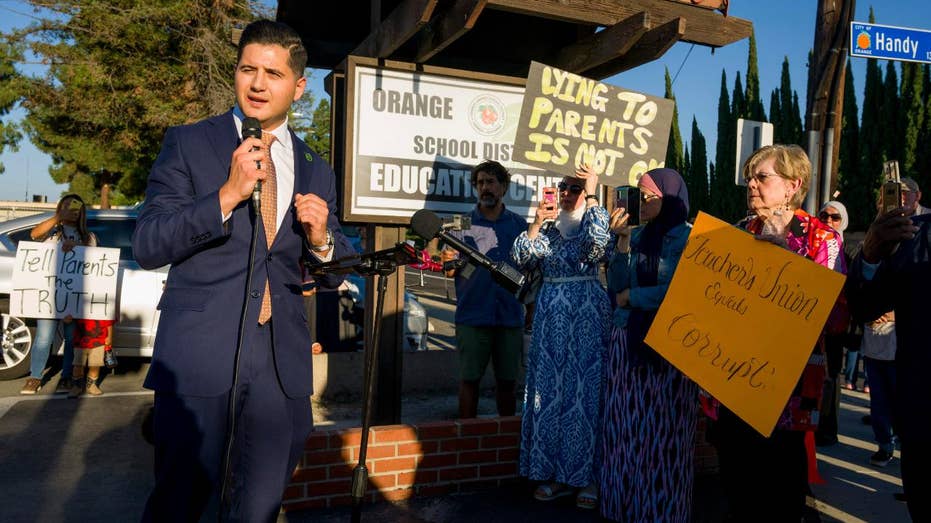
Republican California Assemblyman Bill Essayli is pledging to “dismantle” his state’s status as a popular sanctuary for illegal immigrants after President Donald Trump tapped him this week to head up a team of prosecutors for the nation’s largest federal district court by population. “I’m excited to get to work and to implement their vision and their mission for the Department of Justice,” Essayli told Fox News Digital in a phone interview. “I think the first order of business is reassuring people and reinstilling trust into the Justice Department. I think for the last few years, it’s been weaponized, has been politicized, and the President’s made it clear that we’re going to restore trust into our law enforcement agencies and into the Department of Justice.” Essayli, a lightning rod in California legislative politics who frequently spars with Democratic Gov. Gavin Newsom, said his commitment is to “restore law and order” in his new post as U.S. attorney for the Central District of California. “We’re going to get back to work,” he said. “We’re going to go after these transnational organizations, which the president designated as terrorist organizations.” CALIFORNIA DEM COMPARES ‘SAVE GIRLS SPORTS’ LAW TO NAZI GERMANY, AS TWO TRANS ATHLETE BAN BILLS FAIL TO PASS “We’re going to go after criminal illegal immigration,” Essayli continued. Setting himself up for a potential showdown in the coming months with Newsom, who “Trump-proofed” the state with a $50 million legal fund to protect illegal immigrants in the state, Essayli vowed to “dismantle the sanctuary state status that they’ve enjoyed here in California.” Brandon Richards, a spokesman for Newsom’s office, told Fox News Digital in a previous statement that “none of this funding will be used to support immigration-related services for criminals. Period.” Additionally, Essayli said as U.S. attorney, his office will tackle public corruption, noting, “I don’t think we’ve had robust public corruption cases and investigations. It’s long overdue.” When asked if Newsom had reached out to him since his appointment, Essayli laughed. NEWSOM’S ‘UNFAIR’ REMARK ON GIRLS’ SPORTS BELIES RECORD AS GOVERNOR: ‘ABSOLUTE BULLS—‘ “No,” he said. “We don’t talk.” Fox News Digital reached out to Newsom’s office for comment but did not hear back by the time of publication. Essayli has gone head-to-head with Newsom’s administration throughout his Republican career in the state, criticizing the state over its handling of wildfire management, public safety, reparations, and most notably, parental rights in schools. It was not uncommon in the last several years to see Essayli at school board meetings voicing his opposition to policies that prohibited parental notification of their child’s gender identity. When asked how he would go about removing sanctuary state protections for illegal immigrants, Essayli responded he will be working “hand in hand” with the Trump Justice Department and Attorney General Pam Bondi. “We’re gonna put a plan together,” he said. “That’s not something I’m obviously prepared to discuss or signal at this point, but I assure you that something will be done, and when we do, it will be very well known in public.” MAINE UNIVERSITIES AGREE TO KEEP TRANSGENDER ATHLETES OUT OF WOMEN’S SPORTS AFTER TRUMP ADMIN PAUSES FUNDING Just hours before his appointment to be the next top federal prosecutor in the district that includes Los Angeles County, Essayli introduced Assembly Bill 844, which sought to reverse California’s existing law that allows biological males to participate in girls’ and women’s sports teams corresponding to their gender identity. But the Assembly’s Committee on Arts, Entertainment, Sports and Tourism rejected AB 844 along party lines on Tuesday. Essayli called the tolerance of trans girls in girls’ sports “not just bad policy, it’s also a flagrant violation of Title IX and puts California schools at risk of losing billions in federal funding,” during the committee hearing. “I believe California will come into compliance with Title IX, either through this legislative process or the court process.” He resigned from his post as assemblyman that evening to accept the federal position. In a news release, the U.S. attorney’s office said Essayli, born to two Lebanese immigrants, was sworn into the country’s largest attorney’s office outside of Washington, D.C., on Wednesday morning. The office, with over 250 lawyers on staff, serves roughly 20 million residents across the counties of Los Angeles, Orange, Riverside, San Bernardino, Ventura, Santa Barbara and San Luis Obispo. Essayli previously founded the law firm Essayli & Brown LLP in 2019 and worked as a federal prosecutor from 2014 to 2018 in the Los Angeles and Riverside offices. During his time as an assistant U.S. attorney, Essayli handled high-profile cases, including the 2015 San Bernardino terrorist attack and a significant opioid prescription case. Prior to his federal role, he was a deputy district attorney in Riverside County and worked as an associate attorney at Paul Hastings LLP. Essayli’s nomination to U.S. attorney requires Senate confirmation, but the president has the authority to appoint someone to the position on an interim basis before Senate confirmation.
Condemnation of anime-style images from Israeli military
[unable to retrieve full-text content] The Israeli army faced backlash for joining an online trend of using AI anime-style images to portray its forces.
Reverse reparations: Zimbabwe’s perfect trap, South Africa’s looming danger
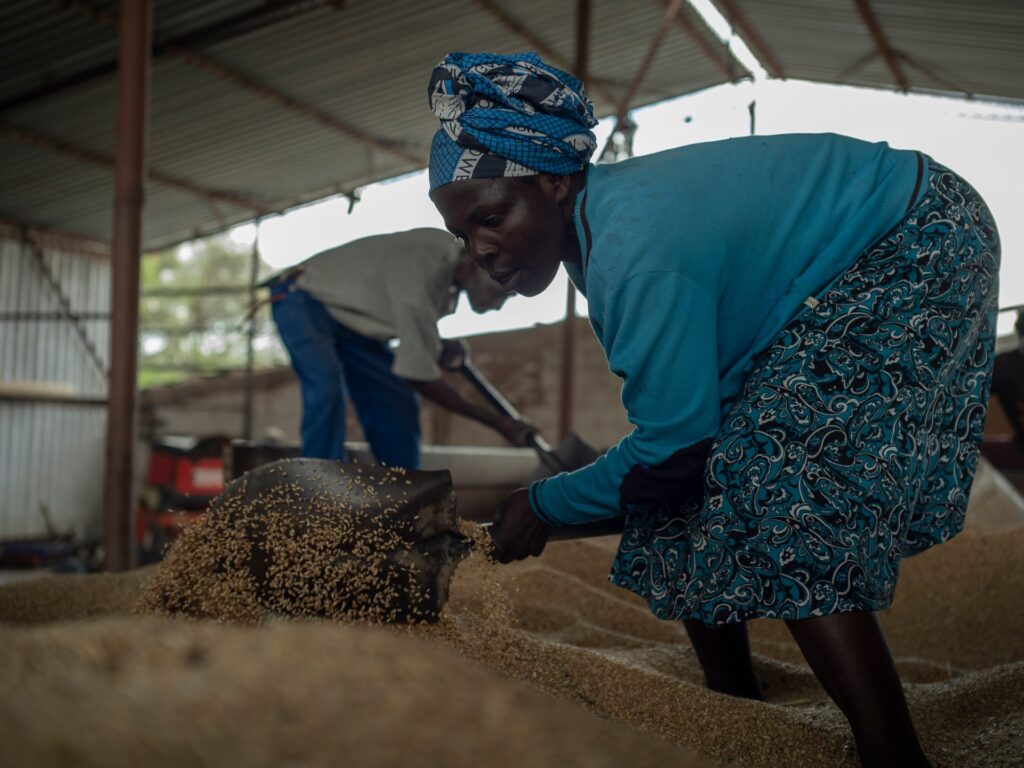
On February 7, the White House cut aid to South Africa, citing a nonexistent threat to white farmers from government land expropriation. To see what might lie beyond Trump’s executive order, South Africa need only look north. Zimbabwe’s economy has been crushed by sanctions imposed after redistributing colonial-era farmland. And despite efforts to placate the development establishment, it appears that Washington prefers the country to dangle, like a corpse in a gibbet, lest other countries start getting ideas of their own. In July 2020, in the teeth of the COVID-19 pandemic, Zimbabwe agreed to pay $3.5bn in compensation to approximately 4,000 white settler landowners for property redistributed during land reforms. This sum, five times the size of Zimbabwe’s May 2020 COVID stimulus plan, was pledged at a time when the United Nations warned the country was “on the brink of man-made starvation”. The deal came after years of pressure, with Zimbabwean officials hoping it would persuade the United States to lift the punitive 2001 Zimbabwe Democracy and Economic Recovery Act (ZDERA) that has blocked the nation’s access to international loans and assistance for two decades. Yet Zimbabwe lacked the funds to pay, and ZDERA remained. Advertisement The conventional narrative portrays Zimbabwe’s land reform as reckless expropriation by the despotic Robert Mugabe, leading to economic collapse. This version rewrites history. During British colonisation, Africans were prohibited from owning land outside “native reserves”. By the mid-20th century, 48,000 white settlers controlled 50 million acres (more than 20 million hectares) of prime farmland, while nearly a million Africans were confined to 20 million acres of largely infertile land – an injustice that fuelled Zimbabwe’s liberation struggle. The 1979 Lancaster House Agreement, which ended white minority rule, restricted land reform to market transactions for a decade, ensuring colonial-era land ownership persisted. Despite this constraint, Zimbabwe made strides in human development in the 1980s. But by the end of the decade, the World Bank and the IMF imposed an economic structural adjustment programme, slashing public spending, removing subsidies, and privatising state enterprises. The result: mass unemployment, degraded services, and deepening poverty. By 2000, facing growing domestic pressure, Mugabe’s government began compulsory land redistribution. The programme had flaws – inadequate support for new farmers and insufficient resources to rebuild agricultural supply chains. Yet, contrary to disaster narratives, thousands of landless Zimbabweans benefitted while a small elite of white settlers lost their privileged status. The international response was swift and punitive. When the US Congress passed ZDERA in December 2001, it was explicitly presented as a response to Zimbabwe’s land reform programme, framing Zimbabwe’s actions as a threat to US foreign policy. The United Kingdom, the European Union, Australia, and Canada followed with their own punitive measures. For two decades, Zimbabwe has been trapped in a cycle of economic isolation, unable to access the loans and investment needed to rebuild. Advertisement The human cost has been staggering. UN human rights experts have repeatedly warned that ZDERA has had an “insidious ripple effect” on Zimbabwe’s economy and the enjoyment of fundamental rights. The Southern African Development Community estimates that Zimbabwe has lost access to more than $100bn in international support since 2001. The 2020 compensation deal is a cruel irony. Zimbabwe, already bankrupt, must now borrow billions to pay former colonial beneficiaries, hoping to escape a punitive law imposed in response to its land reform programme. This creates a perfect trap: a nation forced to finance its subjugation, while its people suffer. The absurdity is underscored by the US’s refusal to support Zimbabwe’s debt restructuring through the African Development Bank. US officials insist that ZDERA is “a law, not a sanction”, but this is a distinction without a difference – whether through formal sanctions or legislation, the goal remains the same: protecting settler property rights over justice for the colonised. This is not just Zimbabwe’s story. The Trump administration recently attacked South Africa’s far more cautious land reform efforts, falsely claiming the government was “seizing land from white farmers”. This rhetoric, amplified by far-right media, ignores that South Africa’s land reform – a constitutionally mandated process – seeks to correct apartheid-era dispossession, where white South Africans, 8 percent of the population, control 72 percent of farmland. Trump’s intervention was never about property rights – it was about preserving a global system that favours former colonisers over the dispossessed. The fight for land justice in Zimbabwe, South Africa, and across the Global South is not just a local struggle – it is a global one. Advertisement As Thomas Sankara, the revolutionary leader of Burkina Faso, once said, debt is “a cleverly managed reconquest of Africa”. Zimbabwe’s plight is a stark reminder of this truth. The international community must reckon with the legacy of colonialism and the systems that continue to enforce it. Until we do, the promise of liberation will remain out of reach for millions. Zimbabwe’s land reform was not perfect, but it was necessary. The tragedy is not the reform itself but the global backlash punishing Zimbabwe for daring to challenge the status quo. It is time to lift the sanctions, cancel the debts, and allow Zimbabwe, South Africa, and other nations to pursue justice on their own terms. Land reform is not a threat – it is a demand for justice, one the world can no longer ignore. The views expressed in this article are the authors’ own and do not necessarily reflect Al Jazeera’s editorial stance. Adblock test (Why?)
Trump’s tariffs: Which countries will hit back – and which likely won’t?
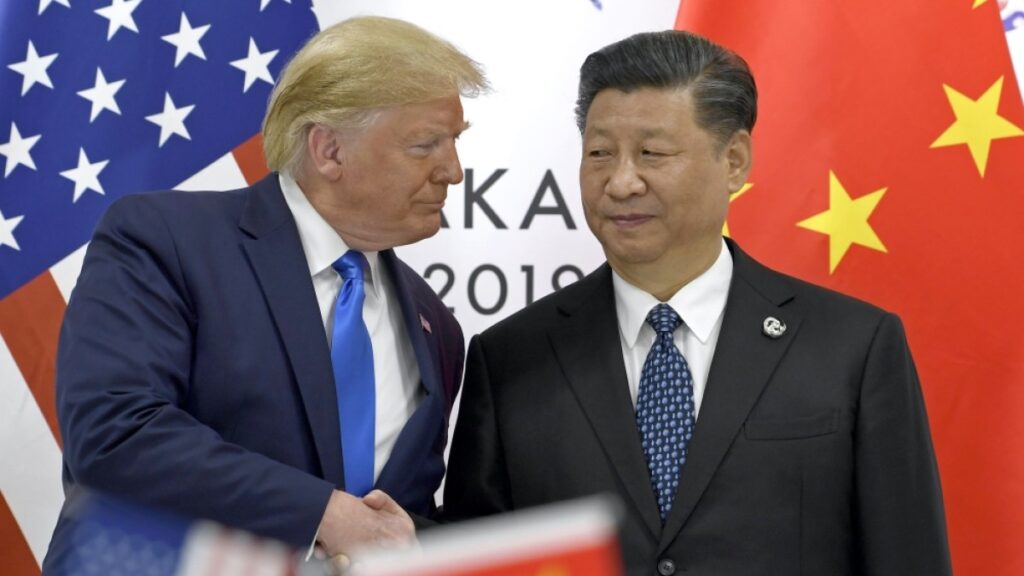
US President Donald Trump has unveiled his long-awaited “reciprocal” tariff plan, in a move that sent financial markets reeling amid growing fears of a global trade war. On Wednesday, Trump announced a 10 percent “minimum baseline tariff” on nearly all imports into the United States. Higher duties on targeted countries will be phased in shortly afterwards. He claimed the new import taxes were designed to reduce trade deficits and bring foreign manufacturing back to US shores. He also said they would pave the way for tax future cuts. As Trump took aim at a global trading system he said “ripped off” the US, his tariffs prompted an immediate backlash, with some of America’s largest trading partners promising countermeasures. What was announced? Invoking the International Emergency Economic Powers Act of 1977, Trump announced a 10 percent tariff on all countries, scheduled to take effect on April 5. Then, he revealed there would be “individualised” tariffs for countries that have large trade surpluses with the US or that impose higher duties on American imports. Those tariffs would come into effect four days later, on April 9. Advertisement Trump explained that his team calculated the “individualised” tariffs by taking half of what he claimed those countries charged the US for its exports. As such, the European Union is headed for 20 percent tariffs, while the United Kingdom has been slapped with a 10 percent levy. China, meanwhile, had been assigned 34 percent – on top of the 20 percent tariffs that Trump had already imposed on Chinese imports since coming into office on January 20. Vietnam will be tariffed at 46 percent, and Thailand 36 percent. Mexico and Canada, the US’s two largest trading partners and its immediate neighbours, were missing from the list but they both already face 25 percent tariffs for all exports to the US that are not covered by the US-Mexico-Canada (USMCA) trade pact. Reciprocal tariffs will not apply to some goods such as copper, semiconductors, energy, and “certain minerals that are not available in the United States”, according to a White House fact sheet. Reciprocal tariffs may also be subject to change. According to the White House document, tariffs may be negotiated with trading partners who “take significant steps to remedy non-reciprocal trade arrangements”. What did Trump say? “For decades, our country has been looted, pillaged, raped and plundered by nations near and far, both friend and foe alike,” Trump told an audience of manufacturing workers, cabinet members and journalists. “Foreign leaders have stolen our jobs. Foreign cheaters have ransacked our factories. And foreign scavengers have torn apart our once-beautiful American dream.” Advertisement But he proclaimed that Wednesday would mark a turning point in US history, marking an end to the “vicious attacks” he said the country had weathered. “April 2, 2025, will forever be remembered as the day American industry was reborn, the day America’s destiny was reclaimed,” Trump said. “We will charge them approximately half of what they are – and have – been charging us. So, the tariffs will be not a full reciprocal,” Trump said. “I could have done that, I guess, but it would’ve been tough for a lot of countries. We didn’t want to do that,” he added. What have target countries said in response? Within minutes of Trump’s announcement, world leaders began denouncing the tariffs as harmful. China’s Ministry of Commerce promised “countermeasures to safeguard its own rights and interests” in response to US “bullying,” it said in a statement. US tariffs on China are now effectively at 54 percent. While Beijing stopped short of saying it would impose retaliatory countermeasures, the statement read “the United States has drawn the so-called ‘reciprocal tariffs’ based on subjective and unilateral assessments, which is inconsistent with international trade rules”. It urged the Trump administration to cancel the tariffs and “properly resolve differences with its trading partners through equal dialogue”. For once, Beijing and Taipei appeared to be on the same page. Taiwan labelled the tariffs “highly unreasonable”. Cabinet spokesperson Michelle Lee said Taipei “deeply regretted” Trump’s announcement of a 32 percent tariff on its exports. Advertisement Australian Prime Minister Anthony Albanese said the tariffs were “not the act of a friend” and “totally unwarranted”. European Commission President Ursula von der Leyen, responding to a new 20 percent tariff on the EU, called the measure a “major blow to the world economy”. “The consequences will be dire for millions of people around the globe,” she said, adding groceries, transport and medicine will cost more. Even Canada, which was exempt from the latest tariffs, chimed in. “During this crisis, we must act with purpose”, Canadian Prime Minister Mark Carney wrote on social media. “My government will fight US tariffs,” he said. Which countries will hit back with their own measures? As reciprocal tariffs won’t kick in until April 9, countries have six days to try to cut a deal with the Trump team. But some may respond with retaliatory tariffs. Canada is one of several US trading partners which has pledged to respond to tariffs with retaliatory measures. Meanwhile, the European Union is “ready for a trade war” with the US and could “attack online services”, French government spokesperson Sophie Primas said. She said the EU was preparing a two-stage rebuttal, with “an initial response”, to be put in place around mid-April, concerning aluminium and steel. Then the EU also will target “all products and services”, with the measures probably ready at the end of April, Primas said, adding this was still being discussed. “China is likely going to release some type of retaliation …,” Nick Marro, a principal economist at the Economist Intelligence Unit told Al Jazeera. Advertisement Which countries will likely prefer diplomacy? Mexico, meanwhile, has demurred. On Wednesday, Mexican President Claudia Sheinbaum said she would avoid pursuing “tit-for-tat” tariffs. Similarly, British Prime Minister Keir Starmer has ruled out immediate retaliation, promising on Thursday to keep a “cool head … in the coming days”. Business Secretary Jonathan Reynolds told the House of Commons on Thursday
Trump issues ‘prognosis’ for US after tariffs in medical metaphor
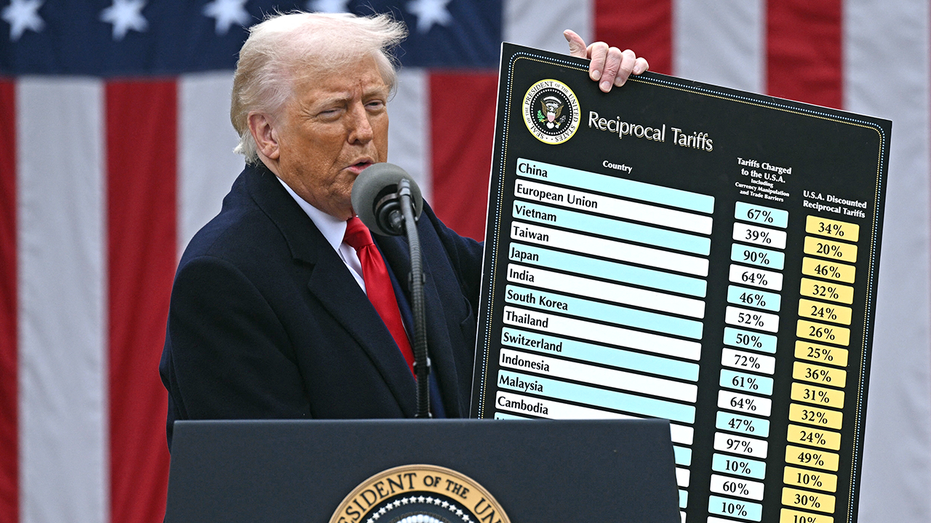
President Donald Trump on Thursday used a medical metaphor to describe the status of his “reciprocal tariffs” plan implemented on what he dubbed “Liberation Day.” “THE OPERATION IS OVER! THE PATIENT LIVED, AND IS HEALING,” Trump wrote on TRUTH Social. “THE PROGNOSIS IS THAT THE PATIENT WILL BE FAR STRONGER, BIGGER, BETTER, AND MORE RESILIENT THAN EVER BEFORE. MAKE AMERICA GREAT AGAIN!!!” The Dow Jones Industrial Average opened more than 1,000 points lower on Thursday morning after Trump unveiled his most severe levy of tariffs yet during a White House Rose Garden ceremony a day earlier, but administration officials remained optimistic in early morning TV interviews. They touted an anticipated impact of onshoring U.S. manufacturing and further bolstering American jobs. White House Press Secretary Karoline Leavitt told CNN the United States “is no longer going to be cheated by foreign nations around the world,” reiterating that Trump had declared the issue a “national emergency.” SENATE APPROVES RESOLUTION AGAINST TRUMP’S CANADA TARIFFS HOURS AFTER ‘LIBERATION DAY’ EVENT “We have a $1.2 trillion trade deficit and counting. We’ve had 90,000 factories close in the last couple of decades,” Leavitt told CNN. “Since 1997, Americans have been put out of five million manufacturing jobs. These are not just statistics. These are real American lives that have been impacted. And it’s about time we have a president who actually does something about it. This is going to restore more wealth, more jobs, more economic prosperity to our great country.” Leavitt said that the countries targeted by Trump’s reciprocal tariffs have had “70 years to do the right thing by the American people, and they have chosen not to.” “They have ripped off American workers. They have taken our jobs overseas,” Leavitt said. She also told CNN that Trump has already launched a “massive deregulatory agenda” that has “saved the American taxpayer millions of dollars.” Leavvitt said that the president is “unleashing the might of our American energy industry,” arguing that a stifled energy industry drove inflation during former President Joe Biden’s administration. Vice President JD Vance told Fox & Friends on Thursday morning that critics during Trump’s first term warned that tariffs would be inflationary, but instead inflation dipped to 1.5% until the “four terrible years of the Biden administration.” Vance said the “globalist economy” has resulted in the United States “incurring a huge amount of debt to buy things that other countries make for us.” “To make it a little bit more crystal clear, we borrow money from Chinese peasants to buy the things those Chinese peasants manufacture,” Vance said. “That is not a recipe for economic prosperity. It’s not a recipe for low prices, and it’s not a recipe for good jobs in the United States of America.” SOME COUNTRIES TARGETED BY TRUMP TARIFFS SEEK NEGOTIATIONS, CHINA SAYS ‘NO WINNERS IN TRADE WARS’ The vice president said the “Joe Biden globalist pathway” has resulted in the U.S. having $2 trillion in peacetime debt and deficits and manufacturing “disappearing,” promising that Trump is taking the country in a different direction. Addressing criticism from Wall Street following Trump’s “Liberation Day” event in the White House Rose Garden, Vance said, “a lot of people have gotten rich from American jobs moving overseas, but American workers have not gotten rich” and American companies “have not gotten wealthy from the increasing growth of foreign competitors manufacturing overseas.” “They charge us ridiculous tariffs. They engage in a lot of non-tariff practices like currency manipulation,” Vance said. “That has been awful for Main Street in the United States of America.” On concerns about tariffs potentially driving up costs, Vance said the administration is “fighting very hard to bring prices down” and usher in “the biggest deregulation in the history of this country.” Trump’s Commerce Secretary Howard Lutnick told CBS News that “when tariffs come into place, foreign goods may become a little more expensive, but domestic goods do not.” “For the first time in your lives, you’re going to actually think about the Americans who make the products, the Americans who produce these products and work in these factories,” he said. “It’s time for us to take care of them instead of taking care of the world.” Trump said that his administration secured about $5 trillion of committed investment, which Lutnick told CBS meant “people are going to start building factories right now.” “That means all that construction work begins now,” Lutnick said, vowing that the president’s plan would build on the 150,000 jobs already added to the U.S. economy in March. “That starts to employ Americans today. You’re going to see plants being built, factories rebuilding. All shifts are going to be running hot across America now. You’re going to see employment leaping starting today.”
Kremlin official says he’s meeting Trump admin in first Russian visit to US since Ukraine war
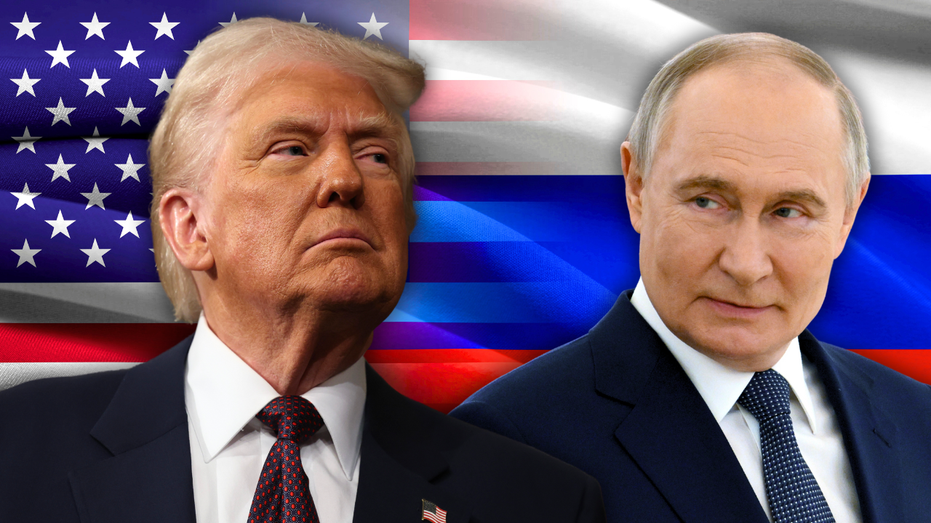
A Russian official said he is in Washington this week to meet with Trump administration officials as talks continue to hash out a potential peace agreement between Ukraine and Russia. “On April 2–3, at the request of the President of the Russian Federation V.V. Putin, I will hold meetings in Washington with representatives of the administration of President Donald Trump,” Russia’s special envoy on international economic and investment, Kirill Dmitriev, posted to Telegram Thursday confirming the visit. The post was published in Russian and translated to English. “Yes, restoring dialogue is a difficult and gradual process. But each meeting, each frank conversation allows us to move forward,” he continued. “A real understanding of the Russian position opens up new opportunities for constructive cooperation, including in the investment and economic sphere.” Dmitriev’s trip marks the first time a senior Russian official has traveled to the U.S. to meet with officials since war broke out between Russia and Ukraine in February 2022. No Russian officials visited the Biden White House. FINNISH PRESIDENT: TRUMP SHOULD GIVE PUTIN 3 WEEKS TO AGREE UKRAINE CEASEFIRE Dmitriev, traveled to Washington, D.C., and met with “representatives of the administration of President Donald Trump” Wednesday, and will reportedly hold meetings again with Trump officials Thursday, according to the Telegram post. The White House did not immediately respond to Fox News Digital’s request for additional comment on the visit. The Russian envoy did not specify who in the Trump administration he was meeting. Trump administration special envoy Steve Witkoff has previously cited the Russian official as his primary counterpart when he helped hash out a prisoner exchange deal with Russia in February that led to the release of American teacher Marc Fogel. The visit comes after President Donald Trump told NBC News Sunday that he was “pissed off” with Russian President Vladimir Putin after the Russian president slammed Ukrainian President Volodymyr Zelenskyy’s leadership last week. Russia also carried out a series of attacks on Ukraine over the weekend amid ongoing talks to reach a potential peace agreement. TRUMP THREATENS SANCTIONS ON RUSSIA, DEMANDS PEACE AFTER MAJOR HITS IN UKRAINE “If Russia and I are unable to make a deal on stopping the bloodshed in Ukraine, and if I think it was Russia’s fault – which it might not be – but if I think it was Russia’s fault, I am going to put secondary tariffs on oil, on all oil coming out of Russia,” Trump told NBC News. TRUMP SAYS HE IS ‘PISSED OFF’ WITH PUTIN OVER LACK OF PEACE PROGRESS: REPORT “That would be that if you buy oil from Russia, you can’t do business in the United States,” he continued. “There will be a 25% tariff on all oil, a 25- to 50-point tariff on all oil.” TRUMP, VANCE AND ZELENSKYY SPAR OVER RUSSIAN WAR IN TENSE EXCHANGE: ‘VERY DISRESPECTFUL’ Trump added that his anger will “dissipate quickly” if Putin “does the right thing.” The reported Russia-U.S. meeting came the same week Trump celebrated “Liberation Day,” when he unveiled his highly anticipated tariff plan that his administration has said will unshackle the U.S. from its decadeslong reliance on goods from overseas. The new tariff plan did not include reciprocal tariffs on Russia – as well as other nations such as Canada and Mexico – with Treasury Secretary Scott Bessent saying the United States doesn’t trade with Russia because the nation is sanctioned.
Democrat rep vows to work with Trump on key part of tariff plan: ‘Hoping that I can help’
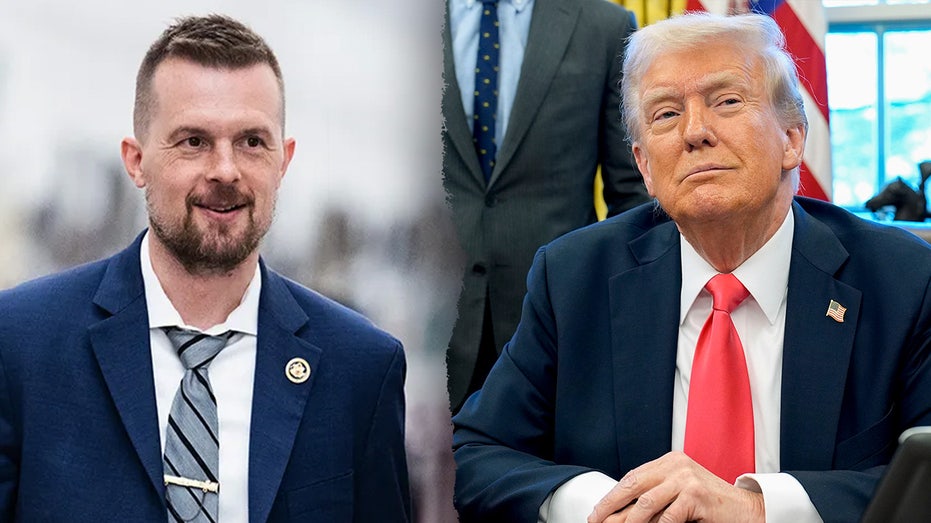
A moderate Democrat is expressing cautious optimism at President Donald Trump’s stance on tariffs in a stark departure from most of his party’s infuriated reaction. Rep. Jared Golden, D-Maine, pointed out in a lengthy statement that he himself proposed a 10% blanket tariff on U.S. imports earlier this year and said he was happy Trump’s baseline policy was the same – and even publicly pledged to work with Trump on enshrining it in federal law in a subsequent interview with Fox News Digital. “What I can say now is I’m pleased the president is building his tariff agenda on the foundation of a universal 10% tariff like the one I proposed in the BUILT USA Act. This ring fence around the American economy is a good start to erasing our unsustainable trade deficits,” Golden said in his statement. “I’m eager to work with the president to fix the broken ‘free trade’ system that made multinational corporations rich but ruined manufacturing communities across the country. But tariffs must be paired with policies that prioritize American families’ prosperity.” TREASURY SECRETARY BESSENT TELLS COUNTRIES NOT TO RETALIATE AFTER SWEEPING ‘LIBERATION DAY’ TARIFFS He noted, however, that Trump “introduced a number of new tariff policies” alongside the 10% universal tax, and that he would need time to review the policies in detail before weighing in on them further. “We need to make sure that the new approach benefits working people — that means supporting unions, the trades and apprenticeship programs, cutting regulations that hold back production, unleashing American energy and using tariff revenue to support domestic manufacturers that create good-paying jobs for Americans,” he said. “Tariffs are a first step in rewriting a rigged trade system, but they cannot be the last one.” He told Fox News Digital in a brief interview Thursday that he was open to working with Trump on codifying the 10% tariffs measure in federal law. “I’m really glad that he included that in his kind of broader strategy that he rolled out yesterday. And on the reciprocal tariffs, I would assume that he wants flexibility, he probably likes doing that through an executive order,” Golden said. “But I’m of the mind that the 10% global tariff is something that should be part of a longer-term strategy for the U.S. And so, you know, I’m hoping that I can help the president get some members of Congress to support doing that in a bill and maybe put it on his desk.” “I think that the president and his team would have to do some heavy lifting to make sure that the House Republicans supported it, but if they didn’t have a lot of defections, you know, could I find some like-minded Democrats for a 10% global tariff? I think so.” While it’s far from a full embrace of Trump’s tariff plan, Golden’s comments are still more optimistic than those of his fellow Democratic lawmakers. FRANCE ASKS US TO BE ‘COOPERATIVE’ INSTEAD OF ‘CONFRONTATIONAL’ FOLLOWING TRUMP’S ‘LIBERATION DAY’ TARIFFS “I have always said that when used strategically, tariffs are a critical tool,” Rep. Debbie Dingell, D-Mich., told Axios. “However, the key word is ‘strategically.’ I’m concerned about the chaotic and immediate implementation of these wide-reaching tariffs.” Meanwhile, Rep. Gregory Meeks, D-N.Y., the top Democrat on the House Foreign Affairs Committee, pledged to force a vote targeting the new national emergency Trump is using to justify the 10% blanket tariff. “I’ll soon introduce a privileged resolution to force a vote on ending the made up national emergency Trump is using to justify these taxes. Republicans can’t keep ducking this — it’s time they show whether they support the economic pain Trump is inflicting on their constituents,” Meeks said in a statement. Golden has been known to break from his party on several key occasions. Maine’s 2nd Congressional District, which he has represented since January 2019, was won by Trump by roughly 10% in 2024. Trump’s plan involves a 10% blanket tariff on all imports into the U.S., as well as tariffs of up to 50% on both adversaries and allies. It also introduces some level of reciprocal tariffs on countries that tax U.S. exports, though in most cases, the U.S. rate is lower than the foreign country’s. “April 2, 2025, will forever be remembered as the day American industry was reborn. The day America’s destiny was reclaimed. And the day that we began to make America wealthy again,” Trump said in remarks announcing his plan Wednesday.
Trump gets rare Democrat support for new tariffs: ‘This is a good start’
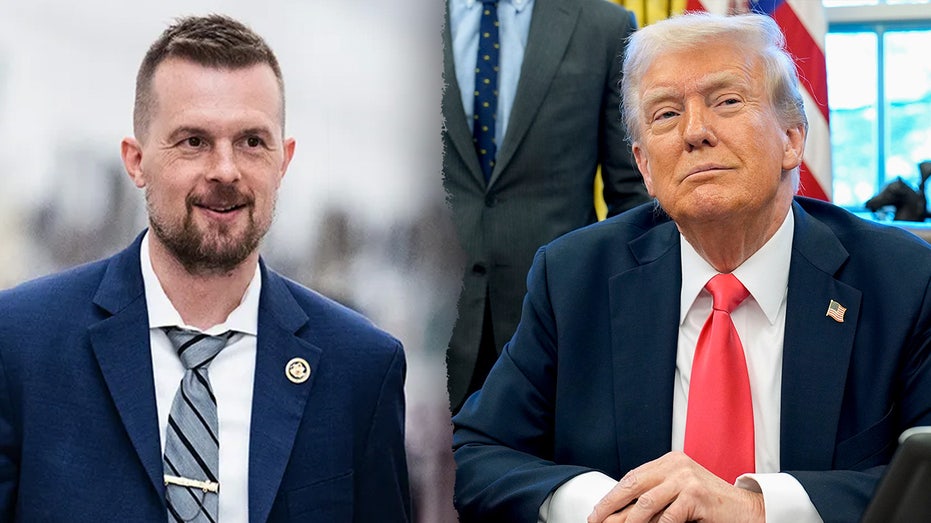
A moderate Democrat is expressing cautious optimism at President Donald Trump’s stance on tariffs in a stark departure from most of his party’s infuriated reaction. Rep. Jared Golden, D-Maine, pointed out in a lengthy statement that he himself proposed a 10% blanket tariff on U.S. imports earlier this year and said he was happy Trump’s baseline policy was the same. “What I can say now is I’m pleased the president is building his tariff agenda on the foundation of a universal 10% tariff like the one I proposed in the BUILT USA Act. This ring fence around the American economy is a good start to erasing our unsustainable trade deficits,” Golden said. “I’m eager to work with the president to fix the broken ‘free trade’ system that made multinational corporations rich but ruined manufacturing communities across the country. But tariffs must be paired with policies that prioritize American families’ prosperity.” TREASURY SECRETARY BESSENT TELLS COUNTRIES NOT TO RETALIATE AFTER SWEEPING ‘LIBERATION DAY’ TARIFFS He noted, however, that Trump “introduced a number of new tariff policies” alongside the 10% universal tax, and that he would need time to review the policies in detail before weighing in on them further. Golden also said tariffs “must be paired with policies that prioritize American families’ prosperity.” “We need to make sure that the new approach benefits working people – that means supporting unions, the trades and apprenticeship programs, cutting regulations that hold back production, unleashing American energy and using tariff revenue to support domestic manufacturers that create good-paying jobs for Americans,” he said. “Tariffs are a first step in rewriting a rigged trade system, but they cannot be the last one.” While it’s far from a full embrace of Trump’s tariff plan, Golden’s comments are still more optimistic than those of his fellow Democratic lawmakers. FRANCE ASKS US TO BE ‘COOPERATIVE’ INSTEAD OF ‘CONFRONTATIONAL’ FOLLOWING TRUMP’S ‘LIBERATION DAY’ TARIFFS “I have always said that when used strategically, tariffs are a critical tool,” Rep. Debbie Dingell, D-Mich., told Axios. “However, the key word is ‘strategically.’ I’m concerned about the chaotic and immediate implementation of these wide-reaching tariffs.” Meanwhile, Rep. Gregory Meeks, D-N.Y., the top Democrat on the House Foreign Affairs Committee, pledged to force a vote targeting the new national emergency Trump is using to justify the 10% blanket tariff. “I’ll soon introduce a privileged resolution to force a vote on ending the made up national emergency Trump is using to justify these taxes. Republicans can’t keep ducking this – it’s time they show whether they support the economic pain Trump is inflicting on their constituents,” Meeks said in a statement. Golden has been known to break from his party on several key occasions. Maine’s 2nd Congressional District, which he has represented since January 2019, was won by Trump by roughly 10% in 2024. Fox News Digital reached out to Golden’s office for further comment but did not hear back by press time. Trump’s plan involves a 10% blanket tariff on all imports into the U.S., as well as tariffs of up to 50% on both adversaries and allies. It also introduces some level of reciprocal tariffs on countries that tax U.S. exports, though in most cases, the U.S. rate is lower than the foreign country’s. “April 2, 2025, will forever be remembered as the day American industry was reborn. The day America’s destiny was reclaimed. And the day that we began to make America wealthy again,” Trump said in remarks announcing his plan Wednesday.