

Self-styled Punjab’s ‘Yeshu Yeshu’ pastor Bajinder Singh gets life imprisonment in 2018 rape case
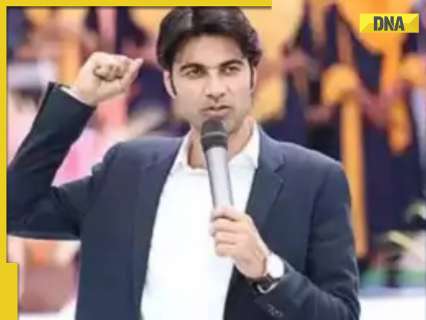
Singh’s church operates as a non-governmental organisation (NGO) claiming to provide charitable services. His “miracle” videos, where he organises religious congregations or satsangs, often show dramatic healings and testimonials.
Trump, eyeing 3rd term, keeps attacking elite institutions – and many are caving
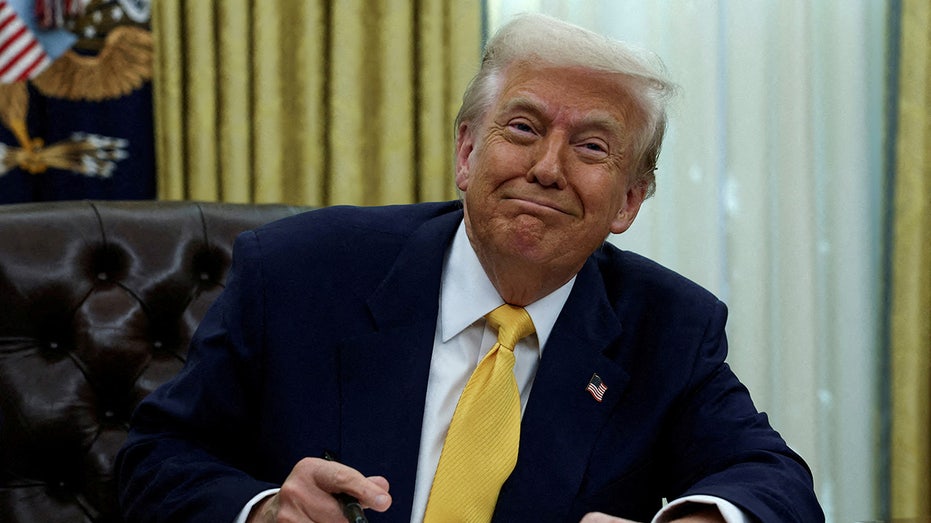
President Trump stirs up controversy, by design, on just about everything. And when the media, including me, cover this flood-the-zone approach, Trumpian allies rip the resulting stories and segments as reflecting an unhealthy negative obsession with the president. Memo to the pro-Trump zealots who go online and declare I hate the president, that’s objectively ridiculous. He was pleased with the two interviews I did with him during the campaign, and I was just over at the White House for a meeting with his team. But have your fun. HOW DONALD TRUMP DOMINATES THE NEWS, BOTH POSITIVELY AND NEGATIVELY You know how Trump has been kidding around about running for a third term? Well, he told Kristen Welker on “Meet the Press” he’s “not joking,” in an off-camera but on-the-record interview in which she had to describe his remarks. Sure it violates the 22nd Amendment, but there are workarounds, he said, adopting her suggestion that JD Vance could run in 2028 and then turn over the presidency to him. This is classic Trump – it’s a joke until it’s not. I happen to think he’s trolling the press and won’t do it – he’d be 82 – but with the Democrats in such sorry shape, who really knows? Now he undoubtedly called Welker because the Atlantic’s Jeffrey Goldberg was a guest (insisting, by the way, that he does too know national security adviser Michael Waltz), and made other news. Trump said he is “pissed” at Russia for dragging its feet on a Ukraine peace deal, and IF he concludes that he may hit the Kremlin with more sanctions. This is noteworthy because he almost never criticizes Vladimir Putin – and sanctions won’t do much because of our minimal trade with Russia – but notice there’s no Trump sound bite to be replayed. Also, on American cars costing more because of his tariff war, the president said “I couldn’t care less if they raised prices because people are going to start buying American-made cars.” Imagine if Joe Biden had said that. He’d already have been impeached, with many cutting off the sound bite after the first eight words. Meanwhile, the market plummeted again yesterday over uncertainty over the tariffs that are about to take effect, and is on track for a horrible quarter. On his vow to take control of Greenland, Welker quoted Trump as saying “I never take military force off the table, but I think there’s a good possibility we could do it without military force.” That’s a relief. TRUMP TEASES RUNNING FOR A THIRD TERM: ‘NOT JOKING’ I talk and write about most of the major Trump controversies – there are always ones I can’t get to because of the fire-hose approach – which is of course as he likes it. Negative coverage helps him as much as positive coverage, as I’ve been saying for the more than three decades I’ve known him, because it means he’s driving the news agenda. I mean, the guy will talk about anything. When Kid Rock insisted on bringing Bill Maher to have dinner with Trump, the president said he’d do it as a favor to Kid but: “The problem is, no matter how much he likes your Favorite President, ME, he will publicly proclaim what a terrible guy I am, etc…Who knows, though, maybe I’ll be proven wrong? It might be fun or, it might not, but you will be the first to know!” I wonder if the president’s aware of how Maher beats up on the left. Maher’s response to critics: “If two guys who’ve been at each other for so long — I mean, it’s kind of a Nixon to China thing. There was nobody who was harder on Trump…It will probably accomplish very little, but you gotta try, man, you gotta try.” COMEDIAN BILL MAHER ACCEPTS TRUMP’S WHITE HOUSE INVITATION, SPARKS DEBATE Trump has launched a series of harsh attacks against major institutions, the latest being some of the world’s biggest law firms. Skadden, Arps has agreed to provide $100 million in free services to the White House. Paul, Weiss has agreed to $40 million in pro bono work. The alternative: Getting hit with an executive order which would bar the firms from reviewing classified documents, and therefore unable to help corporate clients. And sometimes that’s because a single prosecutor who investigated Trump works or worked there. Three other large law firms have sued the administration and won an initial round in court. As for academia, Columbia University has been acting conciliatory in hopes of regaining $400 million in frozen federal funds because of its failure to crack down on anti-Semitism. Unable to work it out, the school’s interim president has resigned, with longtime television journalist Claire Shipman taking over on a temporary basis. Columbia is obviously a test case. And then there are Trump’s lawsuits against CBS, NBC and the Des Moines Register. Remember, ABC paid Trump $16 million to settle a suit about George Stephanopoulos’ comments about sexual assault. JUDGES V TRUMP: HERE ARE THE KEY COURT BATTLES HALTING THE WHITE HOUSE AGENDA The New York Times says: “An Ivy League university. Distinguished law firms with Fortune 500 clients. The highest levels of government in the nation’s largest city. “As President Trump seeks to extract concessions from elite institutions and punish his perceived enemies, some of New York’s most powerful people are suddenly confronting excruciating decisions. “The hard choices they face seem almost to be pulled from the pages of a college ethics textbook.” Politico co-founder John Harris, with his staff, conjured up a great phrase on the reaction to these aggressive moves by Trump: the “Great Grovel.” “One after another, a parade of the wealthiest and most elite institutions in American life since last November have found themselves confronted by unprecedented demands from President Donald Trump and his team of retribution-seekers. “One after another, these establishment pillars have met these demands with the same response: capitulation and compliance.” SUBSCRIBE TO HOWIE’S MEDIA BUZZMETER PODCAST, A
India rejects NYT report on HAL’s Russia link, calls it ‘factually incorrect and misleading’

A recent New York Times report alleged that HAL redirected sensitive British technology -valued at $2 million and sourced from HR Smith Group-into the hands of Russia’s sanctioned arms agency, Rosoboronexport, with subsequent shipments worth over $14 million between 2023 and 2024.
Why is China angry about a plan to sell two ports on the Panama Canal?
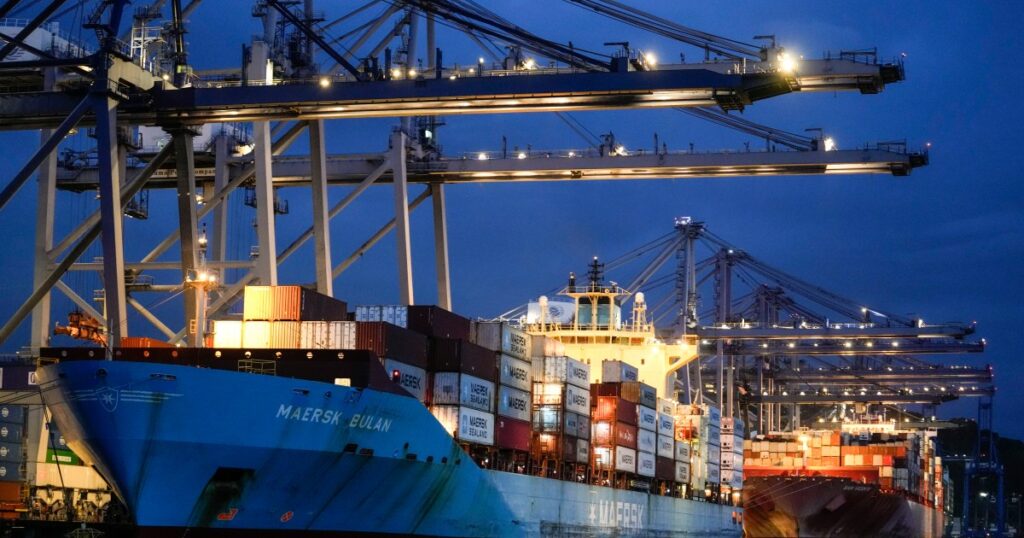
CK Hutchison, one of the largest conglomerates in Hong Kong, earlier this month announced plans to sell its stake in two ports on the Panama Canal to a group of US investors led by BlackRock. The plan, part of a $22.8bn megadeal that would grant the consortium control over more than 40 ports in 23 countries, followed complaints by United States President Donald Trump that the key shipping route was under Chinese control. CK Hutchison shares soared following news of the deal on March 4, but plunged less than two weeks later when Ta Kung Pao, a Chinese state-run newspaper in Hong Kong, accused the company in two op-eds of “spineless grovelling” and cutting a deal “that betrayed and sold out all Chinese people”. With an April 2 deadline to sign the deal looming, CK Hutchison is now in the crosshairs of both Washington and Beijing. Why would China want to stop the deal? Editorials in Ta Kung Pao, which is controlled by Beijing’s liaison office in Hong Kong through a subsidiary, are often read as signals from the upper ranks of the Chinese Communist Party. Advertisement Hong Kong leader John Lee, who was elected as the sole candidate in an election tightly controlled by Beijing, has criticised the CK Hutchison deal, saying it deserves “serious attention”. The Wall Street Journal earlier this month reported that anger over the deal extended all the way to Chinese President Xi Jinping. Citing unnamed sources familiar with the matter, the newspaper said Xi was angered that CK Hutchison had not sought his approval for the deal and that he had hoped to use the Panama Canal ports as a bargaining chip with Trump, who has pledged to “take back” the strategically important waterway. On Friday, China’s market regulator said on its official WeChat account that it would carry out an antitrust investigation “in accordance with the law to protect fair competition in the market and safeguard the public interest”. Following the news, local media, including the Sing Tao Daily and the South China Morning Post, reported that CK Hutchison would not go forward with the deal this week. [embedded content] What is Beijing’s relationship with CK Hutchison? The proposed sale has also highlighted longstanding tensions between Beijing and CK Hutchison and its 96-year-old billionaire founder, Li Ka-shing. Li’s rise from a mainland Chinese-born refugee to Hong Kong real estate tycoon holds an almost mythical status in the Chinese territory, a former British colony, where he built his reputation navigating Western business interests and the Communist Party. Li was known for his close relations with Chinese leaders Deng Xiaoping and Jiang Zemin, who oversaw China’s economic opening between the late 1970s and early 2000s, but his political influence waned following Xi’s rise to the top job in 2012. Advertisement In 2015, Li raised eyebrows when he restructured his business interests and registered them in the Cayman Islands. Around this time, he also began to divest from China. In 2018, Li passed control of his company to his son, Victor, but the tycoon has stayed in the limelight. The following year, Li angered pro-Beijing commentators with his ambivalent comments about Hong Kong’s mass pro-democracy protests at a time when other companies in the city were openly critical of the demonstrations. While analysts have offered differing opinions on whether the Li family tacitly supported calls for democracy in Hong Kong, there is broad agreement that it is less visibly pro-Beijing than many of the city’s other business dynasties. “Compared to other family offices of his generation – such as the Fok and Pao family, who invested in the mainland as early as the 1980s, or the Tung family, who are active in Sino-American relations and Hong Kong governance – Li and his sons position themselves as businesspeople who invest globally and distance themselves from politics,” Wilson Chan, co-founder and director of policy research at Hong Kong’s Pagoda Institute, told Al Jazeera. Can Beijing stop the sale from going ahead? Chan said Beijing is relatively constrained in terms of formal regulatory authority to stop the deal. “In strict legal terms, it will be quite difficult for Beijing and Hong Kong to call off the deal, given the companies and the ports involved are not ‘legally’ located within the jurisdiction of China and Hong Kong,” he said. Advertisement Ronny Tong, a Hong Kong barrister and member of the city’s Executive Council, said the antitrust investigation could be seen as a “deterrent” against CK Hutchison moving forward with the deal. Tong said Chinese regulators typically do not step in to block Hong Kong business deals, but are within their rights to investigate. “If people carry on their business activities contrary to the law, they ought to be investigated to see whether they have fallen afoul of the law,” Tong told Al Jazeera. Experts quoted in the South China Morning Post said that Chinese regulators could claim legal jurisdiction over the deal by arguing that BlackRock’s acquisition of so many ports would give them a monopoly over regional trade routes. Proving that the deal would have an adverse impact on competition, however, could be more difficult, while invoking national security concerns could be challenging as BlackRock is a private company, the experts quoted by the Post said. Martina Fuchs, a business correspondent for the Chinese state-run Xinhua News Agency, said she expects the deal to be delayed or called off as it has become “highly politicised.” “China’s criticism of CK Hutchison’s move to sell the ports business also reflects its strategic interests in the region on the one hand side, and the growing pressure from US President Donald Trump to curb China’s influence as well as worries about national security on the other,” Fuchs told Al Jazeera. “CK Hutchison being thrust into the crosshairs in the midst of the once-again escalating China-US trade war reflects how both powers are battling for control of the strategic waterway,” she said. Advertisement What other pressure can Beijing apply? Even without going through
Ashwani Kumar makes record-breaking IPL debut for Mumbai Indians

Kumar put on an outstanding bowling display, becoming the first Indian player to take four wickets on IPL debut. A sparkling debut performance by medium pacer Ashwani Kumar, powered up by a single banana, helped Mumbai Indians register their first win of the Indian Premier League (IPL) season, downing Kolkata Knight Riders by eight wickets. Kumar’s stunning but highly unexpected four-wickets-for-24-runs effort, coupled with an overall disciplined bowling performance by the home team, restricted champions Kolkata to a modest total of 116, which Mumbai chased down with more than seven overs to spare on Monday. The 23-year-old took the crucial wickets of Kolkata captain Ajinkya Rahane, Rinku Singh, Manish Pandey and the powerful Andre Russell. “I didn’t have anything for lunch, I just had a banana. There was a little pressure. I wasn’t feeling hungry,” said Kumar. “But still, I played well, so it’s good. “[Captain] Hardik Pandya said that since it’s your debut match, enjoy yourself. Just keep bowling the way you have been,” he added. Pandya said the credit for his bowler’s impressive debut should go to the extensive Mumbai scouting network. Advertisement “We thought Ashwani can come in on this pitch and bowl the way he bowled. It is all the scouts – they picked him,” said Pandya. “They have gone to all the places and picked these young kids. We played a practice game, he had that zip, that late swing, something off the wicket, a different action and he was a leftie.” Following Kumar’s exploits with the ball, South African wicketkeeper-batsman Ryan Rickelton spearheaded Mumbai’s run chase at Wankhede Stadium, scoring a quick 62 off 41 balls in an innings laced with five sixes. T20 specialist Suryakumar Yadav’s quickfire 27 off just nine balls ensured Mumbai sealed the win over Kolkata in their first home IPL match of the year. Mumbai’s Ashwani Kumar, second from right, celebrates with teammates after taking the wicket of Kolkata’s Andre Russell at Wankhede Stadium, Mumbai, on March 31, 2025 [Francis Mascarenhas/Reuters] Adblock test (Why?)
New names for Uttarakhand cities? Here’s what CM Pushkar Singh Dhami said
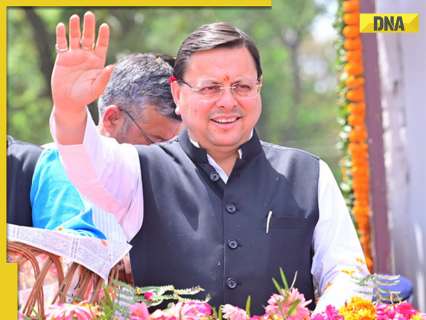
In Nainital district, Nawabi Road will be renamed Atal Marg, and the road from Panchakki to ITI will be named Guru Golwalkar Marg, the announcement said. In Udham Singh Nagar, the Sultanpur Patti municipal council will be renamed Kaushalya Puri, it added.
Trump says he’ll be ‘kind’ on tariffs amid rollercoaster for global stocks
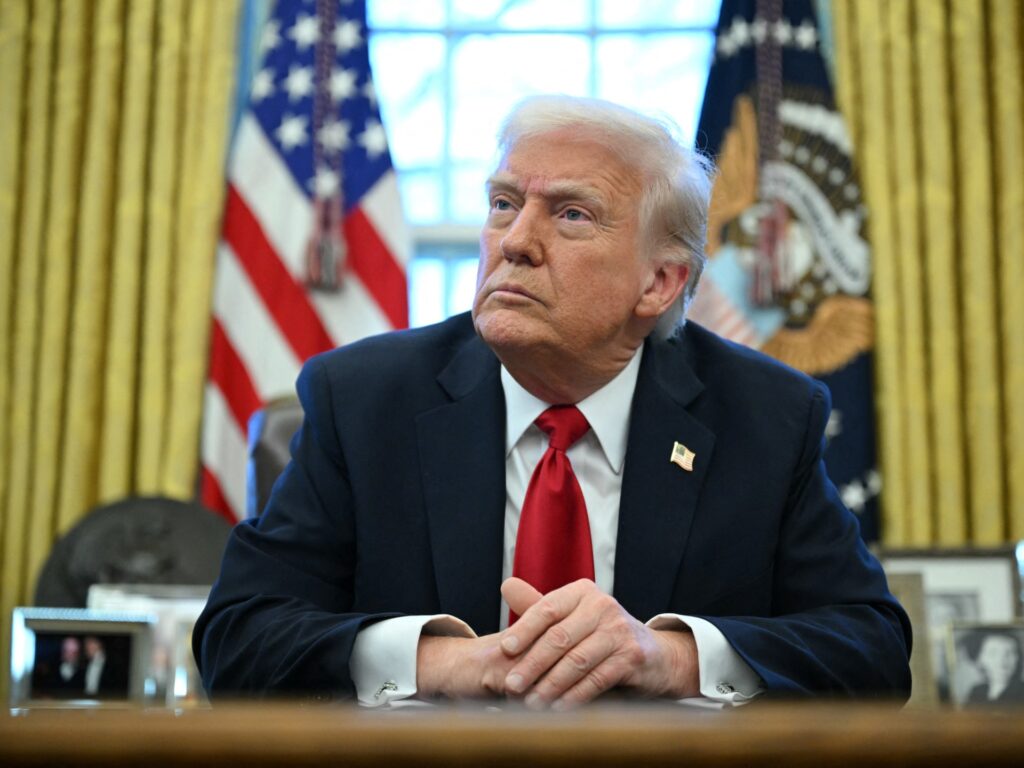
United States President Donald Trump has said his long-awaited reciprocal tariffs will be lower than what other countries charge as uncertainty over his biggest trade announcement yet continues to roil global stocks. Speaking at the White House on Monday, Trump said the tariffs he is preparing to announce on Wednesday will be “nicer” than the trade policies of US trading partners. “We are going to be very nice by comparison to what they were. The numbers will be lower than what they have been charging us, and in some cases, maybe substantially lower,” Trump told reporters at the Oval Office. “Relatively speaking, we’re going to be very kind,” Trump said. Repeating his regular talking point that the US has been taken advantage of by its trading partners, Trump said the measures would bring “tremendous wealth back to our country”. “It’s really, in a sense, a rebirth of our country,” he said. Trump’s remarks came a day after he clarified that the tariffs would apply to “all countries”, pouring cold water on hopes that the measures might only target countries responsible for the bulk of the US trade deficit. Advertisement “Just hours out from his big announcement, Trump and his team continue to give conflicting and inconsistent signals of what to expect,” Deborah Elms, the head of trade policy at the Hinrich Foundation in Singapore, told Al Jazeera. “I am taking this latest statement with a grain of salt,” Elms added. “I still expect that tariffs will be applied to almost everyone. With higher levels for those with higher trade deficits and other Trump complaints.” Trump’s April 2 tariff announcement, which he has dubbed “liberation day”, is just the latest in a flurry of trade salvoes launched by the US president in recent weeks. Many of the measures – including 25 percent tariffs on Canada and Mexico, and a 25 percent duty on all auto imports – are set to go into effect this week. Other tariffs – including a 20 percent duty on all Chinese imports and 25 percent duties on aluminium and steel – have been in place since last month. US stocks had a mixed performance on Monday, after equities in Japan, South Korea, Hong Kong and Australia earlier racked up sharp losses. The benchmark S&P 500, which is down nearly 6 percent from the start of March, rose 0.55 percent. The tech-heavy Nasdaq Composite, which is down more than 8 percent, fell 0.14 percent. Asian markets clawed back some losses on Tuesday morning, with Japan’s Nikkei 225, South Korea’s KOSPI, Australia’s ASX200 and Hong Kong’s Hang Seng up by between 0.41 percent and 0.76 percent as of 1:30 GMT. While Trump has talked up his April 2 tariff announcement for weeks, the scope and specifics of his plans have remained vague. Advertisement Though Trump often expressed his support for blanket tariffs during his election campaign, senior officials in his administration have indicated that specific countries are of particular concern. US Treasury Secretary Scott Bessent said last month that the administration was particularly focused on what he termed the “Dirty 15” – the 15 percent of countries deemed to account for the bulk of trade imbalances while imposing steep tariffs and other non-tariff barriers. While Bessent did not mention any countries by name, the US has some of its biggest trade deficits with China, the European Union, Canada, India, Japan, Vietnam and South Korea. Kevin Hassett, the director of Trump’s National Economic Council, suggested last month that officials were particularly looking at 10 to 15 countries that account for the bulk of the US trade deficit. In an interview with Fox News on Sunday, White House trade adviser Peter Navarro said the tariffs could raise $600bn annually, which would imply a rate of about 20 percent, going by US imports valued at about $3 trillion. In a potential clue as to Trump’s next moves, the Office of the US Trade Representative on Monday released a list of policies and regulations in dozens of countries that it considers barriers to trade. The report outlined tariff rates and non-tariff barriers, such as food safety regulations and green energy rules, for China, the EU, Canada, Argentina, Mexico and the United Arab Emirates, among other trade partners. While Trump has argued that his tariffs will boost manufacturing and create jobs in the US, economists have warned that the measures are likely to upend global supply chains and lead to higher prices for consumers. Advertisement The US president’s trade salvoes have stoked tensions with some of Washington’s closest allies, including Canada, Japan and the EU. On Monday, European Central Bank President Christine Lagarde said in an interview with French radio that Europe should “take greater control of our destiny” and a “step towards independence” in the face of Trump’s trade moves. Adblock test (Why?)
Russia-Ukraine war: List of key events, day 1,132
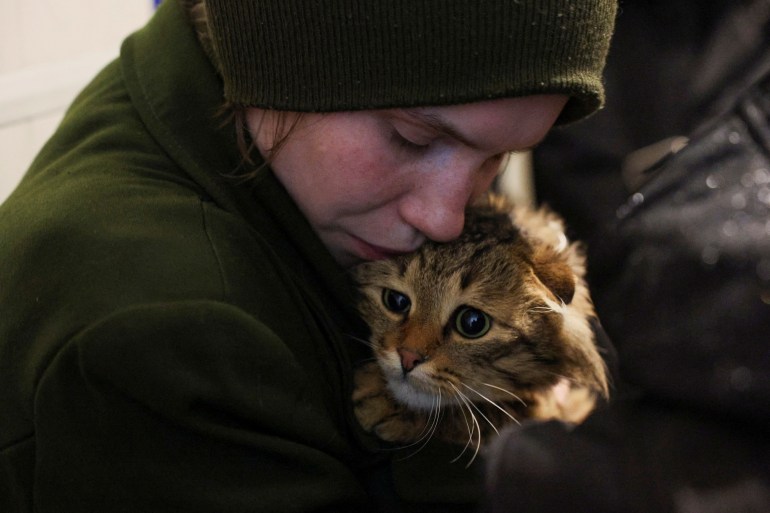
These are the key events on day 1,132 of Russia’s war on Ukraine. These are the key events from Monday, March 31: Fighting Russian forces shelled a front-line settlement in Ukraine’s southeastern Zaporizhia region, killing a 66-year-old woman and wounding five others. The number of people wounded in Russia’s attack on Ukraine’s second-largest city, Kharkiv, has risen to three. Moscow’s Ministry of Defence said Ukraine had attacked energy facilities in Russia’s Bryansk region despite a joint moratorium on striking such infrastructure. Russian President Vladimir Putin ordered 160,000 more Russians to be called up for military service by July 15. Nurse Kateryna, 24, who was evacuated from Ukraine’s eastern front-line city of Kostiantynivka, comforts her cat Abu at a transit centre in the Dnipropetrovsk region, Ukraine March 31, 2025 [Violeta Santos Moura/Reuters] Diplomacy The Kremlin said Russia and the United States were working on ideas for a possible peace settlement in Ukraine and on building bilateral ties despite US President Donald Trump saying he was “p***** off” with Putin. Ukrainian President Volodymyr Zelenskyy called for Russia to be punished for more than 183,000 alleged war crimes documented by Kyiv since Moscow’s full-scale invasion three years ago. The top diplomats from Spain, Germany, France, Italy, the United Kingdom, Poland and the European Union have pledged to redouble their aid to Ukraine and are considering new sanctions on Russia to force it to accept a ceasefire. Chinese Minister of Foreign Affairs Wang Yi, who is in Moscow, said securing peace in Ukraine was “no pain, no gain” and that any ceasefire agreement had to be binding, fair and acceptable for all parties. Wang also welcomed Russia and the US taking the first steps to normalise relations, which he said would be “good for stabilising the balance of power between major powers and inspires optimism in a disappointing international situation”. Moldova has expelled Russian diplomats after accusing embassy staff of helping a convicted pro-Kremlin legislator escape being jailed over illegal political funding. Moscow has denied it sought to interfere in Moldovan politics. US Secretary of State Marco Rubio will travel to Brussels on Wednesday to attend a NATO foreign ministers meeting to discuss security priorities, including defence investment and peace negotiations in Ukraine. Military aid Advertisement Sweden said it would donate 16 billion kronor ($1.6bn) in new military aid to Ukraine, the largest such package from the Nordic country since Russia’s full-scale invasion in 2022. A spokesman for UK Prime Minister Keir Starmer said officials from the United Kingdom, France and Ukraine would meet in the coming days to build on “real momentum” in efforts to boost Kyiv’s security. A Russian Army 2S5 howitzer Giatsint-S fires towards Ukrainian positions in Ukraine [Screenshot from video distributed by Russian Defence Ministry Press Service on Sunday, March 30, 2025, via AP] Adblock test (Why?)
China stages military drills off Taiwan in warning to ‘separatists’
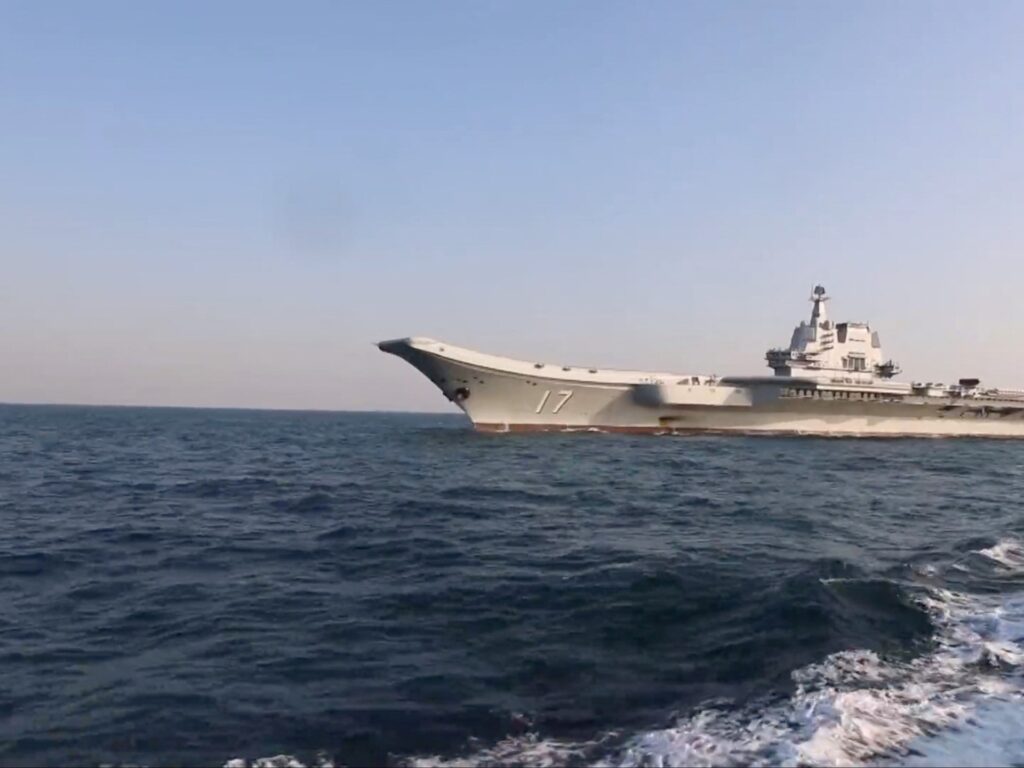
China’s military has launched a new round of military exercises around Taiwan in its latest “warning” to Taipei’s democratic government. The People’s Liberation Army said on Tuesday that the drills served as a “powerful deterrent” to “separatist forces” advocating Taiwanese independence. The exercises are intended to test the “combat readiness” of China’s army, navy, air force, and rocket force and their ability to work together during a joint military operation, the Eastern Theater Command said in a statement. The drills will be carried out from multiple directions around Taiwan and focus on “sea and air combat readiness patrols, seizing comprehensive control, sea and land strikes, and blocking key areas and roads,” the Eastern Theater Command said. China considers Taiwan, a self-ruled democracy, part of its territory and has pledged to take control of the island by force if necessary. Wen-ti Sung, a nonresident fellow with the Atlantic Council’s Global China Hub, told Al Jazeera that the military exercises seemed to be focused on containing and isolating Taiwan. Advertisement “One of the scenarios that analysts have always been concerned about is the prospect of the Chinese military launching a quarantine or an embargo against waterways near Taiwan and how that may enable the PLA to squeeze Taiwan and starve Taiwan and thereby force it into submission,” he said. “This time around, that very maneuver of quarantine of key passageways around Taiwan is one of the main items on the PLA to-do list.” Beijing’s Communist Party views Taiwanese President William Lai Ching-te and his Democratic Progressive Party as “separatists”, and has increasingly staged military exercises in response to their activities. The latest round of military exercises follows a speech made by Lai last month when he called Beijing a “foreign hostile force” and laid out a 17-point plan to curtail its ongoing political infiltration, espionage, and influence operations in Taiwan. The PLA also took the unusual step of releasing multimedia along with the announcement, including a short animation depicting Lai as a “parasite poisoning Taiwan” and then held to a fire with a set of chopsticks. Beijing’s Taiwan Affairs Office blasted Lai in a statement on Monday, and accused the president of stirring up “anti-China sentiment” and intensifying tension in the Taiwan Strait. Despite the uptick in military exercises, Sung told Al Jazeera that Lai’s “cross-strait policy towards China enjoys majority support in Taiwan” and Beijing’s response to his actions are seen as “regrettable.” The latest public opinion polling by the Taiwanese website My Formosa found that public trust in Lai and overall approval rose to 6.2 percent and 7 percent, respectively, following his “17 point speech.” Advertisement Trust in the president now stands at 56.7 percent with his approval rating at 55.6 percent, in the latest polls. The website linked the uptick to Lai’s speech rather than Taiwan’s tumultuous domestic politics. China last held a small round of military exercises near Taiwan in December after Lai visited Taiwan’s few diplomatic allies in the Pacific and transited through Hawaii and Guam, according to the Prospect Foundation, a Taiwan-based think tank. Larger drills were held in May and October 2024 to coincide with Lai’s inauguration and Taiwan’s national day. Beijing has stepped up its use of military drills since August 2022, when then-Speaker of the House Nancy Pelosi made a historic trip to Taiwan as the highest-ranking US official to visit in 25 years. Adblock test (Why?)
Commercial LPG cylinders price reduced by Rs 41 from today; check new rates
Oil companies regularly revise LPG prices based on changes in global crude oil rates and other factors. The prices of domestic LPG cylinders, which are used for household cooking, remain unchanged in this revision.