

Alabama lawmakers go on immigration law blitz as tide turns in favor of tough enforcement

As federal officials renew their focus on strict enforcement of immigration laws and deportations, Alabama lawmakers are advancing their own sweeping changes to the legal landscape. “The previous presidential administration’s open border policies have been absolutely disastrous for the state of Alabama,” Alabama House Speaker Nathaniel Ledbetter, R-Rainsville, said in a statement announcing the House’s legislative entries. Enhanced penalties for illegal immigrants who commit crimes against minors would become law under a bill from state Rep. Chip Brown, R-Bayou la Batre. Across the bay in Baldwin County, GOP state Rep. Jennifer Fidler introduced another bill that keys into efforts made in other states, like Pennsylvania, where lawmakers have attempted to levy wire-transfer remittances for migrants and illegal immigrants to their home countries. MIGRANT CONTROVERSY HITS HEARTLAND AS COUNCIL MEETING BOILS OVER If approved, a 4% fee would be attached to any Western Union or other outbound international money transfer – with the proceeds going to help communities affected by the illegal immigration crisis. “These individuals often come to our state to work in various jobs, some of which are not subject to state income tax,” Fidler said in a statement. “Many send their earnings out of the country and, in some cases, to the cartels that facilitated their crossing.” Similar legislation was attempted in the Keystone State but failed under then-Democratic Gov. Tom Wolf. Ledbetter said Alabama schools’ English-as-Second-Language programs have been “pushed to the brink.” “Housing in rural and urban communities has become even more challenging and local governments have been forced to support people who are either here illegally or protected under politically motivated asylum statuses,” he added. “While President Trump has made great progress in securing the southern border, it is important that we take action to secure Alabama’s border.” In Alabama, cities like Sylacauga – not far from the famed NASCAR Talladega Superspeedway – have dealt firsthand with that crisis. In September, state leaders demanded answers from the Biden administration after a city council hearing erupted over an influx of Haitian migrants many blamed on a procedural olive branch extended to the migrants by then-Department of Homeland Security (DHS) Secretary Alejandro Mayorkas. Ledbetter told Fox News Digital at the time that Sylacauga, Albertville and other affected communities are often stuck “dealing with the disaster” themselves. Instances like those bolster Fidler’s legislation, proponents said. Fidler told the Alabama Political Reporter that many illegal immigrants who come to Alabama send their earnings home and/or take jobs that are not subject to income taxes. NEW FOIA ON MIGRANTS POTENTIALLY AVOIDING THE DRAFT COULD OPEN NEW DEPORTATION PREDICATE: ATTORNEYS About two-thirds of the remittance fee would go to the county where the international transfer originated, while the rest would go toward law enforcement, according to the outlet. The Sylacauga lawmaker who first drew attention to that particular crisis, Rep. Benjamin Robbins, is also putting forward a bill that would mandate the use of E-Verify. Another bill from state Rep. Ernie Yarbrough, R-Moulton, would allow state and county police the ability to hold and transfer illegal immigrants to federal authorities. It also green-lights Attorney General Steve Marshall to report on agencies that do not comply with the new law and directs timely adherence to federal ICE detainer requests. Marshall said he invites state cooperation with the feds, and that he hopes to see an Etowah County detention facility purportedly unused by the Biden administration taken advantage of by DHS under President Donald Trump. “It had been an ICE detention facility for years. The Biden administration, and I think for the reasons of politics alone, weren’t using. And so what we hope also is it will become an opportunity for the federal government to use local sheriff’s departments, particularly those that are equipped to be able to house those that are here unlawfully,” he said. When asked if he expects to see lawsuits crop up if the spate of legislation is passed, Marshall said he is prepared, if so. “I think our legislature is trying to figure out exactly what that lane is, that we can lawfully engage in activities that don’t otherwise invade what has been principally a federal responsibility,” he said. Another bill in the state House will reportedly target how the migrant crisis could affect public school athletic classifications. Rep. Brock Colvin, R-Albertville, announced a plan to exclude certain English Language Learner students from calculations of athletic classifications, as a “significant influx of immigrants” muddy the waters and require “clear regulations and a level playing field.” “This legislation will restore both safety and fairness to high school sports, preserving the integrity of competition for all athletes,” he said in a statement. A January letter from the state’s education chief to school superintendents also offered advice on how to deal with ICE if they were to visit. CLICK HERE TO GET THE FOX NEWS APP “First and foremost, to our knowledge, none of our schools have experienced any disruptions whatsoever on the part of federal or state law enforcement related to this issue. We [the Department of Education] remain in constant contact with law enforcement agencies and will notify local superintendents should any new guidance or directives be issued by law enforcement,” Dr. Eric Mackey wrote, according to FOX-10 Mobile. FOX 10 also recently broadcast viewer video of federal agents conducting a raid in Daphne, on the other side of the George Wallace Tunnel from Mobile. The state Senate also passed a trio of immigration-related bills thus far this month, including one requiring police to collect DNA from illegal immigrants and another targeting migrants or illegal immigrants using out-of-state driver’s licenses. The Yellowhammer State does not allow such people to obtain licenses in the state to begin with.
Jim Jordan details House GOP strategy to back up Trump in court: ‘Everything’s on the table’
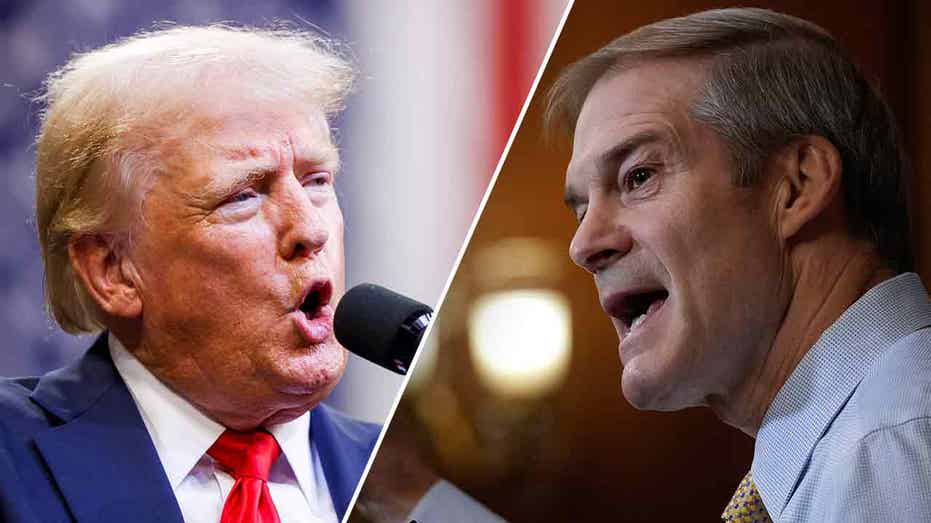
EXCLUSIVE: House Judiciary Chairman Jim Jordan, R-Ohio, said Republican lawmakers are preparing a slate of legislation to rein in the judiciary as the Trump administration battles multiple federal courts over its policies. “Everything’s on the table,” Jordan told Fox News Digital in an interview. “We’re looking to be as helpful as possible.” As one example, Jordan signaled he expected an eventual vote on a bill introduced by Rep. Darrell Issa, R-Calif., who chairs the courts subcommittee of Jordan’s panel, which would limit federal judges’ ability to order nationwide injunctions in response to more localized cases. BLACK CAUCUS CHAIR ACCUSES TRUMP OF ‘PURGE’ OF ‘MINORITY’ FEDERAL WORKERS “We’ve looked at different ways to draft legislation. But we think that makes sense,” Jordan said. “That’s something that we can look at doing and maybe even, you know, try to move fairly quick on that bill.” Another idea Jordan mentioned was taking those nationwide injunctions to stop presidential policies and providing an avenue for an expedited appeal to potentially get the order limited quickly. The Ohio Republican also mentioned reintroducing legislation from the previous Congress, when Democrats controlled the Senate and White House. One such bill by Rep. Russell Fry, R-S.C., would allow presidents or vice presidents involved in lawsuits or other prosecutions to move those cases to federal court, if they were in a lower circuit. But Jordan said the measure would be widened beyond just those two roles. “I think the bill we’re looking at this year would say not just the president, vice president, but ‘federal official,’” he explained. Legislation that passed the House and Senate under former President Joe Biden to expand the number of federal judgeships across the country could also come back up for a vote, Jordan said. The bill, which would have added 66 new judges, passed the Senate in August of last year but was not taken up by the House until December, after President Donald Trump won the election. Unlike the Senate vote, however, the majority of Democrats in the House did not support the bill. Biden vetoed it in January as one of his last major acts as president. “Everyone thinks we need more judges. I think we do. We had legislation that every Democrat in the Senate supported that would allow the presidents over the next 10 years, you know, whoever happens to be president, to appoint those,” Jordan said. “We brought it up, but the Democrats voted against it after President Trump won. So we’ll try to pass that again and see if we can get the votes.” KEY CONSERVATIVE CAUCUS DRAWS RED LINE ON HOUSE BUDGET PLAN Jordan said his staff has been in consistent communication with Speaker Mike Johnson’s office about moving legislation to the House floor. It comes after dozens of activists, left-wing groups and other entities filed myriad lawsuits against Trump’s executive orders during his first few weeks as president. Trump policies from the Department of Government Efficiency (DOGE) to birthright citizenship limitations have been challenged. Trump’s plans to freeze federal aid have also been ordered blocked by federal courts. Fox News Digital reached out to the White House and Johnson’s office for comment.
Musk tells Cabinet that DOGE email was ‘pulse check’ for workers, warns US will ‘go bankrupt’ without action
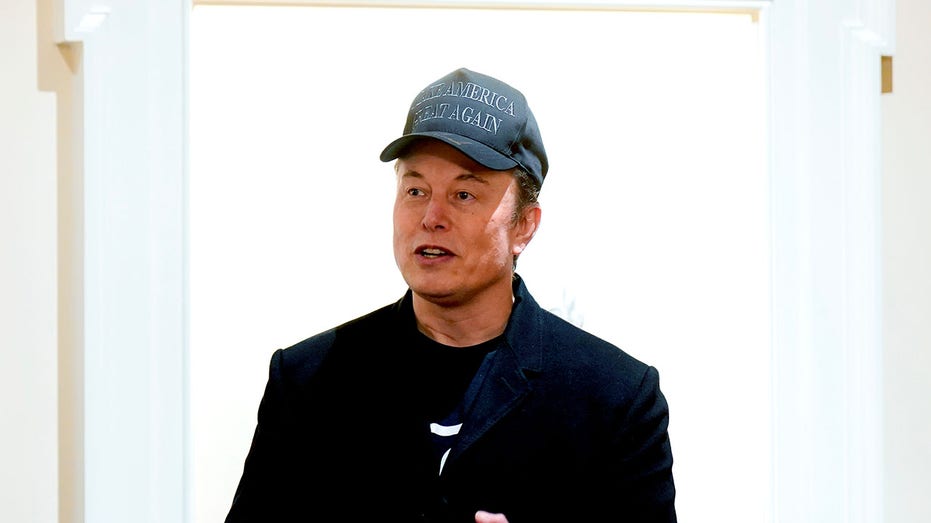
President Donald Trump tapped Elon Musk to speak at the top of the first full Cabinet meeting on Wednesday to discuss the progress made by the Department of Government Efficiency (DOGE). Musk, standing in his signature black suit jacket with a T-shirt underneath, spoke at the meeting in which the media was present and made some clarifications about what he and DOGE are doing, as well as a recent email sent to government employees. “I actually just call myself a humble tech support hero,” Musk stated. “As crazy as it sounds, that is almost a literal description of the work of the DOGE team is doing is helping fix the government computer systems,” Musk said, saying the computer systems are “extremely old” and there are many mistakes in the systems. “So we are actually tech support,” Musk said. “It’s ironic, but it’s true.” HERE ARE THE AGENCIES THAT FOLLOWED MUSK’S DOGE PRODUCTIVITY EMAIL VERDICT – AND THE ONES THAT DIDN’T He also defended last week’s productivity email to federal employees. White House press secretary Karoline Leavitt said Tuesday in a press briefing that more than 1 million federal workers participated in the Musk and the Office of Personnel Management directive to provide a bullet-point list of their work accomplishments from the previous week. “I think that email was perhaps interpreted as a performance review, but actually it was a pulse check review. Do you have a pulse?” Musk said. “And if you have a pulse and two neurons, you could reply to an email.” Musk said the task was “not a high bar” and should be something “anyone could accomplish.” “But what we are trying to get to the bottom of is we think there are a number of people on the government payroll who are dead, which is probably why they can’t respond,” Musk said. “And some people who are not real people … like they’re fictional individuals that are collecting a paycheck … well somebody is collecting paychecks on a fictional individual, so we’re just literally trying to figure out are these people real, are they alive, and can they write email, which I think is a reasonable expectation.” Musk explained that “our goal is not to be capricious or unfair” in how DOGE operates, and that the “overall goal here with the DOGE team is to help address the enormous deficit.” HOUSE DOGE HEARING ERUPTS OVER DEMOCRAT DEEMING TRUMP ‘GRIFTER IN CHIEF,’ REFERRING TO ‘PRESIDENT MUSK’ “We simply cannot sustain a country on $2 trillion deficits,” Musk said, noting the interest on the national debt exceeds Defense Department spending. “We spend a lot on the Defense Department, but we’re spending like $1 trillion on interest. If this continues, the country will go, become de facto bankrupt. It’s not an optional thing.” “It is a central thing that’s the reason I’m here. And taking a lot of flack, and getting a lot of death threats, by the way,” Musk added. “But if we don’t do this, America will go bankrupt. That’s why it has to be done.” Musk said he was confident that DOGE could find $1 trillion in savings, or roughly 15% of the $7 trillion budget, and thanked Cabinet members for their support. “We do need to move quickly,” Musk said. “If we’re to achieve $1 trillion deficit reduction in financial year 2026, it requires saving $4 billion per day every day from now through the end of September. But we can do it. And we will do it.”
Federal judge hints she will continue blocking Trump from firing head of whistleblower protection agency
A federal judge hinted Wednesday that she may extend a temporary restraining order which has kept Hampton Dellinger, the head of the Office of Special Counsel, in his job after President Donald Trump announced his termination earlier this month. U.S. District Court Judge Amy Berman Jackson called the matter “an extraordinarily difficult constitutional issue” during a Wednesday hearing before telling lawyers for Dellinger and the government that she will take the matter under advisement. Jackson issued the temporary restraining order 14 days ago, meaning she must act by Wednesday evening to extend the order. Earlier this month, liberal Supreme Court justices Sonia Sotomayor and Ketanji Brown Jackson voted to outright deny the administration’s request to approve the firing. Conservative justices Neil Gorsuch and Samuel Alito dissented, saying the lower court overstepped. They also cast doubt on whether courts have the authority to restore to office someone the president has fired. While acknowledging that some officials appointed by the president have contested their removal, Gorsuch wrote in his opinion that “those officials have generally sought remedies like backpay, not injunctive relief like reinstatement.” HOUSE DEMS ORGANIZE RAPID RESPONSE TASK FORCE AND LITIGATION GROUP TO COMBAT TRUMP AGENDA The dispute over Dellinger is the first legal challenge to reach the Supreme Court after several firings under the Trump administration. FEDERAL JUDGE ORDERS TRUMP ADMIN TO RESTORE PUBLIC HEALTH WEB PAGES Dellinger sued the Trump administration in Washington, D.C., federal court after his Feb. 7 firing. “I am glad to be able to continue my work as an independent government watchdog and whistleblower advocate,” Dellinger said in a statement after Friday’s proceedings. “I am grateful to the judges and justices who have concluded that I should be allowed to remain on the job while the courts decide whether my office can retain a measure of independence from direct partisan and political control.” He has argued that, by law, he can only be dismissed from his position for job performance problems, which were not cited in an email dismissing him from his post. Trump began his second term in the White House with a flurry of executive orders and directives that have since been targeted by a flood of legal challenges. Since Jan. 20, dozens of lawsuits have been filed over the administration’s actions, including the president’s birthright citizenship order, immigration policies, federal funding freezes, federal employee buyouts, Elon Musk’s Department of Government Efficiency and legal action against FBI and DOJ employees. Fox News’ Louis Casiano contributed to this report.
Trump’s latest moves signals most ‘hawkish’ approach on China yet: expert
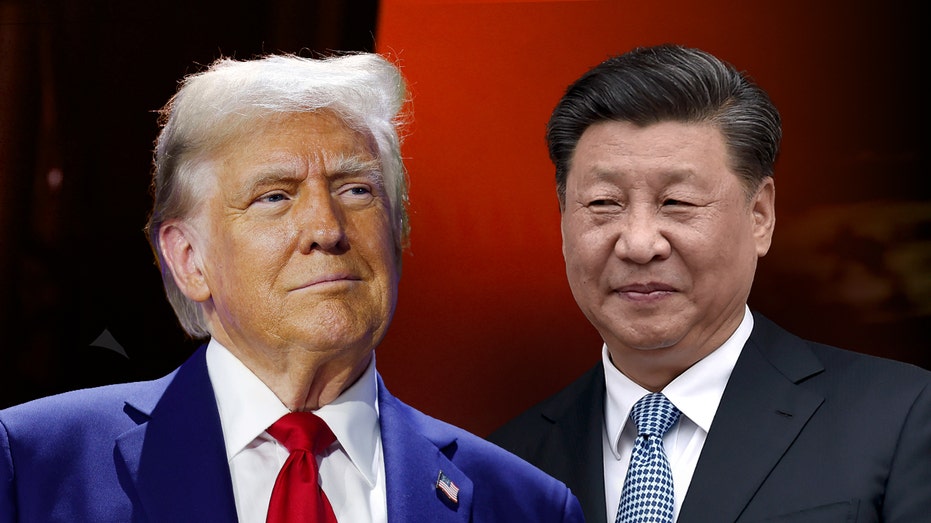
President Donald Trump’s latest move to restrict Chinese investment in strategic areas shows the president may be even more aggressive than ever toward the U.S. rival in his second term. “Although it will take time for the necessary agency and regulatory actions necessary to implement the policy, Trump 2.0 is taking an even more hawkish approach to China as he did in his first term,” Larry Ward, a national security law expert and current partner at the international law firm Dorsey & Whitney, told Fox News Digital. The comments come after Trump signed a memorandum last week that directed the Committee on Foreign Investment in the United States (CFIUS) that aims to both promote foreign investment from some countries while restricting investment from adversaries such as China, protecting U.S. national security interests. “The Committee on Foreign Investment in the United States (CFIUS) will be used to restrict Chinese investments in strategic U.S. sectors like technology, critical infrastructure, healthcare, agriculture, energy, raw materials, and others,” reads a fact sheet about the memorandum released by the White House last week. TAIWAN DISPATCHES NAVY, AIR FORCE AFTER CHINA LAUNCHES LIVE-FIRE DRILLS WITH NO WARNING The memorandum, dubbed the National Security Presidential Memorandum (NSPM), specifically singles out China for “exploiting our capital and ingenuity to fund and modernize their military, intelligence, and security operations, posing direct threats to United States security with weapons of mass destruction, cyber warfare, and more,” according to the White House release. “Chinese hackers have repeatedly targeted U.S. entities, including recently breaching the Treasury Department’s CFIUS office, the entity responsible for reviewing foreign investments for national security risks,” the release adds. While Trump has in the past imposed tariffs on China, Ward argued that the president’s new policy is a further step in aggressively responding to the threat posed by China. “This is very different from tariffs. It’s different from trade concerns. Foreign investment is an issue that potentially impacts national security,” Ward said. Ward noted the example of the social media application TikTok, which has famously been at the center of a debate about protecting Americans from potentially being targeted by China. TRUMP MUST DUMP ‘ONE CHINA’ POLICY AND RECOGNIZE ‘FREE’ TAIWAN, HOUSE REPUBLICANS SAY “TikTok initially went through the CPA process and was examined on a national security basis, and then the determination was made that there were national security concerns,” Ward said. Ward noted that Chinese investment in certain sectors has faced restrictions for years, but Trump’s move makes clear that such restrictions are likely to expand beyond those that investors have traditionally seen. “So you look at sectors like semiconductors, the AI space increasingly is a tech sector that has been a general focus,” Ward said. “But certainly this policy again puts out in front that, yes, certainly as to those sensitive industry sectors, we we are going to be very stringent when it comes to Chinese investment, but also we’re going to expand into other industry sectors that maybe haven’t been sort of front and center over the last five, 10 years.” Responding to Trump’s move, the Chinese commerce ministry accused the U.S. of “politicizing” and “weaponizing” economic issues, according to a report from Reuters, adding that it would continue to closely monitor the situation to defend its interests. Nevertheless, Ward believes Trump’s memorandum signals that the president is more committed than ever to combating Chinese threats to U.S. security. “The biggest thing about this policy is that President Trump is not afraid to say that really the threat here is China,” Ward said. “Everybody that sort of works in this space knows that, but it was the elephant in the room, right? People sort of weren’t willing to speak about it publicly. And President Trump has really come out and said through this policy, yeah, China’s the concern.”
Trump: Environmental Protection Agency eyeing to cut 65% of its staffers
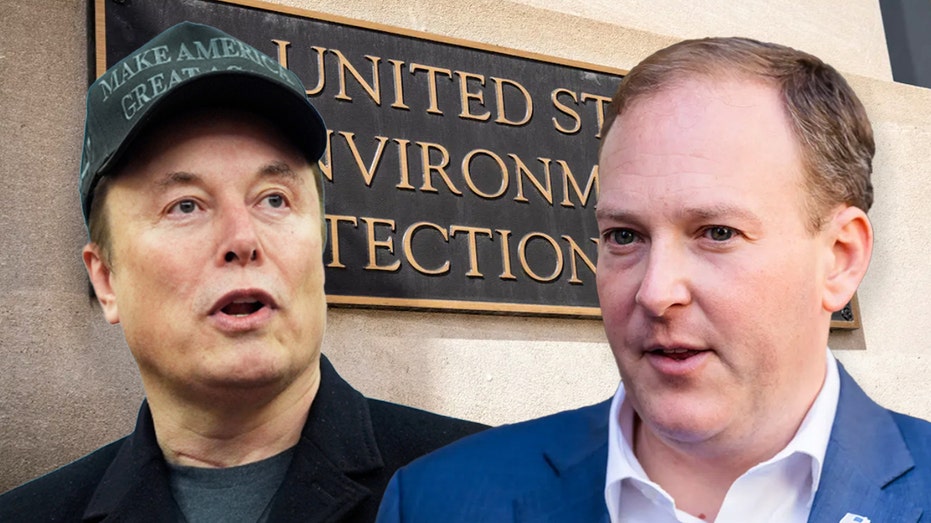
President Donald Trump signaled Wednesday that the Environmental Protection Agency (EPA) might be the next agency on the chopping block as his administration continues to unveil new cuts to the federal government. Trump told reporters Wednesday during the first meeting with his Cabinet that Environmental Protection Agency Administrator Lee Zeldin is eyeing cutting 65% of federal employees from the agency. “I spoke with Lee Zeldin, and he thinks he’s going to be cutting 65 or so percent of the people from Environmental, and we’re going to speed up the process too at the same time,” Trump said. “He had a lot of people that weren’t doing their job, they were just obstructionists, and a lot of people that didn’t exist.” TRUMP ADMIN TO DIRECT AGENCY HEADS TO PREP FOR ‘LARGE-SCALE REDUCTIONS IN FORCE,’ REORGANIZATION BY MARCH 13 Trump also suggested that the Department of Education could also face steep cuts as he renewed calls to move education back to the states. Trump historically has signaled he is considering shuttering the agency entirely through an executive order, although Article II of the Constitution stipulates Congressional approval is required to entirely eliminate a federal agency. “We’re cutting down government … we’re bloated, we’re sloppy,” Trump said Wednesday. The EPA and White House press office did not immediately respond to a request for comment from Fox News Digital. Trump’s remarks come as his administration and the newly created Department of Governmental Efficiency (DOGE) led by SpaceX and Tesla CEO Elon Musk are seeking to dramatically shrink the size of the federal government and workforce. The Office of Management and Budget (OMB) Director Russell Vought and acting Director of the Office of Personnel Management (OPM) Charles Ezell issued a memo on Wednesday directing agencies to brace themselves for “large-scale reductions in force” and establish downsizing plans by mid-March. Additionally, DOGE has been tasked with eliminating government spending, waste and streamlining efficiency and operations, and Trump said Saturday he wanted to see DOGE take an even more aggressive approach moving forward. HERE ARE THE AGENCIES THAT FOLLOWED MUSK’S DOGE PRODUCTIVITY EMAIL VERDICT – AND THE ONES THAT DIDN’T Musk, who said Wednesday that the U.S. will “go bankrupt” without DOGE cuts, has launched several initiatives to drastically cut the federal workforce. For example, Musk requested all federal workers respond to a personal productivity email — that he described Wednesday as a “pulse check review” — the Office of Personnel and Management (OPM) sent out by Monday at 11:59 p.m. listing five things they accomplished the previous week. Musk warned that those who failed to comply would lose their jobs. While some agencies instructed their staffers to ignore the email, Musk said Wednesday another email would go out as DOGE seeks to eliminate people who are on the government payroll but don’t exist. Likewise, Musk said Wednesday that DOGE is seeking to preserve jobs for everyone who is an essential worker and is performing well, but warned that those who aren’t could lose employment. The White House said Tuesday that one million federal workers did comply with Musk’s productivity email request and that employees should look to their individual agency for guidance on how to proceed.
Senate confirms Trump nominee Jamieson Greer as US trade representative
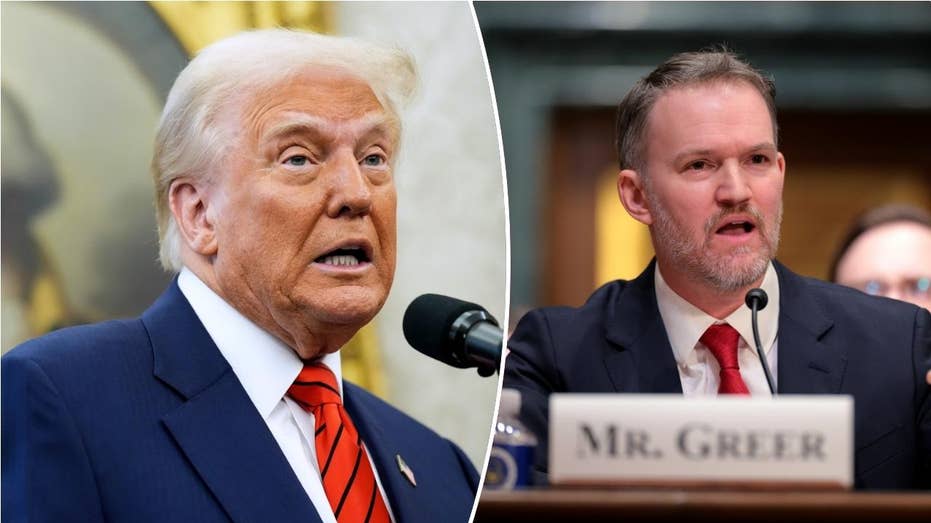
The Senate Wednesday afternoon confirmed President Donald Trump’s nominee for U.S. trade representative (USTR), Jamieson Greer. The vote was 56-43. Greer, who previously served as chief of staff to former USTR Robert Lighthizer during Trump’s first term, has been credited with assisting in imposing tariffs on China and renegotiating the trade agreement with Canada and Mexico during the first administration. He is also a lawyer and Air Force judge advocate general’s corps veteran with one deployment to Iraq. The Senate Finance Committee advanced his nomination with a 15-12 vote in early February despite some Democratic concerns about his support for President Trump’s trade agenda. TRUMP US TRADE REP PICK JAMIESON GREER ADVANCES OUT OF SENATE FINANCE COMMITTEE Greer’s confirmation comes on the heels of Trump’s promise to impose tariffs on Mexico, China and Canada. TRADE REPRESENTATIVE NOMINEE DEFENDS TRUMP TARIFFS IN COMMITTEE HEARING Greer will be responsible for pursuing U.S.-international trade agreements that align with President Trump’s agenda to support American jobs and bolster supply chain resilience, which includes boosting domestic manufacturing and industrial jobs and diversifying sources for essential goods and reducing dependence on foreign suppliers. Greer also noted he would seek to balance U.S. trade with countries like Vietnam, which has a trade surplus in the country, to “have better reciprocity.”
Bipartisan bill promises more resources at ports to fight fentanyl smuggling, speed up wait times
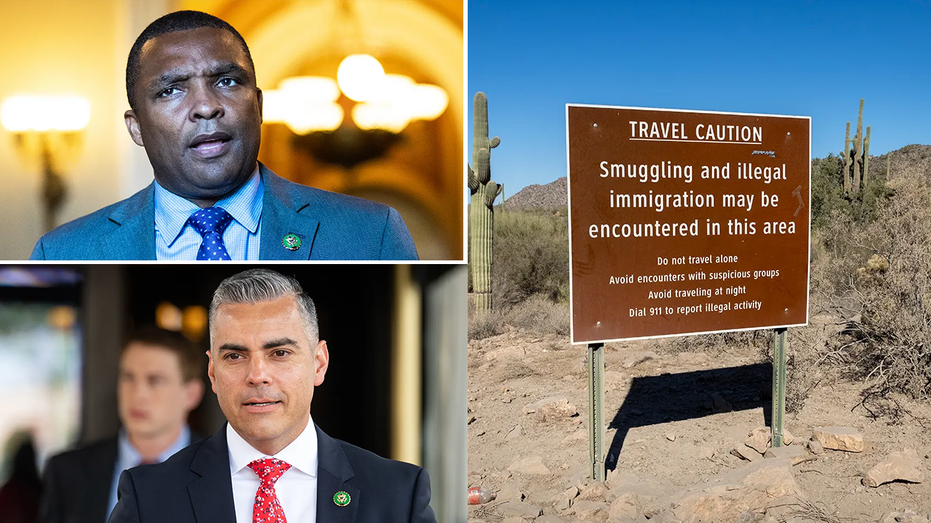
As drug smuggling attempts persist at ports of entry along the southern border, a bipartisan duo in the House of Representatives is proposing legislation to make it easier for U.S. Customs and Border Protection agents to do their jobs. H.R. 1924, the Border Enforcement, Security, and Trade (BEST) Facilitation Act, would make sure image technicians and supervisors are hired at the ports to more closely examine cargo scans, a policy that proponents believe would speed up wait times and make it easier to catch drugs like fentanyl from heading into the U.S. The goal is to create a specific role for scanning to make it easier on already strained agents. “The majority of the fentanyl that is intercepted is at the ports of entry because of the technology that we have,” Rep. Juan Ciscomani, R-Ariz., who drafted H.R. 1924, told Fox News Digital. “Also because of the way that fentanyl looks and the way it gets transported, which are small pills and they can fit pretty much anywhere.” MEXICAN DRUG CARTEL LEADER EXTRADITED TO THE US TO FACE FEDERAL DRUG TRAFFICKING CHARGES “Cars are taken apart and rebuilt around the fentanyl there. So when you’ve got these kinds of training positions, that enhances the security at the port of entry,” the Arizona Republican continued, adding that the legislation comes from an idea floated by authorities on the ground. Much of the known drug trafficking done across the border is through the ports. The majority of convictions in recent years for smuggling fentanyl specifically have been American citizens, according to the U.S. Sentencing Commission. “Through this kind of scanning process where goods are flowing back and forth, we can prevent the crossing of illegal drugs and also speed up the process of the legal goods coming in,” Ciscomani said. He also noted that the legislation could make certain ports optimal for increasing trade and reduce wait times, which could be hours. BLUE STATE SHERIFF UNLEASHES ON ‘UN-AMERICAN’ SANCTUARY LAWS, MAKES SPECIAL OFFER TO HOMAN The influx of migrants during the Biden administration put a strain on resources at the ports, which even led to longer lines as authorities were also trying to handle the wave of people crossing into the nation illegally. Despite the obstacles, CBP still seized over 21,000 pounds of fentanyl and over 158,000 pounds of meth along the southern border in fiscal year 2024 alone, according to the agency’s data. “When I think about Eastern North Carolina and so many families being devastated in particular by the fentanyl crisis, we have to do something. We have to take urgent steps. We have to, you know, put aside the partisan politics because this is hitting home literally. So when I went to the border, taking three trips to the border, and in particular the Tucson sector,” Rep. Don Davis, D-N.C., who’s co-sponsoring the legislation, told Fox News Digital. “They’re gonna be able to do more inspections, and I believe that this is a pathway of actually saving lives,” Davis added. DHS SEC NOEM DOUBLES DOWN ON CALLS FOR ILLEGAL MIGRANTS TO SELF-DEPORT, ANNOUNCES ENFORCEMENT OF REGISTRY H.R. 1294 has been referred to the House Homeland Security Committee, and it comes at a time when the Trump administration is undertaking a full-scale crackdown on the border crisis, which has led to praise from Republicans and backlash from Democrats. Homeland Security Secretary Kristi Noem announced that only 200 people were encountered by CBP trying to illegally cross on Saturday, the lowest daily figure in 15 years. Immigration and Customs Enforcement raids are ongoing across the country, with some even being held at Guantanamo Bay, and troops were sent down to the southern border shortly after President Donald Trump took office last month. CLICK HERE TO DOWNLOAD THE FOX NEWS APP Meanwhile, the overall conversation remains heated on Capitol Hill. Democratic Rep. Janelle Bynum slammed another bill by Ciscomani, the Agent Raul Gonzalez Safety Act, as akin to the Fugitive Slave Act of 1850 for ramping up penalties for those “intentionally fleeing” law enforcement near the border. Yet, the bill ended up passing with some bipartisan support. There have been some bright spots of compromise despite broader disputes on the issue across the nation as well. Arizona Republican lawmakers and Democratic Attorney General Kris Mayes are supporting a state bill that would give permission to local authorities to shoot down drones suspected of being operated by the cartels, which would likely hinder one tool the organizations use to smuggle illicit drugs.
Top blue-state Republican launches comprehensive DOGE effort, with a twist
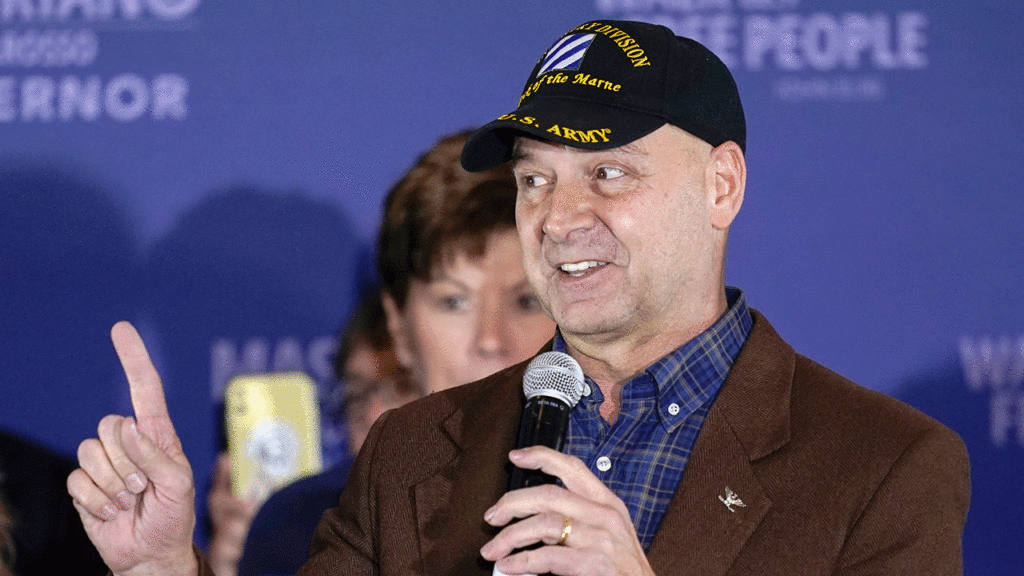
A top Republican in the Pennsylvania legislature is drafting plans for a Department of Government Efficiency modeled after the work of President Donald Trump, Elon Musk and congressional DOGE lawmakers, but with one major difference. State Sen. Doug Mastriano, R-Gettysburg, said in a Tuesday interview his plan entails PA DOGE being a legislative branch project, not that of the executive, which is currently helmed by Democratic Gov. Josh Shapiro. At the federal level, Trump and Musk say they are working from the executive branch to slash government bureaucracy and inefficiency, but Mastriano said Pennsylvania’s legislature is the chief appropriator and therefore the fitting home for PA DOGE. “It doesn’t make any sense why we always defer to the executive branch seeing it for these kinds of decisions,” said Mastriano, the 2022 GOP gubernatorial nominee. LAWMAKERS DRAFT ‘DRAIN THE SWAMP’ ACT “We have oversight of the purse strings. We control the budget. It only makes sense, therefore, that we have a DOGE by the legislature with oversight to make cuts where we can.” State Treasurer Stacy Garrity and Auditor General Timothy DeFoor would, however, have a say in some of its membership, he noted. Mastriano, who ran as the 2022 GOP gubernatorial nominee against Shapiro, said that when Musk unveiled his original DOGE proposal, he thought, “No kidding, we absolutely must have this in Pennsylvania.” The lawmaker, who is also a retired Army colonel and veteran of the Desert Storm Battle of 73 Easting – history’s last major tank battle – said his DOGE committee plan was also inspired by his experiences with the federal military bureaucracy. “I remember in the ’80s when Reagan came in, and there was accountability done when reporters found out the U.S. Air Force had spent $800 on toilet seats for the airplanes and another case of a hammer [reportedly costing hundreds of dollars] that they wanted to buy – so that kind of fraud, waste, abuse has been extant throughout my career.” “And in DoD, we always had a fraud-waste-abuse hotline – then you see what Elon Musk is doing. We need that in Pennsylvania.” DOGE ANNOUNCES MORE THAN $1B IN SAVINGS Mastriano added that if legislation to create PA DOGE is passed, it will be Shapiro’s “ultimate test” of bipartisanship to consider it. In separate remarks to Chambersburg’s 103.7FM, Mastriano quipped that some state cabinet departments are run “like USAID” in that they take in a lot of money and put out very little of value – and would therefore be a prime target of PA DOGE. Mastriano suggested PA DOGE is also the panacea to bloated executive budget proposals the legislature has been handed over the years. Under the proposal, three of PA DOGE’s 10 members would be House lawmakers, three would be senators, the state treasurer would name one member, the auditor general would name one member and two would be civilians. Any ties would be broken by the state treasurer; currently Garrity – a Republican. “This committee will have teeth,” Mastriano said. “If the committee sees fraud, waste and abuse and decides to eliminate elements of the state budget or even departments within the state, they have the power to do so.” Fox News Digital reached out to leaders on the Senate Intergovernmental Operations Committee – which oversees and manages relationships within state government and would be the relevant panel should the DOGE plan come to fruition. Chairman Jarrett Coleman, R-Allentown, told Fox News Digital it is “well past time to examine how state funds are being used.” Coleman said he will support any effort to highlight or minimize government waste. “Oftentimes, I question whether or not elected officials would be so wasteful if it were their own money,” he said. CLICK HERE TO GET THE FOX NEWS APP The chairman, who is a pilot by trade, suggested DOGE could target what he described as a hefty executive branch tab for use of the state plane, which he dubbed “Shapiro-Davis Airlines; Operated by PennDOT.” Clint Barkdoll, a Waynesboro attorney, told NewsTalk 103.7 that he supports the idea of a Keystone DOGE. “We need this at all levels of government, we’re seeing the benefits that it can bring. Obviously, if it’s set up in a way through the General Assembly, they don’t have to accept the recommendations,” Barkdoll said. “But why not have a body empaneled to make recommendations and make it a diverse group? Get some lay-people on there. It doesn’t have to be all elected officials: Get some business people.” The idea of having civilians on the board alongside public officials would offer wider insight into key issues and considerations, he said. State Sen. Tina Tartaglione, D-Philadelphia, the ranking member on Coleman’s committee, did not respond to a comment request. Shapiro also declined comment.
Over 150 lawmakers lend support to resistance movement inside Iran as regime’s proxies fall

FIRST ON FOX: A bipartisan group of 151 lawmakers is rallying around a resolution to support the Iranian resistance movement ahead of a hearing with an opposition leader. The resolution, led by Rep. Tom McClintock, R-Calif., expresses support for the Iranian people and their stated desire for a “democratic, secular and non-nuclear” Iran through regime change. “The developments of the past year have left no doubt that the source of terrorism and warmongering in the Middle East region is the theocratic Islamic Republic of Iran,” the resolution reads. It calls out the Iranian regime’s oppressive practices, voices support for the opposition and calls on global leaders to continue imposing sanctions. WORLD BRACES FOR IMPACT OF TRUMP’S ‘MAXIMUM PRESSURE’ SANCTIONS TARGETING IRAN “The efforts of Western countries over the past 45 years to change the behavior of this regime have failed, and the ultimate solution to ending the Iranian regime’s threats is the establishment of a secular, democratic, and pluralistic republic by the Iranian people and resistance.” President Donald Trump has been hesitant to throw U.S. efforts into regime change in Iran. “We can’t get totally involved in all that. We can’t run ourselves, let’s face it,” he told Iranian-American producer Patrick Bet-David in October. The resolution also claimed that in the first four months of Masoud Pezeshkian’s presidency, beginning July 28, 2024, some 500 prisoners, including political prisoners and at least 17 women, were executed, and hand amputations increased. The resolution also expressed support for Maryam Rajavi, president-elect of the National Council of Resistance of Iran (NCRI), a leading resistance group known as MEK to Iranians, and her 10-point plan to bring democracy, secular government and human rights to Iran. The plan, which has the support of 4,000 parliamentarians across the globe, calls for installing NCRI as a provisional government for six months to set up elections and a constituent assembly. It was introduced Wednesday ahead of a 2 p.m. hearing entitled “The Future of Iran” with the Congressional Iran Human Rights and Democracy Caucus, where Rajavi – a top target of Iran’s terror plots and demonization – will give testimony. PRESIDENT TRUMP CAN STOP IRAN’S MARCH TO NUCLEAR WEAPONS: ‘RE-ESTABLISH CREDIBLE MILITARY THREAT’, REPORT SAYS The first Trump administration imposed harsh sanctions to bankrupt Iran but stayed away from messaging campaigns aimed at encouraging Iranian resistance. This time around, opposition supporters say the situation on the ground has changed – the regime is far weaker after Bashar al-Assad was forced out of power in Syria and Israel has decimated its proxies, Hamas and Hezbollah. Protests have again kicked up across the nation and threaten to spread if the financial crisis does not improve. Rajavi, in her opening remarks, will say that the Iranian regime is at its weakest point in decades. “The situation of the Iranian society is explosive. During its 46-year rule, the religious fascism has never been so weak and fragile,” Rajavi is expected to say, according to remarks obtained by Fox News Digital. STATE, TREASURY DEPARTMENTS REIMPOSES ‘MAXIMUM PRESSURE’ SANCTIONS ON IRAN’S OIL TRADE “The mullahs are surrounded from all sides: by a society that is filled with anger and rebellion, by Resistance Units, and by selfless and rebellious youth, because of its bankrupt economy and corruption in the government, particularly after the overthrow of the brutal dictatorship of Assad and the collapse of the regime’s “strategic depth” in the region.” The resolution is sure to rankle Ayatollah Ali Khameni, leader of the current Iranian regime, and supporters of Reza Pahlavi II, whose father ruled Iran in the 1970s, who want to see the younger Pahlavi cede power in Iran and deeply oppose the NCRI. Rajavi will call for the implementation of United Nations snapback sanctions that were eased under the 2015 nuclear deal, putting the regime under the Chapter VII charter of the U.N. as a threat to peace and formally recognizing the resistance’s movement for regime change. She will also pay tribute to two resistance leaders, Behrouz Ehsani and Mehdi Hassani, who have been sentenced to death on charges of “rebellion” and for being members of the MEK. The U.N. has called on Iran to halt their executions. The regime has executed 120,000 on political grounds over the past four decades, according to Rajavi. The hearings come after the Trump administration pushed forward with its promise to return the U.S. to “maximum pressure” sanctions with new crackdowns on Iranian oil tankers. Trump has said he would “love to make a deal” with the nation’s clerical leaders, but Iran has insisted it will not engage in nuclear negotiations while the U.S. is imposing maximum pressure. “Iran’s position regarding nuclear talks is clear, and we will not negotiate under pressure and sanctions,” Iranian Foreign Minister Abbas Araqchi said during a televised joint press conference with his Russian counterpart Sergei Lavrov. “There is no possibility of direct negotiations with the U.S. as long as maximum pressure is being applied in this way.”