

New law clamps down on homeless as blue city advocate admits the ‘frustration’ is justified

A blue California city voted last week to impose a strict ban on camping on public property, including penalties such as fines or jail time for those “causing, permitting, aiding, abetting, or concealing” homeless encampments. While activists argue the ordinance “criminalizes” homelessness, one advocate — who himself once struggled with drug addiction and a period of homelessness — tells Fox News Digital that the Fremont City Council’s actions reflect a growing “frustration” with the escalating crisis affecting cities across the state. “This entire ordinance was born out of frustration regarding their inability to mitigate the homeless issue, and because politicians are afraid or lack political will, in many cases, to make the hard choices that need to be made,” Tom Wolf, founder of the San Francisco Bay-area nonprofit Pacific Alliance for Prevention and Recovery, told Fox News Digital in an interview. Wolf, who himself was homeless for six months while addicted to fentanyl and heroin in 2018, said that Fremont’s ordinance is “not criminalizing homelessness,” but rather it is “criminalizing the behaviors that are exhibited by people who happen to be experiencing homelessness and are also struggling with drug addiction.” CALIFORNIA COMMUNITY ALARMED BY HOMELESS CAMPS FOUND IN UNDERGROUND CAVES: ‘HUGE SAFETY HAZARD’ “It’s not as controversial as people and the media are blowing it up to be controversial, because it’s a departure from the approach that we’ve been taking for the last eight to 10 years in California, which is, ‘Oh, everyone just needs a home,’ Wolf said, referring to the state’s “Housing First” model adopted several years ago, which prioritizes providing shelter and temporary housing units to homeless without requiring sobriety or wraparound drug addiction services to people. The Fremont City Council voted 6-1 last week in a lengthy session in favor of banning camping on any public property “including any street, sidewalk, park, open space, waterway, or banks of a waterway or any private property not designated and equipped for such camping” as well as “any land designated as a high fire risk area.” Fremont is roughly 40 miles south of San Francisco. The new ordinance states that anyone “causing, permitting, aiding, abetting or concealing” encampments shall be guilty of a misdemeanor and subjected to either a $1000 fine or up to six months in jail. Violators may also be subjected to a temporary seizure of personal property. CALIFORNIA CITY PASSES SWEEPING HOMELESS ENCAMPMENT BAN ON ALL PUBLIC PROPERTY “Fremont is not a conservative city,” conservative think tank California Policy Center expert Edward Ring told Fox News Digital. “It’s part of one of the most liberal regions in the country. So, the fact that they’re doing this, it’s not a reflection of some sort of harsh conservative mentality.” “It’s a bipartisan conclusion, a non-partisan conclusion, that the city council has come to, and they’ve apparently decided that just a ban isn’t going to be sufficient, because there are so many groups associated with the homeless nowadays that call themselves advocates for the homeless,” Ring added. “But what they’re basically doing by aggressively protecting the right of people to camp in public spaces, for example, is perpetuating homelessness,” he said. These groups include nonprofits and homeless outreach workers who offer services to homeless people. These services include optional substance abuse treatment, housing, temporary shelter, tents, and even “safe” supplies for drug use, in line with the state-sanctioned “Harm Reduction” model, which focuses on preventing overdoses and infections rather than stopping drug use altogether. Wolf said he takes issue with much of the Harm Reduction’s strategy because “people are going to still continue to use because they’re out there on the street addicted to drugs.” As of the 2024 Point-in-Time (PIT) Count, which provides a snapshot of homelessness on a single night completed annually, Fremont reported 612 homeless individuals, marking a 21% decrease from the previous count in 2022. California’s homeless population was estimated at approximately 187,000 after last year’s PIT count, making it the highest in the nation for unsheltered homeless people. The 2025 count is currently underway across the state’s cities. CALIFORNIA PLANS TO CONTINUE ALLOWING TRANS ATHLETES TO COMPETE IN GIRLS’ SPORTS DESPITE TRUMP EXECUTIVE ORDER “The purpose of this chapter is to maintain streets, parks and other public and private areas within the city in a clean, sanitary and accessible condition and to adequately protect the health, safety and public welfare of the community, while recognizing that, subject to reasonable conditions, camping and camp facilities associated with special events can be beneficial to the cultural and educational climate in the city,” the ordinance reads. It continued, “The use of streets and public areas within the city for camping purposes or for storage of personal property interferes with the rights of the public to use these areas for which they were intended. Such activity can constitute a public health and safety hazard that adversely impacts residential neighborhoods and commercial areas. Camping without the consent of the owner and proper sanitary measures adversely affects private property rights, public health, safety, and welfare of the city. Nothing in this chapter is intended to interfere with otherwise lawful and ordinary uses of public or private property.” CLICK HERE TO GET THE FOX NEWS APP Beyond California, cities like Washougal, Washington, have also adopted anti-camping restrictions, though Fremont’s is unique due to its penalties. The anti-camping law comes after the U.S. Supreme Court ruled last year that local governments have the authority to ban camping on public property, allowing cities to clear homeless encampments. The decision came after the Court declined to review a lower court ruling that upheld Boise, Idaho’s ban on camping, effectively setting a precedent for other municipalities to follow. Fox News Digital’s Lindsay Kornick contributed to this report.
Who is Delhi’s ‘Lady Don’ Zoya Khan? Had lavish lifestyle, managed husband’s gang similar to Dawood Ibrahim’s sister, now arrested for…

Zoya, 33, had been on the police radar for years but had always managed to evade arrest
Kerala Lottery Result February 21 LIVE Updates: NIRMAL NR 420 Friday winner list shortly; first prize Rs 70 Lakhs

Kerala Lottery Result February 21 LIVE Updates: The NIRMAL NR 420 Friday is one of Kerala’s most popular weekly draws, offering significant prizes while supporting the state government’s various welfare initiatives. Participants can check their winning numbers on the official Kerala Lottery website
Federal judge orders Trump admin to comply with previous order to lift foreign aid freeze
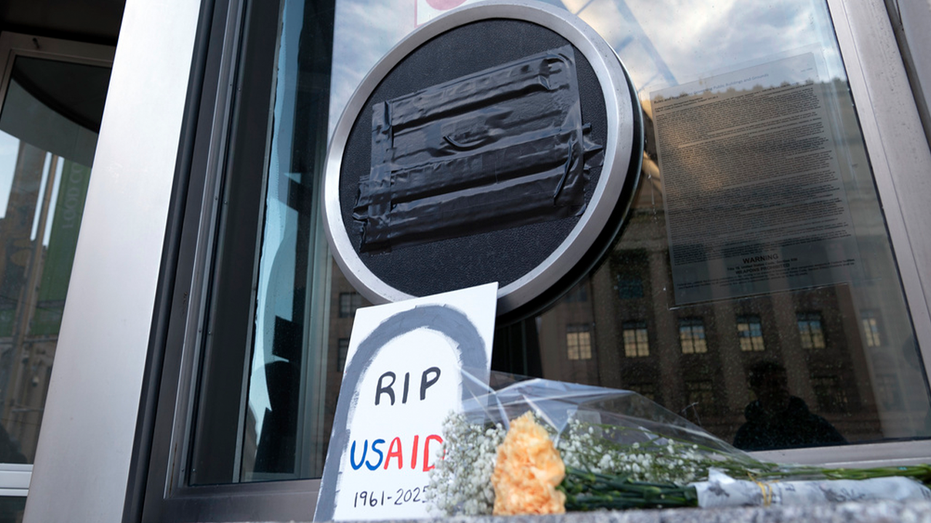
A federal judge on Thursday ordered Trump administration officials to comply with his previous order to temporarily lift a freeze on nearly all foreign aid, temporarily restoring it to programs worldwide. In his order, Judge Amir H. Ali, a Biden appointee, said Trump administration officials had used his Feb. 13 order to temporarily lift the freeze on foreign aid to instead “come up with a new, post-hoc rationalization for the en masse suspension” of funding. Despite the judge’s order to the contrary, USAID Deputy Secretary Pete Marocco, a Trump appointee, and other top officials had “continued their blanket suspension of funds,” Ali said. Still, the Washington, D.C. district court judge declined a request by nonprofit groups doing business with the U.S. Agency for International Development to find Trump administration officials in contempt of his order. TRUMP’S DOGE STAYS ON TRACK AFTER PAIR OF FEDERAL JUDGE RULINGS Ali’s ruling comes in a lawsuit by the nonprofit groups challenging the Trump administration’s month-old cutoff of foreign assistance through USAID and the State Department, which shut down $60 billion in annual aid and development programs overseas almost overnight. Even after Ali’s order, USAID staffers and contractors say the State Department and USAID still have not restored payments, even on hundreds of millions of dollars already owed by the government. Marocco and other administration officials defended the nonpayment in written arguments to the judge this week. They contended that they could lawfully stop or terminate payments under thousands of contracts without violating the judge’s order. The Trump administration says it is reviewing all State Department and USAID foreign assistance programs on a case-by-case basis to see which ones meet the Trump administration’s agenda. TRUMP’S DOGE STAYS ON TRACK AFTER PAIR OF FEDERAL JUDGE RULINGS Aid organizations, current and former USAID staffers in interviews and court affidavits, say the funding freeze and deep Trump administration purges of USAID staffers have brought U.S. foreign assistance globally to a halt, forced thousands of layoffs and is driving government partners to financial collapse. Led by SpaceX CEO Elon Musk’s efforts at the newly formed Department of Government Efficiency (DOGE), the department has been what Musk characterizes as a crusade to cut government spending and downside the federal workforce. DOGE so far claims to have saved some $55 billion via cuts to USAID, the Department of Education and the Consumer Financial Protection Bureau. But many of DOGE’s cost-cutting efforts have brought legal challenges.
Musk vows to ‘fix’ X after polls show high support for Ukraine’s Zelenskyy

Elon Musk has pledged to “fix” X’s fact-checking tool in response to opinion polling that contradicts United States President Donald Trump’s claim that Ukrainian President Volodymyr Zelenskyy is deeply unpopular in his country. Rowing in behind Trump’s attacks on Zelenskyy on Thursday, Musk claimed that his social media platform’s “community notes” feature was being “gamed” by governments and traditional media. Musk made the claim while reposting an anonymous right-wing X account that cast doubt on the credibility of a Ukrainian polling outfit over its work with the US Agency for International Development (USAID). “If Zelensky was actually loved by the people of Ukraine, he would hold an election. He knows he would lose in a landslide, despite having seized control of ALL Ukrainian media, so he canceled the election,” Musk said on X, while sharing the unsubstantiated claim that US intelligence agencies estimate Zelenskyy’s approval to be just 4 percent. “In reality, he is despised by the people of Ukraine, which is why he has refused to hold an election,” Musk said, referring to Zelenskyy’s decision to suspend elections after declaring martial law in the wake of Moscow’s 2022 invasion. Advertisement “I challenge Zelensky to hold an election and refute this. He will not.” The Tesla and SpaceX CEO, who is one of Trump’s most powerful allies as the head of the Department of Government Efficiency (DOGE), did not provide evidence of manipulation of X’s community notes system, which attaches explanatory notes to contentious posts based on the consensus of users. Musk, who later on Thursday appeared at the Conservative Political Action Conference waving a chainsaw in homage to Argentina’s cost-cutting president Javier Milei, also did not substantiate a claim that widely reported polling by the Kyiv International Institute of Sociology was “Zelensky-controlled” and “not credible.” Lucas Graves, a journalism professor at the University of Wisconsin-Madison who researches misinformation and disinformation, described Musk’s comments as “extremely concerning”. “As is often the case with this kind of rhetoric, the accusations are a guide to what we have to look out for from the accuser – a world where private platforms like X can be systematically gamed to favour the political interests and alliances of their owners,” Graves told Al Jazeera. “A well-designed community notes system can be a useful check on misinformation. But that requires transparent rules that make it easy for users to surface reliable information, and that can’t be tweaked at the whim of one person.” John Wihbey, an associate professor of media innovation and technology at Northeastern University in Canada, said an inescapable feature of crowdsourced fact-checking models is that a platform’s owner or management may not like the results. Advertisement “That is part of the bargain you make when you implement these kinds of mechanisms,” Wihbey told Al Jazeera. “Overall, I think community notes is a good approach, but it should be blended with other tools. X is now relying on it too much, and it is ironic that leadership is now complaining that it isn’t working well.” Musk’s broadside against Zelenskyy comes as the Ukrainian leader and the Trump administration have been engaged in a war of words over Washington’s efforts to reach a deal with Russia to end the war in Ukraine. On Wednesday, Trump accused Zelenskyy of being a “dictator” after the Ukrainian leader rejected his claims that Kyiv was to blame for the war and raised concerns about being sidelined in Washington’s negotiations with Moscow. Trump also claimed that Zelenskyy was “very low” in the polls in his country, echoing an earlier claim that he had an approval rating of just 4 percent. In an opinion poll published by the Kyiv International Institute of Sociology on Wednesday, 57 percent of respondents said they trusted Zelenskyy, up five points from December. The Ukrainian leader’s popularity, however, has waned as the war has gone on, dropping from 90 percent in March 2022 to 64 percent in February last year, according to the institute’s polling. Since taking control of X, formerly known as Twitter, in 2022, Musk has been heavily criticised for allowing, and in some cases promoting, misinformation on the platform. An analysis published by the nonprofit Center for Countering Digital Hate found that nearly three-quarters of a sample of false or misleading posts about the 2024 US elections did not display accurate notes correcting the record. Advertisement “I think there’s a strong chance that X/Twitter becomes a propaganda arm for Musk/Trump – and, in fact, it’s already happening,” Gordon Pennycook, a professor of psychology at Cornell University who studies misinformation, told Al Jazeera. “I think Musk wants to reform community notes because he doesn’t like being corrected, as is typical for authoritarian oligarchs.” Adblock test (Why?)
Russia-Ukraine war: List of key events – day 1,093

Here are the key developments on the 1,093rd day of Russia’s full-scale invasion of Ukraine. Here is the situation on Friday, February 21: Fighting Ukraine’s air force shot down 87 drones, with 70 more probably lost to electronic countermeasures, the country’s military said, as it responded to an overnight attack in which Russia launched 160 drones. Two ballistic missiles also targeted Odesa. Russian forces took back more than 800 square kilometres (309 square miles) from Ukrainian troops in western Russia’s Kursk region, a Russian general told the Krasnaya Zvezda newspaper. The area is about 64 percent of the land initially seized by Kyiv, the newspaper claimed. Moscow’s forces attacked Ukraine’s energy infrastructure in the southern Odesa region for a second time, Kyiv’s energy firm DTEK said. The first attack left one of Odesa’s districts without heating and power. Ukraine’s military said Russian forces launched 161 drones in an overnight attack on Ukraine, out of which 80 were shot down and 78 were “lost”. Moscow also attacked the northeastern Kharkiv region with 14 missiles. Advertisement Politics & Diplomacy Russian Central Bank’s Governor Elvira Nabiullina said the bank was not involved in the talks with the United States on lifting sanctions or the freeze on Russia’s foreign country reserves. Kremlin Spokesperson Dmitry Peskov said any plans by the United Kingdom to send troops to Ukraine as part of a potential peacekeeping mission would be unacceptable. Such a move would involve forces from a NATO member state, which would have necessary ramifications for Russia’s security, Peskov said. Russia’s foreign minister has branded such plans a “direct threat”. Peskov said that Russia had agreed to resume dialogue with the US on “all parameters” regarding the war on Ukraine, including prisoner exchanges. He also slammed Ukraine’s President Volodymyr Zelenskyy for his “inadmissible” and “unacceptable” remarks about other heads of state, after Zelenskyy accused US President Donald Trump of living in a Russian-fuelled “disinformation bubble” when it came to Ukraine. White House National Security Adviser Mike Waltz also criticised Zelenskyy’s comments, saying Ukraine needs to “tone it down and take a hard look and sign that deal”, referring to the rare earth minerals that the US now wants for helping Kyiv’s war effort. Ukraine began talks with the International Monetary Fund’s team working on the country’s latest loan programme review, which could unlock about $917m in new funds. Kyrylo Budanov, Ukraine’s military intelligence agency chief, said he believes a ceasefire between Moscow and Kyiv could happen this year. “How long it will be, how effective it will be – is another question,” Budanov added. The Associated Press news agency reported that Zelenskyy and Trump’s special envoy to Ukraine and Russia Keith Kellogg had a meeting in Ukraine, but that a joint news conference scheduled for afterwards was cancelled at the US’s request. However, Zelenskyy said the “detailed” meeting with Kellogg was “good” and “restore[d] hope.” NATO chief Mark Rutte said any European security guarantees for Ukraine under a future peace deal would need to be backed by the US, “not with boots on the ground”, but backup to ensure that the deterrence is there, he said. Despite tension with the US, Zelenskyy said Kyiv was ready to work with Washington to produce a “strong, effective investment and security agreement” when dealing with Russia and a peace deal. “We have proposed the fastest and most constructive way to achieve results. Our team is ready to work 24/7,” Zelenskyy said. China’s Foreign Minister Wang Yi has told his G20 counterparts that a “window for peace” is opening for the Ukraine crisis, days after top US and Russian diplomats met in Saudi Arabia. Advertisement Adblock test (Why?)
Are white Afrikaners at risk in South Africa? Not really, most say
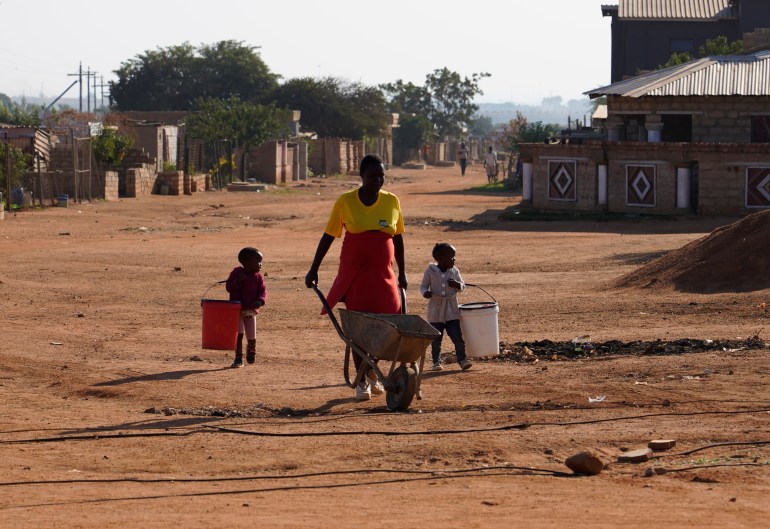
Johannesburg and Pretoria, South Africa – On a rainy Saturday in South Africa’s capital Pretoria, several hundred white Afrikaners gathered outside the embassy of the United States. “President Trump and Elon Musk, please help the farmers chase away the [African National Congress] ANC takeover of South Africa,” read a large banner hoisted above the crowd gathered to “thank” the US president for championing their cause against their government. On February 7, Donald Trump signed an executive order offering asylum to white Afrikaners and cutting aid to South Africa. The US said it made the decision after Pretoria signed a law allowing the government to expropriate land in the public interest under exceptional circumstances and over the genocide case South Africa brought against Israel at the International Court of Justice (ICJ). The minority Afrikaner community are descendants of mainly Dutch colonial settlers who formalised the segregationist system of apartheid in 1948. Under apartheid, whites were legally able to seize land and resources from the majority Black population, who were largely relegated to far-off “Bantustans” (segregated homelands) or overcrowded, ill-equipped townships. Advertisement Although apartheid ended in 1994 when the ANC won the first racially inclusive democratic elections in South Africa, experts said economic apartheid persists with many Black people still cut off from land, resources and opportunities. Data show that 73 percent of privately owned land in South Africa is white-owned despite white people comprising about 7 percent of the population. In corporate South Africa, white individuals occupy 62 percent of top management positions while 17 percent of leadership roles are held by Black managers. Despite this, experts said small groups of white South Africans, emboldened by right-wing lobbying groups, have been championing a narrative in the US in recent years that Afrikaners are the ones under threat. At the rally outside the US embassy, speakers urged attendees to “make South Africa great again,” echoing Trump’s Make America Great Again (MAGA) rhetoric. Other participants spoke of being on an “anti-woke mission”, aligning with broader global narratives surrounding identity and nationalism. Willem Petzer, a well-known Afrikaner commentator and organiser of the event, presented a 26-page memorandum to US officials. It alleged that South African transformation legislation aimed at rectifying the injustices of apartheid is, in fact, discriminatory against the Afrikaner community. The US embassy said it would send the document to Trump. When Petzer took the podium, he was met with enthusiastic applause. He pointed to billionaire Musk’s Starlink satellite network, which provides internet service, alleging that it could not operate in South Africa because “Musk would have to allow the state to expropriate 30 percent of his company in order to do business here”. Advertisement The government has said that is not true and the conflict with Musk’s Starlink is because South African legislation requires companies operating in the country to be 30 percent Black owned to redress past inequalities. Musk has tried to get an exemption from the rule. The South African-born tech billionaire and close Trump adviser is perceived by many as an ally of the Afrikaner cause. He has repeatedly posted his outrage on X against what he claims is unfair treatment of white South Africans – even going as far as claiming a “white genocide” was occurring. President Cyril Ramaphosa cautioned Musk this month against spreading misinformation regarding South Africa in a telephone call. A woman and two children make their way to a water tank to collect water in the Hammanskraal township in Pretoria, South Africa. Decades after the end of apartheid, Black South Africans still have the least access to land and resources [Denis Farrell/AP] ‘I am quite privileged’ For many South Africans, the gathering outside the US embassy evoked memories of apartheid nostalgia as participants sang “Die Stem”, the national anthem used during the years of racist rule. In the crowd, some supporters held placards that read, “Trump, we are coming,” responding to the offer of refugee status for Afrikaners. However, many would not say whether they would actually take Trump up on the offer. Some experts said the threshold for someone to gain refugee status in the US is not met by Afrikaner landowners. The US Immigration and Nationality Act defines a refugee as someone unable or unwilling to return to their home country due to a well-founded fear of persecution based on race, religion, nationality, membership in a particular social group or political opinion. Advertisement Meanwhile, beyond the rally, most white South Africans seem uninterested in seeking asylum. Many acknowledge they experience privilege not persecution in a democratic South Africa. About 2km (1.2 miles) from the US embassy, the University of Pretoria buzzed with students of all races, many born after apartheid ended 31 years ago. During apartheid, Black students were not allowed to study at the institution. Marissa Jacobs, a 22-year-old student hailing from an Afrikaans community in Pretoria, said she has never personally felt threatened as an Afrikaner living in South Africa but she empathises with farmers who do. “They feel like they are being attacked, and while it’s true that crime affects all races, farm murders are happening,” she remarked, referring to rural violence, which is a big problem in South Africa but which experts say affects people from all communities. Jacobs praised South Africa’s fair and progressive constitution but criticised race-based transformation laws, expressing distrust towards the government. “I know the government says it won’t take away people’s land, but didn’t President Ramaphosa sign the Expropriation Act? I don’t trust them,” she said. As a final-year political science student, she has no plans to leave South Africa for the US and doesn’t personally know anyone who does. Nicole du Plessis, who is studying supply chain management, said she has no idea why people would consider leaving South Africa for the US. “I am quite privileged. I never felt any oppression against my culture,” she added as two of her friends nodded in agreement. Advertisement She also emphasised that crime is a universal issue that affects everyone equally. Muimelele Metsiende,
For Mahakumbh final week, Indian Railways sets up holding areas in stations for crowd management: ‘Passengers are allowed to…’

This comes days after a stampede at the New Delhi Railway station claimed 18 lives. According to authorities, confusion over almost identical train names after an announcement of the platform number for an arriving Prayagraj-bound special train sparked panic and a sudden rush leading to the tragedy.
Newly-appointed Delhi CM Rekha Gupta to review roads, water supply; Ayushman Bharat rollout will be..

Delhi Chief Minister Rekha Gupta and her Council of Ministers were sworn in at a grand ceremony held at Ramlila Maidan, in the presence of Prime Minister Narendra Modi and other dignitaries on Thursday afternoon.
Trump’s DOGE stays on track after pair of federal judge rulings
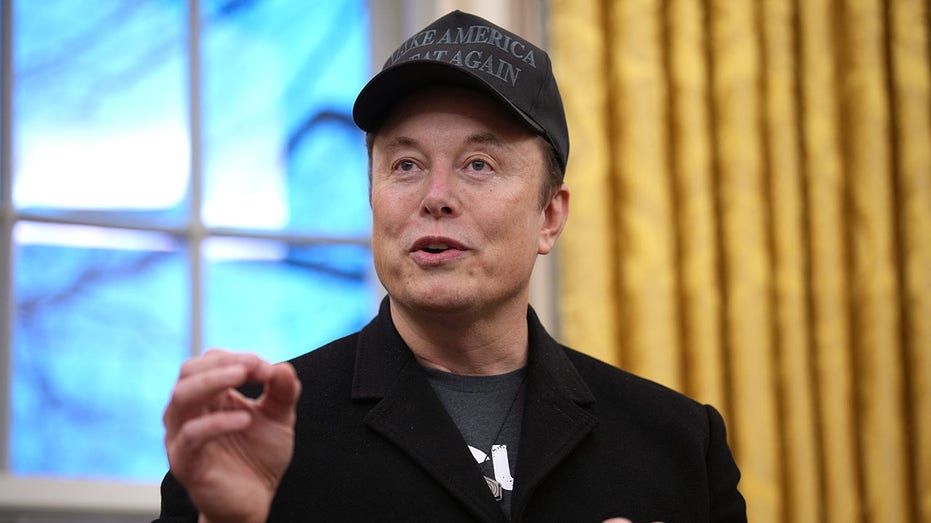
Two federal judges declined this week to stop the Trump administration from firing federal workers and conducting mass layoffs, allowing the Department of Government Efficiency (DOGE) to remain on track with finding and slashing wasteful government spending. On Thursday, U.S. District Judge Christopher Cooper shot down a request from several federal labor unions, including the National Treasury Employees Union (NTEU), to issue a pause on the mass firings of federal workers by the Trump administration. NTEU and four other labor unions representing federal employees – the National Federation of Federal Employees; the International Association of Machinists and Aerospace Workers; the International Association of Machinists and Aerospace Workers; the International Federation of Professional and Technical Engineers; and the International Union, United Automobile, Aerospace and Agricultural Implement Workers of America – filed a complaint on Feb. 12, challenging the firing of probationary employees and the deferred resignation program. The resignation program presented federal employees with a fork in the road, meaning they could either return to the office or they could resign from their positions and continue to get paid through September, though they had to decide by Feb. 6. That date was ultimately deferred to Feb. 12, then subsequently closed that day. ‘GET BACK TO WORK’: HOUSE OVERSIGHT TO TAKE ON GOVERNMENT TELEWORK IN 1ST HEARING OF NEW CONGRESS The unions moved for a Temporary Restraining Order (TRO) and preliminary injunction to prevent the firing of probationary employees across all federal agencies and furtherance of the resignation program on Feb. 14, and the next day it was sent to Cooper’s court. Cooper denied the request, though, saying the court lacks jurisdiction over the unions’ claims. Instead, Cooper ruled the unions must pursue their challenges through the Federal Service Labor-Management Relations Statute, which provides for administrative review by the Federal Labor Relations Authority. JUDGE EXTENDS RESTRAINING ORDER TO BAN TRUMP ADMIN BUYOUT OFFER TO FEDERAL WORKERS In a separate case, 14 states asked U.S. District Judge Tanya S. Chutkan to issue a TRO preventing billionaire Elon Musk and DOGE from accessing data systems at the Office of Personnel Management (OPM), Department of Education, Department of Labor, Department of Health and Human Services, Department of Energy, Department of Transportation and Department of Commerce for 14 days after the order is issued. The plaintiffs also asked Chutkan’s order to forbid Musk and DOGE from terminating, furloughing, or putting on leave, any federal officers, or employees in those agencies. JUDGE ISSUES RESTRAINING ORDER AFTER TRUMP BLOCKS FEDERAL FUNDS FOR YOUTH SEX CHANGE OPERATIONS This week, Chutkan wrote, “The court is aware that DOGE’s unpredictable actions have resulted in considerable uncertainty and confusion for Plaintiffs and many of their agencies and residents.” She ultimately ruled that DOGE can continue to operate as it is now and keep the status quo. CLICK HERE TO GET THE FOX NEWS APP Chutkan also, on Friday, issued the court briefing schedule for plaintiffs and defendants to file motions for discovery, preliminary injunctions and dismissals, which stretches through April 22.