

‘Most people never cook at home’: Zerodha’s co-founder Nikhil Kamath compares India’s eating habits with THIS country

He added that if India were to follow this trend, investing in or opening up restaurants would become a great business opportunity. “But we don’t have restaurant brands that have close to the scale Southeast Asian chains do.”
Kerala Lottery Result February 19 LIVE Updates: Fifty Fifty FF-129 Wednesday winner list to be announced soon; first prize Rs 1 crore

The grand prize winner will take home Rs 1 crore, while the second and third-place winners will receive Rs 10 lakh and Rs 5,000, respectively.
‘Will his good friend in New Delhi…’: Congress attacks PM Modi over President Trump’s reciprocal tariffs, says it is ‘threatening existence of GST’
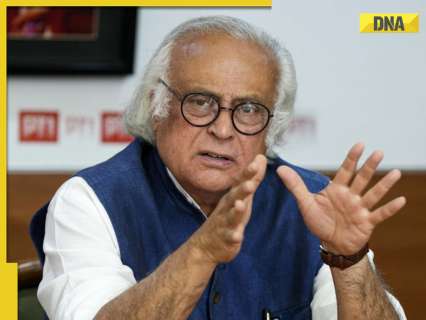
Jairam Ramesh also shared an article on X which claimed that the latest round of proposed tariffs from US President Trump includes a response to what the White House describes as “unfair” taxes, specifically, value-added taxes such as Australia’s Goods and Services Tax.
Bipartisan probation reform modeled off DeSantis and Jay-Z efforts primed for passage in VA

Bipartisan Virginia lawmakers are putting forward a criminal justice reform bill proponents say is modeled after a 2022 Florida law that featured the unlikely pairing of Gov. Ron DeSantis and rap mogul Jay-Z. State Del. Wren Williams, R-Stuart, is spearheading the effort that already garnered the support of the entire Democratic majority in Virginia’s lower House earlier this month. The Democratic-majority state Senate is set to vote on its version of the legislation on Wednesday, after which it will then be conferenced into a final bill for Gov. Glenn Youngkin’s review. Williams’ legislation will offer convicts on supervised probation the ability to fulfill certain criteria in exchange for lighter treatment. One example is that probates who can prove they are holding a job, seeking educational opportunities or partaking in rehabilitation programs for several months could see their probationary period shortened. Those provisions and others in the bill are similar to DeSantis’ legislation from three years ago that had been championed by the Jay-Z-founded criminal justice “REFORM Alliance.” The Florida law, authored by a Tampa Republican, allows probates to earn education and workforce credits that in turn get them out of the system faster, according to Axios. In Virginia, Williams told Fox News Digital he was inspired both by Florida’s law and the fact that reform initiatives like the First Step Act on the federal level have been key priorities for President Donald Trump. YOUNGKIN TO DRAFT SANCTUARY CITY BAN, MAKING STATE FUNDING CONTINGENT ON COOPERATION “Virginia [is] offering conservative solutions that emphasize rehabilitation and second chances,” Williams said. “Virginia’s approach mirrors Florida’s successful model, focusing on providing individuals under supervision the opportunity to reduce their probation terms by engaging in rehabilitative programs like job training, education, and mental health services.” While typically viewed as a liberal or Democratic bailiwick, Williams added that Virginia’s legislation proves conservatives can create a consensus on reforms that also align with their values while remaining compassionate. “By focusing on rehabilitation and offering individuals the chance to prove their commitment to change, the state has demonstrated that reducing recidivism, lowering costs, and promoting public safety are achievable goals,” he said. Crime and reform were top issues in the last gubernatorial election, with Youngkin and former Gov. Terry McAuliffe trading barbs, including about Democrats’ “defund the police” group that had endorsed the Democrat and purportedly “criminals-first” appointees McAuliffe had made to the parole board. YOUNGKIN INVITES NEW TRUMP ADMIN TO SETTLE IN VA OVER DC, MD Lt. Gov. Winsome Sears, the front-running Republican gubernatorial candidate in November’s race, heartily endorsed the legislation in comments to conservative radio host John Fredericks this week. “What I’m talking about is we have about 50,000 men and women who are on probation. And if we can give them incentives, we can get them engaged, get them education; then if you have a job, of course, then there’s something about work that dignifies the soul,” Sears said. “And all work, of course, is dignified. This is America, where dreams come to see the realization of it. It’s where you can say to your children, ‘You can make it in America.’” CLICK HERE TO GET THE FOX NEWS APP “So I’m all for lifting up that soul,” Sears concluded. Top Democratic candidate, former Rep. Abigail Spanberger, has also been a proponent of some criminal justice reforms, vociferously supporting the George Floyd Justice in Policing Act while in Congress. A spokesperson for Youngkin told Fox News Digital the “governor will review any bills that come to his desk.” In 2024, he vetoed a similar bill, HB-457, which would decrease probationary periods and establish criteria for reduction of such.
Medicaid becomes flashpoint in House debate over Trump budget bill

Medicaid is quickly emerging as a political lightning rod as House Republicans negotiate on a massive bill to advance President Donald Trump’s agenda. Some Republican lawmakers are worried about the level of spending cuts being sought by fiscal hawks to offset the cost of Trump’s policies, arguing the current deal could force potentially unworkable cuts on Medicaid and other federal safety net programs. “I’m concerned that $880 billion out of [the House Energy & Commerce Committee] is likely very steep cuts to Medicaid – and it’s the very thing President Trump asked us not to do,” Rep. Don Bacon, R-Neb., told Fox News Digital on Tuesday. GOP lawmakers are working to pass a broad swath of Trump policies – from investments in defense and border security to extending his 2017 tax cuts and eliminating taxes on tips – via the budget reconciliation process. The mechanism allows the party in control of both houses of Congress to pass a tax and budget bill without help from the opposing party. KEY CONSERVATIVE CAUCUS DRAWS RED LINE ON HOUSE BUDGET PLAN But conservative spending hawks are looking for deep cuts in federal dollars to offset money going toward Trump’s priorities. The current resolution advancing through the House would aim to cut government spending by at least $1.5 trillion, while allocating $4.5 trillion toward Trump’s tax cuts. An amendment added after conservatives balked at that deal would cut funding going toward Trump’s tax cuts by $500 billion if at least $2 trillion total spending cuts were not reached. Even before the additional cuts, however, some Republicans like Bacon are concerned that the $880 billion that the Energy & Commerce Committee is tasked with cutting will negatively impact their constituents. Conservatives have pushed back, arguing that significant cuts could be found in Medicaid work requirements. But skeptics of that argument say that the level of spending cuts being sought go past what work requirements can cover. “We want to ensure that it’s not going to hurt… our hospitals, or our organizations that serve the developmentally disabled, and we’re asking for clarity on where the $880 billion in savings come from,” Rep. Nicole Malliotakis, R-N.Y., the only House Republican representing part of New York City, told Fox News Digital. She did agree with GOP rebels that there was “mismanagement” and waste to root out in those programs. Malliotakis and other Republicans on the Ways & Means Committee tasked with writing tax policy are also uneasy about the new amendment that could cut funds allocated to their panel. “I don’t think that is doable without affecting beneficiaries, and I’ve expressed that concern to leadership and in talking to some of my colleagues,” Malliotakis said. Another House Republican who declined to be named told Fox News Digital that “there’s a bunch of us” who think the proposed cuts “are too big.” “They’re trying to sell us $1.5 trillion, but in reality, there’s another $500 billion attached to it that they’re trying to cut. And it’s not going to pass,” the GOP lawmaker said. Meanwhile, Rep. Rob Bresnahan, R-Pa., who unseated a Democrat in a close race last year, wrote on X over the weekend, “I ran for Congress under a promise of always doing what is best for the people of Northeastern Pennsylvania. If a bill is put in front of me that guts the benefits my neighbors rely on, I will not vote for it.” GOP LAWMAKER CALLS FOR CONGRESSIONAL HEARING OVER DC PLANE CRASH The budget reconciliation process allows legislation to advance with only GOP votes by lowering the threshold for Senate passage from two-thirds to a simple 51-seat majority. The House already operates on a simple majority. But currently, Republicans can lose just one vote in the House to pass anything on party lines – meaning they can afford almost no dissent to get their reconciliation bill over the line. Rep. Ralph Norman, R-S.C., a conservative on the House Budget Committee who would not have supported the resolution last week without the last-minute amendment, told reporters last week, “Medicaid’s got to be in it. You don’t get to the [$1.5 trillion figure], much less two, without it.” “And it’s not cuts to Medicaid. Work requirements have an $800 billion savings on it… able-bodied 40-year-old men who can work don’t need to be on Medicaid,” Norman said. Democrats are waiting to pounce on the discord. The House Majority PAC, which is aligned with House Democratic leadership, released a memo on Tuesday accusing Republicans of seeking to make “deep cuts” to Medicaid “to fund $4.5 trillion in tax cuts to Elon Musk and other billionaires.” “In battleground congressional districts across the country, House Republicans are putting Medicaid on the chopping block – a move that would rip life-saving health care away from tens of thousands of their own constituents – roughly half of whom are children,” the memo said. But according to Ways & Means Republicans, the average American household could see taxes raised by over 20% if the Trump tax cuts expired.
Pro-union Trump nominee faces Senate grilling as at least one Republican vows to oppose her
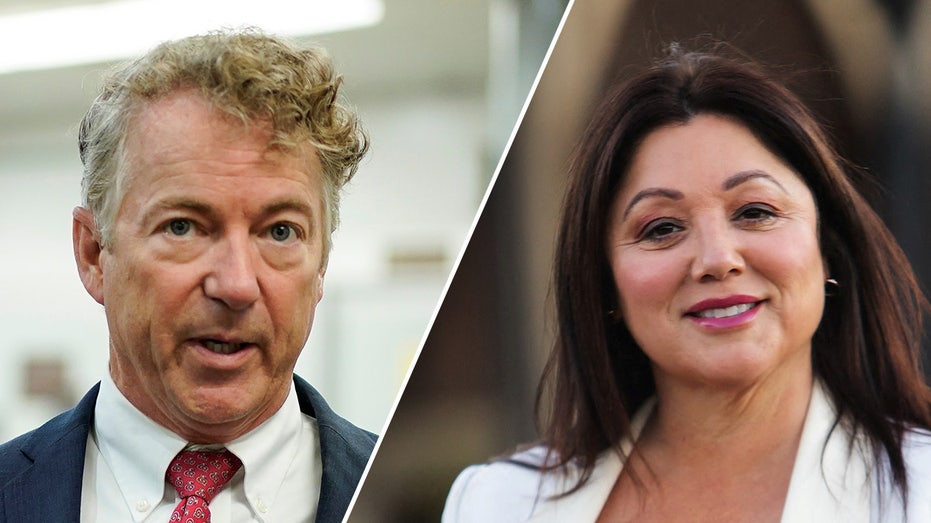
Former Rep. Lori Chavez-DeRemer, a pro-union Republican, will go before the Senate Committee on Health, Education, Labor and Pensions (HELP) on Wednesday for a confirmation hearing to be the next Secretary of Labor. President Donald Trump’s choice to lead the Department of Labor will be questioned by committee senators beginning at 10 a.m. Chavez-DeRemer has already found an opponent in Sen. Rand Paul, R-Ky., who is a member of HELP. “Her support for the PRO Act, which would not only oppose national right to work, but it would preempt state law on right to work,” he previously told reporters. “I think it’s not a good thing, and it’d be sort of hard for me since it’s a big issue for me to support her. So I won’t support her.” MCCONNELL’S MENTAL ACUITY TARGETED BY TRUMP AFTER EX-SENATE LEADER JOINS DEMS AGAINST CABINET NOMINEES The Protecting the Right to Organize Act (PRO Act) is a piece of legislation designed to protect union workers and was introduced in Congress several years ago. It would effectively kill state-level laws that prohibit employers and unions from requiring workers to pay union dues as a condition of their employment. Republicans have traditionally supported such Right-to-Work laws, and many have opposed the PRO Act for that reason. As of the night before the confirmation hearing, Paul was still planning to oppose Trump’s pick. “If she wanted to make a public statement saying that her support for the PRO Act was incorrect and she no longer does, then I’d think about her nomination,” he told Fox News Digital in a statement. Fox News Digital asked a representative for Chavez-DeRemer whether her support for the bill had changed but did not receive a response. Senate Majority Leader John Thune, R-S.D., foreshadowed the questions Chavez-DeRemer would face while speaking with reporters recently. DEMS TORCHED OVER DOGE SECURITY CLAIMS AFTER ALLOWING ‘WIDE-OPEN’ BORDER, ‘EMPOWERING IRAN’ “[S]upport for the PRO Act is not something that most Republicans have tolerated in the past, but I think she’s attempted to address that, and my hope is that she can further clarify her position on some of those issues when she goes through the hearing process,” Thune said. If Paul chooses to vote “no” or abstain from voting at the committee level, Chavez-DeRemer’s nomination could fail to get a majority of “yes” votes or end up tied. However, it could still be reported and scheduled for a floor vote, without a favorable recommendation from the committee. In this case, she would need to amass 60 votes in the full Senate to move on to confirmation. TRUMP AGRICULTURE PICK CONFIRMED AS PRESIDENT RACKS UP CABINET WINS Following his election in November, Trump announced Chavez-DeRemer as his choice to lead the Labor Department. “Lori has worked tirelessly with both Business and Labor to build America’s workforce, and support the hardworking men and women of America,” he said in a statement at the time. “I look forward to working with her to create tremendous opportunity for American Workers, to expand Training and Apprenticeships, to grow wages and improve working conditions, to bring back our Manufacturing jobs. Together, we will achieve historic cooperation between Business and Labor that will restore the American Dream for Working Families.” TULSI GABBARD SWORN IN AT WHITE HOUSE HOURS AFTER SENATE CONFIRMATION “Lori’s strong support from both the Business and Labor communities will ensure that the Labor Department can unite Americans of all backgrounds behind our Agenda for unprecedented National Success — Making America Richer, Wealthier, Stronger and more Prosperous than ever before!”
Four Florida sheriffs tapped for council advising new state immigration enforcement board

Four sheriffs in Florida have been appointed to a council advising the state’s new Board of Immigration Enforcement. Polk County Sheriff Grady Judd, Pinellas County Sheriff Bob Gualtieri, Jacksonville Sheriff T.K. Waters and Charlotte County Sheriff Bill Prummell will make up half of the State Immigration Enforcement Council, which advises the board on how the state can best work with the Trump administration to enforce federal immigration laws. The board was created last Thursday when Gov. Ron DeSantis signed Senate Bill 2C into law. The council advising it consists of four police chiefs and four sheriffs, who will keep the board updated on local law enforcement’s efforts to combat illegal immigration. St. Cloud Police Chief Douglas Goerke, who was nominated on Tuesday, will also serve on the council. The three remaining police chiefs have yet to be selected. FLORIDA SHERIFF SAYS ICE PARTNERSHIP ONLY THE BEGINNING IN ILLEGAL MIGRANT CRACKDOWN The council is tasked with asking Immigration and Customs Enforcement (ICE) for training opportunities and strategies that will strengthen participation in the agency’s 287(g) program. It will also be responsible for making recommendations in several areas, including the allocation of necessary financial assistance to local law enforcement, the enhancement of information sharing from local and state agencies to federal data centers, and how to create more available detention beds for ICE. LEADER BEHIND MIGRANT FLIGHT TO MARTHA’S VINEYARD TAPPED TO HEAD RED STATE’S NEW IMMIGRATION BOARD DeSantis said on Monday that the Sunshine State is “setting the standard” for immigration enforcement and how states can help the Trump administration deliver on its promise to stop illegal immigration, deport illegal aliens, and keep American citizens safe. “On Thursday, I signed a bill to make Florida the strongest state in the nation for immigration enforcement. We are now implementing this new legislation. Illegal immigration is an emergency, and we have no time to waste,” the governor wrote on X. Larry Keefe was nominated to be the board’s executive director at Monday’s Cabinet meeting by the state’s newly appointed Attorney General James Uthmeier. DeSantis, Uthmeier, state Chief Financial Officer Jimmy Patronis and Agriculture Commissioner Wilton Simpson make up the rest of the board. The Cabinet also passed two resolutions on Monday aimed at ensuring all local officials are following the state’s initiative “to detain and deport illegal aliens.”
Food vlogger, Chatori Rajani’s 17-year-old son Taran Jain dies in road accident

Rajani Jain, popularly known as ‘Chatori Rajani’, shared the tragic news on Instagram.
Elon Musk’s budget-slashing hits political reality of suffering Americans
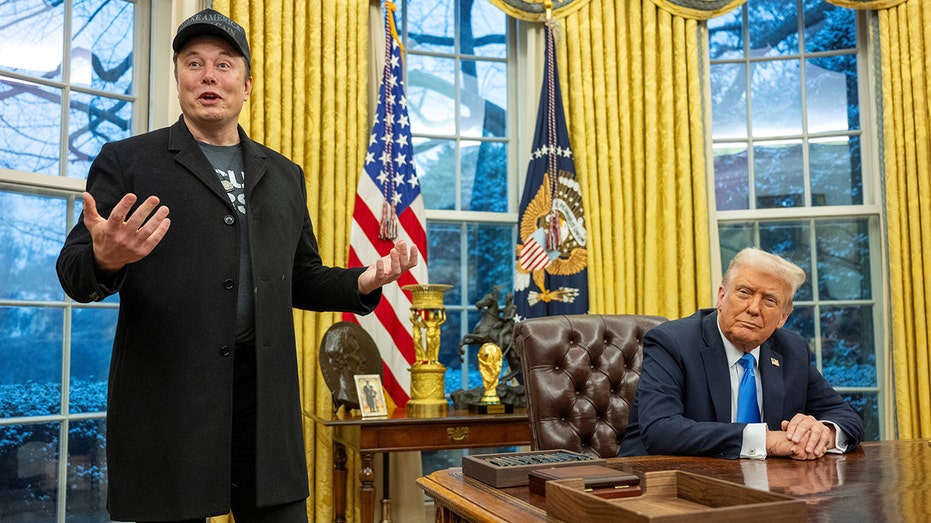
Nearly everyone agrees that the federal government has become this bloated monster that needs to be cut down to size. The massive bureaucracy, attacked by some as evil, is absurdly overstaffed and wastes massive amounts of money. What President Trump is doing in trying to shrink the size of government is popular – even if his billionaire budget-slasher, Elon Musk, is not – and many of the court battles are likely to be resolved in his favor. But the equation is turned on its head when actual people feel the impact. And the media start highlighting sad cases of devastated folks. And Republican lawmakers start objecting to the cutbacks that hit home. WHAT HAS DOGE CUT SO FAR? That’s why it’s so hard to cut the federal budget. It’s not like going into SpaceX and firing a bunch of software engineers. The political pressures can be intense. Virtually every program in the federal budget is there because some group, at some time, convinced Congress it was a good idea. There are noble-sounding causes – cancer research, aid to veterans, subsidies for farmers. In fact, farmers are threatened by the near-abolition of USAID – while most people hate foreign aid, food programs provide a crucial market for American farmers, many of whom are now stuck with spoiling surpluses or loans they can’t repay. Now there’s plenty of game-playing that goes on with government programs. Let’s say, for the sake of argument, that agencies could cut one of every 10 employees without damaging their core functions. Anyone who’s looked at the endless cycle of conferences, conventions, training confabs, office renovations and the like knows how much fat there is in these budgets. When you throw in lucrative payments to well-connected contractors, that figure skyrockets. But when agency officials come under fire, they immediately insist that any cutbacks will instantly hurt the poor and downtrodden, or working-class folks living paycheck to paycheck. It used to be called the Washington Monument defense, the notion that any attempt to reduce funding for the Interior Department would cause the memorial’s immediate shutdown. DOGE SAYS IT FOUND NEARLY UNTRACEABLE BUDGET LINE ITEM RESPONSIBLE FOR $4.7T IN PAYMENTS NIH, for instance, does world-class research that benefits the country. But the battle between Musk’s DOGE and the institute centers on how much is spent on indirect costs. Musk says his aim is “dropping the overhead charged on NIH grants from the outrageous 60 percent to a far more reasonable 15 percent.” But an NBC story is headlined: “NIH Cuts Could Stall Medical Progress for Lifesaving Treatments, Experts Say.” The piece quotes Theodore Iwashyna, a physician at the Johns Hopkins School of Medicine, as saying his “father had pancreatic cancer, and the care plan developed for him existed only because of research funded through organizations like the NIH.” Iwashyna says the overhead is needed for “computers, whiteboards, microscopes, electricity, and janitors and staff who keep labs clean and organized.” Alabama Sen. Katie Britt, whose state is getting $518 million in NIH grants, mainly to the University of Alabama at Birmingham, is raising objections. The conservative Republican told a reporter she wants the administration to take a “smart, targeted approach” so as not to endanger “groundbreaking, lifesaving research.” DOGE NEEDS TO ‘CUT DEEPER’ AND MUST ‘KEEP SLASHING’ TO SUCCEED, SAYS KEVIN O’LEARY The examples are legion. Alaska Sen. Lisa Murkowski has asked the administration not to restrict funding for diversity programs among American Indian tribes. As the New York Times puts it, “some Republicans” have sought “carve outs and special consideration for agriculture programs, scientific research and more, even as they cheered on Mr. Trump’s overall approach.” Musk’s DOGE team seems to be using a meat-ax method. Why lay off hundreds of FAA technicians and engineers just weeks after the fatal plane crash at Reagan National Airport, when there’s already a major shortage of air traffic controllers? FEMA, which is already stretched thin after the Los Angeles wildfires and the Kentucky flooding, is preparing to fire hundreds of probationary workers, reports the Washington Post. Such workers, who have been with the government for one or two years, basically have no rights. But there has been zero effort to assess them. Some were told their performance was the issue, but showed the Post their evaluations. “Above fully successful,” said one, for a fired GSA worker. “An outstanding year, consistently exceeding expectations,” said the review for a fired NIH staffer. But viewed from a different angle, the hometown paper and other outlets buy into the notion that federal employees should have tenure for life. Everyone in Washington knows that before Trump it was virtually impossible to fire such employees, even for cause. SUBSCRIBE TO HOWIE’S MEDIA BUZZMETER PODCAST, A RIFF ON THE DAY’S HOTTEST STORIES By contrast, Southwest Airlines just announced a 15% cut of its corporate workforce. No one is rushing to interview those laid off, because this sort of downsizing is routine in the private sector. But the Beltway ethos is that federal workers are entitled to their jobs. Now intellectual honesty requires the observation that even radical cuts to the federal payroll won’t have much impact on the $840 billion budget deficit or the $36 trillion federal debt. The bulk of the budget consists of Social Security, Medicare, Medicaid, defense spending and interest on the debt. Can Elon Musk and DOGE at least make progress on rooting out waste, fraud and abuse? Maybe. But the level of pain being inflicted on ordinary Americans, including in red states, and the natural tendency of politicians to shield local residents from that pain, and the media’s relentless spotlight on those suffering, are going to be a giant obstacle.
Delhi traffic advisory issued for CM oath-taking ceremony on February 20; check restrictions, routes to avoid

Traffic restrictions will be imposed from 7 am to 4 pm on key roads to manage the huge traffic during the oath-taking ceremony.