

Chirag Paswan hits back at Prashant Kishor-led JSP’s accusation of Rs 14000cr World Bank fund use in Bihar election: ‘Govt will respond…’

Jan Suraaj Spokesperson and one of the key architects of the Party, Pavan Verma, levelled serious allegations that funds from the World Bank meant for some other project were diverted for the Bihar Assembly elections by the central government and distributed to women voters in the state.
5 killed after speeding SUV collides with tractor on Gwalior-Jhansi highway

The bodies of the victims have been sent for post-mortem examination at the district hospital. Preliminary reports indicate that some of the deceased belong to the Rajawat family from Adityapuram, while verification of the others is ongoing.
MORE trouble for Lalu Yadav! Family rift intensifies as 3 more daughters leave Patna house, day after Rohini Acharya disowns family, quits politics

Rohini Acharya’s sudden ‘disowning’ of Yadav family and quitting politics has intensified the drama in one of the most influential families of Bihar. Now, three more daughters of the Lalu Yadav, Rajlaskhmi, Ragini and Chanda, have left the family’s Patna residence.
Who was Naveen Arora? RSS leader’s son shot dead by bike-borne attackers in Punjab’s Ferozepur

Police said one bullet hit Arora in the head, and he was rushed to a nearby private hospital, where doctors declared him dead. Arora’s family has refused to cremate him and sought justice in the case. CCTV footage from the area shows the two assailants fleeing moments after the firing.
Bad news for UP residents: Yogi Adityanath-led govt takes BIG decision on Greater Noida-Ballia Expressway, orders UPEIDA to…

As per the cabinet directive, the Uttar Pradesh Expressways Industrial Development Authority (UPEIDA) will return Rs 32,696,764 to M/s JP Ganga Infrastructure Corporation Limited, the company originally contracted to build the expressway.
Delhi blast case: Who is Amir Rashid Ali? NIA makes FIRST major arrest in car explosion near Red Fort, nabs mastermind Dr Umar’s close aide

Amir Rashid Ali, who was a close aide of Dr Umar, has been arrested. Amir Rashid Ali, is a Kashmiri resident who had conspired the delhi blast with the suicide bomber, Dr Umar that killed 13 lives and left 32 others injured. NIA, which had launched a massive search operation arrested him from Delhi.
SHOCKING twist in Bihar politics: Tej Pratap Yadav set to support NDA, gives BIG offer to sister Rohini Acharya to…

In a new shocking twist in Bihar politics, JJD President Tej Pratap is set to offer moral support to the NDA government. This comes after NDA’s clean sweep in Bihar elections 2025, securing historic victory on 202 seats.
BIG update on Delhi Metro, CM Rekha Gupta announces new names for THESE stations, they are…

Delhi Chief Minister Rekha Gupta on Sunday said that three metro stations in Pitampura will be renamed for the sake of local identity. She announced while attending the Shresth Bharat Sampark Yatra in Haiderpur village here.
Zelenskyy moves to ‘clean up’ Ukraine’s energy sector as corruption scandal rocks leadership
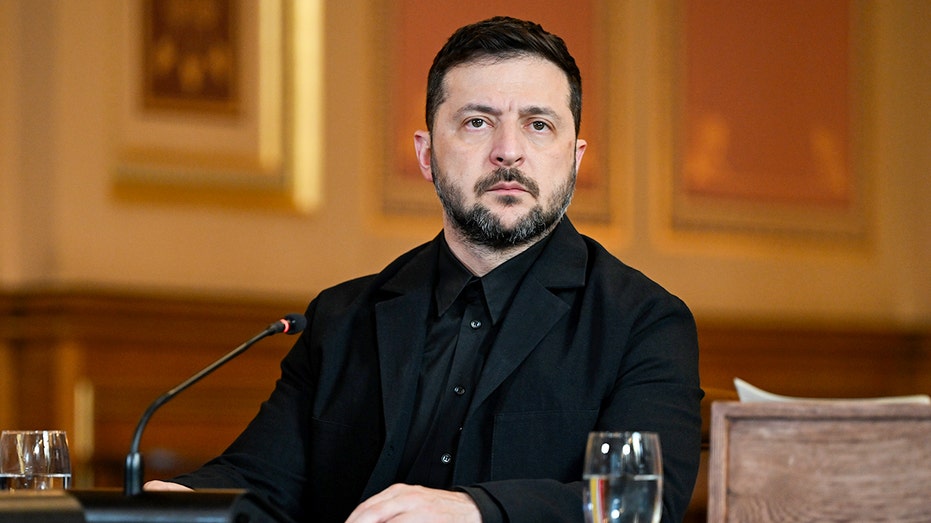
Ukrainian President Volodymyr Zelenskyy announced new efforts to “clean up” the nation’s energy sector amid a corruption scandal and near-constant attacks from Russia. Zelenskyy met with Ukrainian Prime Minister Yulia Svyrydenko on Sunday morning, saying he called on lawmakers to revamp the leadership at the State Nuclear Regulatory Inspectorate and the State Energy Supervision Inspectorate, in addition to other efforts to expunge Russian influence in the sector. “In full coordination with law enforcement and anti-corruption bodies, ensure the renewal of the Asset Recovery and Management Agency and to promptly complete the competition for the position of Head of ARMA so that the new Head of the Agency can be selected by the end of this year,” Zelenskyy wrote on X. He further called on lawmakers to “promptly conduct an audit and prepare for sale the assets and shares in assets that belonged to Russian entities and to collaborators who fled to Russia. All such assets must operate one hundred percent in Ukraine’s interests – to support our defense and to contribute to Ukraine’s budget.” TRUMP ADMINISTRATION STAYS SILENT AS MASSIVE UKRAINE CORRUPTION SCANDAL ROCKS ZELENSKYY’S INNER CIRCLE The new energy initiative also comes after a former associate of Zelenskyy’s was accused of being the mastermind behind a $100 million embezzlement scheme involving nuclear energy. Tymur Mindich, who was once Zelenskyy’s business partner, was identified by Ukraine’s anti-corruption watchdogs as being the orchestrator of a scheme involving top officials and Ukraine’s state nuclear power company. Prior to the scandal, some feared Mindich’s growing influence over Ukraine’s lucrative industries that he had access to because of his ties to Zelenskyy. Mindich allegedly exerted control over loyalists who then pressured contractors for Energoatom, Ukraine’s state-owned nuclear power company, demanding kickbacks to bypass bureaucratic obstacles. The requested kickbacks were reportedly as high as 15%. Zelenskyy himself was not implicated in the investigation. FORMER ZELENSKYY ASSOCIATE ACCUSED IN $100 MILLION EMBEZZLEMENT SCHEME The new effort comes as Zelenskyy says that his team is “working to ensure another start to negotiations” on ending the war with Russia. “We are also counting on the resumption of POW exchanges – many meetings, negotiations, and calls are currently taking place to ensure this. I thank everyone who is helping. Thank you to everybody who stands with Ukraine,” Zelenskyy wrote. Ukraine’s president further said that he is preparing for a full week of diplomacy with Greece, France and Spain, as well as renewed negotiations over prisoner of war exchanges with Russia. Zelenskyy will meet with officials in Greece on Sunday to discuss natural gas imports, while talks with France on Monday and Spain on Tuesday will center on bolstering Ukrainian air defenses. Fox News’ Rachel Wolf contributed to this report.
Skies at stake: Inside the US-China race for air dominance
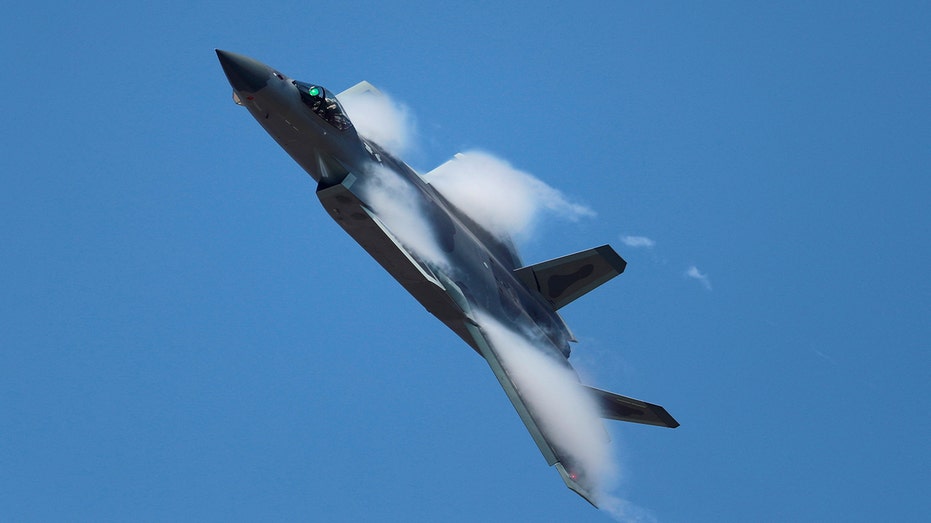
From new stealth bombers to AI-enabled drones, the U.S. and China are reshaping airpower for a Pacific showdown – each betting its technology can keep the other out of the skies. The U.S. is charging ahead with its next-generation F-47 fighter, while China scrambles to catch up with jets designed to match the F-35 and F-22. After a brief program pause in 2024, the Air Force awarded Boeing the contract in March for the F-47, a manned sixth-generation fighter meant to anchor America’s next air superiority fleet. The first flight is expected in 2028. At the same time, the B-21 Raider, the stealth successor to the B-2, is deep into testing at Edwards Air Force Base. The Air Force plans to buy at least 100 Raiders – each built to survive inside heavily defended Chinese airspace. The Pentagon is also betting on Collaborative Combat Aircraft, or CCAs – drones designed to fly alongside fighters as “loyal wingmen.” Prototypes from Anduril and General Atomics are already in the air. Officials say CCAs will let one pilot control several drones at once. China outpaces the rest of the world in the commercial drone market, but that doesn’t necessarily give it the advantage from a military perspective. “I’m not sure that’s really true. In terms of high-end military drones that are really important to this fight, the U.S. still has a pretty significant edge.” said Eric Heginbotham, a research scientist at MIT’s Center for International Studies. He pointed to the Air Force’s stealth reconnaissance platforms – the RQ-170 and RQ-180 – and upcoming “loyal wingman” drones designed to fly with fighters as proof that the U.S. still leads in advanced integration and stealth technology. HIGH STAKES ON THE HIGH SEAS AS US, CHINA TEST LIMITS OF MILITARY POWER China’s airpower modernization has accelerated as the U.S. reshapes its force. Beijing has zeroed in on three priorities – stealth, engines and carriers – the areas that long held its military back. The Chengdu J-20, China’s flagship stealth fighter, is being fitted with the new WS-15 engine, a home-built powerplant meant to rival U.S. engines. “It took them a while to get out of the blocks on fifth generation, especially to get performance anywhere near where U.S. fifth gen was,” Heginbotham said. “The J-20 really does not have a lot of the performance features that even the F-22 does, and we’ve had the F-22 for a long time.” Meanwhile, China’s third aircraft carrier, the Fujian, was commissioned this fall – the first with electromagnetic catapults similar to U.S. Ford-class carriers. The move signals Beijing’s ambition to launch stealth jets from sea and project power well beyond its coast. Together, the J-20, the carrier-based J-35, and the Fujian give China a layered airpower network – stealth jets on land and at sea backed by growing missile coverage. Chinese military writings identify airfields as critical vulnerabilities. PLA campaign manuals call for striking runways early in a conflict to paralyze enemy air operations before they can begin. Analysts believe a few days of concentrated missile fire could cripple U.S. bases across Japan, Okinawa and Guam. “The U.S. bases that are forward deployed – particularly on Okinawa, but also on the Japanese mainland and on Guam – are exposed to Chinese missile attack,” said Mark Cancian, a retired Marine colonel and senior advisor at the Center for Strategic and International Studies. “In our war games, the Chinese would periodically sweep these air bases with missiles and destroy dozens, in some cases even hundreds, of U.S. aircraft.” Heginbotham said that missile-heavy strategy grew directly out of China’s early airpower weakness. “They didn’t think that they could gain air superiority in a straight-up air-to-air fight,” he said. “So you need another way to get missiles out – and that another way is by building a lot of ground launchers.” The two militaries are taking different paths to the same target: air dominance over the Pacific. The U.S. approach relies on smaller numbers of highly advanced aircraft linked by sensors and artificial intelligence. The goal: strike first, from long range, and survive in contested skies. China’s model depends on volume – mass-producing fighters, missiles, and carrier sorties to overwhelm U.S. defenses and logistics. “U.S. fighter aircraft – F-35s, F-15s, F-22s – are relatively short-legged, so they have to get close to Taiwan if they’re going to be part of the fight,” Cancian said. “They can’t fight from Guam, and they certainly can’t fight from further away. So if they’re going to fight, they have to be inside that Chinese defensive bubble.” Both sides face the same challenge: surviving inside that bubble. China’s expanding missile range is pushing U.S. aircraft farther from the fight, while American bombers and drones are designed to break back in. Heginbotham said survivability – not dogfighting – will define the next decade of air competition. “We keep talking about aircraft as if it’s going to be like World War II – they go up, they fight each other. That’s not really our problem,” he said. “Our problem is the air bases themselves and the fact that aircraft can be destroyed on the air base.” US NAVY SEA HAWK HELICOPTER, F/A-18F SUPER HORNET FIGHTER JET GO DOWN IN SEPARATE SOUTH CHINA SEA INCIDENTS China, he warned, is preparing for that reality while the U.S. is not. “They practice runway strikes in exercises, they’re modeling this stuff constantly,” Heginbotham said. “Unlike the United States, China is hardening its air bases. The U.S. is criminally negligent in its refusal to harden its air bases.” Cancian’s war-game findings echo that vulnerability. He said U.S. surface ships and aircraft would likely have to fall back under missile fire in the opening days of a conflict. “At the initial stages of a conflict, China would have a distinct advantage,” Cancian said. “Now, over time, the U.S. would be able to reinforce its forces, and that would change.” The Pentagon’s fiscal 2026–27 budget will determine how fast the U.S. can build out its F-47s,