

6 top winners and losers who emerged in politics in 2024
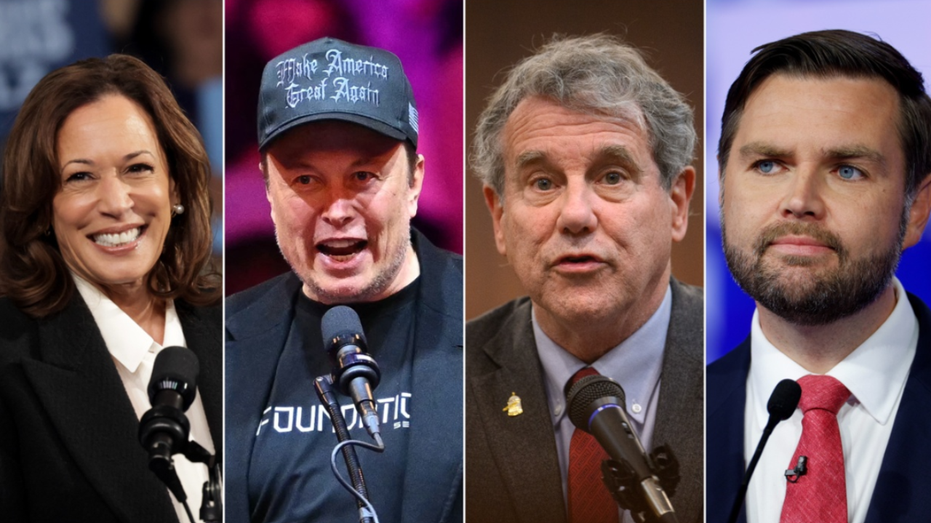
Several “winners” and “losers” emerged in 2024 as the year comes to a close after Republicans took control of Congress in the November election and several prominent Democrats ended up on the losing side. WINNER – President-elect Donald Trump Pundits in the media largely wrote Trump off after he left office and argued his political career was over in the wake of the Jan. 6, 2021, Capitol riot and House impeachments. That critique intensified after he found himself facing indictments in several different jurisdictions and battling with several prominent Republicans during the GOP primary. However, Trump weathered the political storm while surviving two assassination attempts and won back the White House in November in what many described as the greatest political comeback in American political history. TOP POLITICAL GAFFES OF 2024 Trump will be sworn in as the 47th president of the United States on Jan. 20 for a term that will be bolstered by Republican control of the House and Senate for at least the next two years. LOSER – VP Kamala Harris and Minnesota Gov. Tim Walz President Biden made history this summer when he dropped out of the presidential race amid pressure from many within his own party and essentially handed the reins to his vice president despite calls to hold an open primary process. After several months of campaigning along with a spending blitz of $1 billion, Harris ultimately failed to make the case to voters that the Biden-Harris administration policies should be continued with four years of a Harris presidency. Harris lost both the popular vote and the Electoral College to Trump, and Republicans down the ballot secured enough seats to keep control of the House and retake control of the Senate. 2024’S MOST ANNOYING PEOPLE. LEFT AND RIGHT CAN AGREE ON AT LEAST 2 Harris was widely criticized for her decision to select Walz as her running mate, with many political experts making the case that Pennsylvania Gov. Josh Shapiro was the optimal choice. Walz had been labeled by many media outlets as a personable and popular governor who brought “Midwestern charm” to the ticket but also consistently brought negative attention to the campaign with a series of gaffes and controversial statements about his past military service. “Historically, vice presidents have little impact on a presidential candidate’s fate,” Rob Bluey, president and executive editor of the Daily Signal, told Fox News Digital last month. “But in the case of Tim Walz, it proved to be a disastrous decision that doomed Kamala Harris from the moment she made it. Not only was Walz ill-prepared for the national spotlight and media scrutiny, but Harris passed over several better options. Given how little Americans knew about Harris or her policy positions, they were right to question her judgment on this big decision.” WINNER – Elon Musk The Tesla and SpaceX CEO officially threw his support behind Trump shortly after the former president survived being shot during a failed assassination attempt in Butler, Pennsylvania, in July. Musk quickly became a fixture on the campaign trail and spoke at a rally at the site of the assassination attempt. “As you can see, I am not just MAGA. I am Dark MAGA,” Musk joked at the rally in October, a nod to the Dark Brandon meme. He called the upcoming Nov. 5 election “the most important election of our lifetime.” Over the past few months, Musk has positioned himself as a key voice in the Trump administration and has been seen at Trump’s Mar-a-Lago residence in Florida several times – some outlets have reported that he is living on the property – and his influence has grown to the point that liberal pundits are accusing him of being the “co-president.” Musk, along with former presidential candidate Vivek Ramaswamy, was appointed by Trump to lead the newly formed Department of Government Efficiency, which has already made waves in Washington, D.C., with elected officials on both sides of the aisle supporting the agency’s stated goal of slashing government waste. LOSER – George Soros 2024: THE YEAR PRO-TRUMP CELEBRITIES BECAME MAINSTREAM The Soros money machine that has propped up progressive lawmakers and district attorneys across the country suffered significant losses in blue California on election night as voters overwhelmingly rejected progressives on the issue of crime. California voters overwhelmingly voted in favor of Prop 36 that rolled back key provisions of Proposition 47, which was advertised by Democrats in the state as progressive crime reforms that would make the state safer. When Proposition 47 passed in 2014, it downgraded most thefts from felonies to misdemeanors if the amount stolen was under $950, “unless the defendant had prior convictions of murder, rape, certain sex offenses, or certain gun crimes.” Progressives suffered another major loss in Los Angeles, where District Attorney George Gascón, who co-authored Prop 47 and was backed by Soros, was defeated by former federal prosecutor Nathan Hochman as crime was seen as a top issue of the election cycle. In another loss for Soros-backed prosecutors in the Golden State, Alameda County District Attorney Pamela Price was recalled, less than two years after taking office, after backlash for her alleged soft-on-crime approach. Oakland Democrat Mayor Sheng Thao, who faced heat from her constituents amid rising crime, was also ousted from office after her recall effort passed with 65% of the vote. In San Francisco, where crime has been a major concern with voters, Democrat Mayor London Breed lost her re-election campaign. “I think that this is broader than just a message from people who care about crime,” Cully Stimson, senior legal fellow at the Heritage Foundation and co-author of the book “Rogue Prosecutors: How Radical Soros Lawyers Are Destroying America’s Communities,” told Fox News Digital. “This is a massive mandate and cry for help from the general population that we want our state back, we want our counties back, and we want our cities back and that our failed social experiments have had enough time, and they’re an absolute, abysmal failure.” WINNER – Vice President-elect JD Vance TRUMP’S CONVINCING 2024 VICTORY SETS HOUSE
The top 5 political stories of 2024
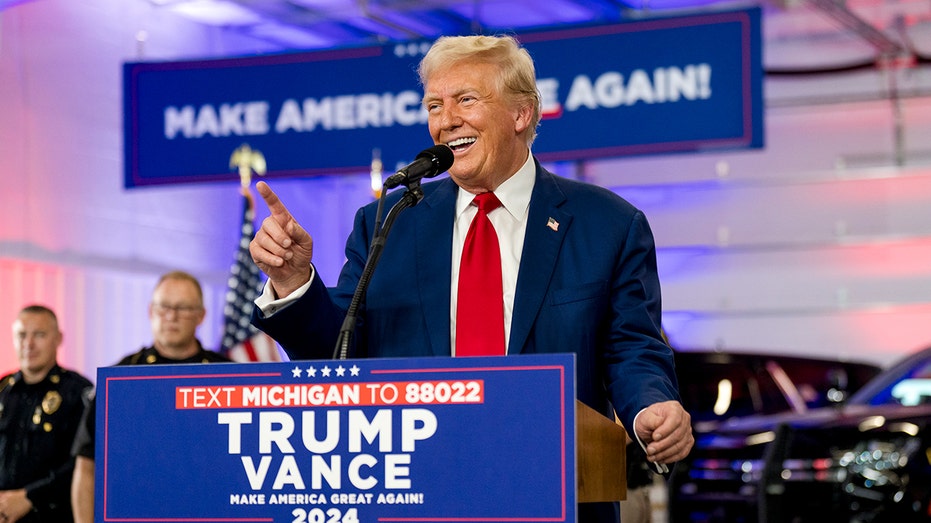
Politics in 2024 was nothing short of unprecedented. Now that the U.S. has put a bow on the year, Fox News Digital looks back on the biggest political news stories that turned Washington, D.C., on its head. The year kicked off with President Biden in the driver’s seat of the Democratic Party as he keyed up a re-election effort in what was shaping up to be a second matchup against now-President-elect Donald Trump. In February, however, Biden’s 81 years of age and mental acuity fell under public scrutiny after years of conservatives questioning the commander-in-chief’s mental fitness. Special counsel Robert Hur, who was investigating Biden’s alleged mishandling of classified documents as vice president, announced he would not recommend criminal charges against Biden for possessing classified materials after his vice presidency, calling Biden “a sympathetic, well-meaning, elderly man with a poor memory.” The report renewed scrutiny over Biden’s mental acuity, which rose to a fever pitch in June after the president’s first and only presidential debate against Trump. Biden faced backlash for a handful of gaffes and miscues in the days leading up to his debate against Trump, including former President Obama taking Biden’s wrist and appearing to lead him off a stage during a swank fundraiser, and also abroad when Italian Prime Minister Giogia Meloni guided Biden back to a group of world leaders when he appeared to wander off to give a thumbs-up to a parachutist during the G-7 summit. When the big debate day arrived, Biden missed his marks repeatedly, tripping over his responses and appearing to lose his train of thought as he squared up against Trump. The disastrous debate performance led to an outpouring of both conservatives and traditional Democrat allies calling on the president to bow out of the race in favor of a younger generation. CRITICISMS MOUNT THAT BIDEN IS A ‘SHADOW’ OF HIMSELF AFTER DISASTROUS DEBATE: ‘NOT THE SAME MAN’ FROM VP ERA The White House for weeks defiantly insisted that Biden would “absolutely not” drop out of the race, with his communications team and campaign daily combating the claims and speculation. On July 21, Biden issued a tweet that Sunday afternoon announcing he would bow out of the race. Biden endorsed Vice President Harris to pick up the mantle shortly after dropping out of the race in a separate social media post published on X, formerly Twitter. Biden’s exit from the race, when there were only about 100 days left before Nov. 5, was the first time the presumptive nominee of a major political party withdrew from the election after winning primaries. Harris soon launched her truncated campaign, flanked by staffers from the Obama administration and campaigns and also a handful of holdovers from Biden’s campaign. Harris earned the nomination of the party despite not running in the primaries, sparking some calls, including from Democrats, that the process was “undemocratic.” High-profile Democrats from the Obamas to the Clintons threw their support behind Harris, while former Speaker of the House Nancy Pelosi said Harris’ nomination was fair by arguing the nomination process was “open” and Harris “won it.” “We do not live in a dictatorship,” left-wing group Black Lives Matter declared over the summer. “Delegates are not oligarchs. Installing Kamala Harris as the Democratic nominee and an unknown vice president without any public voting process would make the modern Democratic Party a party of hypocrites.” Harris previously ran for the White House during the 2020 election cycle, but she dropped out in early December 2019, two months before the 2020 Iowa caucuses. BLACK LIVES MATTER SAYS DEMS ARE ‘PARTY OF HYPOCRITES’ FOR ‘INSTALLING’ HARRIS SANS ‘PUBLIC VOTING PROCESS’ Before Trump was elected president, he faced two assassination attempts in July and September that rocked voters and the election cycle. Trump took the stage at a campaign rally in Butler, Pennsylvania, on July 13 for what was intended to be a rally in the crucial swing state. Then shots rang out. Trump was seen dropping to the ground during the rally before he quickly stood up, a bloodied ear apparent, while surrounded by Secret Service agents. “Fight, fight, fight,” Trump was seen shouting to the crowd with a raised fist as he was escorted off the stage. One man, Corey Comperatore, lost his life while protecting his family from the attack, and two other people were seriously injured. The would-be assassin, Thomas Matthew Crooks, 20, was shot and killed by a Secret Service sniper. TRUMP SAYS HE ‘PROBABLY TOOK A BULLET TO THE HEAD’ DUE TO DEM RHETORIC The attack unfolded just days before the Republican National Convention kicked off in Milwaukee. Despite initial speculation the RNC would be upended by the attempt, Trump appeared throughout the week with a patch over his injured right ear before formally accepting the nomination in a speech. “The amazing thing is that prior to the shot, if I had not moved my head at that very last instant, the assassin’s bullet would have perfectly hit its mark and I would not be here tonight. We would not be together,” Trump said in his acceptance speech at the Republican National Convention. “Bullets were flying over us, yet I felt serene. But now the Secret Service agents were putting themselves in peril. They were in very dangerous territory,” Trump continued. “Bullets were flying right over them, missing them by a very small amount of inches. And then it all stopped. Our Secret Service sniper, from a much greater distance and with only one bullet used, took the assassin’s life, took him out.” Weeks later, on Sept. 15, Trump faced an assassination attempt while golfing at his Trump International Golf Club in Florida. Trump was safely escorted from the green at his golf club in West Palm Beach that Sunday afternoon after suspect Ryan Routh allegedly pointed a rifle toward the 45th president just outside the perimeter of the club. Routh fled the scene but was apprehended shortly thereafter on I-95. Routh allegedly waited in the bushes near Trump’s
Shillong Teer Results TODAY January 1, 2025 Wednesday Live Updates: Check lucky winning numbers
The game is not only a source of entertainment but also provides economic opportunities for many locals. It has become a significant part of Shillong’s culture, drawing crowds and fostering community engagement.
‘Happy 2025’: President Murmu, PM Modi, LoP Rahul Gandhi extend New Year greetings
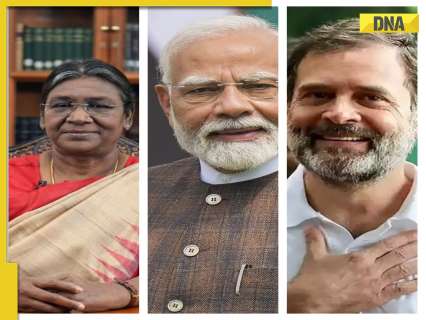
President Droupadi Murmu, Prime Minister Narendra Modi and Leader of Opposition (LoP) in Lok Sabha Rahul Gandhi extended new year greetings to everyone through posts on their respective social media handles.
Delhi-NCR weather update: Air quality dips to ‘poor category’ with AQI 239, temperature drops to…
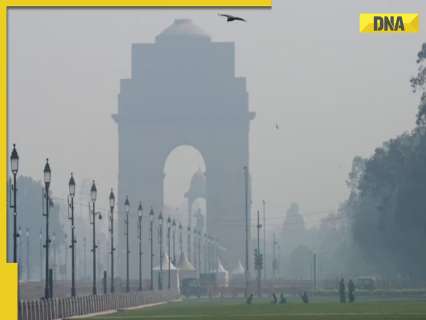
The air quality of the national capital witnessed a slight decline on New Year’s Day (January 1, 2025).
10 major rules changing from January 1, 2025: How they will impact your pocket

The rules that will come into effect from January 1, 2025, will directly impact your wallet. Therefore, prepare in advance and improve your financial planning.
Panama commemorates canal handover despite Trump’s call for US control
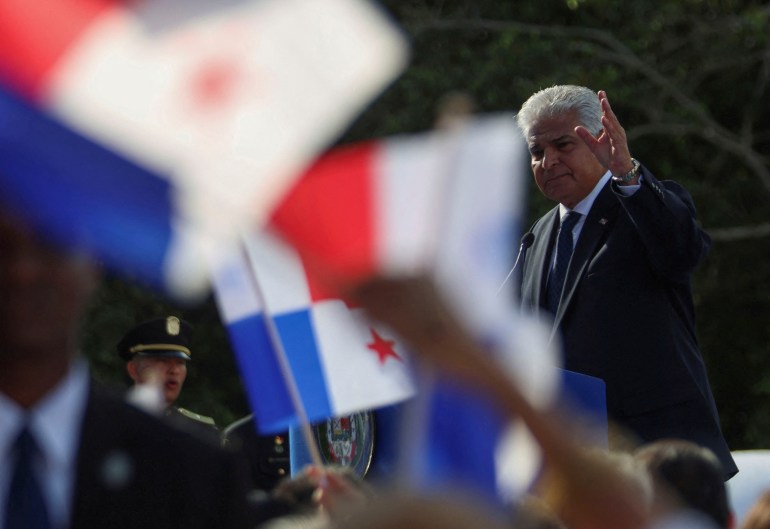
Top political leaders in Panama have held a ceremony to mark the 25th anniversary of the return of the Panama Canal after decades of United States control. But the celebration took place under a pall, as US President-elect Donald Trump continued calls for his country to reassert dominance over the pivotal waterway, which connects the Pacific Ocean to the Caribbean Sea. Panamanian President Jose Raul Mulino, a right-leaning leader like Trump, was among the speakers at Tuesday’s main ceremony in the capital Panama City. He reassured spectators that the Panama Canal would remain in his country’s possession, dismissing Trump’s remarks without mentioning the US leader by name. “There are no hands involved in the canal other than Panama’s,” Mulino said. “Rest assured, it will be in our hands forever.” But Trump has increasingly pushed for US governance over the canal as part of his broader expansionist rhetoric. President Jose Raul Mulino attends a ceremony to celebrate the 25th anniversary of the US ceding control of the Panama Canal in 1999 [Aris Martinez/Reuters] Earlier this month, Trump teased that Canada should become the 51st US state, and he repeated his desire to buy Greenland, an idea he floated during his first term in office. Advertisement But as Trump prepares for a second term on January 20, he has alarmed some observers with threats to potentially wrest the Panama Canal back from Panama’s control. On December 21, in a post on his online platform Truth Social, Trump accused Panamanian officials of exacting “exorbitant prices” for passage in the canal. The canal allows cargo ships to pass from the Pacific to the Atlantic Ocean without having to navigate all the way around South America, a perilous route that stretches thousands of kilometres. But the canal has seen increased traffic in recent decades. It has also suffered a severe drought that stymied travel through its system of locks: water chambers that lift boats up and down when the surrounding land is not level. In his posts, however, Trump indicated that Panama was violating a 1977 agreement that established conditions for the canal to shift from the US to Panamanian hands. “This complete ‘rip-off’ of our Country will immediately stop,” Trump wrote in the first of two lengthy posts. In the second, he continued with a warning. “If the principles, both moral and legal, of this magnanimous gesture of giving are not followed, then we will demand that the Panama Canal be returned to us, in full, and without question,” he wrote. “To the Officials of Panama, please be guided accordingly.” Institutional security officers stand during a ceremony to celebrate the 25th anniversary of the return of the Panama Canal on December 31 [Aris Martinez/Reuters] A history of control Building the canal through the isthmus of Panama had long been an ambition of Western colonial powers. Advertisement In the late 1800s, for instance, the US made overtures to construct the canal in Panama — part of Colombia at the time — but the South American country refused the deal. When Panama later declared independence, the US quickly supported its secession. The US was the first country to recognise Panama as its own state. In return for US support, Panama granted the North American country the right to build the canal and oversee the land surrounding it. That area became known as the Panama Canal Zone. But critics saw the agreement as a violation of Panama’s sovereignty. Ultimately, in 1977, then-US President Jimmy Carter signed two treaties to engineer the return of the canal and its surrounding lands. That transfer took effect on December 31, 1999, exactly 25 years ago. Carter died on Sunday, just shy of the anniversary. Mulino paid tribute to the late US president on Tuesday by holding a moment of silence. In his speech, Mulino described feeling a “mix of happiness for this 25th anniversary” and “sadness” over Carter’s death. A man on December 31 holds up a newspaper published decades earlier on January 1, 2000, announcing the transfer of the canal to the government of Panama [Aris Martinez/Reuters] Remembering ‘martyrs’ Tuesday’s celebrations also acknowledged the protesters who died advocating for the canal’s return to Panamanian control. Among the honoured were the more than 20 participants killed in a student protest on January 9, 1964. That day, known in Panama as the Martyrs Day, saw students try to raise a Panamanian flag alongside a US one at a high school in the canal zone. Violence erupted, resulting in the deaths of the protesters as well as four US soldiers. Advertisement In recent days, Trump has accused Panama of violating the terms of the canal’s return, by allegedly allowing Chinese soldiers to operate the shipping route. But Panama’s officials have denied that China has any influence over the canal. Jorge Luis Quijano, who served as the canal’s administrator from 2014 to 2019, was quoted in The Associated Press as saying that Trump has no legal basis for his claims to the canal. “There’s no clause of any kind in the neutrality agreement that allows for the taking back of the canal,” Quijano said. Adblock test (Why?)
In India’s east, farmers risk jail to grow lucrative cannabis crop
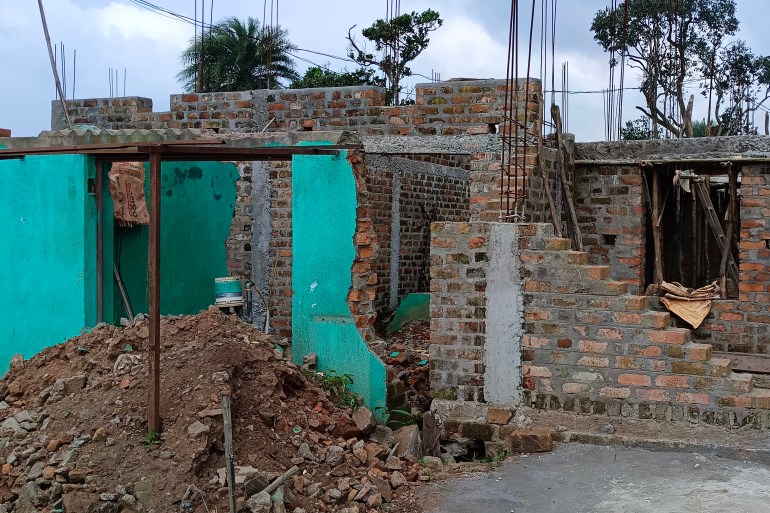
Odisha, India – Ajay Rout is an Indigenous farmer in a remote village in a southern district of India’s Odisha state. The village is surrounded by forest and hills with the nearest market 10km (6.2 miles) away. The 34-year-old grows sweetcorn and vegetables on his 0.2 hectares (0.5 acres) for both his family to eat and to sell at the market. Rout said this income is a pittance, so he has taken up growing cannabis, a banned drug, for a better income. He has about 1,000 cannabis plants located deep in the hills, which require a trek of at least two hours each way to get to because the path is full of boulders and rocks, making it almost impossible for him to ride his bicycle or motorcycle. The cultivation of cannabis – also known as hemp, marijuana, weed and ganja – is legal for medicinal use in only several states, including Uttarakhand, Gujarat, Madhya Pradesh, Uttar Pradesh and Jammu. Odisha is not one of them. India had no legislation on narcotic substances until November 1985 when it brought in a law including a ban on the use of cannabis. Advertisement The Narcotic Drugs and Psychotropic Substances Act, 1985, makes it illegal for a person to cultivate, possess, sell, buy and consume narcotic and psychotropic substances and doing so can lead to severe fines and imprisonment of up to 20 years. Risky but profitable Rout, who has been in this business for the past eight years, served three months in prison in 2017 and has been out on bail ever since. The income from the business, huge for him, overcomes the fear of being involved in it. Brick houses are replacing mud houses in tribal areas in Odisha state [Gurvinder Singh/Al Jazeera] “We live in a hilly terrain where traditional farming has a very limited scope. I hardly earn 30,000 rupees [$357] a year by growing vegetables and sweetcorn whereas I can easily make 500,000 rupees [$5,962] in just five to six months in cannabis cultivation,” he told Al Jazeera after being assured that his real name would not be disclosed. Rout said he and other cannabis growers generally choose remote locations in the hills for their plantations to protect themselves from police raids. “We are lucky to live amidst hills as cops don’t raid here as the path is too difficult to trek and reach the plantation area,” he said. The planting season starts at the end of July. Typically, it takes five months for the flowers to grow, which are then plucked, dried under the sun, packed and sold to traders. An 8- to 10ft-tall (2.4- to 3-metre-tall) plant produces 1kg (2.2lb) of cannabis at a cost of about 500 to 600 rupees ($5.8 to $7) per kilogramme. Farmers sell that to traders for 1,000 to 1,500 rupees ($12 to $18) per kilogramme. Advertisement “But all the trees do not give similar production and most of them bear no flowers at all. Excessive rains are harmful for the crop,” said Deepankar Nayak, 37, a farmer. Change in lifestyle Cannabis cultivation, even though banned in Odisha, is a highly lucrative business for the farmers and has brought them overnight riches. Subhankar Das, 38, who lives in the same village as Rout, told Al Jazeera that he recently changed the flooring in his house from concrete to marble tiles with the income from the illegal trade. He has also bought three motorcycles. His children are enrolled in local language schools, but he is planning to shift them to English language schools, which are a lot more expensive. “I can even buy four-wheelers and can build a palatial house, but we have to refrain from such activities as it would bring us on the radar of cops who are always on alert to nab us and destroy our fields,” Das added. “Still, some among us have purchased four-wheelers.” NK Nandi, founder of SACAL, a nonprofit working in weed-growing districts, said he has witnessed the change in the lifestyle of the farmers. “We started work in 2000 in the districts where cannabis is grown and the locals, mostly tribal, hardly had two-wheelers and lived in mud houses. The marriages were simple and as per their tribal traditions. But everything has undergone a sea change in the past eight to 10 years,” Nandi said. “Each tribal family has not only purchased two to three motorcycles but has also built concrete houses. They carry out marriage ceremonies like they are done in other parts of the country and spend lavishly and invite several guests. The decline of rebel insurgent activities in these areas along with better transport connectivity has also helped traders to reach them,” helping expand the market for this banned product, he said. Advertisement Police raids Cannabis cultivation is currently active in six districts of Odisha state: Koraput, Malkangiri, Rayagada, Gajapati, Boudh and Kandhamal, all of which have mountainous and hilly terrain. Police with seized cannabis [Courtesy of Odisha Police] Senior state police officials told Al Jazeera they are putting in their best effort to stop the illegal trade and have seized about 600 tonnes of cannabis in the three years until 2023, goods worth $200m, and have also arrested 8,500 drug traffickers. Of that drug haul, police got their largest one-time catch last year when they seized 185,400kg (408,737lb) of cannabis worth about $55m. The police have also destroyed about 28,000 hectares (70,000 acres) of cannabis plantations in Odisha from 2021 to 2023, the highest for cannabis in the country, JN Pankaj, a former inspector general of the Special Task Force of the Odisha Police, told Al Jazeera. In the first seven months of 2024, his team seized 102,200kg (225,312lb) of cannabis worth about $30m, he said. “We use drones and even satellite images to track the planting areas and destroy them. The challenge for us is not the hilly terrains but the use of landmine explosives in these areas,” which have traditionally been hideouts for rebel groups, Pankaj said, adding:
Indonesia’s Apple and Google bans frustrate country’s tech fans
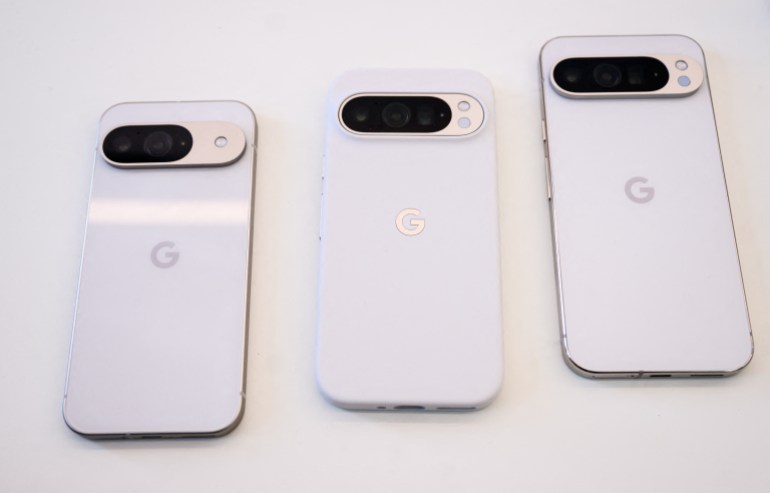
Medan, Indonesia – Winston, a medical doctor who lives and works in the capital of North Sumatra Province, is a self-proclaimed Apple fan. Currently the proud owner of an iPhone 15, Winson had been looking forward to upgrading to the latest model, the iPhone 16, released in September. Winston, however, has reluctantly given up on the idea since the Indonesian government banned sales of the iPhone 16 and the Google Pixel in late October, citing the tech giants’ failure to comply with the country’s Tingkat Komponen Dalam Negeri, or TKDN, policy, which requires phones to source at least 40 percent of their parts locally. “Indonesian regulations about iPhones hit me once, and once was enough,” Winston, who like many Indonesians goes by one name, told Al Jazeera. While Winston could buy an iPhone overseas to bring back home – a relatively common practice that is legal as long as the phone is not resold – he has been burned by Indonesian regulations before. “I bought the iPhone 11 in Singapore back in 2019 because it was much cheaper than in Indonesia, about $250 cheaper in fact. A round-trip ticket to Singapore at that time was only $120. You could fly to Singapore and back to Indonesia on the same day, so it was more cost-effective,” he said. Advertisement Winston used the phone without problems for about a year, until the Indonesian government in 2022 issued a regulation mandating that all phones be registered. Despite registering his phone as required, the device suddenly lost signal one day and would not reconnect to the network, even with a different SIM card, he said. “I went to a licensed Apple products reseller in Medan because I thought there was a problem with the phone, but they just said, ‘There is nothing we can do or suggest,’” he said. Saddled with an unusable iPhone, Winston, who has had no problems with his current iPhone 15, which he bought through a licensed reseller, sold the device at a loss at a secondhand store during a subsequent visit to Singapore. The New Pixel 9, 9 Pro and 9 Pro XL phones at Google’s Bay View campus in Mountain View, California on August 13, 2024 [Josh Edelson/AFP] Indonesia, the fourth-most populous country with some 280 million people, is one of the world’s largest smartphone markets. The archipelago was home to some 190 million smartphone users in 2022, according to market research firm Newzoo. According to data from the Ministry of Industry, the country imported about 22,000 Google Pixel phones and 9,000 iPhone 16s in 2024, before authorities announced the bans. Smartphone shipments to Indonesia were dominated by devices made by China’s Xiaomi, Oppo and Vivo, and South Korea’s Samsung. Abdul Soleh, a lawyer in Medan, said the prohibitively expensive price of the iPhone 16 for many Indonesians might explain why there had not been more vocal opposition to the ban. Advertisement “It is a real shame, because iPhones are very popular and have a high user satisfaction rate in Indonesia,” Soleh told Al Jazeera. “It would be better if the iPhone 16 could be sold in Indonesia because there are quite a lot of enthusiasts here.” Khairul Mahalli, the head of the Chamber of Commerce in North Sumatra, said that while Indonesia’s TKDN policy is aimed at supporting local industry, it could have unintended consequences. “As a member of the World Trade Organization (WTO) with a trade industry that works between countries, it is fine to protect our industries, but we also need to have checks and balances in place,” Mahalli told Al Jazeera. “One of the issues for the future could be that, if Indonesia blocks the sales of certain products, other countries could do the same and no longer accept the sales of Indonesian products on the international market.” Mahalli said it was the job of the government to find ways to minimise harm to local industries that are less drastic than outright bans on foreign products. “We don’t need to completely ban foreign sales, as Indonesia’s market is large enough to accommodate foreign products due to its large population of over 270 million people,” he said. “We need to look at whether local production can keep up with consumer demand.” Rio Priambodo, the head of the legal and complaints department at the non-profit Indonesia Consumers Organization, said consumers should think twice about purchasing the latest iPhone model, especially through illegal resellers in the country. Advertisement “The Consumers Organization recommends that consumers don’t just try to buy the iPhone 16 by any means possible if it has been banned by the government,” Priambodo told Al Jazeera. “If purchases are made illegally, this will eliminate the dimension of consumer protection that all customers should have.” In a bid to break the impasse, Apple has pledged to dramatically ramp up its investment in the country in exchange for lifting the ban. In November, the California-based tech giant offered to invest $100m in the country over two years, a 10-fold increase from an earlier pledge to pour $10m into the construction of an accessories and components factory in Bandung, West Java. Apple CEO Tim Cook, centre, walks with Indonesia’s Minister of Industry Agus Gumiwang Kartasasmita, right, and Minister of Communication and Information Technology Budi Arie Setiadi, left, after a meeting with President Joko Widodo in Jakarta, Indonesia on April 17, 2024 [Achmad Ibrahim/AP] Despite the offer, the Ministry of Industry appeared unmoved. “From the government’s perspective, of course, we want this investment to be larger,” spokesperson Febri Hendri Antoni Arif said at the time. On November 25, Jakarta formally rejected the offer, with Industry Minister Agus Gumiwang Kartasasmita saying it did not meet Indonesia’s “principles of fairness”. He said that Apple had invested more significant amounts in neighbouring countries such as Thailand and Vietnam, including $15bn for manufacturing facilities in the latter. Advertisement “Based on the technocratic assessment, the investment amount has not met the figure that we consider fair,” he said. “We want Apple to return
US prepares to deorbit International Space Station amid China competition
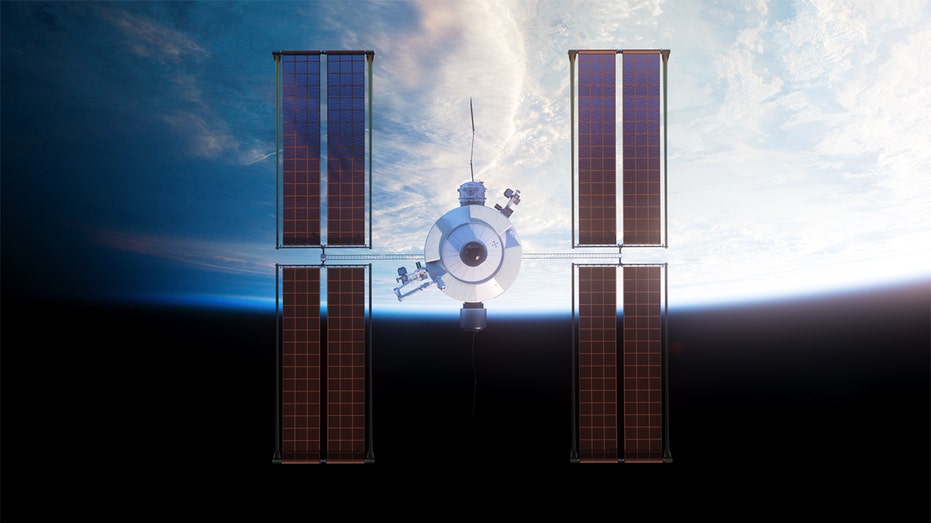
Before the International Space Station was launched into orbit in 1998, the U.S. signed a document with several other countries to agree to the peaceful use of the orbital laboratory. The agreement included Russia, Japan, Canada and 11 European countries. China was left out of the plan. Nearly a decade later, China expressed interest in joining those on board the space station. The European Space Agency signaled support for the addition, along with South Korea. The final decision was ultimately opposed by the United States. “I think you’ll have to understand that Congress gave us very clear direction in 2011,” NASA Deputy Administrator Pam Melroy said. “Any bilateral cooperation with China had to be certified as not sharing any information that would give China some kind of an advantage.” In 2011, Congress included in a spending bill direction to prohibit collaboration between NASA and China when it comes to some scientific research, including in space. Lawmakers argued China’s program was secretive and too closely tied to its military. NASA FINALIZES STRATEGY FOR HUMAN PRESENCE IN SPACE “I think there’s no question they’re an economic competitor and they’re also a competitor for leadership geopolitically,” Melroy said. China began developing its own space station. It launched and deorbited a pair of short-term space labs between 2011 and 2018. It launched the first part of its Tiangong Space Station, which translates to Heavenly Palace, in 2011. “We’re laser-focused on China now. China is a threat. We’re in a new space race,” said President of International and Space Stations at Voyager Space Jeffrey Manber. Voyager is one of three companies contracted by NASA that is working to develop a new space station. Voyager says it is on pace to launch its Starlab in 2028. There are some fears that NASA will face funding cuts. If there are delays for the companies designing the next space stations, NASA will deorbit the space station without a replacement ready to go. Melroy insists the agency will not let China be the sole operator of a space station in orbit, but the storyline resonates with that of the space shuttle program. The American-made space shuttle was the world’s first reusable aircraft. It launched like a rocket and landed like an airplane. In 2004, then-President George W. Bush announced a new space initiative, which included retiring the shuttle by 2010 and conducting the first manned mission on a new spacecraft no later than 2014. NASA FINALIZES STRATEGY FOR HUMAN PRESENCE IN SPACE “The Crew Exploration Vehicle will be capable of ferrying astronauts and scientists to the space station after the shuttle is retired,” Bush said in 2004. The government considered several contractors to develop the vehicle under the constellation program. Over the next several years, program delays and funding issues led the Obama administration to eliminate the program from its 2011 budget. “Pursuing this new strategy will require that we revise the old strategy. In part, this is because the old strategy, including the Constellation program, was not fulfilling its promise in many ways,” then-President Barack Obama said in April 2010. The administration instead directed more than $6 billion to support commercial companies building spacecraft. The shuttle program came to an end a year later. American-made rockets were still not yet available. The U.S. was forced to rely on Russia for continued space travel. “It was tough times. I think it was the right decision. The shuttle’s time had come to an end. We needed to make a strategic investment in our own industry to develop the capability to take humans to space,” Melroy said. “There were a lot of people who thought we’d canceled the space program.” NASA would finally launch an American-made rocket that could carry humans to the space station, nine years after the shuttle’s retirement. It was a delay of six years from Bush’s initial projection. The 2020 SpaceX launch also marked the first of a commercial rocket on U.S. soil. ELON MUSK MOVES TO MAKE STARBASE, TEXAS, THE OFFICIAL ‘GATEWAY TO MARS’ As NASA faces the same prospect once again, officials insist they have a different strategy for competition in space with China. “I think it’s different in the sense that we are still the leader. We intend to remain the leader. We intend to remain the partner of choice. We work very well with our international partners, and they want to continue to work with us,” Melroy said. Only Chinese Taikonauts have visited the Tiangong Space Station. The country has expressed openness to hosting astronauts from other countries. Beijing has increased cooperation with Sweden, Russia and Italy. In recent months, China’s first International Payload launched on a Chinese commercial rocket. It included Oman’s first satellite, which is equipped with artificial intelligence for urban planning, forestry monitoring and disaster management. If China becomes the only permanent presence in space, international partners could be forced to rely on Taikonauts for long-term needs in low Earth orbit. Commercial companies could also be forced to do the same. “We do have to be somewhat careful about technology transfer and how do we actually connect with international firms to make sure that we’re not sort of giving away things associated with it,” Arkisys CEO Dave Barnhart said. California-based Arkisys is working on a robotic servicing port for companies to use while in orbit. “We can provide either the cargo, the supplies, the robotic manipulation capability, the fuel, whatever’s required to support a servicing architecture,” Barnhart said. Barnhart added the port could help keep the U.S. competitive in space if a commercial station is not ready to go when the space station is decommissioned. While the port would be robotic and not have humans onboard, it would still give the U.S. a form of permanent presence. CLICK TO GET THE FOX NEWS APP “We actually hope that we will be a bridge between when the [space station] is decommissioned and when the new commercial space stations are up there,” Barnhart said. “We are autonomous, we can move much