

EPA chief wraps national tour as critics slam deregulation agenda
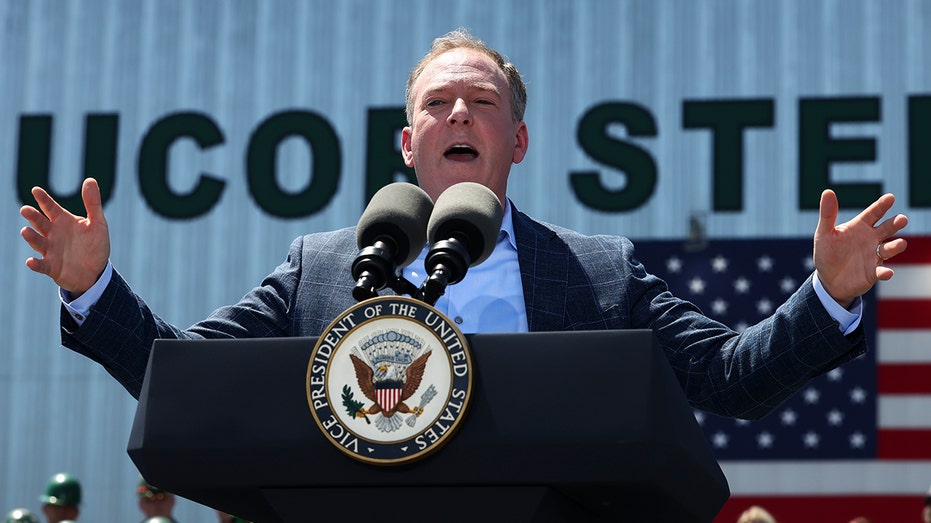
Environmental Protection Agency (EPA) Administrator Lee Zeldin just capped off a nine-and-a-half month 50-state tour around the country talking to various folks impacted by his agency’s policies. Zeldin completed his tour Friday after having made numerous reforms while on the road, including an agreement with Mexico to stop their wastewater from continuing to flow into the United States, a new directive that will help expedite the cleanup of nuclear waste in Missouri, rescission of an emissions rule and new guidance on diesel exhaust fuel aimed at helping farmers and truckers. Meanwhile, Zeldin also visited sites of major environmental disasters, such as East Palestine, Ohio, which is still dealing with the after-effects of a major chemical spill that happened during the Biden administration, and Los Angeles, which has recently seen several devastating wildfires. NEWSOM PUSHES CLIMATE RECORD ABROAD AS CALIFORNIANS SHOULDER AMERICA’S HIGHEST GAS COSTS “From business owners to trade workers, elected officials to residents impacted by environmental challenges, I’ve been soliciting feedback on any and every way the Trump EPA can fix everything,” Zeldin said after the culmination of his tour. One of the accomplishments Zeldin is touting includes a July Memorandum of Understanding to address sewage spillage from the Tijuana River. Raw sewage has been flowing into Southern California from Mexico for decades, which Zeldin’s EPA said has led to beaches being forced to close, harm to the region’s economy and sickness on either side of the border. EPA administrator Zeldin also released an “EPA Region 7 Status Update for West Lake Landfill Superfund Site” located in Bridgeton, Missouri and Coldwater Creek. The update cut two years off the initial start date of the project, according to the EPA. The waste is scheduled to be entirely cleaned up by 2038. Another reform includes rescinding guidance from the “Preparation of Clean Air Act Section (CAA) 179B Demonstrations for Nonattainment Areas Affected by International Transport of Emissions.” Zeldin’s EPA said that the guidance made it “unnecessary difficult” for states to prove that foreign air pollution was harming Americans, not theirs, and seek regulatory relief under the Clean Air Act. Zeldin said this was of major concern for elected officials and business owners in Arizona and Utah. Part of this reform will include a reevaluation of a determination by the federal government of how much international emissions are impacting residents in the Wasatch Waterfront area, in Utah. FLARING CLIMATE PROTESTS BECOMING MORE CONFRONTATIONAL AS FREE SPEECH TESTED GLOBALLY Zeldin also announced in Iowa that new action would be taken to “protect” farmers, truckers and other individuals who need to operate diesel-fueled engines during his trip. In conjunction with the U.S. Small Business Administration, the government is pushing engine and equipment manufacturers to revise emissions control system software in existing vehicles and equipment that has been compelling sudden speed and power losses and costing businesses a lot of money in order to comply with strict regulations. “Together we are empowering the great American comeback,” Zeldin insists in a video his team posted to social media about the conclusion of his tour. However, there are some folks who disagree with Zeldin. “Administrator Zeldin is supposed to safeguard the environment and public health, yet under his watch the Trump EPA is fast-tracking new pesticides — including several containing PFAS ‘forever chemicals’ that build up in our bodies and never break down,” Alex Formuzis, spokesperson for the Environmental Working Group, told Fox News Digital. “At the same time, he is tearing apart core protections on toxic air pollution, contaminated drinking water, hazardous industrial discharges, and even bedrock legal decisions that allow the EPA to regulate greenhouse gas emissions from tailpipes and smokestacks under the Clean Air Act.” Zeldin was “alarmingly right” about enacting one of the “biggest de-regulatory action[s]” in history, Formuzis added, calling it “a wholesale retreat from facts, science and environmental and public health protection.” “Hardly an agenda to make Americans healthy,” he added. Environmental groups have sued Zeldin’s EPA and the Trump administration over many of their regulatory rollbacks. Earthjustice Action and WE ACT for Environmental Justice have recently challenged Zeldin’s bid to scrap federal greenhouse-gas reporting rules in a Nov. 3 filing. “The climate crisis is a public health crisis, and EPA’s proposed repeal of the Greenhouse Gas Reporting Program will exacerbate both,” the groups wrote. “At a time when millions of Americans are losing access to healthcare and millions more are seeing polluting data centers and energy generators built in their backyards, it is imperative that EPA uphold its mission to protect human health and the environment.”
Destiny or Dynasty: Inside the new class of political nepo babies vying for power
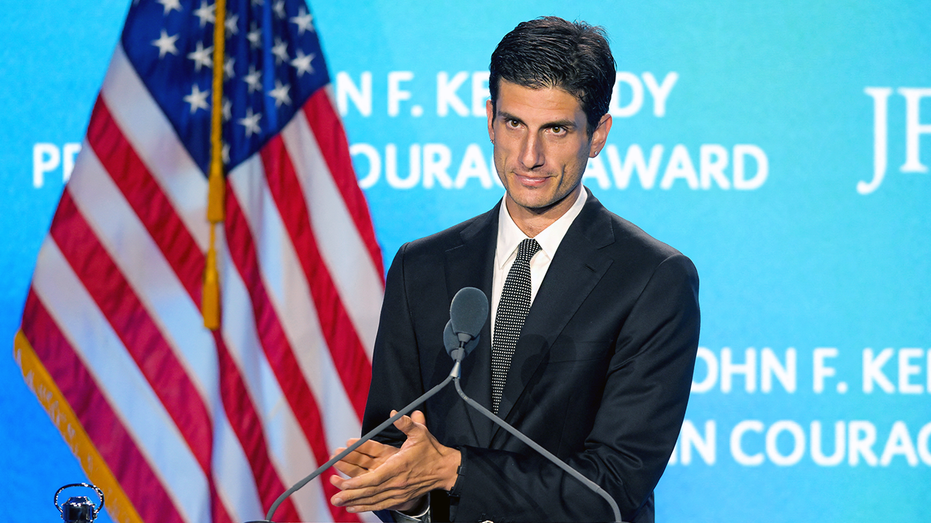
A young member of the Kennedy dynasty with a thin résumé is seeking a seat in Congress. And he’s not alone among candidates who hope to keep their family name in politics. There is a slew of political heirs hoping voters see their legacies as leadership rather than nepotism. Hollywood’s “nepo babies” took plenty of heat in 2022, when stars like Hailey Bieber and Zoë Kravitz were accused of finding success through their famous family names. The phenomenon isn’t limited to Hollywood, and political nepotism is nothing new. Just look at former Presidents George H. W. Bush and George W. Bush (and now there’s another Bush on the ballot in 2026). Here’s a look at the next generation of political heirs running for office. CAMELOT OR CRINGE?: MEET JFK’S GRANDSON TURNED CONGRESSIONAL CANDIDATE FOR THE SCROLLING GENERATION As former President John F. Kennedy’s only grandson, Jack Schlossberg is practically political royalty. But to New York City’s chronically online electorate, he is better known as the star of hundreds of satirical, and often absurd, viral videos, amassing close to 850,000 TikTok followers and nearly 770,000 on Instagram. Despite the followers and the Kennedy connections, Schlossberg has a thin résumé. He most recently served as a political correspondent for Vogue during the 2024 presidential election. JOE KENNEDY III BLASTS RFK JR. AFTER FIERY SENATE HEARING, FUELING KENNEDY FAMILY INFIGHTING: ‘HE MUST RESIGN’ “I’m Jack Schlossberg, and my grandfather, President Kennedy, is my hero,” the candidate for New York’s 12th Congressional District said in a campaign text on the day of his launch, leaning into his Kennedy roots. “To make the entire campaign about [being] from this super famous political dynasty with nothing else to offer is a choice,” Democratic commentator Kaivan Shroff, a 2016 Hillary Clinton campaign alum, told Fox News Digital. Schlossberg was a Democratic National Committee delegate in 2024 and worked as a staff assistant at the U.S. Department of State in 2016. He is a graduate of Yale University and Harvard Law and Business Schools. Schlossberg is the son of former U.S. Ambassador Caroline Kennedy. According to his LinkedIn, Schlossberg has worked for the John F. Kennedy Library Foundation for 12 years, first as chair of the New Frontier Award, and now as chair of the Profiles in Courage Award. While the Kennedy heir is making his foray into elected office with a congressional run, House Speaker Emerita Nancy Pelosi’s daughter, Christine Pelosi, announced a bid for local office this week. The former House Speaker said last week that she will retire from Congress at the end of her term, teeing up a competitive Democratic primary in an already crowded race. As Democratic state Sen. Scott Wiener is running to replace Pelosi’s congressional seat, her daughter is opting to run for Wiener’s open seat in 2028, or in a special election if he wins, rather than seek to fill her mother’s shoes in Congress. While Schlossberg, at 32, jumped right into a congressional race, Shroff told Fox News Digital that “there is something humble” about Pelosi opting to run for local office first, especially when she would have had “huge, huge, huge advantages” given her mother’s campaign infrastructure. Meanwhile, Shroff said the perception of Schlossberg’s congressional campaign reads like it’s “his inheritance to be a member of Congress” as a Kennedy. Christine Pelosi is an author, Democratic campaign strategist, and attorney. She has chaired the California Democratic Party’s Women’s Caucus and is a longtime member of the Democratic National Committee. Last month, Jonathan Bush, nephew of the late George H. W. Bush, launched a gubernatorial campaign in Maine to succeed term-limited Gov. Janet Mills, D-Maine. Earlier this year, Bush founded a podcast and advocacy group called Maine for Keeps, which he describes as a “movement to ensure the American Dream is alive and well right here in Maine.” A health-tech entrepreneur, Bush co-founded athenahealth in 1997 and served as its CEO until 2018, when he resigned following allegations of domestic violence and sexual harassment. On the campaign trail, the Republican has described himself as a “disruptor” and “job creator,” highlighting his business background as evidence he can bring innovation to state government. Bush is a member of one of the country’s most recognizable political dynasties, but this is his first time running for public office. Political inheritance has its perks, but it can also mean family feuds spilling into the public eye. Democratic congressional candidate Stefany Shaheen, who is running in a crowded primary for New Hampshire’s open U.S. House seat, is the daughter of Sen. Jeanne Shaheen. The elder Shaheen, a former governor who is retiring next year rather than seeking re-election, was one of seven Democrats who voted with Republicans to end the government shutdown last week. But the younger Shaheen said she “cannot support” the agreement, which was brokered in part by her mother, exposing the generational divide within the Democratic Party. Shaheen is an entrepreneur and healthcare advocate, and it’s her first time running for public office. Rep. Adelita Grijalva, D-Ariz., was sworn into Congress this week. Earlier this year, she won the special election to replace her late father, longtime Rep. Raúl Grijalva, after he died in March. While Grijalva had her father’s legacy on her side in the competitive special election for Arizona’s 7th Congressional District, she has decades of experience serving on the local level. She was most recently on the Pima County Board of Supervisors and, prior to that, she worked at Pima County Teen Court for more than 25 years, according to her campaign website. In the special election, Grijalva faced a challenge from social media influencer and activist Deja Foxx, who was endorsed by former DNC chair David Hogg’s super PAC, Leaders We Deserve. Since Grijalva was elected in a special election, she will have to run again in the upcoming 2026 midterms to earn a full term in Congress. While Grijalva most likely benefited from her family name, Shroff pointed out that her decades of experience serving Arizona gave her campaign
Trump administration stays silent as massive Ukraine corruption scandal rocks Zelenskyy’s inner circle
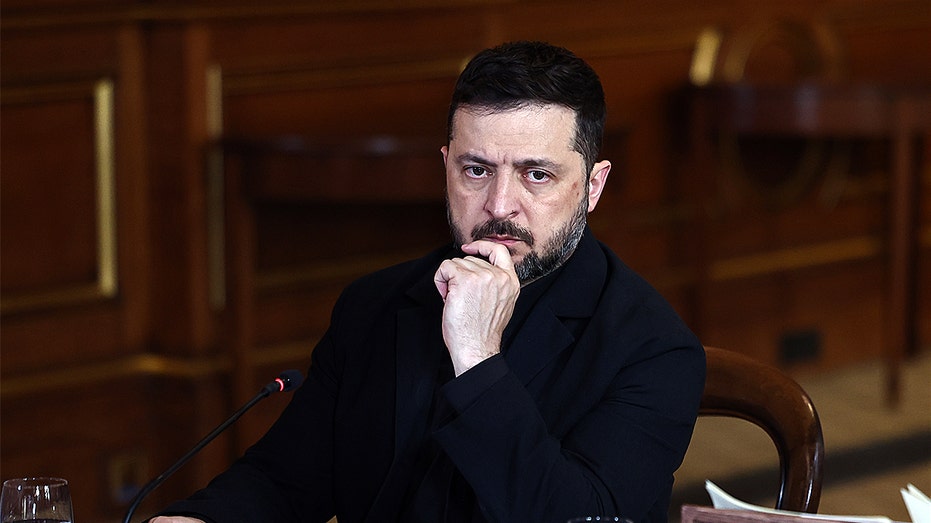
The Trump administration has so far remained silent on a widening corruption scandal inside Ukrainian President Volodymyr Zelenskyy’s government and inner circle. The White House did not respond to a request for comment on a $100 million corruption probe announced this week that has already prompted the resignations of senior Ukrainian officials. Corruption has long been a friction point in U.S.–Ukraine relations. In 2019, the Trump administration paused roughly $400 million in military aid to Ukraine, citing concerns about government corruption. At the same time, Trump’s associates sought information on then–Democratic rival Joe Biden, who served as vice president under Barack Obama. Meanwhile, Biden’s son Hunter held a $50,000-per-month board seat at the Ukrainian energy firm Burisma. As vice president, Joe Biden had threatened to withhold $1 billion in U.S. loan guarantees unless Ukraine dismissed prosecutor Viktor Shokin, whom Western governments accused of failing to pursue corruption cases. Shokin later claimed he was fired because he was investigating Burisma — a claim U.S. and European officials dispute. RUSSIA’S GAS GAMBLE BACKFIRES AS TRUMP’S ENERGY VISION RESHAPES EUROPE President Donald Trump for months has been working to secure a peace deal between Russia and Ukraine, which the U.S. has provided with around $175 billion in aid since the start of the war in 2022. Ukraine’s anti-corruption agencies — the National Anti-Corruption Bureau (NABU) and the Special Anti-Corruption Prosecutor’s Office (SAP) — said they spent 15 months on “Operation Midas,” a probe that included roughly 1,000 hours of wiretaps. Investigators say the inquiry uncovered a kickback scheme in which contractors for the state-owned nuclear company Energoatom paid 10 to 15 percent bribes, totaling about $100 million, to keep government contracts. According to prosecutors, the alleged ringleader was Timur Mindich, a longtime associate of Zelenskyy and co-owner of his former production studio, as well as an advisor to Justice Minister German Galushchenko. Authorities say Galushchenko, who served as energy minister until July, helped facilitate the money laundering operation and acted under Mindich’s influence. Mindich fled Ukraine early Monday, hours before investigators raided his home. Both Galushchenko and his successor, Energy Minister Svitlana Grynchuk, said they would resign at Zelenskyy’s request. Five suspects have been arrested, and seven others placed under official suspicion, prosecutors said. In a statement, NABU alleged that the criminal network transferred funds to “an unnamed former deputy prime minister of Ukraine,” identified internally by the codename Che Guevara. Investigators said about $1.2 million was traced to that individual. “Using their official connections in the ministry and the state-owned company,” the suspects “ensured control over personnel decisions, procurement processes, and financial flows,” Ukraine’s anti-corruption agencies said. TOP UKRAINIAN OFFICIALS IN ZELENSKYY GOVERNMENT SUBMIT RESIGNATIONS AMID $100 MILLION CORRUPTION SCANDAL Zelenskyy has not been directly implicated, but the revelations cast a shadow over a president who built his career on promises to root out graft. He publicly backed the investigation, saying Monday night that “any effective action against corruption is very necessary” and that “the inevitability of punishment is necessary.” Earlier this year, Zelenskyy faced backlash after proposing tighter presidential oversight of Ukraine’s independent anti-corruption agencies — a plan he later withdrew. Before entering politics, the former comedian often joked about his country’s entrenched corruption. “Is it possible to become president and not steal?” he once quipped. “It’s a rhetorical question, as no one has tried so far.” His 2019 election campaign centered on dismantling the oligarch-dominated political system and increasing transparency. Now, nearly seven years later — with no election planned amid wartime conditions — some Ukrainians view him as increasingly reliant on a small inner circle consolidating their own power and wielding it with limited checks. Investigators say some of the laundered money had been earmarked for equipment meant to protect energy facilities from Russian missile attacks. Ukraine continues to face rolling blackouts, with many residents limited to five to eight hours of electricity per day as Russian forces target power infrastructure heading into winter. Last week, the European Commission praised Ukraine’s “significant efforts” to combat corruption but warned that “limited progress” could jeopardize its bid to join the European Union. The commission also cautioned that reports of political pressure on anti-corruption groups “cast doubt on Ukraine’s commitment” and urged Kyiv to “prevent any backsliding on its notable reform achievements.”
Who is Jeannette Jara, the communist leading Chile’s presidential election?
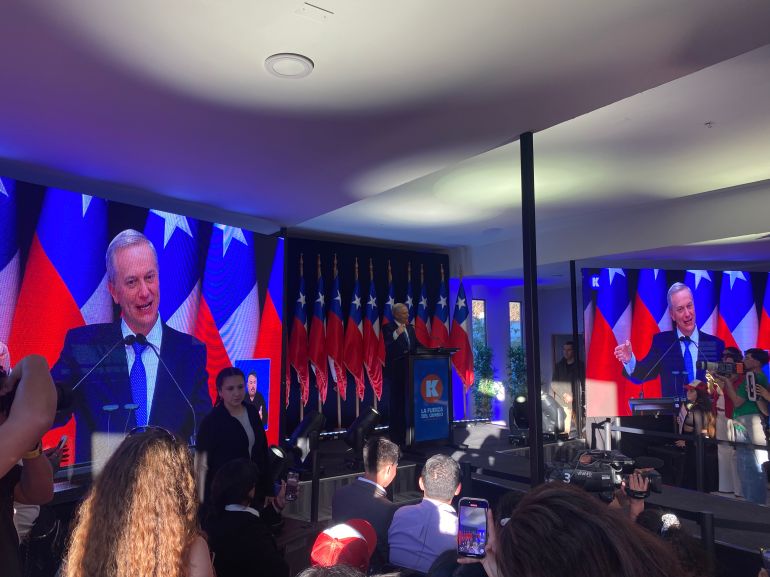
Fears of crime Yet not all Chileans are convinced. Virginia Peredo, a domestic worker, told Al Jazeera she “would never” vote for the left-wing candidate, offering a blunt explanation: “She is a communist.” Peredo was one of the nearly 200 supporters at a rally for Jara’s right-wing rival Kast in Copiapo, a mining town some 750km (466 miles) north of Villa Alemana. Many of Kast’s supporters believe that Jara stands for the status quo. Under President Boric, Jara’s former boss, Chile saw a period of slow economic growth. Boric has also struggled to quell concerns about an increase in organised crime and undocumented immigration. Peredo, for instance, said she is afraid to leave the house at night. Although she moved to Chile from Bolivia 10 years ago, she supports Kast’s hardline stance, which includes militarising the country’s borders and deporting all irregular immigrants. “The good ones can stay, but the bad ones have to go,” Peredo said of immigrants to Chile. “They make us all look bad.” Candidate Jose Antonio Kast speaks to voters in Copiapo, Chile [Sophia Boddenberg/Al Jazeera] Kast, a 59-year-old Catholic and founder of the far-right Republican Party, has leaned into those fears of immigration and violence to build his base of support. A report released in April from the University of San Sebastian found that activity linked to organised crime increased by 8.4 percent between 2022 and 2023. “This is not a crisis. It’s an emergency,” Kast told his supporters in Copiapo. Christopher Sabatini, senior research fellow for Latin America at the think tank Chatham House, told Al Jazeera that Kast’s “iron-fisted approach to crime” has struck a chord among voters. “If you look at number-one demands, security, crime and immigration are all up there. Those are not what Jara is running on,” he said. Sabatini sees parallels between Kast and the rise of other right-wing leaders, like Donald Trump in the United States and Javier Milei in Argentina. In Milei’s case, his victory in the 2023 presidential race was seen as a sign of discontent with the left-wing Peronist government that was in power at the time. “[Kast is] exploiting people’s fears very effectively, in the same way Milei was able to exploit people’s hate with 16 years of Peronism, and Trump was able to with immigration,” Sabatini explained. Adblock test (Why?)
Tanzania’s president announces probe into post-election protest deaths
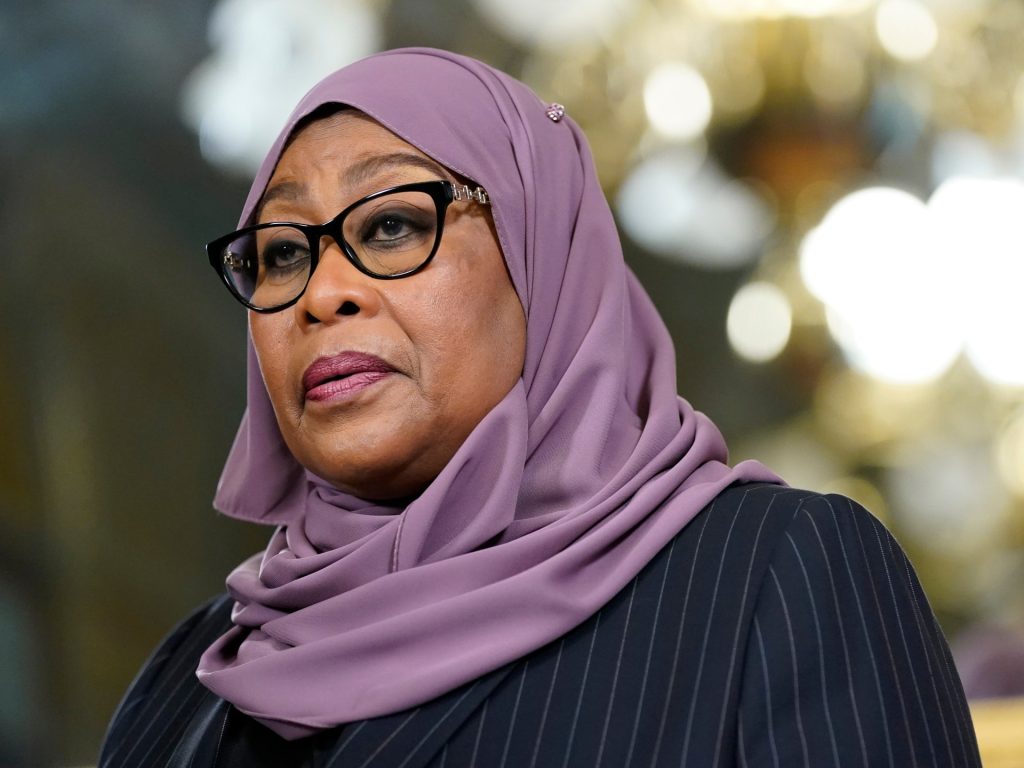
Samia Suluhu Hassan, whose re-election prompted protests and a deadly police crackdown, faces international calls for accountability. Tanzanian President Samia Suluhu Hassan says her government will launch an inquiry into the deadly unrest that erupted following her controversial re-election last month, as claims of an undemocratic vote process prompted mass protests. Speaking during the opening session of Tanzania’s new parliament on Friday, Hassan said she was “deeply saddened by the incident” and offered condolences to the families who lost loved ones in the crackdown. Recommended Stories list of 3 itemsend of list “The government has taken the step of forming an inquiry commission to investigate what happened,” she added. Her comments mark the first conciliatory message since Tanzanian authorities violently cracked down on widespread demonstrations following the country’s October 29 presidential election. Hassan was declared the winner of the vote with nearly 98 percent support, after her leading rivals were barred from participating, fuelling anger and frustration among many Tanzanians who said the contest was unfair. While the exact death toll is unclear, Tanzania’s main opposition party has said hundreds of people were killed as the government sent troops into the streets to disperse the protests. Authorities also imposed an internet blackout on the East African nation. ‘Grave human rights violations’ Rights groups have called for an independent and thorough investigation into what happened, with Amnesty International saying the authorities committed “grave human rights violations that include unlawful killings, enforced disappearances, unlawful detentions”. Advertisement “Authorities should promptly, thoroughly, independently, impartially, transparently and effectively investigate all killings by security agents and bring to justice in fair trials those suspected of being responsible,” the organisation said in a statement in early November. The United Nations human rights chief, Volker Turk, also urged the Tanzanian government earlier this week to investigate the killings and other rights violations. He called on the authorities to provide information about the whereabouts of people who have gone missing and to hand over the bodies of those killed. Reports of families desperately searching everywhere for their loved ones, visiting one police station after another and one hospital after another are harrowing,” Turk said, adding that his office has been unable to verify casualty figures due to the security situation and internet shutdown. Probe into youth ‘offences’ Meanwhile, dozens of people have been charged with treason and other offences in relation to the protests. On Friday, President Hassan, who first took power in 2021 after the sudden death of her predecessor, John Magufuli, appeared to indicate there would be leniency. “I realise that many youths who were arrested and charged with treason did not know what they were doing,” she said during her address in parliament. “As the mother of this nation, I direct the law enforcement agencies and especially the office of the director of police to look at the level of offences committed by our youths. “For those who seem to have followed the crowd and did not intend to commit a crime, let them erase their mistakes,” she added. Hassan also acknowledged the demands of the opposition Chadema party, which has said, for any meaningful reconciliation to happen, constitutional reforms are needed. She said her administration would embark on a constitutional reform process within its first 100 days. Adblock test (Why?)
Normalising hate: Israel leans in to anti-Palestinian violence, rhetoric

The US-imposed ceasefire of October 10 has not stopped Israel’s regular attacks on the Gaza Strip. Nor has it threatened to hold a parliament and society that largely cheered on the war, which has been deemed genocidal by multiple international bodies, accountable for their actions. Instead, fuelled by what analysts from within Israel have described as an absolute sense of impunity, anti-Palestinian violence has intensified across the country and the occupied West Bank while much of the world continues to look away, convinced that the work of the ceasefire is done. Recommended Stories list of 4 itemsend of list In the parliament, or Knesset, a senior lawmaker and member of the governing party openly defended convicted ultranationalist Meir Kahane, long considered beyond the pale even by members of Israel’s right wing and whose Kach movement has been banned as a “terrorist organisation”. At the same time, the parliament is debating reintroducing the death penalty, as well as expanding the terms of the offences for which it might apply – both unambiguously targeting Palestinians. Under the legislation, proposed by ultranationalist National Security Minister Itamar Ben-Gvir – who himself has past “terrorism”-related convictions for his outspoken support of Kahane – anyone found guilty of killing Israelis because of “racist” motives and “with the aim of harming the State of Israel and the revival of the Jewish people in its land” would face execution. That bill passed its first reading this week. “The absence of any attempt to assert accountability from the outside, from Israel’s allies, echoes into Israel’s own Knesset,” analyst and former Israeli peace negotiator Daniel Levy said. “There’s no sense that Israel has done anything wrong or that anyone should be held to account.” Even Israel’s media, traditionally cheerleaders of the country’s war on Gaza, has not proven exempt from the hardening of attitudes. Legislation is already under way to close Army Radio because it had been broadcasting what Defence Minister Israel Katz described as political content that could undermine the army, as well as extend what lawmakers have referred to as the so-called “Al Jazeera law”, allowing them to shutter any foreign media perceived as a threat to Israel’s national security. Advertisement “Israel has built up this energy through two years of genocide,” Orly Noy, editor of the Hebrew-language Local Call, told Al Jazeera. “That hasn’t gone anywhere. “Just because there’s a ceasefire and the hostages are back, the racism, the supremacy and the unmasked violence didn’t just disappear. We’re seeing daily pogroms by soldiers and settlers in the West Bank. There are daily attacks on Palestinian bus drivers. It’s become dangerous to speak Arabic, not just within the ‘48, but anywhere,” she said, referring to Israel’s initial borders of 1948. ‘May your village burn’ In the West Bank, Israeli violence against Palestinians has reached unprecedented proportions. According to the United Nations Office for the Coordination of Humanitarian Affairs (OCHA), there were 264 attacks against Palestinians in the month the ceasefire was announced: the equivalent of eight attacks per day, the highest number since the agency first started tracking attacks in 2006. An Israeli settler gestures as he argues with a Palestinian farmer (not pictured), during olive harvesting in Silwad, near Ramallah, in the Israeli-occupied West Bank, October 29, 2025 [Mohammed Torokman/Reuters] Israel’s interior appears no less secure from the mob. On Tuesday, a meeting at a private house in Pardes Hanna near Haifa, hosted by Ayman Odeh, a Palestinian member of the Knesset, was surrounded and attacked by a mob of right-wing protesters. As police reportedly stood nearby, Israeli protesters surrounded the house, chanting “Terrorist! Terrorist!” and singing “May your village burn” in an attempt to interrupt the meeting, which was billed as a chance to build “partnership and peace” after “two years characterised mainly by pain and hostility”. And in the Israeli Supreme Court on Monday, two of the soldiers accused of the brutal gang rape of a Palestinian prisoner at Sde Teiman prison last year were met, not by condemnation, but applause and chants of “We are all Unit 100”, referring to the military unit accused of raping the Palestinian man. “They’re not cheering rapists, they’re cheering this idea that nothing matters any more,” Ori Goldberg, a political scientist based near Tel Aviv, said. “Genocide devalues everything. Once you’ve carried out a genocide, nothing matters any more. Not the lives of those you’ve killed and, by extension, not your own. Nothing carries any consequence. Not your actions, nothing. We’ve become hollow.” Seeming to prove Goldberg’s point in the Knesset on Wednesday was Nissim Vaturi, the body’s deputy speaker and a member of Prime Minister Benjamin Netanyahu’s governing Likud party. Vaturi crossed one of Israel’s few political rubicons and directly referenced Kahane, whose name has become a rallying cry for settlers and ultranationalist groups across Israel. Meir Kahane’s violent anti-Arab ideology was considered so repugnant that Israel banned him from parliament and the US listed his party, Kach, as a ‘terrorist group’, October 27, 1988 [Susan Ragan/AP] Asked if he was in favour of “Jewish terror”, Vaturi replied “I support it. Believe me, Kahane was right in many ways where we were wrong, where the people of Israel were wrong,” he said, referencing the former lawmakers convicted of “terrorism” offences in both Israel and the US and whose party, Kach, remains a proscribed “terrorist group” across much of the world. Advertisement “Once you’ve manufactured consent for genocide, you need to be proactive in dialling the cruelty levels down, which is something we’re not seeing,” analyst and former Israeli peace negotiator Daniel Levy said. “If anything, we’re just seeing it continue. They have dialled the cruelty levels up to 11 … and they’re leaving them there.” Adblock test (Why?)
Bihar Election Results 2025: Tejashwi Yadav wins Raghopur after nail-biting contest
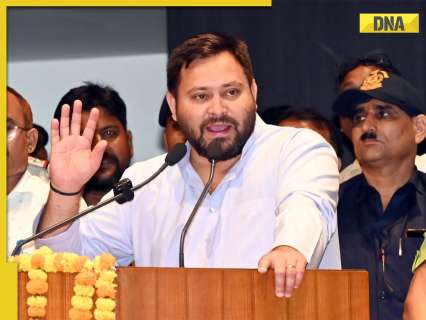
After hours of a tough contest with Bharatiya Janata Party (BJP) leader Satish Kumar, Rashtriya Janata Dal (RJD) leader Tejashwi Yadav has won the Raghopur assembly constituency, his family bastion.
Who is Devyani Rana? BJP leader and US-educated businesswoman wins Nagrota Assembly bypoll

Her win has helped the Bharatiya Janata Party (BJP) maintain its stronghold on the key seat in Jammu and Kashmir. The victory has also helped the saffron party gain a new youth icon in Devyani Rana, who studied abroad and also manages a number of family businesses.
Bihar Elections Results 2025 Update: BIG win for RJD’s viral Bhai Virendra against JSP’s Jitendra Yadav from Maner
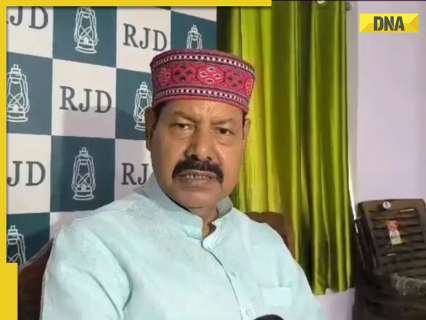
BIG win for RJD’s viral Bhai Birendra against JSP’s Jitendra Yadav from Maner.
Bihar Election Results 2025: Who is Chhoti Kumari? BJP leader takes massive lead against Khesari Lal Yadav in Chapra

Chhoti Kumari is a local political leader and the current Zila Parishad chairperson of the Chapra Assembly constituency. She was fielded by the BJP in place of the sitting MLA CN Gupta. Let us tell you more about her.