

Harrison
Harrison
Hyderabad airport receives bomb threat for Riyadh-bound Flynas flight; lands safely

Earlier on December 6, two international flights had received bomb threat emails at the Hyderabad airport. The threats were sent to the customer support ID, and safety protocols began after the landing. Here are more details.
Delhi-NCR air quality remains in ‘very poor’ levels, AQI crosses 350-mark in Anand Vihar, Bawana, Jahangirpuri; Check area-wise pollution levels
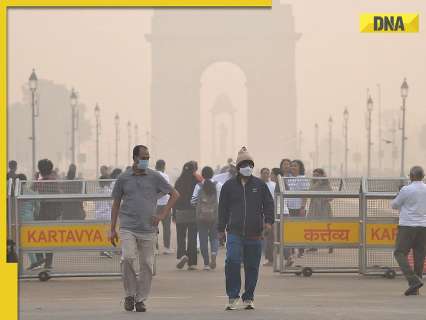
Delhi’s air quality slipped back into the ‘very poor’ category with the AQI touching 292 as vehicular emissions and pollution from NCR districts increased. Weak winds limited dispersion, and several areas recorded AQI levels above 300, raising health concerns.
Asia’s longest tunnel is being built in THIS country, not in China, Japan or Korea, it is in…, to get completed by…

The Zojila Tunnel, Asia’s longest highway tunnel at high altitude, is set for completion by May 2026. Spanning 13.150 km, it will provide all-weather connectivity between Jammu and Kashmir and Ladakh, boosting strategic mobility and reducing travel time by 3.5 hours.
Nonprofit uses underwater technology to search for missing service members

More than 80,000 service members who went missing in action in previous conflicts are still unaccounted for. However, through research and new technology, the Defense POW/MIA Accounting Agency estimates the remains of 38,000 fallen veterans could be recoverable. Nonprofit organization Project Recover is working with the agency to bring some of those service members home through complex underwater missions. “This is a great American story here,” former Navy Rear Admiral Tim Gallaudet said. “Our work is to use technology, like underwater drones and scuba diving gear, to find the platforms that these members perished on and then do the DNA analysis of detecting and recovering their remains and matching them to those that are missing.” Gallaudet also serves as a Project Recover advisory council member. The group was founded by Dr. Patrick Scannon. He came up with the idea in 1993 when he was touring the Palau islands with his wife and discovered a downed plane from World War II. “That 65-foot wing essentially changed my life,” Scannon said in an interview with GoPro. NEWLY RELEASED AMELIA EARHART DOCUMENTS REVEAL VIVID DETAILS OF JAPAN’S ROLE IN SEARCH FOR DOOMED AVIATOR Project Recover teams have located dozens of aircraft sites around the Palau islands associated with nearly 100 service members who went missing in action. “The recovery is difficult. We first have to find the aircraft or ships,” Gallaudet said. “And then we’ve got to go determine if there are any remains there and then ID them, match them to the service members. “ In 1944, U.S. officials determined the Palau islands were a crucial part of a larger mission to liberate the Philippines. The effort to capture the island of Peleliu ended up being a costly effort for the U.S. Located around 500 miles away from the Philippines, the island held an airfield, which U.S. officials believed could be used to launch an attack during their larger mission. More than 10,000 Japanese troops were stationed on Peleliu at the time. The battle was expected to last just a few days but ended up going on for 74. The U.S. began its bombardment by dropping more than 600 tons of bombs, but the Marines had little intelligence on enemy positions. Japanese troops hid in coral caves and mine shafts around the islands. The initial aerial attacks had little impact unless pilots flew dangerously close to the island. SEARCH FOR MISSING MALAYSIA AIRLINES FLIGHT 370 TO RESUME AFTER MORE THAN A DECADE On Peleliu, 1,800 Americans were killed in action and more than 8,000 were wounded or missing. Nearly all the 10,000 Japanese troops were killed in action. Across the Palau islands, the U.S. had carried out nine major air campaigns in which around 200 aircraft were lost. Now Project Recover is working to bring some of those service members home. “There were three service members on the aircraft that perished, a lieutenant and then two enlisted crew members. And over the last few years, we were able to recover the remains of all three. And we didn’t identify them all at the same time. It took forensic analysis and DNA. Technology. But the last one was finally identified,” Gallaudet said. Lt. Jay Manown, AOM1c Anthony Di Petta and ARM1c Wilbur Mitts took off for a bombing mission in September 1944. They were conducting pre-invasion strikes in preparation for the invasion of Peleliu when their plane spun out of control and crashed into surrounding waters. “The plane was hit by enemy fire, and it burst into flames,” Di Petta’s niece, Suzanne Nakamura, said in an interview with Media Evolve. Project Recover located the plane in 2015. After more than a dozen dives to investigate the wreckage, teams began removing the remains of the three service members. Lt. Manown was the last to be repatriated. “We held the ceremony in his hometown in West Virginia, and the relatives of all three service members came to that final ceremony,” Gallaudet said. The three nieces of the men have become especially close. WWII HERO’S REMAINS FINALLY COMING HOME AFTER 80-YEAR MYSTERY IS SOLVED THROUGH MILITARY DEDICATION “We’ve communicated beautifully and become friends through this experience and almost a sisterhood of type,” Manown’s niece, Rebecca Sheets, said in an interview with Media Evolve. “We’ve talked so much by phone and feel so close,” Mitt’s niece, Diana Ward, told Media Evolve. “This is just a joy to meet each other in person, and we’re just sharing the emotion we’ve felt about bringing our uncles home.” The three women have also connected over how their grandmothers, or the mothers of Manown, Di Petta and Mitts, may have felt about their sons finally coming home. “We have a connection because our uncles were involved in not only defending the freedom of the United States, but as human beings who fought together and died together,” Nakamura said. AMELIA EARHART MYSTERY EXPEDITION HALTED AS RESEARCHERS SEEK ANSWERS ON MISSING PLANE Including their work in Palau, Project Recover has completed more than 100 missions across 25 countries. They have repatriated 24 missing Americans and have located more than 200 missing in action awaiting further recovery efforts. The group is raising money for a mission it hopes to complete in 2026 — the search for a B-52 aircraft that disappeared during a training accident. “It’s off the coast of Texas. We’ve not yet found the aircraft. And of those eight service members, they all had families,” Gallaudet said. “There are about 32 of those family members still alive today who want the answers to know what happened to their loved ones.” In addition to the more than 80,000 missing-in-action service members, 20,000 are missing from training accidents. The Defense POW/MIA Accounting Agency is not permitted to allocate funds toward a search effort for the eight men who disappeared along with their B-52 because the crash occurred during a non-conflict training accident. “Not having found the wreck yet, we don’t know what the cause of the failure was. And so it’s our goal
Biden nearly invisible in own Christmas family photo as Hunter takes center stage

Former President Joe Biden shared a family photo on social media on Christmas Eve, sparking online criticism after he appeared partially visible in the image while son Hunter stood front and center. The photo shows several members of the Biden family standing in front of a decorated Christmas tree, with Hunter positioned prominently in the foreground. Former first lady Jill Biden is also in the image, standing in front of the former president with her head partially obstructing his face. All other family members appear fully framed and clearly visible. In the X post accompanying the image, Biden wrote, “Wishing you a peaceful and joyful Christmas Eve filled with joy.” INSIDE THE WHITE HOUSE CHRISTMAS CARD TRADITION – FROM COOLIDGE TO TRUMP The post did not address the framing of the photo, and representatives for Biden did not immediately respond to requests for comment. The image circulated widely on social media following its release, with users commenting on the positioning and composition of the family members shown. One person posted a close-up of Biden’s face, writing, “Took me a while to find ya, champ.” TRUMP LISTS ACCOMPLISHMENTS, SAYS ‘RADICAL LEFT SCUM’ ARE ‘FAILING BADLY’ IN CHRISTMAS MESSAGE Another commenter wrote, “I think it’s disrespectful to put the eldest family member in the back of a photo taken for the former president’s social media.” Appearing to compare the image to a Where’s Waldo? scene, one person wrote, “Where’s Joe?“ Another user asked Biden in the comments, “Why are you in the back, blocked by Jill?” TRUMP AND FIRST LADY GO ALL BLACK FOR OFFICIAL WHITE HOUSE CHRISTMAS PORTRAIT PHOTO Other users questioned why Hunter was positioned so prominently in the photo, with some comments focusing specifically on his placement. One person wrote, “Hunter is the alpha now.” Additional posts shared altered versions of the image, depicting Hunter either shirtless or with a white substance under his nose. “Wishing you and your entire family (specially your son) a white Christmas,” one user wrote. Not all the comments were critical of the photo or the former president. One person wrote, “Wishing you and your family a peaceful and joyful Christmas. Your strength and love inspire us all.” Another added, “Wishing you a peaceful Christmas Eve too, Mr. President. Let’s hope the spirit of goodwill extends into the new year and helps bridge some of the divides we’ve seen. The image is a nice reminder of simpler times.” Several others shared similar sentiments, including a message that said, “Merry Christmas to the whole Biden family!”
Lawmakers attempt to tackle NIL, giving it the ‘old college try’

Congress has done nil to fix NIL in college sports. Lawmakers get another chance to tackle NIL in early 2026. Let’s start with terms. “NIL” refers to “name, image, likeness.” College athletes have made bank over the past few years, marketing themselves as their own product. They skip from school to school for more playing time. A bigger spotlight. And that leads to a better NIL deal. Translation: You’ll probably make more from your NIL contract if you play for Ohio State and not North Dakota State. TRUMP RIPS NIL ‘DISASTER’ IN OVAL OFFICE, WARNS IT’S KILLING COLLEGE SPORTS As everyone watches bowl games and the College Football Playoff this holiday season, fans inevitably crow about the lack of parity for schools from the Big 10 and SEC compared to the Mid-American Conference and Sunbelt Conference. James Madison, we’re looking at you. The NCAA appears incapacitated to act to rein in NIL and issue nationwide rules. So, they’ve turned to Congress for a fix. Good luck with that. The House tried to advance a bill in early December. But that legislation plunged into a toxic political scrum. First of all, many Democrats opposed the bill. The legislation then lacked the votes, thanks to some GOP defections. The timing of the legislation was in question, too. The House wasn’t addressing annual spending bills or health care, but college sports. Some Republicans thought this was a bad optic. This commotion came just as former Ole Miss head football coach Lane Kiffin defected to SEC rival Louisiana State University (LSU) for a king’s ransom. House Minority Leader Hakeem Jeffries, D-N.Y., wasted no time noting that House Speaker Mike Johnson, R-La., and House Majority Leader Steve Scalise, R-La., are both LSU graduates and superfans of the school’s athletic programs. Jeffries questioned whether well-moneyed alumni connected to the school advocated for Johnson and Scalise to push the NIL bill at that time. Jeffries then anointed the legislation the “Lane Kiffin Protection Act.” “People are asking the question, ‘Why did you decide to bring this bill this week?’ with all the other issues that the country is demanding that we focus on, led by the affordability crisis that they claim is a scam and a hoax,” posited Jeffries. The controversy created a maelstrom too challenging for the House to handle. So the GOP brass yanked the legislation off the floor. NATIONAL CHAMPION COACH WANTS TRUMP ‘MORE INVOLVED’ IN NIL REGULATION: ‘OUR SPORT IS GETTING KILLED’ House leaders hope to try again to regulate NIL and manage money in college sports in 2026. “I think we need to do it sooner rather than later,” said House Budget Committee Chairman Jodey Arrington, R-Texas. “We need a national framework,” said Rep. Debbie Dingell, D-Mich., at a House session to prepare a NIL bill over the summer. “One with clarity and real enforcement to bring fairness, transparency, and equity to the new NIL era.” Lawmakers are now revising the NIL bill to set national standards — and coax enough lawmakers to support it. It’s possible Congress could vote around the same time the nation crowns the next college football champion. “We want to get it right to really do what we can to save college sports,” said Rep. Gus Bilirakis, R-Fla., the main author of the legislation. The measure in question is known as the Student Compensation and Opportunity through Rights and Endorsements (SCORE) Act. The bill would cap money schools can use from athletic revenue to pay athletes at 22 percent. Most Republicans support the measure. But Democrats believe the plan favors schools. Not athletes. Especially when it comes to labor rights – and treating athletes as university workers. “Passing the SCORE Act as it stands would only eliminate students’ abilities to collectively bargain,” said Rep. Emilia Sykes, D-Ohio. HOUSE VOTE ON NIL REGULATION ACT CANCELED DESPITE TRUMP’S BACKING AS SOME REPUBLICANS STILL NOT ON BOARD From a labor perspective, is a running back the same as a physics professor? “I do not think they should be granted employee status,” said Sen. Cynthia Lummis, R-Wyo., of student-athletes. Some lawmakers aren’t sure whether Congress should even mettle in intercollegiate athletics. Rep. Frank Pallone, D-N.J., the top Democrat on the Commerce Committee, questioned the wisdom of addressing this issue in higher education compared to more pressing topics. “You have to have a college to have college sports,” said Pallone as that panel prepped the bill over the summer. “And the way we’re going with this administration, I don’t even know if there’s going to be any colleges or universities left fighting for.” Pallone says lawmakers should focus instead on “very real threats to our nation’s colleges and universities.” Opponents of the legislation contend that the bill bends over backwards for major conferences. Rep. Chip Roy, R-Texas, has problems with that. He demands overall better governance of college athletics. “We need to have a better structure around what is currently in NCAA. I think we need to have some reforms and some of the guardrails in what we’re doing. These coaches are getting these massive buyouts,” said Roy. Sen. Josh Hawley, R-Mo., is pushing NIL regulation. But with a completely different approach. Hawley wants something which stretches far beyond the lines of the athletic fields and basketball arenas. He advocates universal NIL rules — because of Big Tech and AI. “We ought to give name, image and likeness rights to every single American. You should be able to control your image online. Control your data. Control your kids data,” said Hawley. “[It would be a] great thing to do for parents.” So, expect the House to try again on NIL in a few weeks. But consider the legislative agenda. A coalition of Democrats and four Republicans are deploying a gambit to go around the Speaker and force a vote to renew health care subsidies. That vote likely ripens around January 8 or 9. Obamacare subsidies expired. So that issue isn’t going away. And we haven’t even talked about trying to avoid a partial government
Palestine Action: Prison hunger strikes that shaped history

Four members of the advocacy group Palestine Action have pledged this week to continue their hunger strike amid grave medical warnings and the hospitalisations of their fellow protesters. The group’s members are being held in five prisons in the United Kingdom over alleged involvement in break-ins at a facility of the UK’s subsidiary of the Israeli defence firm Elbit Systems in Bristol and a Royal Air Force base in Oxfordshire. They are protesting for better conditions in prison, rights to a fair trial, and for the UK to change a July policy listing the movement as a “terror” group. Recommended Stories list of 4 itemsend of list Palestine Action denies charges of “violent disorder” and others against the eight detainees. Relatives and loved ones told Al Jazeera of the members’ deteriorating health amid the hunger strikes, which have led to repeated hospital admissions. Lawyers representing the detainees have revealed plans to sue the government. The case has brought international attention to the UK’s treatment of groups standing in solidarity with Palestinians amid Israel’s genocidal war in Gaza. Thousands of people have rallied in support of Palestine Action every week. Hunger strikes have been used throughout history as an extreme, non-violent way of seeking justice. Their effectiveness often lies in the moral weight they place upon those in power. Historical records trace hunger strikes back to ancient India and Ireland, where people would fast at the doorstep of an offender to publicly shame them. However, they have also proved powerful as political statements in the present day. Advertisement Here are some of the most famous hunger strikes in recent world history: A pigeon flies past a mural supporting the Irish Republican Army in the Ardoyne area of north Belfast, September 9, 2015 [Cathal McNaughton/Reuters] Irish Republican Movement hunger strikes Some of the most significant hunger strikes in the 20th century occurred during the Irish revolutionary period, or the Troubles. The first wave was the 1920 Cork hunger strike, during the Irish War of Independence. Some 65 people suspected of being Republicans had been held without proper trial proceedings at the Cork County Gaol. They began a hunger strike, demanding their release and asking to be treated as political prisoners rather than criminals. They were joined by Terence MacSwiney, the lord mayor of Cork, whose profile brought significant international attention to the independence cause. The British government attempted to break up the movement by transferring the prisoners to other locations, but their fasts continued. At least three prisoners died, including MacSwiney, after 74 days. Later on, towards the end of the conflict and the signing of the Good Friday Agreement, imprisoned Irish Republicans protested against their internment and the withdrawal of political prisoner status that stripped them of certain rights: the right to wear civilian clothes, or to not be forced into labour. They began the “dirty protest” in 1980, refusing to have a bath and covering walls in excrement. In 1981, scores of people refused to eat. The most prominent among them was Bobby Sands, an IRA member who was elected as a representative to the British Parliament while he was still in jail. Sands eventually starved to death, along with nine others, during that period, leading to widespread criticism of the Margaret Thatcher administration. India’s Mohandas Karamchand Gandhi, who was later popularly known as Mahatma Gandhi, used hunger strikes as a tool of protest against the British colonial rulers several times. His fasts, referred to as Satyagraha, meaning holding on to truth in Hindi, were considered by the politician and activist not only as a political act but also a spiritual one. Gandhi’s strikes sometimes lasted for days or weeks, during which he largely sipped water, sometimes with some lime juice. They achieved mixed results – sometimes, the British policy changed, but at other times, there were no improvements. Gandhi, however, philosophised in his many writings that the act was not a coercive one for him, but rather an attempt at personal atonement and to educate the public. Advertisement One of Gandhi’s most significant hunger strikes was in February 1943, after British authorities placed him under house arrest in Pune for starting the Quit India Movement back in August 1942. Gandhi protested against the mass arrests of Congress leaders and demanded the release of prisoners by refusing food for 21 days. It intensified public support for independence and prompted unrest around the country, as workers stayed away from work and people poured out into the streets in protest. Another popular figure who used hunger strikes to protest against British rule in colonial India was Jatindra Nath Das, better known as Jatin Das. A member of the Hindustan Socialist Republican Association, Das refused food while in detention for 63 days starting from August 1929, in protest against the poor treatment of political prisoners. He died at the age of 24, and his funeral attracted more than 500,000 mourners. Palestinian kids wave their national flag and hold posters showing Khader Adnan following his death on May 2, 2023 [Majdi Mohammed/AP Photo] Palestinian prisoners in Israeli prisons Palestinians held, often without trial, in Israeli jails have long used hunger strikes as a form of protest. One of the most well-known figures is Khader Adnan, whose shocking death in May 2023 after an 86-day hunger strike drew global attention to the appalling treatment of Palestinians by the Israeli government. Adnan, who was 45 when he starved to death at the Ayalon Prison, leaving behind nine children, had repeatedly been targeted by Israeli authorities since the early 2000s. The baker from the occupied West Bank had once been part of the Palestinian Islamic Jihad group as a spokesperson, although his wife later stated publicly that he had left the group and that he had never been involved in armed operations. However, Adnan was arrested and held without trial multiple times, with some estimates stating that he spent a cumulative eight years in Israeli prisons. Adnan would often go on hunger strike during those detentions,
Five people killed in firefight on Tajik-Afghan border, Tajikistan says
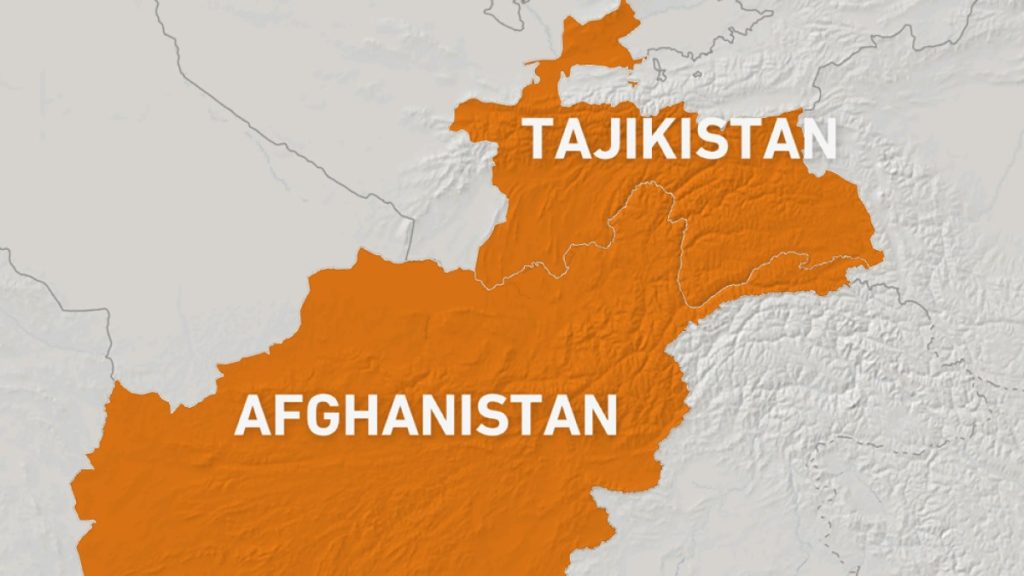
The incident is the third of its kind in recent weeks in which Tajik border guards and civilians have been killed. By News Agencies Published On 25 Dec 202525 Dec 2025 Click here to share on social media share2 Share Five people have been killed in a firefight between border guards and intruders on Tajikistan‘s border with Afghanistan, the Tajik border protection agency says. Heavily armed raiders from Afghanistan crossed into Tajikistan at the village of Kavo in the Shamsiddin Shokhin district on Tuesday and were located on Wednesday, according to a statement by the border agency published by Tajik news agency Khovar. Recommended Stories list of 3 itemsend of list The border agency said the men attacked a guard post, killing two border guards, and three of the intruders died in the ensuing gun battle. The agency said the incident was the third of its kind in recent weeks in which Tajik border guards and civilians were killed. The border guards secured the weapons and ammunition used by the intruders, including grenades, three M-16 rifles, a Kalashnikov assault rifle, three foreign-made pistols with silencers, 10 hand grenades, a night-vision scope, explosives and other ammunition at the scene, the agency said. “The terrorists refused to obey orders from Tajik border guards to surrender and offered armed resistance. They intended to carry out an armed attack on one of the border posts of the Border Troops of the State Committee for National Security of the Republic of Tajikistan,” the statement said. Chinese citizens working for a mining company in the region have also been among those killed. The latest incident demonstrated “the Taliban government’s failure to fulfil their international obligations and repeated commitments to ensuring security and stability along the state border with the Republic of Tajikistan and to combating members of terrorist organisations, reflecting serious and recurring irresponsibility”, the statement added. Advertisement It agency said that it expected an apology from the Afghan leadership. Tajikistan will defend its territorial integrity against “terrorists and smugglers” by all means, it added. Afghanistan has not yet commented on the incident. Drugs from Afghanistan are smuggled into Central Asia across the largely unsecured 1,340km (830-mile) border. Russian forces are stationed in Tajikistan and have in the past participated in joint exercises with Tajik forces to help secure the border. Adblock test (Why?)
Palestinian actor and filmmaker Mohammad Bakri dies at 72

Celebrated director of ‘Jenin, Jenin’ documentary leaves behind legacy of artistic resistance. Published On 25 Dec 202525 Dec 2025 Click here to share on social media share2 Share Acclaimed Palestinian actor and filmmaker Mohammad Bakri has died in northern Israel, ending a five-decade career that established him as one of the most influential voices in Palestinian cinema. Bakri died on Wednesday at Galilee Medical Centre in Nahariya after suffering from heart and lung problems, hospital officials said. Recommended Stories list of 2 itemsend of list His passing removes a towering figure whose work directly challenged Israeli narratives and whose decades-long legal battles over censorship became a defining chapter in Palestinian cultural resistance. The 72-year-old was best known for his 2002 documentary, Jenin, Jenin, which captured testimonies from Palestinian residents following a devastating Israeli military operation in the refugee camp that killed 52 Palestinians. The film ignited years of controversy in Israel but elevated Bakri’s status as a creative and would overshadow the remainder of his life. Israeli authorities banned the documentary from screening in 2021, with the Supreme Court upholding the prohibition in 2022, deeming it defamatory. “I intend to appeal the verdict because it is unfair, it is neutering my truth,” Bakri told the Walla News website at the time. Five soldiers sued Bakri, and courts eventually fined him hundreds of thousands of shekels while ordering all copies seized and online links removed. In an interview with the British Film Institute earlier this year, Bakri said, “I don’t see Israel as my enemy … but they consider me their enemy. They see me as a traitor … for making a movie.” Advertisement Born in 1953 in the Galilee village of Bi’ina, Bakri was a Palestinian citizen of Israel who studied Arabic literature and theatre at Tel Aviv University. He made his striking film debut at age 30 in Costa-Gavras’s Hanna K, playing a Palestinian refugee attempting to reclaim his family’s home. His role as a Palestinian prisoner in the 1984 Israeli film Beyond the Walls earned international acclaim and an Academy Award nomination for the production. But it was Bakri’s commitment to telling Palestinian stories that defined his career. He appeared in more than 40 films and directed several documentaries examining the experiences of Palestinians living under occupation and within Israel. His solo theatrical performance of The Pessoptimist, based on Emile Habibi’s novel about Palestinian identity, was performed more than 1,500 times worldwide and cemented his status as a cultural icon. Bakri is survived by his wife Leila and six children, including actors Saleh, Ziad and Adam, who have followed him into cinema. His funeral was held the same day in Bi’ina. Adblock test (Why?)