

Trump admin makes Supreme Court plea for National Guard in Chicago after judge denies ‘rebellion’ concern
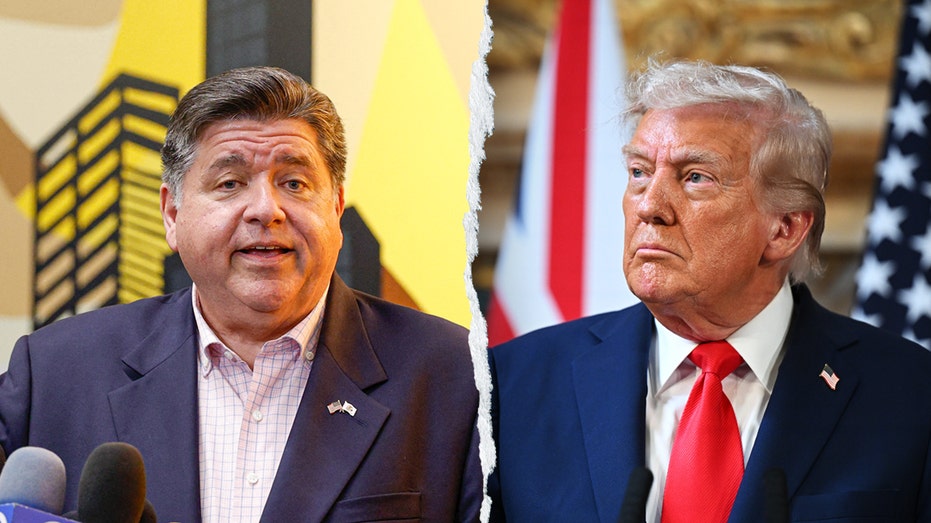
The Trump administration has urged the U.S. Supreme Court to allow the deployment of the National Guard in Chicago to protect federal personnel and federal property amid protests over immigration enforcement in the area. Solicitor General D. John Sauer, Trump’s top Supreme Court lawyer, urged the justices to step in immediately after a judge ruled last week that National Guard troops sent to Illinois by President Donald Trump to combat crime can remain in the state but can’t patrol or deploy to protect federal property. A federal appeals court had refused to put the judge’s order on hold. U.S. District Judge April Perry said she found no convincing evidence that a “danger of rebellion” exists in Illinois amid Trump’s immigration enforcement push. TRUMP’S NATIONAL GUARD TROOPS CAN STAY IN ILLINOIS BUT FEDERAL JUDGE BLOCKS DEPLOYMENT Sauer wrote in the emergency filing that the judge’s ruling “intrudes on the president’s authority and needlessly puts federal personnel and property at risk.” The Trump administration argues in its filing that the case represents a “disturbing and recurring pattern” in which federal officers enforcing immigration law are met with “prolonged, coordinated, violent resistance that threatens their lives and safety and systematically interferes with their ability to enforce federal law.” “Federal agents are forced to desperately scramble to protect themselves and federal property, allocating resources away from their law enforcement mission to conduct protective operations instead,” the filing states. “Receiving tepid support from local forces, they are often left to fend for themselves in the face of violent, hostile mobs. Confronted with intolerable risks of harm to federal agents and coordinated, violent opposition to the enforcement of federal law, the president lawfully determines that he is unable to enforce the laws of the United States with the regular forces and calls up the National Guard to defend federal personnel, property and functions in the face of ongoing violence,” it says. The Supreme Court has asked for the opposition’s response to the Trump administration’s emergency filing by 5 p.m. on Monday. The court is then expected to offer that the administration file a reply. The plea to the nation’s top court comes as 11 protesters were arrested Friday outside a U.S. Immigration and Customs Enforcement (ICE) facility in Broadview, a west Chicago suburb that has become a frequent flashpoint for demonstrations against federal agents in recent weeks. The filing also further escalates Trump’s standoff with Illinois Gov. JB Pritzker and Chicago Mayor Brandon Johnson, who have staunchly opposed deploying troops. They have called any deployment unconstitutional and insisted the city is not facing the kind of crime crisis the White House claims. Pritzker fired back at the filing on X, accusing Trump of trying to “invade Illinois with troops” and vowing to defend the state’s sovereignty. “Militarizing our communities against their will is not only un-American but also leads us down a dangerous path for our democracy,” Pritzker wrote. “What will come next?” Trump has already deployed the National Guard to Los Angeles, Washington D.C., and Memphis, Tenn., to help curb violent crime. He has said the moves caused crime to plummet in those areas. Earlier this week, the president floated the idea of invoking the Insurrection Act to tackle violent crime in Chicago and urged Pritzker to “beg for help” from the federal government. ‘UNTETHERED FROM REALITY’: LAWYERS FOR TRUMP, OREGON, SPAR OVER NATIONAL GUARD DEPLOYMENT IN COURT CLASH “I could use it if I wanted to. I could use it — that’s a very simple answer. I’m allowed to use the Insurrection Act,” Trump said, after the question was put to him by a reporter aboard Air Force One. The Insurrection Act of 1807 gives the president authority to deploy active-duty military or federalized National Guard troops inside the country in limited circumstances, such as to suppress civil disorder, rebellion or obstruction of federal law. It has been invoked about 30 times by roughly 10 presidents, most recently by George H. W. Bush during the 1992 Los Angeles riots, according to The Associated Press. But on Monday, Trump said he didn’t have to “go there yet” because his administration is “winning on appeal.” CLICK HERE TO GET THE FOX NEWS APP “You know, we lose with radical-left judges at the lower level, but we’re winning on appeal. So we’ll see what happens,” Trump said. The conservative-dominated court has handed Trump repeated victories in emergency appeals since he took office in January, after lower courts have ruled against him and often over the objection of the three liberal justices. The court has allowed Trump to ban transgender people from the military, claw back billions of dollars of congressionally approved federal spending, move aggressively against illegal immigrants and fire the Senate-confirmed leaders of independent federal agencies. The Associated Press contributed to this report.
REBECCA GRANT: How Tomahawks work and how they could change everything for Ukraine

Tomahawks, Tomahawks, Tomahawks. That’s the word buzzing in the ears of Russian President Vladimir Putin, as President Donald Trump weighs providing America’s precision strike missile of choice to Ukraine. Since May, Trump has bombed the Houthis in Yemen, obliterated Iran’s nuclear facilities and hit narco-terrorist drug boats in the Caribbean. Putin has to realize that Tomahawks could soon be in the skies over Russia. What can Ukraine hit with the 1000-mile range Tomahawks? Start with the Shahed drone factory in Tatarstan, and at least 67 Russian airbases. Tomahawks in Ukraine’s hands rip open Russian energy infrastructure to precision attack with no warning. ZELENSKYY PITCHES TRUMP ON UKRAINE DRONE-FOR-TOMAHAWK MISSILE EXCHANGE AS PRESIDENT WEIGHS ESCALATION CONCERNS If Ukraine launches Tomahawks, they’ll be flying as low as 100 feet, hugging the terrain, evading radar. TLAMs can each take separate routes at 500 mph then meet up over the Russian target for a coordinated strike. Trump is baiting Putin. “Hopefully, they won’t need it,” Trump said of the Tomahawks at Friday’s lunch with Ukrainian President Volodymyr Zelenskyy at the White House. Trump said he’d like to “get the war over without Tomahawks” but then went on to describe the missiles as “very dangerous” and “incredible.” Here’s the backstory on the Tomahawks, and why Trump is keeping them on the table to pressure Putin. First tested in 1972, the Tomahawk Land Attack Cruise Missile or TLAM was actually developed by the U.S. Navy during the Cold War to attack targets on land in the Soviet Union. In case you haven’t seen one up close, the Tomahawk is 20 feet long but just 21 inches wide. It looks like a white pole with wiglets, but inside is a powerful turbo-fan engine and sophisticated guidance. Today’s Block IV Tomahawks can be retargeted in flight, and loiter over a target for hours, taking electro-optical scans and waiting for other missiles to arrive before detonating. They carry a unitary warhead for harder targets, or dispense cluster munitions over a wide pattern to hit airfields, for example. (Yes, there was once a nuclear TLAM variant with a 200 Kiloton warhead, but they were placed in storage in 1991 and eliminated in 2010.) The presence of Tomahawks in Ukraine will set up an almost insoluble air defense problem for Putin. No way can Russia place air defenses at every remote gas pipeline point or cover all the airbases where planes park out in the open. TLAMs could be in Ukraine in 24 hours. The Army Mid-Range Capability missile system is a tractor-trailer missile launcher that can be driven onto a U.S. Air Force C-17 cargo plane. The Army deployed TLAM launcher 8,000 miles away to North Luzon in the Philippines in under 15 hours last year for a wargame. Trump has plenty of time. Deterring Putin. The brutal escalation of mass attacks by Russia led Ukraine to ramp up its drone strikes on Russian energy starting in August. According to a Reuters study, Ukraine’s drones have hit 18 pumping stations, plus 32 strikes on refineries. Ukraine’s Liutyi drones have a range of about 600 miles and carry warheads of about 50 pounds. Mixing in TLAMs would intensify pressure on Russian energy, Putin’s single biggest source of government revenue. Zelenskyy has called Ukraine’s drone attacks on Russian energy “the sanctions that work the fastest.” The U.S. still has about 4,000 Tomahawks in its inventory, and new missiles like the U.S. Navy’s SM-6 are already in action. The U.S. Army deployed its new Dark Eagle long-range hypersonic weapons to Australia in August and will have its first full battery by December. By the way, last year Japan bought 400 Tomahawks for targeting China and North Korea. Tomahawks have piled up an incredible combat record since Jan. 17, 1991, when 122 TLAMs hit Iraqi oil and command and control targets at the start of Operation Desert Storm. Eight-hundred TLAMs were fired in Operation Iraqi Freedom in 2003. Over the years, Tomahawks have hit targets in Iraq, Serbia, Afghanistan, Libya, Syria, Yemen and, of course, Iran. On June 22, TLAMs hit above-ground “key surface infrastructure targets” in the nuclear complex at Isfhahan, according to Chairman of the Joint Chiefs of Staff Gen. Dan Caine. The TLAM strikes left the sprawling site visibly damaged and blackened. “We gave it a capper with 30 TLAMS,” as Trump said Friday. Putin may yell and scream about Tomahawks for Ukraine. Pay no attention. He’s grumbled about each weapon system, from F-16s to Patriots. And no, Putin does not dare escalate with nuclear weapons in Ukraine, because the wind patterns blow radiation clouds back into Russia. As Trump said Friday: “Yeah, its escalation. But we’re going to talk about it anyway.”
Meet the new ‘Squad’: The next generation of Trump-era progressive congressional candidates

Galvanized by President Donald Trump’s sweeping second-term agenda, a new generation of progressive Democrats is working to redefine the party’s future. The original “Squad,” a group of young, left-wing lawmakers, including Rep. Alexandria Ocasio-Cortez, D-N.Y., was elected to the U.S. House of Representatives in 2018 as a referendum on Trump’s first term. Now, with Trump back in the Oval Office and Republicans controlling both the House and Senate, a new wave of progressive candidates is emerging across the country. The next generation of progressive leaders includes some recognizable names, like mayoral candidates Zohran Mamdani, the “Mamdani of Minneapolis” Omar Fateh, U.S. Senate candidate Mallory McMorrow and progressive congressional candidates Kat Abughazaleh and the “AOC of Tennessee” Aftyn Behn. SQUAD 2.0: MEET AMERICA’S NEXT WAVE OF RADICAL DEMOCRATS SHAPING THE PARTY’S FUTURE Others, such as Saikat Chakrabarti, Dr. Abdul El-Sayed and Justin Pearson, are gaining national attention as discontent among young Democrats grows with each day of the Trump administration’s second act. YOUNG PROGRESSIVES LOOK TO ZOHRAN MAMDANI, AOC AS FUTURE OF THE DEMOCRATIC PARTY – UNDER ONE CONDITION Saikat Chakrabarti arrived on the political scene during the rise of the first “Squad,” running Ocasio-Cortez’s successful 2018 congressional campaign and then serving as her chief of staff. The progressive met Ocasio-Cortez when he launched “Justice Democrats,” a political action committee committed to recruiting a new generation of leaders. Now, Chakrabarti has become the generational candidate himself, challenging House Speaker Emerita Nancy Pelosi for her congressional district in San Francisco next year — a seat she has held since 1987. After 38 years in Congress, Chakrabarti said Pelosi “no longer has the strength for the current fight,” and it’s time for “totally new leadership” in Washington, D.C. His policy platform includes a long list of progressive promises, including Medicare-for-all, a wealth tax on the ultra-rich, millions of units of housing, a ban on congressional stock trading and an end to military funding to Israel. During a phone interview, Chakrabarti told Fox News Digital that his main focus is fixing the “underlying economic anxieties that most Americans are facing” — the same “plan for bold, sweeping economic change” that landed Trump back in the White House last year. Chakrabarti’s said a new generation of candidates, like himself, have been inspired to run since witnessing “the complete failure of the Democratic political establishment.” “I think the people are feeling that the Democratic Party, the establishment, is just sort of weak and slow moving and unable to face the moment,” he added. Chakrabarti’s first campaign commitment, according to his website, is to stop Trump’s “authoritarian coup.” The congressional candidate described Trump’s deportation mandate led by the U.S. Immigration and Customs Enforcement as “a flagrant violation of our constitutional rights and the freedom of speech and everything we hold dear in this country.” When asked if the party is moving to the left in response to Trump’s second term, he said, “It’s not really a left versus right thing.” “I think people are looking for real solutions to the problems. People are looking for a change to the system, and I don’t think Donald Trump is doing it, but that’s what Donald Trump articulated in his campaign.” Overall, Chakrabarti said voters are “very sick and tired of corruption” and the “old guard” that he described as only looking out for themselves, rather than their constituents. Dr. Abdul El-Sayed is one of several progressive candidates vying for Michigan’s open U.S. Senate seat next year. “Abdul literally wrote the book on Medicare for All,” according to his campaign website. He wrote “Medicare for All: A Citizen’s Guide,” explaining how the U.S. healthcare system can provide affordable care to all Americans. El-Sayed led Detroit’s Health Department after its bankruptcy and restructured Wayne County’s Department of Health, Human & Veterans Services. In 2020, he helped President Joe Biden craft policies to help lower prescription drug prices. He believes in abolishing medical debt and that students deserve debt-free and tuition-free two-year apprenticeship programs or a four-year college education. Tennessee state Rep. Justin Pearson garnered national attention in 2023, just months after taking office, when he was expelled from his Republican-led legislature for protesting a mass shooting in Nashville that killed three 9-year-olds and three adults. Pearson was expelled alongside state Reps. Justin Jones and Gloria Johnson, who became known as the “Tennessee Three.” Voters re-elected Pearson weeks later with 94% of the vote. He co-founded Memphis Community Against Pollution, a climate justice non-profit. Pearson has been endorsed by fellow congressional candidate Chakrabarti’s former PAC, “Justice Democrats,” in his campaign for Tennessee’s 9th Congressional District. Pearson also secured an endorsement from “Leaders We Deserve,” a super PAC founded by former DNC vice chair David Hogg, who created a rift in the Democratic Party when he vowed to invest millions to support young, progressives challenging older, incumbent Democrats he said were “asleep at the wheel.” CLICK HERE TO GET THE FOX NEWS APP Fox News Digital reached out to the Democratic Congressional Campaign Committee, El-Sayed and Pearson but did not immediately receive a response. A Pelosi spokesperson declined to comment.
Ciattarelli gains momentum in New Jersey governor’s race as polls narrow sharply
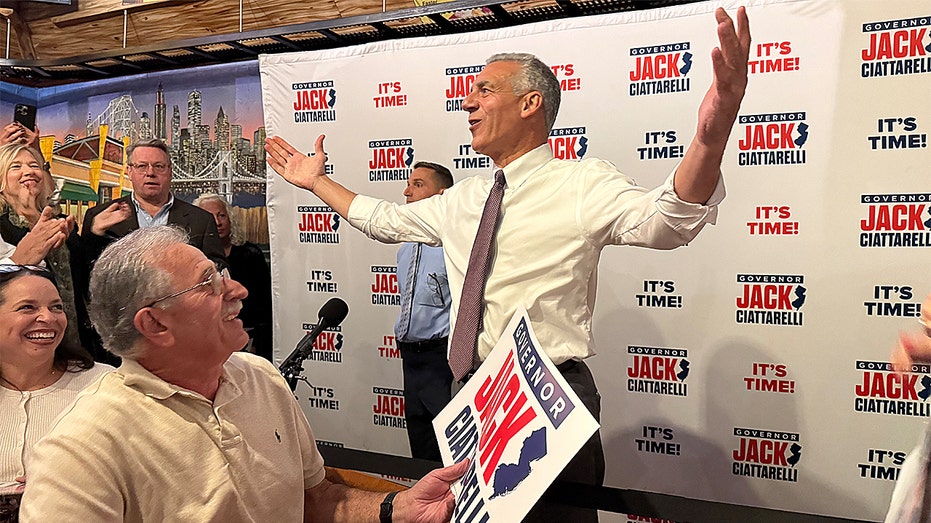
SADDLE BROOK, N.J. – With Election Day fast approaching, the Republican nominee in one of only two races for governor in the nation this year is fired up. “Championship teams finish strong,” Jack Ciattarelli told a crowd of supporters jam-packed into a diner in this northern New Jersey town earlier this week. “Let’s win this race.” Ciattarelli, who’s making his third straight run for Garden State governor and who nearly upset Democratic Gov. Phil Murphy four years ago, has good reason to be confident. In a state where registered Democrats still outnumber Republicans despite a GOP surge in registration this decade, two new public opinion polls released this week indicated Ciattarelli narrowing the gap with Democratic gubernatorial nominee Rep. Mikie Sherrill in the race to succeed the term-limited Murphy. THE POLITICAL BOMB TRUMP EXPLODED IN THE NEW JERSEY SHOWDOWN FOR GOVERNOR The slightly fresher of the two surveys, a Fox News poll conducted Oct. 10–14, put Sherrill at 50% support among likely voters, with Ciattarelli at 45%. Sherrill’s 5-point advantage was down from an 8-point lead in Fox News’ September survey in New Jersey. New Jersey and Virginia are the only two states to hold gubernatorial showdowns in the year after a presidential election, and the contests traditionally grab outsized attention and are viewed as political barometers ahead of the following year’s midterm elections. CLICK HERE TO CHECK OUT THE LATEST FOX NEWS POLLING And this year, they’re being viewed to a large degree as ballot-box referendums on President Donald Trump’s unprecedented and combustible second-term agenda. While Democrats have long dominated federal and state legislative elections in blue-leaning New Jersey, Republicans are very competitive in gubernatorial contests, winning five out of the past 10 elections. And Trump made major gains in New Jersey in last year’s presidential election, losing the state by only six percentage points, a major improvement over his 16-point deficit four years earlier. Ciattarelli, interviewed by Fox News Digital Wednesday in Bayonne, New Jersey, noted that he “made big gains” in his 2021 showing “in Hudson County and Passaic County,” two long-time Democratic Party strongholds. “And the President did very, very well in ’24 in those very same counties. And if you take a look at who’s been endorsing me, including some very prominent Democrats here in Hudson County, people want change,” Ciattarelli emphasized. But Ciattarelli is also aiming to energize Republican base voters in what’s likely to be a low-turnout election. Multiple sources confirmed to Fox News that Trump will hold tele-rallies with Ciattarelli ahead of Election Day. Trump’s teaming up with Ciattarelli may help energize MAGA supporters, many of whom are low propensity voters who often skip casting ballots in non-presidential election years. And on Wednesday, Ciattarelli was joined at his diner stop, where there was an overflow crowd of a couple of hundred people outside, by Vivek Ramaswamy, the MAGA rockstar who is running for governor next year in his home state of Ohio. Ramaswamy, the multimillionaire biotech entrepreneur and conservative commentator who pushed an “America First 2.0” platform as he ran for the 2024 Republican presidential nomination before ending his bid and becoming one of Trump’s top supporters and surrogates, told Ciattarelli, “We’re going in Ohio next year, but you’ve got to pave the path this year. We’re counting on you.” ONLY ON FOX: RAMASWAMY SAYS GOP VICTORIES IN THE 2025 ELECTIONS WOULD ‘SET THE TABLE’ FOR BIGGER WINS IN 2026 Democratic National Committee Chair Ken Martin, commenting on why Republicans feel bullish about the New Jersey showdown, raised concerns. “New Jersey is the best place, probably, for Donald Trump to actually stop the Democratic momentum — or at least minimize the Democratic momentum that we’ve seen throughout this year,” Martin said in a Politico interview. But the Democratic Governors Association (DGA) is confident of a Sherrill victory next month. “As numerous polls show her holding a strong lead and earning more than 50% of the vote, Mikie Sherrill is rising to meet the moment in this incredibly competitive race,” DGA Spokesperson Izzi Levy told Fox News. “It’s clear that Mikie has the momentum, and that New Jersey voters are all-in to reject Ciattarelli for a third time this November.” While Trump isn’t on the ballot, he’s loomed large over the New Jersey gubernatorial election. At last week’s second and final debate, Sherrill charged that her GOP rival had “shown zero signs of standing up to this president. In fact, the president himself called Jack 100% MAGA, and he’s shown every sign of being that.” Asked whether he considered himself part of the MAGA movement, Ciattarelli said he was “part of a New Jersey movement.” CIATTARELLI WELCOMES TRUMP’S HELP IN FINAL STRETCH IN BATTLE FOR NEW JERSEY GOVERNOR When asked to grade the president’s performance so far during his second term, Ciattarelli said, “I’d certainly give the president an A. I think he’s right about everything that he’s doing.” “I think that tells us all we need to know about who Jack Ciattarelli’s supporting. I give him an F right now,” Sherrill responded, as she pointed to New Jersey’s high cost of living. The race in New Jersey was rocked a couple of weeks ago by a report that the National Personnel Records Center, which is a branch of the National Archives and Records Administration, mistakenly released Sherrill’s improperly redacted military personnel files, which included private information like her Social Security number, to a Ciattarelli ally. HEAD HERE FOR THE LATEST FOX NEWS REPORTING ON THE 2025 ELECTIONS But Sherrill’s military records indicated that the United States Naval Academy blocked her from taking part in her 1994 graduation amid a cheating scandal. The showdown was jolted again last week after Sherrill’s allegations that Ciattarelli was “complicit” with pharmaceutical companies in the opioid deaths of tens of thousands of New Jerseyans, as she pointed to the medical publishing company he owned that pushed content promoting the use of opioids as a low-risk treatment for chronic pain. This week, Trump set off a political hand grenade
Anti-Israel radicals from ‘global intifada’ movement join ‘No Kings’ protests
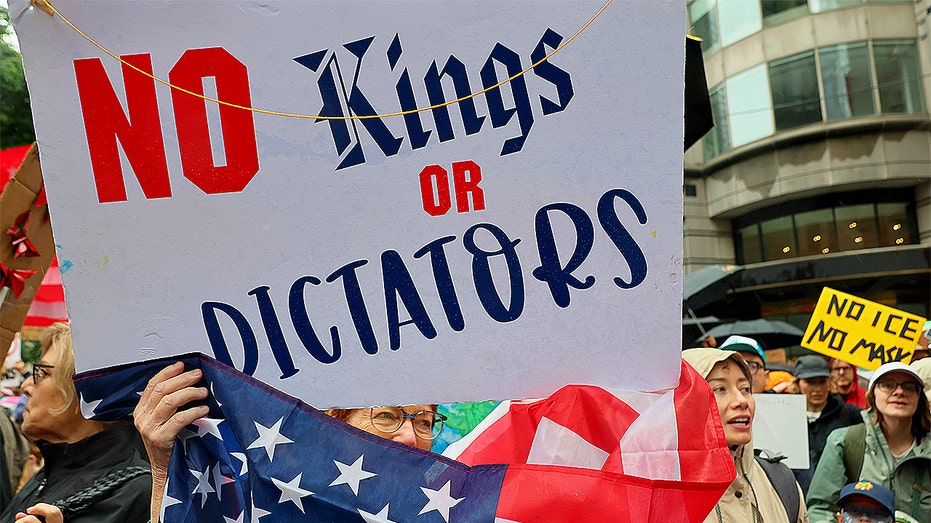
New York City organizers embedded in the global intifada to destroy the state of Israel moved Friday to join the controversial “No Kings” protests planned for today, despite the peace deal reached between Israel and Hamas. “UAW Labor for Palestine” and “NYC Labor for Palestine” quietly posted a call-to-action for the “Palestine Labor Solidarity Contingent” to meet Saturday at 11 a.m. at Duarte Square at the corner of Grand Street and Canal Street in midtown Manhattan and then flow into the #NoKings protests planned to protest President Donald Trump. They’re not alone. Around the country, anti-Israel blocs are slotting themselves into the “No Kings” protests as a “Palestine Contingent” and “Socialist Contingent,” positioning their messages “front and center,” as Seattle activists put it, “from Providence to Palestine.” ‘NO KINGS’ ORGANIZER DISCOURAGES VIOLENCE FOLLOWING COAST-TO-COAST ARRESTS The alignment underscores a strategic pivot in the global intifada’s next phase, experts say, carrying the anti-Israel message into any high-energy civic protest, even after Hamas agreed to a ceasefire by linking “Free Palestine” to domestic fights like ICE, police and “fascism.” Billionaire donor George Soros is reportedly funding many of the organizations leading the “No Kings” protests, like Indivisible, whose co-founders, Leah Greenberg and Ezra Levin, received a $3 million two-year grant last year from Soros’s Open Society Foundations for “social welfare activities.” Details about the “Palestine Contingent” weaving into the “No Kings” protests raises new questions about the way big Democratic donors like Soros are funneling nonprofit dollars into a professional protest industry that is fractious, divisive and partisan, potentially in violation of tax and nonprofit laws. ‘NO KINGS’ MOVEMENT AND WHAT IT WANTS: INSIDE THE MESSAGE DRIVING SATURDAY’S NATIONWIDE PROTESTS Behind the emotion and patriotic imagery of the protests, a Fox News Digital investigation revealed that the movement’s polished “pro-democracy” branding masks a coordinated network of Democratic tax-exempt nonprofits and labor unions, political action committees, coalitions and for-profit protest consultants that include some of the most virulent activists against Israel, including self-declared socialist groups like the Party for Socialism and Liberation, Democratic Socialists of America and Students for a Democratic Society. According to a public database of the protest’s organizers, compiled by the Pearl Project, a journalism initiative, the protest’s “partners” include 265 mostly nonprofit organizations, including some anti-Israel groups, like Jewish Voice for Peace, exploiting their nonprofit benefits to wage a political war against the sitting president. Their nonprofit status shields them from paying taxes on most of their total annual revenues of $2.9 billion, even while they engage in partisan work they aren’t supposed to be doing. Critics say they are allegedly skirting, if not violating, tax and nonprofit laws. Event organizers didn’t return requests for comment. “They call it ‘No Kings,’ but what they’ve built is an empire of tax-exempt organizations doing the Democratic Party’s work on the taxpayer’s dime,” said Jennica Pounds, a computer scientist who runs a platform, DataRepublican.com, following the money on these organizations. “They are using every excuse in the book, from immigration to Israel, to rage-bait America. There is nothing ‘charitable’ about their professional protest enterprise, and they should be investigated for fomenting so much hate in America behind the shield of ‘charity work.’” Already, Trump has said that he has directed the Justice Department to investigate possible violations of the Racketeer Influenced and Corrupt Organizations Act (RICO). Sen. Chuck Grassley, R-Iowa, has opened an investigation that follows the money to anti-Israel groups, including some of the groups who will be bringing their protest signs to the “No Kings” demonstrations. Sen. Ted Cruz, R-Texas, told Fox News Digital, “The Trump administration and the Republican Congress are committed to countering this network of left-wing violence.” Last week, House Speaker Mike Johnson called the protests a “hate America rally.” Indeed, on June 14, at the “No Kings” protest in Philadelphia, activists from the “Palestinian Contingent,” including activists from the Council on American-Islamic Relations and Democratic Socialists of America, hissed as a woman sang the national anthem. “Booooo! Boooooo!” they yelled, covering their faces in keffiyehs, carrying Palestinian flags and heckling bystanders, “Zionist!” While organizers insist the movement transcends party lines, its structure tells a different story. The protest network’s official “partners” include 24 Democratic political action committees that make no secret of their partisan agenda, dedicated to electing Democratic politicians. Among them are the mega-organizing groups Indivisible Action, Hollywood Democrats and the Democratic National Committee’s Washtenaw County Democratic Party in Michigan, Westside Democratic Headquarters in Los Angeles, Wellstone Democratic Renewal Club in northern California, 504 Democratic Club and College Democrats of America. The motto of Field Team 6, another political action committee, is “Register Democrats. Save the World.” However, those PACs are just one layer of a much larger partisan infrastructure. About one-third, or 79 groups, behind the “No Kings” protests hold 501(c)(3) status, meaning their donors receive tax deductions while the groups face strict restrictions to do “charitable” work, not political work. They are supposed to be nonpartisan. Yet most have clearly stated political agendas. On its donation page, one of the protest partners, “Build the Resistance,” states a partisan mission to “fight against autocracy, fascism, and donald [sic].” Donations go to Oil and Gas Action Network, a 501(c)(3) that reported $1.9 million in revenues in its last tax filing. Another 100 are 501(c)(4) political nonprofits that may do limited lobbying but still cannot devote themselves primarily to political work. Meanwhile, 24 are 501(c)(5) labor union nonprofits, like the labor unions marching against Israel in New York and the San Francisco Bay Area, that also have limits on the amount of political work they can do. It’s clear that the protests are all about politics. The protest’s own internal online “toolkit” mentions Trump 12 times and describes the mobilization explicitly as a direct stand against “the Trump administration,” “Trump and his enablers,” “President Trump’s authoritarian takeover” in a partisan-centered campaign. In Rhode Island, the “Free Palestine Contingent” activists will march “FROM PROVIDENCE TO PALESTINE” to “FIGHT FASCISM! FIGHT GENOCIDE.” It connects the battles against ICE law enforcement officers and the battles of Palestinians, noting, “Military occupations and
Republicans torch anti-Trump ‘No Kings’ protests, say Dems fear angering leftists in shutdown fight

Republican lawmakers have spent the week sharpening their attacks on Saturday’s nationwide day of protests against President Donald Trump, which many GOP leaders dismissed as “Hate America” rallies. Cities across the country are expected to see hundreds of thousands of people come out for the “No Kings” movement, and several congressional Democrats have even said they will attend. Republicans have seized on the protests as a product of far-left activism, while at the same time arguing Democrats have held firm against the GOP’s plan to end the government shutdown in a bid to please that far-left base. House Speaker Mike Johnson, R-La., told Fox Business Network he hoped that Democratic leaders who attended would be more willing to accept the GOP’s plan after the demonstrations were over — but he did not sound overly optimistic. SCREAMING MATCH ERUPTS BETWEEN HAKEEM JEFFRIES, MIKE LAWLER AS GOVERNMENT SHUTDOWN CHAOS CONTINUES “It’ll be a collection of wild leftist policy priorities, and that’ll be on display for the whole country. After that’s over, I hope there’s a few Democrats over here who will come to their senses and return to governing the country,” Johnson said. “Right now, I don’t think — it’s my assumption and all of ours that they would not make that concession before that rally’s over because they don’t want to face the angry mob. I mean it’s sad, but that’s where we are.” House Minority Leader Hakeem Jeffries, D-N.Y., dodged a question on whether he would attend one of the rallies on Friday, telling reporters, “I haven’t finalized my schedule for the weekend given, you know, the sensitivities around the government shutdown. I’m still very hopeful that Republicans will decide to show up for work so we can get the government back open.” “But I support the right of every single American to participate in the rallies that are going to take place this week and showing up to express dissent against an out-of-control administration,” he said. However, Senate Minority Leader Chuck Schumer, D-N.Y., said he would attend one of the protests, as did House Democratic Caucus Chairman Pete Aguilar, D-Calif. Rep. Zach Nunn, R-Iowa, predicted more top Democratic figures would go but, like Johnson, signaled hope that they would acquiesce to Republicans’ demands when it was over. “My guess is if they don’t want a primary from the left, they’ll probably find a way to sneak it into their schedule. The real question that’s going to be is, do they have the fortitude after Saturday to come back and open up the government?” Nunn told Fox News Digital earlier this week. 58 HOUSE DEMS VOTE AGAINST RESOLUTION HONORING ‘LIFE AND LEGACY’ OF CHARLIE KIRK “They should be doing it today. But if they feel like they’ve got to appease their base, then they better come to Jesus on Sunday and figure out a way to help them get back to the business of taking care of the American people.” House GOP leaders also criticized the rallies at nearly every one of their daily shutdown press conferences this week. Majority Leader Steve Scalise, R-La., said Friday that Schumer was “more concerned” with “impressing the ‘Hate America’ rally crowd that’s coming up here tomorrow than he is about not solving all of our problems tomorrow.” And House Majority Whip Tom Emmer, R-Minn., told Fox News’ Maria Bartiromo on Tuesday of the rallies’ place in the shutdown fight, “The rumor is that they can’t end the shutdown beforehand, because a small but very violent and vocal group is the only one that’s happy about this.” “If they shut it down beforehand, then they’ve got to deal with that group beforehand. If they make it through that, then at least they’ve made it through their Hate America rally, and then they can get this thing done,” Emmer said. The House passed a bill to keep the federal government funded at current levels through Nov. 21, called a continuing resolution (CR), mostly along party lines last month. It’s since failed 10 times in the Senate, with a majority of Democrats rejecting any spending deal that does not also include an extension of COVID-19 pandemic-era Obamacare subsidies that will expire at the end of this year without congressional action.
Poisoned promises: Camp Lejeune families still wait for justice decades after toxic water scandal
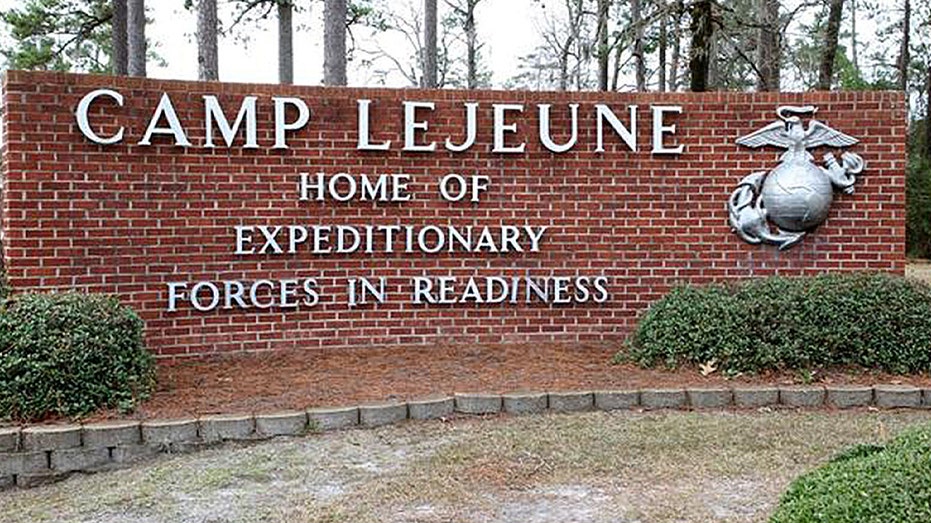
Decades after Marines and families at North Carolina’s Camp Lejeune bathed and drank in poisoned water, the law meant to bring them justice has stalled. The 2022 Camp Lejeune Justice Act — intended to finally allow victims their day in court — has instead become mired in legal backlogs and procedural fights. As medical bills mount from lifetimes of chronic illness and loved ones pass away, families say Washington’s delays have turned a promise of justice into yet another bureaucratic waiting game. They’re now calling on Congress to pass the Ensuring Justice for Camp Lejeune Victims Act, which would guarantee victims the right to trial and ensure their claims are heard. BANNED CHEMICALS FOUND IN AMERICAN SHAMPOO, SUNSCREEN AND TAMPONS ACROSS MAJOR BRANDS Donna Harris was born and spent her early childhood on the North Carolina Marine Corps base. She believes she’s been paying for it ever since. After years of drinking and bathing in contaminated water, Harris has battled asthma and immune thrombocytopenic purpura (ITP) — a rare blood disorder — lost her left kidney and faced both breast and uterine cancer. “I’m just wondering where the next cancer is going to come,” she said. “That’s how I live every day.” Her mother, who lived on base in the 1960s, suffered four miscarriages. Her sister later died from kidney disease. From the 1950s through the late 1980s, drinking water at Marine Corps Base Camp Lejeune was contaminated with toxic chemicals — including trichloroethylene (TCE), perchloroethylene (PCE), benzene, and vinyl chloride — leaked from fuel tanks and improper waste disposal. Estimates from the Agency for Toxic Substances and Disease Registry (ATSDR) suggest that up to one million Marines, civilian workers and their families were exposed over decades. Although contamination was first detected in the early 1980s, the most polluted wells weren’t shut down until 1985. Veterans and families spent years reporting high rates of rare cancers, birth defects and chronic diseases, only to face a long fight for recognition and care. Federal investigations later found that military and health officials were slow to act, even after learning the water was unsafe. When the contamination first became public in the mid-1980s, Marine officials blamed a nearby dry-cleaning shop for leaking chemicals into the groundwater. But federal investigations later found multiple sources, including leaking fuel tanks, chemical dumps and industrial solvent disposal across the base. Bob Quinter, a fighter pilot who survived being shot down five times during the Vietnam War, never imagined that the greatest danger he faced would come from his own base. After being stationed at Camp Lejeune for eight years in the 1970s and ’80s, Quinter was diagnosed with recurring kidney cancer in 2011. “No one had any idea of the toxic exposure,” he said. Still, strange smells loomed in the air on base from time to time. Quinter recalled a friend who served as the base adjutant warning him in the early ’80s that “a major issue on base would soon come to light — and its reach would prove devastating.” “It’s sort of like a betrayal from the Corps,” Quinter said. HIGHER CANCER RATES LINKED TO WWII RADIOACTIVE WASTE IN MIDWESTERN CREEK Both of his daughters have suffered multiple miscarriages, and at least half a dozen fellow Marines from his time on base later developed serious illnesses they believe are tied to their exposure. “Marines, by their nature, tend to be positive and not worry about the bad parts of their service,” Quinter added. “So it’s something that comes up sort of off the cuff, and then we move on to some old sea story that everybody would rather hear.” Originally, injury claims related to Camp Lejeune had a filing deadline of 1997 — long before many victims even knew about the contamination. When Congress passed the Camp Lejeune Justice Act in 2022, victims felt a wave of relief. Harris learned that her breast cancer qualified as a covered condition and filed a claim to help pay for radiation and surgery. “I reached out and was approved for any out-of-pocket medical costs,” she said. She meticulously submitted every receipt and record. “That was in April of 2022,” Harris said. “And I’ve not seen a dime. They care until they don’t.” Her 93-year-old father, who will soon attend the Marine Corps Ball in his dress blues, appears to have escaped the illnesses that ravaged others in the family. “I asked him, I said, ‘Daddy, why didn’t you get sick?’ He said, ‘I never drank the water.’” It’s believed that the water on site affected up to one million people before authorities cut off the poisoned supply. Now, victims and families are urging Congress to ensure that the Camp Lejeune law actually opens the door to jury trials or fair mediation rather than leaving claims stalled in administrative limbo. The most important goal, they say, is simply to get into court — to have their cases move forward rather than remain buried in procedural bottlenecks. They’re also asking lawmakers to expand the capacity of the court system so that more cases can be heard and resolved efficiently. Beyond compensation, they want acknowledgment: public recognition that the government knew what was happening and failed to act, and an honest accounting of how that negligence destroyed lives. By law, Camp Lejeune claims are first handled by the Navy’s Office of the Judge Advocate General (JAG), which must review each case before victims are allowed to sue in federal court. The Navy JAG office and the Department of Justice could not be reached for comment. There is growing bipartisan support behind new legislation to fix the system. More than 60 members of the House of Representatives and over 10 senators now back the Ensuring Justice for Camp Lejeune Victims Act, introduced by North Carolina Republicans Sen. Thom Tillis, R-N.C., and Rep. Greg Murphy — but the bill has not yet been scheduled for a vote. Michelle James, whose husband died in 2019 after years of illness she believes was
India: How is the ethnic conflict in Manipur affecting ordinary citizens?

101 East travels to northeast India, where a brutal civil war has killed hundreds and displaced tens of thousands. For more than two years, India’s northeastern state of Manipur has been beset by violence between two ethnic groups, the Meitei and the Kuki-Zo. With nearly 260 people killed and about 60,000 displaced, the Indian government has taken control of the state in a bid to restore order. In what has been described as a civil war, both sides accuse the other of committing atrocities. New Delhi has pledged to disarm the warring factions and restore peace to the region. 101 East examines how the ethnic conflict in Manipur is affecting the lives of common citizens on both sides of the divide. Published On 18 Oct 202518 Oct 2025 Click here to share on social media share2 Share Adblock test (Why?)
Lebanon court orders son of late Libyan leader Gaddafi freed on $11m bail
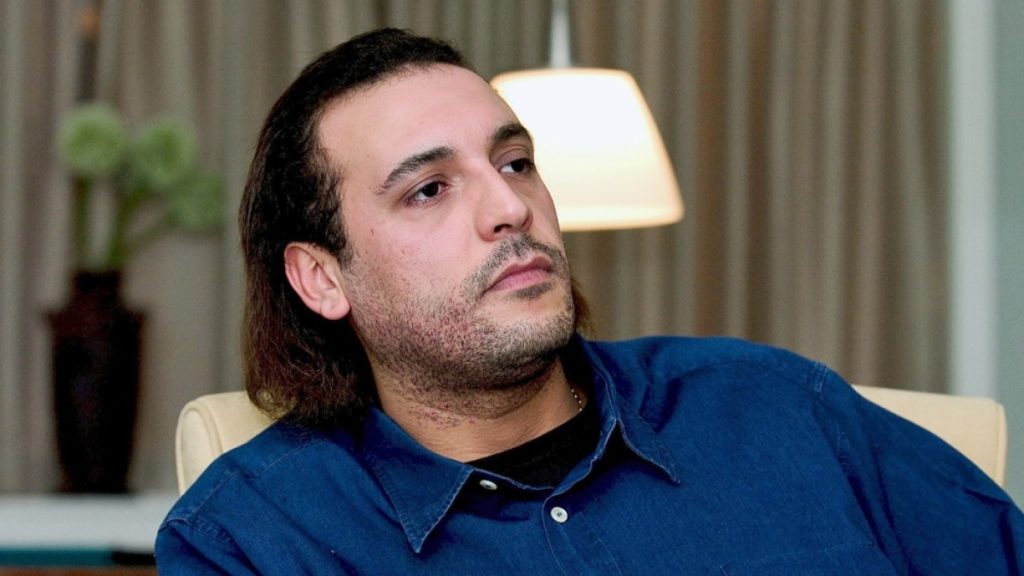
Hannibal Gaddafi, youngest son of Muammar Gaddafi, has been held for nearly a decade without trial in Lebanon. Published On 18 Oct 202518 Oct 2025 Click here to share on social media share2 Share A judge in Lebanon has ordered the release on bail and imposed a travel ban on Hannibal Gaddafi, the youngest son of the late Libyan leader Muammar Gaddafi, who has been held for nearly a decade in pre-trial detention. Lebanon’s National News Agency confirmed Gaddafi’s bail ruling on Friday in a case related to the kidnapping and disappearance of revered Lebanese Shia leader Musa al-Sadr in Libya. Recommended Stories list of 4 itemsend of list The court’s decision was greeted with ridicule by Gaddafi’s lawyer Laurent Bayon. The “release on bail is totally unacceptable in a case of arbitrary detention. We will challenge the bail,” Bayon told the AFP news agency. Bayon also said his client “is under international sanctions” and could not pay the large bail fee. “Where do you want him to find $11m?” Bayon asked. Lebanese authorities arrested Gaddafi in 2015 and accused him of withholding information about the disappearance of al-Sadr in Libya in 1978 – a case which still grips public attention in Lebanon. Al-Sadr was an iconic figure in Lebanon when he travelled to meet with then-Libyan leader Muammar Gaddafi. Founder of the Amal Movement, which is now an ally of Hezbollah, al-Sadr went missing on the visit along with an aide and a journalist, and none have been heard from since. Al-Sadr’s disappearance has sparked decades of theories and accusations of official involvement by Gaddafi – who was overthrown and killed in a 2011 uprising – and ties between the two countries have been strained since the disappearance. Lebanon’s parliament speaker, Nabih Berri, who succeeded al-Sadr at the head of the Amal Movement, has accused Libya’s new authorities of not cooperating on the issue of al-Sadr’s disappearance, an accusation Libya denies. In what many see as a means of extracting answers as to al-Sadr’s fate in Libya, Hannibal Gaddafi has been held in prison in Lebanon since 2015 without trial. Advertisement His lawyer, Bayon, has noted that his client is now 49, meaning that he was around two years old at the time that al-Sadr disappeared. After the judge’s decision on Friday, the al-Sadr family published a statement protesting the proposed release of Gaddafi and expressing their “surprise” at the bail ruling. The family also said they would “not interfere today in [the judge’s] decision to release him”. “The arrest or release of Hannibal Gaddafi is not our goal, but rather a mere legal procedure. Our primary issue is the disappearance of the imam [al-Sadr],” the family added. In August, Human Rights Watch urged Lebanon to immediately release Gaddafi, saying he had been wrongly imprisoned on “apparently unsubstantiated allegations that he was withholding information” about al-Sadr. Last week, an alarm was raised about the health of Gaddafi – who already suffers from depression – after he was hospitalised for abdominal pain. Libyan authorities in 2023 formally asked Lebanon to release Gaddafi because of his deteriorating health after he went on a hunger strike to protest his detention without trial. Libyan Prosecutor General Al-Sediq al-Sour sent the request to his Lebanese counterpart, Ghassan Oueidat, according to reports, and al-Sour reportedly said in his request that Lebanon’s cooperation in freeing Gaddafi could help reveal the truth regarding al-Sadr. Adblock test (Why?)
Kremlin envoy proposes ‘Putin-Trump tunnel’ to link Russia, US

Siberia-Alaska link could ‘unlock’ resources and be built with Elon Musk’s The Boring Company, says Kirill Dmitriev. A Kremlin envoy has proposed building an undersea tunnel linking the United States and Russia, suggesting it could be built with the help of US billionaire Elon Musk’s The Boring Company. Kremlin investment envoy Kirill Dmitriev said that the 112-kilometre (70-mile) “railroad and cargo link” between Siberia and Alaska would “unlock joint resource exploration” between the two countries. Recommended Stories list of 4 itemsend of list US President Donald Trump, who has promised to “drill, baby drill” during his second term, told reporters on Friday that he thought the proposal was “interesting” during a White House meeting with Ukrainian President Volodymyr Zelenskyy. During their meeting, Trump turned to Zelenskyy, asking for his thoughts on the tunnel. The Ukrainian leader responded that he was “not happy with this idea”. Dmitriev, who is also the CEO of the Russian Direct Investment Fund, has also suggested that the US could join Russia and China in joint “hydrocarbon projects in the Arctic”, referring to expanded drilling for oil. “Certainly, Russia is eyeing the opportunity of joint Russia-China-US projects, including in the Arctic region, specifically in the energy sector,” Dmitriev said last month, according to Russia’s TASS news agency. Russia and other Arctic countries are reportedly planning to expand mining operations in the region as climate change sees polar ice receding. Dmitriev also proposed that Musk’s The Boring Company could become involved in the project, tagging Musk in a post on X, a social media platform owned by the South Africa-born billionaire. Advertisement “Let’s build a future together,” Dmitriev wrote to Musk on X, in a post also touting the project as “symbolising unity”. “Imagine connecting the US and Russia, the Americas and the Afro-Eurasia with the Putin-Trump Tunnel,” Dmitriev wrote. Musk had not publicly responded to Dmitriev’s post as of Friday evening, US time. Dmitriev’s posts promoting the tunnel project came as Trump and Putin held a two-hour call on Thursday night in advance of a planned meeting in Hungary’s capital, Budapest, which Trump says will take place within two weeks. The Kremlin has also confirmed the meeting. The Bering Strait, 82km (51 miles) wide at its narrowest point, separates Russia’s vast and sparsely populated Chukotka region from Alaska. Proposals to link them have been around for at least 150 years. The small Diomede Islands, one Russian and one belonging to the US, sit in the middle of the strait, only 4km (2.4 miles) apart. Dmitriev said a plan for a “Kennedy-Khrushchev World Peace Bridge” over the strait had been floated during the Cold War. He posted a sketch from that era of the route it might have taken, with a graphic showing the route the new tunnel could take. “The time has come to do more and connect the continents for the first time in human history,” Dmitriev said. From the Soviet JFK docs released by @RepLuna: Kennedy–Khrushchev World Peace Bridge “could and should be built between Alaska and Russia at once.” With modern @boringcompany technology this can become a Putin-Trump tunnel connecting the Eurasia and Americas for < $8 billion pic.twitter.com/c84VK75rh5 — Kirill Dmitriev (@kadmitriev) October 16, 2025 Adblock test (Why?)