

Can death-by-hanging be replaced with lethal injection? Supreme Court says, ‘Problem with govt is…’

The PIL has sought to declare Section 354(5) of the Code of Criminal Procedure (CrPC) — which prescribes hanging by the neck till death — as unconstitutional, and urged the apex court to recognise the right to die by a dignified procedure of death as a facet of Article 21 of the constitution.
Delhi: Special courts to now try former MPs, MLAs after LG approves expansion of courts’ ambit; check details

Delhi Lieutenant Governor VK Saxena has approved a proposal expanding the jurisdiction of Special Courts dealing with cases against sitting MPs, MLAs to now try former legislatives as well. New special court have also been created for this purpose.
The feds are cutting off public money for all Planned Parenthoods, following a playbook that began in Texas
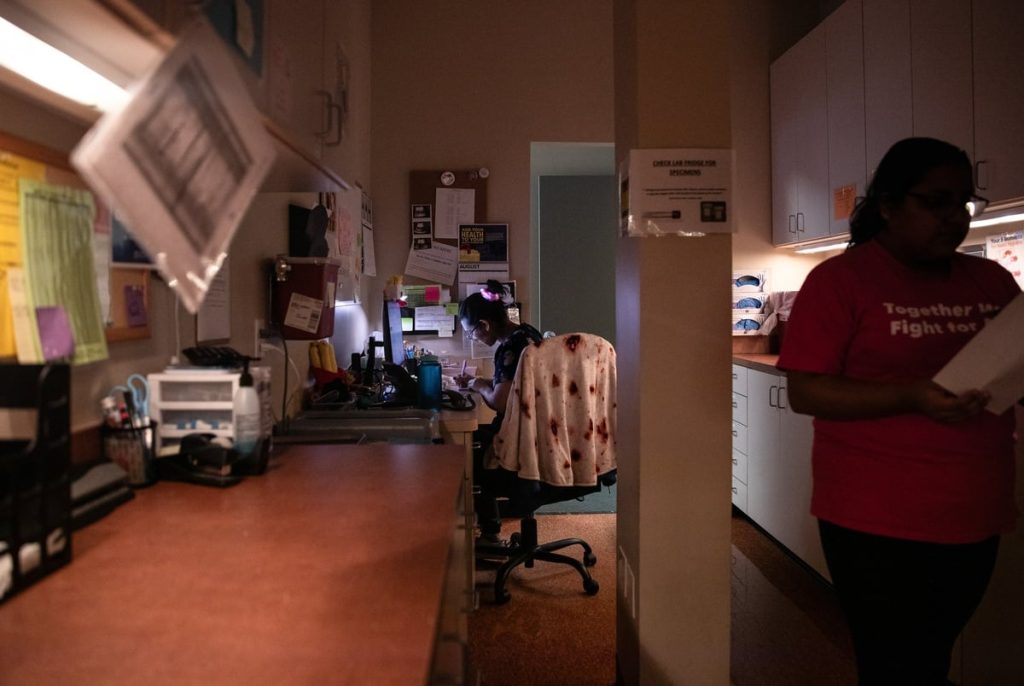
Texas’ Planned Parenthood has lost half its clinics, but they continue to see thousands of patients a year.
Texas Rep. Gina Hinojosa joins Democratic race to challenge Gov. Greg Abbott
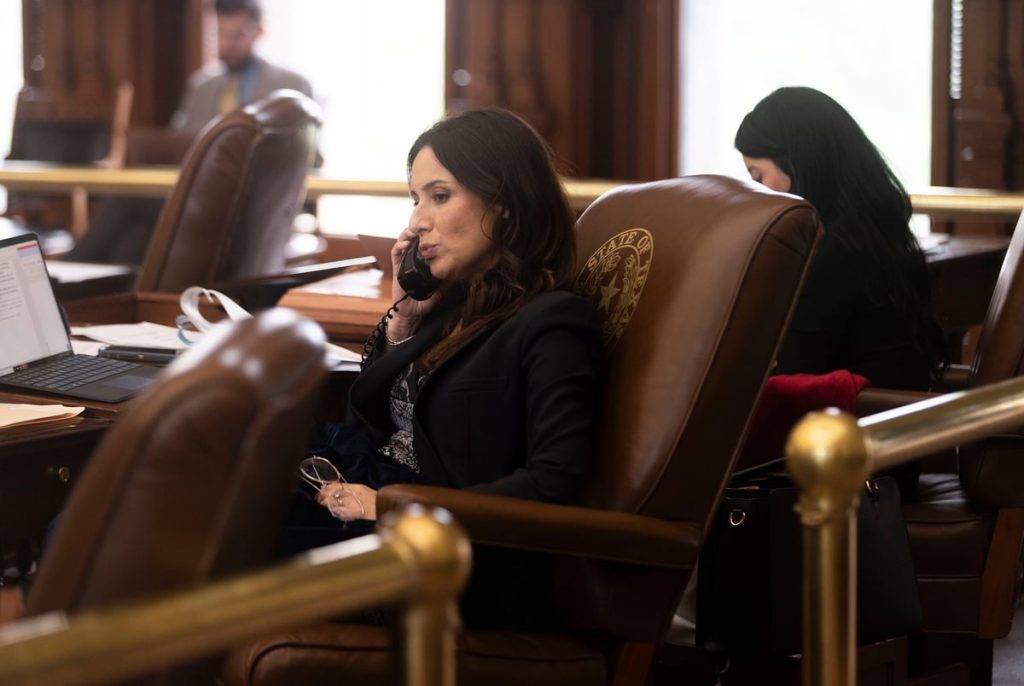
The five-term state lawmaker from Austin has homed in on education issues in the Texas House, becoming a primary foil to Abbott on school vouchers.
Republicans eye fresh funding fight as shutdown standoff drags on
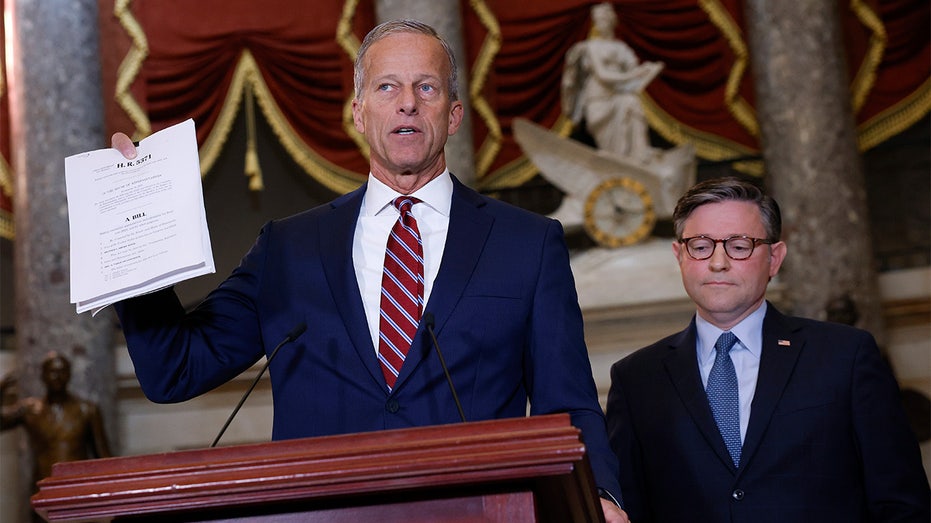
With the stalemate over federal funding showing no clear signs of easing, some House and Senate Republicans are beginning to reckon with the possibility of running out of time before the next government shutdown deadline. Senate Democrats have now rejected the GOP’s bill, a short-term measure to keep the government funded through Nov. 21, called a continuing resolution (CR), eight times — and are expected to sink it again Wednesday afternoon. CRs are traditionally used to give congressional negotiators more time to strike a longer-term deal on government spending. Yet the bill Republicans hoped would originally give them seven more weeks past the end of fiscal year (FY) 2025 on Sept. 30 has dwindled down to just over five, assuming Democrats change their tune this week. Both House and Senate Republicans who spoke with Fox News Digital have acknowledged that it’s at least possible the Nov. 21 date will need to be modified. JOHNSON RAISES STAKES ON SCHUMER AS GOVERNMENT SHUTDOWN BARRELS INTO WEEK 3 “That’s an important question that we’re all discussing,” Rep. Tom McClintock, R-Calif., who has served in Congress since 2009, told Fox News Digital. “It may well be that we’ll need to extend that deadline further in order to make up for the time we’ve lost during the shutdown.” However, McClintock said he was more in favor of a new CR after the current measure expires, rather than starting from scratch on a new bill. The Nov. 21 CR passed in the House — largely along party lines — on Sept. 19, and most House Republicans have been united in now putting the onus on the Senate. “I think we need to pass the CR that’s in the Senate and then assess if we need additional time,” he said. Rep. David Valadao, R-Calif., a senior member of the committee tasked with spearheading federal funding talks, also acknowledged that more time could be needed. He blamed Senate Democrats for stalling the GOP bill and noted the House had already passed 12 individual appropriations bills out of his committee. SCREAMING MATCH ERUPTS BETWEEN HAKEEM JEFFRIES, MIKE LAWLER AS GOVERNMENT SHUTDOWN CHAOS CONTINUES “We felt like we were in a really good spot and were coming to a lot of agreement,” he said of the House Appropriations Committee’s work. “And I feel like this set us back quite dramatically.” Meanwhile, another House Republican familiar with the appropriations process told Fox News Digital they’d heard of preliminary discussions about combining three bills that have passed both the House and Senate floor — dealing with military construction and veterans’ affairs, the legislative branch and agriculture — as a combined “minibus” alongside an additional 10-day CR. The House and Senate have already voted to set up a “conference committee” on those three bills, a formal working group of sorts aimed at giving lawmakers room to make a compromise. Speaker Mike Johnson, R-La., acknowledged discussions about the date during a media call with the Republican Study Committee last week. “I mean, the longer [Democrats] delay this, the closer we get to that seven-week added deadline to Nov. 21, and it makes it very difficult to complete the process… with regard to the regular order on appropriations,” Johnson told Fox News Digital. “So there is some discussion,” he said. “There’s a lot of angst about that. We haven’t made final determinations yet, because it’s first things first, and we’re taking it day by day. But I’ll tell you, of course, obviously the leadership has to keep a close eye on these things.” He distanced himself from the idea of a new CR during a Wednesday press conference, however, telling reporters, “It would do us no good to pass yet another CR out of the House, because it will meet the same fate. Chuck Schumer and the Senate Democrats want to close the government down.” A new CR could be a potentially bruising political fight for the House and Senate, considering Republicans’ historic aversion to short-term federal funding extensions. And while Senate Majority Leader John Thune, R-S.D., and Senate Republicans remain largely adamant that the House’s bill is the one they want to use, Thune didn’t shut down the idea of changing the date. “We keep losing time on the clock, which could be used to do the normal appropriations process,” he said. “So, you know, I mean, I think that that’s a point of discussion and certainly something I’ve expressed an opening about.” Sen. Markwayne Mullin, R-Okla., who has been one of a handful of Senate Republicans meeting with Senate Democrats throughout the shutdown, told Fox News Digital that the longer the shutdown goes on, “It becomes less realistic that we can have a funding bill.” “We’ll have to open the government back up, and then I can see a real possibility of us having to extend that date,” he said. Others in the Senate GOP appeared more rigid in their thinking, however, and wanted to stick with the original plan. “I don’t think a new deadline is going to help,” Sen. John Kennedy, R-La., told Fox News Digital. “This is up to the Democrats. We’ve asked for no conditions, it’s a clean CR. Their demands are not serious. Until they back off their unserious demands, we’re going to stay shut down.” And Sen. James Lankford, R-Okla., argued that Republicans should just keep going with the same bill and warned that changes could further delay reopening the government. “Whatever we do, we still gotta go back, renegotiate with the House,” he said. “If you start changing dates, we gotta have a new document, start all over again, it gets delayed again.” Rep. Stephanie Bice, R-Okla., another House Appropriations Committee member, similarly pushed for the Nov. 21 deadline to remain in place. “I really think we should stick with [Nov. 21]. I would remind folks that we actually, on the House side, have passed all 12 appropriations bills,” Bice said. “I don’t think that extending the date right now is the best.” “The focus
White House reveals illegal migrants who received Medicaid as shutdown over healthcare drags on
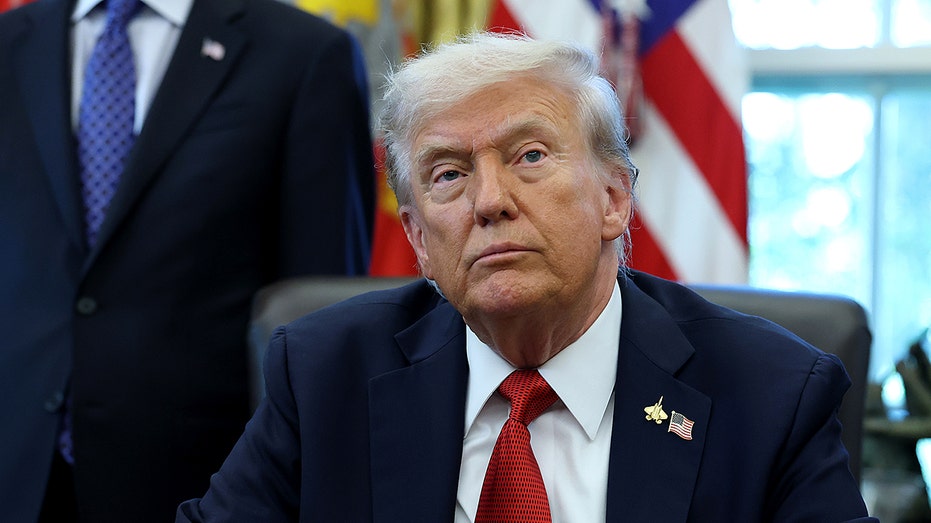
EXCLUSIVE: The White House unveiled a number of criminal illegal migrants who received Medicaid as the Senate remains in gridlock over the government shutdown. Fox News Digital obtained detailed information surrounding the arrests of 49 illegal migrants, who have all been deported under the Trump administration, who were arrested for an array of crimes that occurred in the U.S. Charges include murder, assault, theft, burglary, rape and sexual abuse of a minor among other serious charges. In Congress, the federal government has remained shut down for more than two weeks as Senate Minority Leader Chuck Schumer and most Democrats push for a reinstatement of Medicaid policy that was altered under the One Big Beautiful Bill Act to be included in legislation that would fund the government through Nov. 21. SENATE SET FOR NEW VOTE TO END SHUTDOWN, BUT GRIDLOCK OVER OBAMACARE SUBSIDIES REMAINS Republicans argue that “more than 1 million illegal aliens” receive Medicaid under the previously existing program that was revised under Trump’s landmark bill. “Democrats shut down the government and are inflicting pain on hardworking Americans because they want to provide free healthcare to illegal aliens,” White House spokeswoman Abigail Jackson told Fox News Digital. “Due to previously lax federal controls and Democrat state policies, criminal illegal murderers and rapists received Medicaid at the American taxpayers’ expense.” While federal law prohibits undocumented individuals from obtaining Medicaid, some states use federal funds to provide unique versions of state-funded healthcare that permit illegal immigrants to receive health benefits. MEXICAN GANGS OFFERING UP TO $50K BOUNTIES FOR ICE AGENT ASSASSINATIONS IN US, DHS SAYS Under the Biden administration, states were not allowed to place limits on the length of time someone could attest to having eligible immigration status for Medicaid. “President Trump’s Working Families Tax Cut Act is ensuring taxpayer dollars are focused on American citizens and do not subsidize healthcare for illegal aliens – but Democrats are desperate to undo these important reforms, and they’re willing to make the American people suffer for it,” Jackson added. A majority of the illegal migrants the White House shared with Fox News Digital come from Mexico, El Salvador and even include some that illegally emigrated from China. ILLEGAL IMMIGRANT GETS 30 YEARS FOR RAPING 11-YEAR-OLD VIRGINIA GIRL MULTIPLE TIMES A White House official explained that illegal migrants could obtain Medicaid through different means, but, specifically, emergency care spending on those not legally in the U.S. rose from $3 billion to $9 billion under President Joe Biden across various states. Tax dollars spent on illegal migrants exceeded that of pregnant women, children, elderly and the disabled during the Biden administration. The One Big Beautiful Bill Act removed these provisions, which Senate Democrats are fighting to include, among other Medicaid items, in the ever-failing continuing resolution that has kept the government shut down. On Tuesday night, the eighth vote to pass the continuing resolution failed in the Senate. Only Sen. Catherine Cortez Masto, D-Nev., broke ranks from her party. Sen. John Fetterman, D-Pa., did not vote.
Trump, Vance blast Democrats for backing Virginia AG candidate over texts fantasizing GOP lawmaker’s murder
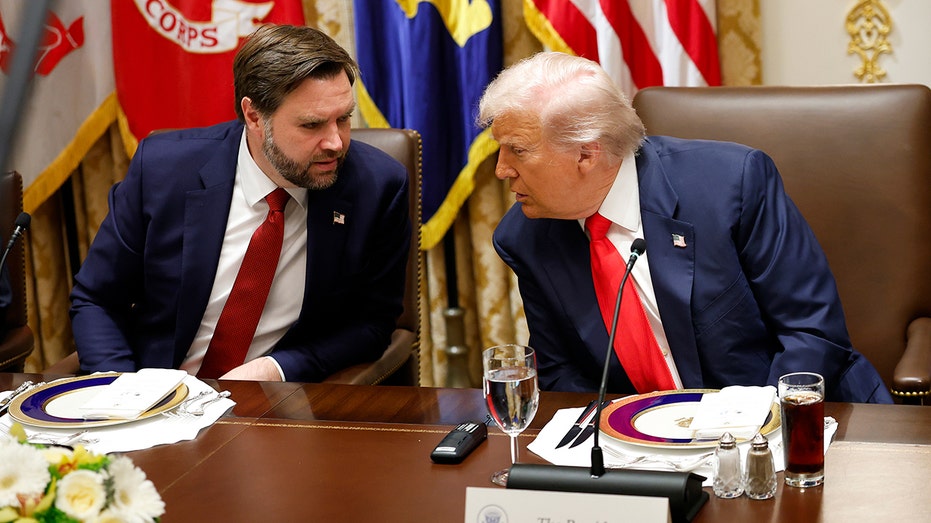
Vice President JD Vance and President Donald Trump separately slammed Democrats who continue to back Virginia attorney general candidate Jay Jones as his campaign unravels over texts envisioning the murder of a former top Republican lawmaker and his young children. Jones – who sent messages claiming he would shoot former Virginia House Speaker Todd Gilbert, R-Shenandoah, over Cambodian dictator Pol Pot and former German Chancellor Adolf Hitler – will also face off with incumbent Attorney General Jason Miyares at the University of Richmond on Thursday in their sole debate. Vance also appeared to respond to outrage over a leaked group chat, first reported by Politico, in which young Republican activists — many from New York — praised Hitler and used racist slurs, reportedly referring to African Americans as “watermelon people.” VIRGINIA DEMOCRATS HAVE A VIOLENCE PROBLEM Senate Minority Leader Chuck Schumer, D-N.Y., has not publicly denounced Jones or called for him to drop out, but immediately demanded “every Republican from President Trump on down” condemn the group chat “unequivocally.” Vance pushed back, tweeting that he wouldn’t join the outrage given Democrats’ silence on Jones. “This is far worse than anything said in a college group chat, and the guy who said it could become the AG of Virginia,” he said. LIBERAL MEDIA DOWNPLAYS SCANDAL OF DEM VIRGINIA AG HOPEFUL JAY JONES’ TEXTS FANTASIZING MURDER OF GOP LAWMAKER “I refuse to join the pearl clutching when powerful people call for political violence,” Vance said, sharing a snippet of Jones’ text to Virginia Del. Carrie Coyner, R-Hopewell, that read: “only when people feel pain personally do they move on policy.” Speaking during a ceremony eulogizing conservative activist Charlie Kirk, who was allegedly murdered by a left-wing extremist, Trump said political violence and violent rhetoric from the left must stop. “We’ve seen that a candidate for attorney general in Virginia boasted that he would want to see [a] Republican legislator in Virginia shot in the head and to see his children murdered — They actually said this,” Trump said. LIBERAL MSNBC PANELIST CALLS FOR VIRGINIA AG CANDIDATE TO DROP OUT OVER VIOLENT TEXT MESSAGES “And now he continues to run for office, and most people continue to back him.” Trump offered incredulity at the idea Jones could envision such violence and not either drop out or be forced out of the race. “Pretty amazing, right – that’s a bad one; let’s see how that turns out,” he said. “Especially in the wake of Charlie’s assassination, our country must have absolutely no tolerance for this radical left violence, extremism and terror.”
Trump hammers rise in left-wing political violence in Charlie Kirk remarks: ‘Devil’s ideology’
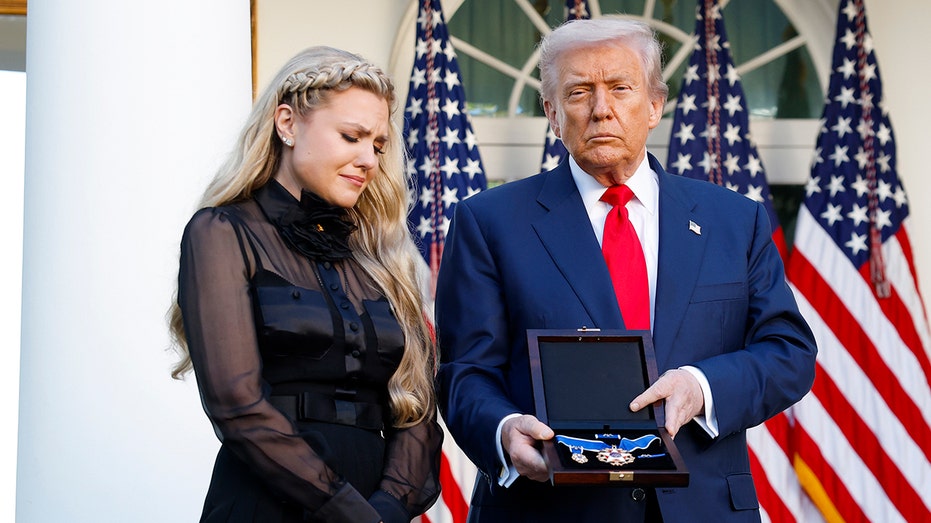
President Donald Trump decried left-wing violence on Tuesday while speaking at the ceremony to posthumously honor conservative activist Charlie Kirk with the Presidential Medal of Freedom. “We’ve watched legions of far-left radicals resort to desperate acts of violence and terror because they know that their ideas and arguments are persuading no one. They know that they’re failing. They have the Devil’s ideology,” he asserted. CHARLIE KIRK POSTHUMOUSLY AWARDED MEDAL OF FREEDOM ON WHAT WOULD HAVE BEEN HIS 32ND BIRTHDAY Trump also sounded off regarding the political firestorm surrounding Democratic Virginia attorney general candidate Jay Jones. At the center of the controversy are Jones’ texts, which spoke hypothetically of a Republican being shot, and even seemed to show him hoping for the death of the man’s children. “Nobody’s heard that one before,” Trump said. The scandal over the texts overshadowed the state’s top-of-the-ticket race as Lt. Gov. Winsome Earle-Sears and Abigail Spanberger descended on Jones’ backyard in Hampton Roads, Virginia, for their gubernatorial bout Thursday. Earle-Sears — who also represented nearby Virginia Beach, Virginia, in the state legislature two decades ago — and Spanberger met at Norfolk State University in Norfolk, Virginia, Thursday for their one-and-only debate appearance. CHARLIE KIRK’S LEGACY GUIDING ‘UNHAPPY’ GENERATION TOWARD FAITH, FAMILY AND FULFILLMENT ENDURES AFTER DEATH Trump said that, especially following the assassination of Kirk, the nation “must have absolutely no tolerance for this radical left violence, extremism and terror.” Kirk, 31, was assassinated last month while holding an event at Utah Valley University. The ceremony was held on the day that would have been Kirk’s 32nd birthday. The president described Kirk as a “true American hero.” Fox News Digital’s Charlie Creitz contributed to this report.
Shutdown faces taxpayer reckoning as lawmaker works to expose ‘true cost of Democrats’ political stunt’
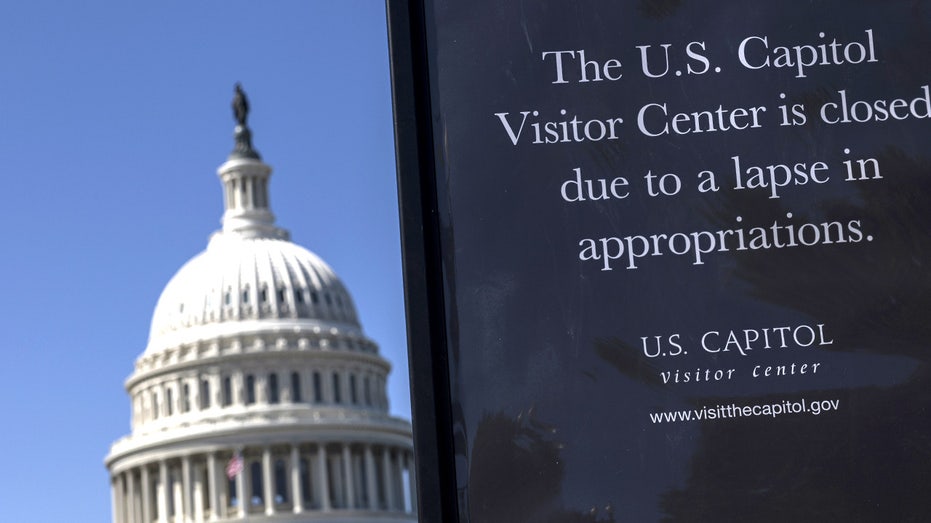
FIRST ON FOX: Republican Iowa Sen. Joni Ernst introduced a bill Wednesday that would require federal agencies to submit detailed reports outlining the true full costs of a government shutdown, including back pay for furloughed employees. “Schumer’s Shutdown shenanigans have already wasted $4.4 billion paying 750,000 ‘non-essential’ federal employees not to work for more than two weeks,” Ernst told Fox News Digital. “My Non-Essential Workers Transparency Act will expose the lost productivity and true cost of Democrats’ political stunt,” she said. “It will also help expose which parts of the bloated bureaucracy are truly ‘non-essential’ and should be put on the chopping block to increase efficiency in Washington for taxpayers.” Ernst’s bill would require federal agencies to submit reports to the Senate Committee on Homeland Security and Governmental Affairs within 30 days of a shutdown’s end, detailing each agency’s total number of employees when the shutdown began, total salary spending during the previous fiscal year, the number of furloughed workers, how much those employees would have earned during the shutdown, and the number and pay of those who continued working. DEMOCRATS THREATEN TO SUE TRUMP TEAM OVER ‘ILLEGAL’ FIRINGS AS SHUTDOWN BATTLE ESCALATES The U.S. government has been in the midst of an ongoing shutdown since Oct. 1, when Senate lawmakers failed to pass funding legislation for 2026. An estimated 750,000 federal employees were furloughed and will be compensated with back pay once the shutdown ends, as stipulated in a 2019 law. As the shutdown loomed at the end of September, Ernst published Congressional Budget Office data showing the shutdown is expected to cost taxpayers $400 million a day, with the Iowa senator railing against the hefty price tag “to pay 750,000 non-essential bureaucrats NOT to work.” WHITE HOUSE ESCALATES SHUTDOWN CONSEQUENCES AS DEMOCRATS SHOW NO SIGNS OF BUDGING: ‘KAMIKAZE ATTACK’ The estimated cost of back pay has reached roughly $4.4 billion as of Wednesday, according to estimates cited by Ernst. “Using information from the agencies’ contingency plans and the Office of Personnel Management (OPM), CBO estimates that under a lapse in discretionary funding for fiscal year 2026 about 750,000 employees could be furloughed each day; the total daily cost of their compensation would be roughly $400 million,” a letter to Ernst from the Congressional Budget Office stated in September. ‘SCHUMER SHUTDOWN’ ALREADY COST TAXPAYERS $1.2B IN PAY TO EMPLOYEES NOT WORKING The Trump administration and Republicans have since pinned blame for the shutdown on Democrats, claiming they sought taxpayer-funded medical benefits for illegal immigrants. Democrats have denied they want to fund healthcare for illegal immigrants and instead have blamed Republicans for the shutdown. “They say that undocumented people are going to get these credits,” Senate Minority Leader Chuck Schumer said earlier in October. “That is absolutely false. That is one of the big lies that they tell.” White House spokesman Kush Desai slammed Democrats as “not serious people” when asked about the Congressional Budget Office data earlier in October. “Democrats are burning $400 million a day to pay federal workers not to work because they want to spend $200 billion on free health care for illegal aliens,” he told Fox News Digital. “These are not serious people.” President Donald Trump warned the administration could make “irreversible” changes to the federal workforce in the lead-up to the shutdown, most notably through a new wave of fresh layoffs. The president repeatedly said that he and his allies did not want the government to shut down, but that it opened the door for some “good” that could come from it as he looks to further slim down the size of the government and make it more efficient. The White House announced on Friday that reduction in force notices, better known as RIFs, had been issued across agencies. “The RIFs have begun,” White House Office of Management and Budget Director Russell Vought wrote on X Friday.
Supreme Court hears pivotal Louisiana redistricting case ahead of 2026 midterms
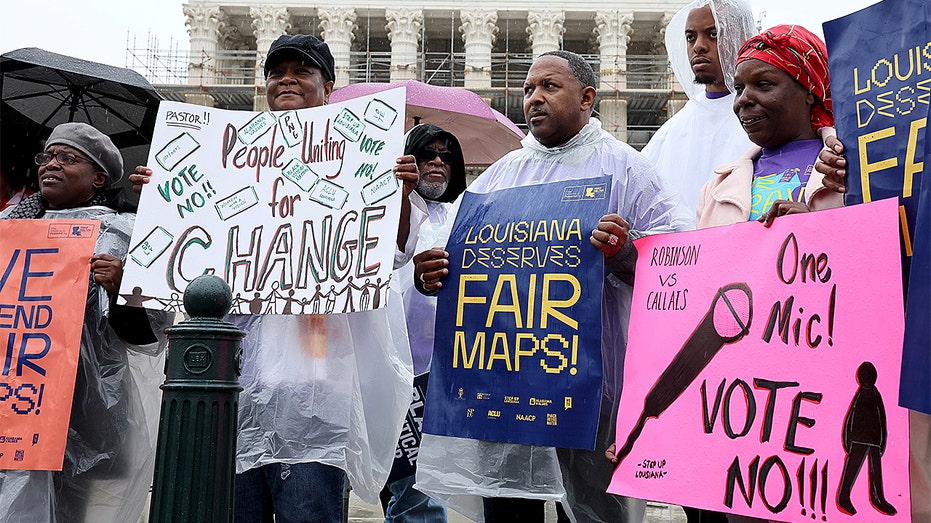
The Supreme Court is rehearing oral arguments Wednesday in a case centered on Louisiana’s use of race as a factor when drawing its congressional map — a closely watched legal fight that some fear could be used to weaken protections under Section 2 of the Voting Rights Act. The case, Louisiana v. Callais, was first heard by the high court in March. It focuses on whether Louisiana’s updated 2024 congressional map, which added a second majority-Black district, constitutes an unconstitutional “racial gerrymander.” The outcome could shape how states nationwide apply the Voting Rights Act in redistricting battles ahead of the 2026 midterms. Justices ordered both parties to reappear in court in the fall to take up additional arguments before the case is decided. They also asked parties to submit additional briefs answering whether the state’s “intentional creation” of the second majority-minority district runs afoul of the 14th and 15th Amendments of the U.S. Constitution. The court’s ruling could have a major impact on voters ahead of the 2026 midterms, with critics warning that a decision favoring the state may further erode safeguards for minority voters under the Voting Rights Act. JUDGES SAY THEY’LL REDRWA LOUISIANA CONGRESSIONAL MAP THEMSELVES IF LAWMAKERS CAN’T Janai Nelson, a lawyer for the NAACP arguing on behalf of Black voters, argued Wednesday that siding with Louisiana’s request to reverse S.B. 8 would be a “staggering reversal of precedent,” and a ruling that she argued “would throw maps across the country into chaos.” “If we take Louisiana as one example, every congressional member who is Black was elected from a Voting Rights Act-opportunity district,” she told the justices. “We only have the diversity that we see across the south, for example, because of litigation that forced the creation of opportunity districts under the Voting Rights Act.” “Every justice in Louisiana has been elected through a VRA opportunity district, and nearly all legislative representatives have been elected in those same districts. So Louisiana alone is an example of how important it is to have Section 2 continue to be enforced to create these opportunities,” she continued. Invalidating Section 2 in Louisiana “would be pretty catastrophic,” Nelson added. Justices Brett Kavanaugh and Amy Coney Barrett signaled skepticism about keeping Section 2 of the VRA in place as is. They each pressed Nelson about whether there should be a time duration limit on the intentional use of race in drawing voting districts under the law — prompting Justice Ketanji Brown Jackson to jump in to clarify that, since the VRA is derived from the 15th Amendment, it does not have a time limit. FORMER SUPREME COURT JUSTICE WARNS PARTISANSHIP PLAYS ‘TOO MUCH OF A ROLE’ IN JUDICIAL NOMINATIONS Louisiana Solicitor General Ben Aguiñaga, arguing for the state, urged the Supreme Court to prohibit the use of race as a factor in redistricting. “We are 50 years removed from Gingles,” he said, referring to the 1986 Supreme Court case Thornburg v. Gingles, which established a three-part legal standard to determine whether minority votes were being diluted under the Voting Rights Act. These standards “have placed states in impossible situations, where the only sure demand is more racial discrimination for more decades,” he said .He argued the racial considerations required under VRA are tantamount to a system of “government-mandated racial balancing” and urged them to be rejected outright. He fielded tough questions from Jackson after he was asked whether, in the states’ view, identifying and remedying racial discrimination is a “compelling interest.” “If I’m right that Section 2 is about identifying the problem and requiring some remedy, I don’t understand why your answer to Justice Kagan’s question about, ‘Is this a compelling state interest,’ would be ‘no,’” Jackson said. “The answer is obviously yes,” Jackson said, raising her voice just slightly. “You have an interest in remedying the effects of racial discrimination that we identify using this tool. Whether you go too far in your remedy is another issue.” Louisiana has abruptly changed its position since March. Louisiana Attorney General Elizabeth Murrill asked the Supreme Court in August to invalidate the 2024 map — an about-face from its earlier position — and urged the justices to rule more broadly that race-based redistricting is unconstitutional. Murrill said that the 14th Amendment “commands that the government ‘may never use race as a stereotype or negative.’ Yet race-based redistricting rests on an invidious stereotype: that all minorities, by virtue of their membership in their racial class, think alike and share the same interests and voting preferences.” “Race-based redistricting is fundamentally contrary to our Constitution,” she said. A group of Black voters and civil rights groups, meanwhile, urged the court to leave in place the newer map, which it said “comport[s] with the Fourteenth and Fifteenth Amendment guarantees of equal voting rights and the VRA’s requirements.” NEW MAJORITY-BLACK LOUISIANA HOUSE DISTRICT REJECTED, NOVEMBER ELECTION MAP STILL UNCERTAIN Louisiana has redrawn its congressional map twice since the 2020 census. The first version — which included only one majority-Black district — was blocked by a federal court and later by the Fifth Circuit Court of Appeals in 2022. Both courts sided with the NAACP voters, and the Fifth Circuit ordered the state to adopt by January 2024 a new state redistricting map. The Supreme Court’s request for additional arguments comes at a pivotal time, as several Republican-led states have attempted to aggressively push through new congressional maps of their own. They also argued in filings to the Supreme Court that non-Black voters failed to show the direct harm required for equal protection claims or prove race was the main factor in redrawing the map. This is a developing story. Check back for updates.