

Vance pauses North Carolina speech for boy who said he ‘skipped school’ to ask for a selfie
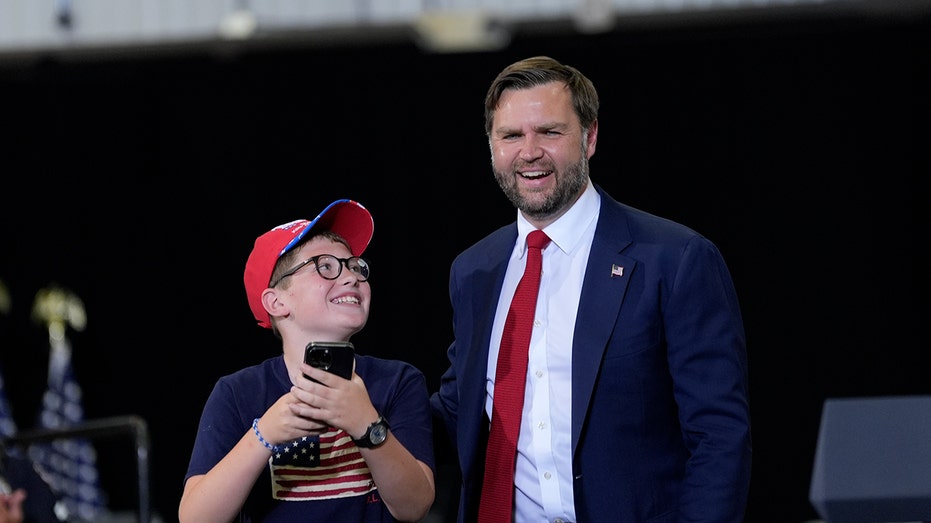
Vice President JD Vance spent most of his North Carolina speech Wednesday talking about public safety and backing law enforcement, but the day’s most viral moment came from a quick exchange with a young supporter in the crowd. A boy near the press area called out during a Q&A session and Vance invited him to speak. “I skipped school today,” the boy named Henry said. “I was wondering if I could get a picture with you.” Vance smiled and beckoned Henry up to the stage as the room erupted in cheers. VANCE SAYS FAR LEFT NOW DEFENDS ‘VIOLENT CRIME’ AS TRUMP SHOWS ‘POLITICAL GENIUS’ Vance answered, “Henry said ‘I skipped school. Can I have a picture with you?’ Well, I guess I got to have some excuse to skip school, so I might as well get a photo with Henry.” Henry walked to the stage in a red Trump hat and an American flag T-shirt. They shook hands and Henry pulled out his phone. Vance leaned in for the selfie as the crowd roared. The vice president gave him a quick pat on the back and returned to the microphone. Vance kept the tone easy for a beat and joked that the next request might be a reporter asking for a photo. He said he was not holding out hope for questions that easy and moved back to policy and press questions. ‘TONE-DEAF’ PROTESTERS HECKLE VANCE OUTSIDE MINNEAPOLIS CHURCH SHOOTING SITE The rest of Vance’s remarks focused on law and order and support for police. He called for keeping violent offenders behind bars and praised local officers. He later circled back to the moment as he wrapped. “Henry, I hope you got the photo you needed,” he said, drawing another round of applause. The White House’s official Rapid Response 47 account also shared the moment, which currently has over 15K likes on X. CLICK HERE TO GET THE FOX NEWS APP The White House and the Office of the Vice President did not immediately respond to Fox News Digital’s request for comment.
Zelenskyy slams UN’s weakness over Gaza, Ukraine and Sudan wars
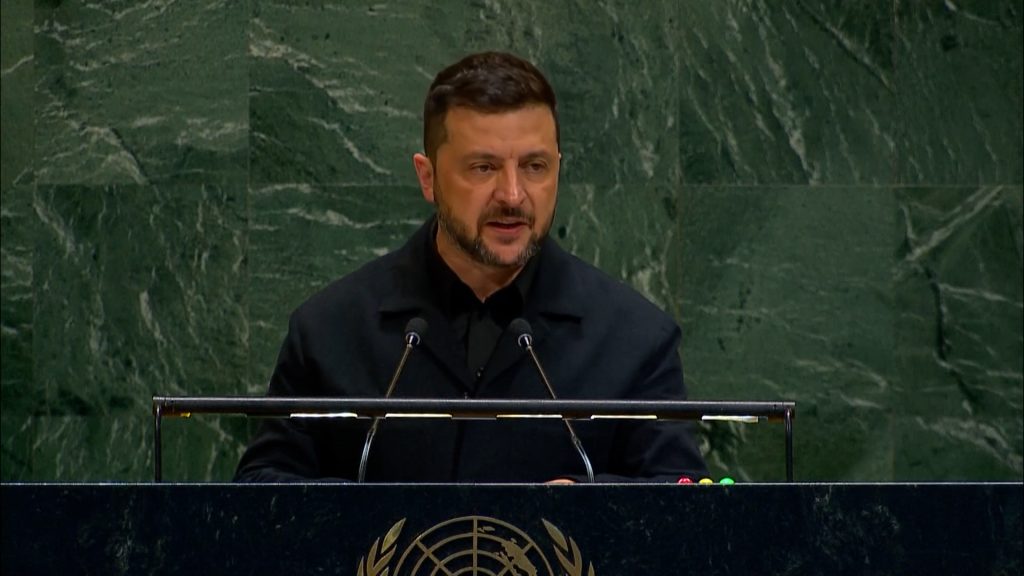
NewsFeed Ukrainian President Volodymyr Zelenskyy slammed the UN and other international institutions as being too weak to stop wars in Gaza, Sudan, Syria, and Ukraine during a speech at the UN General Assembly. Published On 24 Sep 202524 Sep 2025 Click here to share on social media share2 Share Adblock test (Why?)
Protests seeking statehood in India’s Ladakh turn deadly
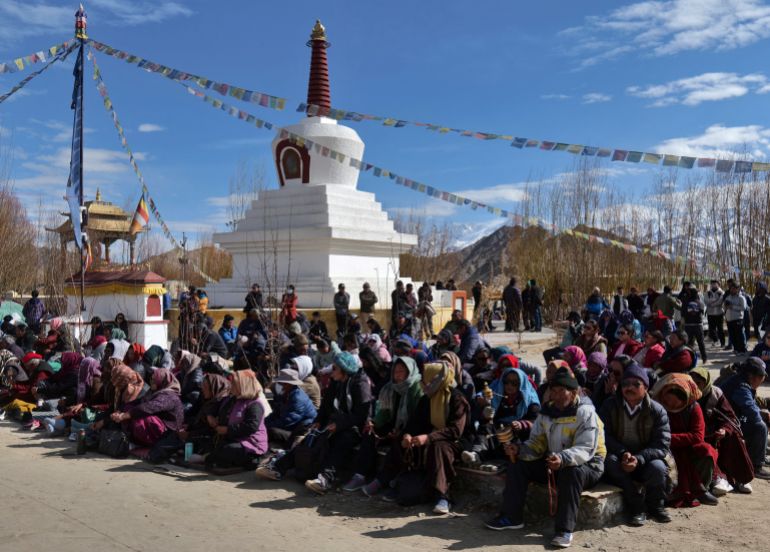
Leading activist says three to five people feared killed in police fire, but no official word yet on casualty figures. Published On 24 Sep 202524 Sep 2025 Click here to share on social media share2 Share A protest in the Indian Himalayan region of Ladakh demanding statehood for the federal territory has turned violent as protesters clashed with police and set fire to a paramilitary vehicle and the office of the country’s governing Bharatiya Janata Party (BJP). Police fired tear gas on Wednesday and charged demonstrators with batons, injuring dozens of them, police said. Some among the injured were in critical condition, residents said. Recommended Stories list of 3 itemsend of list Authorities banned the assembly of more than five people in Leh district, the capital of the Ladakh region, after the clashes. No official statement has been released on the number of casualties, but a local activist who has been on hunger strike seeking more power for the region bordering China told Indian media that three to five people are believed to have been killed in police gunfire. “We have reports that many people have been injured. We don’t know the exact count,” Sonam Wangchuk was quoted as saying by the Indian Express site. Al Jazeera could not independently verify the casualty figures. Protests erupted after youth groups called for the shutdown of Leh. Demonstrators attend a sit-in demanding constitutional safeguards and statehood for the Himalayan region of Ladakh on March 21, 2024 [Reuters] The protests are part of a larger movement in the federally governed region that seeks statehood and constitutional provisions from the Indian government for autonomy over land and agricultural decisions. Ladakh lost its autonomy in 2019 when Prime Minister Narendra Modi’s government carved the region out of India-administered Kashmir. Since then, the majority Muslim-Buddhist territory has been directly governed from New Delhi. Advertisement Protesters have called for Ladakh to be given special status that would allow for the creation of elected local bodies to protect its tribal areas. At its core, the protests are calling for Ladakh to be included under the Sixth Schedule of the Indian Constitution, which provides provisions for tribal areas and allows local communities to have a say in how the regions are administered. Wangchuk called for restraint as he called off his hunger strike, which he launched two weeks ago. “My message of peaceful path failed today. I appeal to [the] youth to please stop this nonsense. This only damages our cause,” he said. In a public notice, District Administrator Romil Singh Donk announced a ban on demonstrations, public gatherings and inflammatory speech. Activists and local politicians in Ladakh have accused Modi’s government of not addressing their concerns. Several rounds of talks between local politicians and representatives from New Delhi in the past few years have not yielded results. The next round of talks is expected to take place on October 6. Ladakh, which shares a long border with China, is a strategically important territory for India. Ladakh was the site of deadly clashes between Indian and Chinese soldiers in 2020 that strained the ties between the two Asian countries. The two Asian giants have recently moved to mend their ties in the wake of Trump’s punishing tariff war. Adblock test (Why?)
Russia, Iran sign nuclear power plants deal as sanctions loom
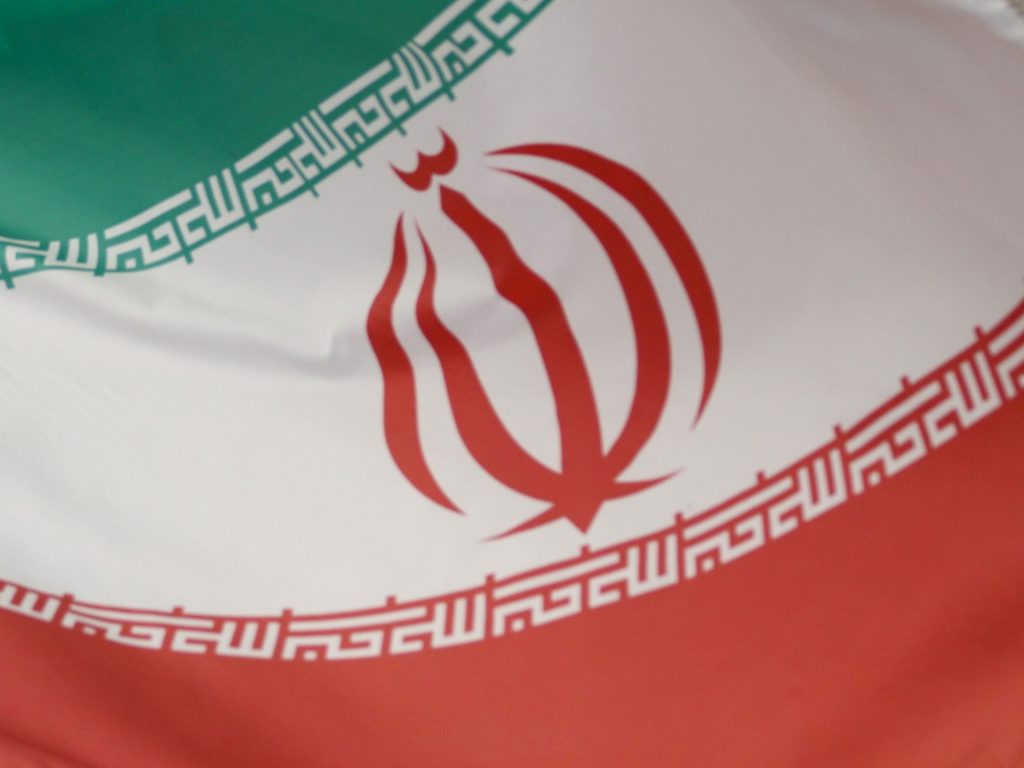
Agreement between Rosatom and Iran targets energy expansion with eight new nuclear plants planned by 2040. Published On 24 Sep 202524 Sep 2025 Click here to share on social media share2 Share Russia and Iran have signed a memorandum of understanding on the construction of small nuclear power plants in Iran, according the Russian state nuclear corporation Rosatom, as Tehran has been engaged in a diplomatic push to avert new sanctions over its nuclear programme. The agreement was signed by Rosatom chief Alexei Likhachev and Iran’s top nuclear official, Mohammad Eslami, on Wednesday at a meeting in Moscow. Rosatom described it as a “strategic project”. Recommended Stories list of 3 itemsend of list Eslami, who is also Iran’s vice president, told Iranian state media earlier this week that the plan was to construct eight nuclear power plants as Tehran seeks to reach 20GW of nuclear energy capacity by 2040. Iran, which suffers from electricity shortages during high-demand months, has only one operating nuclear power plant, in the southern city of Bushehr. It was built by Russia and has a capacity of approximately 1GW. The development comes amid looming sanctions on Iran, after the United Nations Security Council voted on Friday not to permanently lift economic sanctions on Iran over its nuclear programme, meaning sanctions will return by September 28 if no significant deal is reached beforehand. Russia was among four nations that voted to stop the sanctions from being reintroduced. Iran pushed back against the UNSC vote, saying the resumption of sanctions would “effectively suspend” the country’s cooperation with the International Atomic Energy Agency (IAEA), the UN watchdog. The vote followed a 30-day process launched in late August by the United Kingdom, France and Germany – known as the E3 – to reinstate sanctions unless Tehran meets their demands. Advertisement The E3 have accused Tehran of breaching its nuclear commitments, including by building up a uranium stockpile of more than 40 times the level permitted under a 2015 nuclear deal, from which Trump unilaterally withdrew in 2018, during his first term. The deal allowed Iran to enrich uranium up to 3.67 percent purity. In its defence, Iran says it boosted its nuclear enrichment only after Trump withdrew from the deal and reimposed sanctions on the country. Tehran deems the US action a violation of the 2015 deal. Iranian officials have accused the European trio of abusing the dispute mechanism contained in the 2015 Treaty on the Non-Proliferation of Nuclear Weapons (NPT), which allows for the application of sanctions under a “snapback mechanism”. New sanctions would result in freezing of Iranian assets abroad, a halt in arms deals with Tehran, and penalise the development of ballistic missile programme, among other measures. Iran has repeatedly denied pursuing nuclear weapons but affirmed its right to peacefully pursue nuclear energy. Addressing the United Nations General Assembly on Wednesday, Iran’s President Masoud Pezeshkian said Tehran would never seek a nuclear bomb. On Tuesday, Iran’s Supreme Leader Ayatollah Ali Khamenei said Tehran will not directly negotiate with the United States over Iran’s nuclear programme, calling talks with the US “a sheer dead end”. Tensions escalated this June, when Israel launched a 12-day war on Iran, with Israeli and US forces striking several nuclear facilities. Adblock test (Why?)
Diwali Bonanza for Government Employees: Centre likely to approve Diwali bonus for Railways staff

Last year, nearly 11 lakh employees received the payout, which not only boosted morale but also added to festive season spending across the country.
Bihar to get India’s first sleeper Vande Bharat train before Durga Puja celebration? Railway minister Ashwini Vaishnaw says…
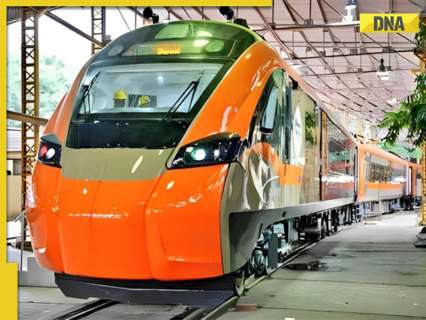
The Vande Bharat Sleeper train boasts modern features that prioritize passenger comfort and safety. Read here to know when India will get its first sleeper Vande Bharat trains.
Massive student protest in Leh leads to clashes, complete shutdown, know what exactly happened – WATCH video
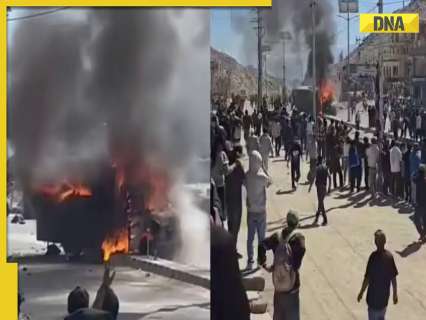
Leh Ladakh Statehood Protest: Massive protest erupts in Leh as Sonam Wangchuk’s hunger strike enters day 15
Meet Sonam Wangchuk, inspiration behind iconic film 3 Idiots, who is face of Ladakh protest, his demands are…
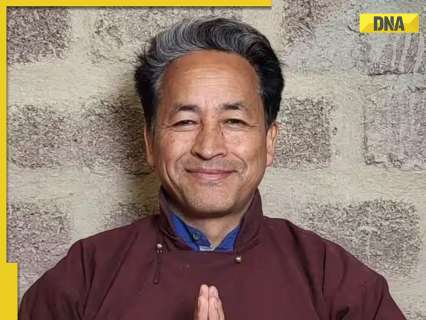
The protests in Ladakh are gaining momentum, with students taking to the streets in large numbers. The agitation is not limited to Leh, with protests being held in other parts of the region as well.
Why Gen-Z are protesting in Ladakh? 4 key demands behind the unrest
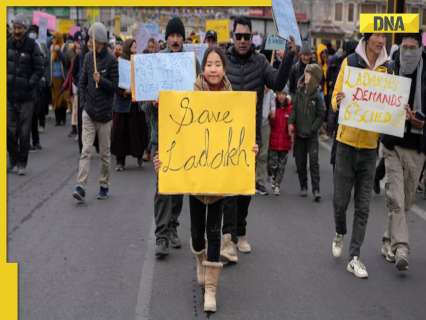
On Wednesday, i.e., September 24, a massive protest was witnessed in the Union Territory of Ladakh, with people engaging in clashes with the police. As protestors clashed with the police, the Bharatiya Janata Party (BJP) was set ablaze.
With EBCs in focus, Rahul Gandhi makes BIG poll promise in Bihar ahead of assembly elections | 10 points
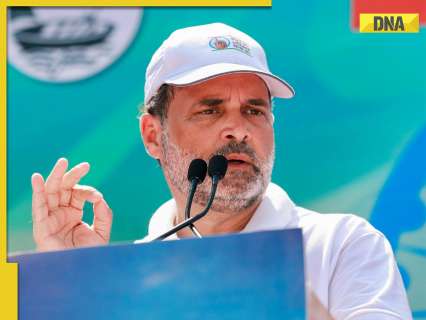
As Bihar is set to undergo polls in November, the Congress, on Wednesday, i.e., September 24, announced a 10-point program focused on education and employment reservation for the Extremely Backward Classes (EBC).