

Charlie Kirk credited with helping Trump gain significant ground with young voters
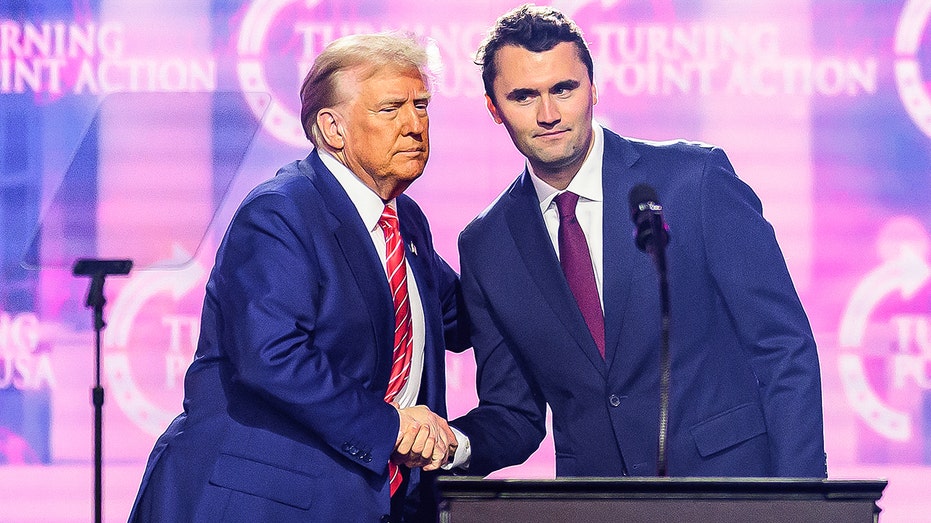
As conservatives reflect on the legacy of Turning Point USA founder Charlie Kirk ahead of his celebration of life in Arizona on Sunday, some Republicans credit him with helping President Donald Trump win over young voters in 2024. Former TPUSA staffer Anthony DeWitt explained that the grassroots element of Kirk’s work likely played a “monumental” role in “energizing the youth to get out and vote in 2024.” “Charlie created something that finally lifted the voices and work of not only grassroots, but young people, people like myself who were just entering politics and gave us something that traditionally was only achieved by those who have had a lifetime in politics,” DeWitt stated. RED HATS AND CHANTS OF ‘USA’ MARK VIGIL HONORING SLAIN CONSERVATIVE LEADER CHARLIE KIRK: ‘ACT’ “Getting young people knocking doors, chasing ballots, getting signatures, signing up new voters, attending conferences — that was the key to winning the 2024 election.” A Fox News voter analysis had Trump wooing 47% of voters aged 18-29, with former Vice President Kamala Harris narrowly winning the demographic with 51%. In the battleground state of Michigan, the analysis found that Trump won the age group with 50%, compared to 48% for Harris. He also came close with 48% in Arizona, where TPUSA is headquartered, with 51% of those surveyed backing Harris. FROM GRIEF TO GROWTH: TURNING POINT USA BECOMES A RALLYING FORCE FOR GEN Z IN BATTLEGROUND ARIZONA Trump ultimately ended up sweeping the battleground states, including Michigan and Arizona, winning 312 electoral votes and the popular vote. However, it is an 11% increase from the 36% of voters in the same age range in 2020, with former President Joe Biden carrying the demographic with 61%. Colin Reed, a Washington, D.C.-based Republican strategist, noted how Kirk plays a unique role in “expanding the tent” for the party. ‘SLEEPING GIANT’ LIKELY WOKE UP FOR TURNING POINT USA AFTER CHARLIE KIRK’S ASSASSINATION “A generation ago, it would have been unthinkable for a Republican candidate to run nearly equal among younger voters against a Democratic standard-bearer who had every Hollywood and celebrity endorser under the sun, but that’s precisely what happened in 2024,” Reed wrote to Fox News Digital, alluding to Harris’ star-studded, but short campaign after Biden dropped out in July. “Charlie opened the doors for younger people to not only consider the conservative movement but embrace it and champion its principles as a ticket to prosperity and happiness.” Those close to Kirk, including Turning Point Action’s leader Tyler Bowyer, dubbed 2026 the “Charlie Kirk election” at a vigil at Arizona State University Monday. “2028 will be the Kirk-Vance election,” he said, and the organization is expected to rally around Vice President JD Vance to be Trump’s successor.
Byron Donalds rebukes ‘Squad’ member over ‘fascist’ slur: ‘Do I look like a member of the Third Reich?’
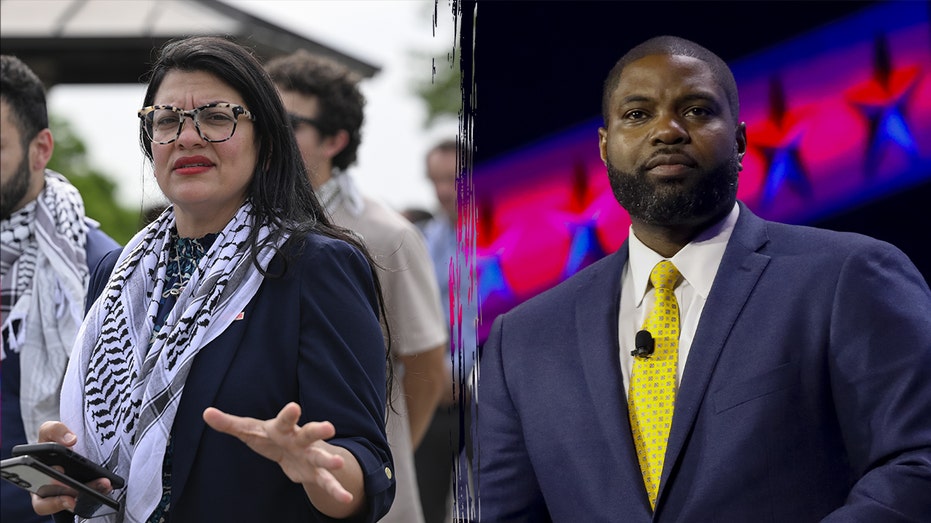
Rep. Rashida Tlaib, D-Mich., began shouting at Florida GOP Rep. Byron Donalds during a Thursday hearing, after he chastised the “Squad” lawmaker for referring to GOP efforts to crack down on crime in Washington, D.C., as ‘fascist.’ Tlaib’s clash with Donalds came after she slammed Republicans for their “rhetoric” targeting the District of Columbia, where President Donald Trump has deployed the National Guard to help local law enforcement address crime in the capitol city. “We can’t be passive right now,” Tlaib said during the House Oversight hearing. “So don’t nobody over there should take anything we say serious – you know, like, so personally – as if we’re attacking them. No, we’re attacking a process. We’re not attacking people here. And I think it’s really important we need to stand up against this fascist takeover – that’s not a bad word, it’s a fact.” TRUMP’S DC CRIME CRACKDOWN OVERWHELMINGLY BENEFITS BLACK AMERICANS AS HOMICIDES HIT ZERO “Here in DC and across the country it is so incredibly important, Mr. Chair, that this committee does not allow rhetoric that defames, or paints Washington, D.C., in a way that you all really haven’t truly seen. You’re just reading it, or something off of some –,” Tlaib continued before Donalds stepped in, asking Tlaib if he could pose a question. Even though Tlaib did not pause to let Donalds speak, he eventually interjected anyways. “I think it’s insane that the gentlelady doesn’t have an argument, but she is going to refer to me and some of my colleagues like we’re from the Third Reich. This is insane. It’s insane,” Donalds said. TRUMP’S SECURITY UNDER SCRUTINY AS SECRET SERVICE BRACES FOR KIRK MEMORIAL The pair began raising their voices and eventually got into a shouting match, with Donalds asking Tlaib, “Do I look like a member of the Third Reich to you, Ms. Tlaib? Is that what I look like to you? Is that what you think?” Donalds called Tlaib’s “fascist” label “out of line,” in a gaggle with reporters after the event. The GOP lawmaker from Florida is currently attempting to usher two bills through Congress to help tamp down on crime, including one that he said would lower the age for juvenile sentencing from 25 to 18-years-old. “I think it was important to set the record straight,” Donalds told reporters. “Congresswoman Tlaib tried to call me and my colleagues fascists. Obviously, in light of the assassination of Charlie Kirk, that’s even more of a sore subject now than it ever has been, and I just find it to be reprehensible. I don’t look like somebody who is in the Third Reich. None of my colleagues do. And I think if people want to start talking about people being responsible with their rhetoric, it should start with Congresswoman Tlaib.” CLICK HERE TO GET THE FOX NEWS APP In 2023, enough Democrats in Congress joined Republicans to formally censure Tlaib over her rhetoric about the Israel-Hamas war that erupted on Oct. 7. 2023. Tlaib defended her rhetoric and positions, saying she “will not be silenced and I will not let you distort my words,” according to the Associated Press. Tlaib has also faced additional censure threats this month over recent comments she made at a pro-Palestinian conference in August. Fox News Digital reached out to Tlaib’s office for comment but did not immediately hear back.
What are the GCC’s air defence capabilities?
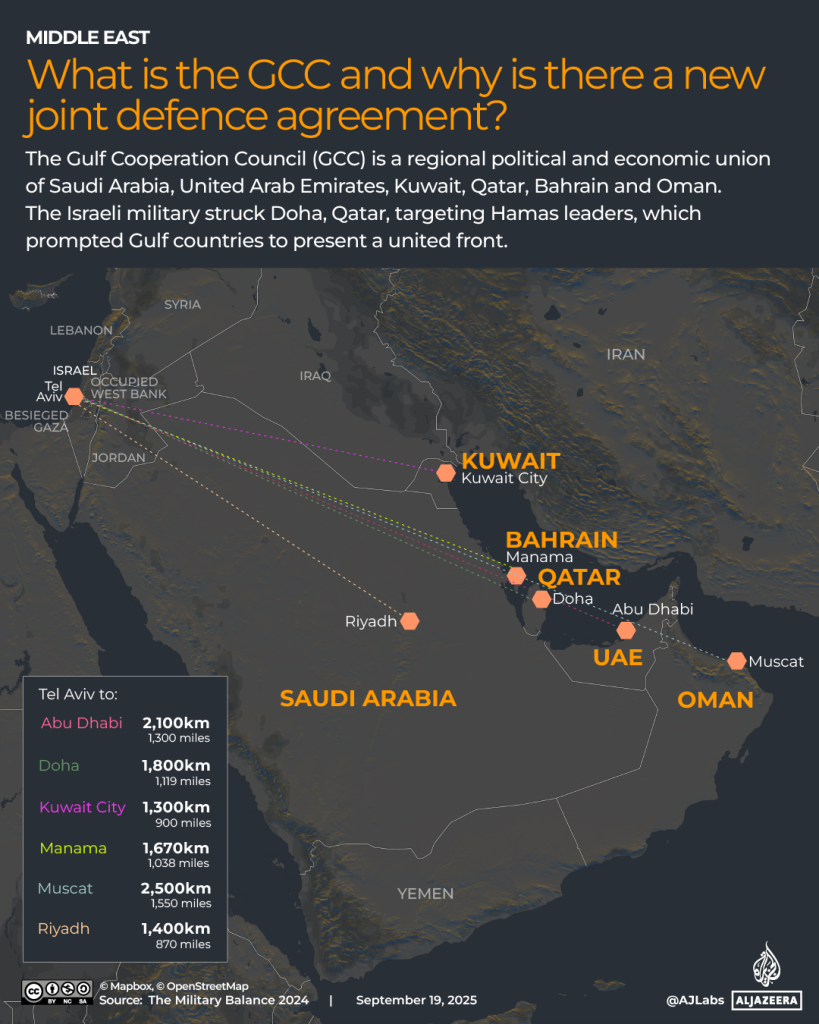
The Gulf Cooperation Council’s (GCC) Joint Defence Council held an emergency session in Doha, Qatar, on Thursday, to discuss urgent regional security measures in response to the recent Israeli strike on a Hamas office in Qatar’s capital, which killed six people. GCC Secretary-General Jasem Mohamed AlBudaiwi said the attack on the State of Qatar can be considered an attack on all GCC countries. Recommended Stories list of 3 itemsend of list AlBudaiwi said member states would activate joint defence mechanisms, enhance intelligence sharing, coordinate aerial positions, activate an early-warning system against ballistic missiles and carry out joint training exercises, including a regional air force drill. Qatar is the seventh country Israel has bombed since the start of this year. (Al Jazeera) Which countries make up the GCC, and what do they spend on their militaries? The Gulf Cooperation Council (GCC) is a political and economic bloc which was formed in 1981. It brings together six Arab states on the Arabian Peninsula: Bahrain Kuwait Oman Qatar Saudi Arabia United Arab Emirates (UAE) The GCC was established to promote cooperation on security, economics and politics, and it often coordinates positions on regional and international issues. In 2023, GCC countries collectively spent $114.5bn on their militaries. Saudi Arabia accounted for the largest share, budgeting for at least $69bn and ranking as the world’s seventh-largest military spender, followed by the United Arab Emirates (UAE) at $20.7bn, Qatar at $9.02bn, Kuwait at $7.77bn, Oman at $6.5bn and Bahrain at $1.4bn, according to the International Institute for Strategic Studies, Military Balance 2024. (Al Jazeera) Where are the US military bases in the Middle East? The US has operated military bases in the Middle East for decades. Advertisement According to the Council on Foreign Relations, the US operates a broad network of military sites, both permanent and temporary, across at least 19 locations in the region. Of these, eight are permanent bases in five of the six GCC countries – Bahrain, Kuwait, Qatar, Saudi Arabia and the United Arab Emirates – as well as in Egypt, Iraq and Jordan. (Al Jazeera) The strategic partnership between Qatar and the US Al Udeid Air Base was established in Qatar in 1996 and is the largest US military base in the Middle East. Covering an area of 24 hectares (60 acres), the base accommodates almost 100 aircraft as well as drones. This base, which houses some 10,000 troops, serves as the forward headquarters for US Central Command (CENTCOM) and has been central to operations in Iraq, Syria and Afghanistan. Following Israel’s attacks on Doha, US Secretary of State Marco Rubio visited Qatar, arriving the day after he attended meetings in Israel. During his visit, Qatar’s Foreign Ministry spokesman, Majed al-Ansari, emphasised the country’s strategic relationship with the United States, particularly on defence matters. He added: “We are determined to defend our sovereignty and take measures to prevent any recurrence of such an attack.” US President Donald Trump gestures on stage as he tours the Al Udeid Air Base on May 15, 2025, in Doha, Qatar [Win McNamee/Getty Images] Saudi-Pakistan defence pact On Wednesday evening, Saudi Arabia signed a “strategic mutual defence agreement” (SMDA) with nuclear-armed Pakistan. The agreement states that any aggression against either country shall be considered an act of aggression against both. The pact came just days after nearly 60 member states of the Arab League and the Organisation of Islamic Cooperation (OIC) gathered in Doha in a show of regional solidarity with Qatar in the wake of the recent attack. A handout picture provided by the Saudi Press Agency (SPA) on September 17, 2025, shows Saudi Arabia’s Crown Prince Mohammed bin Salman (R) meeting with Pakistan’s Prime Minister Shehbaz Sharif ahead of their meeting in Riyadh (AFP) Which air defence systems do Gulf states rely on? The six Gulf states have built layered air defence networks combining US, European, Russian and Chinese systems. Their arsenals range from long-range interceptors to point-defence missiles and anti-aircraft guns. Long-range systems cover threats beyond 100 km (62 miles), medium-range protect targets 30–100 km (19–62 miles) away and short-range systems defend assets within 1–30 km (0.6–19 miles). (Al Jazeera) Saudi Arabia possesses the Gulf’s largest air defence network, anchored by US-made THAAD systems and long-range Patriot PAC-3 batteries. Advertisement Its layered arsenal also includes medium-range US-made I-Hawk missiles, short-range French Crotale, Shahine and MICA systems, as well as a large number of American and French point-defence launchers such as Stinger, Avenger, Mistral and MPCV. Complementing these are extensive anti-aircraft guns from several countries, including the US-made Vulcan, Swiss/German Oerlikon, and Swedish Bofors L/70 models. Saudi Arabia is the only GCC country to deploy the Chinese-made Silent Hunter laser system, which tracks and neutralises low-flying drones and other small aerial threats by emitting a high-energy beam that can disable or destroy them. (Al Jazeera) The United Arab Emirates (UAE) operates US-made THAAD and long-range Patriot systems, alongside a version of the Israeli-made Barak air defence system. For medium-range threats, the UAE relies on the South Korean-made Cheongung II. Its short-range defences include French Crotale and Mistral, Russian Igla and Pantsir-S1, Swedish RBS-70 and British Rapier systems, all supported by a variety of European anti-aircraft guns. Saudi Arabia and the UAE are the only two GCC countries which operate the THAAD (Terminal High Altitude Area Defence) system, giving them advanced missile interception capabilities against ballistic threats. (Al Jazeera) Qatar has invested in US-made Patriot systems and NASAMS III for long- and medium-range air defence, while its short-range defences feature a mix of Russian Igla, US Stinger, Chinese FN-6 and French Mistral systems, supported by German Gepard and Skynex anti-aircraft guns. Kuwait fields US-made Patriot PAC-3 batteries for long-range defence, Italian Aspide launchers paired with Skyguard systems for short-range defence and Stinger, Starburst and FIM-92 missiles for point defence, complemented by German Oerlikon GDF anti-aircraft guns. Bahrain has recently acquired the Patriot PAC-3 MSE system, joining Saudi Arabia, the UAE, Qatar and Kuwait as the GCC countries with advanced long-range, surface-to-air missile capabilities. For medium- to short-range threats, it relies
UN Security Council rejects resolution to extend Iran sanctions relief
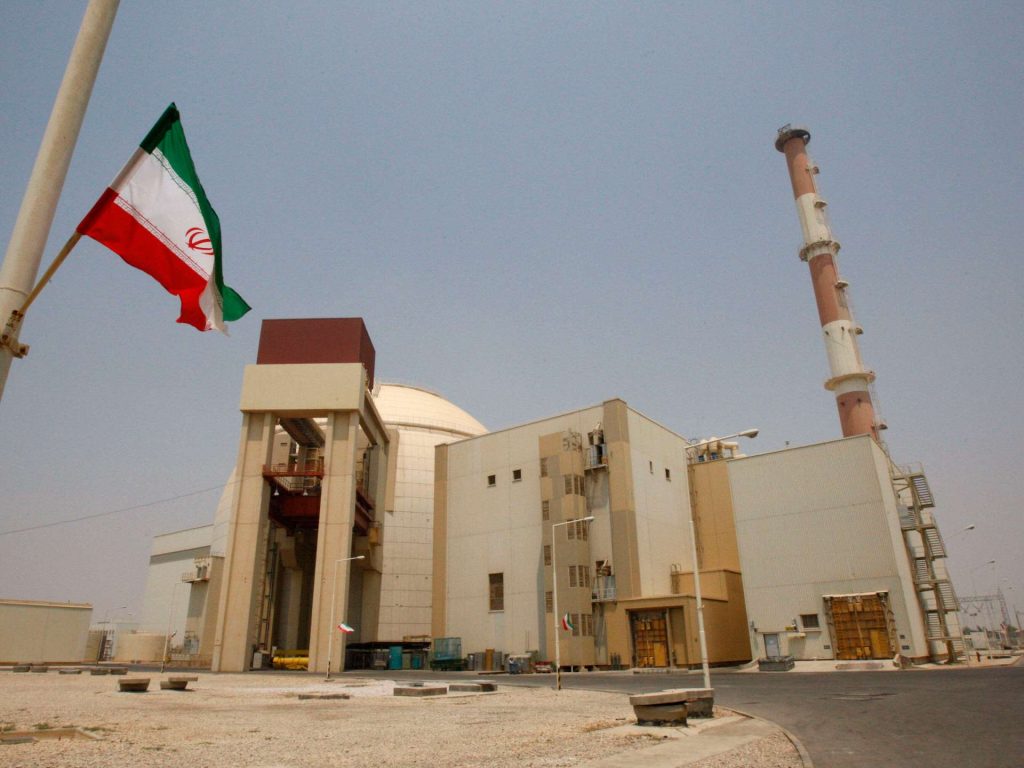
The United Nations Security Council has voted not to permanently lift economic sanctions on Iran over its nuclear programme, delivering a major economic blow that Tehran claims is “politically biased”. A resolution on Friday to block the sanctions fell in the Security Council by a vote of four to nine, meaning European sanctions will return by September 28 if no significant deal is reached beforehand. Recommended Stories list of 3 itemsend of list Russia, China, Pakistan and Algeria voted to stop the sanctions from being reintroduced, while nine UNSC members voted against sanctions relief. Two countries abstained. The vote follows a 30-day process launched in late August by Britain, France and Germany – known as the E3 – to reinstate sanctions unless Tehran meets their demands. “Any attempt by the E3 to reimpose sanctions already terminated is not only baseless but a direct assault on international law and the credibility of the Security Council itself,” Amir Saeid Iravani, Iran’s permanent representative and ambassador to the UN, said at the session on Friday. “This travesty unfolds against the backdrop of blatant aggression,” he added, referring to Israel and the United States’s attacks on his country’s nuclear facilities during June’s 12-day war. The council, he added, had “squandered an opportunity for dialogue and consensus”. Iran says Europeans ‘misusing JCPOA mechanism’ Iranian officials have accused the European trio of abusing the dispute mechanism contained in the 2015 Treaty on the Non-Proliferation of Nuclear Weapons (NPT), which allows for the application of sanctions under a “snapback mechanism”. Advertisement “What Europeans are doing is politically biased and politically motivated … They are wrong on different levels by trying to misuse the mechanism embedded in the Joint Comprehensive Plan of Action (JCPOA),” Deputy Foreign Minister Saeed Khatibzadeh said before the vote. The Europeans offered to delay the snapback for up to six months if Iran restored access for UN nuclear inspectors and engaged in talks with the US. Iran’s Foreign Minister Abbas Araghchi claimed that Tehran had presented a “reasonable and actionable plan” and insisted Iran remains committed to the NPT. But the E3 accuse Tehran of breaching their nuclear commitments, including by building up a uranium stockpile of more than 40 times the level permitted under the JCPOA. The UN’s nuclear watchdog board also ruled back in June that Iran was not respecting international nuclear safeguards. “However slim, there is still a possibility of diplomatic engagement to fix this already complicated issue,” said Al Jazeera’s Tohid Asadi, reporting from Tehran. But today’s vote adds another “layer of complexity” and puts Iran “on the very brink” of deeper sanctions that would compound pressure on its economy, he added. ‘Clock is ticking for high-level diplomacy’ The UNSC vote allowing sanctions to snap back is not the complete “end of negotiations,” as the parties have just over a week to come up with a last-ditch deal, said Al Jazeera’s diplomatic editor James Bays, reporting from the UN. “It’s the week where world leaders are all here in New York for the high-level meeting of the UN General Assembly, so it sets the stage for high-level diplomacy between Iran and particularly the three European countries,” said Bays. But “we’re reaching the end of this high-stakes diplomacy, and the clock really is ticking.” Iran has repeatedly denied pursuing nuclear weapons but affirmed its right to peacefully pursue nuclear energy. Under the JCPOA – signed by Iran, the United States, China, Russia and the EU – Tehran agreed to curb its nuclear programme in return for sanctions relief. But the agreement unravelled in 2018 after then-US President Donald Trump pulled out and reimposed unilateral sanctions. Tensions escalated further earlier this summer, when Israel launched a 12-day war on Iran, with Israeli and US forces striking several nuclear facilities. “It was the United States that unilaterally tore up the agreement in 2018, reimposing sanctions in open defiance of this Council. It was the E3 that failed to meet their obligations, hiding behind empty promises while quietly following Washington’s lead and instructions,” said Iravani. Advertisement “This contradiction between their rhetoric and actions proves, once more, their real intention is not diplomacy but escalation,” he added. Adblock test (Why?)
Safety concerns on eve of World Cup after Italian skier death
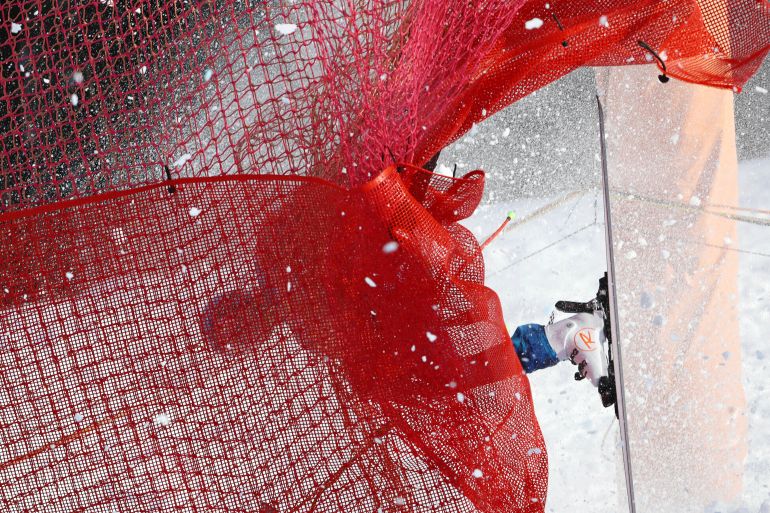
It’s usually not until December or January and after a series of tumbles, twisted knees, torn ACLs and worse that the debate over safety in World Cup skiing becomes an annual topic. Not this season. Recommended Stories list of 4 itemsend of list The death of Italian skier Matteo Franzoso this week following a crash in preseason training in Chile has resurfaced concerns over how to limit risks in the high-speed sport more than a month before the racing even starts. The debate also comes less than five months before the Milan-Cortina Olympics. Franzoso, who was 25, became the third rising Italian skier to die in less than a year. Matilde Lorenzi, who was 19, died from her injuries after a crash last October. Then in March, Marco Degli Uomini, who was 18, died while testing the course for a regional children’s race. A month later, Margot Simond, who was a promising 18-year-old French skier, died in a training crash, too. In 2017, French downhill skier David Poisson, a former medallist at the world championships, died following a training crash in Canada. He was 35. “How many tragic losses will we have to experience before we finally open the debate on safety, especially during training?” veteran French downhiller Adrien Theaux wrote on Instagram. Added Lucrezia Lorenzi, Matilde’s older sister and a competitive skier herself: “The time has come to stop … You can’t go out to ski and then not return home.” Franzoso crashed through two layers of safety fencing on a course at La Parva and slammed into another type of fence positioned six to seven meters (20-23 feet) outside the course, the Italian Winter Sports Federation said. He was transported by helicopter to a hospital in Santiago, but couldn’t survive cranial trauma and a consequent swelling of his brain. He died two days later — a day before what would have been his 26th birthday. Advertisement The La Parva course has been widely used by World Cup skiers for years. Lindsey Vonn and the US Ski Team were training there a week before Franzoso’s crash and several other national teams have been there this month. Italian veteran Christof Innerhofer had completed a run just before Franzoso’s crash and heard about the crash. Then Innerhofer saw the crash site with his own eyes when he went back up on a chairlift and looked down at his fallen teammate. “Matte, when I saw where you fell, where they were applying emergency aid, with you on the other side of the fence, I lost my mind because I feared for the severity of the situation,” Innerhofer wrote on Instagram. The 40-year-old Innerhofer was so shaken that he abandoned the training camp and flew home to Italy: “These are the toughest days I’ve ever experienced as an athlete,” he said. United States’ Ryan Cochran Siegle crashes onto the safety net during an alpine ski, men’s World Cup downhill in Kitzbühel, Austria in 2021 [Marco Trovati/AP] Franzoso’s death has sparked debate over whether the Switzerland-based International Ski and Snowboard Federation (FIS) should take on a greater role in ensuring safety for preseason training courses in the Southern Hemisphere. Ushuaia in Argentina and Coronet Peak in New Zealand are also popular destinations for World Cup skiers in August and September. The Italian federation held an urgent meeting Friday and called for the FIS to establish dedicated training courses for national teams. “The proposal could include two courses in the Southern Hemisphere for summer training, and a few courses in Europe and North America for fall and winter training,” the Italian federation, known as FISI, said. FISI added that the training courses should have A, B and C safety netting just like courses used for World Cup races. “In the coming weeks, FIS will further intensify dialogue with its stakeholders, always with a single guiding principle: the wellbeing and safety of athletes must come first,” the FIS said in a statement Friday. Starting this season, all World Cup skiers will be required to wear protective air-bag systems under their racing suits for downhill and super-G races; and cut-resistant underwear for all events. The air bags, which inflate briefly when activated by a sophisticated algorithm that can sense when a skier loses control, have been around as an optional safety device for years. The cut-resistant underwear protects against laceration injuries from ultra-sharp ski edges. For example, the underwear may have helped prevent the severe cut and nerve damage to the right calf of Norwegian standout Aleksander Aamodt Kilde during a horrific crash in January 2024. Kilde has been out ever since that fall but hopes to return this season. Advertisement “Moments like this bring into sharp focus the profound risks that are an inseparable part of our sport,” the FIS said. “It is not possible to eliminate the inherent dangers of alpine skiing, but — by listening, by raising awareness, and by fostering dialogue that leads to collective action — we can mitigate the risks.” Franzoso was from the coastal city of Genoa but had moved to the mountains near Sestriere to pursue his skiing career. His funeral will be held on Tuesday in Sestriere — where skiing was contested at the 2006 Turin Olympics. For the Milan-Cortina Games in February, men’s skiing will be held in Bormio and women’s skiing will be held in Cortina d’Ampezzo. Both the Stelvio course in Bormio and the Olympia delle Tofane course in Cortina have been the site of numerous high-profile crashes in recent years. Mikaela Shiffrin hit the Cortina nets at high speed in 2024, and French standout Cyprien Sarrazin needed surgery to drain brain bleeding after he was catapulted into the air and landed hard on the Stelvio last season. This season’s World Cup circuit opens on the Rettenbach glacier in Solden, Austria, at the end of October. Adblock test (Why?)
RJD leader Tejashwi Yadav makes BIG promises ahead of election, claims to bring ‘new politics’ in Bihar , ‘no talk of caste, religion…’
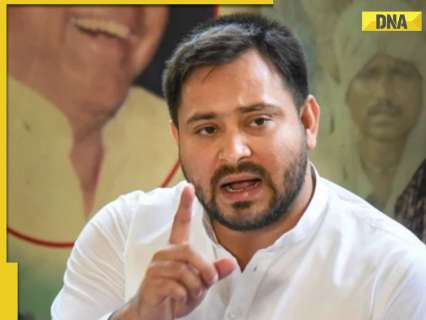
Ahead of Bihar election scheduled later for this yar, Tejashwi Yadav, Rashtriya Janata Dal (RJD) leader, has called for a ‘new politics’ in Bihar. What is ‘New Politics’?
Who is ABVP’s Aryan Maan? DUSU’s 2025 President who defeats NSUI’s Jocelyn Nandita by 16000 votes

Delhi University’s student union (DUSU) results are out! In the high-stake contest between ABVP’s Aryan Maan and the NSUI’s Jocelyn Nandita for the Student Union’s President, Aryan Maan has secured a massive victory. Who is ABVP’s Aryan Maan?
DUSU Election 2025: ABVP bags 3 key posts; Aryan Maan emerges as new President
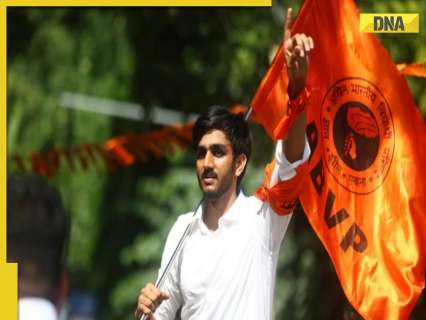
The Akhil Bharatiya Vidyarthi Parishad (ABVP) made a powerful show in the Delhi University Students’ Union (DUSU) election, securing three of the four key posts, including the President’s seat. Aryan Maan, a native of Haryana, emerged as the new DUSU President with 28,841 votes.
‘Been to Pakistan, felt at home’: Sam Pitroda’s remarks on foreign policy spark row
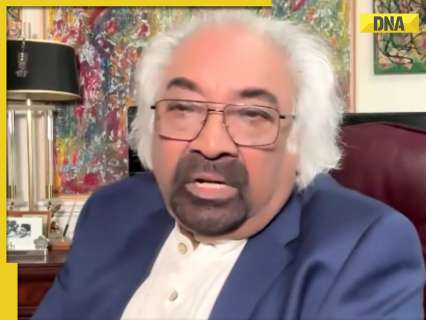
BJP has slammed Congress, alleging that the party did not take ‘tough actions’ against Pakistan, even after the 2008 Mumbai terror attack, because of its ‘undying love’ for the neighbouring country.
India reacts to Saudi Arabia, Pakistan defence pact: ‘We expect that this strategic…’
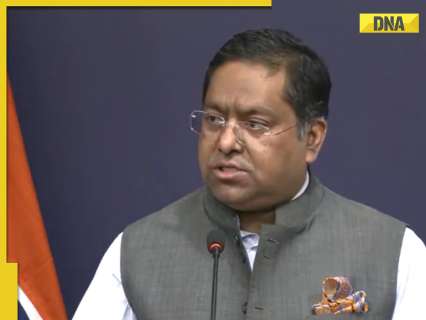
MEA spokesperson Randhir Jaiswal said that India and Saudi Arabia have a wide-ranging strategic partnership which has deepened considerably in the last several years.