

Manchin recalls close ties with ‘outsider’ Trump, cold shoulder from Obama in new book
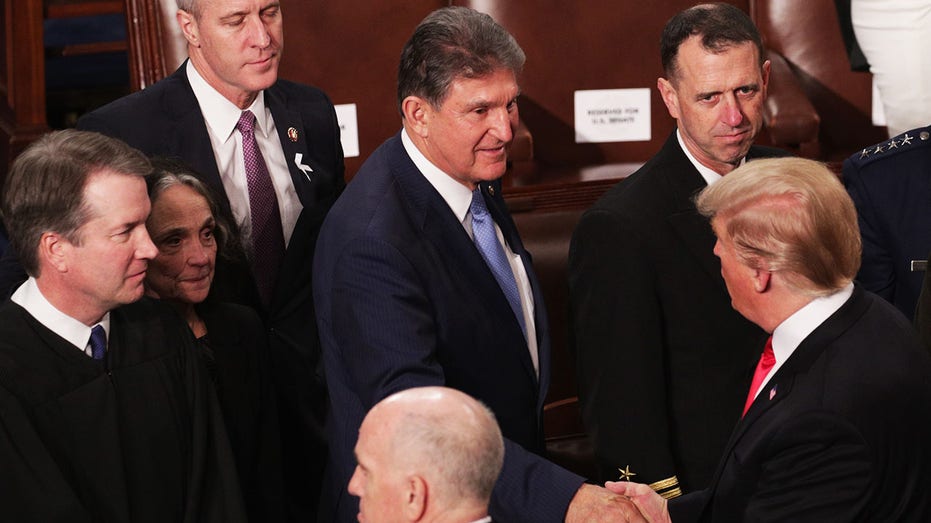
Former Sen. Joe Manchin, I-W.Va., said he spoke more with President Donald Trump in the first two years of Trump’s term than with former President Barack Obama during Obama’s eight years in office. In his new book, “Dead Center: In Defense of Common Sense,” released this week, Manchin outlined a cordial working relationship with Trump and a far chillier, less active back and forth with Obama. Manchin, who switched from the Democratic Party to become an Independent before retiring from the Senate last year, wrote that he considered Trump a fellow “outsider” when he arrived in Washington, D.C., for his first term and lauded him as the “most engaged president I ever worked with” since former President Bill Clinton. MANCHIN SAYS HE WANTED GOP TO WIN SENATE TO STOP DEMOCRATS’ QUEST FOR ‘RAW POLITICAL POWER’ “From the start, President Trump had an open line of communication with me,” he wrote. “I spoke to him more in the first two years of his presidency than I did to President Obama during all eight years of his time in office.” He noted, “If you want to have influence with Donald Trump, you have to be the last person he talks to about a topic,” and said he would jokingly ask that the president ensure he was the last person he called. “He’d laugh, and we’d talk it out,” he said. He recalled his 2018 election campaign in the wake of Trump’s dominant, 40-point win in the state. Trump told Manchin that he was being pressured to campaign against him and promised he wouldn’t. Ultimately, Trump visited the state five times, but Manchin still came out on top. JOE MANCHIN TELLS ‘THE VIEW’ WHY HE COULDN’T ENDORSE KAMALA HARRIS He was later invited to the Oval Office to meet with Trump, where, in front of then-Vice President Mike Pence and Ivanka Trump, the president “blurted to his other guests, ‘I told you we couldn’t beat him,’” Manchin wrote. Manchin’s relationship with the former president goes back to his time as governor of West Virginia, when Obama was still a senator. The two worked together on a coal deal in Illinois that had previously excluded West Virginia. During the 2008 election cycle, he said he invited both then-Sen. Hillary Clinton, D-N.Y., and Obama to come to West Virginia to campaign, but said Obama shook off the invitation and told him, “Let’s be honest with each other — my demographics don’t work well in your state.” NEW BOOK REVEALS WHAT OBAMA AND ‘CONQUEROR’ TRUMP CHATTED ABOUT IN VIRAL MOMENT DURING CARTER’S FUNERAL “But he didn’t come, and that night belonged to Hillary,” he wrote. “She made the most of her visit and won the primary by 41 points.” He said their relationship became even chillier when Obama launched his “war on coal” with a push for green initiatives that targeted fossil fuels and states like West Virginia. Manchin argued that the Democratic Party had grown dismissive and lost touch with the working class as a means to reshape their agenda through a progressive lens. That led to a seismic shift in West Virginia’s political alignment, from Democratic to now largely Republican, he said. And in the process that began when Obama won in 2008, he said that rural states like his felt “overlooked and undervalued.” “But that’s exactly how Democrats handled West Virginia, and no one embodied that disconnect more than President Obama,” he wrote. Fox News Digital reached out to Obama’s office and the White House for comment but did not immediately hear back.
Why Ben & Jerry’s co-founder quit over Gaza

NewsFeed Jerry Greenfield, co-founder of Ben & Jerry’s, has resigned after nearly fifty years, accusing parent company Unilever of silencing its stance on Israel’s war on Gaza. The decision follows years of tension, including a 2021 move to halt sales in the occupied West Bank. Published On 17 Sep 202517 Sep 2025 Click here to share on social media share2 Share Adblock test (Why?)
EU proposes suspending trade concessions with Israel over Gaza
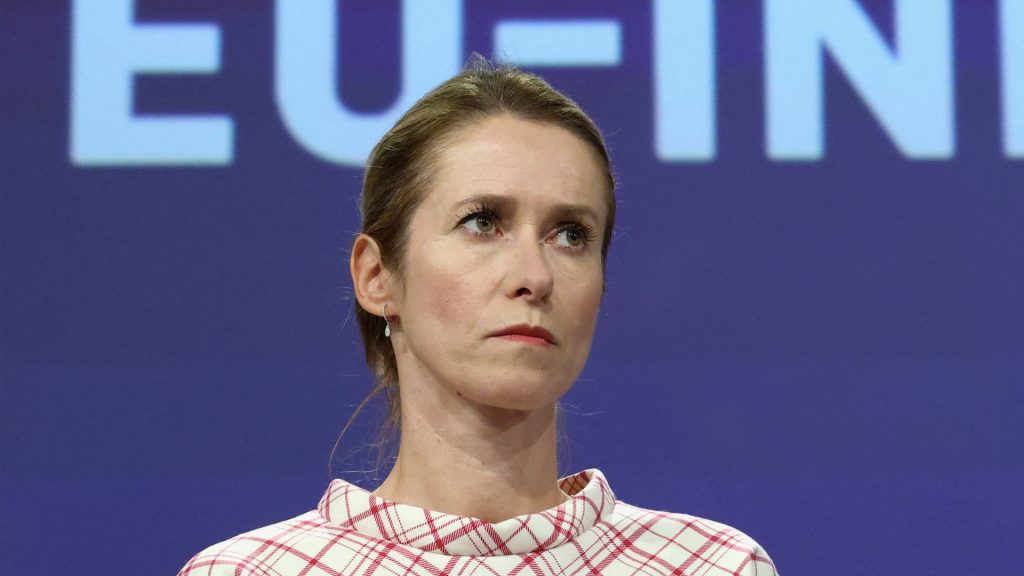
NewsFeed The European Commission has presented a measure to suspend its trade concessions on Israeli exports worth nearly $6.87 billion because of Israel’s war on Gaza. The proposal does not have enough support among the EU’s 27 nations to pass. Published On 17 Sep 202517 Sep 2025 Click here to share on social media share2 Share Adblock test (Why?)
Lebanon’s terrible year: From exploding pagers to Israeli occupation
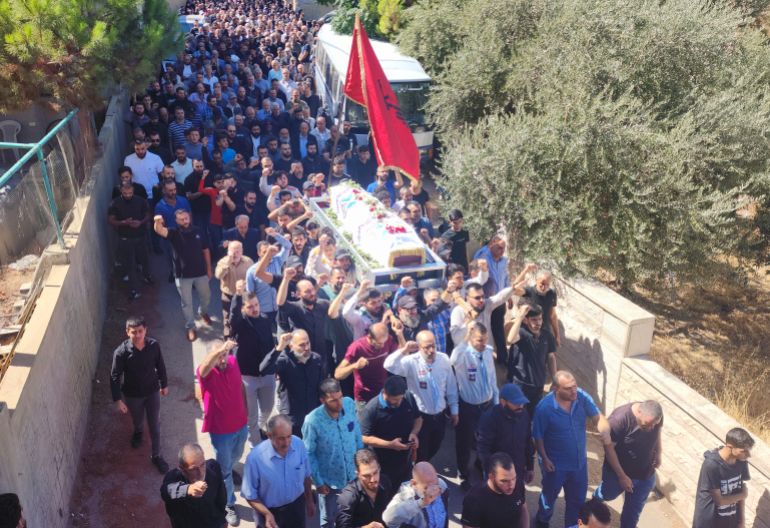
On September 17, 2024, a series of small explosions echoed along many of Lebanon’s streets. The incident, which sparked confusion and terror throughout the country, came to be known as the pager attack – and was a definitive day in Israel’s war on Lebanon. The attack wounded many operatives with connections to Hezbollah in Lebanon and Syria but also hurt and killed civilians, including two children. What followed in the days, weeks and months after was a whirlwind of intensifying violence, political assassinations and mass displacement in Lebanon as Israel expanded a relatively controlled war with the Iran-backed, armed political group Hezbollah into an all-out assault on southern Lebanon, the Bekaa Valley in the east and Beirut. One year on, the political reality on the ground has been flipped on its head. Hezbollah, which was first formed in 1982 to resist Israel’s occupation of southern Lebanon, is no longer the military and political force it had been in recent years. Now, a battle is under way to disarm the group altogether. In its bid to achieve this, Israel has unleashed its military might on southern Lebanon and continues to occupy at least five points in the area, bringing back the trauma of its occupation from 1982 to 2000. Tens of thousands of people are still unable to return to their villages as a result. On the first anniversary of the pager attack, this is a timeline of events in Lebanon’s difficult year under Israeli aggression and occupation: In the months leading up to the attack, Israeli intelligence was able to place devices implanted with small explosives into Hezbollah’s pager supply chains. Advertisement When thousands of these pagers were detonated by Israeli operatives, more than 3,000 people were wounded – many lost body parts, eyes and hands mostly – and at least 12 people were killed. “Every five to 10 seconds, I heard another [explosion],” 40-year-old Ali who was in Beirut’s southern suburbs when the attack took place told Al Jazeera the following day as he sat outside the American University of Beirut Medical Center. People attend the funeral of Fatima Abdullah, a girl who died in a pager explosion, in Saraain El Faouqa, a village in the Baalbek district of Lebanon on September 18, 2024 [Suleiman Amhaz/Anadolu via Getty Images] September 18: Exploding walkie-talkies The day after the pager attack, walkie-talkies with explosives embedded in them were detonated, striking further fear into the Lebanese public. Twenty people were killed and more than 450 wounded in the attack that ostensibly targeted Hezbollah members but also counted civilians among the casualties. Legal experts told Al Jazeera that the Israeli attacks violated international law. “We seem to be living in a Netflix series or in a dystopia,” Lebanese political analyst Karim Emile Bitar said at the time. In the following days, Israeli jets began flying low over Beirut, causing frequent sonic booms. September 23: Deadliest day since Lebanese Civil War Hezbollah and Israeli forces had been exchanging near-daily fire across the Lebanese border since the onset of Israel’s war on Gaza in October 2023. Until the week of September 23, these exchanges had been relatively controlled and followed certain rules of engagement. Hezbollah mostly attacked military targets while Israel predominantly executed targeted strikes on Hezbollah operatives although civilians, including journalists, had been killed. Israel also targeted villages and towns in southern Lebanon with white phosphorus with the aim of creating a buffer zone between northern Israel and southern Lebanon that would be uninhabitable for local residents. But on this day, the rules of engagement appeared to be set aside as Israel killed upwards of 500 people in Lebanon, marking the country’s deadliest single day since its 1975-1990 civil war, in the first of a series of air strikes. Israel’s widespread bombing campaign continued on for more than two months, killing more than 3,000 people and displacing nearly a million, including thousands of foreign nationals and labourers. September 27: Nasrallah assassinated, orders to evacuate On the evening of September 27, residents of Beirut heard a ground-shaking explosion. Advertisement After initial confusion about where the explosion had occurred, the following day about noon, the news was announced: Israel had assassinated longtime Hezbollah Secretary-General Hassan Nasrallah by dropping about 80 bunker-busting bombs in an attack on Dahiyeh, in Beirut’s southern suburbs, killing at least 33 people. Hours after the Nasrallah assassination but before the news had been confirmed, Israel issued displacement notices to residents of Beirut’s southern suburbs. Those with nowhere else to go fled to the city’s seafront as the first of two months of daily attacks and evacuation orders from Israel’s Arabic-language spokesperson began. As those displacements became more frequent, human rights groups noted that Israel’s demands that Lebanese civilians leave those areas were violations of international law and Israel’s military was not upholding its responsibility under international law to avoid harming civilians. September 30: First Israeli attack on Beirut Israel killed three members of the Popular Front for the Liberation of Palestine (PFLP) in central Beirut’s Kola district in an air strike that took out an entire floor of an apartment building but left the rest of the building standing. October 3: Safieddine assassination Less than a week after Nasrallah was killed, so too was the man set to be his successor: Hashem Safieddine. His death would not be confirmed for several days because any attempt to approach the scene of the air strike in the southern suburbs of Beirut was blocked by Israeli forces. October 7: Firefighters killed by Israel When Israel killed 10 firefighters in a strike on the southern Lebanese town of Baraachit near Bint Jbeil, a pattern started to emerge: direct Israeli targeting of first responders in emergency situations. Late October: ‘Urbicide’ As Israel’s daily attacks on civilian infrastructure continued, observers began to describe its actions as “urbicide” – the destruction of a city, or “city killing”. “It’s this huge obliteration of the place and the people and its memories,” Mona Harb, professor of urban studies and politics at
Who is Gourangalal Das? India’s new envoy to South Korea who played key role in India-China negotiations

Senior diplomat Gourangalal Das has been appointed as the next Ambassador of India to the Republic of Korea, the Ministry of External Affairs (MEA) announced on Wednesday. “He is expected to take up his new assignment in Seoul shortly,” the MEA said in a statement. The Indian Embassy in South Korea also announced on X.”Gourangalal Das appointed as the next Ambassador of India to the Republic of Korea”, said the Embassy. At present, Amit Kumar is serving as India’s Ambassador to South Korea.
Maharashtra strike: Medical services across state to be affected on THIS date, check details

The strike comes in the wake of the Maharashtra government’s decision to allow homeopaths with CCMP (Certificate Course in Modern Medicine and Surgery) qualification to register with the state medical council. Read on for more details on this.
Delhi tragedy: 1 sanitation worker dies, three others hospitalised after exposure to toxic gas
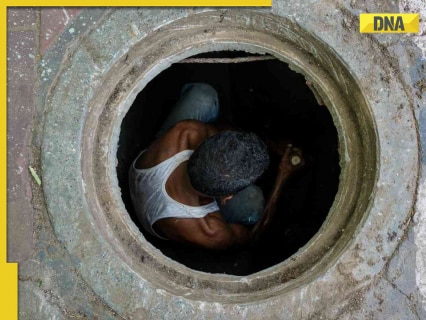
The three other workers — Sonu, Narayana (both from Kasganj) and Naresh (from Bihar) — were admitted to the intensive care unit (ICU) in drowsy condition. A police team inspected the spot, and the manager of Brijgopal Construction Company was summoned for inquiry. Read on to know more on this.
Indians made to wait for 5 hours without food, toilets, made to sit on footpath like animals in freezing cold in THIS country…
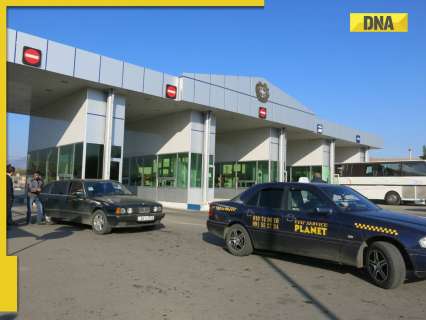
Sharing her experience on Instagram, a traveler described how Indians were humiliated without any reason at the Sadakhlo border despite carrying valid e-visas and other necessary documents. Details here.
Weather Update: Rain lashes parts of Delhi-NCR; THESE states to experience rain showers for next…, check forecast here
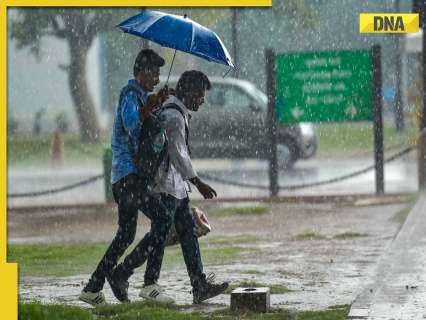
After days of scorching heat, people in Delhi-NCR got some respite on Wednesday, i.e., September 17, as several parts of the national capital received rain showers, leading to a slight drop in temperature.
Durga Puja 2025: 5 ancient caves that celebrate divine energy of Goddess Durga during Navratri

Discover 5 sacred caves in India where Goddess Durga is believed to appear every Navratri. From Vaishno Devi to Harsiddhi Mata, explore the legends, significance, and divine power of these mystical sites of devotion.