

Secretary of War Hegseth lands in Puerto Rico as US ramps up Caribbean cartel fight with naval forces

The U.S. ramped up its fight against Caribbean drug cartels Monday as Secretary of War Pete Hegseth and Joint Chiefs Chairman Gen. Dan Caine touched down in Puerto Rico to bolster military operations. Puerto Rican Gov. Jenniffer González-Colón and First Gentleman Dr. José Yovín Vargas welcomed the pair, framing the visit as the Trump administration’s show of support for troops training on the island. “We thank President Trump and his administration for recognizing Puerto Rico’s strategic importance to our national security, and for their commitment to combat drug cartels and the narco-dictator Nicolás Maduro,” the governor said. “We fully support America First policies that protect our borders and fight illicit activities in defense of the American people.” The meeting took place at Muñiz Air Base in Carolina, outside San Juan, and drew top brass including Puerto Rico National Guard Adjutant General Carlos José Rivera-Román, Public Safety Secretary Brig. Gen. Arthur Garffer, and other senior military leaders. RUBIO SAYS TRUMP ‘WANTS TO WAGE WAR’ ON VENEZUELAN DRUG TRAFFICKERS: ‘BLOW THEM UP IF THAT’S WHAT IT TAKES’ Hegseth spoke to nearly 300 soldiers at the base, thanking and describing them as “American warriors.” The secretary of war also provided affirmation that those serving in the Armed Forces will be the best equipped and prepared in the world. The visit comes as the U.S. military expands its naval footprint near Venezuela, part of President Donald Trump’s push to choke off drug flows from Latin America. Naval and air assets have been dispatched to confront traffickers and secure key maritime routes, with some already used this week against alleged narco-terrorists. US BOLSTERS MILITARY PRESENCE IN CARIBBEAN NEAR VENEZUELA AMID TRUMP’S EFFORTS TO HALT DRUG TRAFFICKING Last Tuesday, Marines hit a vessel in the southern Caribbean Sea that was allegedly ferrying members of the Tren de Aragua gang smuggling narcotics to the U.S. While the U.S. military has long worked to counter cartel and international gang organizations beginning in the late 1980s, the strike killed 11 alleged members of Tren de Aragua – which the Trump administration designated as a terrorist organization in February – marked a definite shift from previous seize and apprehend operations. President Donald Trump has made it clear since his first administration that he strongly opposes Maduro’s regime and even announced a $50 million reward for information leading to his arrest and conviction. TRUMP TOUTS US STRIKE AS MADURO SLAMS MILITARY ‘THREAT’ OFF VENEZUELA Hegseth has also sent major firepower to the region—including the USS Iwo Jima, USS Lake Erie, USS Jason Dunham, USS Gravely, and USS Sampson—to hunt criminal networks and narco-terrorists. Trump’s decision to deploy U.S. troops off of the South American nation prompted Maduro, last Monday, to decry the move as an attempt to seek regime change and said, “Venezuela is confronting the biggest threat that has been seen on our continent in the last 100 years.” Against that backdrop, González-Colón cast Puerto Rico as America’s frontline in the regional crackdown. “President Trump’s leadership in the fight against narcotrafficking places Puerto Rico—our nation’s Caribbean border—at the forefront of our security and interests,” González-Colón added. “For the first time, I believe we are confronting the problem at its root, striking directly at the source of the drug flow.”
Ryan Routh trial opens with bizarre jury questions and witness drama
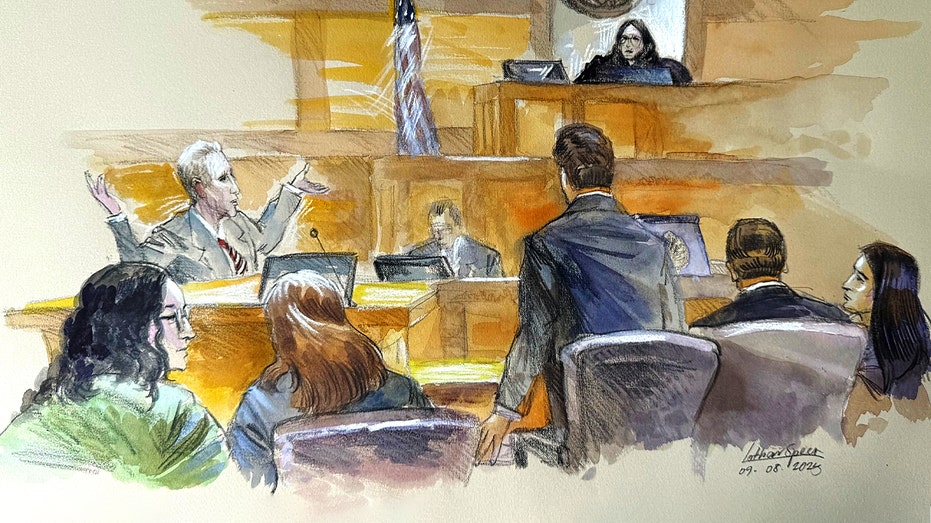
The first day of jury selection kicked off Monday in Fort Pierce, Florida, for the high-profile federal trial of Ryan Routh, who allegedly sought to assassinate President Donald Trump at his West Palm Beach golf club in September 2024. Routh, who is representing himself, appeared at the federal courthouse on Monday morning wearing a gray suit and ankle shackles as the voir dire process began, with prosecutors and Routh questioning jurors to determine whether they can fairly participate in the trial. The jury selection process will identify 12 jurors and four alternates for the trial. RYAN ROUTH TRIAL: JURY SELECTION BEGINS IN TRUMP ASSASSINATION ATTEMPT CASE During jury selection, Routh asked potential jurors their views on the war in Gaza, their position on the U.S. potentially acquiring Greenland as the president has floated, and how they would act if they were driving and spotted a turtle in the middle of the road. U.S. District Judge Aileen Cannon, a Trump appointee, dismissed Routh’s questions as “politically charged,” and said that they were unnecessary for jury selection. “None of the questions on your list have any bearing whatsoever. They were off base, sir, and have no relevance to jury selection,” Cannon said. When Routh attempted to speak in protest, Cannon warned him not to interrupt. Routh also said a former co-worker listed on his witness list, Eric Zuniga, would not testify on Routh’s behalf because Zuniga lives in Costa Rica and “likes his freedom and doesn’t want to get arrested or deported.” Routh then withdrew Zuniga’s name as a potential witness. TRUMP ASSASSINATION ATTEMPT SUSPECT RYAN ROUTH CHALLENGES PRESIDENT TO ROUND OF GOLF Routh also said another potential witness he’d listed would also unlikely to appear, due to scheduled travel to Vietnam during the trial. After the morning session wrapped up, Cannon asked if there was anything else, prompting Routh to say that he is “still in a situation at the jail where I can’t sleep.” “I don’t know if they could move me to general population or something,” Routh said. But Cannon once again shut Routh down, and said that the statement wasn’t appropriate at that time. Twenty-seven out of the 60 prospective jurors claimed that they had a hardship that would prevent them from participating on the jury for Routh’s case. Meanwhile, Routh claimed he had reservations about many potential jurors, but couldn’t identify specific concerns. Prosecutors claim that Routh sought to kill Trump for weeks, and staked out a spot in shrubbery on Sept. 15, 2024, when a Secret Service agent detected him pointing a rifle at Trump while the then-presidential candidate played golf at his West Palm Beach country club. Routh aimed his rifle at the agent, but abandoned his weapon and the scene after the Secret Service agents opened fire. TRUMP ASSASSINATION ATTEMPT SUSPECT RYAN ROUTH CAN’T SEE CLASSIFIED INFO RELATING TO CASE, JUDGE RULES Routh faces federal charges, including attempted assassination of a major presidential candidate, as well as assaulting a federal officer and various gun violations. The charges carry a potential life sentence if the jury finds him guilty. Meanwhile, Routh has maintained he’s innocent and pleaded not guilty to all federal charges, in addition to state charges of terrorism and attempted murder. Opening statements for the trial are expected to kick off on Thursday, and prosecutors are poised to launch into their case immediately afterward. The court has allocated four weeks for Routh’s trial, although it is expected to wrap up sooner. Fox News’ Jamie Joseph, Heather Lacey, Jake Gibson, and the Associated Press contributed to this report.
French no-confidence vote: What’s next if the government collapses?
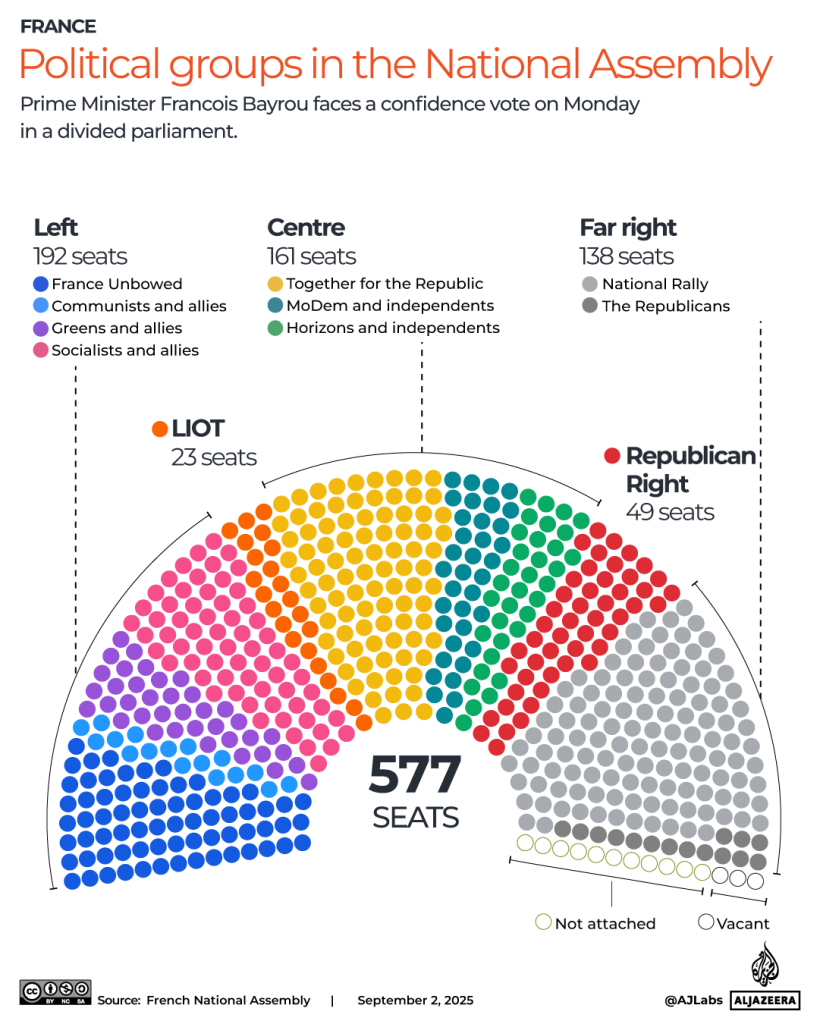
The French government looks set to collapse in a vote of no confidence and tip the eurozone’s second biggest economy into a political crisis. Prime Minister Francois Bayrou is expected to be ousted, casting doubt over President Emmanuel Macron’s future. Monday’s vote hinges on Bayrou’s unpopular budget proposal for 2026, designed to slash France’s fiscal deficit. The 74-year-old political veteran, who called the vote himself in a bid to pressure lawmakers to back his plans, has been in office for only nine months. France has had four prime ministers in less than two years, and a fifth probably won’t be enough to break the country’s political deadlock. The paralysis is reminiscent of the instability last observed in 1958 when the Fifth Republic was established. Ahead of the no-confidence vote, Bayrou spoke on Monday afternoon in the National Assembly, France’s lower house of parliament, where he told lawmakers that the economy faced serious risks because of its deep indebtedness. He is expected to field questions from parliamentarians. The vote itself will take place in the evening with the result expected between 8pm and 9pm (18:00 and 19:00 GMT). Here’s what you need to know: What could happen next? For several weeks, lawmakers have made it clear they will vote against Bayrou’s state-slashing budget. Opposition parties from the far left to the far right hold 330 seats in the 577-seat National Assembly – more than enough to oust him. If Bayrou loses Monday’s vote and the government falls, he would stay in office until President Emmanuel Macron decides what to do next. Unfortunately for the president, France lacks a consensus figure to replace Bayrou. Advertisement Macron is faced with uniquely hard choices – appoint another prime minister in the hope he or she can pass an unpopular budget, call new elections to try to re-establish a parliamentary majority or stand down himself, something he has refused to do before his term ends in 2027. Most experts expected Bayrou to lose the vote, which would force Macron to find a replacement. But with the arithmetic in parliament unchanged, that risks simply repeating the events from last year when Bayrou succeeded Michel Barnier. A fiscal conservative, Macron is unlikely to appoint a premier who advocates for higher state spending. But after the government recently tried to cut deals on the right of the political spectrum, some wonder if Macron might try something new. According to Stefano Palombarini, assistant professor of economics at the University of Paris VIII, “the two previous appointments, Barnier and Bayrou, both failed. He [Macron] lost a lot of credibility in that process, and if he tries a similarly centrist approach, he’d lose even more.” Palombarini told Al Jazeera that “in this context, it would make the scenario of a relative opening towards the left possible. Some Macronist, Socialist and Green politicians say they’re ready for compromises to form a government that lasts until 2027.” Does this mean there is a clear political path? Not really. According to an opinion poll this month for Le Figaro Magazine by the Verian Group, just 15 percent of the electorate has confidence in Macron, down 6 percentage points since July. However, the president has consistently ruled out resigning from office. Separate surveys by Ifop, Elabe and Toluna Harris Interactive indicated that 56 to 69 percent of French people want snap parliamentary elections, indicating growing dissatisfaction with current party politics in a country run by minority cabinets since 2022. For Palombarini, “there’s general political malaise [in France] and also dissatisfaction specifically with Macron. So overall, opinion polls are actually quite stable.” Indeed, the latest polls show no material change in voting intentions over the past year. This means there is no certainty that a new prime minister would be safe from a similar fate as Bayrou. What are the origins of this crisis? At the heart of France’s political paralysis is Macron’s risky decision to call snap parliamentary elections last year. That came after he was re-elected in 2022. Macron’s gamble in June 2024 was an effort to shore up support for the political centre. But French voters edged towards the extremes, leaving Macron with a weakened minority government and limiting his ability to pass legislation. Advertisement The vote resulted in a hung parliament split between three groups. A left alliance won the most seats but fell far short of a majority. The far-right National Rally won the most votes but also doesn’t have a majority. Macron’s centrist coalition lost seats but still forms a significant third bloc. This parliamentary shake-up has made France hard to govern. Divisions have shown up most clearly around spending. How does the budget fit into it? The immediate reason for Bayrou’s fall is his budget proposal for next year. His unpopular 44-billion-euro ($51bn) deficit-reduction plan, including freezing most welfare spending and scrapping two public holidays, has been widely rejected by parliamentarians. On August 25, Jordan Bardella, head of the National Rally, said his party would “never vote in favour of a government whose decisions are making the French suffer”. Bayrou in effect has announced “the end of his government”, Bardella said. The French budget deficit is now nearly 169 billion euros ($196bn), or 5.8 percent of its gross domestic product (GDP), well above the 3 percent limit set by the European Union for countries using the euro. Bayrou is trying to lower the government’s borrowing to 4.6 percent of GDP in 2026 and to 2.8 percent by 2029. In turn, that would lower the overall debt-to-GDP ratio to 117.2 percent in 2029, compared with 125.3 percent if no changes are made. Bayrou recently said young people will be saddled with years of debt payments “for the sake of the comfort of boomers” if France fails to tackle its fiscal pressures. Born in 1951, Bayrou himself qualifies as a baby boomer, the generation born in the years soon after World War II. But any attempt to curtail social benefits is politically difficult in France, as made clear by conflicts in 2023 over Macron’s
Israel’s settler outposts choke Palestinian life in West Bank’s villages
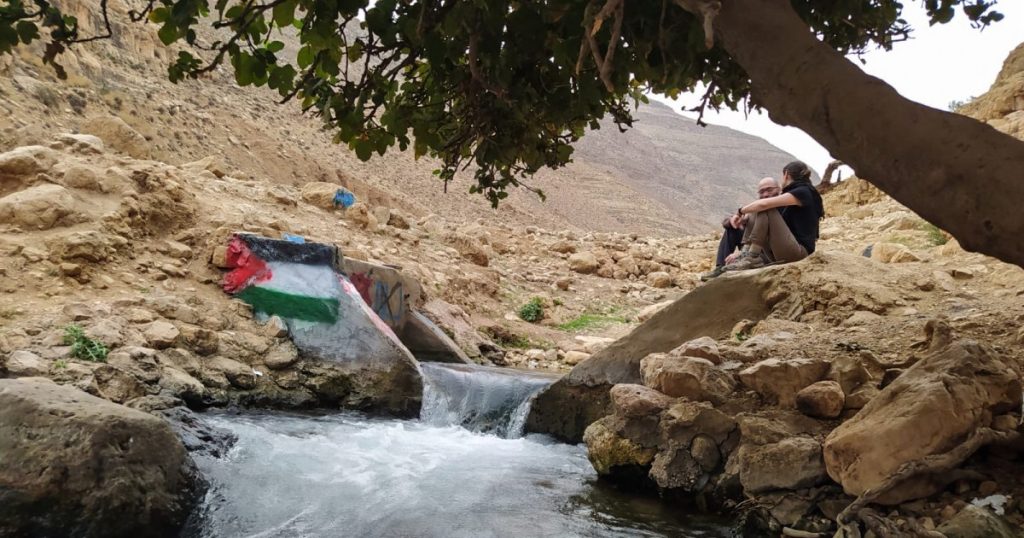
On a sweltering summer day, the insides of villagers’ homes in Ras Ein al-Auja smelled of rot. The villagers said that the day before, settlers had – not for the first time – severed the power lines between their homes and the off-grid electricity networks the community had built up with help from humanitarian organisations, causing the food in their refrigerators to spoil. Israeli authorities have long denied access to basic services such as water, electricity and sanitation to this Palestinian community and others in Area C, and almost all of these communities face demolition orders. Israel typically accuses Palestinians of building without permits to justify the orders, but it makes it near impossible to acquire the permits. The Israeli military did not respond to Al Jazeera’s request for comment for this article. According to Ghawanmeh, Israeli settlers from the three surrounding outposts – all established in the past two years – cut the off-grid electricity systems “five or six times a week”. Last year, settlers prohibited the Bedouins from accessing the al-Auja spring, which locals depend on for both their herds’ and their own water needs. The Palestinian villagers and local reports indicate that Israeli military forces allowed the settlers to block access to the spring. Now, all of the land where the Palestinian locals had grazed their herds is off-limits, forcing them to keep their livestock penned up. Ibrahim Kaabneh, 35, has only 40 sheep and goats left. He once had 250, but he said he sold most of his herd after he and a relative were attacked by settlers last year and the settlers stole his relatives’ herd. “I needed to get money to feed the rest of the herd before they would die or be stolen by the settlers,” he said inside his sparse family home with his children looking on quietly in the summer heat. With settlers attacking them if they bring out their herds to graze and no longer able to access the water spring as well as being denied access to the nearby water pipes connected to Israeli settlements, Kaabneh now must spend about 200 shekels ($60) a day on fodder for his animals while paying for water tanks every two days. “Even the livestock that we still have, we feel like they’re not ours,” Kaabneh said. “Any moment, they can be stolen. Any moment, they can be attacked.” Kaabneh lives about 200 metres (220 yards) away from a second Israeli outpost that was established a year ago. The outpost, containing a corrugated iron pen allegedly stolen from an already-expelled Bedouin community nearby, is a preview of what the newest outpost will look like as it expands, according to locals. The outpost established in August is even closer to the Bedouins living here. This has added to the fears among community members who feel “suffocated” by encroaching settlers. Since the war in Gaza started, settlers have burned homes in the community and are alleged to have assaulted community members, including Kaabneh’s uncle, who was struck by a bulldozer. Settlers also come to the village inappropriately dressed or drunk, the Palestinians say. Kaabneh says he has trouble sleeping, and he is wary of leaving his home even to get groceries because he fears for his family. Women and children avoid leaving their homes for more than an hour or two at a time. An access road to the community – built with funding from the United States Agency for International Development, as a billboard attests – now has at its entrance a series of concrete blocks painted with Israeli flags, and community members face constant harassment to run the most basic of errands. “Once we step outside of the house, it seems like we’re doing something wrong or we’re doing something illegal,” Ghawanmeh explained. “Children, the women and everyone here is in constant fear and in constant danger whenever they leave the house for whatever necessary reason.” “What we are living at the moment is a disaster,” he continued. “To move from accessing 20,000 dunums of land to accessing nothing and from having a free water source to now not having it at all is crippling.” Adblock test (Why?)
Trump asks Supreme Court to let it cut billions in foreign aid
Published On 8 Sep 20258 Sep 2025 Days after a federal judge ruled that United States President Donald Trump’s administration cannot unilaterally slash billions in foreign aid funding, the Department of Justice has asked the Supreme Court to intervene. In a court filing on Monday, lawyers for the administration asked for an emergency stay to halt the order issued by the lower court and allow the administration to continue to withhold about $4bn in congressionally approved funds. Last month, Trump said he would not spend the money, invoking disputed authority that was last used by a US president roughly 50 years ago. Last week, US District Judge Amir Ali ruled that the Republican administration’s decision to withhold the funding was likely illegal. The money at issue in the case was approved by Congress for foreign aid, United Nations peacekeeping operations and democracy-promotion efforts overseas. The Justice Department said in its filing on Monday that the administration views the $4bn of disputed foreign aid funding as “contrary to US foreign policy”. Congress budgeted billions in foreign aid last year, about $11bn of which must be spent or obligated before a deadline of September 30 – the last day of the US government’s current fiscal year – lest it expire. After being sued by aid groups that expected to compete for the funding, the administration said last month that it intended to spend $6.5bn of the disputed funds. Trump also sought to block $4bn of the funding through an unusual step called a “pocket rescission”, which bypasses Congress. Advertisement Ali ruled on Wednesday that the administration cannot simply choose to withhold the money and it must comply with appropriations laws unless Congress changes them. The judge’s injunction “raises a grave and urgent threat to the separation of powers”, Justice Department lawyers wrote in Monday’s filing, adding that it would be “self-defeating and senseless for the executive branch to obligate the very funds that it is asking Congress to rescind”. Under the US Constitution, the government’s executive, legislative and judicial branches are assigned different powers. Trump budget director Russell Vought has argued that the president can withhold funds for 45 days after requesting a rescission, which would run out the clock until the end of the fiscal year. The White House said the tactic was last used in 1977. Lauren Bateman, a lawyer for a group of plaintiffs, said on Monday that the administration is asking the Supreme Court “to defend the illegal tactic of a pocket rescission.” “The administration is effectively asking the Supreme Court to bless its attempt to unlawfully accumulate power,” Bateman said. In recent months, the Supreme Court has issued a number of decisions in Trump’s favour through the use of emergency rulings – rarely requested by previous administrations but which Trump has sought and received in record number. From the beginning of his second term in January to early August, Trump had sought 22 emergency rulings, surpassing the 19 requested in all four years of President Joe Biden’s administration and nearly three times as many as the eight requested during each of the presidencies of Barack Obama and George W Bush, both of whom served two terms, or eight years. The rulings differ from typical cases in that they are often issued in extremely short, unsigned orders that give little in the way of legal reasoning despite the high stakes involved. That lack of transparency has led to criticism from legal scholars as well as rare pushback from federal judges. As of August, the court had sided with Trump in 16 out of the 22 emergency ruling cases. Adblock test (Why?)
Agra flood alert: Yamuna water reaches Taj Mahal wall, surpasses danger mark; 40 families evacuated so far

Although there is no damage to the monument as its construction is designed to withstand such water levels, the district administration has stepped up preparations to manage the flood situation.
Red Fort Gold Kalash Theft: Accused Bhushan Verma arrested in Uttar Pradesh

The Delhi Police Crime Branch has arrested the accused involved in the high-profile theft of a diamond-studded gold ‘kalash (ceremonial vessel)’ worth over Rs 1 crore from a religious event held at the historic Red Fort premises. Who is accused and how was he arrested?
Haryana man, who paid Rs 45 lakh for ‘Dunki’ route to US, shot dead in California over urination, know what happened

Eyewitnesses called police immediately after the shooting, and Kapil was rushed to hospital, but doctors were unable to save him.
Bihar SIR: SC asks EC to consider Aadhaar as document for identity of voter, but clarifies it’s not…
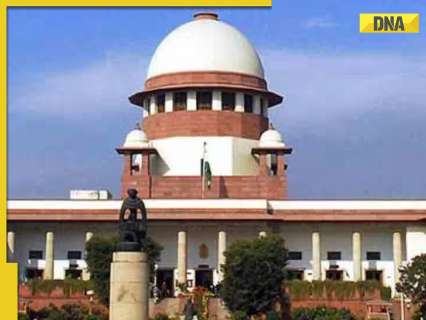
The top court added that authorities shall be entitled to verify the authenticity and genuineness of the Aadhaar card itself.
Section 144 imposed in Karnataka’s Mandya due to…

Security has been tightened across the state as pro-Hindu organisations hold protest against the reported incident.