

Deadly strike on US troops tests Trump’s counter-ISIS plan — and his trust in Syria’s new leader

A deadly insider attack that killed two U.S. service members in Syria is prompting fresh scrutiny of the Trump administration’s counter-ISIS approach and its rapid embrace of Syria’s new leader, Ahmed al-Sharaa. While Republican lawmakers largely urge a stronger campaign to contain ISIS, the shooting has exposed vulnerabilities inside Syria’s fledgling security institutions and raised new questions about whether the U.S. can rely on Syrian forces as the administration seeks to stabilize the country. The incident has now become a flash point in a broader debate: whether the administration is underestimating ISIS’s resilience, overestimating the reliability of Syria’s fledgling institutions and potentially risking a withdrawal that could give the terror group room to rebound. 2 US ARMY SOLDIERS, INTERPRETER KILLED IN SYRIA AMBUSH ATTACK, TRUMP WARNS OF ‘VERY SERIOUS RETALIATION’ Syrian officials say the gunman was part of the new post-Assad security apparatus and had been flagged internally for extremist leanings. He reportedly was in the process of being reassigned when he opened fire on American personnel, killing two service members and injuring an American civilian before being shot dead. The attack immediately raised questions about the strength of U.S.–Syrian cooperation — a partnership that hinges on Washington’s willingness to trust a government led by a man who was, until recently, a wanted terrorist himself. Trump officials have argued that al-Sharaa is essential to stabilizing Syria after Bashar al-Assad’s downfall, but critics say the weekend shooting reveals glaring cracks in that strategy. TRUMP TO HOST SYRIAN PRESIDENT IN HISTORIC WHITE HOUSE MEETING AMID PUSH FOR REGIONAL PEACE Indiana Republican Sen. Jim Banks defended Trump’s approach, saying on Fox News that the president “rooted out and took out the ISIS caliphate in his first term” and “is going to do that again” in his second. But Sen. Jack Reed, D-R.I., the top Democrat on the Senate Armed Services Committee, pushed back sharply. “There’s been some discussion, the president has claimed repeatedly he defeated the caliphate, ISIS etc., and that’s not the case at all,” Reed said on “Fox News Sunday.” “Our intelligence agencies tell us that ISIS is still the most capable and dangerous Islamic terrorist group who have already demonstrated that their intent is to strike even within the United States.” Reed and others argue that the ambush underscores why a U.S. presence in Syria remains necessary despite political pressure from Trump’s base to reduce deployments abroad. But some Republicans counter that the attack proves the opposite — that the mission has become strategically dubious and unacceptably dangerous. ISRAEL RELEASES BODY-CAM VIDEO OF DEADLY SYRIA RAID TARGETING MUSLIM BROTHERHOOD-AFFILIATED TERRORISTS “The soldiers who died are obviously heroes … but the purpose of whether or not they should be there or not is a big question,” Sen. Rand Paul, R-Ky., said on NBC’s “Meet the Press.” Paul, who chairs the Homeland Security Committee, said the attack should force a reconsideration of why U.S. troops remain in the country at all. “A couple hundred troops in Syria are more of a trip wire than a strategic asset. I don’t think they deter war.” Rep. Marjorie Taylor Greene, R-Ga., added that U.S. troops “should not be sent to foreign countries to be killed in foreign lands like Syria… Bring our troops home!!!” The administration, however, has indicated it intends to double down. Tom Barrack, Trump’s envoy to Syria, said the killings “underscore the need for continued cooperation” with al-Sharaa’s government. Trump himself said al-Sharaa was “devastated” by the attack and vowed “very serious retaliation.” But national security specialists caution that the administration may be moving too quickly to normalize ties with Syria’s new leadership. Michael Makovsky, CEO of the Jewish Institute of National Security of America (JINSA), said Washington appears reluctant to confront the fact that the shooter came from within al-Sharaa’s own security forces. “The administration is very invested right now in Shaara, and seems to want to minimize that the killer was from Shaara’s security forces,” Makovsky said. He warned that “a lot of bad people” remain embedded in the new Syrian institutions and that early cooperation should not come with premature sanctions relief. “His security forces have committed a lot of atrocities against minorities … I’m worried the administration is not focused on that.” Trump has vowed retribution for what he called “an ISIS attack against the U.S., and Syria, in a very dangerous part of Syria.” But the White House has not clarified what specific steps it is considering. The White House did not provide additional clarification on what types of retaliation the U.S. would pursue in response to the attack, and referred Fox News Digital back to Trump’s initial statement. However, Trump later told reporters Monday that “they’ll be hit hard” when asked about the U.S. response. He also voiced support for al-Sharaa, and said he still has confidence in Syria’s new leader. Mona Yacoubian, director of the Middle East Program at the Center for Strategic and International Studies, said the administration’s response will depend on what investigators determine about the attacker’s affiliations. Syria’s Interior Ministry spokesman, Noureddine al-Baba, said the gunman had been scheduled to be relieved of duty Sunday after authorities identified he held “extremist” views. Al-Baba told The Associated Press that the government had been forced to recruit quickly amid severe security shortages following Assad’s ouster. The fact that the shooter, who was ultimately shot during the attack, was part of the Syrian security forces adds another layer of complexity, Yacoubian said. If the gunman was part of a specific cell affiliated with a group like ISIS, that could prompt the Trump administration to launch strikes targeting leadership of the respective group or the group’s infrastructure, according to Yacoubian. Regardless, Yacoubian said that the attack raises alarms in terms of the vetting process for security forces and will prompt the Trump administration to dramatically increase their vetting and understanding of the security forces as it continues to partner with Syrian national forces. U.S. forces in Syria currently work in tandem with both Syrian
Noem announces pause on immigrant visa lottery that allowed alleged Brown shooter to enter US

The man accused of committing a mass shooting at Brown University entered the country under the Diversity Immigrant Visa Program lottery in 2017 and was given a green card, Department of Homeland Security Secretary Kristi Noem said in a post on X. Noem also said that she is instructing U.S. Citizenship and Immigration Services to pause the visa program following President Donald Trump’s direction. “The Brown University shooter, Claudio Manuel Neves Valente entered the United States through the diversity lottery immigrant visa program (DV1) in 2017 and was granted a green card. This heinous individual should never have been allowed in our country,” Noem asserted in the post. “In 2017, President Trump fought to end this program, following the devastating NYC truck ramming by an ISIS terrorist, who entered under the DV1 program, and murdered eight people,” she continued. “At President Trump’s direction, I am immediately directing USCIS to pause the DV1 program to ensure no more Americans are harmed by this disastrous program.” CLAUDIO MANUEL NEVES-VALENTE IDENTIFIED AS BROWN UNIVERSITY AND MIT SHOOTING SUSPECT, FOUND DEAD Claudio Manuel Neves Valente, a Portuguese national who was found dead on Thursday from “a self-inflicted gunshot wound,” according to officials, was the suspect in both the Brown University shooting and in the separate murder of an MIT professor. Valente was a Brown University student more than two decades ago, according to school President Christina Paxson. CLAUDIO MANUEL NEVES-VALENTE RESPONSIBLE FOR BROWN SHOOTING, MIT PROFESSOR’S MURDER, AUTHORITIES SAY “Neves Valente was enrolled at Brown as a graduate student from Fall 2000 to Spring 2001, but he has no active affiliation with Brown and has not been affiliated with Brown since 2003. He was not a current student, was not an employee and did not receive a degree from the University, attending for only three semesters as a graduate student until taking a leave in 2001 and formally withdrawing effective July 31, 2003,” she noted. WHO WAS NUNO LOUREIRO? MIT PROFESSOR GUNNED DOWN IN APARTMENT NEAR UNIVERSITY “Neves Valente was admitted to Brown’s Graduate School to study in the Sc.M-PhD program in physics,” Paxson indicated.
Rubio unloads on ‘alarmists,’ touts State Dept disaster response after USAID closure

FIRST ON FOX: Those worried about shuttering the U.S. Agency for International Development (USAID) were wrong, according to Secretary of State Marco Rubio, who touted the agency’s record in delivering support in the wake of Hurricane Melissa that ravaged the Caribbean in October. Although USAID historically functioned as an independent agency to deliver aid to impoverished countries and development assistance, the State Department announced in March that it would absorb remaining operations and functions in an effort to streamline operations to deliver foreign assistance amid concerns that USAID did not advance U.S. core interests. The move resulted in cuts for thousands of USAID employees. Critics including Sen. Bernie Sanders, I-Vt., said that upending the agency would “lead to millions of preventable deaths,” while a group of House Democrats wrote a letter to President Donald Trump in February as USAID cuts got underway that changes would lead to increased maternal and child mortality. But Rubio now claims those skeptics’ fears were unfounded. ‘HYSTERIA’: WHITE HOUSE SHUTS DOWN CONCERNS OVER USAID DOCUMENT PURGE “Alarmists in politics and the media forecasted that the closure of USAID would result in catastrophe. Now, nearly a year later, they’ve been proven wrong,” Rubio said in a statement to Fox News Digital. “The State Department has realigned foreign assistance with the interests of the American people, streamlined disaster response capabilities, and leveraged the ingenuity of American companies to save lives.” Specifically, Rubio pointed to the assistance the State Department provided in the aftermath of Hurricane Melissa, which hit Jamaica as a Category 5 hurricane and was the strongest to strike Kingston since the island started tracking its storms 174 years ago. The State Department deployed a regional disaster assistance response team (DART) and activated U.S.-based urban search and rescue (USAR) teams to support response efforts in the region as part of recovery efforts. Likewise, the State Department allocated roughly $1 million to go toward administering food and other resources to those in need, using predesignated supplies housed in 12 different warehouses across the region. Ultimately, the State Department coordinated with the United Nations World Food Program to distribute 5,000 family food packs to families in Jamaica. “This new era of foreign assistance eliminates extreme ideological projects that previous administrations forced the American people to subsidize, cuts out the wasteful NGO industrial complex, and puts the American people first,” Rubio said. The Council on Foreign Relations, a nonpartisan think tank, evaluated the State Department’s response to Hurricane Melissa looking at key performance indicators including speed, logistics, funding, and interagency coordination, and concluded that the U.S. “delivered a textbook surge of humanitarian aid in the wake of a natural disaster of historic magnitude.” Sanders’ office did not immediately respond to a request for comment from Fox News Digital. The Department of Government Efficiency (DOGE) targeted USAID in its push to eliminate wasteful spending during a review earlier in 2025. The agency attracted scrutiny for a series of funding choices, including allocating $1.5 million for a program that sought to “advance diversity, equity and inclusion in Serbia’s workplaces and business communities” and a $70,000 program for a “DEI musical” in Ireland. ‘FIRED ME ILLEGALLY’: EMOTIONAL EX-USAID EMPLOYEES LEAVE BUILDING WITH BELONGINGS AFTER MASS LAYOFFS USAID was officially closed down in July — a move that attracted criticism from Democrats and former Presidents George W. Bush and Barack Obama. “Gutting USAID is a travesty, and it’s a tragedy,” Obama said in a video that was shown to departing USAID employees, according to The Associated Press. “Because it’s some of the most important work happening anywhere in the world.” Obama labeled the decision to upend USAID “a colossal mistake,” and said, “sooner or later, leaders on both sides of the aisle will realize how much you are needed.” Meanwhile, the State Department is undergoing its own transformation. In addition to absorbing USAID, the State Department has undergone a massive overhaul as part of the largest restructuring for the agency since the Cold War. Additionally, it rolled out an America First Global Health Strategy in September to deliver health aid worldwide by working directly with recipient country’s governments instead of through non-governmental organizations and other aid programs. In December, Kenya became the first country to sign a five-year, $2.5 billion Health Cooperation Framework agreement with the U.S. in alignment with this new strategy, which also aims for recipient countries to eventually bear more responsibility for their own health expenditures. Fox News’ Emma Colton contributed to this report.
NC Senate showdown escalates as Trump rallies behind Whatley to keep GOP seat
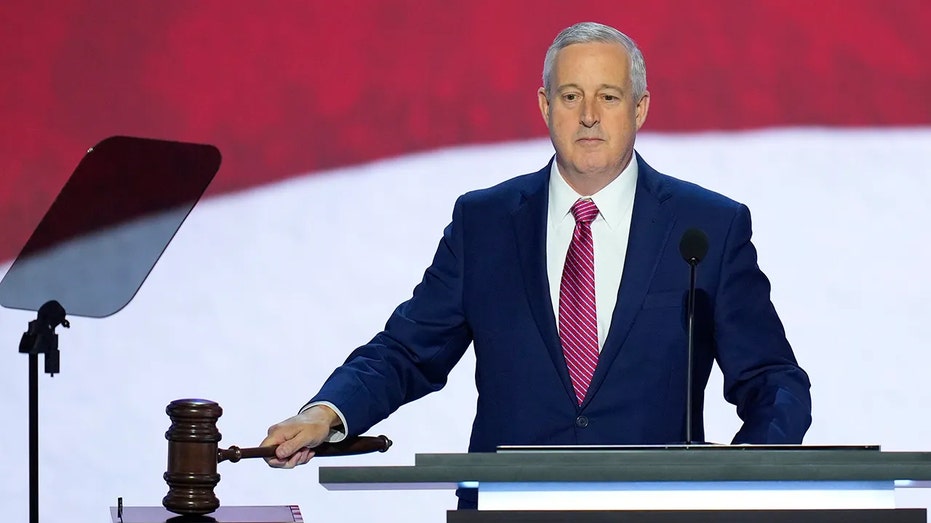
President Donald Trump heads to battleground North Carolina on Friday as he aims to keep an open Republican-held Senate seat in GOP hands in next year’s midterm elections. Trump will hold an evening event on affordability as he teams up in the crucial southeastern state with Michael Whatley, a former Republican National Committee (RNC) chair and clear frontrunner for the GOP Senate nomination in the 2026 race to succeed retiring Republican Sen. Thom Tillis. Whatley is likely to face off next year against former two-term Democratic Gov. Roy Cooper in what’s expected to be one of the most expensive and crucial Senate battles in the country, as the GOP works to hold its 53-47 majority in the chamber. And rising prices will be a top issue on the campaign trail. “President Trump won North Carolina all three times. 2016, 2020, and 2024… because he connects directly with the people of North Carolina, talking about the issues that they care about. So it is very important to have him on the ground,” Whatley emphasized this week in a Fox News Digital interview. TRUMP-BACKED RNC CHAIR JUMPS INTO ‘MARQUEE’ SENATE BATTLE Low propensity MAGA voters and other Trump supporters don’t always head to the polls in elections when the president’s not on the ballot, which is a major concern for Republicans heading into next year’s midterms. That’s why Whatley, a former state GOP chair whom Trump handpicked in 2024 to run the RNC and urged this summer to run for the Senate, would love to see the president return to North Carolina numerous times next year. GOP SENATE CAMPAIGN CHIEF AIMS TO EXPAND 2026 MAP IN THIS BLUE-LEANING STATE “He is fantastically popular in North Carolina,” Whatley said of Trump. “He has a real affinity for the state. The voters…love him, and it’ll be very, very good to get him back in North Carolina.” But more importantly, Whatley and other Republicans are aiming to frame the 2026 elections as a referendum on Trump and his agenda. “We’re certainly going to need him to be on the ballot,” Whatley emphasized. “When you think about what happens if we lose the House, if we lose the Senate, if the Democrats take over, and they go right back to investigations and hoaxes and impeachments, that is really, truly the president and his legacy are going to be on the ballot.” With inflation remaining persistent this year, Democrats have stayed laser focused on the issue of affordability, which fueled them to decisive victories in last month’s 2025 elections and over performances in a slew of special elections this year. THE GOP’S TAKE ON HIGH-PROFILE SENATE DEMOCRATIC PRIMARIES: ‘THEY’RE IN SHAMBLES’ And the same issue that boosted Trump and Republicans to sweeping ballot box victories in 2024 is now dragging the president’s approval ratings on the economy to record lows. Whatley argued that the president “is fighting right now to bring down gasoline prices… We’re fighting, you know, every day against the Fed, trying to get them to lower interest rates and make housing more affordable. And you know, there’s, there’s a fight every day with this administration to try and bring down the prices for everybody.” And looking ahead to next year, Whatley said, “We’re seeing signs already that the economy is starting to tick up and is starting to take hold as the President’s policies are getting in place. We need to make sure that we have the trade policies, the tax policies, the regulatory policies from this administration that are going to help our small businesses, our manufacturers and our farmers across North Carolina.” But Democratic National Committee Chair Ken Martin sees Trump and Republicans headed for a ballot box disaster. “Donald Trump has lost the economy, is losing his mind, and is going to lose the midterms,” Martin said in a statement ahead of Trump’s stop in North Carolina. Whatley has been busy crisscrossing North Carolina and highlighted that “we’re talking to every single community. We will be in all 100 counties across North Carolina, and we’re fighting for every single family.” And he plans to hold tight to Trump. “Our voters know Donald Trump, and they know me. I’ve worked on his campaigns since 2016. President Trump won North Carolina in all three election cycles. So we know how to win, and we have the policies that are going to win,” Whatley emphasized. And pointing to Cooper, who won election and re-election four times as attorney general before becoming governor, Whatley charged that “Roy Cooper is on the wrong side of every 80-20 issue. He has fought harder for criminals, for illegal aliens, men who want to, you know, play in women’s sports and be in women’s locker rooms. Those are issue sets that he’s going to have to defend.” But Cooper’s campaign countered, saying in a statement to Fox News Digital that the former governor “has spent his career fighting for North Carolina families by lowering health care costs and keeping their communities safe while Michael Whatley spent decades at the beck and call of DC politicians delivering for billionaires and special interests at the expense of the middle class.”
Russia-Ukraine war: List of key events, day 1,394
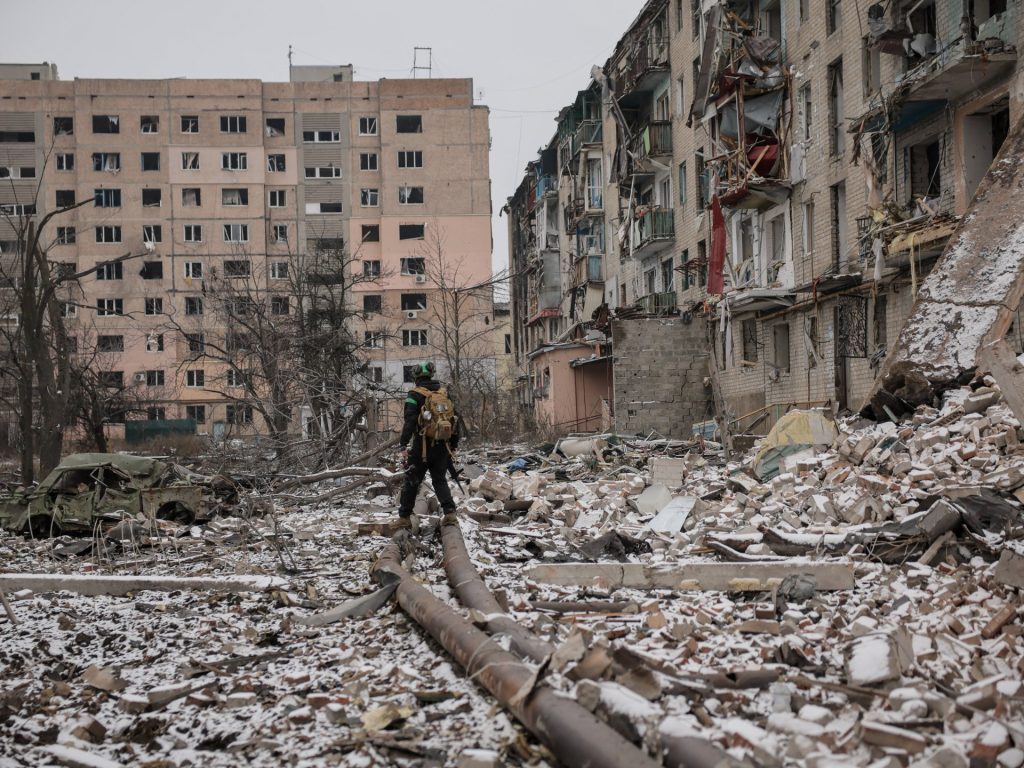
These are the key developments from day 1,394 of Russia’s war on Ukraine. Published On 19 Dec 202519 Dec 2025 Click here to share on social media share2 Share Here is where things stand on Friday, December 19: Fighting Three people, including two crew members of a cargo vessel, were killed in overnight Ukrainian drone attacks on the Russian port of Rostov-on-Don and the town of Bataysk in the country’s southern Rostov region, local governor Yury Slyusar said. Russian strikes near Ukraine’s Black Sea port of Odesa killed a woman in her car and hit infrastructure. Odesa’s Governor Oleh Kiper said a Russian drone killed a woman crossing a bridge in her car, and three children were injured in the incident. Kiper also asked residents whose homes have been affected by extended power outages to be patient and to end blocking roads in protest against the blackouts. “As a result of enemy attacks, the energy infrastructure in Odesa region has suffered extensive damage,” Kiper said. About 180,000 consumers have been left without electricity across five Ukrainian regions after Russian attacks, Ukraine’s acting energy minister, Artem Nekrasov, said. Nekrasov said the southern regions of Mykolaiv and Zaporizhia, the central regions of Cherkasy and Dnipropetrovsk, and the northeastern region of Sumy have been impacted. Russia has formed a military brigade equipped with Moscow’s new hypersonic intermediate-range ballistic missile, Russian chief of the general staff, Valery Gerasimov, said. Russia fired the Oreshnik at Ukraine for the first time in November 2024, and Russian President Vladimir Putin has boasted that the missile is impossible to intercept and has destructive power comparable to that of a nuclear weapon. Sanctions Advertisement European Union leaders have agreed to provide an interest-free loan to Ukraine to meet its military and economic needs for the next two years, EU Council President Antonio Costa has said. EU leaders avoided “chaos and division” with their decision to provide Ukraine with a loan through borrowing cash rather than use frozen Russian assets, Belgian Prime Minister Bart De Wever said. “We remained united,” De Wever added after EU leaders discussed for hours how to provide Ukraine with the money it needs to sustain its fight. Poland’s Prime Minister Donald Tusk had earlier said the EU leaders had agreed in principle at a summit in Brussels to work on financing Ukraine in 2026 and 2027 through the use of frozen Russian assets rather than EU borrowing. But attempts to overcome differences over the plan, including talks to reassure Belgium and other concerned countries that Europe would share the legal and financial risks, failed to seal the deal. The new draft had offered Belgium and other countries unlimited guarantees for damages should Moscow successfully sue them for using Russian assets to finance Ukraine. The deal also offered EU countries and institutions, whose assets may be seized by Russia in retaliation, the possibility to offset such damages against Russian assets held by the EU. Earlier, Russia’s central bank said it would extend legal action beyond its lawsuit against Belgium-based depository Euroclear and sue European banks in a Russian court over attempts the EU’s plans to use frozen Russian assets as loans for Kyiv. Britain has imposed more sanctions targeting Russian oil companies, including 24 individuals and entities, in what it described as a move against Russia’s largest remaining unsanctioned oil companies: Tatneft, Russneft, NNK-Oil and Rusneftegaz. Peace talks Ukrainian peace negotiators are en route to the United States and plan to meet Washington’s negotiating team on Friday and Saturday, Ukrainian President Volodymyr Zelenskyy has said. US President Donald Trump said he believes talks to end the war in Ukraine are “getting close to something” as Trump envoys Steve Witkoff and Jared Kushner plan to meet a Russian delegation in Miami this weekend. Aid The Ukraine-US reconstruction fund, established as part of a Trump-pushed minerals deal the two countries signed in April, has approved its asset policies and is poised to begin reviewing its first investment opportunities in 2026, the US body overseeing the fund said. The Development Finance Corporation (DFC) said the fund’s second meeting “reached final consensus necessary to bring the fund to full operational status”. Potential deals could focus on critical minerals extraction and energy development as well as on maritime infrastructure, the DFC said. Ukraine is facing a foreign aid shortfall of 45-50 billion euros ($53-$59bn) in 2026, President Zelenskyy said, adding that if Kyiv did not receive a first tranche of a loan secured by Russian assets by next spring, it would have to cut drone production. Ukraine has clinched a long-awaited deal to restructure $2.6bn of growth-linked debt, with creditors overwhelmingly accepting a bonds-and-cash swap offer – a key step for the country to emerge from the sovereign default it suffered in the wake of Russia’s full-scale invasion in 2022. Politics and diplomacy Advertisement President Zelenskyy said he saw no need to change Ukraine’s constitution enshrining its aim to become a NATO member state. A block on Ukraine joining the military alliance has been a core Russian demand to end its war. “To be honest, I don’t think we need to change our country’s constitution,” Zelenskyy said. “Certainly not because of calls from the Russian Federation or anyone else,” he said. Earlier this week, Zelenskyy said Ukraine could compromise on NATO membership if given bilateral security guarantees with protections similar to NATO’s Article 5, which considers an attack on one member as an attack against all. Ukraine’s Deputy Foreign Minister Sergiy Kyslytsya met Chinese foreign ministerial aide Liu Bin in Beijing, where the pair “discussed ways to strengthen trade and economic cooperation, and issues of co-operation within international organisations”, the Foreign Ministry said. Russian affairs Sergei Yeremeyev, a Belarusian man accused by Russia of blowing up two trains in Siberia for Ukraine, has been jailed for 22 years. Yeremeyev was found guilty of carrying out an act of terrorism and of planting explosives on two freight trains in 2023. British man Hayden Davies, who fought for Ukraine against Russia, has been
EU delays trade deal with South America’s Mercosur bloc as farmers protest
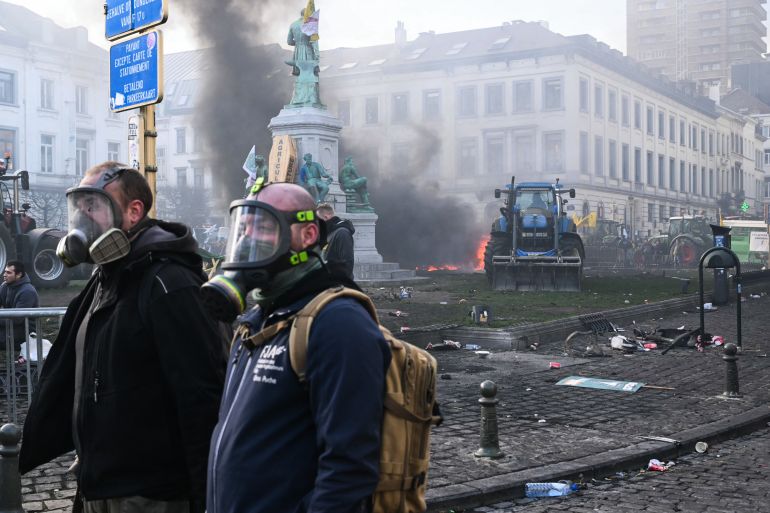
EU delays Mercosur trade deal until January amid farmer protests and opposition from France and Italy. The European Union has delayed a massive free-trade deal with South American countries amid protests by EU farmers and as last-minute opposition by France and Italy threatened to derail the agreement. European Commission chief spokesperson Paula Pinho confirmed on Thursday that the signing of the trade pact between the EU and South American bloc Mercosur will be postponed until January, further delaying a deal that had taken some 25 years to negotiate. Recommended Stories list of 4 itemsend of list Commission President Ursula von der Leyen was expected to travel to Brazil on Saturday to sign the deal, but needed the backing of a broad majority of EU members to do so. The Associated Press news agency reported that an agreement to delay was reached between von der Leyen, European Council President Antonio Costa and Italian Prime Minister Giorgia Meloni – who spoke at an EU summit on Thursday – on the condition that Italy would vote in favour of the agreement in January. French President Emmanuel Macron had also pushed back against the deal as he arrived for Thursday’s summit in Brussels, calling for further concessions and more discussions in January. Macron said he has been in discussions with Italian, Polish, Belgian, Austrian and Irish colleagues, among others, about delaying the signing. “Farmers already face an enormous amount of challenges,″ the French leader said. The trade pact with Argentina, Brazil, Bolivia, Paraguay and Uruguay would be the EU’s largest in terms of tariff cuts. But critics of the deal, notably France and Italy, fear an influx of cheap commodities that could hurt European farmers, while Germany, Spain and Nordic countries say it will boost exports hit by United States tariffs and reduce reliance on China by securing access to key minerals. Brazil’s President Lula says Italy’s PM Meloni asked for ‘patience’ The EU-Mercosur agreement would create the world’s biggest free-trade area and help the 27-nation European bloc to export more vehicles, machinery, wines and spirits to Latin America at a time of global trade tensions. Advertisement Al Jazeera’s Dominic Kane, reporting from Berlin, said Germany, Spain and the Nordic countries were “all lobbying hard in favour of this deal”. But ranged against them were the French and Italian governments because of concerns in their powerful farming sectors. “Their worry being that their products, such as poultry and beef, could be undercut by far cheaper imports from the Mercosur countries,” Kane said. “So no signing in December. The suggestion being maybe there will be a signing in mid-January,” he added. “But there must now be a question about what might happen between now and mid-January, given the powerful forces ranged against each other in this debate,” he added. Farmers wear gas masks at the Place du Luxembourg near the European Parliament, during a farmers’ protest on December 18, 2025 [Nicolas Tucat/AFP] Mercosur nations were notified of the move, a European Commission spokeswoman said, and while initially reacting with a now-or-never ultimatum to its EU partners, Brazil opened the door on Thursday to delaying the deal’s signature to allow time to win over the holdouts. Brazil’s President Luiz Inacio Lula da Silva said Italy’s Meloni had asked him for “patience” and had indicated that Italy would eventually be ready for the agreement. The decision to delay also came hours after farmers in tractors blocked roads and set off fireworks in Brussels to protest the deal, prompting police to respond with tear gas and water cannon. Protesting farmers – some travelling to the Belgian capital from as far away as Spain and Poland – brought potatoes and eggs to throw and waged a furious back-and-forth with police while demonstrators burned tyres and a faux wooden coffin bearing the word “agriculture”. The European Parliament evacuated some staff due to damage caused by protesters. Adblock test (Why?)
Australia PM Albanese launches gun ‘buyback’ plan after Bondi Beach attack
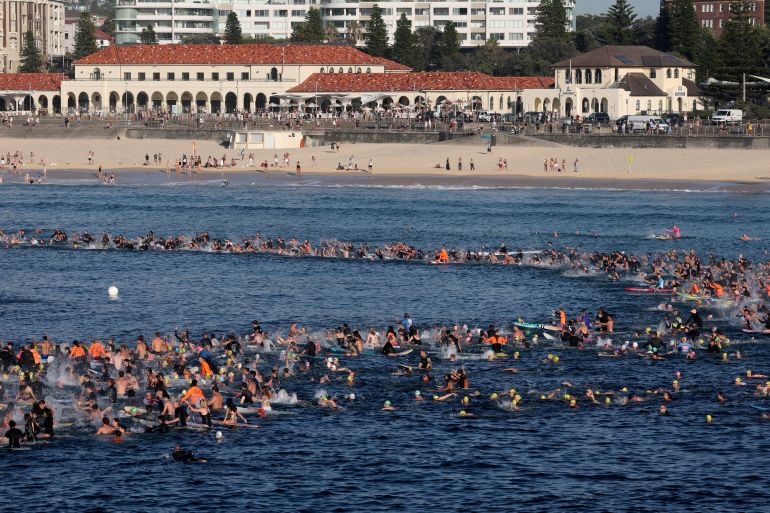
Albanese said Australia has more guns now than 30 years ago, when the country’s deadliest-ever mass shooting took place. Australia will launch a national gun buyback scheme, Prime Minister Anthony Albanese has announced, as the country continues to come to terms with the deadly attack on a Jewish holiday event at Sydney’s Bondi Beach that left 15 people dead. Albanese called the plan the country’s biggest gun buyback since 1996 – the year of Australia’s deadliest mass shooting in modern history, the Port Arthur massacre in the island state of Tasmania – and said authorities will purchase surplus, newly-banned and illegal firearms. Recommended Stories list of 3 itemsend of list “Right now, there are more guns in Australia than there were during Port Arthur. We can’t allow that to continue,” Albanese told a news conference on Friday, adding that there are currently more than four million firearms in the country. “Non-citizens have no need to own a gun. And someone in suburban Sydney has no need to own six … The terrible events of Bondi show we need to get more guns off our streets,” he said. Albanese added that authorities in Australia’s states and territories will be tasked with collecting the weapons and processing payments for surrendered firearms under the scheme. Federal police will then be responsible for destroying them. “We expect hundreds of thousands of firearms will be collected and destroyed through this scheme,” Albanese added. Aided by some of the toughest gun restrictions globally, Australia has one of the lowest gun homicide rates in the world. Restrictions were tightened after a lone gunman, armed with semiautomatic weapons, killed 35 people at the Port Arthur tourist site almost 30 years ago. Advertisement The massacre shocked the country, with authorities soon after launching a major gun amnesty and buyback scheme that removed more than 650,000 newly-prohibited firearms from circulation. ‘We need to do more to combat this evil scourge’ Sunday’s shooting in Sydney’s Bondi Beach area – in which two attackers, named as father and son Sajid Akram and Naveed Akram, went on a shooting spree and killed 15 people – has had a similarly jolting impact on Australian society as the Port Arthur massacre and prompted self-reflection. Albanese said 50-year-old Sajid – who was shot dead at the scene – and 24-year-old Naveed – who was charged with “terrorism” and murder offences after he awoke from a coma on Tuesday – were inspired by “Islamic State ideology”. On Thursday, Albanese announced tougher hate speech laws as he acknowledged the country had experienced a rising tide of anti-Jewish hate since the Hamas-led October 7, 2023, attacks on Israel, and Israel’s genocidal war on Gaza. Albanese said rising anti-Semitism in Australia “culminated on Sunday in one of the worst acts of mass murder that this country has ever seen”. “It was an attack on our Jewish community – but it was also an attack on the Australian way of life,” he said. “Australians are shocked and angry. I am angry. It is clear we need to do more to combat this evil scourge, much more,” he added. The prime minister also announced on Friday that Australia will hold a national day of reflection this Sunday – one week after the mass shooting. Albanese urged Australians to light candles at 6:47pm (07:47 GMT) on Sunday, December 21 – “exactly one week since the attack unfolded”. “It is a moment to pause, reflect, and affirm that hatred and violence will never define who we are as Australians,” he told reporters. Earlier on Friday, hundreds of people plunged into the ocean off Bondi Beach in another gesture to honour the dead. Swimmers and surfers paddled into a circle as they bobbed in the gentle morning swell, splashing water and roaring with emotion. “They slaughtered innocent victims, and today I’m swimming out there and being part of my community again to bring back the light,” security consultant Jason Carr told the AFP news agency. “We’re still burying bodies. But I just felt it was important,” the 53-year-old said. “I’m not going to let someone so evil, someone so dark, stop me from doing what I do and what I enjoy doing,” he said. Surfers and swimmers congregate in the surf at Bondi Beach as they participate in a tribute for the victims of Sunday’s Bondi Beach attack, in Sydney, on December 19, 2025 [David Gray/AFP] Adblock test (Why?)
‘Jahannum main jaye’: Giriraj Singh’s shocking statement to woman defending Nitish Kumar over Hijab row lands him in trouble, what happened?
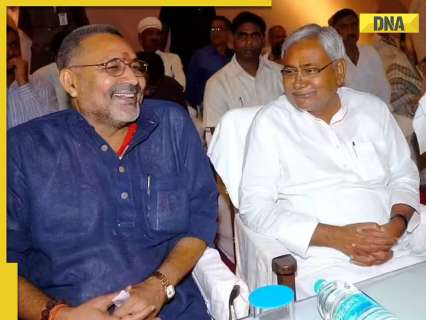
Bihar Chief Minister Nitish Kumar was under scrutiny due to the Hijab controversy for the fourth day on Thursday. However, Union minister and BJP leader Giriraj Singh came to his defence after he pulled down a Muslim woman’s veil in public.
School Holiday December 19: Schools to remain closed in THESE states today due to…; Check state-wise list here

Extreme cold waves, rising pollution, and local holidays are causing school closures and schedule changes across India on December 19, 2025. Delhi, Uttar Pradesh, Goa, Jammu & Kashmir and Tamil Nadu are among the states affected, with some schools shifting to online or hybrid modes.
Good news for commuters: Gurugram to get metro services on THESE 2 new routes, preparations underway; Here’s what we know so far

Gurugram is set to expand its metro network as HMRTC approves DPRs for two new corridors connecting Bhondsi, the railway station, Golf Course Extension Road and Sector 5. Traffic studies will begin soon, with reports expected in six months.