

Pritzker says ‘action will be met with a response’ after Trump threatens to send National Guard to Chicago

Illinois’ Democratic Gov. JB Pritzker said the state “will not stand idly by” if President Donald Trump makes good on his threat to deploy the National Guard to Chicago to respond to crime in the Windy City. “Unlike Donald Trump, we keep our promises,” the governor wrote Wednesday on X. “We will not stand idly by if he decides to send the National Guard to intimidate Chicagoans.” “Action will be met with a response,” he continued. Pritzker’s comments are just the latest in his recent feud with Trump, as the federal government weighs whether to send troops to Chicago. TRUMP SAYS ‘INCOMPETENT’ ILLINOIS GOVERNOR, ‘NO BETTER’ CHICAGO MAYOR SHOULD CALL HIM FOR HELP WITH CRIME Last week, the governor said there is no crime emergency in Chicago and Trump is “attempting to manufacture a crisis, politicize Americans who serve in uniform, and continue abusing his power to distract from the pain he is causing working families.” “The safety of the people of Illinois is always my top priority,” Pritzker said on Saturday. “There is no emergency that warrants the President of the United States federalizing the Illinois National Guard, deploying the National Guard from other states, or sending active duty military within our own borders. We will continue to follow the law, stand up for the sovereignty of our state, and protect the people of Illinois.” On Monday, Pritzker said the potential federal deployment is “unconstitutional” and “un-American.” “Donald Trump wants to use the military to occupy a U.S. city, punish its dissidents and score political points,” he said. “If this were happening in any other country, we would have no trouble calling it what it is — a dangerous power grab.” Chicago Mayor Brandon Johnson, also a Democrat, has cited data showing that violent crime has declined in the last year, including homicides and robberies dipping by more than 30%, and shootings dropping by nearly 40%. Although, crime is still up compared to 2021, according to statistics posted by Chicago police. GOV. PRITZKER SAYS TRUMP TRYING TO ‘MANUFACTURE A CRISIS’ AS ADMIN PLANS NATIONAL GUARD DEPLOYMENT TO CHICAGO “The problem with the President’s approach is that it is uncoordinated, uncalled for, and unsound,” Johnson said on Friday. “Unlawfully deploying the National Guard to Chicago has the potential to inflame tensions between residents and law enforcement when we know that trust between police and residents is foundational to building safer communities.” “When we fight back against tyranny, the people united will always prevail,” the mayor later said. Other Illinois leaders have also made criticisms of the potential move to send troops to Chicago. Trump responded to Pritzker and Johnson on Tuesday, writing in a social media post that the governor is “incompetent” and the mayor is “no better.” “A really DEADLY weekend in Chicago,” Trump wrote on Truth Social. “6 DEAD, 27 HURT IN CRIME SPREES ALLOVER THE CITY. Panic stricken Governor Pritzker says that crime is under control, when in fact it is just the opposite. He is an incompetent Governor who should call me for HELP. Mayor Johnson is no better. Make Chicago Great Again!” CLICK HERE TO GET THE FOX NEWS APP This comes after Trump’s move to boost the presence of federal law enforcement in Washington, D.C., in an attempt to reduce crime. Hundreds of federal agents and National Guard troops have been deployed to the streets of D.C. as part of the federal takeover of the district.
How rare earth shortages are stalling India’s burgeoning EV sector
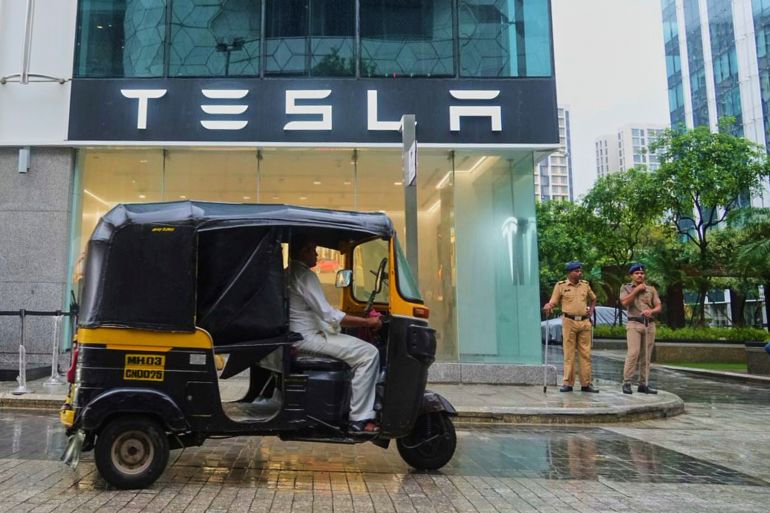
In July, India’s best-selling electric scooter, Bajaj Auto’s Chetak, hit a big speed bump. A shortage of rare-earth metals had hit production plans, and the company was forced to almost halve its output. Bajaj manufactured just 10,824 units of the Chetak in July, as compared with 20,384 units during the same period last year, due to rare earth shortages. “The rare-earth magnet supply situation has been a constraint that created the risk of a sharper production dip in July,” Rakesh Sharma, executive director of Bajaj Auto, told Al Jazeera. The company has since quickly redesigned certain motors to use light rare-earth magnets and has been reworking supply chains so it can cater to its needs, Sharma said. “These changes helped us recover close to half of our planned July output for electric two-wheelers. We expect to reach around 60 percent [of output] during August and September.” The shortage that Bajaj is facing is industry-wide after China introduced restrictions on its rare earth exports on April 4, two days after United States President Donald Trump announced reciprocal tariffs on April 2. No shipment has come to India since then, putting automobile and other industries reliant on these metals in jeopardy. Vigneshwar Chittur Selvakumar, president of the Federation of Automobile Dealers Association (FADA) that counts about 15,000 automobile retailers across the country as its members, says he is “deeply concerned” about how the shortages of these metals “might have a drastic impact on the automobile sector”. Advertisement “We control around 80 percent sales of the vehicles, and any dip in production will affect our business badly,” Vigneshwar said. Rare-earth metals refer to a combination of 17 metallic elements, including dysprosium, terbium, europium, samarium, and gadolinium, that are found in abundance in China, which has the world’s largest reserves of rare-earth elements, estimated at 44 million tonnes, and dominates 90 percent of rare-earth elements processing capacity. Apart from EVs, the metals are also used in smartphones, computer screens, and other electronic devices. They are also essential for defence equipment like radar and guidance systems, as well as medical machines such as Magnetic Resonance Imaging systems. “The rare-earth elements help in making strong magnets that are used widely in electric vehicles … to maintain a stable magnetic field,” Aman Bir Singh, an EV consultant, told Al Jazeera. “Internal combustion engine (ICE) or hybrid vehicles that run on petrol, diesel and wind turbines also use them, but in a very small quantity, and the current shortage doesn’t impact them as much.” The shortage comes just as India’s EV sector was taking off with sales crossing 2 million for the first time in 2024. This was up 24 percent from 1.6 million vehicle sales in 2023. Two-wheelers lead that with sales of 1.2 million units last year. Sales of electric cars, too, are on the rise, and more than 100,000 electric cars were sold in the financial year ending March 31, 2025. Tesla, too, has joined in and launched its Model Y in the country in July. As a result, the electric car penetration has more than doubled from 1 percent to 2.6 percent during this period, and is expected to cross 7 percent by 2028, according to a July report by CareEdge Analytics & Advisory. Sales of electric cars have started picking up in India, but businesses are concerned the current rare earth shortages might drive potential customers away [File: Rafiq Maqbool/AP] Several EV companies, however, have refrained from speaking on the rare earth crisis. “The industry is still in a fledgling state and companies fear that they might lose customers and also their share value if they concede to rare earth shortage as the potential buyers might be too apprehensive to purchase the vehicles,” said Nilanjan Banik, an economics professor at Mahindra University. The shortage has also affected the television industry, where rare-earth magnets are critical in television manufacturing, particularly for speakers, due to their superior performance and compact size. Advertisement “As the country remains heavily reliant on imports for these components, this presents a clear challenge,” said Arjun Bajaj, director of Videotex – television manufacturers for various reputed brands. “We currently have adequate stocks for the current season, but our focus is also to find an alternative solution, and the industry is actively exploring alternatives like ferrite magnets, though matching the performance of rare-earth magnets will require continued research and technological upgrades,” he added. Relief for India On August 19, China announced it would ease export restrictions on fertilisers, rare earths, and tunnel-boring machines to India after talks with Indian foreign minister S Jaishankar in Beijing. Experts, however, called this a “tactical gesture”. India’s trade deficit with China hit a record $100bn in the last financial year. Beijing has also openly backed India’s archenemy Pakistan in a recent clash between New Delhi and Islamabad in May, a reminder that India’s dependence on China can be risky for it. “India’s dependence on China gives [the latter] significant leverage during crises,” pointed out Ajay Srivastava, the founder of Global Research Trade Initiative (GTRI), a trade research group. “China now supplies over 70 percent of India’s needs in several critical areas. Everyday products like laptops (80.5 percent) and flat panel displays (86 percent) are also dominated by Chinese imports. At the same time, India’s share in bilateral trade has collapsed to just 11.2 percent from 42.3 percent two decades ago, exposing the fragility of supply chains. The easing of rare earth supply is just a tactical gesture and nothing beyond,” Srivastava said. India holds the fifth-largest rare-earth elements with 8.52 million tonnes, but contributes less than 1 percent of the global rare-earth mining as it faces stiff challenges with limited infrastructure, technological issues and regulatory hurdles and environmental concerns. Vishwas Dass, a Delhi-based policy expert, told Al Jazeera that the current disruption must be used to accelerate domestic exploration and offer incentives for refining capabilities, and forging mineral alliances with trusted nations. The Geological Survey of India (GSI) has already started exploration in the states
Australia, Canada, Philippine ships hold drills in tense South China Sea

Manila says exercises with Australia, Canada in flashpoint maritime area demonstrates a ‘commitment’ to defence cooperation with ‘like-minded nations’. Published On 28 Aug 202528 Aug 2025 Australia, Canada and the Philippines have conducted joint exercises off a disputed shoal in the South China Sea claimed by Beijing, deploying three warships and military aircraft in air defence exercises. The Philippine military said on Thursday that the joint naval drills east of the Scarborough Shoal – a flashpoint for confrontations with Chinese vessels – focused on simulations to counter aerial threats “through coordinated defensive measures”. Sailing from a western Philippine province of Palawan, the Philippines’ ship Jose Rizal, Australia’s HMAS Brisbane, and Canada’s HMCS Ville de Quebec participated, the military said, adding that the drills reaffirmed “the Philippines’ commitment to advancing defence cooperation with like-minded nations”. China and the Philippines both claim the Scarborough Shoal and other islands, islets and reefs in the South China Sea, while Vietnam, Malaysia, Brunei and Taiwan also have overlapping claims in the busy waterway. China did not immediately issue any comment on the drills, The Associated Press news agency reports, but Beijing has repeatedly warned that it would defend the shoal and outlying waters, which it claims as its own territory. Video footage and photographs released by the Philippine military showed at least three warplanes taking part in the drills with the three ships, as well as at least one heavy-lift military helicopter. Exercise ALON Naval Forces Forge Stronger Cooperation As Maritime Exercises Conclude Off Bajo De Masinloc The Philippine Navy, together with the Royal Australian Navy and the Royal Canadian Navy, successfully concluded a multilateral maritime exercise east of Bajo de Masinloc on… pic.twitter.com/l6Pz4ifv1r — Armed Forces of the Philippines (@TeamAFP) August 27, 2025 Advertisement The joint naval drill marked the final activities of the largest military exercises Australia has staged with the Philippines – Exercise ALON 2025 – involving more than 3,600 military personnel taking part in 15 days of live-fire drills and manoeuvres that are due to conclude on Friday. Australian Lieutenant Colonel Andrew Raven was quoted by the Philippines Daily Inquirer as saying the exercises were “the largest airlift of Australian combat forces since the 1999 East Timor mission”, when Australia led a multinational peacekeeping force in response to a security and humanitarian crisis. “This shows we can deploy a combat-ready and combat-capable force within the Indo-Pacific to assist a security partner such as the Philippines,” Raven said, according to the Inquirer. One of the most sensitive areas in the South China Sea, the Scarborough Shoal has been closely guarded by China’s forces, and on August 11 witnessed an accidental collision between a Chinese navy ship and a Chinese coastguard vessel as they tried to block a Philippine coastguard vessel near the shoal. The Reuters news agency reported on Wednesday that the Chinese coastguard ship is now under repair at Hainan Island, the first confirmation that the badly damaged vessel made it back to port after the collision, which was caught on video by the Philippines. Satellite images provided to Reuters by Maxar Technologies show the vessel with a crushed bow flanked by tugs alongside a dry dock at the Yulin naval base near Sanya, a city on Hainan. Chinese officials have not commented on the collision, but Beijing has accused Philippine vessels of conducting “dangerous manoeuvres” without referring directly to the collision. Sovereignty over the Scarborough Shoal has never been established. A landmark 2016 ruling on the South China Sea by the Permanent Court of Arbitration in The Hague rejected Beijing’s sweeping claims to the entire maritime region, but the court was not tasked with establishing sovereignty over particular features. The court also ruled China’s blockade of the shoal violated international law and said the area was a traditional fishing ground for several countries. China rejects the ruling and continues to press its territorial claims in the sea backed up by its naval, coastguard and militia vessels. Adblock test (Why?)
US auditing Chinese involvement in cloud services, defence chief says
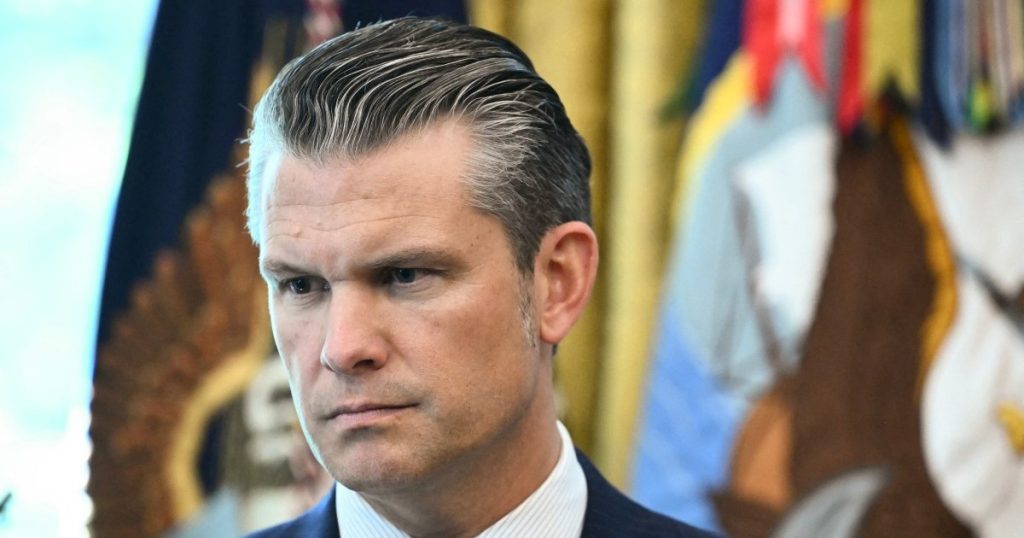
Pete Hegseth orders review after revelations Microsoft used Chinese contractors to manage sensitive cloud services. Published On 28 Aug 202528 Aug 2025 The United States has launched a review of Chinese nationals’ involvement in managing sensitive cloud services for the US military, Washington’s defence chief has said. US Secretary of Defense Pete Hegseth said on Wednesday that he had ordered an audit of Microsoft’s use of Chinese citizens to help manage sensitive cloud services to determine if any security breaches had occurred. “The use of Chinese nationals to service Department of Defense cloud environments – it’s over,” Hegseth said in a video statement. “We’ve issued a formal letter of concern to Microsoft documenting this breach of trust, and we’re requiring a third-party audit of Microsoft’s digital escort programme, including the code and the submissions by Chinese nationals.” “Did they put anything in the code that we didn’t know about? We are going to find out,” Hegseth added. Hegseth said he had also directed software providers to identify and end “any Chinese involvement in DOD systems”. Hegseth’s order comes after an investigative report by ProPublica in July documented Microsoft’s employment of contractors in China and other foreign countries to maintain the Defense Department’s cloud systems in conjunction with US-based “digital escorts”. Following the report, Microsoft announced that it would no longer use China-based technicians to support the military. Hegseth, who announced an immediate review of China’s involvement in cloud services following the ProPublica report, said excluding Chinese nationals from sensitive systems was “common sense”. Advertisement “We expect vendors doing business with the Department of Defense to protect US national security ahead of profit maximisation,” he said. Adblock test (Why?)
Greater Noida Dowry Murder: Nikki Bhati’s dying statement contradicts family allegations, here’s what we know so far

At the time of death, victim Nikki Bhati told doctors she suffered burns due to a cylinder blast while cooking, contradicting her family’s allegations of dowry harassment and murder. However, police found no evidence of a blast.
J-K infiltration: 2 terrorists gunned down by Indian Army along LoC in Gurez sector
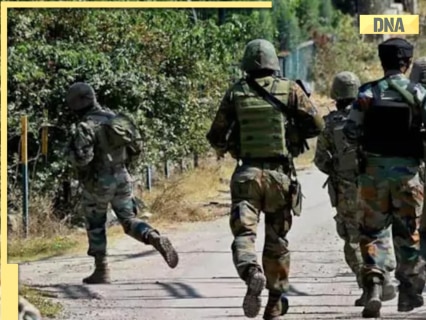
Two terrorists were neutralised after the Indian Army and Jammu and Kashmir Police foiled an infiltration attempt along the Line of Control in the Gurez sector’s Naushehra Nard. The encounter took place under Operation Naushera Nar IV, where alert troops engaged a group of infiltrators trying to cross into Indian territory. The Indian Army also launched a massive search operation to rule out the possibility of any other infiltrators in the area.
Minneapolis gunman appears to promote “Brandon Herrera for president” in video posted before shooting
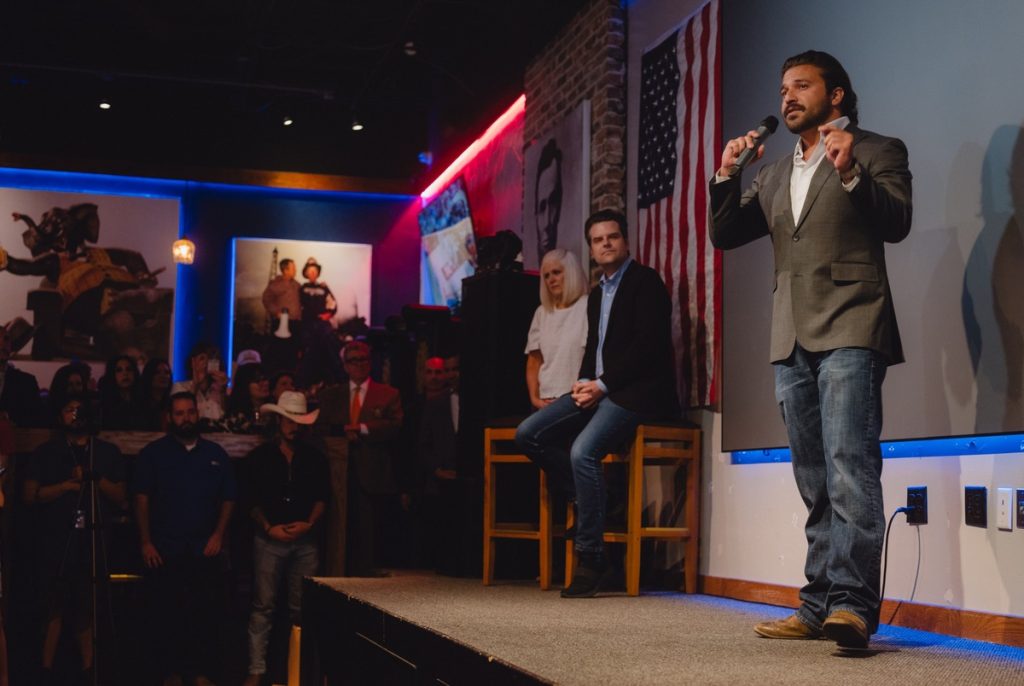
Herrera, a gun rights activist with millions of online followers, said he was “disgusted” to be mentioned by the shooter. Herrera is challenging U.S. Rep. Tony Gonzales in the Republican primary.
RFK Jr. praises Texas for implementing his health vision
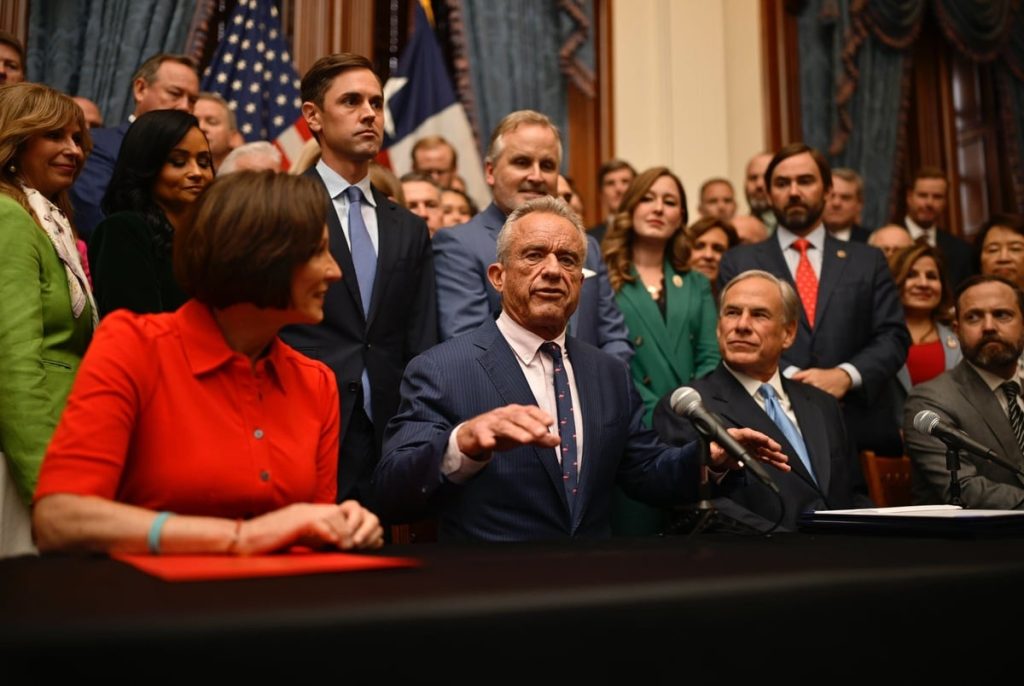
Secretary of Health and Human Services Robert F. Kennedy Jr. complimented Texas as Gov. Greg Abbott signed into law a prohibition on using state tax dollars on specific products with additives, among other measures.
Harris County constables, sheriffs could contract with HOAs without commissioners’ OK under bill heading to Abbott
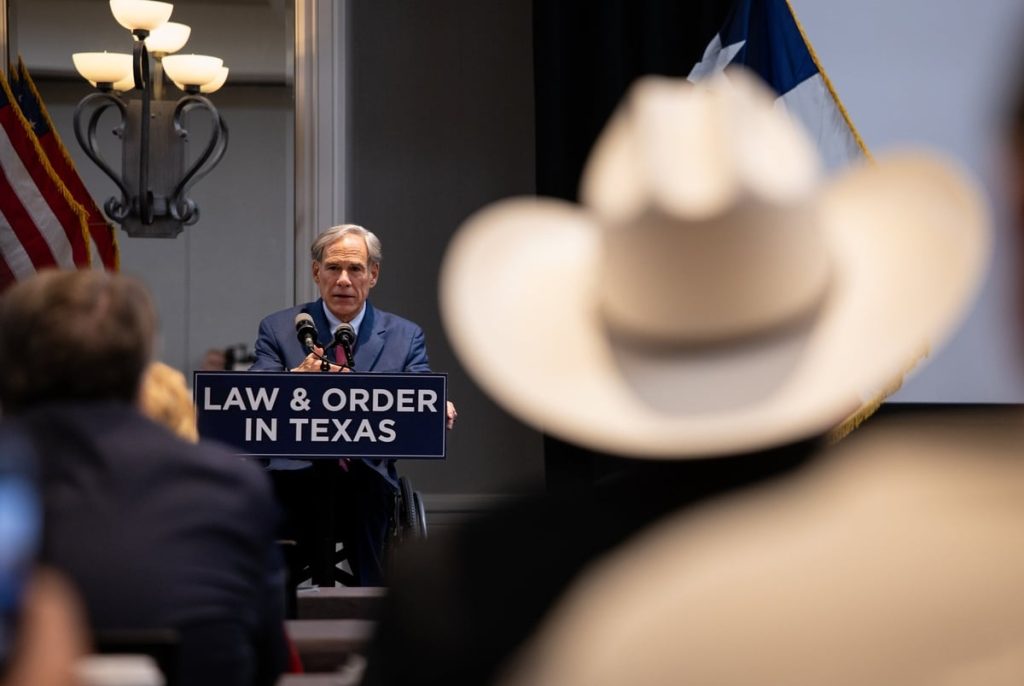
House Bill 26 advanced out of the Texas Legislature on Wednesday evening, two days after being added to the second special session’s agenda.
CDC Director Susan Monarez refuses to be fired as other officials call it quits
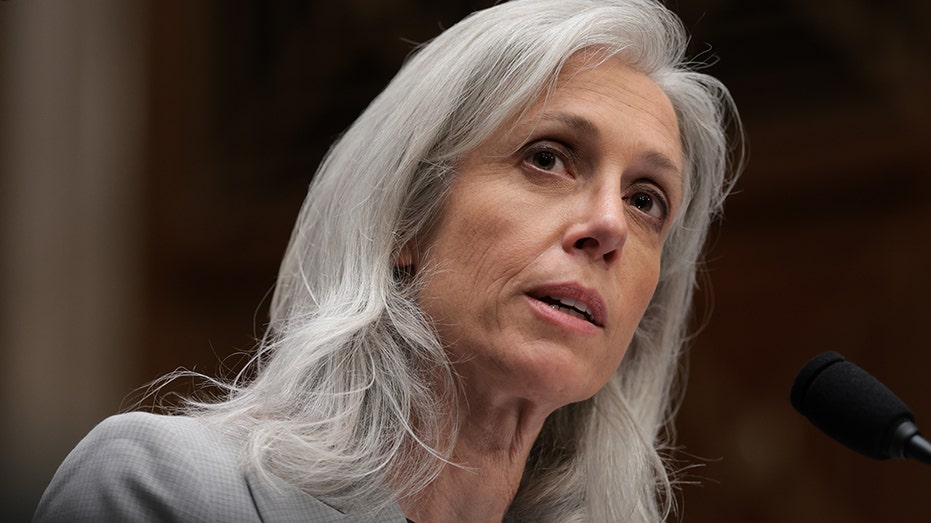
Longtime government scientist Susan Monarez is refusing to leave her position as director of the Centers for Disease Control and Prevention (CDC) after the Department of Health and Human Services (HHS) announced she had been removed from the role less than a month after she was sworn in. Attorneys Mark Zaid and Abbe Lowell said they are representing Monarez and claimed she “has neither resigned nor yet been fired.” The attorneys released a statement on social media, claiming HHS and Secretary Robert F. Kennedy Jr. are weaponizing public health for political gain and putting millions of American lives at risk. “When CDC Director Susan Monarez refused to rubber-stamp unscientific, reckless directives and fire dedicated health experts, she chose protecting the public over serving a political agenda,” the statement said. “For that, she has been targeted. Dr. Monarez has neither resigned nor received notification from the White House that she has been fired, and as a person of integrity and devoted to science, she will not resign.” ABOUT 600 CDC WORKERS TERMINATED AFTER COURT CLEARS PART OF TRUMP ADMIN RESTRUCTURING PLAN The Washington Post reported that sources within the CDC, who spoke on the condition of anonymity, said HHS leaders, including Kennedy, sought to get Monarez to commit to rescinding approvals for certain COVID-19 vaccines. When Monarez did not immediately commit, she was told by administration officials that she must resign or she would be fired. Sources also claimed she then attempted to involve the chairman of the Senate’s top health committee, Sen. Bill Cassidy, R-La. The move reportedly further angered Kennedy. When reached for comment, a spokesperson for the HHS directed Fox News Digital to the agency’s response shared on its official X account. “Susan Monarez is no longer director of the Centers for Disease Control and Prevention,” HHS said. “We thank her for her dedicated service to the American people. Secretary Kennedy has full confidence in his team at the CDC who will continue to be vigilant in protecting Americans against infectious diseases at home and abroad.” The White House confirmed to Fox News Digital that Monarez was being removed. “As her attorney’s statement makes abundantly clear, Susan Monarez is not aligned with the President’s agenda of Making America Healthy Again,” White House spokesman Kush Desai said in a statement. “Since Susan Monarez refused to resign despite informing HHS leadership of her intent to do so, the White House has terminated Monarez from her position with the CDC.” Monarez was tapped by the Trump administration to lead the CDC after its initial nominee, Dave Weldon, withdrew from contention in March amid fears he might not garner enough support in the Senate to be confirmed. Shortly after Weldon stepped down, Monarez was formally nominated to be the CDC’s permanent director and was eventually confirmed in the final week of July. During Monarez’s confirmation hearing, she expressed support for vaccines and told lawmakers she has “not seen a causal link between vaccines and autism.” MEDICAL GROUP GOES AGAINST CDC, RECOMMENDS COVID SHOTS FOR YOUNG KIDS Prior to Monarez’s Senate confirmation, CDC directors did not typically require Senate approval, but that changed in 2022 when Congress passed a law making it necessary. Monarez was the first-ever Senate-confirmed CDC director in the agency’s history. Monarez was also the first CDC director without a medical degree in more than seven decades. However, she does hold a Ph.D. in microbiology and immunology. After getting her doctorate, Monarez entered the federal government, where she found herself in roles at the White House’s Office of Science and Technology Policy, the National Security Council, the Department of Homeland Security and the Advanced Research Projects Agency for Health (ARPA-H). Her biography on the CDC’s website says she worked on “leading efforts to enhance the nation’s biomedical innovation capabilities, including combating antimicrobial resistance, expanding the use of wearables to promote patient health, ensuring personal health data privacy, and improving pandemic preparedness.” Hours after the news that Monarez would no longer head the CDC, sources confirmed to Fox News Digital that at least three other top CDC officials tendered their resignations, including the CDC’s director of its National Center for Immunization and Respiratory Diseases, Demetre Daskalakis; the director of the National Centers for Emerging and Zoonotic Infectious Disease, Dr. Daniel Jernigan; and the CDC’s chief medical officer, Debra Houry. Daskalakis posted his lengthy resignation letter on X, citing various reasons for his departure, including “the views” of Secretary Kennedy and his staff. Daskalakis said he could not continue to work in an administration that treats the CDC “as a tool” to establish policies that “do not reflect scientific reality.” He specifically cited recent changes Kennedy’s HHS has brought to vaccine scheduling for children and adults, arguing it “threaten[s] the lives of the youngest Americans and pregnant people.” The former CDC director also cited the administration’s efforts to “erase transgender populations, cease critical domestic and international HIV programming, and terminate key research.”