

Trump tells Grassley to tell Democrats ‘go to HELL’ over blocked judicial nominees in Senate
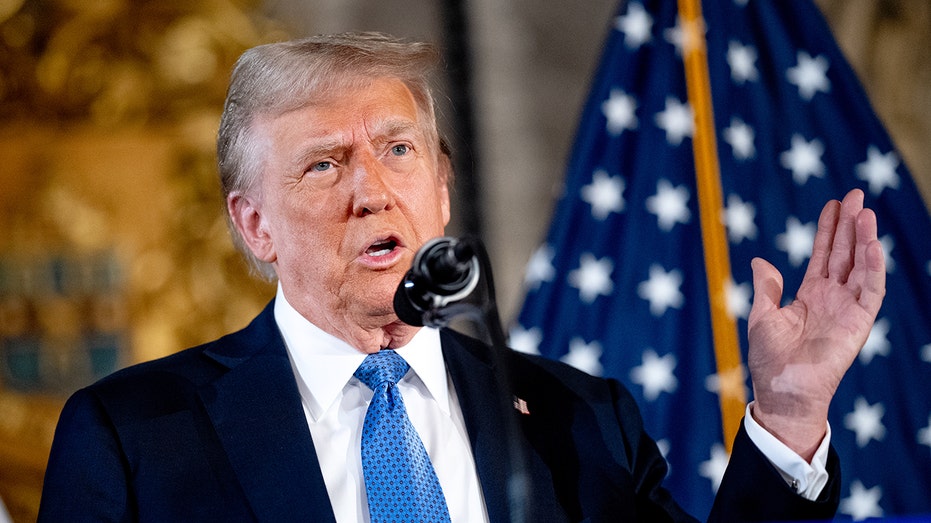
President Donald Trump on Sunday blasted the Senate’s “blue slip” tradition, calling it an unconstitutional affront to his appointment power and alleging that his rights have “been completely taken away from me in States that have just one Democrat United States Senator.” The president is referring to his ability to nominate judges and U.S. Attorneys, accusing the custom of essentially giving Democrats veto power over his nominees. U.S. Sen. Chuck Grassley is defending the century-old process, saying he views it as a norm worth preserving for balance and state input. GRASSLEY REBUKES TRUMP’S PRESSURE TO ‘HAVE THE COURAGE’ TO SPEED UP NOMINATIONS Blue slips are a long-standing tradition but are not a codified law, and constitutionally he is only allowed the power to nominate while the Senate ultimately approves or rejects that nomination. Trump’s frustration with the Senate’s blue slip practice isn’t new. In July, Trump called the tradition a “hoax” and a “scam” used by Democrats to block his nominees and demanded that Grassley stop supporting them. “Put simply, the president of the United States will never be permitted to appoint the person of his choice because of an ancient, and probably unconstitutional, ‘CUSTOM,’” his post said. ALINA HABBA SAYS SHE ‘WON’T BE INTIMIDATED’ AFTER SENATE CUSTOM HINDERS US ATTORNEY NOMINATION In his first term, Trump was able to appoint 234 federal judges, including three Supreme Court justices and 54 appellate court judges. However, this term he has only confirmed five in the first seven months. Trump went on in his post to suggest he was willing to apply pressure and that Grassley shouldn’t acquiesce. “The only candidates that I can get confirmed for these most important positions are, believe it or not, Democrats! Chuck Grassley should allow strong Republican candidates to ascend to these very vital and powerful roles, and tell the Democrats, as they often tell us, to go to HELL!” he wrote. Trump’s comments come after U.S. District Judge Matthew Brann recently ruled that Alina Habba had been unlawfully serving as acting U.S. attorney for New Jersey beyond the 120-day limit allowed for temporary prosecutors and that the administration had been using an unusual maneuver to keep her in the role. Trump’s pressure campaign could shape how many judicial vacancies he can realistically fill in the months ahead.
Has Israel become a divisive issue in Europe?
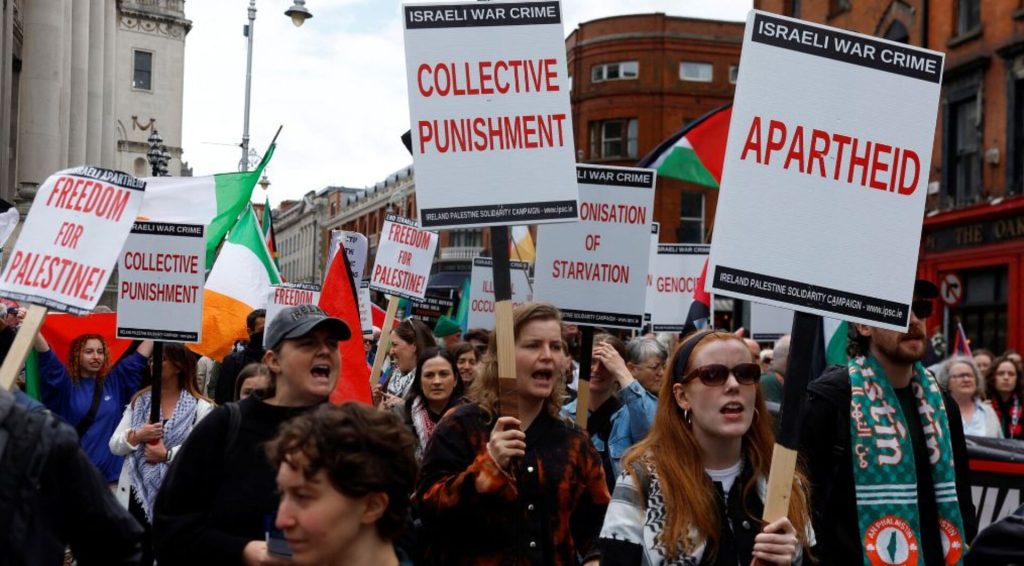
Dutch Foreign Minister Caspar Veldkamp resigns after failing to secure sanctions against Israel over Gaza atrocities. Earlier this month, Slovenia joined Spain and Belgium in imposing an arms embargo on Israel. Germany followed suit, partially, halting the sale of weapons to Israel that could be used in Gaza “until further notice”. The Netherlands has also imposed a partial ban on parts for Israeli fighter jets, while Italy suspended all new military exports to Israel in October. But it is the recent resignation of Dutch Foreign Minister Caspar Veldkamp, after his government failed to agree to sanctions against Israel, that raises questions: Will this one action trigger a broader political fallout across the 27-nation bloc? Presenter: Adrian Finighan Guests: Mpanzu Bamenga – member of the Dutch Parliament and human rights lawyer Ori Goldberg – political commentator and author Rene Wildangel – Middle East analyst and former foreign policy adviser to the German Parliament. Adblock test (Why?)
South Korea’s Lee set to meet Trump, with trade and security high on agenda
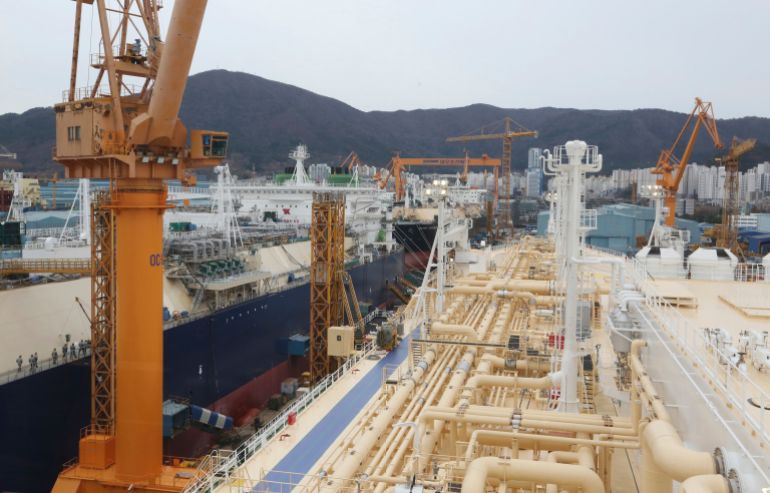
Seoul, South Korea – South Korean President Lee Jae-myung is set to meet United States President Donald Trump for the first time in a high-stakes visit to his country’s closest and most important ally. After a one-day meeting with Japanese Prime Minister Shigeru Ishiba in Tokyo, Lee arrived in Washington, DC, on Sunday ahead of an official working-level meeting at the White House with Trump. It will be the first time the two heads of state meet. Their summit follows a trade deal in July in which Washington agreed to cut its reciprocal tariff on South Korea to 15 percent from an initially proposed 25 percent. The meeting is crucial for South Korea, whose engagement with the Trump administration was disrupted by domestic political turmoil, ignited by the brief declaration of martial law announced in December by the country’s impeached former president, Yoon Suk-yeol. Discussion will focus on ironing out details of the unwritten July trade deal, which involves South Korea agreeing to buy $100bn in US energy and invest $350bn in the US economy. On top of those dizzying sums are direct investments in the US, which are expected from South Korean companies, and which Trump has mentioned will be decided during their talks. Accompanied by first lady Kim Hea-kyung, Lee will lead a delegation formed by the heads of South Korean top conglomerates, including Samsung Electronics, SK Group, Hyundai Motor and LG Group. The four companies alone are already known to contribute approximately 126 trillion won ($91.2bn) in direct investments to the US, according to the South Korean daily Maeil Business Newspaper. Advertisement Choi Yoon-jung, a principal research fellow at the Sejong Institute in Seoul, said Lee needs to be deliberate and direct with Trump in the talks, as “South Korea is in a tough predicament in terms of trade with the US compared to the past”. “It will be important for President Lee to explain how investments will be designed to serve US national interests and to remind Trump that the two nations are close trading partners who went through large ordeals to realise their Free Trade Agreement over two decades ago,” Choi told Al Jazeera. Mason Richey, a professor of international politics at the Hankuk University of Foreign Studies (HUFS), said the direction of the talks on investments is likely to be “unpredictable”. “Not only are the current 15 percent tariffs overwhelmingly likely to stay on, but the investment part of the deal is likely to remain unclear and subject to unpredictable adjustment by the White House,” Richey told Al Jazeera. Liquefied natural gas (LNG) carriers under construction at the Daewoo Shipbuilding and Marine Engineering facility on Geoje Island, South Korea, on December 7, 2018 [Ahn Young-joon/AP] Analysts say shipbuilding is one area where Trump clearly desires to have South Korea as a key partner to play catch-up to China’s naval fleet, which leads in terms of sheer numbers and is also making technological advancements. Officials in Seoul have previously stated that a key component of the tariff deal with Washington would include a partnership worth about $150bn to assist in rebuilding the US shipbuilding industry. To that end, after visiting the White House, Lee will head to Philadelphia to visit the Philly Shipyard, which was bought by the South Korean company Hanwha Group last year. Analysts also say that battery production and semiconductors are some other sectors where Trump has set clear objectives to increase US capacity, and where South Korea has shown willingness and interest in being that partner. “The South Korean government is also willing to actively participate in the ‘modernisation’ of its alliance with the US, that could include increasing contributions to upholding the region’s security and development,” said the Sejong Institute’s Choi. Another major discussion point will be Seoul and Washington’s defence posture regarding the growing threats from North Korea, as well as the development of a strategic alliance to address the changing international security and economic environment. “The pressures for the role of US forces on the Korean Peninsula to evolve has been growing for years,” Jenny Town, the director of the Washington, DC-based research programme 38 North, told Al Jazeera. Advertisement This evolution was especially so with great power competition increasing from China, Town said. “The Trump administration is focused on how to maximise resources for US interests and priorities, so it is likely that some changes will be made during this term,” Town said. “How drastic or dramatic those changes will depend on a number of factors, including the state of the US domestic political infrastructure that provides checks and balances to executive decisions,” she said. A US Senate defence policy bill for fiscal year 2026 includes a ban on the use of funds to reduce the number of US Forces Korea (USFK) troops to below the current level of 28,500 service members. “This makes it unlikely that there will be an immediate change in troop deployment numbers in South Korea,” Choi said. “So, the big point of contention will be the job assignment of the troops to match US interests. I think there’s a possibility of Trump asking South Korea to take on a bigger role in regional security, such as taking part in the conflict involving Taiwan.” Financial negotiations between Trump and Lee may also tip into security details, as the US president has regularly called for South Korea to pay more for the US troops stationed on its soil. Trump has made that same call since his first presidential term. In addition to providing more than $1bn for the presence of USFK forces, South Korea also paid the entire cost of building Camp Humphreys, the largest US base overseas, situated 64km (39 miles) south of Seoul. Trump has said that he wants defence spending to reach closer to 5 percent of gross domestic product (GDP) for all US allies. Today, South Korea’s defence budget is at 3.5 percent of GDP. Transfer of wartime operational command – referring to the transfer of control of South
US National Guard troops begin carrying weapons in Washington, DC
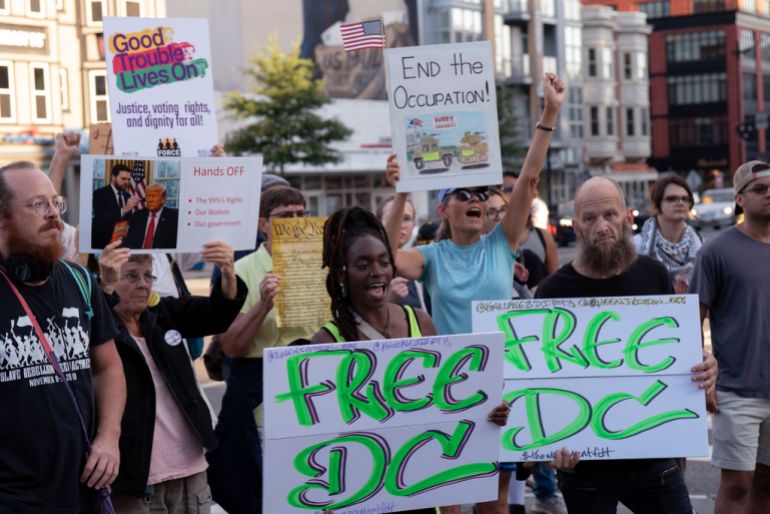
The military said some troops are now carrying guns as Trump claims there is now ‘no crime’ in the US capital. National Guard troops patrolling the United States capital at the direction of President Donald Trump have started carrying firearms, the military said on Sunday. “Starting the late evening of August 24, 2025, [Joint Task Force-DC] service members began carrying their service-issued weapon,” the Joint Task Force-DC said in a statement. The troops are only authorised to use force “as a last resort and solely in response to an imminent threat of death or serious bodily harm”, the statement said. Unnamed officials told the Reuters news agency that the National Guard would either carry M17 pistols or M4 rifles. The announcement came as Trump claimed, without evidence, on Sunday that there is “NO CRIME AND NO MURDER IN DC!”, one week after he deployed troops there. In the same post on Truth Social, Trump said he might “send in the ‘troops’” to neighbouring Baltimore, which he described as “out of control” and “crime-ridden”. Responding to an invitation from Maryland Governor Wes Moore to visit Baltimore and walk its streets, Trump said: “I would much prefer that he clean up this Crime disaster before I go there for a ‘walk’.” However, according to the Baltimore police department, there was a double-digit reduction in gun violence in July compared with the previous year. The city has had 84 homicides so far this year – the fewest in more than 50 years, according to Baltimore Mayor Brandon Scott. In Washington, DC, which has a population of just more than 700,000 people, thousands of National Guard and federal law enforcement officers are now patrolling the streets. Advertisement The National Guard is a part-time force of reserve soldiers, which, according to the US Army, can be called on to respond to domestic emergencies, overseas combat missions and “counter-drug efforts”. People protest against Trump’s use of federal law enforcement and National Guard troops in the city during a rally along the U-Street corridor in northwest Washington, DC, on Saturday [Jose Luis Magana/AP Photo] Their presence in the national capital, along with federal law enforcement officers, has been met by protests, as well as fear and confusion from residents. At Trump’s request, some Republican governors have sent hundreds of National Guard troops to Washington, DC, which the president has depicted as being in the grip of a crime wave, although official data shows crime is down in the city. Since Washington, DC, is not a state, the president has the power to take over policing in the capital for up to 30 days. Many residents have long advocated for the district to become a state. However, Democrats did not further pursue efforts to make it a state after passing a bill in favour of it through the then-Democrat-controlled House of Representatives in 2020. Meanwhile, JB Pritzker, the Democratic governor of Illinois, on Sunday rejected Trump’s push to send troops into Chicago. “Donald Trump is attempting to manufacture a crisis, politicise Americans who serve in uniform, and continue abusing his power to distract from the pain he is causing working families,” Pritzker said in a statement. Adblock test (Why?)
India’s slams US tariffs as ‘unfair, unreasonable, unjustified’; says, ‘Will continue to…
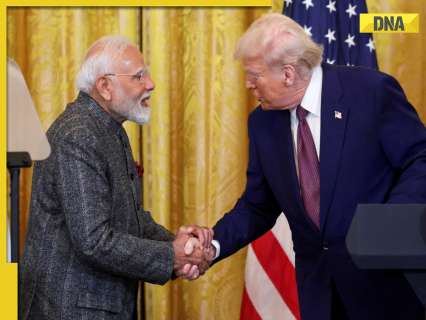
Vinay Kumar, India’s ambassador to Russia, has emphasised that India will continue buying oil from wherever it gets the “best deal” and “take measures” to protect its national interest amid US tariffs.
Who is Sagar Kundu? 22-year-old YouTuber swept away at Odisha’s Duduma waterfall while making reel

A search operation was underway to locate the YouTuber. After the harrowing incident, locals are urging the authorities to implement stringent safety protocols and limited access to dangerous zones located near the waterfall. Read on to know more on this.
Ukraine’s Volodymyr Zelenskyy to visit India soon? Dates being finalised, says…
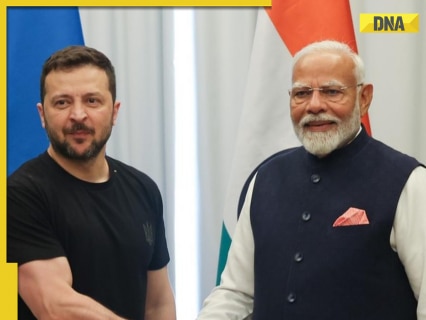
The comment comes days after PM Modi held a phone call with Zelenskyy. PM Modi had said at the time that he conveyed India’s “consistent position on the need for an early and peaceful resolution of the conflict,” adding: “India remains committed to making every possible contribution in this regard.”
Hyderabad Horror: Man kills five-month pregnant wife, throws chopped body parts into Musi river

The incident reportedly occurred within the limits of Medipally police station in Medchal Malkajgiri district on the outskirts of Hyderabad.
8 dead, over 40 injured as container truck hits tractor-trolley in Uttar Pradesh’s Bulandshahr

Senior police officials confirmed that the deceased included a child and two women. Read here to know how the accident happened.
Kolkata Law College Rape: Chargesheet says accused filmed assault through exhaust fan hole

CCTV footage recovered from the scene shows the accused dragging and holding the victim hostage.